Art by Medium: Metal

to
1,328
5,992
2,543
2,214
1,656
4,427
Overall Width
to
Overall Height
to
107
654
2,779
13,290
82
46
101
80
28
71
147
288
437
493
46
7,310
2,827
972
470
400
156
135
120
107
69
54
37
10
9
2,407
1,865
1,255
3,974
2,183
1,919
1,882
1,521
1,311
877
625
505
447
438
422
422
417
351
328
323
288
268
251
385,265
187,377
99,265
82,369
80,982
234
187
142
127
124
1,717
1,187
9,999
5,256
Medium: Metal
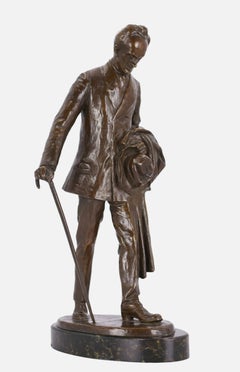
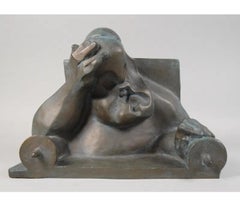
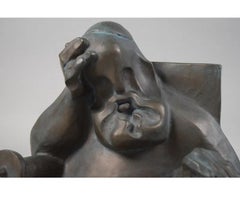
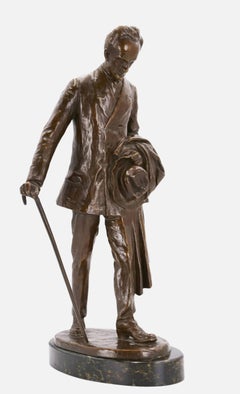
Gerhart Hauptmann, c. 1912 / - - Pensive stride -

Gerhart Hauptmann, c. 1912 / - - Pensive stride -

Located in Berlin, DE

Curt Gitschmann (1876 Breslau - 1933 Berlin), Gerhart Hauptmann, around 1912. Brown patinated bronze mounted on marble plinth, 43 cm (total height), 20 cm (width) x 20 cm (depth) cm,...

Category

1910s Realist Art by Medium: Metal

Materials

Bronze

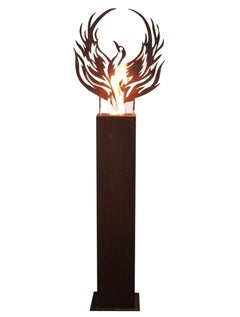
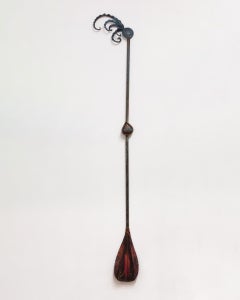
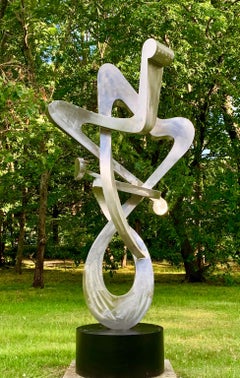
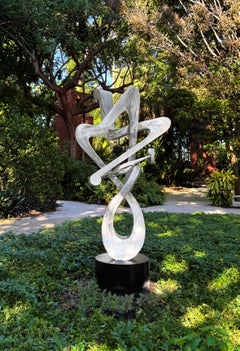
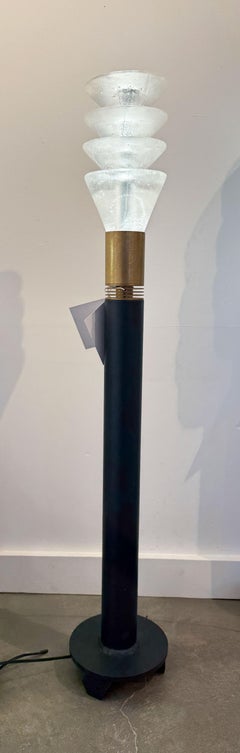
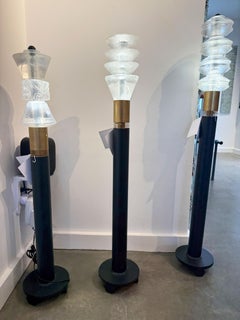
Steel Column and Garden Torch - "Phoenix" - handmade unique art object

Steel Column and Garden Torch - "Phoenix" - handmade unique art object

By Stefan Traloc

Located in Winterswijk, NL

This torch is the eye-catcher in your garden. Customization possible and designed in 2010. Also available to order in stainless steel. Due to good air supply, you can very quickly l...

Category

21st Century and Contemporary Art Deco Art by Medium: Metal

Materials

Steel

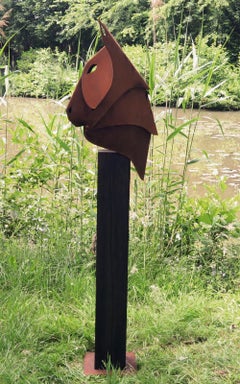
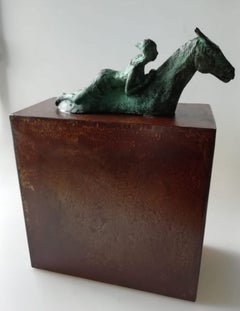
Horse - "Firepit" - contemporary sculpture

Horse - "Firepit" - contemporary sculpture

By Stefan Traloc

Located in Winterswijk, NL

This extraordinary garden torch on oxidized oak stele is a real eye-catcher for your house or garden. Customization possible and designed in 2010. Also available to order in stainles...

Category

21st Century and Contemporary Art Deco Art by Medium: Metal

Materials

Metal

Alex Katz Sunny Silkscreen on Aluminum Signed 2004 Edition of 70

Alex Katz Sunny Silkscreen on Aluminum Signed 2004 Edition of 70

By Alex Katz

Located in Minneapolis, MN

Artist: Alex Katz Title: Sunny Medium: Silkscreen Print on Aluminum Stand Size: 5"h x 6"w x 1.5"d Year: 2004 Edition: 62/70 Publisher: Parkett Publishers, Zürich and New York Printer...

Category

21st Century and Contemporary Art by Medium: Metal

Materials

Metal

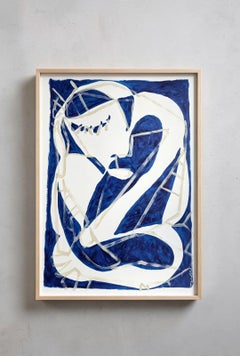
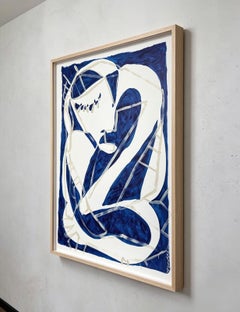
Foundational Series Studio Archive No.313 – abstract blue artwork

Foundational Series Studio Archive No.313 – abstract blue artwork

By Rebecca Wing Sze Lam

Located in STRETTON, AU

A2 Acrylic & Enamel on Archival Paper – Custom Framed Artwork & Framing Specifications Artwork Dimensions: A2 – 420 × 594 mm / 16.5 × 23.4 in Overall Framed Dimensions (...

Category

21st Century and Contemporary Abstract Expressionist Art by Medium: Metal

Materials

Enamel

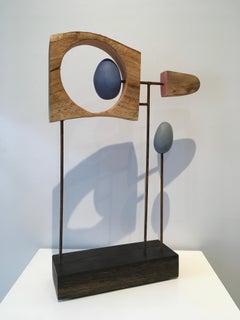
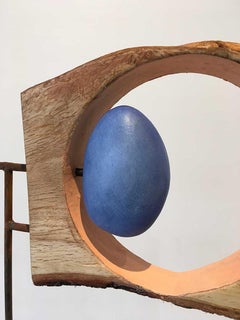
'Untitled Assemblage #S3-23', by John Wolfe, Mixed Media Abstract Sculpture

'Untitled Assemblage #S3-23', by John Wolfe, Mixed Media Abstract Sculpture

Located in Oklahoma City, OK

John Wolfe's Mixed Media Abstract Sculpture, "Untitled Assemblage #S 3-23" brings together wood, steel, ceramic elements, and acrylic paint. The warm colors of the wood and painted ceramic elements soften the feel of the rectilinear arrangement. The shallow depth of the work gives the sculpture a kind of "drawing" quality while the shadows it casts lend a more expansive feel. The heavy, dark wood base anchors all aspects of the work in place. This work is the perfect tabletop piece. It's large enough to command attention, but also subtle in its open framework arrangement. John Wolfe was born in Vernon...

Category

2010s Contemporary Art by Medium: Metal

Materials

Steel

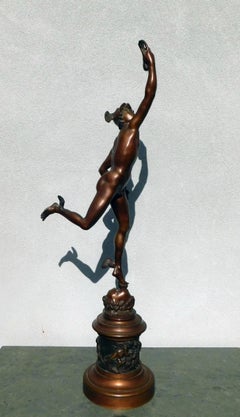
P.E. Guerin, New York Bronze Mercury - 19th Century

P.E. Guerin, New York Bronze Mercury - 19th Century

Located in Phoenix, AZ

Pierre Emmanuel Guerin, (American, NY, NY born France, 1833-1911). Large PE Guerin foundry bronze casting of Mercury. Measures 36"h x 11"w x 8" across. Rests on a decorative bronze...

Category

19th Century Art by Medium: Metal

Materials

Bronze

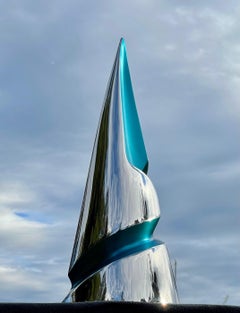
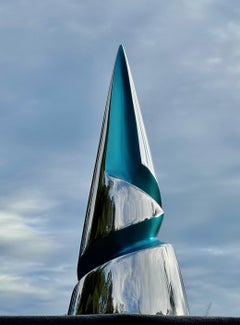
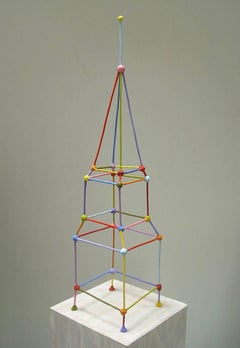
Tower
Tower

Tower

By Tom Nussbaum

Located in New Orleans, LA

Tom Nussbaum is known for a variety of work including drawings, paper cuts, prints, sculpture, children’s books, animations, functional design objects, and site-specific commissions....

Category

2010s Abstract Art by Medium: Metal

Materials

Stainless Steel

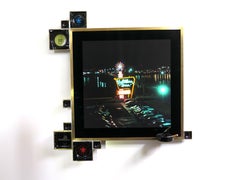
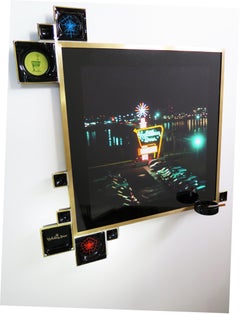
Richard Klein, Holiday Inn Nocturne, 2020, Found and altered objects assemblage

Richard Klein, Holiday Inn Nocturne, 2020, Found and altered objects assemblage

By Richard Klein

Located in Darien, CT

In the mid 1990s Richard Klein started working with found glass objects, including bottles, drinking glasses, ashtrays, and eyeglasses. Initially, Klein rejected any object with commercial or advertising content, but in 2015 he became fascinated with the promotional content that was screen printed on ashtrays from the 1950s, 1960s and early 1970s. This period was before smoking was looked at as being primarily a negative habit, and iconic American businesses, including Howard Johnson’s, International House of Pancakes (iHop) and Holiday Inn, all produced promotional ashtrays printed with their graphic identity. By the time Klein became interested in these objects, the businesses had either ceased to exist, or had changed their logos, and many of their signature buildings, which where examples of classic, “Pop” roadside architecture, has been torn down or repurposed. The artist wanted to connect the glass objects with the business’s sites that were still recognizable and spoke of their history, so he began researching where original buildings still stood. Klein then embarked on a series of road trips to photograph these sites with the intention of combining the photographs with the promotional glass objects. This led him to as far south as Maryland and as far north as upstate New York from his home in Connecticut. In the case of Holiday Inn, it wasn’t their buildings, but their iconic illuminated sign that appeared on ashtrays, so he sought out a standing example of the sign he could photograph. As it turned out all had been removed years before from the hotels' properties and the only working example was indoors at the Henry Ford Museum in Dearborn, Michigan. He did, however, find out that there was one still standing, surprisingly, in Beruit, Lebanon. He found an image of it on the web and used it to make Holiday Inn (Beruit). In 1973 Holiday Inn changed their tagline from “The Nations Innkeeper” to “The World’s Innkeeper” as they expanded overseas, including the Mideast. For the hotel chain it was bad timing: the disastrous Lebanese civil war began in 1975. In the war, the different Lebanese militias involved in the conflict, including the Nasserites, Christian Phalangists, and the Lebanese National Movement engaged in what came to be called “The Battle of the Hotels” where they each occupied a major high-rise hotel in central Beruit. The Phalangists commanded the Holiday Inn, which they used to fire with both light arms and heavier weapons at the militias in neighboring hotels. Klein used the photo of the heavily damaged Holiday Inn sign as I thought it spoke in a curious, offhanded way about American cultural imperialism in juxtaposition with an ashtray that proclaimed Holiday Inn to be “The World’s Innkeeper.” In the work Holiday Inn (Nocturne) the artist utilized a found, 35mm slide of a Holiday Inn sign at night at an unknown location as the basis of the photograph in the work. Richard Klein is a Connecticut-based artist, independent curator and writer. As an artist, he has exhibited widely, including the Neuberger Museum of Art at SUNY Purchase; Caren Golden Fine Art, New York; the John Michael Kohler Arts Center, Sheboygan, WI; Hales Gallery, London; Gavlak Gallery, Palm Beach, FL; deCordova Sculpture Park and Museum, Lincoln, MA; James Barron Art, Kent, CT; The Portland Institute of Contemporary Art (PICA), Portland, OR; Schoolhouse Gallery, Provincetown, MA; Stephan Stoyanov Gallery, NY; Katonah Museum of Art, Katonah, NY; Brattleboro Museum and Art Center, Brattleboro, VT; Ortega y Gasset Projects, Brooklyn, NY; Exhibit by Alberson Tulsa, OK; Incident Report/Flow Chart Foundation, Hudson, NY; ICEHOUSE Project Space, Sharon, CT; Kenise Barnes Fine Art in Kent, CT and with ODETTA Gallery at the Equity Gallery in New York City.. Reviews of his work have appeared in Two Coats of Paint, Whitehot Magazine, The New York Times, Sculpture Magazine, Art in America, and The New Yorker. In the summer of 2024 he will be the first Artist-In-Residence at Peck Ledge Light...

Category

2010s Assemblage Art by Medium: Metal

Materials

Metal

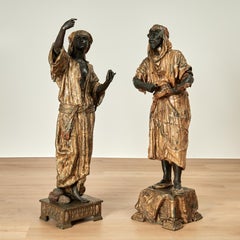
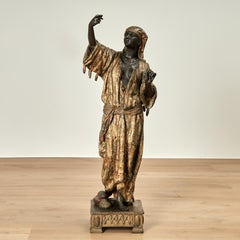
Pair of Large Antique Orientalist Bronze Figural Sculptures or Statues

Pair of Large Antique Orientalist Bronze Figural Sculptures or Statues

Located in Palm Beach, FL

Fine pair of 19th century Austrian bronze figural sculptures, a male and female in classic Bedouin attire and active stance, both cold paint and gilt decorated now with a charming ti...

Category

19th Century Victorian Art by Medium: Metal

Materials

Bronze

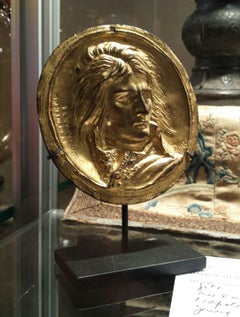
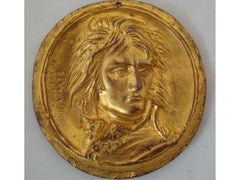
Portrait of General Bonaparte

Portrait of General Bonaparte

Located in Greenwich, CT

Général BONAPARTE by Pierre Jean David d'Angers (1788-1856) Description : medallion in gilt lead alloy cast , signed lower right and dated 1831 presented on a museum-mount display ...

Category

Early 19th Century French School Art by Medium: Metal

Materials

Metal

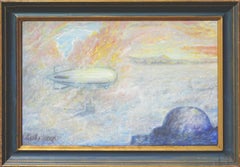
1930s Zeppelin Over San Francisco Landscape

1930s Zeppelin Over San Francisco Landscape

Located in Soquel, CA

1930s Zeppelin Over San Francisco Landscape Bright and evocative 1938 painting of burning Zeppelin by Ethel Grace Arpin Harlo Lynn (American 1881-1960). This was original painting w...

Category

1930s American Realist Art by Medium: Metal

Materials

Metal

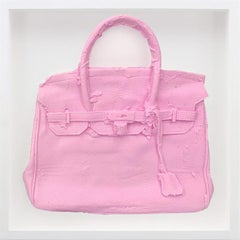
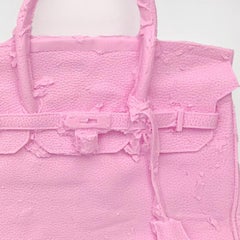
Homemade Hermes Birkin Bag ( Pink ) 2015 by Shelter Serra

Homemade Hermes Birkin Bag ( Pink ) 2015 by Shelter Serra

By Shelter Serra

Located in Brooklyn, NY

Homemade Hermes Birkin Bag ( Kelly Green ) 2015, 15”x14.5”x1.5” inches unframed, 18.75 "x 18.75 x 2.5 framed Cast Resin, Edition of 15 Also available in Kelly Green, White, Gold and Silver. The frame is a white shadow box frame with plexiglass. The Homemade Hermes Birkin Bag is a sculpture that celebrates the beauty, and status, that the docents of fashion have bestowed upon coveted objects and accessories as such. In a Duchampian gesture of representation, the artist has created an object that has been “elevated to uselessness”, yet reveals much about our society’s infatuation with consumption and materialism. Cast in resin the sculpture becomes an apropos trope of our time, a perfect conversation starter. Shelter Serra’s paintings, sculptures, and drawings explore mass consumption and cultural identity. He juxtaposes subject matters that are both common and recognizable: a Campbell's Soup Can, a copper plated baseball hat, and a Hermes Birkin bag...

Category

21st Century and Contemporary Contemporary Art by Medium: Metal

Materials

Enamel

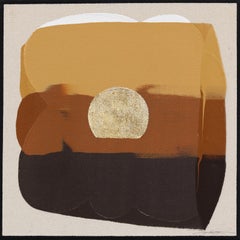
Eternal Sunsets Mini: Aura - Meditative Abstract Warm Tone Geometric Painting

Eternal Sunsets Mini: Aura - Meditative Abstract Warm Tone Geometric Painting

By Jason DeMeo

Located in Los Angeles, CA

Abstract minimalist artist Jason DeMeo presents a collection of artworks designed to engage viewers in a meditative experience, drawing them closer to the enduring ideals of truth, b...

Category

21st Century and Contemporary Abstract Art by Medium: Metal

Materials

Gold Leaf

Shared Secrets 10/25 - Contemporary Figurative Bronze Iron Metal Wall Sculpture

Shared Secrets 10/25 - Contemporary Figurative Bronze Iron Metal Wall Sculpture

By Mireia Serra

Located in Los Angeles, CA

Mireia Serra creates sensuous bronze and iron sculptures showing the beauty of snapshots caught in life which are full of emotions and feelings along the life journey. Her metal artw...

Category

21st Century and Contemporary Contemporary Art by Medium: Metal

Materials

Metal, Bronze, Iron

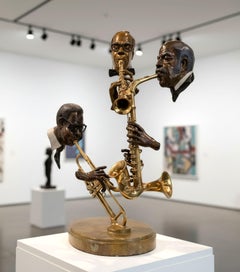
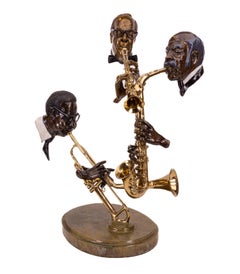
Paul Wegner Pure Jazz Bronze Sculpture Signed Edition

Paul Wegner Pure Jazz Bronze Sculpture Signed Edition

By Paul Wegner

Located in Minneapolis, MN

Artist: Paul Wegner Title: Pure Jazz Medium: Cold Painted Bronze Sculpture Size: 30-1/2" x 19" x 18" Year: 1984 Signed: Etched Signed with Edition Number by the Artist Edition: FP 2/...

Category

Late 20th Century Art by Medium: Metal

Materials

Bronze

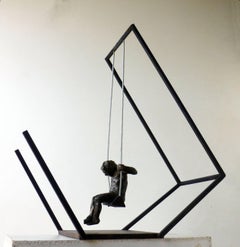
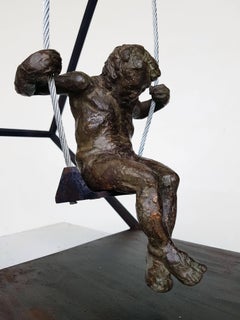
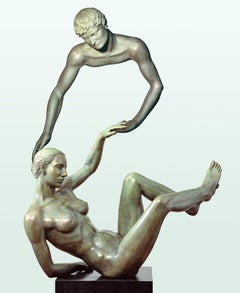
Amancio  swing. "EL COLUMPIO" original bronze iron sculpture

Amancio swing. "EL COLUMPIO" original bronze iron sculpture

By Amancio González Andrés

Located in CORAL GABLES - MIAMI, FL

Sculpture by the Spanish artist AMANCIO GONZALEZ bronze. Series limited to 25 copies Fantastic piece of art representing Spanish sculpture AMANCIO Gonzalez ( Leon 1965 ) Amancio Gon...

Category

21st Century and Contemporary Contemporary Art by Medium: Metal

Materials

Bronze, Iron

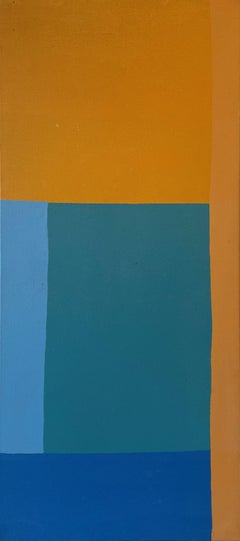
"Untitled" Dan Christensen, Geometric Plaid Series, Orange and Blue Abstract

"Untitled" Dan Christensen, Geometric Plaid Series, Orange and Blue Abstract

By Dan Christensen

Located in New York, NY

Dan Christensen Untitled, circa 1970-71 Acrylic and enamel on canvas 44 x 20 inches Provenance: The artist Sherron Francis (gift from the above) Dan Christensen was an American abs...

Category

1970s Abstract Geometric Art by Medium: Metal

Materials

Enamel

Ted Egri Taos Modernist Judaica Cubist Bronze Sculpture Rabbi & Torah WPA Artist

Ted Egri Taos Modernist Judaica Cubist Bronze Sculpture Rabbi & Torah WPA Artist

By Ted Egri

Located in Surfside, FL

Ted Egri (American, 1913-2010) Bronze sculpture Rabbi Signed Egri and numbered 4/30 on side. Dimensions: 12"L x 8.5"H x 6.75" D Born in New York city in 1913 to a Hungarian Jewish emigre family (both of his parents were born in Hungary), Egri was first exposed to music later dropping that for art. He studied with Howard Giles at the Master Institute of the Roerich Museum in New York where he was introduced to Oriental arts, Chinese and Japanese art forms, and later with Hans Hofmann. He worked for the Federal Arts Project, the WPA, making mural paintings and silkscreen prints as well as easel painting. Once WWII began, Egri signed up to serve as a map maker for the Navy, and was witness to some of the fiercest battles in the Pacific. As an artist, he painted many important depictions of his wartime experiences and these works have all be donated to the U.S. Naval Museum. Already a practicing painter and instructor at the Kansas City Art Institute, Ted Egri came to Taos, New Mexico with his wife Kit in 1950 to continue his study of painting at Ribak's Taos Valley Art School on the GI Bill. Louis Ribak quickly introduced Egri to Eulalia Emetaz, the owner of La Galleria Escondida, who gave him his first one-person show in 1951. A prolific and versatile artist, as well as arts organizer and advocate, Egri's contributions to underserved African American, Native American, Hispanic and women were honored by two Taos mayors, with no less than two Ted Egri days during his 50-year art career in Taos. Egri remained in Taos. He became widely known for his sculpture, influenced by cubism and painting, with his style ranging from abstract to realistic. Egri had incredible draftsmanship - charcoal, pencil, pastel, watercolor, oils, mixed media, pen and ink, acrylic, gouache Over time his work gradually shifted from its focus on human struggle to an exploration of natural elements and the changes that come about as a result of living in a physical environment like Taos. "The impact of the majestic Sangre de Cristo Mountain Range and the vast spaces of the mesas directed me toward space and form. I moved into sculpture," Egri said in a 1987 interview with ARTSPACE magazine. He was included in a show at Stables Gallery along with Emil Bisttram, Louis Catusco, Edward Corbett, Lawrence Calcagno, Keith Crown, Andrew Dasburg, John De...

Category

Mid-20th Century American Modern Art by Medium: Metal

Materials

Bronze

Modernist Persian Iranian Middle Eastern Abstract Fereydoun Assa Oil Painting

Modernist Persian Iranian Middle Eastern Abstract Fereydoun Assa Oil Painting

Located in Surfside, FL

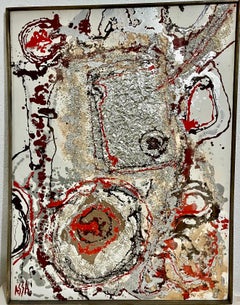
Fereydoun (Fred) Rahimi Assa (Iranian, b. 1936) "Lonely Soul in Desert" Oil and mixed media on canvas, Hand signed lower left Framed : 40-1/2"h x 30-1/2"w Sight: 40"h x 30"w Made with metallic foil or paint, the patchwork-like piece bears geometric designs and symbols. Born in Baku, Azerbaijan, Fereydoun Rahimi Assa (b. 1936) moved to Tehran at the age of three. He attended the College of Decorative Arts, Tehran in the same year group as well-known formidable masters, Hossein Zenderoudi and Massoud Arabshahi. After being awarded a travelling scholarship in 1964, Rahimi-Assa went to Israel for three months of study. Although Rahimi-Assa saw success through the several exhibitions he held in Israel, unable to secure a long-term visa and not keen to return to Iran, he found himself in the US – in no small part, thanks to the help of Eric Azari in obtaining a long-term residency visa. Fred Rahimi-Assa went first to New York and later settled in New Jersey. While in New York, he worked in some capacity at Columbia University’s Painting department where he also exhibited several times, including a solo show in 1968. In the same year, Rahimi-Assa participated in a group exhibition of Modern Persian painting, sponsored by the Centre for Iranian Studies at Columbia University – founded that year by Professor Ehsan Yarshater (Hagop Kevorkian Professor of Iranian Studies, Columbia University). After moving out of the City, to New Jersey in the 1970s, Rahimi Asa continued to exhibit with local institutes and organized art seminars in the homes of various artists. His work was included in the Middle East auction held by Sotheby's. It includes pioneering artists such as Egyptian Mahmoud Mokhtar, Moroccan modernism, Mohamed Melehi...

Category

20th Century Modern Art by Medium: Metal

Materials

Foil

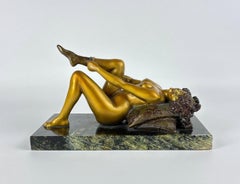
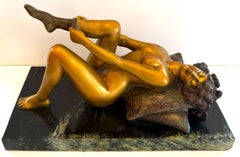
“Reclining Female Nude”

“Reclining Female Nude”

By Louis Chalon

Located in Southampton, NY

Original female nude bronze by the well known French sculptor Louis Chalon. Signed on one of the pillows. See photograph. Circa 1920. Art Deco. Condition is very good. Vienna bronz...

Category

1920s Art Deco Art by Medium: Metal

Materials

Marble, Bronze

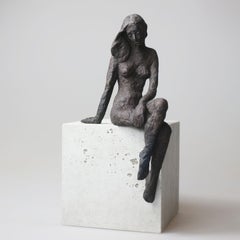
Girl Sitting X -contemporary bronze sculpture, nude female on wooden block

Girl Sitting X -contemporary bronze sculpture, nude female on wooden block

By Susanne Kraisser

Located in Schierensee, SH

"Girl Sitting X" is a bronze sculpture of a nude sitting female on a wooden block. Edition 18, signed, numbered and dated on the bottom. The wooden block can be hung on a wall (come...

Category

21st Century and Contemporary Contemporary Art by Medium: Metal

Materials

Bronze

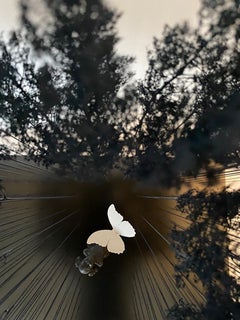
Butterfly
Butterfly

Butterfly

By Laurence Perratzi

Located in New York, NY

Laurence Perratzi is a French figurative artist exploring the body’s expression. Her work is a reflection on movement, strongly influenced by her athletic background where poise and ...

Category

2010s Contemporary Art by Medium: Metal

Materials

Bronze

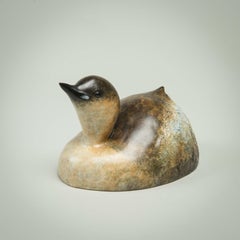
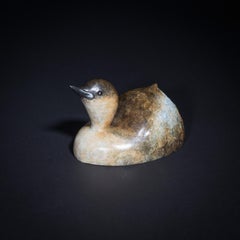
Contemporary Bronze Sculpture of a small bird on water, Dabchick or Little Grebe

Contemporary Bronze Sculpture of a small bird on water, Dabchick or Little Grebe

By Richard Smith b.1955

Located in Shrewsbury, Shropshire

Edition of 50 Dabchick by Richard Smith. A patinated bronze sculpture of a dabchick, or little grebe, distills the charm and character of this small waterbird into a form of quiet e...

Category

21st Century and Contemporary Contemporary Art by Medium: Metal

Materials

Bronze

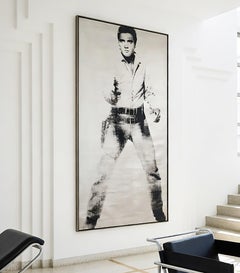
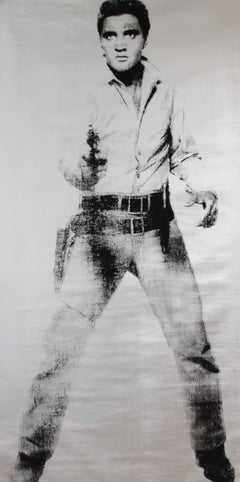
"Elvis", Denied Andy Warhol Silver & Black Pop Art Painting by Charles Lutz

"Elvis", Denied Andy Warhol Silver & Black Pop Art Painting by Charles Lutz

By Charles Lutz

Located in Brooklyn, NY

Elvis, Metallic Silver and Black Full Length Silkscreen Painting by Charles Lutz Silkscreen and silver enamel painted on vintage 1960's era linen with Artist's Denied stamp of the Andy Warhol Art Authentication Board. 82" x 40" inches 2010 Lutz's 2007 ''Warhol Denied'' series gained international attention by calling into question the importance of originality or lack thereof in the work of Andy Warhol. The authentication/denial process of the [[Andy Warhol Art Authentication Board]] was used to create value by submitting recreations of Warhol works for judgment with the full intention for the works to be formally marked "DENIED". The final product of the conceptual project being "officially denied" "Warhol" paintings authored by Lutz. Based on the full-length Elvis Presley paintings by Pop Artist Andy Warhol in 1964, this is likely one of his most iconic images, next to Campbell's Soup Cans and portraits of Jackie Kennedy, Marilyn Monroe, Liz Taylor, and Marlon Brando. This is the rarest of the Elvis works from the series, as Lutz sourced a vintage roll of 1960's primed artist linen which was used for this one Elvis. The silkscreen, like Warhol's embraced imperfections, like the slight double image printing of the Elvis image. Lutz received his BFA in Painting and Art History from Pratt Institute and studied Human Dissection and Anatomy at Columbia University, New York. Lutz's work deals with perceptions and value structures, specifically the idea of the transference of values. Lutz's most recently presented an installation of new sculptures dealing with consumerism at Frank Lloyd Wright's Fallingwater House in 2022. Lutz's 2007 Warhol Denied series received international attention calling into question the importance of originality in a work of art. The valuation process (authentication or denial) of the Andy Warhol Art Authentication Board was used by the artist to create value by submitting recreations of Warhol works for judgment, with the full intention for the works to be formally marked "DENIED" of their authenticity. The final product of this conceptual project is "Officially DENIED" "Warhol" paintings authored by Lutz. Later in 2013, Lutz went on to do one of his largest public installations to date. At the 100th Anniversary of Marcel Duchamp's groundbreaking and controversial Armory Show, Lutz was asked by the curator of Armory Focus: USA and former Director of The Andy Warhol Museum, Eric Shiner to create a site-specific installation representing the US. The installation "Babel" (based on Pieter Bruegel's famous painting) consisted of 1500 cardboard replicas of Warhol's Brillo Box (Stockholm Type) stacked 20 ft tall. All 1500 boxes were then given to the public freely, debasing the Brillo Box as an art commodity by removing its value, in addition to debasing its willing consumers. Elvis was "the greatest cultural force in the Twentieth Century. He introduced the beat to everything, and he changed everything - music, language, clothes, it's a whole new social revolution." Leonard Bernstein in: Exh. Cat., Boston, The Institute of Contemporary Art and traveling, Elvis + Marilyn 2 x Immortal, 1994-97, p. 9. Andy Warhol "quite simply changed how we all see the world around us." Kynaston McShine in: Exh. Cat., New York, Museum of Modern Art (and traveling), Andy Warhol: Retrospective, 1996, p. 13. In the summer of 1963 Elvis Presley was just twenty-eight years old but already a legend of his time. During the preceding seven years - since Heartbreak Hotel became the biggest-selling record of 1956 - he had recorded seventeen number-one singles and seven number-one albums; starred in eleven films, countless national TV appearances, tours, and live performances; earned tens of millions of dollars; and was instantly recognized across the globe. The undisputed King of Rock and Roll, Elvis was the biggest star alive: a cultural phenomenon of mythic proportions apparently no longer confined to the man alone. As the eminent composer Leonard Bernstein put it, Elvis was "the greatest cultural force in the Twentieth Century. He introduced the beat to everything, and he changed everything - music, language, clothes, it's a whole new social revolution." (Exh. Cat., Boston, The Institute of Contemporary Art (and traveling), Elvis + Marilyn 2 x Immortal, 1994, p. 9). In the summer of 1963 Andy Warhol was thirty-four years old and transforming the parameters of visual culture in America. The focus of his signature silkscreen was leveled at subjects he brilliantly perceived as the most important concerns of day to day contemporary life. By appropriating the visual vernacular of consumer culture and multiplying readymade images gleaned from newspapers, magazines and advertising, he turned a mirror onto the contradictions behind quotidian existence. Above all else he was obsessed with themes of celebrity and death, executing intensely multifaceted and complex works in series that continue to resound with universal relevance. His unprecedented practice re-presented how society viewed itself, simultaneously reinforcing and radically undermining the collective psychology of popular culture. He epitomized the tide of change that swept through the 1960s and, as Kynaston McShine has concisely stated, "He quite simply changed how we all see the world around us." (Exh. Cat., New York, Museum of Modern Art (and traveling), Andy Warhol: Retrospective, 1996, p. 13). Thus in the summer of 1963 there could not have been a more perfect alignment of artist and subject than Warhol and Elvis. Perhaps the most famous depiction of the biggest superstar by the original superstar artist, Double Elvis is a historic paradigm of Pop Art from a breath-taking moment in Art History. With devastating immediacy and efficiency, Warhol's canvas seduces our view with a stunning aesthetic and confronts our experience with a sophisticated array of thematic content. Not only is there all of Elvis, man and legend, but we are also presented with the specter of death, staring at us down the barrel of a gun; and the lone cowboy, confronting the great frontier and the American dream. The spray painted silver screen denotes the glamour and glory of cinema, the artificiality of fantasy, and the idea of a mirror that reveals our own reality back to us. At the same time, Warhol's replication of Elvis' image as a double stands as metaphor for the means and effects of mass-media and its inherent potential to manipulate and condition. These thematic strata function in simultaneous concert to deliver a work of phenomenal conceptual brilliance. The portrait of a man, the portrait of a country, and the portrait of a time, Double Elvis is an indisputable icon for our age. The source image was a publicity still for the movie Flaming Star, starring Presley as the character Pacer Burton and directed by Don Siegel in 1960. The film was originally intended as a vehicle for Marlon Brando and produced by David Weisbart, who had made James Dean's Rebel Without a Cause in 1955. It was the first of two Twentieth Century Fox productions Presley was contracted to by his manager Colonel Tom Parker, determined to make the singer a movie star. For the compulsive movie-fan Warhol, the sheer power of Elvis wielding a revolver as the reluctant gunslinger presented the zenith of subject matter: ultimate celebrity invested with the ultimate power to issue death. Warhol's Elvis is physically larger than life and wears the expression that catapulted him into a million hearts: inexplicably and all at once fearful and resolute; vulnerable and predatory; innocent and explicit. It is the look of David Halberstam's observation that "Elvis Presley was an American original, the rebel as mother's boy, alternately sweet and sullen, ready on demand to be either respectable or rebellious." (Exh. Cat., Boston, Op. Cit.). Indeed, amidst Warhol's art there is only one other subject whose character so ethereally defies categorization and who so acutely conflated total fame with the inevitability of mortality. In Warhol's work, only Elvis and Marilyn harness a pictorial magnetism of mythic proportions. With Marilyn Monroe, whom Warhol depicted immediately after her premature death in August 1962, he discovered a memento mori to unite the obsessions driving his career: glamour, beauty, fame, and death. As a star of the silver screen and the definitive international sex symbol, Marilyn epitomized the unattainable essence of superstardom that Warhol craved. Just as there was no question in 1963, there remains still none today that the male equivalent to Marilyn is Elvis. However, despite his famous 1968 adage, "If you want to know all about Andy Warhol, just look at the surface of my paintings" Warhol's fascination held purpose far beyond mere idolization. As Rainer Crone explained in 1970, Warhol was interested in movie stars above all else because they were "people who could justifiably be seen as the nearest thing to representatives of mass culture." (Rainer Crone, Andy Warhol, New York, 1970, p. 22). Warhol was singularly drawn to the idols of Elvis and Marilyn, as he was to Marlon Brando and Liz Taylor, because he implicitly understood the concurrence between the projection of their image and the projection of their brand. Some years after the present work he wrote, "In the early days of film, fans used to idolize a whole star - they would take one star and love everything about that star...So you should always have a product that's not just 'you.' An actress should count up her plays and movies and a model should count up her photographs and a writer should count up his words and an artist should count up his pictures so you always know exactly what you're worth, and you don't get stuck thinking your product is you and your fame, and your aura." (Andy Warhol, The Philosophy of Andy Warhol (From A to B and Back Again), San Diego, New York and London, 1977, p. 86). The film stars of the late 1950s and early 1960s that most obsessed Warhol embodied tectonic shifts in wider cultural and societal values. In 1971 John Coplans argued that Warhol was transfixed by the subject of Elvis, and to a lesser degree by Marlon Brando and James Dean, because they were "authentically creative, and not merely products of Hollywood's fantasy or commercialism. All three had originative lives, and therefore are strong personalities; all three raised - at one level or another - important questions as to the quality of life in America and the nature of its freedoms. Implicit in their attitude is a condemnation of society and its ways; they project an image of the necessity for the individual to search for his own future, not passively, but aggressively, with commitment and passion." (John Coplans, "Andy Warhol and Elvis Presley," Studio International, vol. 181, no. 930, February 1971, pp. 51-52). However, while Warhol unquestionably adored these idols as transformative heralds, the suggestion that his paintings of Elvis are uncritical of a generated public image issued for mass consumption fails to appreciate the acuity of his specific re-presentation of the King. As with Marilyn, Liz and Marlon, Warhol instinctively understood the Elvis brand as an industrialized construct, designed for mass consumption like a Coca-Cola bottle or Campbell's Soup Can, and radically revealed it as a precisely composed non-reality. Of course Elvis offered Warhol the biggest brand of all, and he accentuates this by choosing a manifestly contrived version of Elvis-the-film-star, rather than the raw genius of Elvis as performing Rock n' Roll pioneer. A few months prior to the present work he had silkscreened Elvis' brooding visage in a small cycle of works based on a simple headshot, including Red Elvis, but the absence of context in these works minimizes the critical potency that is so present in Double Elvis. With Double Elvis we are confronted by a figure so familiar to us, yet playing a role relating to violence and death that is entirely at odds with the associations entrenched with the singer's renowned love songs. Although we may think this version of Elvis makes sense, it is the overwhelming power of the totemic cipher of the Elvis legend that means we might not even question why he is pointing a gun rather than a guitar. Thus Warhol interrogates the limits of the popular visual vernacular, posing vital questions of collective perception and cognition in contemporary society. The notion that this self-determinedly iconic painting shows an artificial paradigm is compounded by Warhol's enlistment of a reflective metallic surface, a treatment he reserved for his most important portraits of Elvis, Marilyn, Marlon and Liz. Here the synthetic chemical silver paint becomes allegory for the manufacture of the Elvis product, and directly anticipates the artist's 1968 statement: "Everything is sort of artificial. I don't know where the artificial stops and the real starts. The artificial fascinates me, the bright and shiny..." (Artist quoted in Exh. Cat., Stockholm, Moderna Museet and traveling, Andy Warhol, 1968, n.p.). At the same time, the shiny silver paint of Double Elvis unquestionably denotes the glamour of the silver screen and the attractive fantasies of cinema. At exactly this time in the summer of 1963 Warhol bought his first movie camera and produced his first films such as Sleep, Kiss and Tarzan and Jane Regained. Although the absence of plot or narrative convention in these movies was a purposely anti-Hollywood gesture, the unattainability of classic movie stardom still held profound allure and resonance for Warhol. He remained a celebrity and film fanatic, and it was exactly this addiction that so qualifies his sensational critique of the industry machinations behind the stars he adored. Double Elvis was executed less than eighteen months after he had created 32 Campbell's Soup Cans for his immortal show at the Ferus Gallery, Los Angeles in July and August 1962, and which is famously housed in the Museum of Modern Art, New York. In the intervening period he had produced the series Dollar Bills, Coca-Cola Bottles, Suicides, Disasters, and Silver Electric Chairs, all in addition to the portrait cycles of Marilyn and Liz. This explosive outpouring of astonishing artistic invention stands as definitive testament to Warhol's aptitude to seize the most potent images of his time. He recognized that not only the product itself, but also the means of consumption - in this case society's abandoned deification of Elvis - was symptomatic of a new mode of existence. As Heiner Bastian has precisely summated: "the aura of utterly affirmative idolization already stands as a stereotype of a 'consumer-goods style' expression of an American way of life and of the mass-media culture of a nation." (Exh. Cat., Berlin, Neue Nationalgalerie (and traveling), Andy Warhol: Retrospective, 2001, p. 28). For Warhol, the act of image replication and multiplication anaesthetized the effect of the subject, and while he had undermined the potency of wealth in 200 One Dollar Bills, and cheated the terror of death by electric chair in Silver Disaster # 6, the proliferation of Elvis here emasculates a prefabricated version of character authenticity. Here the cinematic quality of variety within unity is apparent in the degrees to which Presley's arm and gun become less visible to the left of the canvas. The sense of movement is further enhanced by a sense of receding depth as the viewer is presented with the ghost like repetition of the figure in the left of the canvas, a 'jump effect' in the screening process that would be replicated in the multiple Elvis paintings. The seriality of the image heightens the sense of a moving image, displayed for us like the unwinding of a reel of film. Elvis was central to Warhol's legendary solo exhibition organized by Irving Blum at the Ferus Gallery in the Fall of 1963 - the show having been conceived around the Elvis paintings since at least May of that year. A well-known installation photograph shows the present work prominently presented among the constant reel of canvases, designed to fill the space as a filmic diorama. While the Elvis canvases...

Category

21st Century and Contemporary Pop Art Art by Medium: Metal
Materials

Enamel

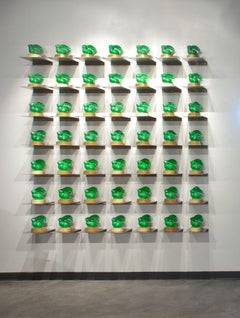
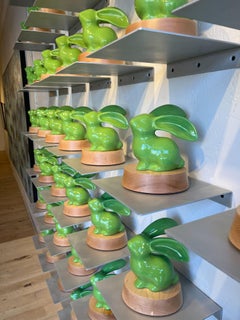
One of a Kind (souvenirs)

One of a Kind (souvenirs)

By Tim Berg & Rebekah Myers

Located in Bozeman, MT

Timothy Berg and Rebekah Myers are a studio art collaborative based in Claremont, California. Berg and Myers have participated in multiple solo exhibitions including On the bright side... at the Falconer Gallery at Grinnell College (2016); Site Unseen at the American Museum of Ceramic Art in Pomona, CA (2014); Honest to Goodness at Santa Barbara City College (2014); An embarrassment of riches at Dean Project Gallery in New York, NY (2013); and As Luck Would Have It at Nääs Konsthantverk Galleri in Göteborg, Sweden (2009). Berg and Myers have also participated in numerous group exhibitions in the US, Mexico, South Korea, Qatar and Kuwait. Their work is included in many private and public collections including The Betty Woodman Collection at the University of Colorado...

Category

2010s Contemporary Art by Medium: Metal

Materials

Metal

Apple Dancer
Apple Dancer

Apple Dancer

By Jean-Léon Gérôme

Located in PARIS, FR

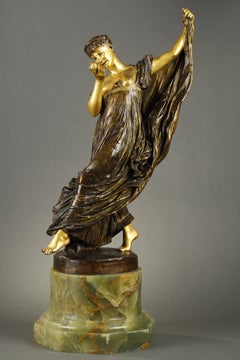
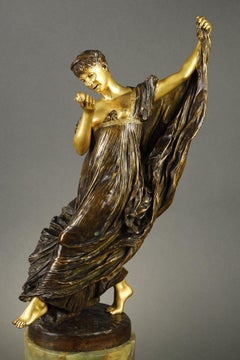
Apple Dancer by Jean-Léon GEROME (1824-1904) Bronze sculpture with a dual patina, brown and gilded signed on the base "JL. GEROME" cast by "Siot-Decauville Fondeur Paris" (foundry s...

Category

1890s Art Nouveau Art by Medium: Metal

Materials

Bronze

Hebe with Zeus mythological nude by Eduard Buchler 19th Century

Hebe with Zeus mythological nude by Eduard Buchler 19th Century

Located in Gavere, BE

Hebe with Zeus mythological nude by Eduard Buchler 19th Century Hebe is the daughter of Zeus and his sister-wife Hera. Pindar in Nemean Ode 10 refers to her as the most beautiful of...

Category

1880s Pre-Raphaelite Art by Medium: Metal

Materials

Gold Leaf

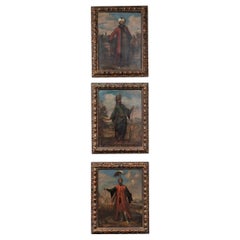
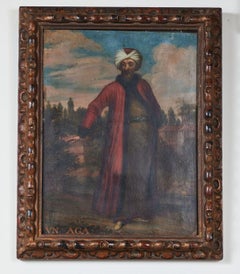
18th Century Paintings of Ottoman Empire Figures

18th Century Paintings of Ottoman Empire Figures

Located in Los Angeles, CA

A remarkable trio of 18th century, oil-on-copper paintings of, Ottoman Empire figures in colorful robes and accouterments, posing in European style landscapes. Each figure is labeled...

Category

1770s Art by Medium: Metal

Materials

Copper

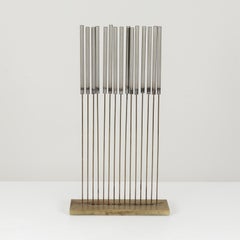
Sonambient
Sonambient

Sonambient

By Harry Bertoia

Located in Toronto, Ontario

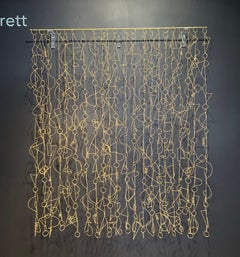
Italian-born American artist Harry Bertoia (1915-1978), is a noted sculptor and modern furniture designer. He is arguably one of the most successful creative forces hired by Florence...

Category

1970s Modern Art by Medium: Metal

Materials

Brass, Copper

Piccola Kore

Piccola Kore

By Wladimiro POLITANO

Located in Atlanta, GA

Wladimiro Politano (February 19, 1940 Lago (Cosenza), Italy) is an Italian sculptor, painter and drawer. Politano's work has been exhibited in the ...

Category

21st Century and Contemporary Modern Art by Medium: Metal

Materials

Metal

Argentine Modernist Brutalist Abstract Bronze Sculpture Jewish Latin American

Argentine Modernist Brutalist Abstract Bronze Sculpture Jewish Latin American

By Naum Knop

Located in Surfside, FL

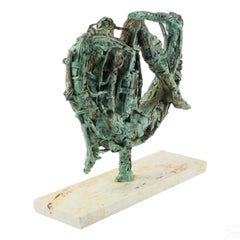
Naum Knop (Ukrainian-Argentinean, 1917-1993) Modernist Brutalist bronze figural sculpture with heavy verdigris green finish. Melted forms in the shape of an abstract pretzel like twist. Affixed to white stone plinth. Artist signature, "NK" side of base. Good condition, shows rich green patina and aged oxidation. Measures approximately 17.5 in. x 19.5 in. x 6.5 in. Naum Knop, Argentine sculptor, was born in 1917 in Buenos Aires, into a Jewish family of Russian origin from Ukraine. His childhood was spent in the neighborhood of La Paternal where his father had a carpentry workshop, a space in which he made contact for the first time with the technique of wood carving. After finishing elementary school, he worked with the teacher Luis Fernández and soon after he dedicated himself to furniture design. Around 1935, he entered the Manuel Belgrano School of Fine Arts . Between 1941 and 1942 he attended the course for graduates taught by Alberto Lagos and Alfredo Bigatti at the National School of Fine Arts and continued his training between 1942-1945 at the Ernesto de la Cárcova High School with Soto Avedaño, Carlos de la Cárcova and José Fioravanti. At this time he put his works in dialogue with other young artists such as Libero Badii and Aurelio Macchi . Around 1947 he made his study trip abroad. He goes to California, United States, where he enters the Art Institute of Los Angeles. At the same time visit museums and galleries. In January 1948 he organized his first exhibition abroad, held at the Hall of Arts in Beverly Hills in Los Angeles. During this period he toured Chicago and then New York. That year he traveled to Europe; his itinerary includes France, Italy, Switzerland and England. As a result, he came into contact with the work of Henry Moore, Hans Jean Arp, Jacques Lipchitz, Constantin Brancusi, Umberto Boccioni, Henry Laurens, Ossip Zadkine. Artists who have an impact on the young Knop and whom he honors in his subsequent production. He returned to Argentina in 1949 and installed his workshop where he worked on ornamental carving and on pieces in which he oscillated between a synthetic figuration and abstraction. In 1956 he began his successful participation in salons , obtaining numerous awards at the national and municipal level. In 1959 he participated in the shipment to the 5th São Paulo Biennial and since then, to the success achieved at the local level, the multiple exhibitions carried out in the international field have been added. The exhibitions in Tel Aviv , Jerusalem and Rome (1966) stand out; Dusseldorf (1977); Los Angeles and Palm Spring (1981); New York (1986), San Pablo and Los Angeles(1989). During this period, his work matured, while he began to experiment with the direct wax technique, obtaining textured surfaces similar to welds that gave it a strong abstract expressionist feature. In parallel to his personal production and to the small models, the artist receives private and public commissions for which he works on large-scale sculptures and murals. Around 1967, the architect Mario R. Álvarez summons him to participate in a closed competition for the creation of a work to be located in the General San Martín Cultural Center . Libero Badii and Enio Iommi participate with the artist ; the bronze Reclining Figure Knop is chosen. Among the large-scale monuments it is worth remembering the piece Los tres soles temporarily located in Recoleta in 1984 and later installed in Maryland, United States; as well as Seated Figure (Reminiscence of Michelangelo) located in the shield of a private building in 1970. To these are added the numerous murals in which he experiments with various materials and techniques such as casting in bronze, openwork and reliefs in wood and work in cement. He was included in the The 1962 International Prize for Sculpture the jury included Argan, Romero Brest and James Johnson Sweeney the former director of the Solomon R. Guggenheim Museum in New York. The participants included Louise Nevelson and John Chamberlain for the United States; Lygia Clark for Brazil; Pietro Consagra, Lucio Fontana, Nino Franchina, and Gió Pomodoro for Italy; Pablo Serrano for Spain; and Eduardo Paolozzi, William Turnbull, and Kenneth Armitage for England. Gyula Kosice, Noemí Gerstein, Julio Gero, Naum Knop, Aldo Paparella, Enrique Romano, Eduardo Sabelli, and Luis Alberto...

Category

Mid-20th Century Abstract Art by Medium: Metal
Materials

Stone, Bronze

The Path - Abstract Geometric Form, Hand Painted Welded Steel Wall Sculpture

The Path - Abstract Geometric Form, Hand Painted Welded Steel Wall Sculpture

By Chris Hill

Located in Chicago, IL

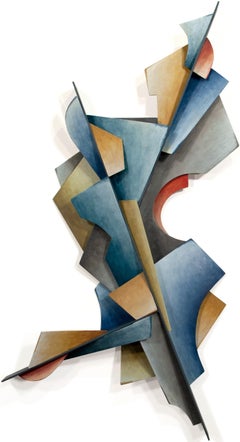
This dynamic wall sculpture is created from sheets of steel, welded together in an abstract geometric pattern. Muted shades of blue, grey, purple and green dominate and are balanced by softer hues. While the work adheres to a rigid, rational geometry, this sculptures suggest lyrical movement, apparent weightlessness and improvisation as the title suggests. Chris Hill The Path welded steel, acrylic paint 28h x 15.75w x 2d in 71.12h x 40.01w x 5.08d cm CHI018 Chris Hill is a Santa Fe based sculptor. Chris was born in Port Arthur...

Category

21st Century and Contemporary Abstract Geometric Art by Medium: Metal
Materials

Steel

Metal art for sale on 1stDibs.
Find a wide variety of authentic Metal art available on 1stDibs. While artists have worked in this medium across a range of time periods, art made with this material during the 21st Century is especially popular. If you’re looking to add art created with this material to introduce a provocative pop of color and texture to an otherwise neutral space in your home, the works available on 1stDibs include elements of blue, purple, red, orange and other colors. There are many well-known artists whose body of work includes ceramic sculptures. Popular artists on 1stDibs associated with pieces like this include Stefan Traloc, Peter Mendelson, Rebecca Skinner, and Stefanie Schneider. Frequently made by artists working in the Contemporary, Abstract, all of these pieces for sale are unique and many will draw the attention of guests in your home. Not every interior allows for large Metal art, so small editions measuring 0.01 inches across are also available