19th Century More Art

to
88
387
70
50
17
42
Overall Width
to
Overall Height
to
146
4,296
9,703
82
64
245
280
129
263
334
357
431
1,174
72
137
63
18
5
3
3
2
2
1
1
329
162
16
26
10
8
6
6
5
4
4
4
3
3
3
3
2
2
2
2
2
1
1
177
87
79
63
63
69
18
9
8
3
21
2
332
174
Period: 19th Century
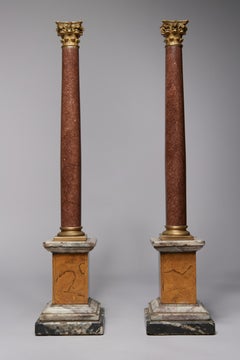
Pair of Porphyry Marble Columns with Gilt Bronze Capitals, 19th Century

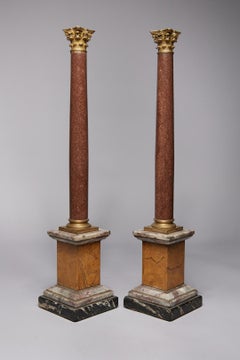
Pair of Porphyry Marble Columns with Gilt Bronze Capitals, 19th Century

Located in Beachwood, OH

Pair of Porphyry Marble Columns with Gilt Bronze Capitals, 19th Century Porphyry marble & gilt bronze 20 x 4.25 x 4.25 inches Porphyry is an igneous rock, not marble, known for its...

Category

19th Century More Art

Materials

Marble, Bronze

An Ancient Style Greek Black Figure Calyx Krater, 19th/20th Century

An Ancient Style Greek Black Figure Calyx Krater, 19th/20th Century

Located in Beachwood, OH

Ancient Style Greek Black Figure Calyx Krater, 19th/20th Century Terracotta 17 x 14.5 inches A calyx krater is a type of ancient Greek pottery, specifically a type of krater (a bowl...

Category

19th Century More Art

Materials

Terracotta

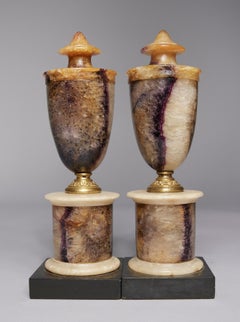
Pair of English Regency Blue John (Derbyshire Spar) Urns, 19th Century

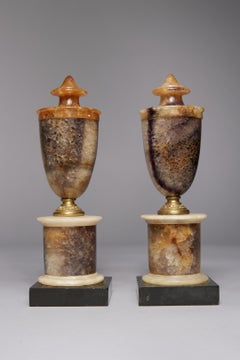
Pair of English Regency Blue John (Derbyshire Spar) Urns, 19th Century

Located in Beachwood, OH

Pair of English Regency Blue John (Derbyshire Spar) Urns, 19th Century 9.5 x 3 x 3 inches Obtained from the Derbyshire England, Blue John is a semi-precious mineral, a rare form of ...

Category

19th Century More Art

Materials

Marble

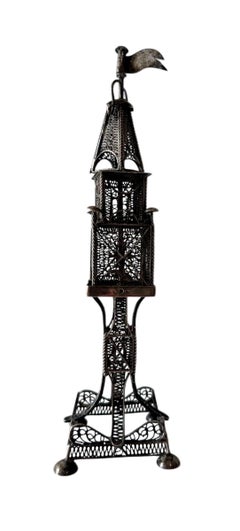
Rare 19th C Antique Silver Filigree Judaica Besamim Spice Tower Austro Hungarian

Rare 19th C Antique Silver Filigree Judaica Besamim Spice Tower Austro Hungarian

Located in Surfside, FL

An exceptional, fine and impressive antique Austro-Hungarian silver spice tower; This beautiful box is fitted with a hinged door and is fully hallmarked The square shaped foot is or...

Category

19th Century More Art

Materials

Silver

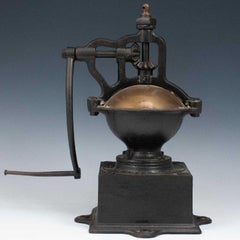
Antique, 19th C. Peugeot Frères Brevetés French Coffee Grinder Table Sculpture

Antique, 19th C. Peugeot Frères Brevetés French Coffee Grinder Table Sculpture

Located in Surfside, FL

This is being sold as a piece of (functional?) decorator table sculpture for a kitchen or restaurant. I do not know if or how it works. the wheel and gears turn. It might be missing a cover on the handle. It is a lovely antique piece. Made in France. A halfcentury before they produced their first car, the Peugeot brothers were making coffee grinders, continuing to do so for over 100years. In 1840 the Peugeots produced their first moulin a cafe out of a combination of metal and wood. The beans were inserted into the metal hopper up top; metal gears were turned by a woodenknob-capped metal...

Category

Modern 19th Century More Art

Materials

Metal, Brass

Camel Back - Summer
Camel Back - Summer

Camel Back - Summer

Located in Milford, NH

A fine Vermont landscape oil painting by American artist Charles Louis Heyde (1822-1892). A prominent New England landscape painter, Charles Heyde lived in Vermont from the early 185...

Category

Hudson River School 19th Century More Art

Materials

Canvas, Oil

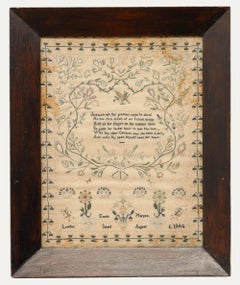
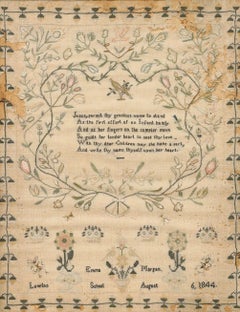
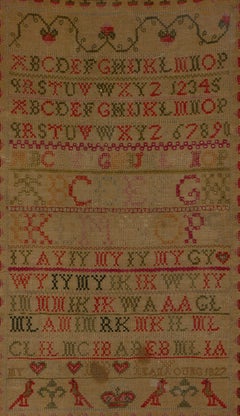
Emma Morgan  - 1844 Embroidery, Sampler

Emma Morgan - 1844 Embroidery, Sampler

Located in Corsham, GB

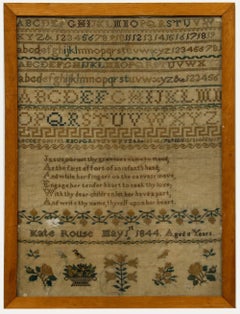
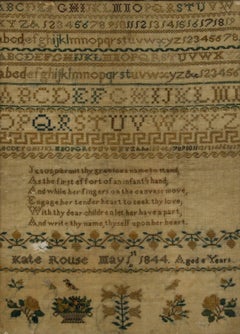
A charming sampler by Erin Morgan, age six, of Lowton School. Dated 1844. Presented in an oak frame. On cotton.

Category

19th Century More Art

Materials

Tapestry

English Brass Bound Mahogany Lap Desk, Late 19th Century

English Brass Bound Mahogany Lap Desk, Late 19th Century

Located in Beachwood, OH

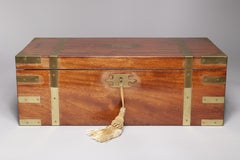
English Brass Bound Mahogany Lap Desk, Late 19th Century 20 inches wide This is an elegant English brass-bound mahogany lap desk, likely dating from the late 19th to early 20th cent...

Category

19th Century More Art

Materials

Brass

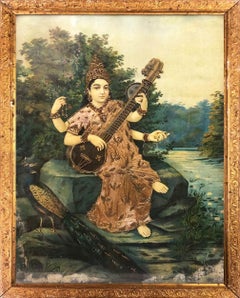
Saraswati, Figurative, Mythology by Raja Ravi Verma "In Stock"

Saraswati, Figurative, Mythology by Raja Ravi Verma "In Stock"

Located in Kolkata, West Bengal

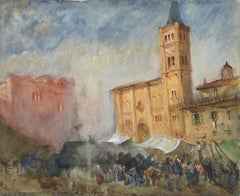
Raja Ravi Varma - Laxmi, 19 x 14 inches Oleograph with embellishments, Circa (Unframed & Delivered) Raja Ravi Varma (29 April 1848 – 2 October 1906) was an Indian painter and artist...
Category

Modern 19th Century More Art

Materials

Paper, Mixed Media

Late 19th Century Bird's Eye Maple Picture Frame with Cushion Profile

Late 19th Century Bird's Eye Maple Picture Frame with Cushion Profile

Located in Corsham, GB

A wonderful late 19th century bird's eye maple frame with cushion profile. Complete with glazing and a sturdy brass hanger. Measurements for the frame: Window 29cm X 22cm. Rebate 31....

Category

19th Century More Art

Framed Early 19th Century Georgian Needlework Sampler

Framed Early 19th Century Georgian Needlework Sampler

Located in Corsham, GB

A colourful Georgian sampler detailing cases of the alphabet, figures and trees. Created by Alice Fisher, aged 9, in 1815. Presented in a rustic wooden frame behind glass. Image size...

Category

19th Century More Art

Materials

Tapestry

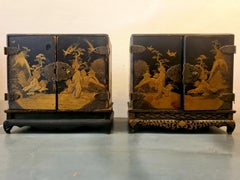
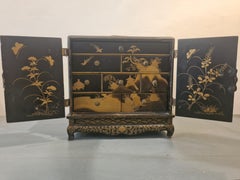
Pair Japanese Lacquered Maki-e Meiji Period Cabinets 漆器 蒔絵 塗物 漆塗

Pair Japanese Lacquered Maki-e Meiji Period Cabinets 漆器 蒔絵 塗物 漆塗

Located in Cotignac, FR

A pair of Meiji period, late 19th Century Lacquerware (漆器, shikki) miniature cabinets on stands. The decorative panels are of very fine quality. The cabinets are a 'true pair' that i...

Category

Edo 19th Century More Art

Materials

Wood, Lacquer

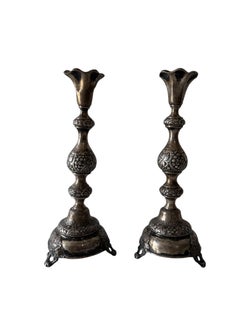
Rare 19th C. Antique Silver Judaica Shabbat Candlesticks Polish Russian, Szekman

Rare 19th C. Antique Silver Judaica Shabbat Candlesticks Polish Russian, Szekman

Located in Surfside, FL

An exceptional, fine and impressive antique Austro-Hungarian Antique Judaica Pair of Shabbos hallmarked silver candlesticks, 12" tall, 16 troy Dated 1895 Viennese or Austro Hungaria...

Category

Rococo 19th Century More Art

Materials

Silver

Two Antique British Colonial Sailors Valentines

Two Antique British Colonial Sailors Valentines

Located in Palm Beach, FL

Two enchanting 19th century sailors valentine having a rare form hand decorated with exotic seashells, one around an image of a man and woman in a rowboat and the other around an ima...

Category

Folk Art 19th Century More Art

Materials

Organic Material

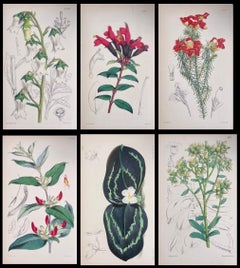
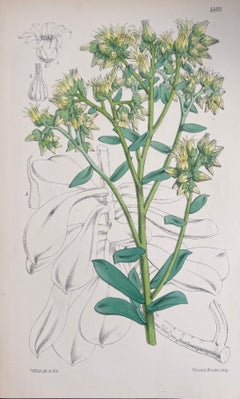
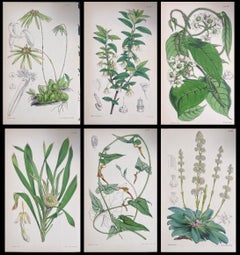
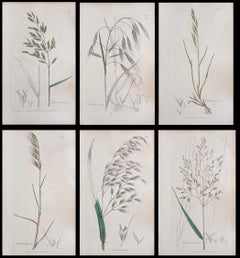
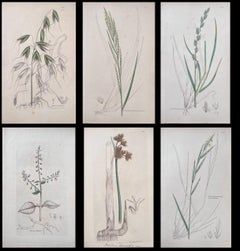
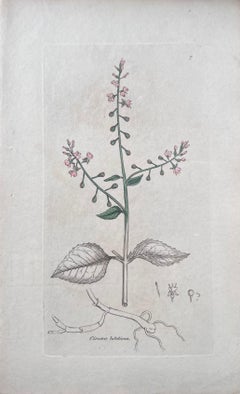
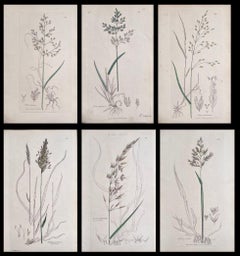
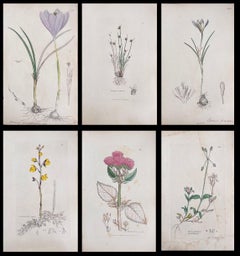
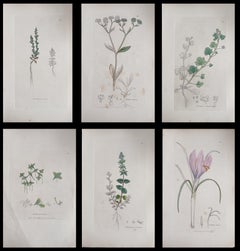
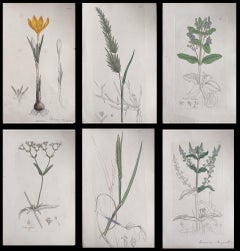
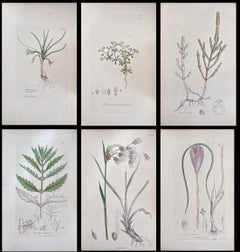
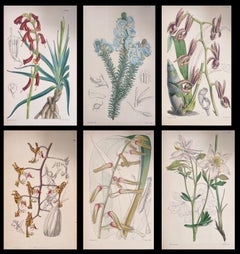
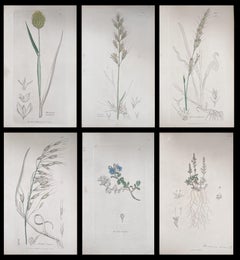
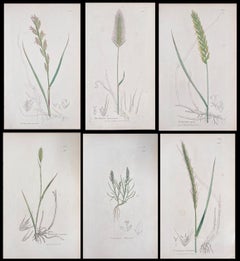
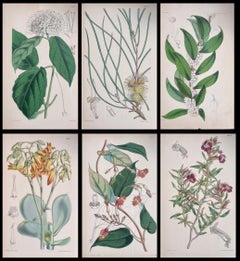
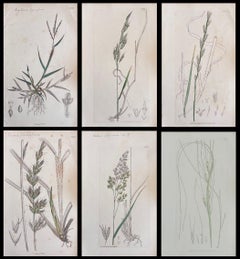
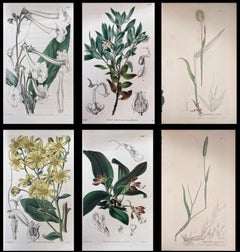
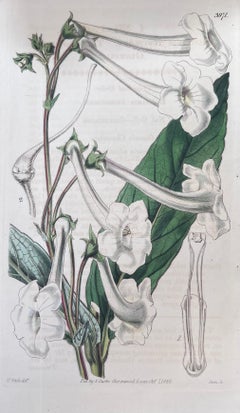
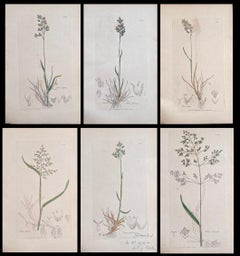
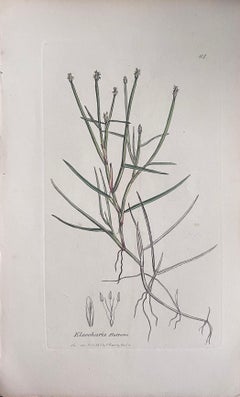
Set of Six Fine Antique British Botanical Paintings, circa 1900's

Set of Six Fine Antique British Botanical Paintings, circa 1900's

Located in Cirencester, Gloucestershire

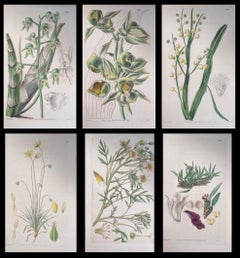
Set of Six Hand Coloured Botanical Prints/Lithographs and Engravings Published by G. Ridgway, S. Curtis, W. Baxter and W. Fitch Early Mid 19th Century Size: image: 8.5 x 5.5 inche...

Category

Art Deco 19th Century More Art

Materials

Color

Vermont Hillside Farm

Vermont Hillside Farm

By James Hope

Located in Milford, NH

A wonderfully detailed New England landscape by Scottish American artist James Hope (1818-1892). Hope was born in Drygrange, Roxboroughshire, Scotland. After the death of his mother,...

Category

Hudson River School 19th Century More Art

Materials

Canvas, Oil

Scaled model of Chinese Ceramic workshop with 17 polychromed figures.End 19th C

Scaled model of Chinese Ceramic workshop with 17 polychromed figures.End 19th C

Located in brussel, BE

The Diorama was in a private collection for more than 20 years and is said to have been exposed at the China Exposition 1902 in Copenhagen.This group of Chinese polychromed-decorate...

Category

19th Century More Art

Materials

Terracotta

Laxmi, Figurative, Mythology by Raja Ravi Verma "In Stock"

Laxmi, Figurative, Mythology by Raja Ravi Verma "In Stock"

Located in Kolkata, West Bengal

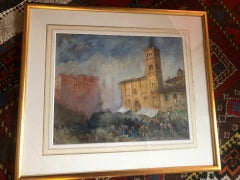
Raja Ravi Varma - Laxmi, 19 x 14 inches Oleograph with embellishments, Circa (Unframed & Delivered) Raja Ravi Varma (29 April 1848 – 2 October 1906) was an Indian painter and artist...
Category

Modern 19th Century More Art
Materials

Paper, Mixed Media

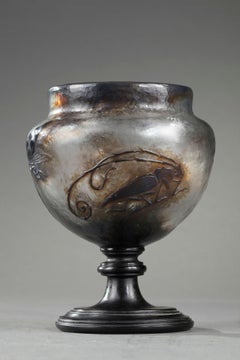
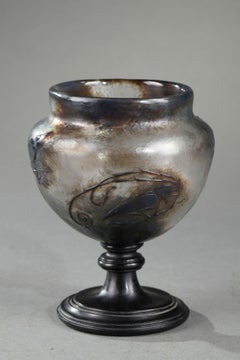
Flowery Cristallerie Vase

Flowery Cristallerie Vase

By Émile Gallé

Located in PARIS, FR

Flowery Cristallerie Vase by Emile GALLE (1846-1904) Vase called "Cristallerie de Gallé" Vase with rounded body and flaring neck, ornated with stylized flowers and foliage. Smoked ...

Category

Art Nouveau 19th Century More Art

Materials

Glass

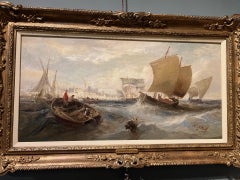
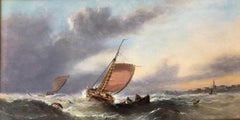
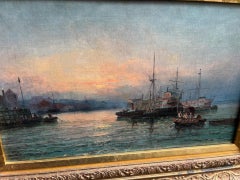
Victorian Marine Seascape Large Oil Painting of Pure Seas and Shimmering Light

Victorian Marine Seascape Large Oil Painting of Pure Seas and Shimmering Light

Located in ludlow, GB

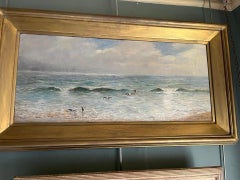
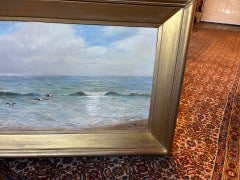
Victorian Marine Seascape Large Oil Painting of Pure Seas and Shimmering Light by the absolute Master of Pure Seas Paintings. This is a beautiful, ethereal work by Henry Moore (THE Henry Moore and not the famous Sculptor!). The seascape we have for sale is an exquisite example of Moore’s sea-painting (he began painting the sea in the late 1860s), this, produced at the height of his fame and talents, it was painted in 1891. In it he captures the rolling waves as they catch the light and conveys a cool beauty within this deceptively simple composition. There may be a hint of a vessel in the background but maybe it is a trick of the light!! The seagulls dance in the foreground. Moore manages to straddle two enormous art...

Category

Victorian 19th Century More Art

Materials

Oil

Florentine singer / - The Renaissance of the Renaissance -

Florentine singer / - The Renaissance of the Renaissance -

By Paul Dubois

Located in Berlin, DE

Paul Dubois (1829 Nogent-sur-Seine - 1905 Paris), Florentine singer, 1865. Light brown patinated bronze with cast round plinth mounted on a square marble base (3.5 cm high). Total height 53 cm. Bronze dimensions: 49.5 cm (height) x 20 cm (length) x 10 cm (width), weight 5.6 kg. Inscribed on the plinth "P.[aul] DUBOIS", dated "1865", with the foundry's mark "F. BARBEDIENNE FONDEUR" and the signet "REDUCTION MECANIQUE A. COLLAS". - Patina very occasionally darkened, lute with loss of one tuning peg, otherwise in excellent condition. - The renaissance of the Renaissance - The bronze is a precisely executed and masterfully cast contemporary reduction of Paul Dubois 155 cm tall masterpiece "Florentine Singer", which is exhibited in the Musée d'Orsay and for which the artist was awarded the Medal of Honor at the Paris Salon in 1865. The work acted as a beacon, and was followed by a plethora of depictions of juveniles. Inspired by Donatello and Luca della Robbia, but also by painters such as Piero della Francesca, Benozzo Gozzoli, and Pinturicchio, the "Florentine Singer" is not an epigonal work that pays homage to a vanished era, but a successful attempt to draw vitality from the art of the past and thus give it new life. The effect of vitality is the core of Italian Renaissance art theory. In order to fulfill itself as art, art had to appear like nature. This naturalism also characterizes the "Florentine Singer". The young man appears to have been taken from life, which is reinforced by the momentary nature of his action. He has just struck a now fading chord. In addition, the natural appearance is enhanced by the detailed shaping of the figurative details, such as the laces with the slightly curved leather of the shoes, the belt buckle, or the ornamentation on the body of the lute. Even the fingernails are clearly defined. Unlike the Renaissance, however, the effect of liveliness here is not based on the "discovery" of nature and the human body, but primarily on the rediscovery of the art of the Quattrocento. The liveliness of the artwork is therefore at the same time a revitalization of this art, so that we can speak of a Renaissance of the Renaissance, just as the Pre-Raphaelites in England at the same time transferred the Quattrocento to contemporary art. Dubois takes on the most difficult of all subjects, the depiction of singing through silent sculpture. He was preceded in this by Luca della Robbia and Donatello with their pulpits of singers created in the 1430s in the Museo dell'Opera del Duomo in Florence. Compared to these works, the physiognomy of Dubois singer is far less animated, yet he also depicts singing in a convincing manner. He uses the whole body. He takes the ancient contrapposto, which was essential to Renaissance sculpture, and transforms the standing leg-playing posture into a late medieval S-swing, giving the body an elegant beauty and at the same time setting it in melodic motion. In the equally elegant finger position, the music is expressed in a much more literal way with the beating of the lute. Finally, the musicality of the sculpture culminates in the face with the mouth open to sing. Through the act of singing, which is a great challenge to the artistic will to depict perfect beauty, the gracefulness of the classical face is not diminished, but enhanced. Starting from the face with the singing mouth and the gaze absorbed by the sounds, the inner vitality spreads, giving the bronze sculpture an intense aura, enhanced by the music. Dubois transfers the beauty of the Renaissance to the musical, sublimating the visible sculpture to the invisible of music. He took up the challenge of transcending the Renaissance with the Renaissance, thus responding to the Querelle des Anciens et des Modernes, which arose at the end of the 17th century around the French Academy and remained virulent into the 19th century, in which antiquity was regarded either as an unattainable ideal or as a standard to be surpassed. With his work, Dubois proved that the Renaissance, which had championed the art of the ancients, could lead to a new renaissance of art. About the artist Paul Dubois' great-uncle was the famous French Baroque sculptor Jean-Baptiste Pigalle, in whose footsteps the talented great-nephew followed. When he debuted at the Paris Salon in 1858, he signed his work "Dubois-Pigalle". At his father's request, however, he first studied law before devoting himself to sculpture under the tutelage of François Christophe Armand Toussaint in 1856 and entering the École des Beaux-Arts in 1858. From 1859 to 1863, he lived in Rome and traveled to Naples and Florence. Inspired by Florentine art of the quattrocento, Dubois initiated a school-forming neo-Florentine style that combined the elegantly simple forms of youthful grace with a precise wealth of detail.Two purchases by the French state (“envois de Rome”) were made during his stay in Rome, which brought him recognition in Paris. After his return there, he quickly became an internationally sought-after artist. Dubois was also active as a creator of monuments. His most famous work is the equestrian statue of Joan of Arc (1896) on the forecourt of Reims Cathedral. He was also a sought-after portraitist who produced around 50 busts and - Dubois was also a passionate painter - around 100 portraits in oil. From 1873 to 1878 he was curator of the Museum du Luxembourg, in 1876 he became a member of the Institut de France and from 1878 to 1905 he was director of the École des Beaux-Arts. In 1865, Dubois was awarded the Paris Salon Medal of Honor for his “Florentine Singer”. In 1867 he became Chevalier, in 1874 Officier, in 1886 Commandeur of the Légion d'honneur, which awarded Dubois the Grande Croix in 1896. Selected Bibliography Stole, Elmar: Paul Dubois. In: Saur. Allgemeines Künstlerlexikon, vol. 30, Munich - Leipzig 2001, pp. 677-678. GERMAN VERSION Paul Dubois (1829 Nogent-sur-Seine - 1905 Paris), Florentinischer Sänger, 1865. Hellbraun patinierte Bronze mit gegossener runder Plinthe auf quadratischem Marmorsockel montiert (3,5 cm Höhe). Gesamthöhe 53 cm. Maße der Bronze: 49,5 cm (Höhe) x 20 cm (Länge) x 10 cm (Breite), Gewicht 5,6 kg. Auf der Plinthe mit „P.[aul] DUBOIS“ bezeichnet, auf „1865“ datiert, mit dem Gießereistempel „F. BARBEDIENNE FONDEUR“ und dem Signet „REDUCTION MECANIQUE A. COLLAS“ versehen. - Patina sehr vereinzelt nachgedunkelt, Laute mit Verlust eines Stimmwirbels, ansonsten ausgezeichnet erhalten. - Die Renaissance...

Category

Realist 19th Century More Art

Materials

Bronze

Wedding Chest of Corinne de Blaru, French 19th Century Folk Art Painted

Wedding Chest of Corinne de Blaru, French 19th Century Folk Art Painted

Located in Cotignac, FR

Vintage French folk art, Early 19th century, painted wood wedding, hope or bridal chest, for the wedding of Charles Herbert Frederic and Corinne de Blaru in 1848. The names and dates...

Category

Folk Art 19th Century More Art

Materials

Iron

Autumn Landscape
Autumn Landscape

Autumn Landscape

By William Louis Sonntag Sr. 1

Located in Milford, NH

A wonderful Autumn landscape likely of the Hudson River Valley by the revered American artist William Louis Sonntag (1822-1900). Sonntag was born near Pittsburgh, PA and moved to Cincinnati, OH in the 1840’s to study art. He studied for a brief time with G. Frankenstein at the Cincinnati Academy of Fine Art and his idealized paintings of American wilderness and visionary paintings of imagined European ruins were commercially successful. He traveled twice to Europe in the 1850’s to improve his skills, eventually settling in New York City. He joined the National Academy of Design, where he exhibited his works for forty years. His mature works identify him with the Hudson River School of landscape painters. A romantic and naturalistic painter of his surroundings, Sonntag also created idealized paintings of Roman ruins, recalling his European trips of earlier years. Sonntag was an Associate (1860) and Academician (1861) at the National Academy of Design, and a member of the American Watercolor Society, Artists Fund Society, and the American Art Union...

Category

Hudson River School 19th Century More Art

Materials

Canvas, Oil