Want more images or videos?
Request additional images or videos from the seller
1 of 5
Luis Alexander Rodríguez (Ie-Xiua)Abstract Oil Painting2025
2025
$350List Price
About the Item
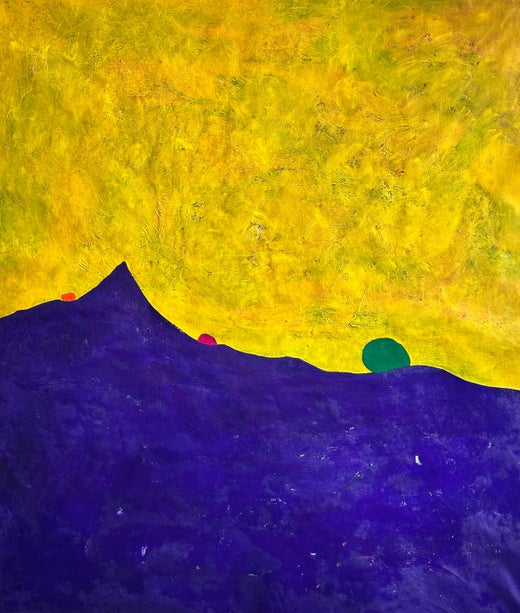
Luis was born in Zipaquirá (Colombia), the city where the famous salt cathedral is located, lives and works in Bogotá. He studied painting and art history at the Javeriana and National University of Colombia. His artistic processes are slow, he transforms matter until he creates his own worlds. In his work, he reflects on today's society, addressing some of the contemporary problems: a world hyperconnected to social networks, but with deep loneliness. In his work there is an intersection with the gaze of animals, a call to remember our same condition of equality, respect and care towards them. He was influenced by Native American art, the fantastic realism of the Peruvian painter Armando Villegas, the abstraction and constructive universalism of the Uruguayan artist Joaquín Torres García. Color, textures and fantastic beings make up the worlds that inhabit his painting.
About the Seller
5.0
Platinum Seller
Premium sellers with a 4.7+ rating and 24-hour response times
Established in 2005
1stDibs seller since 2023
65 sales on 1stDibs
Typical response time: 1 hour
Authenticity Guarantee
In the unlikely event there’s an issue with an item’s authenticity, contact us within 1 year for a full refund. DetailsMoney-Back Guarantee
If your item is not as described, is damaged in transit, or does not arrive, contact us within 7 days for a full refund. Details24-Hour Cancellation
You have a 24-hour grace period in which to reconsider your purchase, with no questions asked.Vetted Professional Sellers
Our world-class sellers must adhere to strict standards for service and quality, maintaining the integrity of our listings.Price-Match Guarantee
If you find that a seller listed the same item for a lower price elsewhere, we’ll match it.Trusted Global Delivery
Our best-in-class carrier network provides specialized shipping options worldwide, including custom delivery.You May Also Like
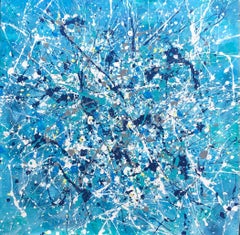
Series “Between Heaven and Earth” - turquoise blue
Located in Vienna, AT
As I layered acrylic and oil onto the canvas, I was swept into an abstract cosmos, expressing the raw essence of emotion through splashes and strokes. Each color, a dialogue between ...
Category
2010s Abstract Abstract Paintings
Materials
Canvas, Cotton Canvas, Mixed Media, Oil, Spray Paint, Acrylic
$2,139
H 31.5 in W 31.5 in D 1.58 in
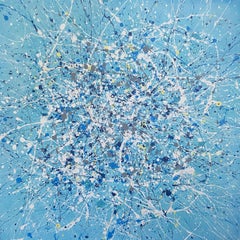
Series “Between Heaven and Earth” - turquoise blue
Located in Vienna, AT
White frame Included.
In this expressive piece, I've unleashed my passion through vibrant splatters, embodying the dynamic clash between tranquility and chaos. The turquoise blue, ac...
Category
2010s Abstract Abstract Paintings
Materials
Canvas, Cotton Canvas, Mixed Media, Oil, Spray Paint, Acrylic
$3,209
H 39.38 in W 39.38 in D 0.79 in
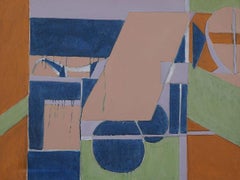
Naval Occurrence, orange, blue & green mid-century, abstract geometrical work
By Richard Andres
Located in Beachwood, OH
Richard Andres (American, 1927-2013)
Naval Occurrence, c. 1963
oil on canvas
signed and titled verso
24 x 32 inches
Richard Andres was born in Buffalo, New York in 1927. A graduate of the Cleveland Institute of Art in 1950, he was immediately drafted and served for two years in the army as a mural painter. He received his Master of Arts from Kent State in 1961. A frequent exhibitor at galleries and museums and winner of multiple May Show prizes, Andres taught art in the Cleveland Public Schools for 28 years, as well as teaching the University of Buffalo, the Cleveland Institute of Art and the Western Reserve University.
Very little in Richard Andres’ childhood would have predicted his love of classical music, mid-century-modern architecture and certainly not his lifelong passion for art and in particular abstract art. Richard’s father, Raymond, had no more than a third-grade education, and his mother, Clara, was one of thirteen children – only three of whom lived into adulthood and none of whom attended high school.
They lived, when Richard was a boy, in a dingy area of Buffalo, NY in a walk-up apartment situated above a tavern. Raymond and Clara supplemented the income from their factory jobs in the bar downstairs with Raymond playing ragtime on the piano and Clara serving drinks. This often left Richard and his two older brothers at home alone to fend for themselves. The two older boys, Raymond and Russell, were - unlike Richard- rather rough and tumble and entertained themselves with stickball, boxing and the like. Richard, on the other hand, from a very young age liked to draw, or better yet even, to paint with the small set of watercolors he received for Christmas one year. Paper, however, at the height of the depression, was hard to come by. Luckily, Clara used paper doilies as decoration for the apartment and Richard would contentedly paint and then cut up doilies, gluing the pieces together to create collages.
At eight-years-old, he discovered the Albright-Knox Museum (then known as the Albright Art Gallery) and spent several hours a week there studying the paintings. He was particularly fond of Charles Burchfield‘s landscapes, enamored with their ‘messiness’ and thinking that they somehow captured more ‘feeling’ than works he was previously familiar with. For his tenth Christmas, he asked for and received a ‘how-to’ paint book by Elliot O’Hare. Through this self-teaching, he assembled the portfolio needed for acceptance to Buffalo Technical High School where he studied Advertising Arts. In his Junior year, he was encouraged to enter a watercolor painting, “Two Barns,” in the national 1944-45 Ingersoll Art Award Contest and was one of twelve grand prize winners – each one winning one hundred dollars. More importantly the painting was exhibited at the Carnegie Institute Galleries, which resulted in his winning a national scholarship to the Cleveland School of Art (The Cleveland Art Institute).
He flourished at the art school under the tutelage of faculty members such as Carl Gaertner, as well as that of visiting artists such as William Sommer and Henry George Keller. He would say in later years that Gaertner, in particular, influenced his attitude toward life as well as art. “Gaertner,” Andres said, “believed that there was no need to be a ‘tortured artist’, that an artist should rather enjoy beauty, family, and life in general.” Free to spend his days as he chose, he wandered the Cleveland Art Museum for most of the hours he was not attending classes or painting; the remaining time was spent drinking coffee at a local hangout with art school friends – which is where he met fellow Henry Keller scholarship winner, Avis Johnson. Richard was immediately smitten with Avis, but being rather shy, it took him the entire summer of 1948 to build up his courage to ask her out. Over that summer he ‘thought about Avis’ and worked in a diner to save money. He also used the hundred-dollar prize money won in High School to visit the first Max Beckmann retrospective in the United States at the City Art Museum in St. Louis. Over a half century later he spoke of that exhibit with a reverence usually reserved for spiritual matters, “I walked in and it was like nothing I had ever seen before... the color...It just glowed.”
Returning to campus in the Fall, the first thing he did was go to the coffee shop in hopes of finding Avis. He did, and she, upon seeing him, realized that she was also smitten with him. They quickly became known as ‘the couple’ on campus, and a year later, with Richard being drafted for the Korean war, they were quickly married by a Justice of the Peace, celebrating after with family at Avis’s Cleveland home. As a gift, faculty member John Paul Miller designed and made the simple gold wedding ring Avis wore for their 65 years of marriage. During those 65 years neither wavered in their mutual love, nor in the respect they shared for one another’s art.
The couple lived in a converted chicken coop in Missouri while Richard was in boot camp. At the camp, he would volunteer for any job offered and one of those jobs ended up being painting road signs. His commander noticed how quickly and neatly he worked and gave him more painting work to do - eventually recommending him for a position painting murals for Army offices in Panama. Until her dying day, Avis remained angry that “The army got to keep those fabulous murals and they probably didn’t even know how wonderful they were.” In Panama, their first son, Mark, was born. After Richard’s discharge in 1953, they moved back to the Cleveland area and used the GI bill to attend Kent State gaining his BA in education. The small family then moved briefly to Buffalo, where Richard taught at the Albright Art School and the University of Buffalo – and their second son, Peter, was born. Richard had exhibited work in the Cleveland May Show and the Butler Art Museum during his art school years, and during the years in Buffalo, his work was exhibited at the gallery he had so loved as a child, the Albright Art Gallery.
In 1956, the family moved back to the Cleveland area and Richard began teaching art at Lincoln West High School during the day while working toward his MA in art at Kent State in the evenings. Avis and Richard, with the help of an architect, designed their first home - a saltbox style house in Hudson, Ohio, and in 1958, their third son, Max (after Max Beckmann) was born. Richard enjoyed the consistency of teaching high school as well as the time it gave him to paint on the weekends and during the summer months. In 1961, he received his MA and his daughter, Claire, was born. With a fourth child, the house was much too small, and Avis and Richard began designing their second home. An admirer of MCM architecture, Richard’s favorite example of the style was the Farnsworth house – he often spoke of how the concepts behind this architectural style, particularly that of Mies van der Rohe, influenced his painting.
Andres described himself as a 1950’s...
Category
1960s Abstract Geometric Abstract Paintings
Materials
Oil
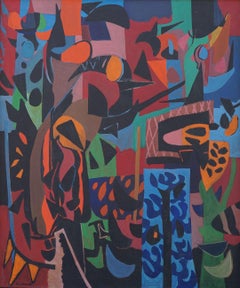
Magic Garden, vibrant mid-century abstract expressionist colorful geometric work
By Richard Andres
Located in Beachwood, OH
Richard Andres (American, 1927-2013)
Magic Garden, c. 1962
oil on canvas
signed lower left, signed and titled verso
50 x 42 inches
Richard Andres was born in Buffalo, New York in 19...
Category
1960s Abstract Expressionist Abstract Paintings
Materials
Oil
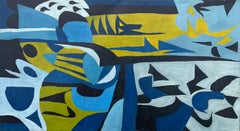
Abstract expressionist blue, black & green mid-century geometric painting
By Richard Andres
Located in Beachwood, OH
Richard Andres (American, 1927-2013)
Untitled, c. 1949
oil on canvas
18 x 32 inches
Richard Andres was born in Buffalo, New York in 1927. A graduate of the Cleveland Institute of Art in 1950, he was immediately drafted and served for two years in the army as a mural painter. He received his Master of Arts from Kent State in 1961. A frequent exhibitor at galleries and museums and winner of multiple May Show prizes, Andres taught art in the Cleveland Public Schools for 28 years, as well as teaching the University of Buffalo, the Cleveland Institute of Art and the Western Reserve University.
Very little in Richard Andres’ childhood would have predicted his love of classical music, mid-century-modern architecture and certainly not his lifelong passion for art and in particular abstract art. Richard’s father, Raymond, had no more than a third-grade education, and his mother, Clara, was one of thirteen children – only three of whom lived into adulthood and none of whom attended high school.
They lived, when Richard was a boy, in a dingy area of Buffalo, NY in a walk-up apartment situated above a tavern. Raymond and Clara supplemented the income from their factory jobs in the bar downstairs with Raymond playing ragtime on the piano and Clara serving drinks. This often left Richard and his two older brothers at home alone to fend for themselves. The two older boys, Raymond and Russell, were - unlike Richard- rather rough and tumble and entertained themselves with stickball, boxing and the like. Richard, on the other hand, from a very young age liked to draw, or better yet even, to paint with the small set of watercolors he received for Christmas one year. Paper, however, at the height of the depression, was hard to come by. Luckily, Clara used paper doilies as decoration for the apartment and Richard would contentedly paint and then cut up doilies, gluing the pieces together to create collages.
At eight-years-old, he discovered the Albright-Knox Museum (then known as the Albright Art Gallery) and spent several hours a week there studying the paintings. He was particularly fond of Charles Burchfield‘s landscapes, enamored with their ‘messiness’ and thinking that they somehow captured more ‘feeling’ than works he was previously familiar with. For his tenth Christmas, he asked for and received a ‘how-to’ paint book by Elliot O’Hare. Through this self-teaching, he assembled the portfolio needed for acceptance to Buffalo Technical High School where he studied Advertising Arts. In his Junior year, he was encouraged to enter a watercolor painting, “Two Barns,” in the national 1944-45 Ingersoll Art Award Contest and was one of twelve grand prize winners – each one winning one hundred dollars. More importantly the painting was exhibited at the Carnegie Institute Galleries, which resulted in his winning a national scholarship to the Cleveland School of Art (The Cleveland Art Institute).
He flourished at the art school under the tutelage of faculty members such as Carl Gaertner, as well as that of visiting artists such as William Sommer and Henry George Keller. He would say in later years that Gaertner, in particular, influenced his attitude toward life as well as art. “Gaertner,” Andres said, “believed that there was no need to be a ‘tortured artist’, that an artist should rather enjoy beauty, family, and life in general.” Free to spend his days as he chose, he wandered the Cleveland Art Museum for most of the hours he was not attending classes or painting; the remaining time was spent drinking coffee at a local hangout with art school friends – which is where he met fellow Henry Keller scholarship winner, Avis Johnson. Richard was immediately smitten with Avis, but being rather shy, it took him the entire summer of 1948 to build up his courage to ask her out. Over that summer he ‘thought about Avis’ and worked in a diner to save money. He also used the hundred-dollar prize money won in High School to visit the first Max Beckmann retrospective in the United States at the City Art Museum in St. Louis. Over a half century later he spoke of that exhibit with a reverence usually reserved for spiritual matters, “I walked in and it was like nothing I had ever seen before... the color...It just glowed.”
Returning to campus in the Fall, the first thing he did was go to the coffee shop in hopes of finding Avis. He did, and she, upon seeing him, realized that she was also smitten with him. They quickly became known as ‘the couple’ on campus, and a year later, with Richard being drafted for the Korean war, they were quickly married by a Justice of the Peace, celebrating after with family at Avis’s Cleveland home. As a gift, faculty member John Paul Miller designed and made the simple gold wedding ring Avis wore for their 65 years of marriage. During those 65 years neither wavered in their mutual love, nor in the respect they shared for one another’s art.
The couple lived in a converted chicken coop in Missouri while Richard was in boot camp. At the camp, he would volunteer for any job offered and one of those jobs ended up being painting road signs. His commander noticed how quickly and neatly he worked and gave him more painting work to do - eventually recommending him for a position painting murals for Army offices in Panama. Until her dying day, Avis remained angry that “The army got to keep those fabulous murals and they probably didn’t even know how wonderful they were.” In Panama, their first son, Mark, was born. After Richard’s discharge in 1953, they moved back to the Cleveland area and used the GI bill to attend Kent State gaining his BA in education. The small family then moved briefly to Buffalo, where Richard taught at the Albright Art School and the University of Buffalo – and their second son, Peter, was born. Richard had exhibited work in the Cleveland May Show and the Butler Art Museum during his art school years, and during the years in Buffalo, his work was exhibited at the gallery he had so loved as a child, the Albright Art Gallery.
In 1956, the family moved back to the Cleveland area and Richard began teaching art at Lincoln West High School during the day while working toward his MA in art at Kent State in the evenings. Avis and Richard, with the help of an architect, designed their first home - a saltbox style house in Hudson, Ohio, and in 1958, their third son, Max (after Max Beckmann) was born. Richard enjoyed the consistency of teaching high school as well as the time it gave him to paint on the weekends and during the summer months. In 1961, he received his MA and his daughter, Claire, was born. With a fourth child, the house was much too small, and Avis and Richard began designing their second home. An admirer of MCM architecture, Richard’s favorite example of the style was the Farnsworth house – he often spoke of how the concepts behind this architectural style, particularly that of Mies van der Rohe, influenced his painting.
Andres described himself as a 1950’s...
Category
1940s Abstract Expressionist Abstract Paintings
Materials
Oil
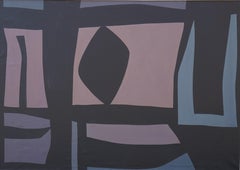
Blue Wall, mid-century abstract expressionist, geometric blue, black & pink work
By Richard Andres
Located in Beachwood, OH
Richard Andres (American, 1927-2013)
Blue Wall, c. 1959
oil on canvas
signed and titled verso
42 x 60 inches
Richard Andres was born in Buffalo, New York in 1927. A graduate of the Cleveland Institute of Art in 1950, he was immediately drafted and served for two years in the army as a mural painter. He received his Master of Arts from Kent State in 1961. A frequent exhibitor at galleries and museums and winner of multiple May Show prizes, Andres taught art in the Cleveland Public Schools for 28 years, as well as teaching the University of Buffalo, the Cleveland Institute of Art and the Western Reserve University.
Very little in Richard Andres’ childhood would have predicted his love of classical music, mid-century-modern architecture and certainly not his lifelong passion for art and in particular abstract art. Richard’s father, Raymond, had no more than a third-grade education, and his mother, Clara, was one of thirteen children – only three of whom lived into adulthood and none of whom attended high school.
They lived, when Richard was a boy, in a dingy area of Buffalo, NY in a walk-up apartment situated above a tavern. Raymond and Clara supplemented the income from their factory jobs in the bar downstairs with Raymond playing ragtime on the piano and Clara serving drinks. This often left Richard and his two older brothers at home alone to fend for themselves. The two older boys, Raymond and Russell, were - unlike Richard- rather rough and tumble and entertained themselves with stickball, boxing and the like. Richard, on the other hand, from a very young age liked to draw, or better yet even, to paint with the small set of watercolors he received for Christmas one year. Paper, however, at the height of the depression, was hard to come by. Luckily, Clara used paper doilies as decoration for the apartment and Richard would contentedly paint and then cut up doilies, gluing the pieces together to create collages.
At eight-years-old, he discovered the Albright-Knox Museum (then known as the Albright Art Gallery) and spent several hours a week there studying the paintings. He was particularly fond of Charles Burchfield‘s landscapes, enamored with their ‘messiness’ and thinking that they somehow captured more ‘feeling’ than works he was previously familiar with. For his tenth Christmas, he asked for and received a ‘how-to’ paint book by Elliot O’Hare. Through this self-teaching, he assembled the portfolio needed for acceptance to Buffalo Technical High School where he studied Advertising Arts. In his Junior year, he was encouraged to enter a watercolor painting, “Two Barns,” in the national 1944-45 Ingersoll Art Award Contest and was one of twelve grand prize winners – each one winning one hundred dollars. More importantly the painting was exhibited at the Carnegie Institute Galleries, which resulted in his winning a national scholarship to the Cleveland School of Art (The Cleveland Art Institute).
He flourished at the art school under the tutelage of faculty members such as Carl Gaertner, as well as that of visiting artists such as William Sommer and Henry George Keller. He would say in later years that Gaertner, in particular, influenced his attitude toward life as well as art. “Gaertner,” Andres said, “believed that there was no need to be a ‘tortured artist’, that an artist should rather enjoy beauty, family, and life in general.” Free to spend his days as he chose, he wandered the Cleveland Art Museum for most of the hours he was not attending classes or painting; the remaining time was spent drinking coffee at a local hangout with art school friends – which is where he met fellow Henry Keller scholarship winner, Avis Johnson. Richard was immediately smitten with Avis, but being rather shy, it took him the entire summer of 1948 to build up his courage to ask her out. Over that summer he ‘thought about Avis’ and worked in a diner to save money. He also used the hundred-dollar prize money won in High School to visit the first Max Beckmann retrospective in the United States at the City Art Museum in St. Louis. Over a half century later he spoke of that exhibit with a reverence usually reserved for spiritual matters, “I walked in and it was like nothing I had ever seen before... the color...It just glowed.”
Returning to campus in the Fall, the first thing he did was go to the coffee shop in hopes of finding Avis. He did, and she, upon seeing him, realized that she was also smitten with him. They quickly became known as ‘the couple’ on campus, and a year later, with Richard being drafted for the Korean war, they were quickly married by a Justice of the Peace, celebrating after with family at Avis’s Cleveland home. As a gift, faculty member John Paul Miller designed and made the simple gold wedding ring Avis wore for their 65 years of marriage. During those 65 years neither wavered in their mutual love, nor in the respect they shared for one another’s art.
The couple lived in a converted chicken coop in Missouri while Richard was in boot camp. At the camp, he would volunteer for any job offered and one of those jobs ended up being painting road signs. His commander noticed how quickly and neatly he worked and gave him more painting work to do - eventually recommending him for a position painting murals for Army offices in Panama. Until her dying day, Avis remained angry that “The army got to keep those fabulous murals and they probably didn’t even know how wonderful they were.” In Panama, their first son, Mark, was born. After Richard’s discharge in 1953, they moved back to the Cleveland area and used the GI bill to attend Kent State gaining his BA in education. The small family then moved briefly to Buffalo, where Richard taught at the Albright Art School and the University of Buffalo – and their second son, Peter, was born. Richard had exhibited work in the Cleveland May Show and the Butler Art Museum during his art school years, and during the years in Buffalo, his work was exhibited at the gallery he had so loved as a child, the Albright Art Gallery.
In 1956, the family moved back to the Cleveland area and Richard began teaching art at Lincoln West High School during the day while working toward his MA in art at Kent State in the evenings. Avis and Richard, with the help of an architect, designed their first home - a saltbox style house in Hudson, Ohio, and in 1958, their third son, Max (after Max Beckmann) was born. Richard enjoyed the consistency of teaching high school as well as the time it gave him to paint on the weekends and during the summer months. In 1961, he received his MA and his daughter, Claire, was born. With a fourth child, the house was much too small, and Avis and Richard began designing their second home. An admirer of MCM architecture, Richard’s favorite example of the style was the Farnsworth house – he often spoke of how the concepts behind this architectural style, particularly that of Mies van der Rohe, influenced his painting.
Andres described himself as a 1950’s...
Category
1950s Abstract Expressionist Abstract Paintings
Materials
Oil
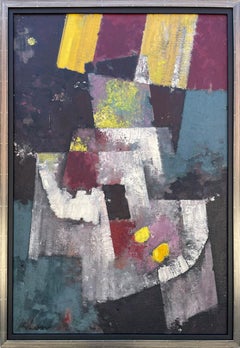
By the Dawn's Early Light, mid-century abstract black, red, yellow oil painting
By Charles Green Shaw
Located in Beachwood, OH
Charles Green Shaw (American, 1892-1974)
By the Dawn's Early Light, 1955
Oil on masonite
Signed lower left, dated and titled verso
35.5 x 23.75 inches
38 x 26.25 inches, framed
Provenance: The estate of the artist to Charles H. Carpenter
Charles Green Shaw, born into a wealthy New York family, began painting when he was in his mid-thirties. A 1914 graduate of Yale, Shaw also completed a year of architectural studies at Columbia University. During the 1920s Shaw enjoyed a successful career as a freelance writer for The New Yorker, Smart Set and Vanity Fair, chronicling the life of the theater and café society. In addition to penning insightful articles, Shaw was a poet, novelist and journalist. In 1927 he began to take a serious interest in art and attended Thomas Hart Benton's class at the Art Students League briefly in New York. He also studied privately with George Luks, who became a good friend. Once he had dedicated himself to non-traditional painting, Shaw's writing ability made him a potent defender of abstract art.
After initial study with Benton and Luks, Shaw continued his artistic education in Paris by visiting numerous museums and galleries. From 1930 to 1932 Shaw's paintings evolved from a style imitative of Cubism to one directly inspired by it, though simplified and more purely geometric. Returning to the United States in 1933, Shaw began a series of abstracted cityscapes of skyscrapers he called Manhattan Motifs which evolved into his most famous works, the shaped canvases he called Plastic Polygons.
The 1930s were productive years for Shaw. He showed his paintings in numerous group exhibitions, both in New York and abroad, and was also given several one-man exhibitions. Shaw had his first one-man exhibition at the Valentine Dudensing Gallery in New York in 1934, which included 25 Manhattan Motif paintings and 8 abstract works. In the spring of 1935 Shaw was introduced to Albert Gallatin and George L.K. Morris. Gallatin was so impressed with Shaw's work, he broke a policy against solo exhibitions at his museum, the Gallery of Living Art, and offered Shaw an exhibition there. In the summer of 1935 Shaw traveled to Paris with Gallatin and Morris who provided introductions to many great painters. Shaw regularly spent time with John Ferren and Jean Hélion. The following year Gallatin organized an exhibition called Five Contemporary American Concretionists at the Reinhardt Gallery that included Shaw, Ferren, and Morris, Alexander Calder, and Charles Biederman...
Category
1950s Abstract Abstract Paintings
Materials
Oil
$18,900
H 35.5 in W 23.75 in
Three Ghosts, colorful abstract painting on panel
By C. Dimitri
Located in Brooklyn, NY
Abstract interior. Oil on panel. 2022.
Category
2010s Abstract Abstract Paintings
Materials
Oil, Wood Panel
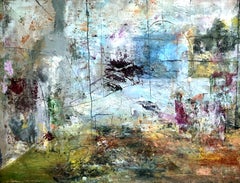
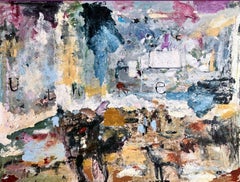
Tintern Abbey, bold colorful brushwork blues pinks earth tones
By C. Dimitri
Located in Brooklyn, NY
Abstract interior, with figures and bison. Oil on panel.
Category
2010s Abstract Abstract Paintings
Materials
Oil, Panel
$2,560 Sale Price
20% Off
H 36 in W 48 in D 2 in
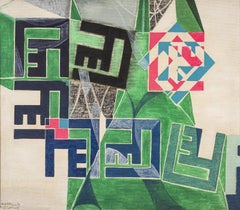
"Abstract Calligraphy" Abstract Oil Painting 31.5" x 39" inch by KAMAL EL SARRAG
Located in Culver City, CA
"Abstract Calligraphy" Abstract Oil Painting 31.5" x 39" inch by KAMAL EL SARRAG
Category
20th Century Abstract Geometric Abstract Paintings
Materials
Canvas, Oil
Price Upon Request
H 31.5 in W 39 in
More From This Seller
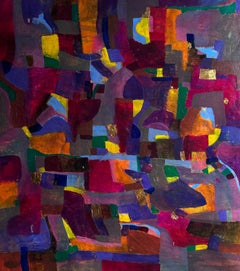
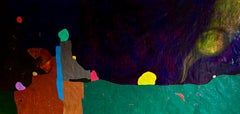
View AllAbstract Oil Painting On Canvas. "Study Purple"
Located in Bogotá, Bogotá
This oil painting of abstract forms is dominated by a rich palette of reds, purples, oranges, blues, and yellows, interweaving a mosaic of irregular geometric shapes, capturing overl...
Category
2010s Abstract Abstract Paintings
Materials
Gold Leaf
$392 Sale Price
20% Off
Contemporary Abstract Figurative Painting on Canvas in Violet Tones
Located in Bogotá, Bogotá
"Encounters at Dawn" – Contemporary Abstract Painting on Canvas in Violet Tones with Figuration is an abstract oil painting that explores color field and abstract expressionism. The ...
Category
2010s Abstract Abstract Paintings
Materials
Cotton Canvas, Oil, Acrylic
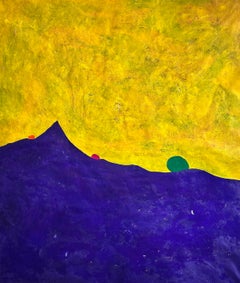
Contemporary Abstract Painting on Canvas in Yellow and Blue Violet "Horizons"
Located in Bogotá, Bogotá
This abstract painting explores the relationship between color, form, and space through the use of two dominant fields: a deep violet blue shape suggesting a mountainous contour and ...
Category
2010s Abstract Abstract Paintings
Materials
Cotton Canvas, Oil, Acrylic
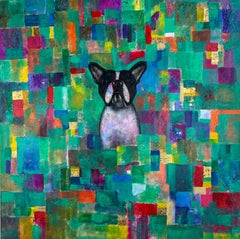
Oil Painting On Canvas. A French Bulldog On An Abstract Green Background.
Located in Bogotá, Bogotá
Oil painting of a forgotten French bulldog, set against an abstract background dominated by Veronese green with touches of gold leaf. Made with professional Rembrandt colors. For dur...
Category
2010s Contemporary Animal Paintings
Materials
Gold
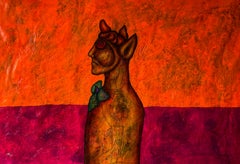
Contemporary Oil Painting On Canvas, Man-Animal And Flower. “The Gifts”
Located in Bogotá, Bogotá
Oil on canvas in textured mixed technique. This piece is part of a series where I explore our connection with animals through the human and magical. It represents a man-animal lookin...
Category
2010s Expressionist Figurative Paintings
Materials
Cotton Canvas, Oil
Abstract Oil Painting and Deer. "The Silence of the Animals"
Located in Bogotá, Bogotá
"The Silence of the Animals" is an original oil painting on canvas by Colombian artist Luis Xiua, known for blending figurative and abstract elements inspired by nature and pre-Hispa...
Category
2010s Abstract Abstract Paintings
Materials
Cotton Canvas, Oil, Acrylic
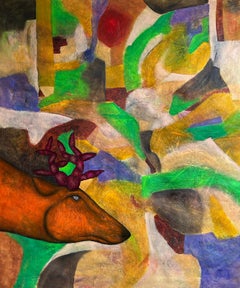
Luis Alexander Rodríguez (Ie-Xiua)Abstract Oil Painting and Deer. "The Silence of the Animals", 2025
$490 Sale Price
30% Off
Free Shipping
Recently Viewed
View AllMore Ways To Browse
Steve Wheeler
Tiffany Stained Glass Collectors Society
Vintage Marble Knives
W Adams Large Oil Paintings
W R Stevenson
Whatever Gallery
William C Palmer
William Weege
Yvonne Love
1980 Olympics Paintings
5ft Painting
6 Ft Paintings
60x84 Painting
Abderrahman Banana
Abstract Painting 80x40
Achim Moeller Fine Art
Adam Elsheimer
Anette Holmberg