Items Similar to "Objets d'Arctic" Aaron Bohrod, Inuit, Polar Bear, Penguin, Winter Still Life
Want more images or videos?
Request additional images or videos from the seller
1 of 10
Aaron Bohrod"Objets d'Arctic" Aaron Bohrod, Inuit, Polar Bear, Penguin, Winter Still Life1987
1987
$5,000
£3,758.68
€4,357.50
CA$6,980.78
A$7,818.84
CHF 4,068.40
MX$94,959.27
NOK 51,577.01
SEK 48,666.75
DKK 32,513.16
Shipping
Retrieving quote...The 1stDibs Promise:
Authenticity Guarantee,
Money-Back Guarantee,
24-Hour Cancellation
About the Item
Aaron Bohrod
Objets D'Arctic, 1987
Signed lower right
Oil on gesso board
14 x 11 inches
Aaron Bohrod's work has not been limited to one style or medium. Initially recognized as a regionalist painter of American scenes, particularly of his native Chicago, Bohrod later devoted himself to detailed still-life paintings rendered in the trompe l'oeil style. He also worked for several years in ceramics and wrote a book on pottery.
Born in 1907, Bohrod began his studies at Chicago's Crane Junior College in 1925, and two years later enrolled in the Art Institute of Chicago. But it was at the Art Students League in New York City, from 1930 to 1932, that he studied under the man believed to be his most significant early influence, John Sloan. Sloan's romantic realism is reflected in the many depictions of Chicago life, which comprised most of Bohrod's early work.
Under Sloan's tutelage, Bohrod came to subscribe to the belief that painters should find the subjects of their art in the immediate world around them. These paintings emphasized architecture unique to north Chicago and featured Chicagoans engaged in such everyday activities as working, playing or going to the theatre. The romantic aspect was conveyed by the use of misty colors, and the realism by attention to detail.
In 1936, Bohrod won the Guggenheim Fellowship award in creative painting. It enabled him to travel the United States, producing similar regionalist paintings on a much broader range of subjects. Nevertheless, most of his early work centered on Chicago and the urban Midwest.
In 1943, Bohrod was commissioned by editors of Life magazine to cover the battlefronts as a war correspondent and artist. Three years later, Bohrod was invited to become the Artist in Residence at the University of Wisconsin, a position that became vacant with the unexpected death of John Steuart Curry. He would remain at the University from 1948 to his retirement in 1973.
Then, quite atypically, fantasy started to appear in his work. Elements of Surrealism, supposedly inspired by his concurrent involvement in ceramics with F. Carlton Ball, began influencing his landscapes. By 1953, Bohrod had completely ceased painting landscapes, turning instead to often symbolic still-life subjects. He abandoned his earlier romantic realism to paint in the luminous trompe l'oeil tradition of William Harnett. Bohrod continued to produce these meticulously crafted fantasies exclusively. While in his position at the University of Wisconsin, Bohrod painted covers for Time magazine and authored two books, A Pottery Sketch-book (1959) and A Decade of Still Life (1966), in which are produced many of his trompe l'oeil paintings.
- Creator:Aaron Bohrod (1907 - 1992, American)
- Creation Year:1987
- Dimensions:Height: 22 in (55.88 cm)Width: 19 in (48.26 cm)
- Medium:
- Movement & Style:
- Period:
- Condition:
- Gallery Location:New York, NY
- Reference Number:1stDibs: LU1841213822182
Aaron Bohrod
Aaron Bohrod's work has not been limited to one style or medium. Initially recognized as a regionalist painter of American scenes, particularly of his native Chicago, Bohrod later devoted himself to detailed still-life paintings rendered in the trompe l'oeil style. He also worked for several years in ceramics and wrote a book on pottery. Born in 1907, Bohrod began his studies at Chicago's Crane Junior College in 1925, and two years later enrolled in the Art Institute of Chicago. But it was at the Art Students League in New York City, from 1930 to 1932, that he studied under the man believed to be his most significant early influence, John Sloan. Sloan's romantic realism is reflected in the many depictions of Chicago life, which comprised most of Bohrod's early work. Under Sloan's tutelage, Bohrod came to subscribe to the belief that painters should find the subjects of their art in the immediate world around them. These paintings emphasized architecture unique to north Chicago and featured Chicagoans engaged in such everyday activities as working, playing or going to the theatre. The romantic aspect was conveyed by the use of misty colors, and the realism by attention to detail. In 1936, Bohrod won the Guggenheim Fellowship award in creative painting. It enabled him to travel the United States, producing similar regionalist paintings on a much broader range of subjects. Nevertheless, most of his early work centered on Chicago and the urban Midwest. In 1943, Bohrod was commissioned by editors of Life magazine to cover the battlefronts as a war correspondent and artist. Three years later, Bohrod was invited to become the Artist in Residence at the University of Wisconsin, a position that became vacant with the unexpected death of John Steuart Curry. He would remain at the University from 1948 to his retirement in 1973. Then, quite atypically, fantasy started to appear in his work. Elements of Surrealism, supposedly inspired by his concurrent involvement in ceramics with F. Carlton Ball, began influencing his landscapes. By 1953, Bohrod had completely ceased painting landscapes, turning instead to often symbolic still-life subjects. He abandoned his earlier romantic realism to paint in the luminous trompe l'oeil tradition of William Harnett. Bohrod continued to produce these meticulously crafted fantasies exclusively. While in his position at the University of Wisconsin, Bohrod painted covers for Time magazine and authored two books, A Pottery Sketch-book (1959) and A Decade of Still Life (1966), in which are produced many of his trompe l'oeil paintings.
About the Seller
5.0
Platinum Seller
Premium sellers with a 4.7+ rating and 24-hour response times
Established in 2022
1stDibs seller since 2022
108 sales on 1stDibs
Typical response time: <1 hour
- ShippingRetrieving quote...Shipping from: New York, NY
- Return Policy
Authenticity Guarantee
In the unlikely event there’s an issue with an item’s authenticity, contact us within 1 year for a full refund. DetailsMoney-Back Guarantee
If your item is not as described, is damaged in transit, or does not arrive, contact us within 7 days for a full refund. Details24-Hour Cancellation
You have a 24-hour grace period in which to reconsider your purchase, with no questions asked.Vetted Professional Sellers
Our world-class sellers must adhere to strict standards for service and quality, maintaining the integrity of our listings.Price-Match Guarantee
If you find that a seller listed the same item for a lower price elsewhere, we’ll match it.Trusted Global Delivery
Our best-in-class carrier network provides specialized shipping options worldwide, including custom delivery.More From This Seller
View All"Knight Horrors" Aaron Bohrod, Realism, Surrealism, Dream, Nightmare Monsters
By Aaron Bohrod
Located in New York, NY
Aaron Bohrod
Knight Horrors, 1985
Signed lower left
Oil on gesso panel
12 x 16 inches
Aaron Bohrod's work has not been limited to one style or medium. Initially recognized as a regionalist painter of American scenes, particularly of his native Chicago, Bohrod later devoted himself to detailed still-life paintings rendered in the trompe l'oeil style. He also worked for several years in ceramics and wrote a book on pottery.
Born in 1907, Bohrod began his studies at Chicago's Crane Junior College in 1925, and two years later enrolled in the Art Institute of Chicago. But it was at the Art Students League in New York City, from 1930 to 1932, that he studied under the man believed to be his most significant early influence, John Sloan. Sloan's romantic realism is reflected in the many depictions of Chicago life...
Category
1980s Realist Animal Paintings
Materials
Oil, Board
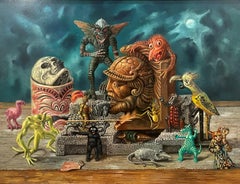
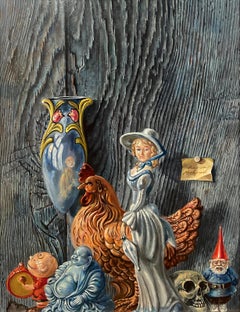
"Gallimaufry" Aaron Bohrod, Realism, Surrealism, Charlie Brown, Buddha, Gnome
By Aaron Bohrod
Located in New York, NY
Aaron Bohrod
Gallimaufry, 1989
Signed on the right
Oil on gesso panel
14 x 11 inches
Aaron Bohrod's work has not been limited to one style or medium. Initially recognized as a regionalist painter of American scenes, particularly of his native Chicago, Bohrod later devoted himself to detailed still-life paintings rendered in the trompe l'oeil style. He also worked for several years in ceramics and wrote a book on pottery.
Born in 1907, Bohrod began his studies at Chicago's Crane Junior College in 1925, and two years later enrolled in the Art Institute of Chicago. But it was at the Art Students League in New York City, from 1930 to 1932, that he studied under the man believed to be his most significant early influence, John Sloan. Sloan's romantic realism...
Category
1980s Realist Animal Paintings
Materials
Oil, Board
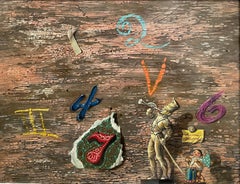
"The Magnificent Seven" Aaron Bohrod, Pun Humor, Magic Realism, Numbers, Text
By Aaron Bohrod
Located in New York, NY
Aaron Bohrod
The Magnificent Seven, 1990
Signed lower right
Oil on gesso panel
11 x 14 inches
Aaron Bohrod's work has not been limited to one style or medium. Initially recognized as a regionalist painter of American scenes, particularly of his native Chicago, Bohrod later devoted himself to detailed still-life paintings rendered in the trompe l'oeil style. He also worked for several years in ceramics and wrote a book on pottery.
Born in 1907, Bohrod began his studies at Chicago's Crane Junior College in 1925, and two years later enrolled in the Art Institute of Chicago. But it was at the Art Students League in New York City, from 1930 to 1932, that he studied under the man believed to be his most significant early influence, John Sloan. Sloan's romantic realism is reflected in the many depictions of Chicago life...
Category
1990s Realist Animal Paintings
Materials
Oil, Board
"The Beginning" Aaron Bohrod, Pun Humor, Magic Realism, Alphabet Letters, Text
By Aaron Bohrod
Located in New York, NY
Aaron Bohrod
The Beginning, 1990
Signed center
Oil on gesso board
10 x 8 inches
Aaron Bohrod's work has not been limited to one style or medium. Initially recognized as a regionalis...
Category
1990s Realist Animal Paintings
Materials
Oil, Board
"Complementary Angels" Aaron Bohrod, Pun Humor, Magic Realism, Putti
By Aaron Bohrod
Located in New York, NY
Aaron Bohrod
Complementary Angels, 1977
Signed lower center
Oil on gesso panel
16 x 12 inches
Aaron Bohrod's work has not been limited to one style or medium. Initially recognized as a regionalist painter of American scenes, particularly of his native Chicago, Bohrod later devoted himself to detailed still-life paintings rendered in the trompe l'oeil style. He also worked for several years in ceramics and wrote a book on pottery.
Born in 1907, Bohrod began his studies at Chicago's Crane Junior College in 1925, and two years later enrolled in the Art Institute of Chicago. But it was at the Art Students League in New York City, from 1930 to 1932, that he studied under the man believed to be his most significant early influence, John Sloan. Sloan's romantic realism is reflected in the many depictions of Chicago life...
Category
1970s Realist Animal Paintings
Materials
Oil, Board
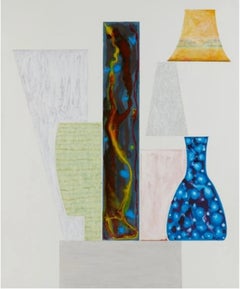
"Abstract (with Two White Vases) " Ed Baynard, Still Life Composition
By Ed Baynard
Located in New York, NY
Ed Baynard
Abstract (with Two White Vases), 2005
Signed, titled, and dated along the verso
Acrylic on canvas
48 x 40 inches
Category
Early 2000s Abstract Abstract Paintings
Materials
Canvas, Acrylic
You May Also Like
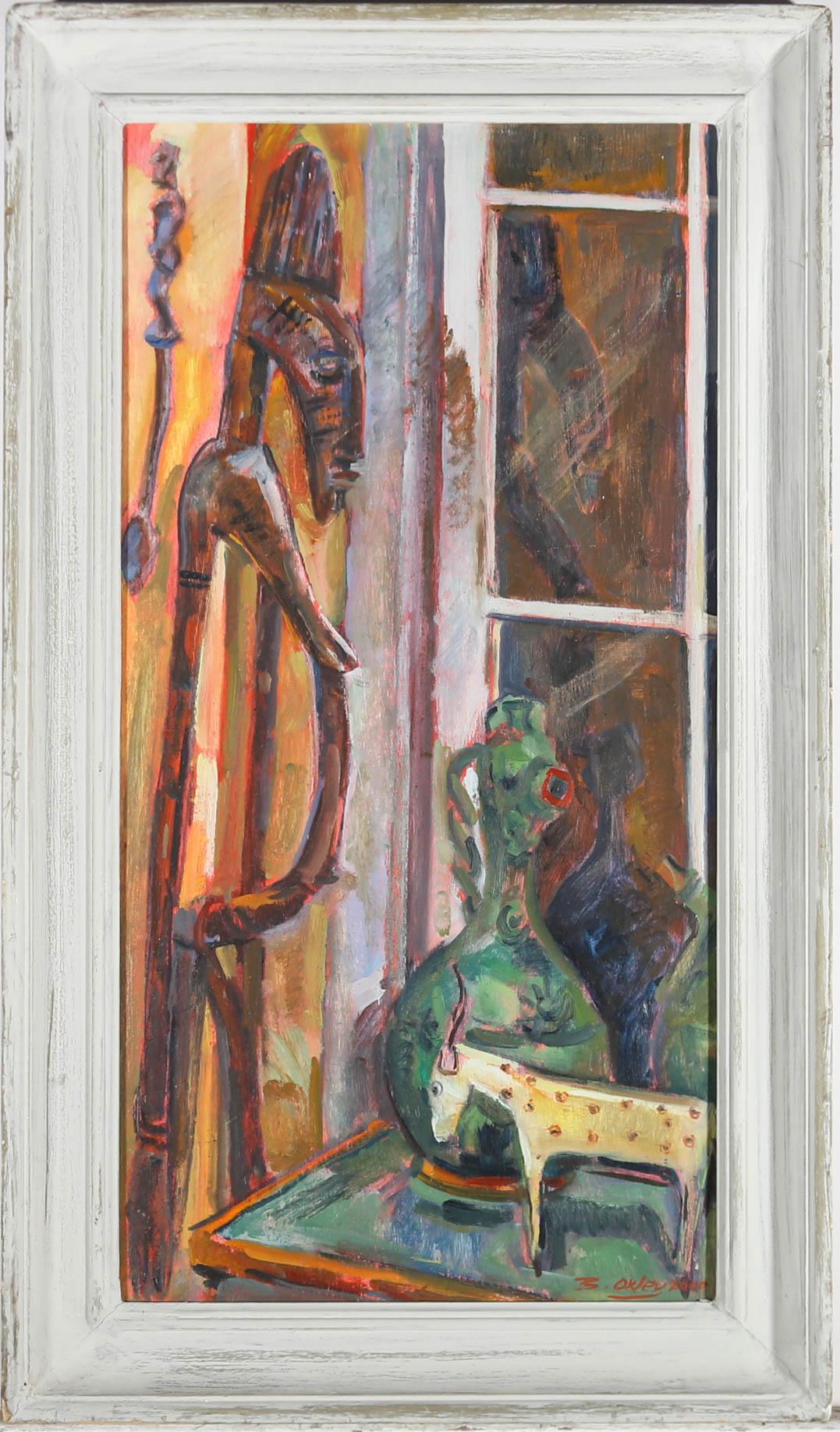
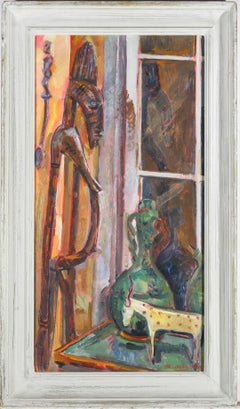
Brian Oxley (b.1943) - 2000 Oil, Still Life of Indigenous Objects
Located in Corsham, GB
A delightful still life study capturing an assortment of indigenous objects placed on a windowsill. The artist captures the scene in bright colours and an expressive style, paying pa...
Category
21st Century and Contemporary Still-life Paintings
Materials
Oil
$504 Sale Price
20% Off
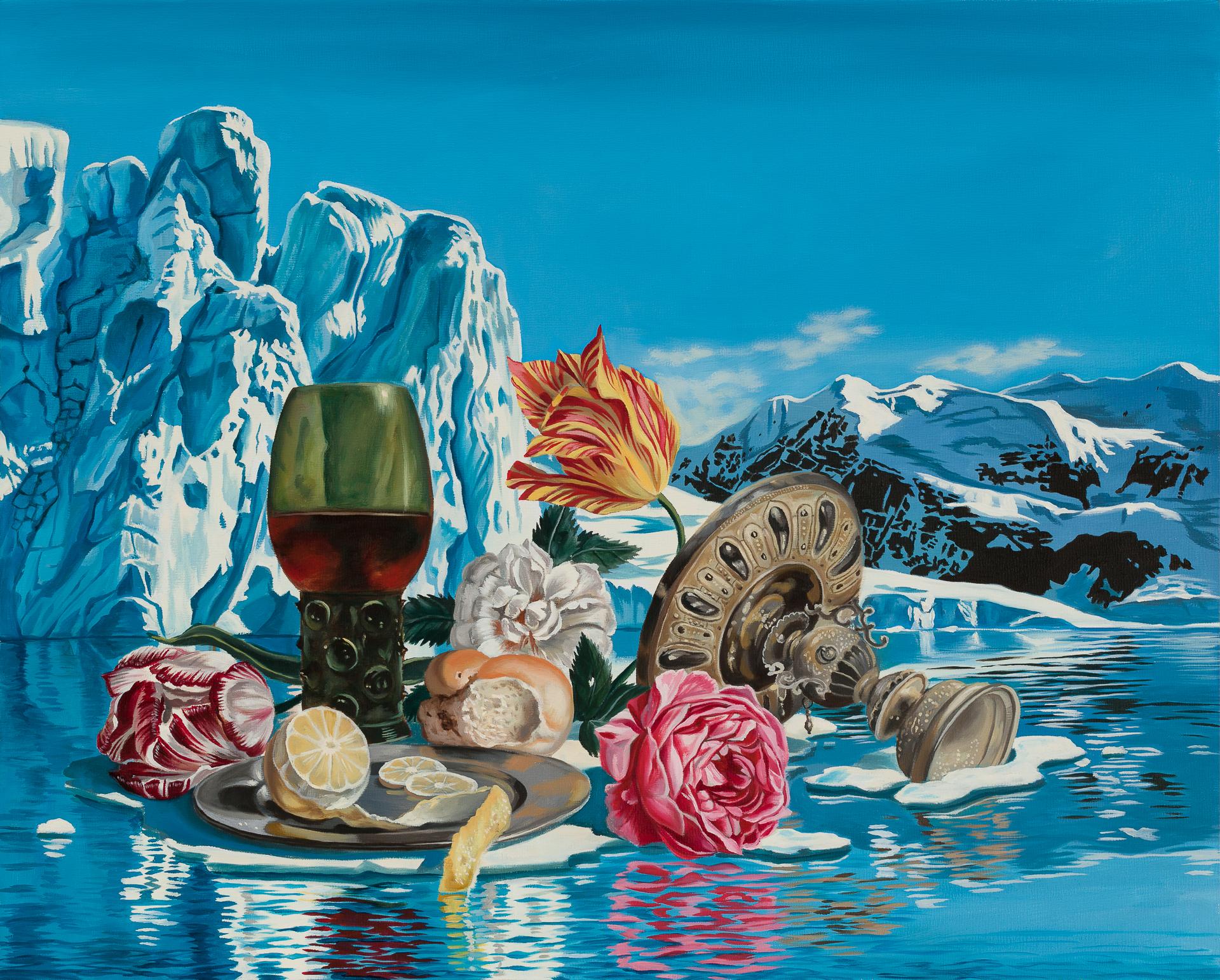
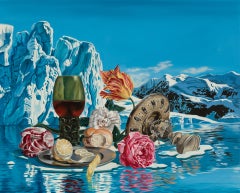
"Still Life with Wine and Glaciers" Oil Painting
By Robin Hextrum
Located in Denver, CO
Robin Hextrum's "Still Life with Wine and Glaciers" is an original, handmade oil painting that features a still life of fruit, Peony's and Red wine floating on icebergs in an arctic...
Category
2010s Surrealist Landscape Paintings
Materials
Oil, Panel
$960 Sale Price
20% Off
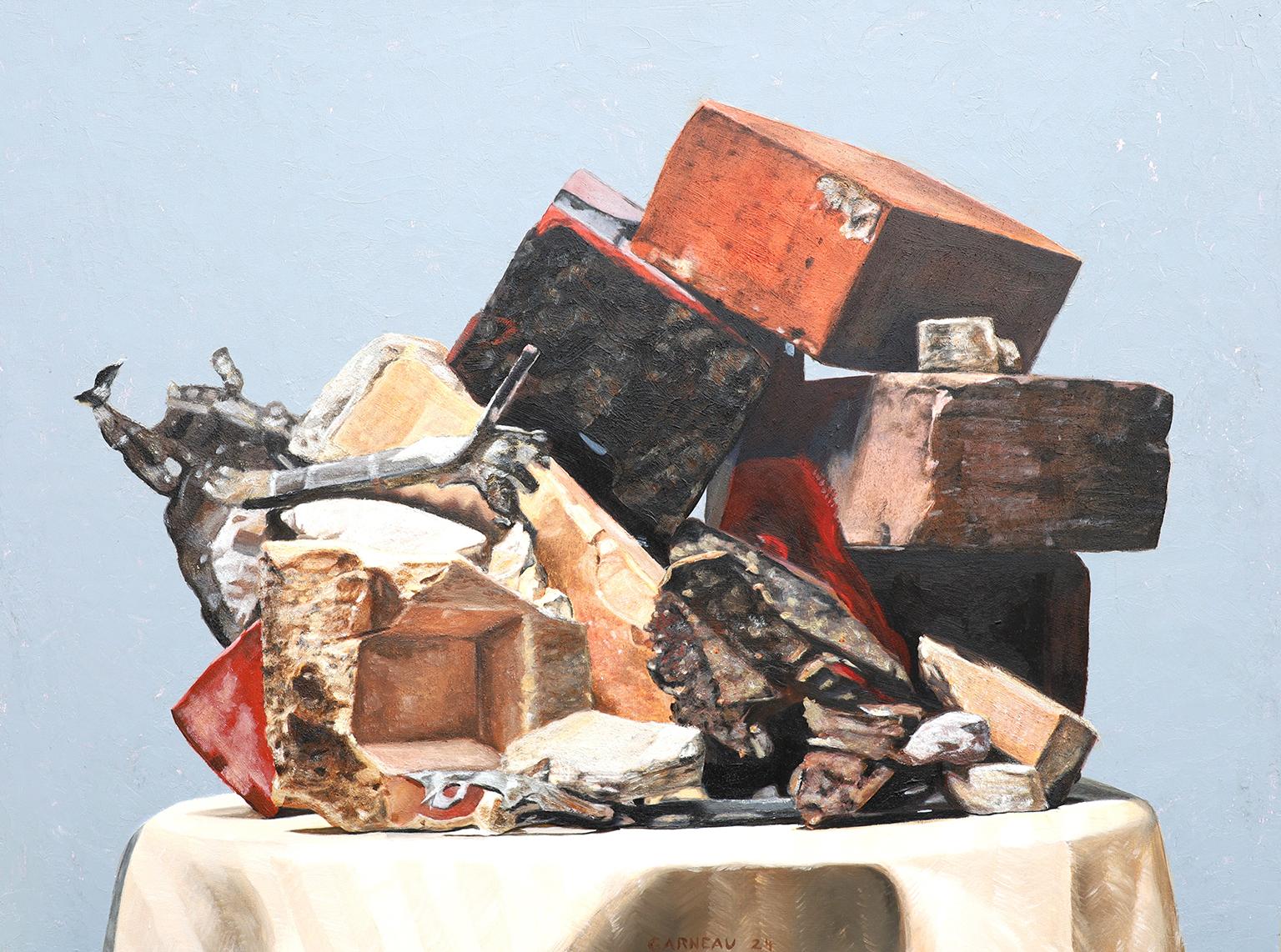
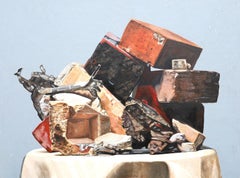
Still Life with Shrapnel (Study III)
By David Garneau
Located in Montreal, Quebec
The European Academy recognized still-life painting as the lowest form in its hierarchy. Being the depiction of the things of everyday life, it was considered a poor container for th...
Category
2010s Contemporary Still-life Paintings
Materials
Acrylic, Wood Panel
Price Upon Request
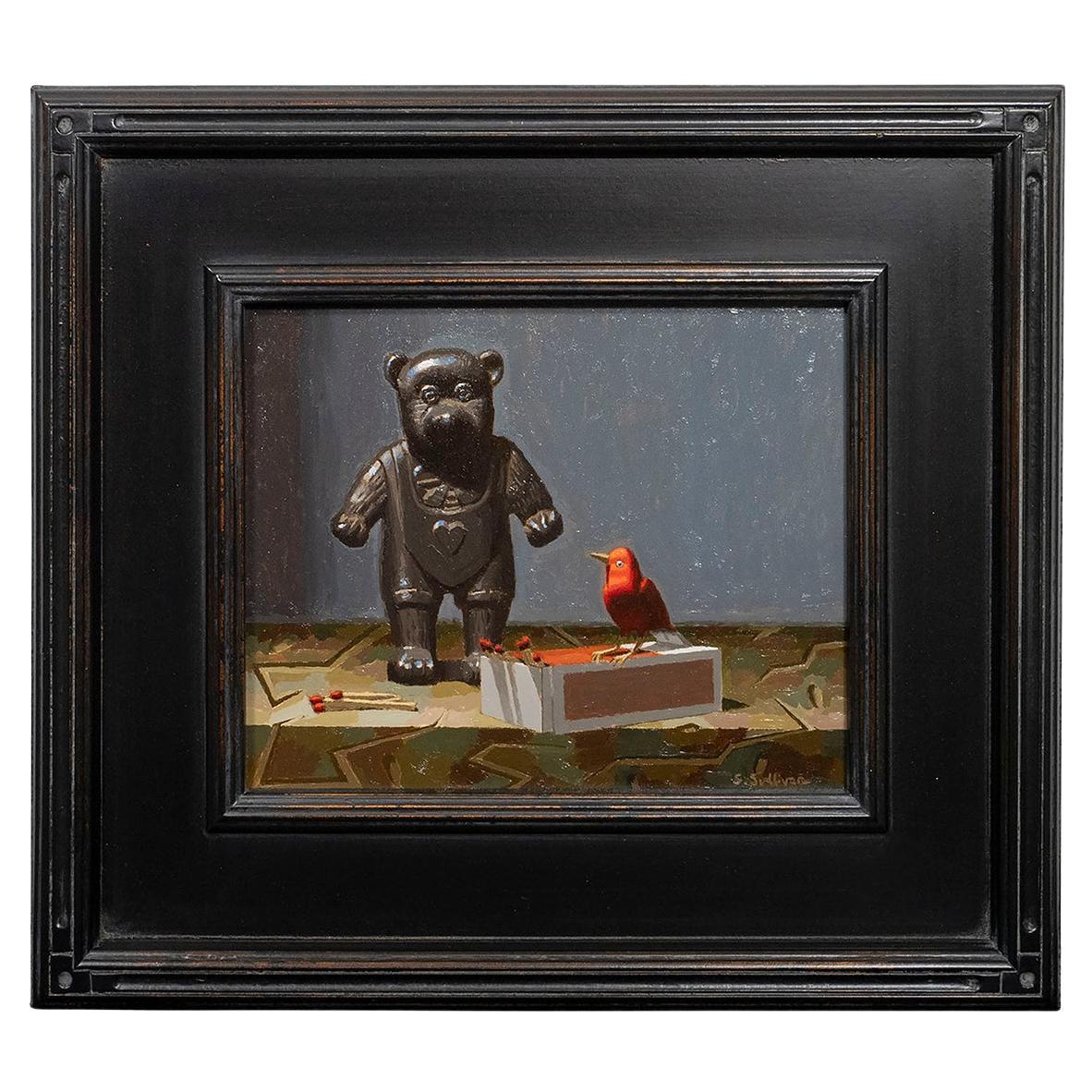
Contemporary Postmodern Still-life Oil on Panel
Located in Tarrytown, NY
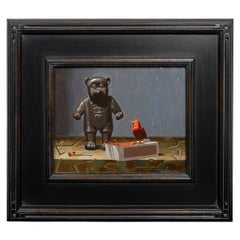
Contemporary Postmodern still life composition with toy bear, cardinal (bird), and a box of matches. Signed at bottom right "S. Sullivan" and inscribed on verso "Shawn Sullivan / Pla...
Category
2010s American Post-Modern Paintings
Materials
Canvas, Paint
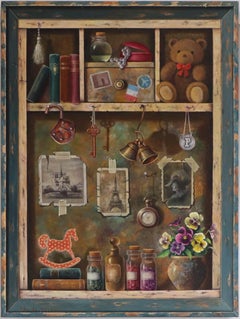
Inner space Contemporary still life Oil Painting by Giulnara Khabibulina
Located in Zofingen, AG
This series of works is based on the artist's impressions and communication with old and new friends. Our future is impossible without the past. We all appreciate old stories about o...
Category
2010s Realist Figurative Paintings
Materials
Canvas, Oil
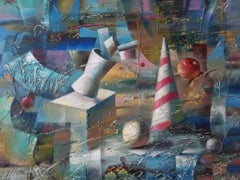
Metaphysical Still Life, Surrealism, Original oil Painting, Ready to Hang
Located in Granada Hills, CA
Artist: Anatoly Borisovich Tarabanov
Work: Original oil painting, handmade artwork, one of a kind
Medium: Oil on Canvas
Year: 2010
Style: Abstract Art
Title: Metaphysical Still Lif...
Category
2010s Impressionist Still-life Paintings
Materials
Canvas, Oil
More Ways To Browse
Vintage Three Bears
Penguin Art
Vintage Animal Sketches
Native American Bear
Arctic Painting
Aaron Stills
Penguin And Painting
Inuit Art
Native American Signed Pottery
Curry John Steuart
Polar Bear Paintings
F D Pottery
Aaron Curry
Carlton Ball Pottery
Penguin Pottery
Hunting Scene Oil Paintings
Horse Bit
English Dog Paintings