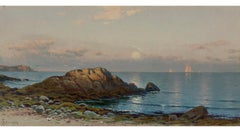
Items Similar to "Risen Moon" Frederick Judd Waugh, Coastal Landscape, Rocky Coast Marine Scene
Want more images or videos?
Request additional images or videos from the seller
1 of 9
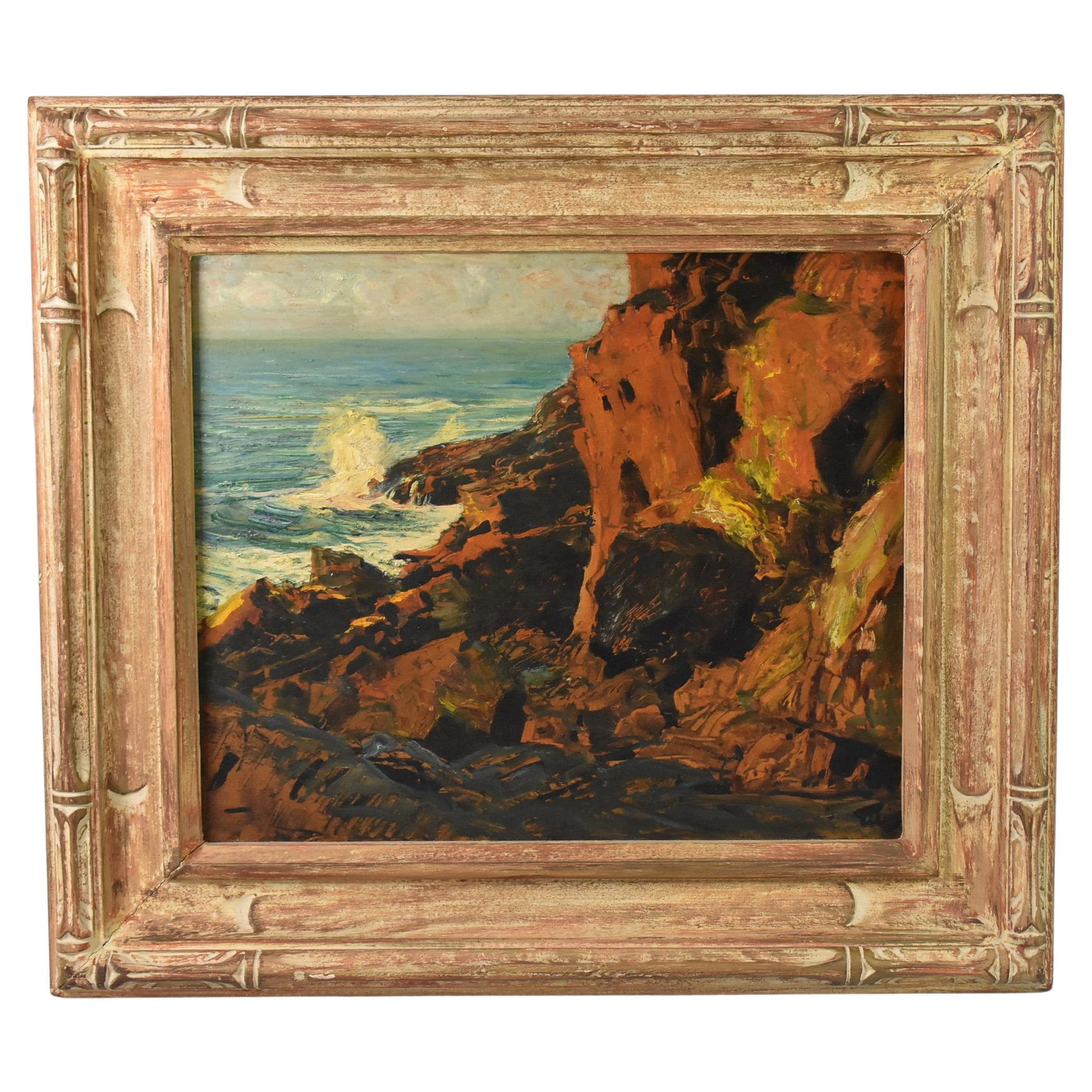
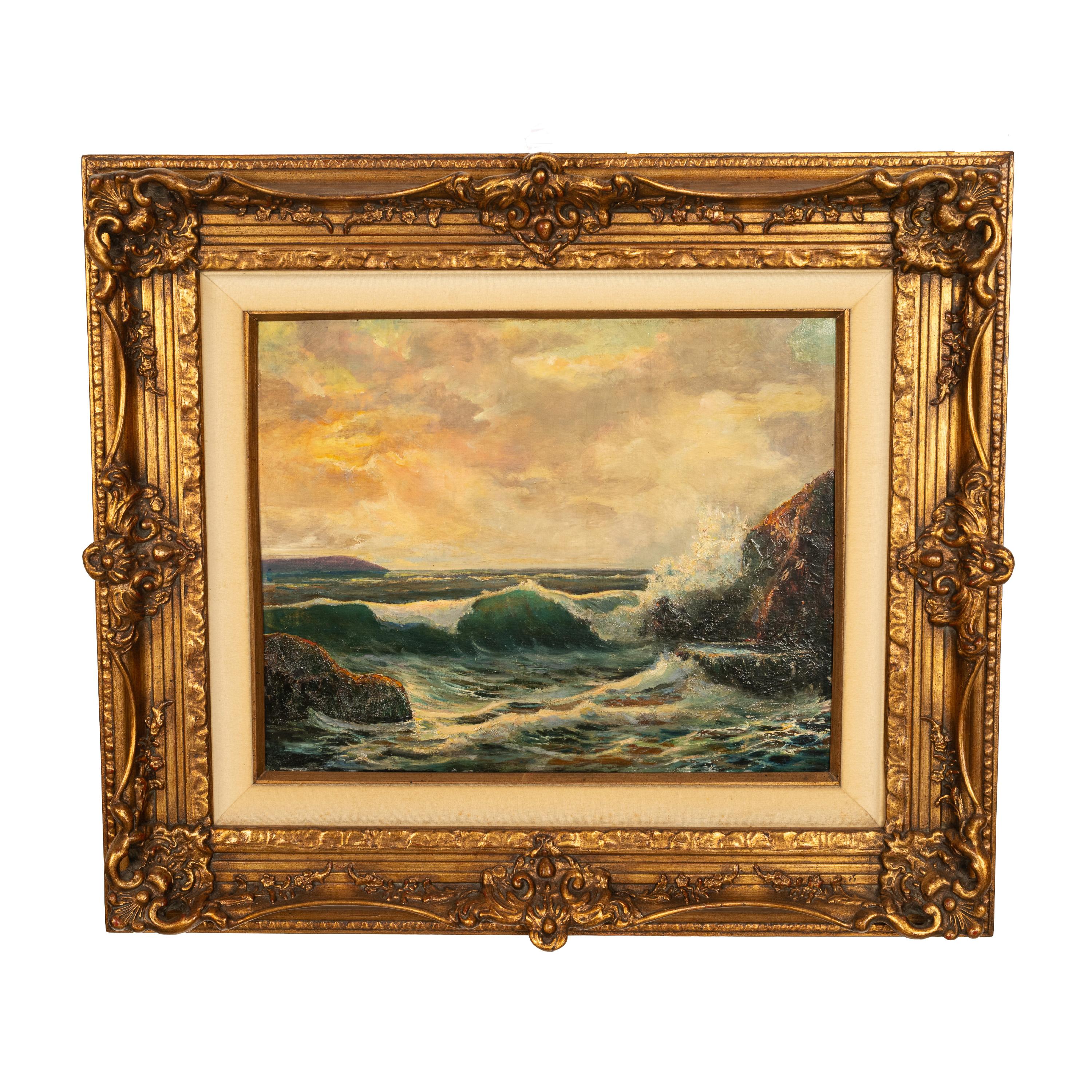
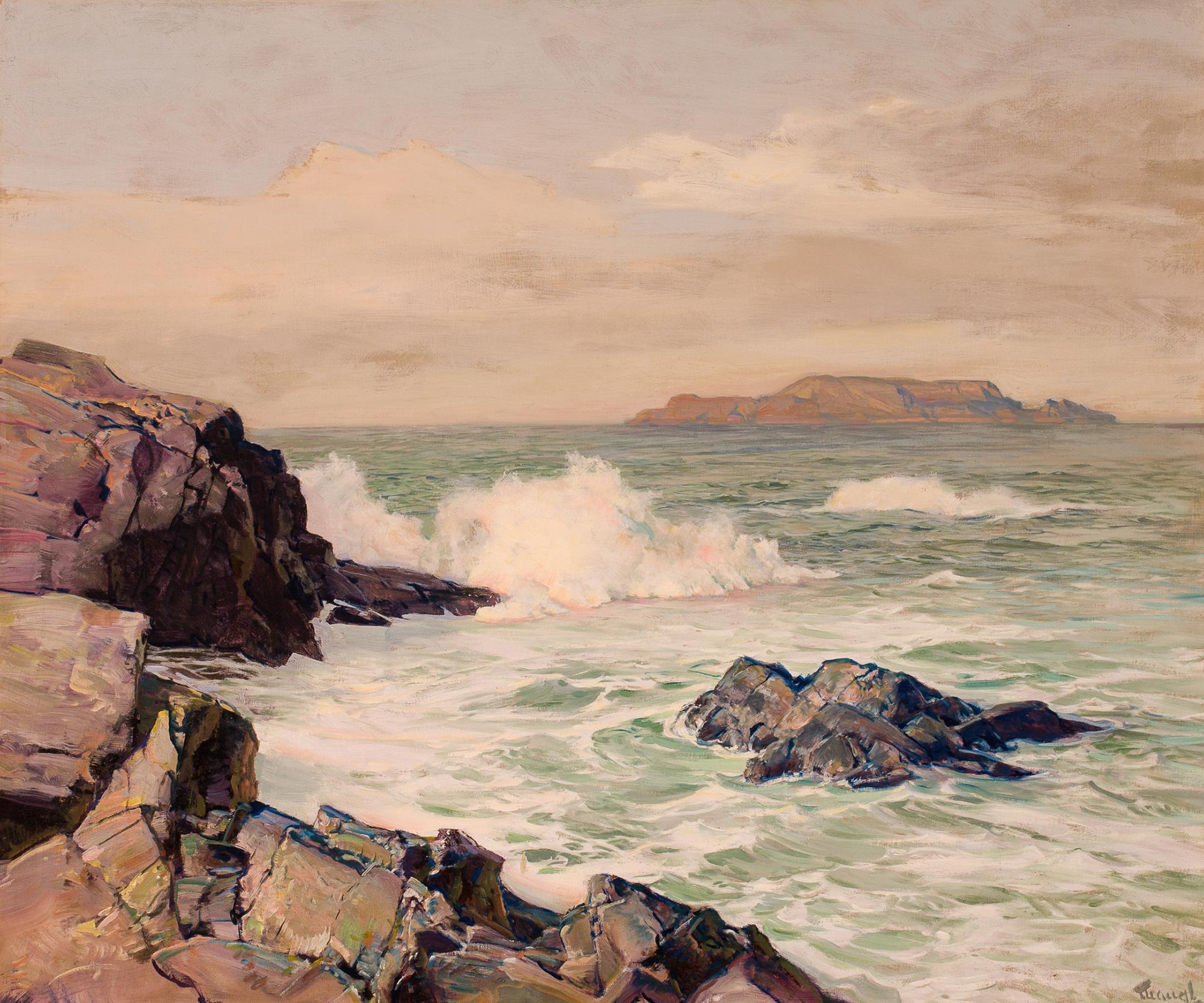
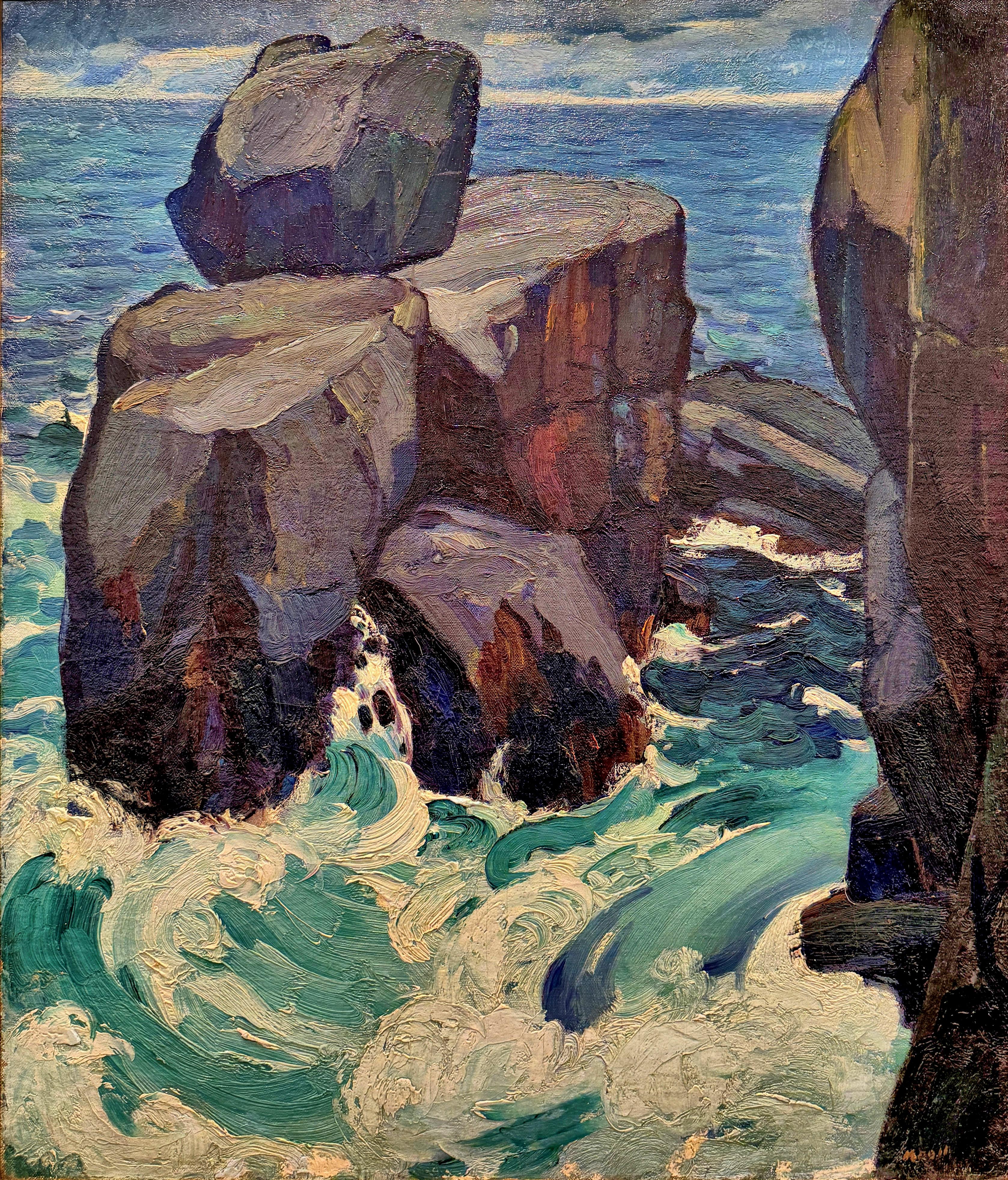
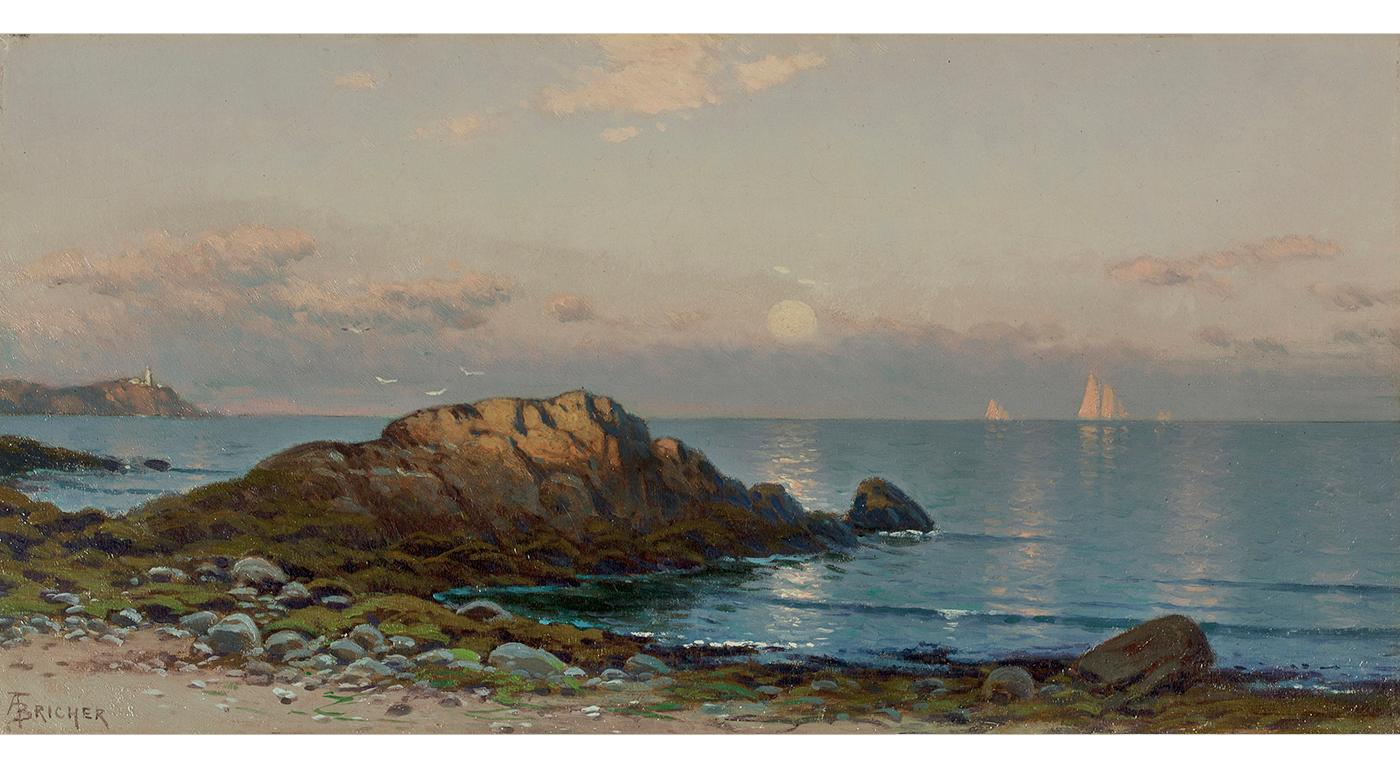
Frederick Judd Waugh"Risen Moon" Frederick Judd Waugh, Coastal Landscape, Rocky Coast Marine Scenecirca 1927
circa 1927
$19,200
$24,00020% Off
£14,339.39
£17,924.2320% Off
€16,638.72
€20,798.4020% Off
CA$26,592.13
CA$33,240.1720% Off
A$29,809.57
A$37,261.9620% Off
CHF 15,545.02
CHF 19,431.2720% Off
MX$365,392.57
MX$456,740.7220% Off
NOK 196,981.45
NOK 246,226.8220% Off
SEK 187,276.47
SEK 234,095.5820% Off
DKK 124,146.42
DKK 155,183.0320% Off
Shipping
Retrieving quote...The 1stDibs Promise:
Authenticity Guarantee,
Money-Back Guarantee,
24-Hour Cancellation
About the Item
Frederick Judd Waugh
Risen Moon
Signed lower right, Grand Central Art Galleries Inc. label on verso
Oil on board
25 x 30 inches
Mainly known as a marine painter. Waugh's sea paintings were enthusiastically received; for five consecutive years, he was awarded the Popular Prize at the Carnegie International Exhibition. Waugh was the son of a well-known Philadelphia portrait painter, Samuel Waugh. He studied at the Pennsylvania Academy of Fine Arts with Thomas Eakins, and at the Académie Julian in Paris with Adolphe-William Bouguereau. After leaving Paris, he moved to England, residing on the island of Sark in the English Channel, where he made his living as a seascape painter. In 1898 he was recorded as living in Heath and Reach, Bedfordshire.
In 1908, Waugh returned to the U.S., settling in Montclair Heights, New Jersey. He had no studio until art collector William T. Evans (a railroad financier and President of the dry goods firm, Mills Gibbs Corporation) offered him one in exchange for one painting a year. In later years, he lived on Bailey Island, Maine, and in Provincetown, Massachusetts.
Waugh’s marinescapes were highly acclaimed, garnering him the Popular Prize at the Carnegie International Exhibition for five years in a row, a feat accomplished by no other artist. In 1914, he was a judge of the art exhibit on Monhegan Island, ME during the 1914 Ter-Centenary celebration of the Voyage of Captain John Smith.
In addition to his marinescapes, Waugh sometimes published work in periodicals, such as The Green Sheaf, to which he contributed at least one illustration. He also produced paintings and sketches on legendary and mythological themes; see, for instance, his 1921 sketch “Levitation in Dream No. 3”, and his c.1912 painting “The Knight of the Holy Grail”.
- Creator:Frederick Judd Waugh (1861-1940, American)
- Creation Year:circa 1927
- Dimensions:Height: 25 in (63.5 cm)Width: 30 in (76.2 cm)
- More Editions & Sizes:Unique workPrice: $24,000
- Medium:
- Movement & Style:
- Period:
- Condition:
- Gallery Location:New York, NY
- Reference Number:1stDibs: LU1841214417312
Frederick Judd Waugh
Frederick Judd Waugh was born into an artist's family. His first teachers were his father, Samuel B. Waugh, a respected Philadelphia portrait painter, and his mother, Mary Eliza Young Waugh, a miniaturist. With encouragement from his parents, he attended the Pennsylvania Academy of the Fine Arts, where he studied with Thomas Eakins and Thomas Anshutz. After three years, he left for Paris, where he entered the Académie Julian and studied under Adolphe William Bougereau and Tony Robert-Fleury. In 1883, while he was still a student, his work was accepted for the Paris Salon. His father's death in 1885 brought him back to the United States, where he spent the next seven years doing commercial work and painting some portraits. In 1892 he returned to Paris. Although Waugh was very versatile and accomplished in depicting a variety of subjects, it was his marine paintings that brought him critical attention. Visiting Sark Island in the English Channel in 1893, he began to study water, rocks, and sky, often battling the elements to paint en plein air. By 1895, Waugh had set up his studio in the English coastal town of Saint Ives, Cornwall, where J. M. W. Turner had painted eighty years earlier. A large window in the studio provided an intimate view of the ocean, and he could continue his intensive study of waves in greater comfort. His wave paintings have been referred to as majesty in motion. Waugh remained in England for twelve years, working as an illustrator for various newspapers and magazines in London, and returning to Saint Ives to paint when time allowed. In 1907, Waugh returned to the United States, eventually settling in Provincetown, Massachusetts. He was elected a member of the National Academy of Design in 1911. For five consecutive years he was voted the favorite artist of the prestigious Carnegie International Exhibition in Pittsburgh. Waugh was known to have painted up to ten canvases a month to keep up with the demand for his work. The United States government called on him to help camouflage the naval fleet in World War I. Fittingly, upon his death, he was buried on the New England coast within sound and sight of the sea.
About the Seller
5.0
Platinum Seller
Premium sellers with a 4.7+ rating and 24-hour response times
Established in 2022
1stDibs seller since 2022
108 sales on 1stDibs
Typical response time: <1 hour
- ShippingRetrieving quote...Shipping from: New York, NY
- Return Policy
Authenticity Guarantee
In the unlikely event there’s an issue with an item’s authenticity, contact us within 1 year for a full refund. DetailsMoney-Back Guarantee
If your item is not as described, is damaged in transit, or does not arrive, contact us within 7 days for a full refund. Details24-Hour Cancellation
You have a 24-hour grace period in which to reconsider your purchase, with no questions asked.Vetted Professional Sellers
Our world-class sellers must adhere to strict standards for service and quality, maintaining the integrity of our listings.Price-Match Guarantee
If you find that a seller listed the same item for a lower price elsewhere, we’ll match it.Trusted Global Delivery
Our best-in-class carrier network provides specialized shipping options worldwide, including custom delivery.More From This Seller
View All"Rocks and Surf, Monhegan" Leon Kroll, Surf Seascape American Realist Artist
By Leon Kroll
Located in New York, NY
Leon Kroll
Rocks and Surf, Monhegan, 1913
Signed and dated lower right
Oil on canvas
30 x 25 inches
Leon Kroll remained a painter of realism at a time when the American art world w...
Category
1910s Impressionist Figurative Paintings
Materials
Canvas, Oil
"Stony Cove and Headland, " Henry Ward Ranger, Coastal Landscape, Seascape
By Henry Ward Ranger
Located in New York, NY
Henry Ward Ranger (1858 - 1915)
Stony Cove and Headland, 1910
Oil on canvas
28 x 36 inches
Signed lower right
Provenance:
McDonough Gallery, New York
William Macbeth Galleries, New York
American Art Association, The Completed Pictures Left by the Late Henry Ward Ranger, 1917, Lot 72
A key person in the establishment of the Old Lyme, Connecticut art colony in 1899, Henry Ward Ranger is regarded as the leader of the Tonalist movement in America and was a leading painter in this country in the late 19th and early 20th-centuries.
He was born in Geneseo and raised in Syracuse, New York, and in 1873, enrolled in the College of Fine Arts at Syracuse University, where his father was a professor of photography and drawing. Two years later, he became a re-toucher of paintings in his father's studio and did not earn a college degree.
He also spent much time in New York City, where he was a writer of music criticism and visited galleries, where he had his first exposure to French Barbizon painting...
Category
1910s American Impressionist Landscape Paintings
Materials
Canvas, Oil
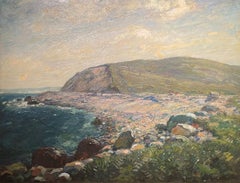
"Coastal Seascape" Charles Herbert Woodbury, New England Boston School Landscape
By Charles Herbert Woodbury
Located in New York, NY
Charles Herbert Woodbury
Coastal Seascape
Signed lower left
Oil on canvas
17 x 20 inches
Charles Herbert Woodbury, born in Lynn, Massachusetts in 1864, is recognized as the founder...
Category
1890s American Impressionist Figurative Paintings
Materials
Canvas, Oil
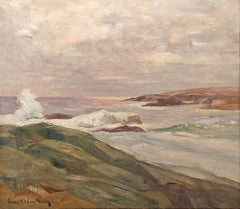
"Maine Coast, Ogunquit, " Ernest Albert, American Impressionism, Seascape
By Ernest Albert
Located in New York, NY
Ernest Albert (1857 - 1946)
Maine Coast, Ogunquit, 1937
Oil on canvasboard
18 x 20 inches
Signed and dated lower right; titled on a label on the reverse
A distinguished theatrical and scenic designer who also became a landscape painter and muralist, Ernest Albert worked in New York, St. Louis, and Chicago.
He was born in Brooklyn, New York in 1857, and showing early talent, received the Graham Art...
Category
1930s American Impressionist Landscape Paintings
Materials
Oil, Board
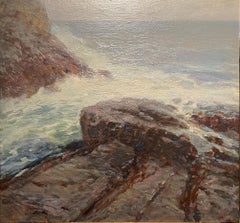
"Monhegan Island, Maine, " Edward Dufner, American Impressionism Landscape View
By Edward Dufner
Located in New York, NY
Edward Dufner (1872 - 1957)
Monhegan Island, Maine
Watercolor on paper
Sight 16 x 20 inches
Signed lower right
With a long-time career as an art teacher and painter of both 'light' and 'dark', Edward Dufner was one of the first students of the Buffalo Fine Arts Academy to earn an Albright Scholarship to study painting in New York. In Buffalo, he had exchanged odd job work for drawing lessons from architect Charles Sumner. He also earned money as an illustrator of a German-language newspaper, and in 1890 took lessons from George Bridgman at the Buffalo Fine Arts Academy.
In 1893, using his scholarship, Dufner moved to Manhattan and enrolled at the Art Students League where he studied with Henry Siddons Mowbray, figure painter and muralist. He also did illustration work for Life, Harper's and Scribner's magazines.
Five years later, in 1898, Dufner went to Paris where he studied at the Academy Julian with Jean-Paul Laurens and privately with James McNeill Whistler. Verification of this relationship, which has been debated by art scholars, comes from researcher Nancy Turk who located at the Smithsonian Institution two 1927 interviews given by Dufner. Turk wrote that Dufner "talks in detail about Whistler, about how he prepared his canvasas and about numerous pieces he painted. . . A great read, the interview puts to bed" the ongoing confusion about whether or not he studied with Whistler.
During his time in France, Dufner summered in the south at Le Pouleu with artists Richard Emil Miller...
Category
Early 20th Century American Impressionist Landscape Drawings and Waterco...
Materials
Paper, Watercolor
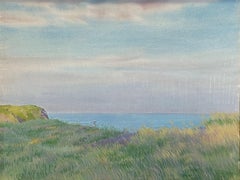
"Bass Rocks" Josephine Reichmann, Impressionist Surf, Luminous Waves, Seascape
Located in New York, NY
Josephine Reichmann
Bass Rocks
Signed lower right
Oil on canvasboard
14 x 16 inches
Reichmann was born in 1864 in Louisville, Kentucky. After studying at the School of the Art Inst...
Category
1920s American Impressionist Landscape Paintings
Materials
Canvas, Oil, Board
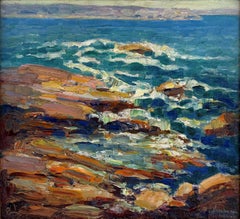
You May Also Like
Oil Seascape by Frederick Judd Waugh
By Frederick Judd Waugh
Located in Toledo, OH
Seascape oil by Frederick Judd Waugh (1861-1940). Waves crash against cliffs in this dramatic seascape on board with shades of rust and blue greens. Signed lower right. Overall size ...
Category
Early 20th Century Paintings
Materials
Paint
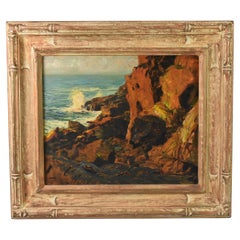
Antique American Marine Seascape Oil Painting Crashing Surf Atlantic Coast Maine
By Frederick Judd Waugh
Located in Portland, OR
A fine antique seascape oil painting on panel by the celebrated marine artist, Frederick Judd Waugh (1861-1940), depicting the Atlantic of the coast of Maine, circa 1910.
The painting is finely executed with bold and decisive brush strokes with crisp edges, one can almost hear the roar of the ocean as the surf crashes upon the rocks. The painting is signed lower right "Waugh" and is housed in the original carved & gilded frame.
Condition is very good indeed, this fine seascape by one of America's most acclaimed late 19th early 20th century marine artists is ready to grace your wall. The painting will be accompanied with a certicificate of authenticity & provenance.
Frederick Judd Waugh was an American artist, primarily known as a marine artist. During World War I, he designed ship camouflage for the U.S. Navy, under the direction of Everett L. Warner.
Waugh was the son of a well-known Philadelphia portrait painter, Samuel Waugh. He studied at the Pennsylvania Academy of Fine Arts with Thomas Eakins, and at the Académie Julian in Paris with Adolphe-William Bouguereau. After leaving Paris, he moved to England, residing on the island of Sark in the English Channel, where he made his living as a seascape painter. In 1898 he was recorded as living in Heath and Reach, Bedfordshire.
In 1908, Waugh returned to the U.S., settling in Montclair Heights, New Jersey. He had no studio until art collector William T. Evans (a railroad financier and President of the dry goods firm, Mills Gibbs Corporation) offered him one in exchange for one painting a year. In later years, he lived on Bailey Island, Maine, and in Provincetown, Massachusetts.
Waugh’s marinescapes were highly acclaimed, garnering him the Popular Prize at the Carnegie International Exhibition for five years in a row, a feat accomplished by no other artist. In 1914, he was a judge of the art exhibit on Monhegan Island, Maine during the 1914 Ter-Centenary celebration of the Voyage of Captain John Smith.
In addition to his marinescapes, Waugh sometimes published work in periodicals, such as The Green Sheaf, to which he contributed at least one illustration. He also produced paintings and sketches on legendary and mythological themes; see, for instance, his 1921 sketch “Levitation in Dream No. 3”, and his c. 1912 painting “The Knight of the Holy Grail”.
In 1918, Waugh was recommended to serve as a camouflage artist (or camoufleur) for the U.S. Navy, as a member of the Design Section of its marine camouflage unit. That section was located in Washington, D.C., and was headed by American painter Everett L. Warner.
According to a biography of Waugh, “Many large ships, including the Leviathan, were painted according to his designs. Though the enterprise was of course a team effort in which no man played a solo part, he had every reason to be proud of his record. Only one ship with his system of camouflage was lost during the war”.
Waugh was known to produce literary work, publishing a short poem in Pamela Colman Smith’s short-lived periodical The Green Sheaf; a fairy tale in The English Illustrated Magazine; and, in 1916, the book The Clan of Munes...
Category
1910s Realist Landscape Paintings
Materials
Panel, Oil
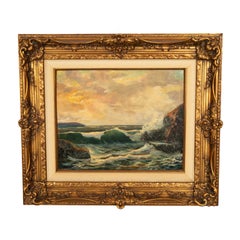
Distant Island
By Frederick Waugh
Located in Costa Mesa, CA
Frederick Waugh was a prolific seascape artist who generated 2,500 paintings of the sea and shore. Although it was never published, he penned a ten chapter book on marine painting. S...
Category
1920s American Realist Landscape Paintings
Materials
Canvas, Oil
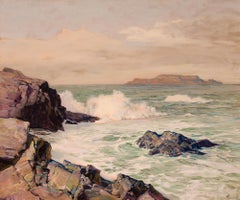
Moonlight Seascape
By Alfred Thompson Bricher
Located in New York, NY
Monogrammed lower left: ATBRICHER
Category
19th Century Hudson River School Landscape Paintings
Materials
Canvas, Oil
"Race Point 2" Impressionistic Coastal Landscape Paintings of Rocks and Ocean
By William Henry Dethlef Koerner
Located in Austin, TX
An impressionistic, antique landscape painting depicting the rugged coastal beauty of Race Point Beach, Massechusets. The rocky coastline and rushing waves are rendered in luminous ...
Category
1920s American Impressionist Landscape Paintings
Materials
Oil, Board
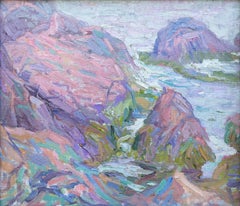
"Race Point 1" Impressionistic Coastal Landscape Paintings of Rocks and Ocean
By William Henry Dethlef Koerner
Located in Austin, TX
An impressionistic, antique landscape painting depicting the rugged coastal beauty of Race Point Beach, Massechusets. The rocky coastline and rushing waves are rendered in luminous ...
Category
1920s American Impressionist Landscape Paintings
Materials
Oil, Board
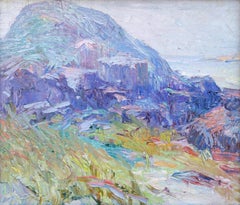
More Ways To Browse
Frederick Fine Art
American Artist William Smith
Captain Portrait
New England Coastal Art
Marine Paintings New England
Rocky Coast Painting
Railroad Oil Paintings
Sea Captain Painting
Sea Captains Portraits
Maine Coast Oil Painting
C Frederick Oil Painting
Seascape Maine
Maine Seascape Paintings
Coastal Maine Paintings
Thomas Eakins
Pennsylvania Railroad
Monhegan Paintings
Antique Railroad Signs