Items Similar to Almond Trees in Spring
Want more images or videos?
Request additional images or videos from the seller
1 of 9
Achille LaugéAlmond Trees in Spring1919-1944
1919-1944
$228,500
£172,669.91
€199,391.39
CA$319,294.25
A$354,283.88
CHF 185,581.52
MX$4,344,471.41
NOK 2,360,532.96
SEK 2,228,242.43
DKK 1,486,986.60
Shipping
Retrieving quote...The 1stDibs Promise:
Authenticity Guarantee,
Money-Back Guarantee,
24-Hour Cancellation
About the Item
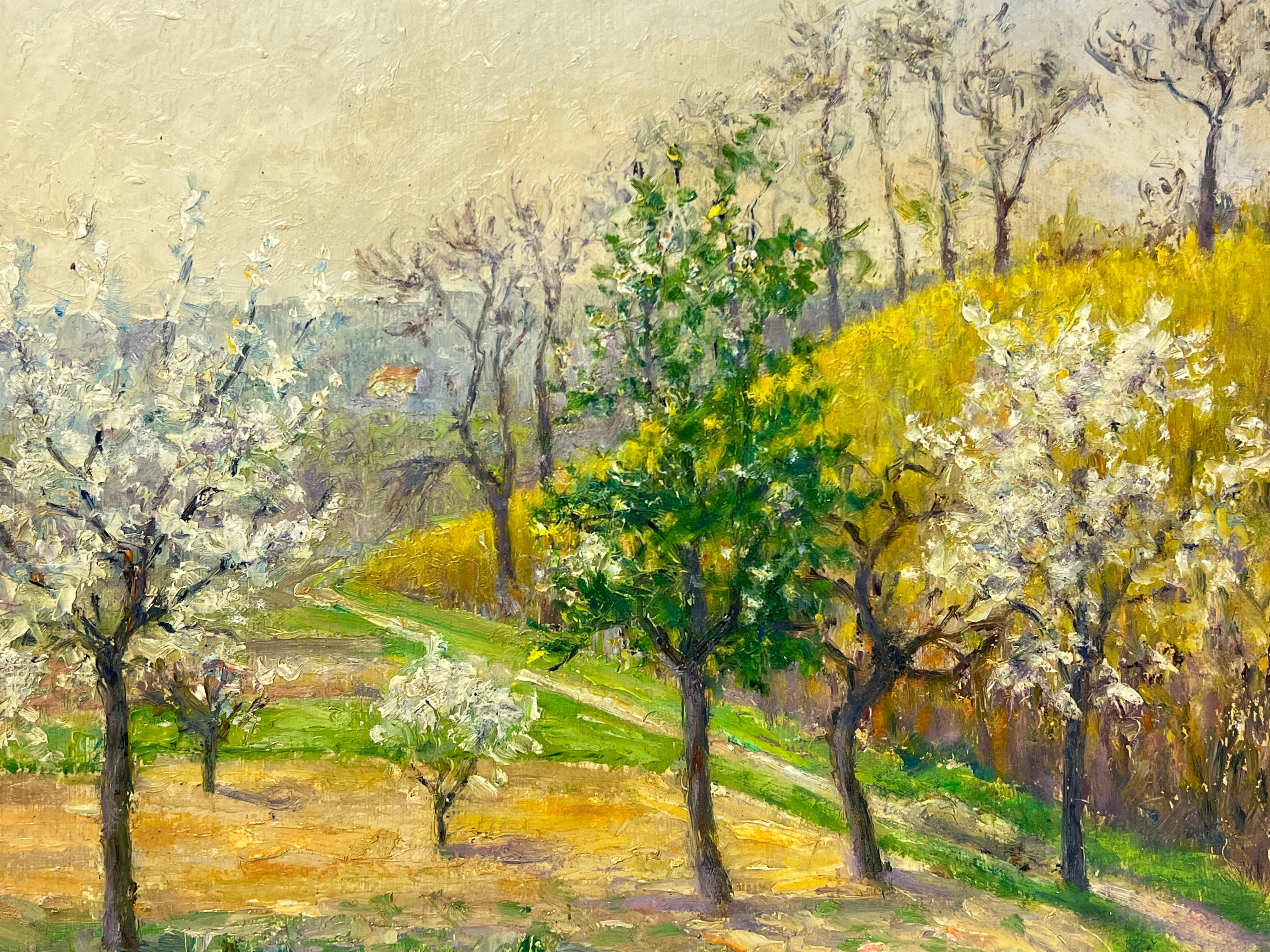
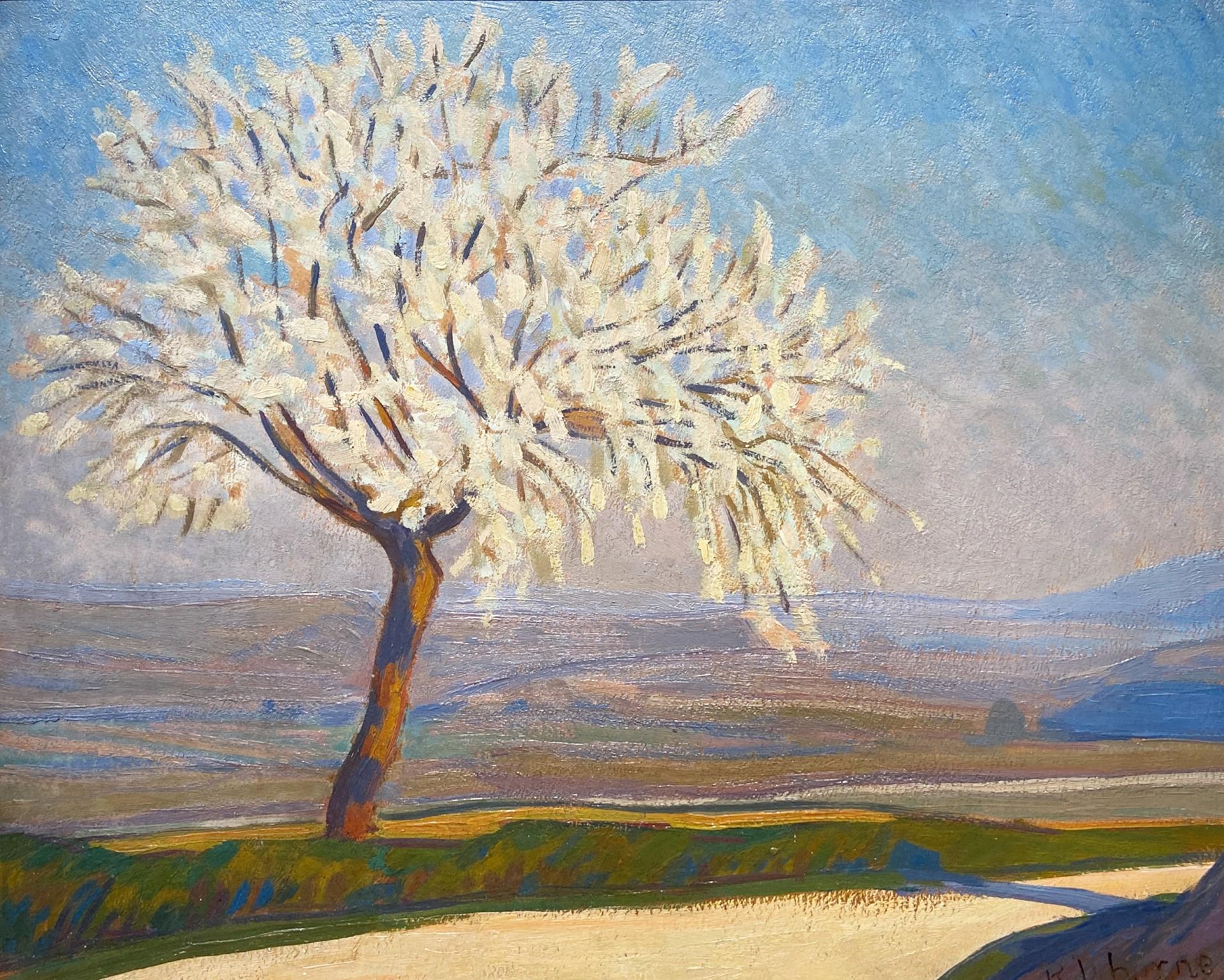
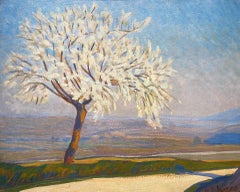
This Neo-Impressionist landscape by the French artist Achille Laugé captures an orchard in late spring in his celebrated, highly modern style. The work displays a thick impasto thanks to the artist's distinctive technique of applying his paint in quick dabs, a characteristic of his later works. One of the foremost painters of the Post-Impressionist period, Laugé’s works are beloved for his sensitivity to light, shade and tone, and his mastery of medium is clearly on display in Almond Trees in Spring. The light blue of the sky and the more muted colors of the field, along with the cottony white and pink tones of the blossoming trees create a scenic and calm composition.
Born in 1861 to wealthy farmers, he moved to Toulouse at the age of 17 to study pharmacy. At this time, he also enrolled part-time at the school of the Beaux-Arts, where he befriended the artist Bourdelle. Three years later, he moved to Paris, where he studied under the famous masters Alexandre Cabandel and Aristide Maillol, making his debut at the Salon in 1884. Like many other artists of his generation, Laugé eventually rejected the conservative ideals of this teacher, falling under the Post-Impressionist influence of George Seurat. By 1888, his landscapes became assiduous experiments in complementary colors and light on canvas. He exhibited three paintings at the Salon des Indépendants in 1894, as well as with the Nabis that same year. In addition, Laugé held several one-man shows in Paris, Toulouse and Perpignan from 1907 to 1930.
It was after his departure from Paris that Laugé developed his divisionist technique, following the lead of Seurat and the Pointillists. Although Laugé never adopted Seurat’s scientific attitude, his interest in the primacy and division of color resulted in work with a vivid, translucent palette. From 1888 until about 1896, Laugé composed his pictures with small points of color. At the end of the century, he abandoned the dots and dabs and painted his landscapes, portraits and still-lives with thin, systematically placed strokes resembling crosshatching. After 1905, he applied his pigments more freely, with enlarged strokes and thick impasto that brought him closer to a traditional impressionist technique whilst maintaining his ability to paint the translucence of southern light. Today, his exceptional works can be found in museums throughout France, including the Musée D'Orsay in Paris.
Canvas: 21" high x 28 1/2" wide
Frame: 32 3/4" high x 40" wide
Provenance:
Galleris Maurice Sternberg, Chicago
Private collection, Texas, 1975
- Creator:Achille Laugé (1861-1944, French)
- Creation Year:1919-1944
- Dimensions:Height: 32.75 in (83.19 cm)Width: 40 in (101.6 cm)
- Medium:
- Movement & Style:
- Period:
- Condition:
- Gallery Location:New Orleans, LA
- Reference Number:Seller: 31-31461stDibs: LU1867942972
About the Seller
5.0
Vetted Professional Seller
Every seller passes strict standards for authenticity and reliability
Established in 1912
1stDibs seller since 2013
17 sales on 1stDibs
Typical response time: 9 hours
- ShippingRetrieving quote...Shipping from: New Orleans, LA
- Return Policy
Authenticity Guarantee
In the unlikely event there’s an issue with an item’s authenticity, contact us within 1 year for a full refund. DetailsMoney-Back Guarantee
If your item is not as described, is damaged in transit, or does not arrive, contact us within 7 days for a full refund. Details24-Hour Cancellation
You have a 24-hour grace period in which to reconsider your purchase, with no questions asked.Vetted Professional Sellers
Our world-class sellers must adhere to strict standards for service and quality, maintaining the integrity of our listings.Price-Match Guarantee
If you find that a seller listed the same item for a lower price elsewhere, we’ll match it.Trusted Global Delivery
Our best-in-class carrier network provides specialized shipping options worldwide, including custom delivery.More From This Seller
View AllThe Garden Near Cailhau By Achille Laugé
By Achille Laugé
Located in New Orleans, LA
Achille Laugé
1861-1944 French
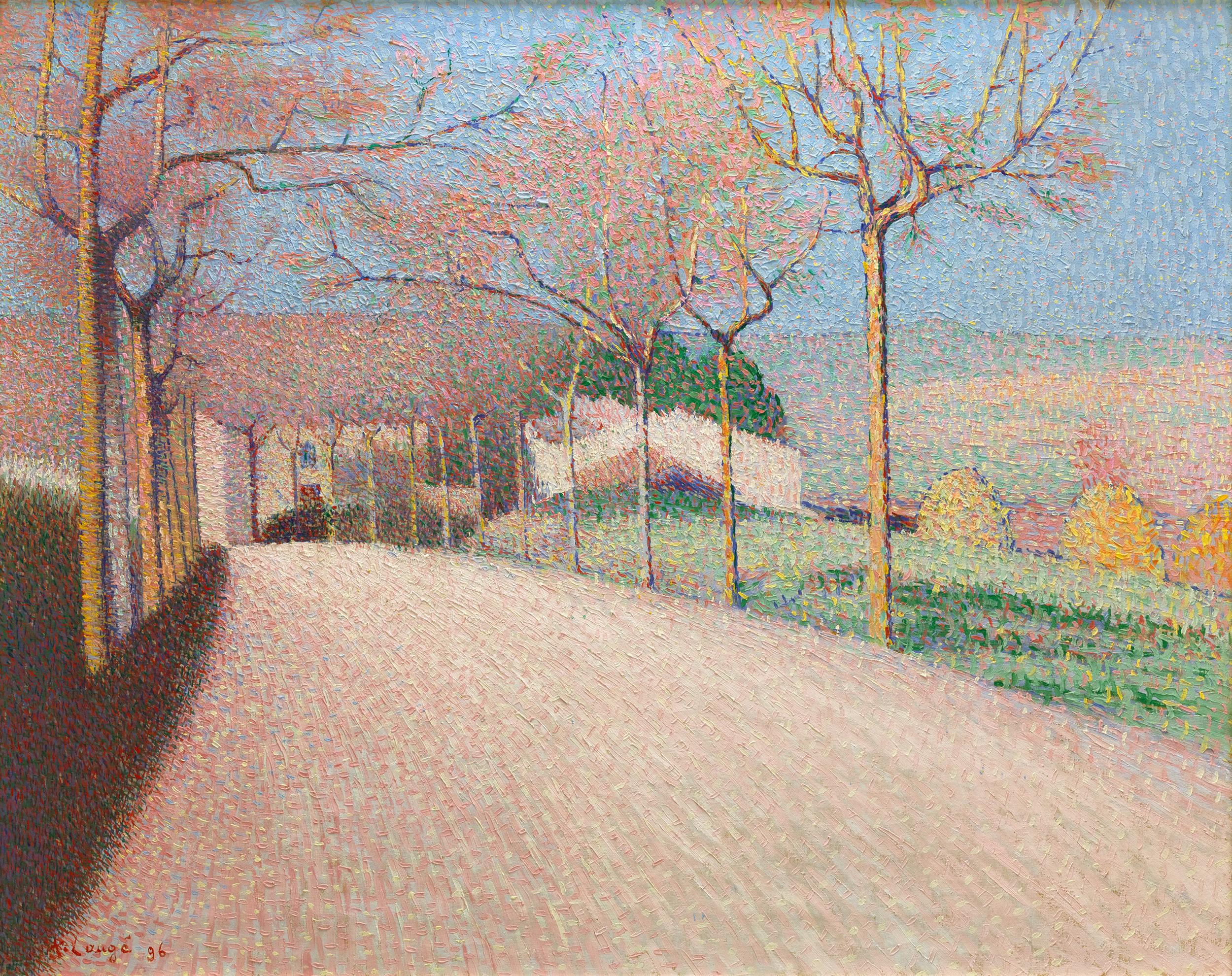
The Garden Near Cailhau
Signed "A. Laugé 96" (lower left)
Oil on canvas
“Laugé’s art is one of great sensitivity and controlled reason; he is a mas...
Category
19th Century Post-Impressionist Landscape Paintings
Materials
Canvas, Oil
Martigues, Provence-Alpes-Côte d'Azur by Paul Leduc
By Paul Leduc
Located in New Orleans, LA
Paul Leduc
1876-1943 Belgian
Martigues, Provence-Alpes-Côte d'Azur
Signed "Paul Leduc" (lower left)
Oil on canvas
Paul Leduc captures the picturesque charm of Martigues, often ca...
Category
20th Century Post-Impressionist Landscape Paintings
Materials
Canvas, Oil
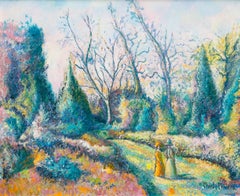
Ces dames au jardin by H. Claude Pissarro
By Hughes Claude Pissarro
Located in New Orleans, LA
Hugues Claude Pissarro
b.1935 French
Ces dames au jardin
(Ladies in the garden)
Signed “H. Claude Pissarro” (lower right)
Oil on canvas
In this composition, French artist H. Clau...
Category
20th Century Post-Impressionist Landscape Paintings
Materials
Canvas, Oil
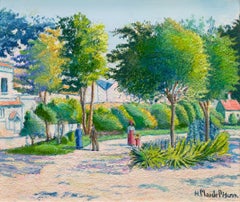
Le jardin municipal, Noisy-le-Sec by H. Claude Pissarro
By Hughes Claude Pissarro
Located in New Orleans, LA
Hugues Claude Pissarro
b.1935 French
Le jardin municipal, Noisy-le-Sec
(The Municipal Garden, Noisy-le-Sec)
Signed “H. Claude Pissarro” (lower right)
Oil on canvas
The Pissarro f...
Category
21st Century and Contemporary Post-Modern Landscape Paintings
Materials
Canvas, Oil
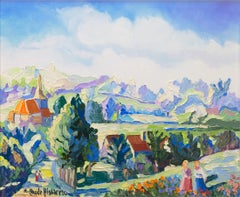
Le manoir de Miette au Vey by H. Claude Pissarro
By Hughes Claude Pissarro
Located in New Orleans, LA
Hugues Claude Pissarro
b. 1935 French
Le manoir de Miette au Vey
(Miette's Manor in Vey)
Signed “H. Claude Pissarro” (lower left)
Oil on canvas
H. Claude Pissarro masterfully cap...
Category
20th Century Post-Impressionist Landscape Paintings
Materials
Canvas, Oil
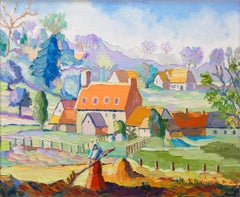
Les toits rouges by H. Claude Pissarro
By Hughes Claude Pissarro
Located in New Orleans, LA
Hugues Claude Pissarro
b.1935 French
Les toits rouges
(The Red Roofs)
Signed “H. Claude Pissarro” (lower right)
Oil on canvas
Capturing the tranquil charm of provincial France, H...
Category
20th Century Post-Impressionist Landscape Paintings
Materials
Canvas, Oil
You May Also Like
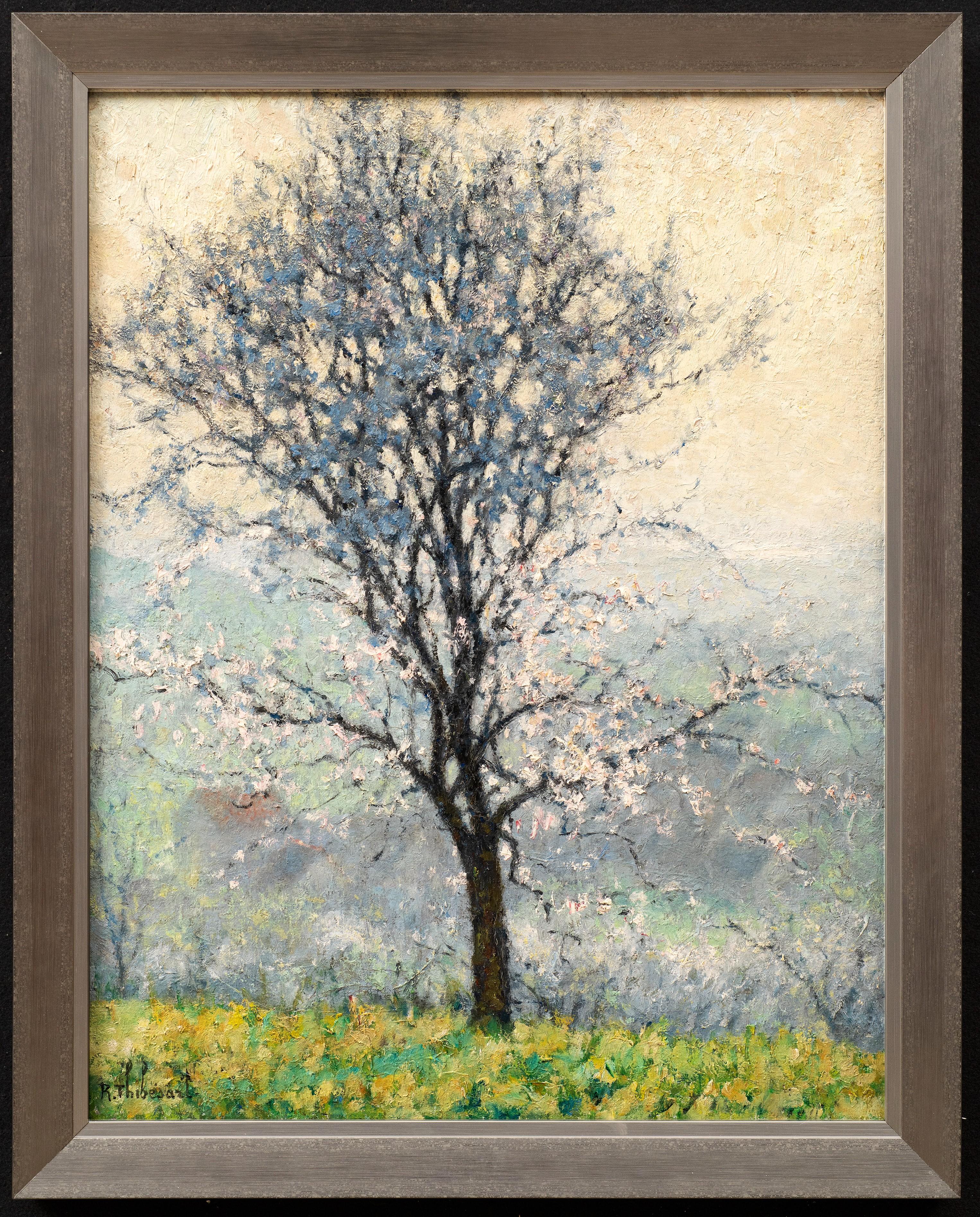
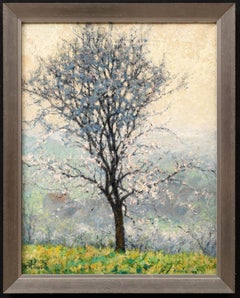
Springtime: Almond Tree in Bloom (Printemps:Amandier en Fleur) Raymond Thibesart
By Raymond Thibesart
Located in SANTA FE, NM
Springtime: Almond Tree in Bloom (Printemps: Amandier en Fleur)
Raymond Thibesart (France, 1874-1968)
Oil on canvas, circa 1920s
19 x 25 1/2 (22 3/4 x 28 1/2 framed) inches
Raymond ...
Category
1920s Post-Impressionist Landscape Paintings
Materials
Canvas, Oil
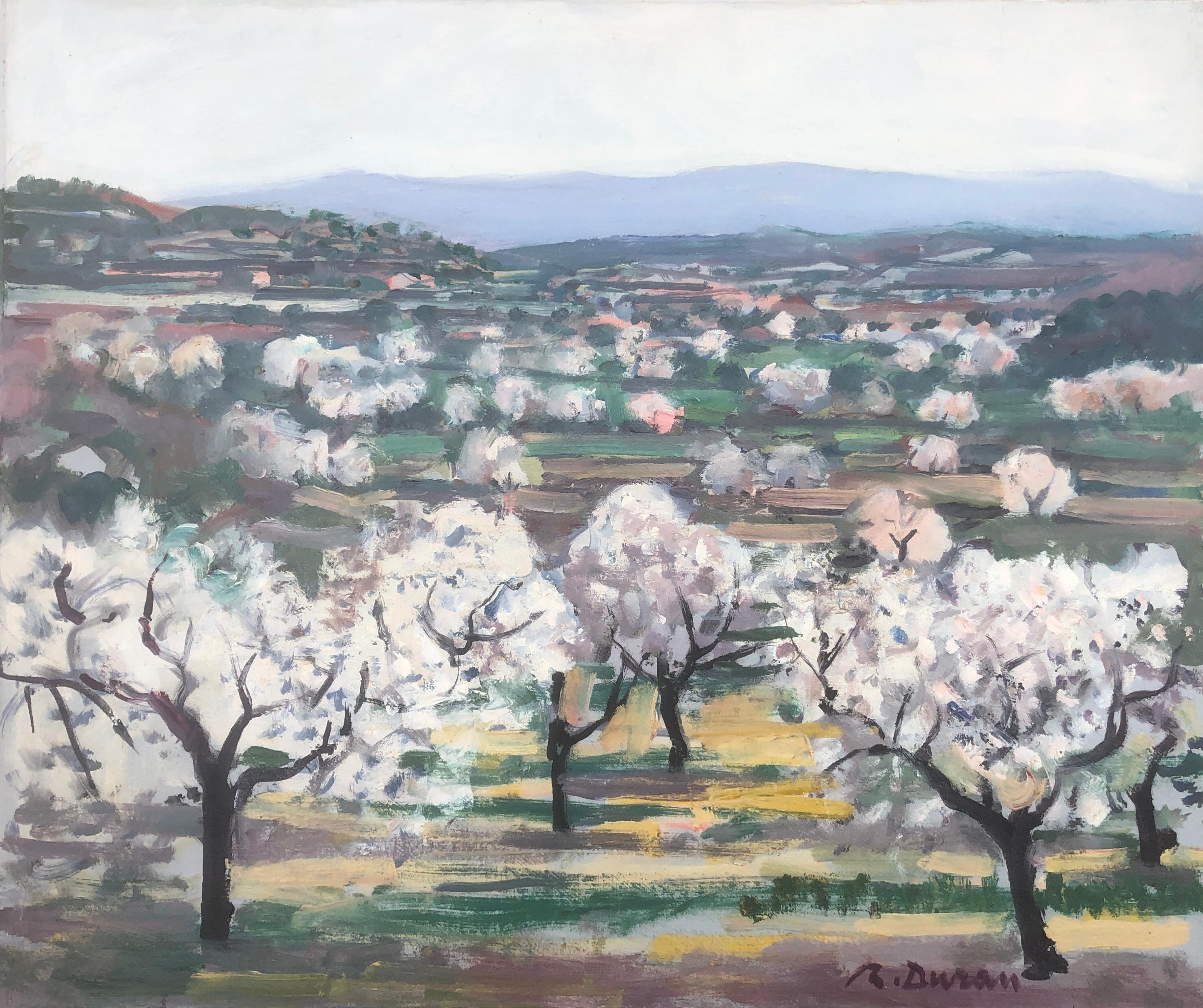
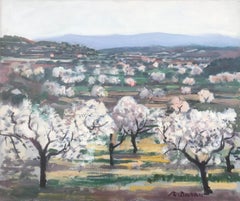
almond trees in bloom Spain oil painting spanish landscape
By Rafael Duran Benet
Located in Barcelona, Barcelona
Rafael Duran Benet (1931-2015) - Cadaques - Oil on canvas on cardboard
Oil measurements 46x55 cm.
Frameless.
Rafael Duran Benet (Terrassa, 1931 - Barcelona, 2015) is a Catalan paint...
Category
1980s Post-Impressionist Landscape Paintings
Materials
Canvas, Oil, Cardboard
$648 Sale Price
22% Off
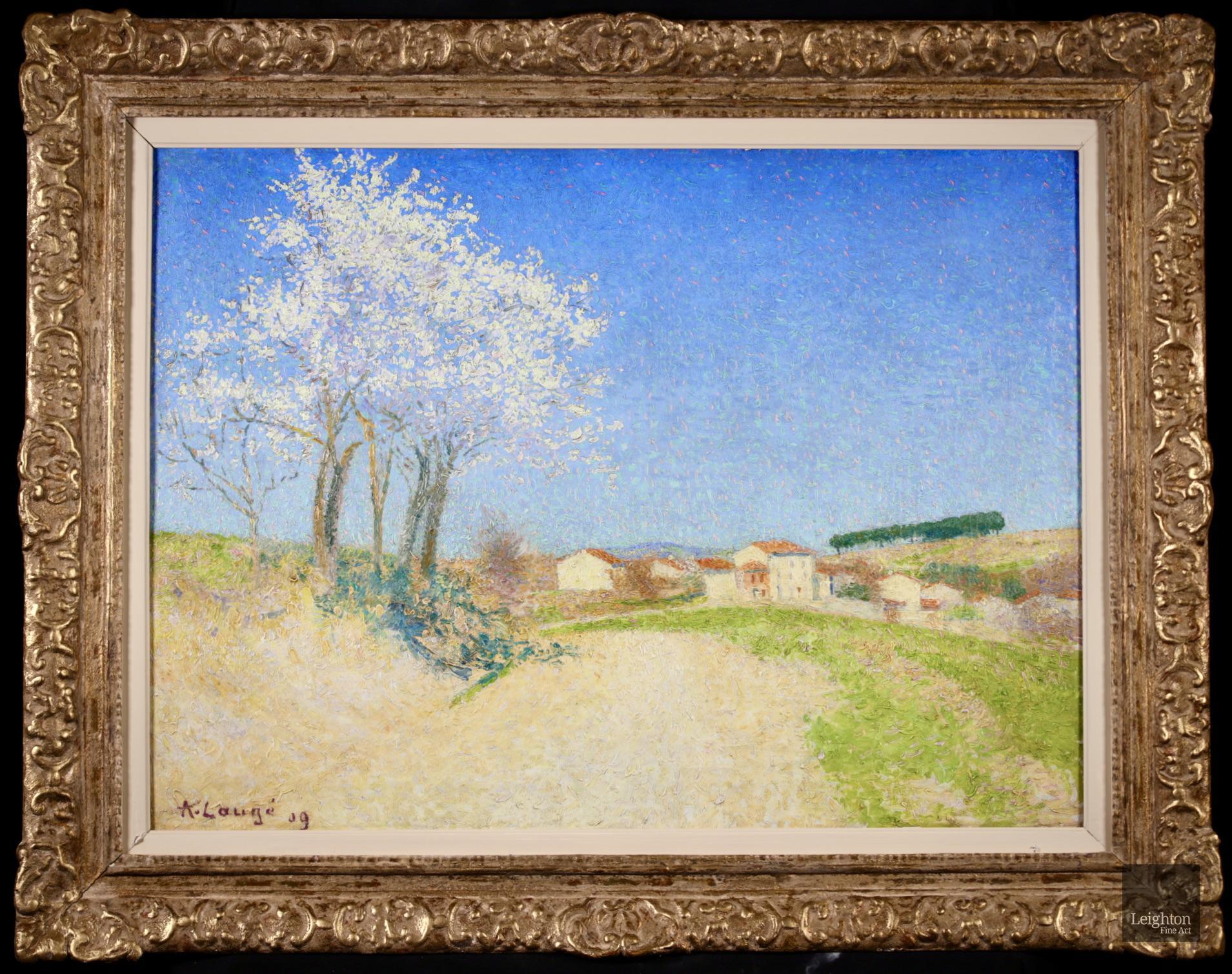
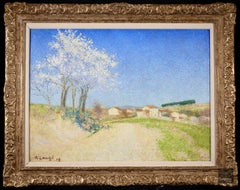
Belveze du Razes - Neo-Impressionist Pointillist Oil, Landscape by Achille Lauge
By Achille Laugé
Located in Marlow, Buckinghamshire
Stunning pointillist landscape oil on panel by French neo-impressionist painter Achille Lauge. The work depicts a path leading to the small village of Belveze du Razes in the South of France on a bright spring day. To the left are white blossom trees in bloom and the houses of the village can be seen in the distance.
Signature:
Signed and dated 1909 lower left
Dimensions:
Framed: 28"x36"
Unframed: 21"x29"
Provenance:
We kindly thank Mme. Nicole Tamburini for allowing us to state that the work is included in the Catalogue Raisonne of the artist which she is currently preparing.
A certificate of authenticity from Mme. Tamburini is available upon request.
Achille Laugé...
Category
Early 1900s Pointillist Landscape Paintings
Materials
Oil, Canvas
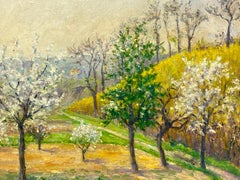
Blossoming Trees in a Spring Orchard, A Pastoral Landscape in Full Bloom
Located in Cirencester, Gloucestershire
Blossoming Trees
by Regine David (female French artist, 1910-2018)
oil painting on board, unframed
board: 13 x 16 inches
inscribed verso
condition: This painting is in excellent cond...
Category
Mid-20th Century Post-Impressionist Landscape Paintings
Materials
Oil
Arbre en Fleurs, Oil Landscape, French Post-Impressionist
Located in London, GB
Oil on board, mounted on panel, signed lower right
Image size: 19 x 23 (48 x 58 cm)
Contemporary style handmade frame
£10,000
Provenance
Artists Estate
The Artist
Robert Deborne...
Category
Early 20th Century Post-Impressionist Landscape Paintings
Materials
Oil, Board
Price Upon Request
1950's French Post Impressionist Signed Oil Painting Blossom Trees in Landscape
Located in Cirencester, Gloucestershire
Blossom Trees in Landscape
French artist, mid 20th century
signed Maut Catelin?
oil on canvas, unframed
canvas: 15 x 22 inches
Provenance: private collection, France
Condition: coul...
Category
Mid-20th Century Post-Impressionist Landscape Paintings
Materials
Oil, Canvas
More Ways To Browse
Spring Fall
Nabi Painting
Vintage Pharmacy
French Pharmacy
Maillol Aristide
Achille Lauge
Longhorn Cattle
Marine Flag
Monterey Cypress
Oil Painting Majorca
Paris Antique Markets
Sanne Bleka
Vintage Christmas Village
Yellowstone Club
Zion National Park Paintings
Arthur Weeks Painting
Aspen Trees In Fall Painting
At Hibbard