Items Similar to Self-Portrait
Want more images or videos?
Request additional images or videos from the seller
1 of 8
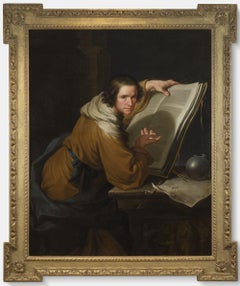
John Hamilton MortimerSelf-Portrait1758
1758
$223,923.79
£165,000
€192,582.52
CA$310,249.77
A$337,229.23
CHF 180,524.22
MX$4,076,319.62
NOK 2,274,957.09
SEK 2,098,101.19
DKK 1,438,283.77
About the Item
Oil on canvas
30 x 25 ⅛ inches; 762 x 638 mm
Verso: after Sir Joshua Reynolds, a self-portrait
Painted c. 1758
Collections:
Philip Gell (1775–1842), Hopton Hall, Derbyshire;
By inheritance at Hopton Hall to his daughter, Isabella, who married William Pole Thornhill, who renounced Hopton and its contents in favour of his kinsman, Henry Chandos-Pole-Gell (1829–1902);
By descent to his son, Brigadier General Harry Chandos-Pole-Gell (1872–1934), who sold Hopton Hall in 1918 and moved the family to Newnham Hall, Northamptonshire;
By descent to his son, Lt Colonel John Chandos-Pole (1909–1993), Newnham Hall;
Thence by descent until 2015, when acquired
By descent to 2015;
Lowell Libson & Jonny Yarker Ltd.
Literature:
Algernon Graves and Walter V. Cronin, A History of the works of Sir Joshua Reynolds P.R.A., London, 1901, IV, p. 1394.
David Manning, Sir Joshua Reynolds: A Complete Catalogue of his Paintings, New Haven and London, 2000, p. 48, no. 13c.
This sensitively handled oil is the earliest recorded self-portrait by John Hamilton Mortimer, executed circa 1758, shortly after Mortimer had entered the studio of Thomas Hudson. It was in Hudson’s studio that Mortimer met Joseph Wright of Derby, with whom he had a life-long friendship and working relationship. Previously unpublished, this painting sheds significant light on Mortimer’s working practices and on the activities of young artists in the 1750s, the decade before the foundation of the Royal Academy. Its rediscovery also underlines what a compelling and intelligent painter Mortimer was, raising significant questions about his relationship with Wright of Derby. The work is also unfinished offering valuable insights into the working methods of British painters at a transitional moment in the emergence of an indigenous school of art.
John Hamilton Mortimer was born in Eastbourne, Sussex the fifth and youngest child of Thomas Mortimer, a mill owner and customs officer. The landscape painter and diarist, Joseph Farington recorded that Mortimer: ‘he began to draw when very young.’ In 1756 or 1757 Mortimer's father paid £100 for him to work in the studio of Thomas Hudson. By the 1750s an artistic system had emerged in Britain which meant drawing from the antique and life model were largely taught in a series of private organisations – including the St Martin’s Lane Academy and Shipley’s drawing academy – whilst the practical role of a painter was learnt in the atelier of an established master. In Hudson’s studio, we know, Mortimer would have been taught to draw, initially by copying old master drawings or prints from Hudson’s own collection. Hudson would also have instructed Mortimer in the use of oil paint, a fact which is significant when considering the confident execution of the present boldly handled work.
Mortimer’s earliest biographers tell us that he grew tired of Hudson’s studio regime and left after a year. Hudson’s most famous student, Joshua Reynolds, similarly rebelled over the repetitive nature of Hudson’s teaching method. Mortimer worked instead with the painter and political radical, Robert Edge Pine.
We have a sense of Mortimer’s powers as a draughtsman at this period from a series of highly finished drawings after sculptures and life-drawings preserved in the collection of the Society of Arts. Two of the life drawings are signed and dated 1758 and 1759, they were probably made at the St Martin’s Lane Academy. Mortimer was awarded a premium by the Society of Arts for the second drawing, the Minutes recording ‘Drawings of Human Figures from living Models at Academy of Artists in St. Martin’s Lane, in Chalks, by Young Men under 24 years to divide 30 Guineas… 1759 John Mortimer pupil of Mr Pine, 2nd share.’ At the same time Mortimer was drawing from casts. An article in The Monthly Magazine noted:
‘whilst he was here [with Hudson], and for a considerable time afterwards, he attended the Duke of Richmond’s Gallery, which was, indeed, his school, and where his assiduity, his exertions, and his opening powers were so much noticed by Cipriani, and the late Mr Moser, that they represented him so favourably to the illustrious nobleman… that he wished very much to have retained him in his house.’
Mortimer did not become the ‘house’ painter to Charles Lennox, 3rd Duke of Richmond, but it is notable that his ‘opening powers’ were recognised by contemporaries.
A series of nine black and white chalk character studies preserved in the Sir John Soane’s Museum date from roughly 1758. Showing different heads observed from oblique angles, the studies show the influence of Giovanni-Battista Piazzetta and the Irish portraitist Thomas Frye, whose own head studies published as mezzotints were extremely popular. The drawings betray Mortimer’s interest in certain viewpoints and physiognomic stylisations. For example, he seems to have been attracted to showing figures from below; many of the sitters are shown with distinctive flared nostrils, upturned noses and small, sharply drawn mouths, with heavily shadowed lower-lips.
These features are all apparent in Mortimer’s earliest self-portrait. A remarkably confident work made at the beginning of his training, the present portrait combines several important themes which would be consistent features of his career.
The first is self-portraiture itself. Mortimer, like his older friend Joseph Wright of Derby, was fascinated by self-portraiture. Wright produced numerous images of himself over his career beginning with a romantic depiction in Van Dyck costume now in Derby Museum and Art Gallery. Possibly painted when Wright was working in Hudson’s studio for the second time, it is similar in approach and handling to our self-portrait by Mortimer. The sitter in our portrait is instantly recognisable as Mortimer from his later self-portraits. Four years after beginning the present study, he produced another self-portrait, which he exhibited at the Society of Artists in 1762. John Sunderland identified the work with a painting formerly in the collection of Mortimer’s descendants which is now known only from a poor quality black and white photograph. It is notable that his first exhibited work, at the first exhibition of living British art in London, was a self-portrait. Like Wright, Mortimer continued to produce self-portraits throughout his career. In the mid-1760s Mortimer painted a conversation piece of himself, his father, Thomas and brother Charles Smith now in the Yale Center for British Art in New Haven. Mortimer is the seated figure in the foreground of the Yale conversation piece, his features – the retroussé nose, the short, dark hair, thick bottom lip and slight dimple in the chin – are the same, but older than in our portrait.
The second is artistic education. Again, like Wright, Mortimer was clearly fascinated by the process of learning to paint and draw and like Wright he produced a series of celebrated images of artists at work. The most instructive is a famous self-portrait of himself seated at a drawing board with a student, presumably correcting the student’s drawing of the casts laid on the table in front of them. The painting is known in two versions, in the second, now in the Royal Academy of Arts, London, Mortimer included the sculptor Joseph Wilton, who had supervised his own time drawing in the Duke of Richmond’s academy. In 1769 Mortimer was appointed a director of the Maiden Lane Academy by the Society of Artists and was required to set the life model along with Ozias Humphry, Robert Edge Pine, George Stubbs, Joseph Wright and Johan Zoffany. According to the Minutes of the Society of Artists, Mortimer was required: ‘to wait upon Dr [William] Hunter and… desire the favour of him to dissect a human figure for the use of the Academy.’
This newly discovered self-portrait is therefore particularly important as it combines these two ideas, showing, as it does, Mortimer at work. Although unfinished, Mortimer depicts himself holding a drawing board, presumably in the process of making a study with a porte crayon. Mortimer’s upturned eyes and concentrated expression possibly suggests that he was attempting to depict himself in the process of drawing a sculpture or cast, given the date, probably at the Duke of Richmond’s Sculpture Gallery. That Mortimer painted this study is also instructive. Given that in 1758 Mortimer was still apprenticed to Thomas Hudson, he would naturally be learning to handle oil. The blond ground, use of liquid brown paint to block in the costume and the careful build-up of colour, all accords with Hudson’s own technique. So too does the format, Mortimer has shown himself in a feigned oval, similar to many of Hudson’s most successful portraits of the period and a format Mortimer himself adopts in his portraiture of the 1760s.
John Hamilton Mortimer is one of the most innovative and impressive history painters of the mid-eighteenth century. In this precautious early self-portrait, Mortimer demonstrates his ability as a painter. A powerful, unfinished work, the portrait looks ahead to Mortimer’s great series of self-portraits. Its provenance also ties the portrait to one of Mortimer’s most important projects and to his long standing friend, Joseph Wright of Derby shedding important light on their work together.
- Creator:John Hamilton Mortimer (1740 - 1779, English)
- Creation Year:1758
- Dimensions:Height: 30.01 in (76.2 cm)Width: 25.12 in (63.8 cm)
- Medium:
- Movement & Style:
- Period:
- Condition:
- Gallery Location:London, GB
- Reference Number:1stDibs: LU1507217299142
John Hamilton Mortimer
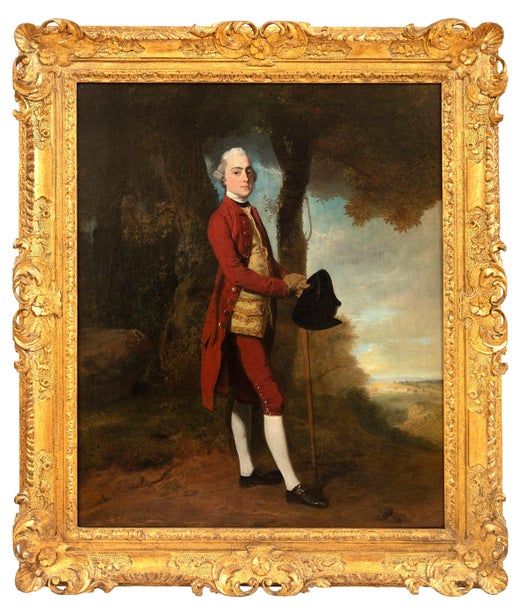
John Hamilton Mortimer was a British figure and landscape painter and printmaker, known for romantic paintings set in Italy, works depicting conversations and works drawn in the 1770s portraying war scenes, similar to those of Salvator Rosa. Mortimer became President of the Society of Artists in 1774, five years before his death, at age 39.
About the Seller
5.0
Recognized Seller
These prestigious sellers are industry leaders and represent the highest echelon for item quality and design.
1stDibs seller since 2021
5 sales on 1stDibs
- ShippingRetrieving quote...Shipping from: Mitchum, United Kingdom
- Return Policy
More From This Seller
View AllSir Charles Frederick
Located in London, GB
Oil on canvas
50 x 40 inches; 127 x 101.6 cm
Framed dimensions: 151.5 x 127 cm
Inscribed on plinth: ‘VOTIS X ET XX’
Painted c.1748
Collections:
Christie’s London, 23rd December 1...
Category
18th Century Old Masters Portrait Paintings
Materials
Canvas, Oil
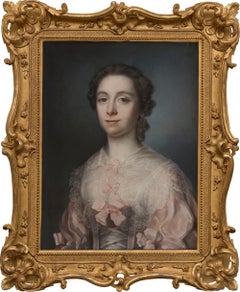
A Pair of Portraits
By Francis Cotes
Located in London, GB
Pastel on paper stretched on canvas
Each 23 ¼ x 19 ¾ inches; 59 x 50 cm
Framed dimensions, each: 83 x 67.5 cm
Both signed ‘F. Cotes Px 1751’
Collections:
Captain Penton;
Christie’...
Category
18th Century Old Masters Portrait Paintings
Materials
Canvas, Paper, Pastel
18th century view of the Elephant and Castle in London
Located in London, GB
Collections:
With Martyn Gregory;
Judy Egerton, 1984, acquired from the above;
By descent to 2014.
Exhibited:
London, Martyn Gregory, Exhibition of English & Continental Watercolours, 1984, no. 94.
London, Lowell Libson...
Category
18th Century Old Masters Landscape Paintings
Materials
Gouache, Vellum
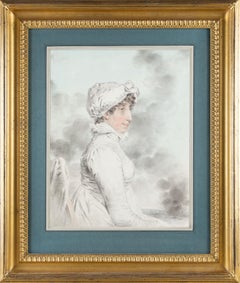
Regency portrait drawing of Arabella Graham-Clarke
By John Downman
Located in London, GB
Collections:
The sitter, and by descent;
Christie's, 19th March 1928, lot 6;
Private collection to 2019
Literature:
G.C. Williamson, John Downman, A.R.A., his Life and Works, Lon...
Category
Early 19th Century Old Masters Portrait Drawings and Watercolors
Materials
Pencil, Watercolor
18th century pastel portrait of Lady Augusta Corbett and her son, Stuart
By Daniel Gardner
Located in London, GB
Collections:
Commissioned by Andrew Corbett, husband of the sitter;
The Venerable Stuart Corbett;
Sir Stuart Corbett;
By descent to 2002;
Sotheby’s, London 21 March 2002, lot.104;
Lowell Libson...
Category
18th Century Old Masters Portrait Drawings and Watercolors
Materials
Pastel, Gouache
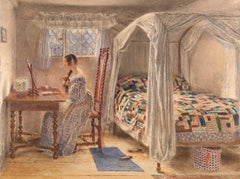
19th century watercolour of a Girl at her Dressing Table
By William Henry Hunt
Located in London, GB
Collections:
Muir Hetherington;
Sir John and Lady Witt, acquired 1974;
By descent to 2015.
Literature:
Tom Jones (ed.), William Henry Hunt 1790-1864, exh. cat., 1981, no. 145 (Girl in a bedroom);
John Witt, William Henry Hunt (1790-1864) Life and Work, London, 1982, no. 553, p. 194, colour pl. 16.
Exhibited:
Wolverhampton, Central Art Gallery, Preston, Harris Museum and Art Gallery and Hastings, Hastings Museum and Art Gallery, William Henry Hunt 1790-1864, 1981, no. 145 as Girl in a bedroom (Lent by Sir John & Lady Witt)
Framed dimensions: 20 x 20.75 inches
This unusually charming and well-preserved watercolour was painted by William Henry Hunt in around 1833. Almost certainly depicting his young wife, Sarah, possibly in the interior of her family home at Bramley in Hampshire. This work shows Hunt’s remarkable virtuosity as a watercolourist, Hunt, for example, articulates the profile of his young wife, by leaving a reserve of white paper to suggest the light modelling her features. Throughout the 1830s Hunt made a sequence of richly painted interior views of both domestic and agricultural spaces which pay scrupulous attention to detail.
Hunt was born in London, the son of a tin-plate worker and japanner. J. L. Roget recorded the observation of Hunt’s uncle: ‘nervy, little Billy Hunt… was always a poor cripple, and as he was fit for nothing, they made an artist of him.’ At the age of sixteen he was apprenticed to the landscape painter John Varley for seven years, moving to live with Varley at 18 Broad Street, Golden Square, London. There he made close friends with both John Linnell and William Mulready. Hunt worked at the ‘Monro Academy’, at 8 Adelphi Terrace, London, the house of Dr Thomas Monro, an enthusiastic patron of landscape watercolourists. Through Monro, Hunt was introduced to the 5th Earl of Essex...
Category
19th Century Old Masters Figurative Drawings and Watercolors
Materials
Watercolor, Pencil
You May Also Like
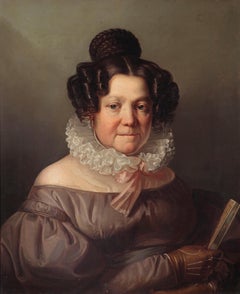
19th Century By Giuseppe Molteni Portrait of a Woman Oil on Canvas
Located in Milano, Lombardia
Giuseppe Molteni (Affori (Milano), Italy, 1800 - Milano, Italy, 1867)
Title: Portrait of a Woman
Medium: Oil on canvas
Dimensions: without frame 67 × 55 cm - with frame 91.5 x 80 cm
...
Category
19th Century Old Masters Portrait Paintings
Materials
Canvas, Oil
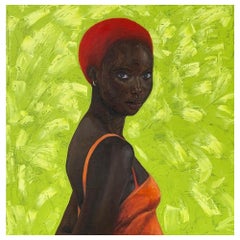
$26,281 Sale Price
20% Off
Answer Within
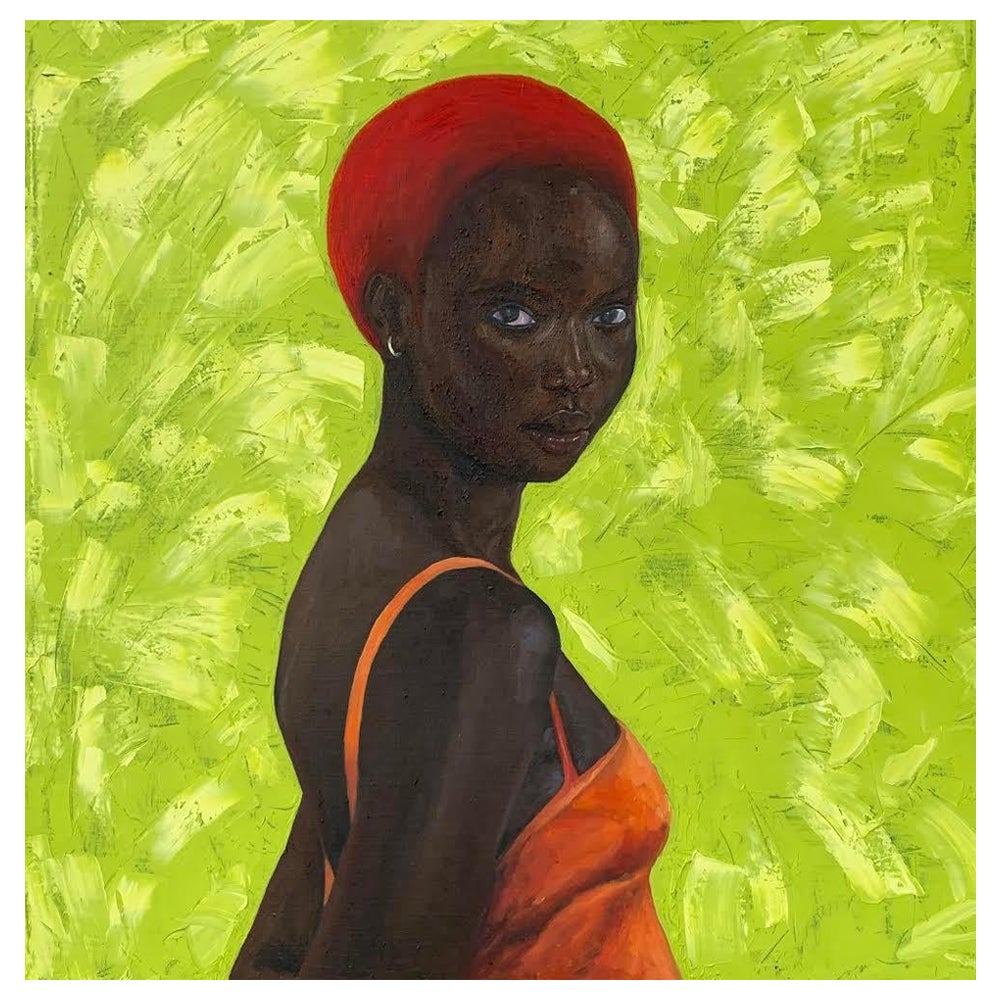
Located in Ibadan, Oyo
Painting
Ships in a well-protected tube from Nigeria
This work is unique, this is not a print or other type of copy.
Accompanied by a Certificate of Authenticity (Issued by the Gallery)
Category
21st Century and Contemporary Old Masters Portrait Paintings
Materials
Canvas, Oil
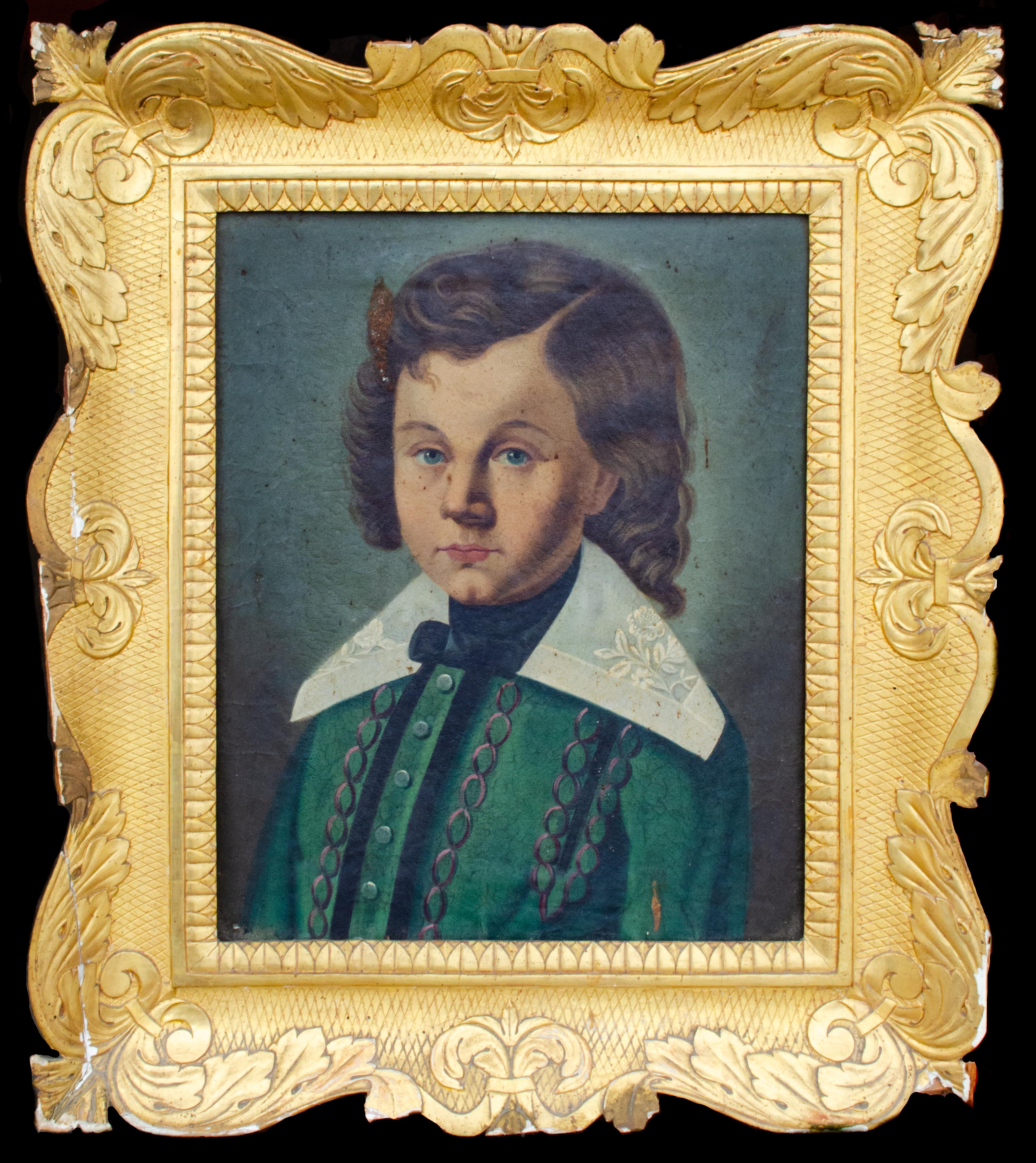
Portrait of a Young Prince, 19th c., by Mystery Artist
Located in New York, NY
Mystery Artist
Untitled (Young Prince), c. 1800-1900
Oil on canvas
16 x 13 in.
Framed: 23 x 19 1/2 x 2 in.
Category
19th Century Old Masters Portrait Paintings
Materials
Canvas, Oil
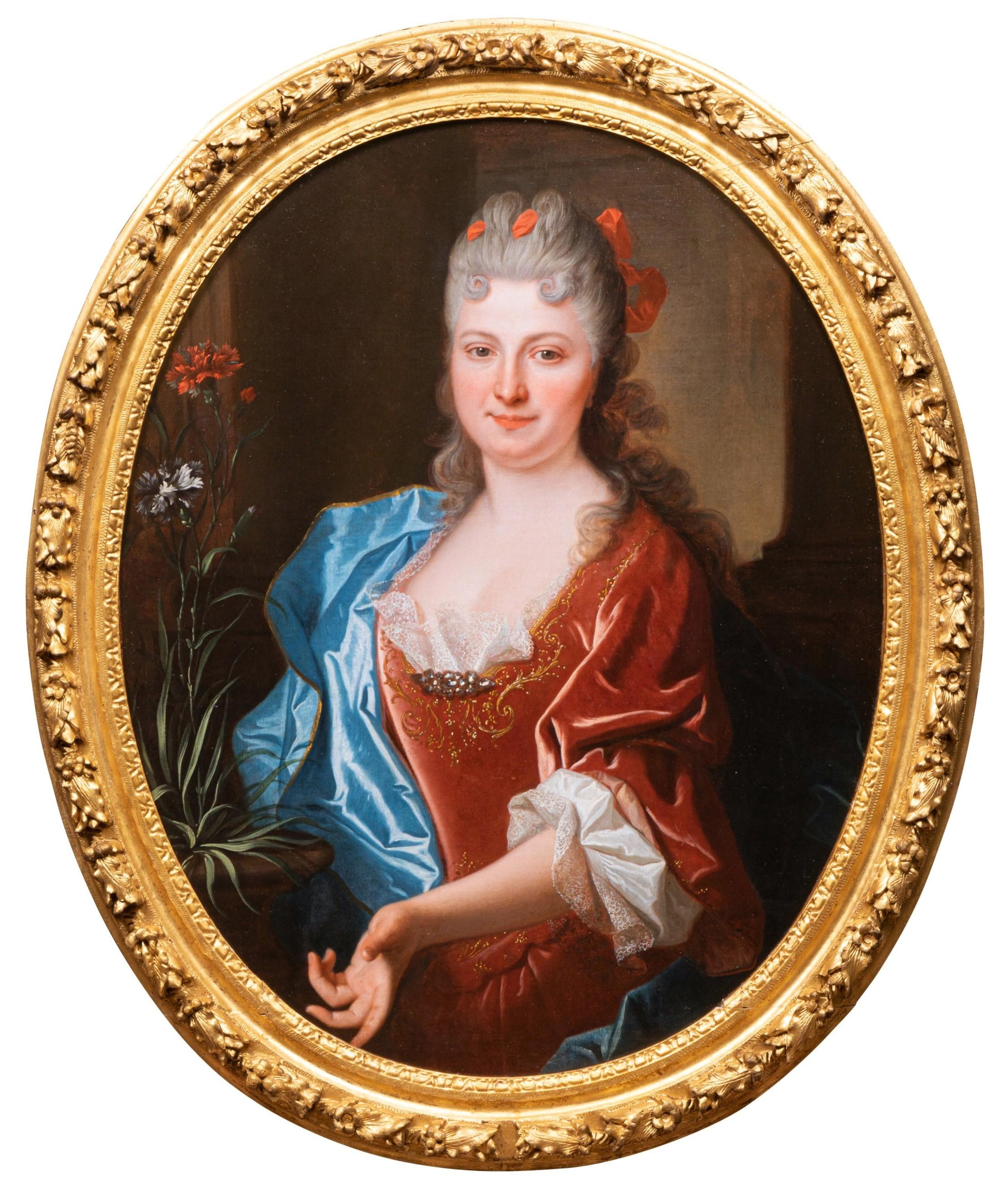
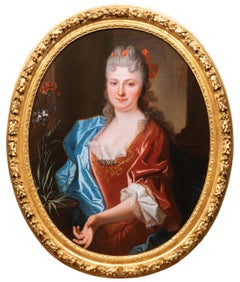
18th c. French Portrait of a Lady by Jean Ranc (1674 - 1735), Paris circa 1700
Located in PARIS, FR
Portrait of a Lady with carnations
By Jean Ranc (Montpellier 1674 - Madrid 1735), circa 1700
Oil on canvas in oval shape,
Dimensions: h. 35.82, w. 28.34 in.
Period Louis XIV giltwood and carved frame with laurel leaves.
Framed dimensions: h. 42.52 in, w. 33.85 in.
Provenance: Collection of the Marquis de Bailleul at the Château d'Angerville-Bailleul (before 1942).
To be included in the catalog raisonné of the artist by Stephane Perreau
Important portrait of a young woman depicted half-length turned three-quarters, her face looking at the viewer.
Dressed in a brick red velvet dress, an elegant blue scarf envelops her figure.
Hair styled “a la Fontange”, her powdered hair is raised and tied at the back with a red ribbon, several curly locks escape from her bun and fall on her back and shoulders.
The perfectly oval face with regular features dominated by her straight nose is softened by her gray eyes with slightly lowered lids. The red tinged skin tones on the cheeks and cheekbones color the face and make the portrait come alive.
The young woman is portrayed standing near a pot of carnations. Her strongly lighted figure stands out against an architectural background of columns.
The artist's palette is made of contrasts opposing warm to cold hues. The icy electric blue contrasts with the fiery brick red, the hair powdered with white accentuates even more the flush of the cheeks.
The left arm bent at the elbow, extending the open hand with slightly bent fingers in the foreground brings depth to the composition.
Our portrait, an interesting testimony in the corpus of works of the painter, is part of his youthful period, around 1700-1705.
The former belonging of this portrait to the Marquis de Bailleul reinforces the remarkable character of our painting.
The portrait has been examined by Stéphane Perreau, specialist of Jean Ranc and will be included in the catalog raisonné currently being written, under number P. 43. The notice edited by Mr Perreau is below:
"Painted around 1700-1705, this portrait of a woman is directly inherited from Hyacinthe Rigaud, the master of Jean Ranc (the hand turned over the front, in a watch...
Category
Early 18th Century Old Masters Portrait Paintings
Materials
Canvas, Oil
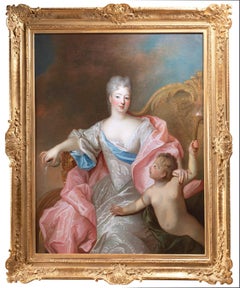
18th c. French Portrait of a Lady as Venus, attributed to Pierre Gobert
By Pierre Gobert
Located in PARIS, FR
Portrait of a Lady as Venus
ATTRIBUTED TO PIERRE GOBERT (1662-1744)
FRENCH SCHOOL AROUND 1720
OIL ON CANVAS: H. 55.51 in, W. 42.91 in.
IMPORTANT 18TH CENTURY GILTWOOD FRAME (RE-GILT)...
Category
Early 18th Century Old Masters Portrait Paintings
Materials
Canvas, Oil
$32,259 Sale Price
20% Off
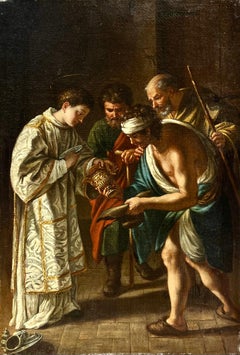
Saint Lawrence Looking at the Treasures
Located in Fredericksburg, VA
"Saint Lawrence Looking at the Treasures" is a captivating painting attributed to the Bolognese School, a prominent art movement from Bologna, Italy, flourishing primarily in the 16t...
Category
Late 17th Century Old Masters Portrait Paintings
Materials
Canvas, Oil