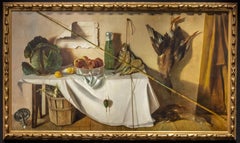
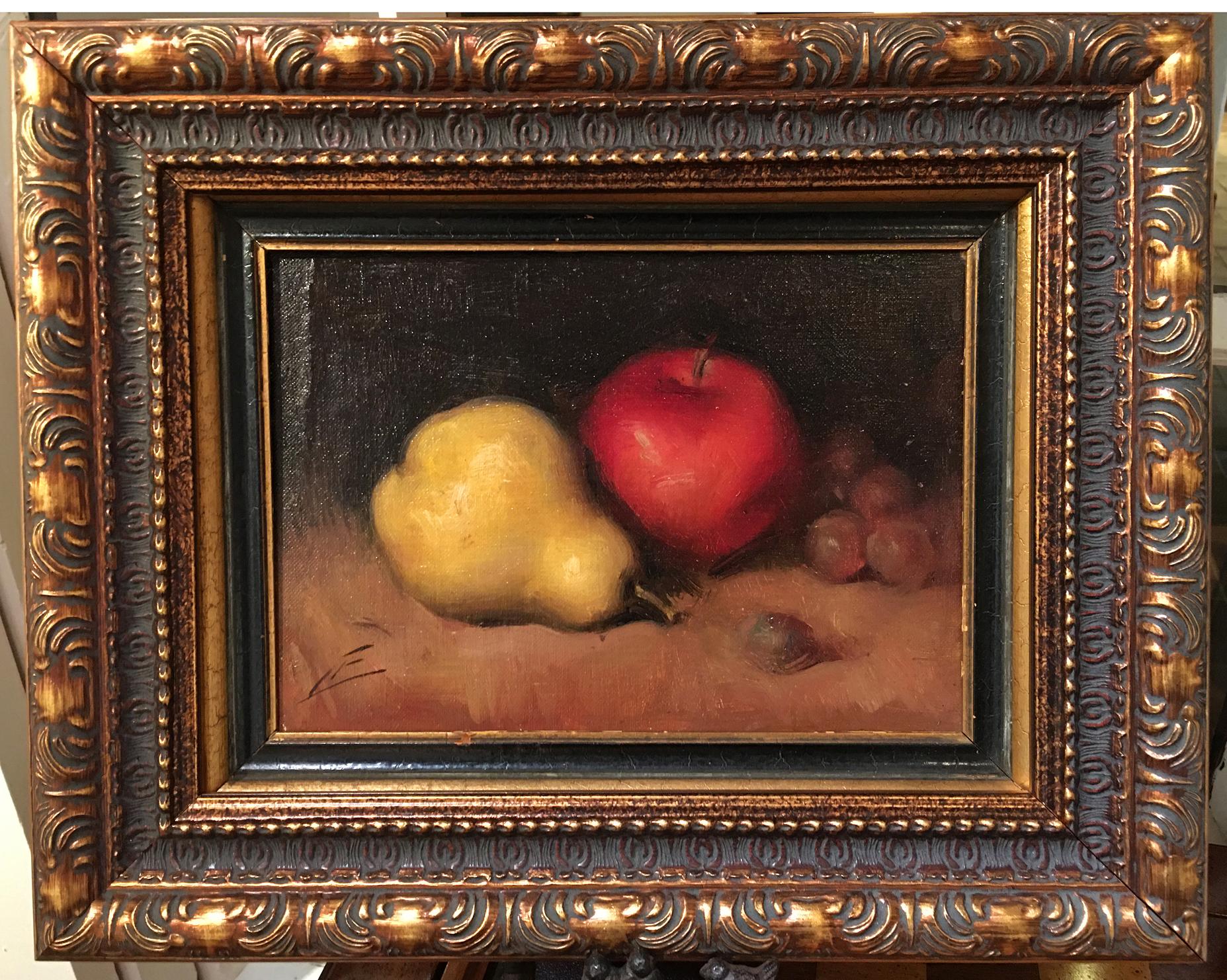
Provisions from Nature
View Similar Items

![[Studies in Fragility] – Oil on Canvas Still Life by Paul Gorka, circa 1965](https://a.1stdibscdn.com/paul-gorka-paintings-studies-in-fragility-oil-on-canvas-still-life-by-paul-gorka-circa-1965-for-sale/a_28432/a_164033521748506722251/Gorka_Paul_Untitled_StudiesinFragility_circa1965_101218_FT_1_Hero_Ratio_0_761_SM_COMPLETE_master.jpg)
Want more images or videos?
Request additional images or videos from the seller
1 of 5
Michael HottesProvisions from Nature1889
1889
$70,000List Price
About the Item
- Creator:Michael Hottes (1852 - 1891)
- Creation Year:1889
- Dimensions:Height: 40.5 in (102.87 cm)Width: 72 in (182.88 cm)
- Medium:
- Movement & Style:
- Period:
- Condition:
- Gallery Location:New York, NY
- Reference Number:1stDibs: LU1025778191
About the Seller
5.0
Recognized Seller
These prestigious sellers are industry leaders and represent the highest echelon for item quality and design.
Established in 1997
1stDibs seller since 2012
21 sales on 1stDibs
Typical response time: 12 hours
Authenticity Guarantee
In the unlikely event there’s an issue with an item’s authenticity, contact us within 1 year for a full refund. DetailsMoney-Back Guarantee
If your item is not as described, is damaged in transit, or does not arrive, contact us within 7 days for a full refund. Details24-Hour Cancellation
You have a 24-hour grace period in which to reconsider your purchase, with no questions asked.Vetted Professional Sellers
Our world-class sellers must adhere to strict standards for service and quality, maintaining the integrity of our listings.Price-Match Guarantee
If you find that a seller listed the same item for a lower price elsewhere, we’ll match it.Trusted Global Delivery
Our best-in-class carrier network provides specialized shipping options worldwide, including custom delivery.More From This Seller
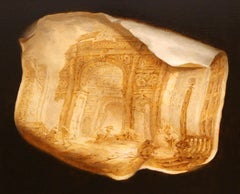
View AllManhattan Arch – Curled Paper
Located in New York, NY
Anthony Baus is an alumnus and instructor of the Grand Central Atelier in Long Island City, New York. His unique artistic vision, which mines the world of the Old Masters and antiqui...
Category
21st Century and Contemporary American Realist Figurative Paintings
Materials
Oil, Acrylic
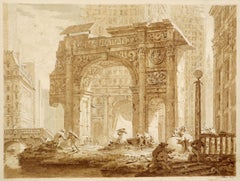
Manhattan Arch
Located in New York, NY
Anthony Baus is an alumnus and instructor of the Grand Central Atelier in Long Island City, New York. His unique artistic vision, which mines the world of the Old Masters and antiqui...
Category
21st Century and Contemporary American Realist Figurative Drawings and W...
Materials
Ink, Pen, Paper
View of St. John’s Cathedral, Antigua
Located in New York, NY
Provenance:
Robert Hollberton, Antigua, ca. 1841
Private Collection, New York
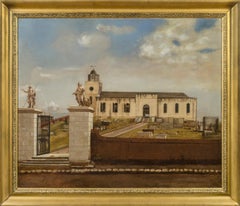
The present painting depicts Old St. John’s Cathedral on the island of Antigua. The church was erected in the 1720s on the designs of the architect Robert Cullen. It measured 130 feet by 50 feet with north and south porches 23 x 20 ½ feet. The tower, 50 feet high with its cupola, was added in 1789. The church was elevated to the status of a cathedral, but disaster struck in the form of an earthquake that destroyed the building on 8 February 1843. A memorandum of that date relates the event:
“On Wednesday, 8th February, 1843, this island was visited by a most terrific and destructive earthquake. At twenty minutes before eleven o’clock in the forenoon, while the bell was ringing for prayers, and the venerable Robert Holberton was in the vestry-room, awaiting the arrival of persons to have their marriage solemnized, before the commencement of the morning service, the whole edifice, from one end to the other, was suddenly and violently agitated. Every one within the church, after the first shock, was compelled to escape for his life. The tower was rent from the top to the bottom; the north dial of the clock precipitated to the ground with a dreadful crash; the east parapet wall of the tower thrown upon the roof of the church; almost the whole of the north-west wall by the north gallery fell out in a mass; the north-east wall was protruded beyond the perpendicular; the altar-piece, the public monument erected to the memory of lord Lavington, and the private monuments, hearing the names of Kelsick, Warner, Otley, and Atkinson, fell down piecemeal inside; a large portion of the top of the east wall fell, and the whole of the south-east wall was precipitated into the churchyard, carrying along with it two of the cast-iron windows, while the other six remained projecting from the walls in which they had been originally inserted; a large pile of heavy cut stones and masses of brick fell down at the south and at the north doors; seven of the large frontpipes of the organ were thrown out by the violence of the shock, and many of the metal and wooden pipes within displaced; the massive basin of the font was tossed from the pedestal on which it rested, and pitched upon the pavement beneath uninjured. Thus, within the space of three minutes, this church was reduced to a pile of crumbling ruins; the walls that were left standing being rent in every part, the main roof only remaining sound, being supported by the hard wood pillars.”
The entrance from the southern side into the cathedral, which was erected in 1789, included two imposing statues, one of Saint John the Divine and the other of Saint John the Baptist in flowing robes. It is said that these statues were confiscated by the British Navy from the French ship HMS Temple in Martinique waters in 1756 during the Seven Years’ War and moved to the church. The statues are still in situ and can be seen today, much as they appeared in Bisbee’s painting, but with the new cathedral in the background (Fig. 1).
Little is known of the career of Ezra Bisbee. He was born in Sag Harbor, New York in 1808 and appears to have had a career as a political cartoonist and a printmaker. His handsome Portrait of President Andrew Jackson is dated 1833, and several political lithographs...
Category
19th Century Old Masters Landscape Paintings
Materials
Canvas, Oil
Portrait of a Gentleman
By Ippolito Scarsella (Scarsellino)
Located in New York, NY
Provenance: Suida-Manning Collection, New York
Private Collection
Exhibited: Venetian Paintings of the Sixteenth Century, Finch College Museum of Art, New York, October 30-December 15, 1963, no. 31.
Veronese & His Studio in North American Collections, Birmingham Museum of Art, Oct. 1-Nov. 15, 1972, and Montgomery Museum of Fine Arts, Dec. 5-Dec. 31, 1972
Literature: Robert L. Manning, A Loan Exhibition of Venetian Paintings of the Sixteenth Century, exh. cat. New York 1963, cat. no. 31ill., as by Veronese
Stephen Clayton and Edward Weeks, eds., introduction by David Rosand, Veronese & His Studio in North American Collections, Birmingham 1972, as by Veronese, p. 38 ill.
Terisio Pignatti, Veronese, Venice 1976, I, p. 199, cat. no. A225, II, fig. 908, as attributed to Veronese
Terisio Pignatti and Filippo Pedrocco, Veronese; catalogo completo dei dipinti, Florence 1991, no. 54°, as attributed to Veronese.
Terisio Pignatti and Filippo Pedrocco, Veronese, Milan 1995, II, pp. 517-518ill., cat. no. A 56, under attributed paintings, by Veronese and workshop)
John Garton, Grace and Grandeur; The Portraiture of Paolo Veronese, London-Turnhout 2008, p. 237, fig. 77, cat. no. R16, as workshop of Veronese.
Scarsellino’s art is widely regarded as critical link between the Renaissance and the Baroque styles in Emilian painting; not only was he an important transmitter of the heritage of the Renaissance, but he was also open to innovative ideas, and was one of the earliest to experiment with the trend to naturalism that would become fundamental to art of the new century. Born around 1550, he received his earliest training from his father Sigismondo, an architect and painter; it was probably while working at his father’s side as a youth that he acquired the nickname Scarsellino, or “little Scarsella”. After absorbing the principles of his art in Ferrara and Parma, he went to Venice in 1570, staying for four years and working in the shop of Veronese. In the following decade, his art —especially in terms of its piety and its development of landscape— demonstrates a strong sympathy with that of the Carracci, with whom he worked in 1592-1593 at the Palazzo dei Diamanti in Ferrara. Maria Angela Novelli and later Alessandra Frabetti both propose that Scarsellino traveled to Rome, although such a trip has not been documented; if he did travel to Rome, it probably would have occurred during the years that Scarsellino’s colleagues Agostino and Annibale Carracci were there, that is, beginning in 1595 and until 1609. The last decades of Scarsellino’s career again involve stylistic experimentation, this time in a manner that would bring his work very close to the progressive figurative naturalism of Carlo Bononi and prepare the way for Guercino.
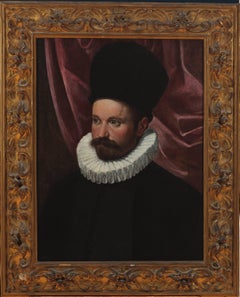
The present portrait of a distinguished gentleman had been long thought to be by Paolo Veronese and was in fact attributed to him by such distinguished connoisseurs as Adolfo Venturi and Wilhelm Suida. The portrait’s style is, however, distinct from Veronese’s, although clearly indebted to it, and the attribution to the young Scarsellino is wholly convincing. The painting would then date from the 1570s – a date confirmed by the costume the subject wears. The puffed hat that appears in the painting had a rather short-lived vogue in the early 1570s. One sees it in Giambattista Moroni’s Portrait of Count...
Category
18th Century and Earlier Baroque Portrait Paintings
Materials
Canvas, Oil
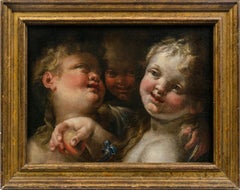
Three Angels
By Domenico Piola the Elder
Located in New York, NY
Provenance:
Robert L. and Bertina Suida Manning, New York, until 1996
Private Collection, USA
One of the leading artists in Genoa during the second half of the seventeenth century, Domenico Piola came from a successful family of artists, renowned for their many illusionistic ceiling programs throughout Genoese churches and palaces. A prolific draughtsman and painter, Domenico oversaw an extremely productive studio. In addition to his collaborations with numerous other artists, Domenico also provided many designs for book illustrations and prints that circulated throughout Europe, earning him international exposure and high acclaim in his own day.
As Dr. Anna Orlando has indicated (written communication), the present work is an early work by Piola, datable from the late 1640s. At this time the young artist came strongly under the influence of Castiglione and Valerio Castello, while admiring the works of Giulio Cesare Procaccini. Piola’s works from this period are exuberant and fluid, and the artist’s love of portraying children is evident from the angels and putti that populate both his altarpieces and more intimate paintings.
The present work depicts three angels...
Category
17th Century Baroque Figurative Paintings
Materials
Canvas, Oil
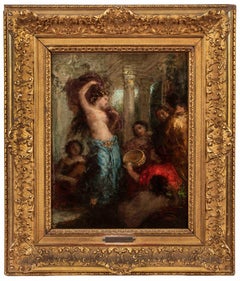
Orientale
By Henri Fantin-Latour
Located in New York, NY
Signed, lower right: Fantin
Provenance:
Gustave Tempelaere (1840–1904), Paris; possibly by descent to his son:
Julien Tempelaere (1876–1961) and with F. & J. Tempelaere, Paris, prob...
Category
1890s Romantic Figurative Paintings
Materials
Canvas, Paper, Oil
You May Also Like
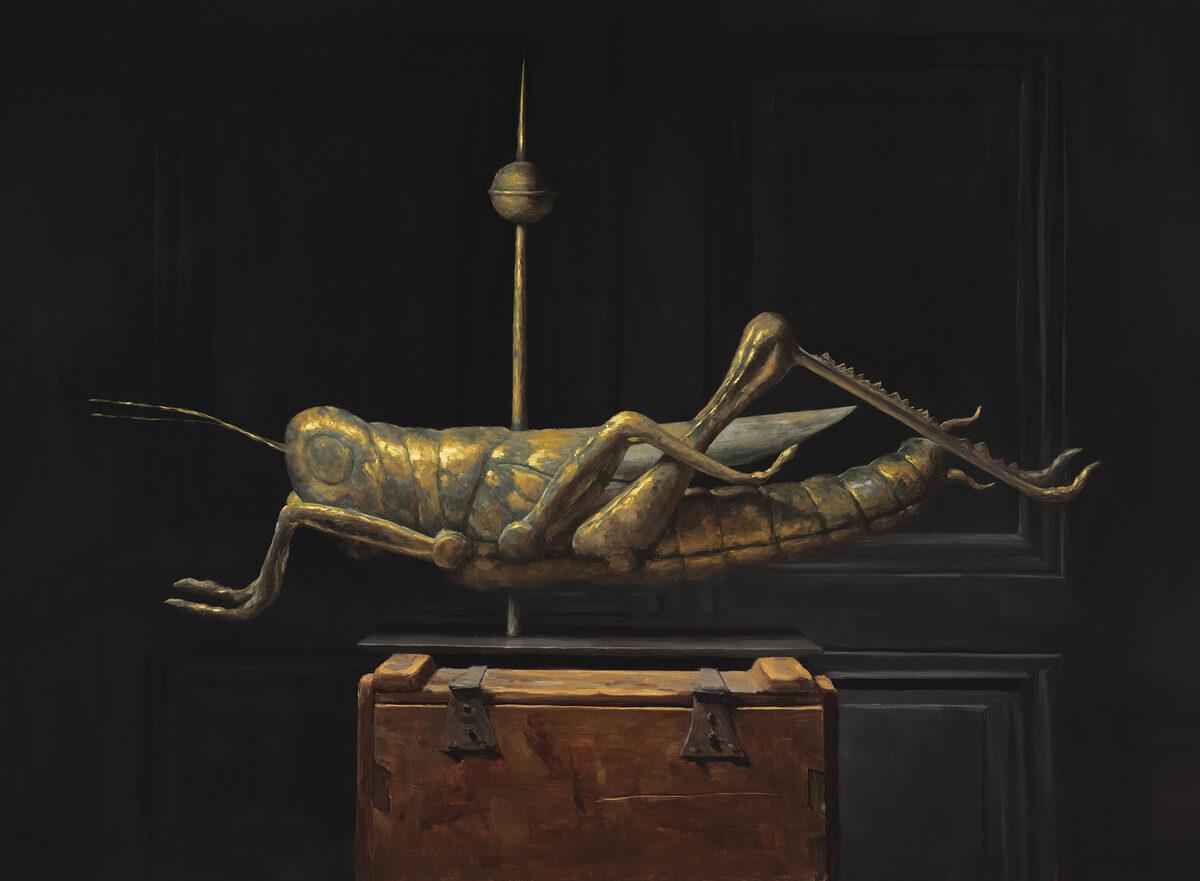
"Antique Grasshopper Weathervane" oil painting, poetic realist, still life
By Sarah Lamb
Located in Sag Harbor, NY
A major oil painting from American Realist painter Sarah Lamb. A unique, antique weathervane in the form of a brass grasshopper is the subject of this still life, set atop a rustic ...
Category
21st Century and Contemporary American Realist Still-life Paintings
Materials
Canvas, Oil

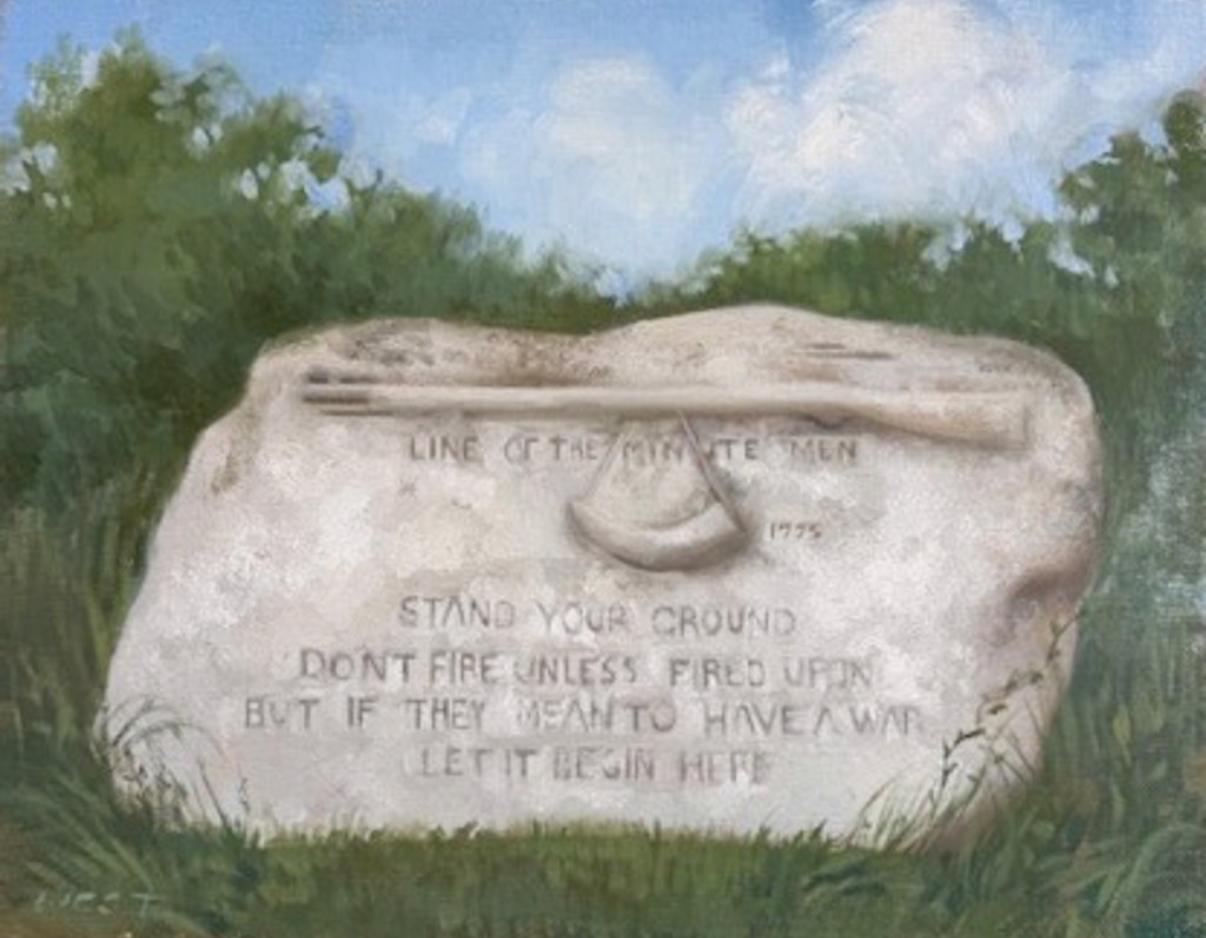
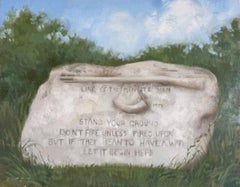
Stand Your Ground
Located in Lexington, MA
Stand Your Ground by McKenzie West is a 12 x 15 inch oil on canvas, capturing the historic Battle Line Boulder located on the Lexington Battle Green in Massachusetts. This beautifull...
Category
2010s American Realist Still-life Paintings
Materials
Canvas, Oil
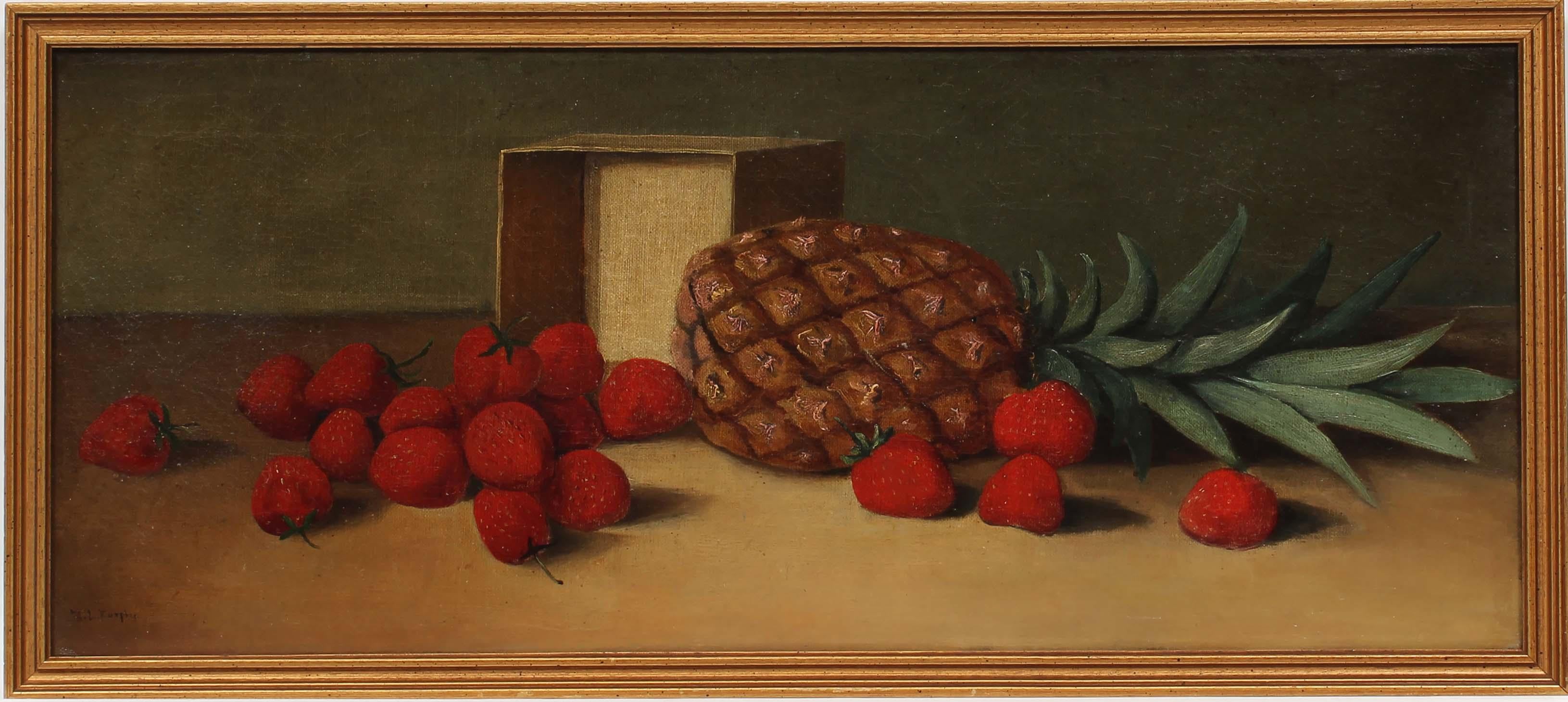
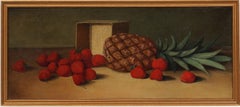
Antique American Oil Painting Framed Fruit Table Still Life Pineapple Strawberry
Located in Buffalo, NY
Incredible early American realist still life featuring pineapple and strawberries on a table. Oil on canvas. Incredible detail and masterfully painted.
Signed illegibly, last n...
Category
1890s American Realist Still-life Paintings
Materials
Canvas, Oil
$1,196 Sale Price
20% Off
Fallen
Located in Burlingame, CA
Through the lens of autobiographical realism, Bing Zhang invites us into an intimate visual narrative—one that reflects not only her private world, but also offers a mirror to our ow...
Category
21st Century and Contemporary American Realist Animal Paintings
Materials
Canvas, Oil
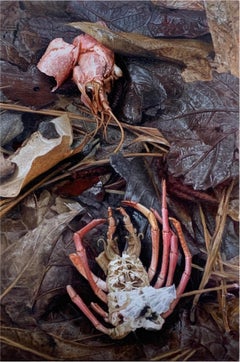
$4,200
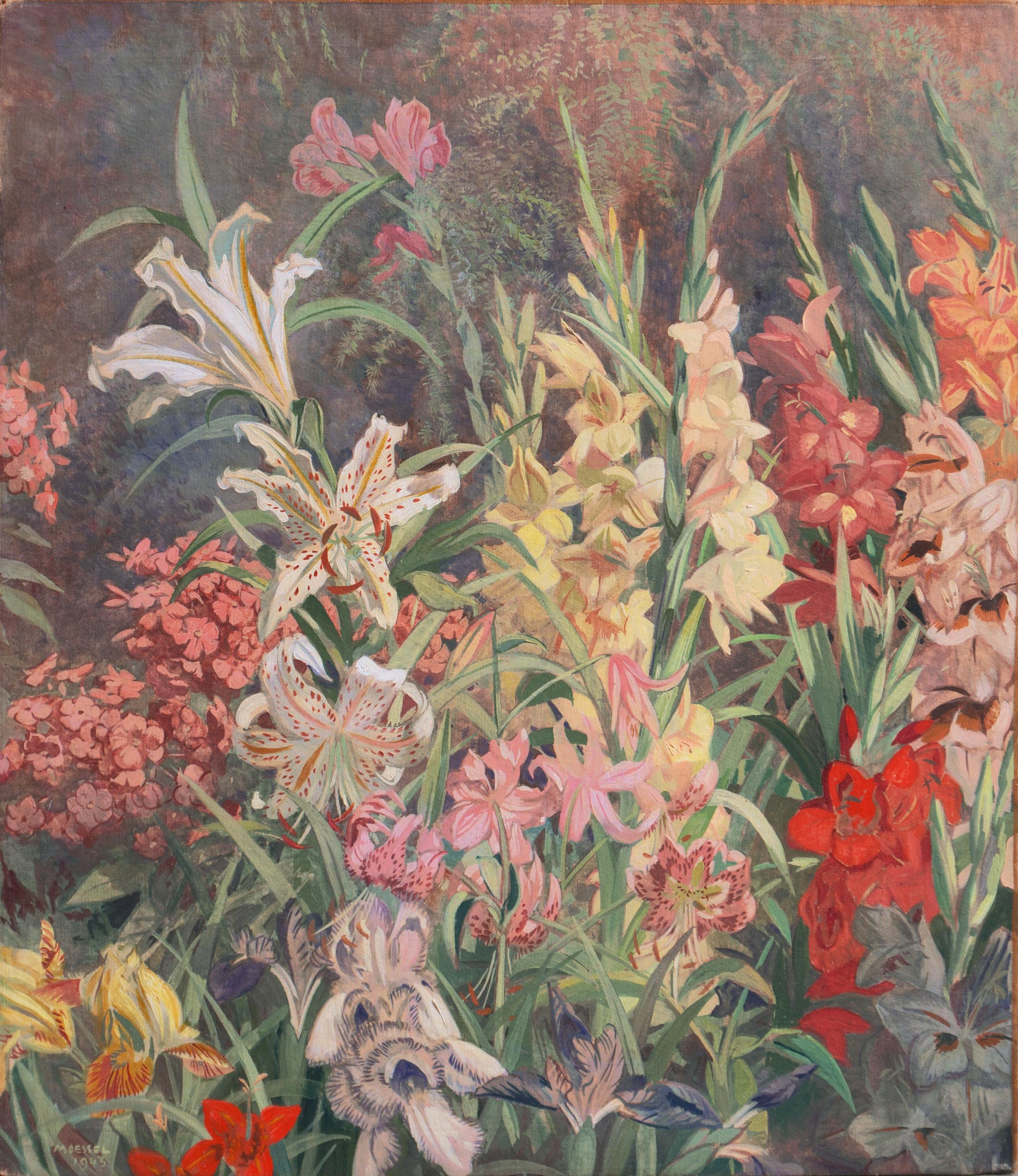
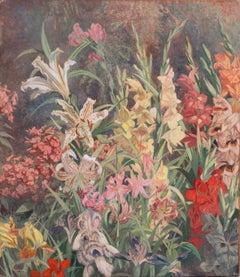
'The Artist's Garden', Munich Academy, Art Institute of Chicago, PAFA, Corcoran
By Julius Moessel
Located in Santa Cruz, CA
Signed lower left 'Moessel' for Julius Moessel (American, 1872-1960) and dated 1943; additionally titled verso, 'In the Artist's Garden'.
A substantial, mid-century horticultural oi...
Category
1940s American Realist Still-life Paintings
Materials
Canvas, Oil
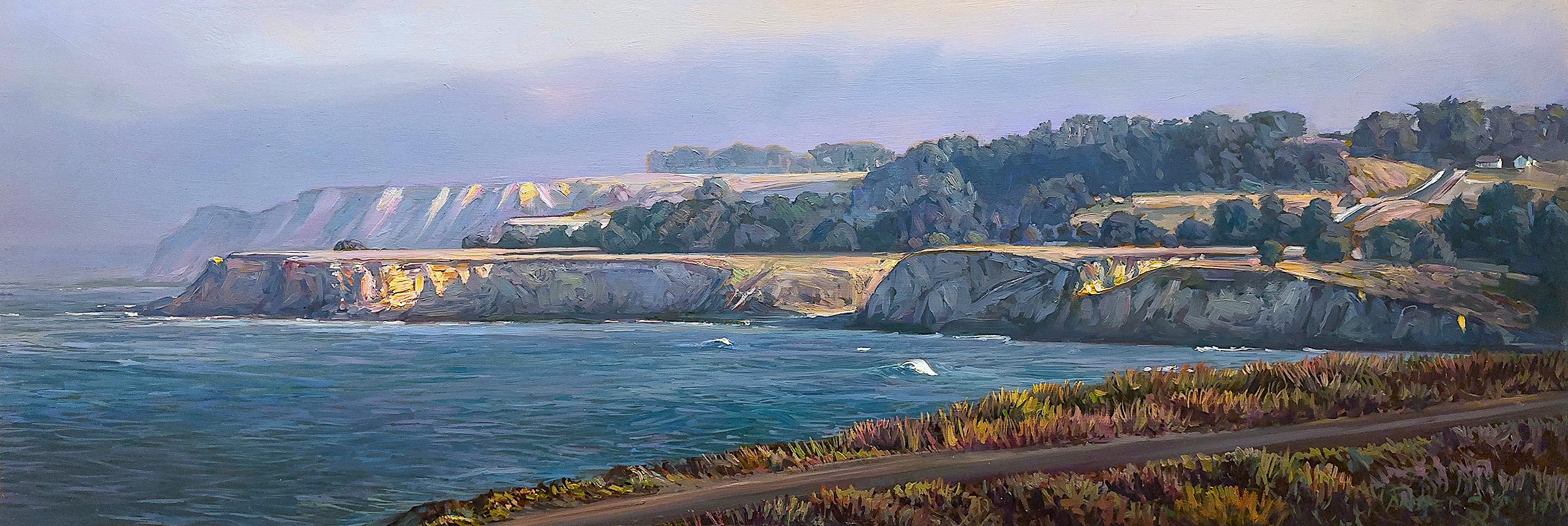
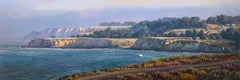
Stillwater
By Brooks Anderson
Located in Burlingame, CA
'Stillwater' - oil on canvas is 12 x 36 inches, meticulously painted by Brooks Anderson. Canvas edges are painted dark in artist's signature style. Lovely to behold from every angle....
Category
21st Century and Contemporary American Realist Landscape Paintings
Materials
Canvas, Oil
Recently Viewed
View AllMore Ways To Browse
Wall Hanging Candle Holder
Antique Fishing Rods
Antique Print Holder
Used Fishing Rope
Wood Harp Case
Antique Fish Bottles
Antique Fishing Floats
Antique Match Holder Wall
Used Fishing Line Winder
Hanging Mallard
Stick Pin Lots
Robert Baramov On Sale
Robert Earle Wood
Robert Leepin
Robert Murdoch Wright
Robert Overman Hodgell
Robert Rauschenberg Skateboard
Robert Setrakian