Want more images or videos?
Request additional images or videos from the seller
1 of 5

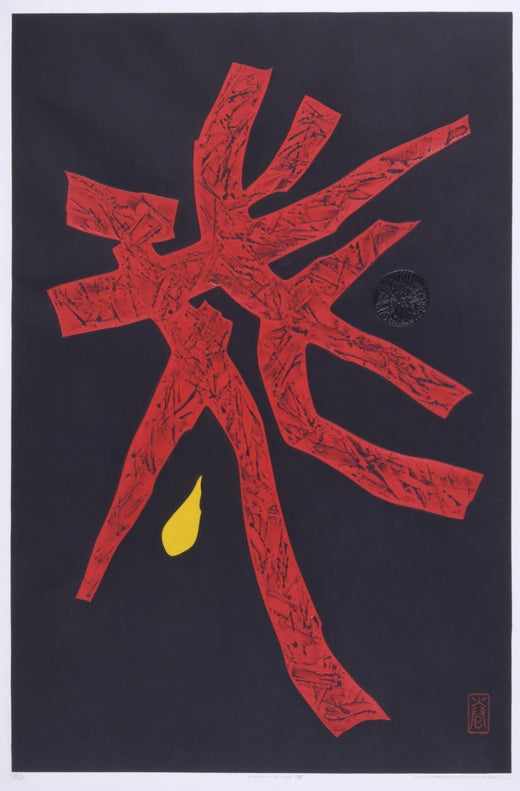
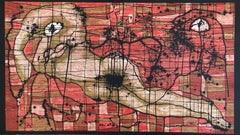
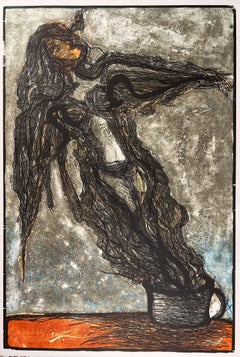
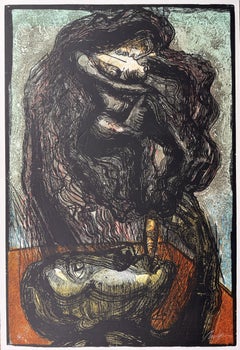
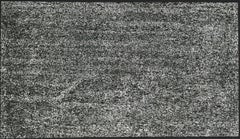
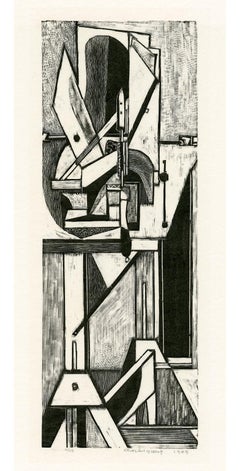
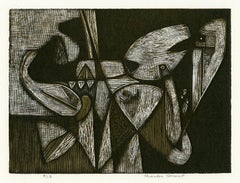
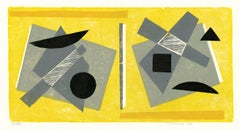
Haku Maki
Poem 71-16

1971

$800List Price

You May Also Like

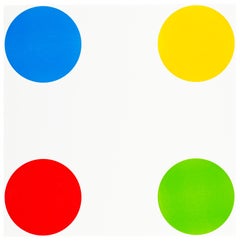
Norcamphor from “40 Woodcut Spots"
By Damien Hirst
Located in Calabasas, CA
Artist: Damien Hirst Title: Norcamphor from “40 Woodcut Spots" Year: 2011 Medium: Woodcut on 410gsm Somerset White Paper Edition: 43/55; signed (recto) and numbered (verso) in penci...
Category

2010s Contemporary Abstract Prints

Materials

Woodcut

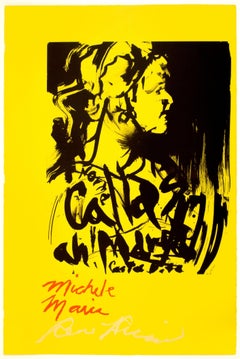
Michele Maria: bright yellow red Maria Callas opera artist portrait with poetry
By Rene Ricard
Located in New York, NY
Touched by the influence of Andy Warhol, champion of a young Jean-Michel Basquiat, Rene Ricard served as enfant terrible of the 1980s New York art scene. In this bright yellow, red, ...
Category

1980s Contemporary Abstract Prints

Materials

Lithograph, Screen, Woodcut

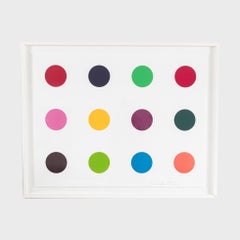
Methionine, from 12 Woodcut Spots Damien Hirst Spot Print, YBA Abstract print
By Damien Hirst
Located in Bristol, GB
Woodcut in colours on Somerset White paper Edition of 48 Signed on the front Artwork in mint condition. Artwork not inspected outside of frame. Minor scratches throughout frame Float...
Category

21st Century and Contemporary Contemporary Abstract Prints

Materials

Woodcut

"La Maja" (Tribute to Goya) 2017 Woodcut 87x42in (Series# Bon a Tirer)
By Sergio Hernández
Located in Miami, FL
Sergio Hernández (Mexico, 1957) 'La Maja', 2017 woodcut on paper Velin Arches 400 g. 46.9 x 82.7 in. (119 x 210 cm.) Edition of 30 Series # available:...
Category

2010s Contemporary Figurative Prints

Materials

Woodcut

"Woman of the coffee" 2012 original signed woodcut collagraph engraving 49x33 in
Located in Miami, FL
Nelson Dominguez (Cuban, 1947) 'La mujer del café', 2012 Woodprint and collagraph 124.5 x 84.5 cm. (49 x 33.3 in.) Edition of 10 Unframed
Category

2010s Contemporary Abstract Prints

Materials

Woodcut

Sergio Hernández, 'Cielo Estrellado', 2011, Woodcut, 46.5x82.7 in
By Sergio Hernández
Located in Miami, FL
Sergio Hernández (Mexico, 1957) 'Cielo Estrellado', 2011 woodcut on paper Velin Arches 300 g. 46.5 x 82.7 in. (118 x 210 cm.) Edition of 10 Unframed
Category

2010s Contemporary Prints and Multiples

Materials

Paper, Woodcut

Woman of the tobacco, 2012 original signed woodcut collagraph engraving 49x33 in
Located in Miami, FL
Nelson Dominguez (Cuban, 1947) 'La mujer del tabaco', 2012 Wood printing and collagraph 124.5 x 84.5 cm. (49 x 33.3 in.) Edition of 10 Unframed
Category

2010s Contemporary Abstract Prints

Materials

Woodcut

"Viaje al fondo del mar" (Trip to the Bottom of the Sea) 2011 Woodcut (Video)
By Sergio Hernández
Located in Miami, FL
Sergio Hernández (Mexico, 1957) 'Viaje al fondo del mar', 2011 woodcut on paper Velin Arches 400 g. 46.5 x 82.7 in. (118 x 210 cm.) Edition of 10 Unframed
Category

2010s Contemporary Prints and Multiples

Materials

Woodcut

"Lluvia Espesa" (Thick Rain) 2011 Woodcut 46x83in Abstract
By Sergio Hernández
Located in Miami, FL
Sergio Hernández (Mexico, 1957) 'Lluvia Espesa', 2011 woodcut on paper Velin Arches 300 g. 46.5 x 82.7 in. (118 x 210 cm.) Edition of 10 Unframed
Category

2010s Contemporary Prints and Multiples

Materials

Woodcut

Sergio Hernández, 'Untitled', 2011, Woodcut, 29.5x41.3in
By Sergio Hernández
Located in Miami, FL
Sergio Hernández (Mexico, 1957) 'Untitled', 2011 woodcut on paper Velin Arches 300 g. 29.6 x 41.4 in. (75 x 105 cm.) Edition of 15 ID: HER-284 Unframed
Category

2010s Contemporary Prints and Multiples

Materials

Paper, Woodcut

More From This Seller

View All
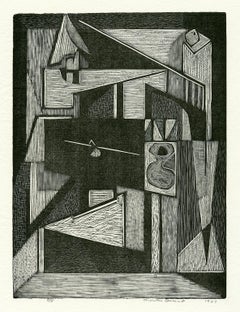
Work Bench — Mid-century Modern
By Charles Quest
Located in Myrtle Beach, SC
Charles Quest, 'Work Bench', 1949, wood engraving, edition 40. Signed, dated and numbered 9/40 in pencil. Titled and annotated 'wood engraving 1949' in pencil, in the artist’s hand, lower right margin. A fine, richly-inked impression, on off-white wove Japan, with full margins (1 3/4 to 2 inches), in excellent condition. Matted to museum standards, unframed. ABOUT THE ARTIST Charles Quest, a successful artist, and fine art instructor, worked in a variety of mediums including mosaic, stained glass, mural painting, and sculpture, but remains best known as a printmaker. Quest grew up in St. Louis, his talent evident as a teenager when he began copying the works of masters such as Michelangelo on his bedroom walls. He studied at the Washington University School of Fine Arts where he later taught from 1944 to 1971. He traveled to Europe after his graduation in 1929, and studied at La Grande Chaumière and Academie Colarossi, Paris, continuing to draw inspiration from the works of the Old Masters. After returning to St. Louis, Quest received several commissions to paint murals in public buildings, schools, and churches, including one from Joseph Cardinal Ritter to paint a replica of Velasquez's Crucifixion over the main altar of the Old Cathedral in St. Louis. Quest soon became interested in the woodcut medium which he apparently learned through his study of J. J. Lankes' A Woodcut Manual (1932) and Paul Landacre's articles in American Artist magazine ‘since no artists in St. Louis were working in wood’ at that time. Quest also revealed that for him, wood cutting and engraving were ‘more enjoyable than any other means of expression.’ In the late 1940s, his graphic works began attracting a lot of critical attention—several of his woodcuts won prizes and were acquired by major American and European museums. His wood engraving entitled ‘Lovers’ was included in the American Federation of Art's traveling print exhibition in 1947. Two years later Quest's two prize-winning prints, ‘Still Life with Grindstone’ and ‘Break Forth into Singing’ were exhibited in major American museums in a traveling show organized by the Philadelphia Print Club. His work was included in the Chicago Art Institute's exhibition, ‘Woodcut Through Six Centuries’ and the print ‘Still Life with Vise’, was purchased by the Museum of Modern Art in New York. In 1951 he was invited by artist-Curator Jacob Kainen to exhibit thirty wood engravings and color woodcuts in the Graphic Arts Division of the Smithsonian's National Museum (now known as the American History Museum). This one-man exhibition was a remarkable achievement for Quest, who had been working in the medium for only about ten years. In the press release for the show, Kainen praised the ‘technical refinement’ of Quest's work: ‘He obtains a great variety of textural effects through the use of the graver, and these dense or transparent grays are set off against whites or blacks to achieve sparkling results. His work has the handsome qualities characteristic of the craftsman and designer.’ At the time of the Smithsonian exhibition, Quest's work was represented by three New York galleries in addition to one in his home town. He had also won 38 prizes, and his prints were in the collections of the Library of Congress, the Chicago Art Institute, the Metropolitan Museum and the Philadelphia Museum of Art. In cooperation with the Art in Embassies program, his color woodcuts were displayed at the American Embassy in Paris in 1951. Recognition at home came in 1955 with his first solo exhibition in St. Louis. Press coverage of the show heralded the ‘growth of graphic arts toward rivaling painting and sculpture as a major independent medium’. Charles Quest retired from teaching in 1971 and made relatively few prints in his later years, as the rigors of the medium were too demanding. He moved to Tryon, North Carolina, with his wife Dorothy, an artist and portrait painter, and remained active as a painter until his death in 1993. An exhibition of his prints at the Bethesda Art Gallery in 1983 attracted the interest of Curator Emeritus Joseph A. Haller, S.J., who began purchasing his work for the University's collection. In 1990 Georgetown University Library's Special Collections Division became the grateful recipient of a large body of Quest's work including prints, drawings, paintings, sculpture, and stained glass, as well as his archive of correspondence and professional memorabilia. These extensive holdings, including some 260 of his fine prints, provide a rich opportunity for further study and appreciation of this versatile and not-to-be-forgotten mid-Western American artist...
Category

1940s American Modern Abstract Prints

Materials

Woodcut

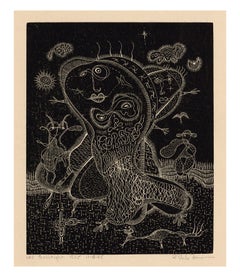
Underwater — Mid-century Modern
By Charles Quest
Located in Myrtle Beach, SC
Charles Quest, 'Underwater', 1948, chiaroscuro wood engraving, edition 12. Signed, titled, dated and numbered '3/12' in pencil. A fine, richly-inked impression, in dark brown and warm black, on off-white wove paper, with full margins (5/8 to 1 1/2 inch), in excellent condition. Scarce. ABOUT THE ARTIST Charles Quest, painter, printmaker, and fine art instructor, worked in various mediums, including mosaic, stained glass, mural painting, and sculpture. Quest grew up in St. Louis, his talent evident as a teenager when he began copying the works of masters such as Michelangelo on his bedroom walls. He studied at the Washington University School of Fine Arts, where he later taught from 1944 to 1971. He traveled to Europe after his graduation in 1929 and studied at La Grande Chaumière and Academie Colarossi, Paris, continuing to draw inspiration from the works of the Old Masters. After returning to St. Louis, Quest received several commissions to paint murals in public buildings, schools, and churches, including one from Joseph Cardinal Ritter, to paint a replica of Velasquez's Crucifixion over the main altar of the Old Cathedral in St. Louis. Quest soon became interested in the woodcut medium, which he learned through his study of J. J. Lankes' A Woodcut Manual (1932) and Paul Landacre's articles in American Artist magazine ‘since no artists in St. Louis were working in wood’ at that time. Quest also revealed that for him, wood cutting and engraving were ‘more enjoyable than any other means of expression.’ In the late 1940s, his graphic works began attracting critical attention—several of his woodcuts won prizes and were acquired by major American and European museums. His wood engraving entitled ‘Lovers’ was included in the American Federation of Art's traveling print exhibition in 1947. Two years later, Quest's two prize-winning prints, ‘Still Life with Grindstone’ and ‘Break Forth into Singing’, were exhibited in major American museums in a traveling show organized by the Philadelphia Print Club. His work was included in the Chicago Art Institute's exhibition, ‘Woodcut Through Six Centuries’, and the print ‘Still Life with Vise’ was purchased by the Museum of Modern Art in New York. In 1951 he was invited by artist-Curator Jacob Kainen to exhibit thirty wood engravings and color woodcuts in a one-person show at the Smithsonian's National Museum (now known as the American History Museum). Kainen's press release praised the ‘technical refinement’ of Quest's work: ‘He obtains a great variety of textural effects through the use of the graver, and these dense or transparent grays are set off against whites or blacks to achieve sparkling results. His work has the handsome qualities characteristic of the craftsman and designer.’ At the time of the Smithsonian exhibition, Quest's work was represented by three New York galleries in addition to one in his home town. He had won 38 prizes, and his prints were in the collections of the Library of Congress, the Chicago Art Institute, the Metropolitan Museum, and the Philadelphia Museum of Art. In cooperation with the Art in Embassies program, his color woodcuts were displayed at the American Embassy in Paris in 1951. Recognition at home came in 1955 with his first solo exhibition in St. Louis. Press coverage of the show heralded the ‘growth of graphic arts toward rivaling painting and sculpture as a major independent medium’. An exhibition of his prints at the Bethesda Art Gallery in 1983 attracted Curator Emeritus Joseph A. Haller, S.J., who began purchasing his work for Georgetown University's collection. In 1990 Georgetown University Library's Special Collections Division was the recipient of a large body of Quest's work, including prints, drawings, paintings, sculpture, stained glass, and his archive of correspondence and professional memorabilia. These extensive holdings, including some 260 of his fine prints, provide a rich opportunity for further study and appreciation of this versatile and not-to-be-forgotten mid-Western American artist...
Category

1940s American Modern Abstract Prints

Materials

Woodcut

Still Life — Mid-century Modern
By Charles Quest
Located in Myrtle Beach, SC
Charles Quest, 'Still Life', 1947, wood engraving, edition 8. Signed, dated, and numbered '3/8' in pencil. Titled and annotated 'wood engraving' in the bottom left margin. A fine impression, on off-white wove paper, with full margins (1 to 2 inches), in excellent condition. Scarce. Matted to museum standards, unframed. ABOUT THE ARTIST Charles Quest, painter, printmaker, and fine art instructor, worked in various mediums, including mosaic, stained glass, mural painting, and sculpture. Quest grew up in St. Louis, his talent evident as a teenager when he began copying the works of masters such as Michelangelo on his bedroom walls. He studied at the Washington University School of Fine Arts, where he later taught from 1944 to 1971. He traveled to Europe after his graduation in 1929 and studied at La Grande Chaumière and Academie Colarossi, Paris, continuing to draw inspiration from the works of the Old Masters. After returning to St. Louis, Quest received several commissions to paint murals in public buildings, schools, and churches, including one from Joseph Cardinal Ritter, to paint a replica of Velasquez's Crucifixion over the main altar of the Old Cathedral in St. Louis. Quest soon became interested in the woodcut medium, which he learned through his study of J. J. Lankes' A Woodcut Manual (1932) and Paul Landacre's articles in American Artist magazine ‘since no artists in St. Louis were working in wood’ at that time. Quest also revealed that for him, wood cutting and engraving were ‘more enjoyable than any other means of expression.’ In the late 1940s, his graphic works began attracting critical attention—several of his woodcuts won prizes and were acquired by major American and European museums. His wood engraving entitled ‘Lovers’ was included in the American Federation of Art's traveling print exhibition in 1947. Two years later, Quest's two prize-winning prints, ‘Still Life with Grindstone’ and ‘Break Forth into Singing’, were exhibited in major American museums in a traveling show organized by the Philadelphia Print Club. His work was included in the Chicago Art Institute's exhibition, ‘Woodcut Through Six Centuries’, and the print ‘Still Life with Vise’ was purchased by the Museum of Modern Art in New York. In 1951 he was invited by artist-Curator Jacob Kainen to exhibit thirty wood engravings and color woodcuts in a one-person show at the Smithsonian's National Museum (now known as the American History Museum). Kainen's press release praised the ‘technical refinement’ of Quest's work: ‘He obtains a great variety of textural effects through the use of the graver, and these dense or transparent grays are set off against whites or blacks to achieve sparkling results. His work has the handsome qualities characteristic of the craftsman and designer.’ At the time of the Smithsonian exhibition, Quest's work was represented by three New York galleries in addition to one in his home town. He had won 38 prizes, and his prints were in the collections of the Library of Congress, the Chicago Art Institute, the Metropolitan Museum, and the Philadelphia Museum of Art. In cooperation with the Art in Embassies program, his color woodcuts were displayed at the American Embassy in Paris in 1951. Recognition at home came in 1955 with his first solo exhibition in St. Louis. Press coverage of the show heralded the ‘growth of graphic arts toward rivaling painting and sculpture as a major independent medium’. An exhibition of his prints at the Bethesda Art Gallery in 1983 attracted Curator Emeritus Joseph A. Haller, S.J., who began purchasing his work for Georgetown University's collection. In 1990 Georgetown University Library's Special Collections Division was the recipient of a large body of Quest's work, including prints, drawings, paintings, sculpture, stained glass, and his archive of correspondence and professional memorabilia. These extensive holdings, including some 260 of his fine prints, provide a rich opportunity for further study and appreciation of this versatile and not-to-be-forgotten mid-Western American artist...
Category

1940s American Modern Abstract Prints

Materials

Woodcut

'Bullfight'— Mid-century American Surrealism
By Robert Vale Faro
Located in Myrtle Beach, SC
Robert Vale Faro, 'Bullfight', wood engraving, 1945, edition 15. Signed, dated, titled, and numbered '105' (the artist's inventory number) and '13/15' in pencil. A fine, richly-inked impression, on cream wove paper, with full margins (1 1/16 to 2 3/8 inches), in excellent condition. Scarce. Matted to museum standards, unframed. Image size 5 1/16 x 4 1/16 inches (129 x 103 mm); sheet size 8 9/16 x 6 5/16 inches (217 x 160 mm). An impression of this work is included in the museum collection of the National Gallery of Art. ABOUT THE ARTIST Robert Vale Faro (1902-1988) was a well-known modernist architect and artist associated with the Chicago Bauhaus. He received his degree in architecture and design from the Armour Institute in Chicago and worked at L'Ecole des Beaux-Arts, Paris, from 1924-27, where he was influenced by Harry Kurt Bieg and Le Corbusier. Upon his return to Chicago, Faro worked with the important modernist Chicago architects George and William Keck under Louis Sullivan. Faro founded the avant-garde printmaking group Vanguard in 1945. The group counted Atelier 17 artists Stanley William Hayter, Sue Fuller, and Anne Ryan as New York members and Francine Felsenthal...
Category

1940s Surrealist Abstract Prints

Materials

Woodcut

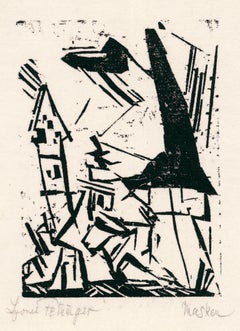
'Masken (Masks)' — German Expressionism, Bauhaus
By Lyonel Feininger
Located in Myrtle Beach, SC
Lyonel Feininger, 'Masken (Masks)' also 'Carnival Masks', woodcut, 1920, proofs only. Prasse W193. Signed and titled in pencil. Annotated '1973', the artist’s inventory number. A fin...
Category

1920s Bauhaus Abstract Prints

Materials

Woodcut

Twin Formation in Gray
By Werner Drewes
Located in Myrtle Beach, SC
Twin Formation in Gray, color woodcut, 1982, edition 30, Rose III.400. Signed, dated and numbered I7/XXX in pencil, annotated 415 and titled in the bottom left sheet edge. A fine impression with fresh, rich colors, on heavy off-white Japan paper; the full sheet with wide margins (1 3/4 to 3 1/4 inches), in good condition. Printed in black, dark gray, medium gray, yellow/orange, and lemon yellow. Matted to museum standards, unframed. An impression of this work is included in the permanent collection of the Smithsonian American Art Museum. ABOUT THE ARTIST Painter, printmaker, and art teacher, Werner Drewes (1899–1985) was among the founding fathers of American abstraction. A student at the famed Bauhaus in the 1920s, he studied under Lyonel Feininger, Paul Klee, Laszlo Moholy-Nagy and Wassily Kandinsky. Following his emigration to the United States in 1930, he was instrumental in introducing modernist Bauhaus concepts and esthetics to America. Drewes’ boldly dynamic and emotionally expressive work, which encompassed both non-objective and figurative genres, brought him critical acclaim and numerous gallery and institutional exhibitions throughout his artistic career. Drewes' graphic work can be found in most major American art museums including, the Ackland Art Museum, The Art Institute of Chicago, Bauhaus Archive...
Category

Late 20th Century Bauhaus Abstract Prints

Materials

Woodcut

Recently Viewed

View All