Want more images or videos?
Request additional images or videos from the seller
1 of 8
Albert Al HirschfeldJohn Lennon, Lithograph by Al Hirschfeld
Price:$7,000
About the Item
- Creator:Albert Al Hirschfeld (1903 - 2003, American)
- Dimensions:Height: 22 in (55.88 cm)Width: 18 in (45.72 cm)
- Medium:
- Movement & Style:
- Period:
- Framing:Framing Options Available
- Condition:Minor wear consistent with age and history.
- Gallery Location:Long Island City, NY
- Reference Number:Seller: RO703211stDibs: LU4669541362
Albert Al Hirschfeld
For nearly 70 years, Al Hirschfeld created iconic caricatures of theater, film and television celebrities, capturing moments in time and documenting U.S. entertainment history in the process. Art historian Lloyd Goodrich called Hirschfeld “one of the few masters of graphic humor.” "New York Times" art critic John Russell dubbed him “the Fred Astaire of pen and ink.” Brendan Gill of "The New Yorker" stated, “To be a star on Broadway is to be drawn by Hirschfeld.” And many performers believed that, regardless of any other accolades they might achieve, “if Al Hirschfeld hasn’t drawn you, you don’t exist.” Hirschfeld began his career as a political cartoonist and became a theater caricaturist for "The New York Times" in 1925. He began creating his pure line drawings on a trip to Bali in the 1930s, and, over the course of his career, mastered the technique of using lines to capture the spirit and personality of his subjects. Hidden in each drawing is his daughter’s name, Nina, and so many people became obsessed with finding all of the Nina’s, that he developed a system of noting the number of Nina’s in each work next to his signature. In addition to "The New Yorker" and "The New York Times," Hirschfeld’s drawings appeared on playbills and posters as well as in advertisements. As a result of his work, he earned two Tony awards for lifetime achievement in theater and had a Broadway theater renamed in his honor.
About the Seller
4.9
Platinum Seller
Premium sellers with a 4.7+ rating and 24-hour response times
Established in 1979
1stDibs seller since 2014
3,112 sales on 1stDibs
Typical response time: 1 hour
Authenticity Guarantee
In the unlikely event there’s an issue with an item’s authenticity, contact us within 1 year for a full refund. DetailsMoney-Back Guarantee
If your item is not as described, is damaged in transit, or does not arrive, contact us within 7 days for a full refund. Details24-Hour Cancellation
You have a 24-hour grace period in which to reconsider your purchase, with no questions asked.Vetted Professional Sellers
Our world-class sellers must adhere to strict standards for service and quality, maintaining the integrity of our listings.Price-Match Guarantee
If you find that a seller listed the same item for a lower price elsewhere, we’ll match it.Trusted Global Delivery
Our best-in-class carrier network provides specialized shipping options worldwide, including custom delivery.You May Also Like
Robert Rauschenberg Signed Lithograph
By Robert Rauschenberg
Located in New York, NY
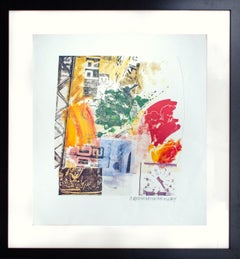
Robert Rauschenberg
American (1925-2008)
Untitled, for ROCI
offset color lithograph, signed and dated lower right "Rauschenberg 84"
25 3/4 x 22 3/4 in. (sheet)
Framed: 31 1/4 x 29 x...
Category
1980s Post-Modern Figurative Prints
Materials
Lithograph
“Untitled”
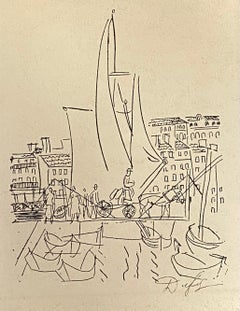
By Jean Dufy
Located in Southampton, NY
Original lithographic print done as a gravure using black ink attributed to the hand of the well known French artist, Jean Dufy. Signed in the plate “Dufy” lower right. Circa 1960. Condition is very good. “Pierre Hautot...
Category
1960s Post-Modern Figurative Prints
Materials
Archival Paper, Lithograph
“Marcel Marceau Mime”
By Marcel Marceau
Located in Southampton, NY
Original artist signed colored lithograph by the well known French actor, artist and mime, Marcel Marceau. Circa 1975. Condition is very good Edition:, 112/275; signed in pencil lowe...
Category
1970s Post-Modern Figurative Prints
Materials
Archival Paper, Lithograph
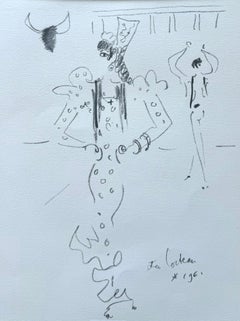
“ Spain, Captivating Flamenco”
By Jean Cocteau
Located in Southampton, NY
Jean COCTEAU (1889-1963)
Spain, Captivating Flamenco, 1971
Original Lithograph
Signed in the plate
Limited edition of 200 unnumbered copies
INFORMATION: Original lithograph publis...
Category
1960s Post-Modern Figurative Prints
Materials
Archival Paper, Lithograph
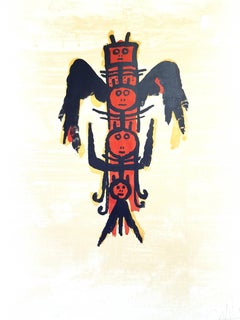
Wifredo Lam - Original Handsigned Lithograph -El ultimo viaje del buque fantasma
By Wifredo Lam
Located in Collonge Bellerive, Geneve, CH
Original lithograph, hand-signed and hand-numbered in pencil by the artist.
Edition: 56/99
Excellent Conditions
Dimensions: 76 x 56 cm
Reference : Catalogue raisonné Tonneau-Ryckely...
Category
1970s Post-Modern Figurative Prints
Materials
Lithograph
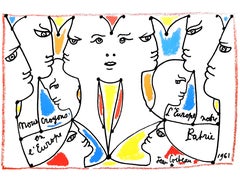
$2,632
H 29.93 in W 22.05 in D 0.04 in
Jean Cocteau (after) - Europe Our Country - Lithograph
By Jean Cocteau
Located in Collonge Bellerive, Geneve, CH
Lithograph after a drawing by Jean Cocteau
Title: Europe Our Country
Signed in the plate
Dimensions: 33 x 46 cm
Edition: 600
Luxury print edition from the portfolio of Sciaky
1961
Category
1960s Post-Modern More Prints
Materials
Lithograph
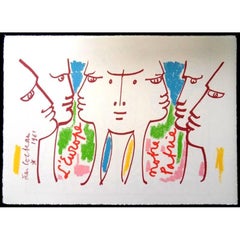
Jean Cocteau - Europe Our Homeland - Original Lithograph
By Jean Cocteau
Located in Collonge Bellerive, Geneve, CH
Original Lithograph by Jean Cocteau
Title: Europe Our Homeland
Signed in the plate
Dimensions: 33 x 46 cm
Edition: 200
Luxury print edition from the portfolio of Sciaky
1961
Jean Co...
Category
1960s Post-Modern More Prints
Materials
Lithograph
$1,436
H 13 in W 18.12 in D 0.04 in
Wifredo Lam - Knight - Original Lithograph
By Wifredo Lam
Located in Collonge Bellerive, Geneve, CH
Wifredo Lam - Knight - Original Lithograph
Published in the deluxe art review, XXe Siecle
1963
Dimensions: 32 x 24 cm
Publisher: G. di San Lazzaro.
Unsigned and unumbered as issued
Category
1960s Post-Modern Figurative Prints
Materials
Lithograph
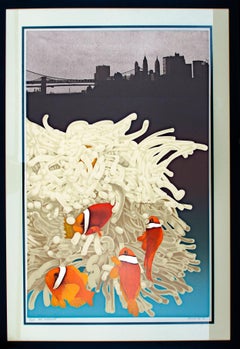
1978 Michael Knigin Manhattan Skyline Print
By Michael Knigin
Located in New York, NY
Michael Knigin (American, b. 1942)
East Riverdance, 1978
Lithograph (?)
Sight: 33 x 21 1/2 in. (image)
Framed: 41 1/8 x 29 x 3/4 in.
Signed, titled, dated, and numbered bottom
Editio...
Category
1970s Post-Modern Figurative Prints
Materials
Lithograph
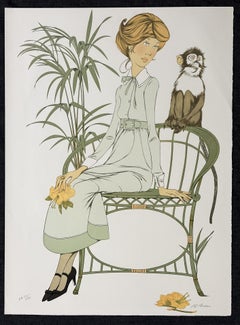
Philippe Noyer Le Singe 1980 A Signed Limited Edition
By Philippe Henri Noyer
Located in Rochester Hills, MI
Artist Name: Philippe Noyer
Title: Le Singe:
Medium Type: Lithograph
Size-Width Size-Height: 35" x 25"
Signed Edition Size: signed in pencil and marked EA XVII/XXX
Unframed in...
Category
1980s Post-Modern Figurative Prints
Materials
Lithograph
$600
H 41 in W 27 in D 1 in
More From This Seller
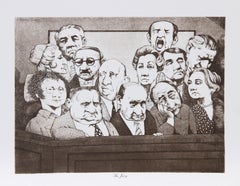
View AllThe Jury, Caricature Lithograph by Charles Bragg
By Charles Bragg
Located in Long Island City, NY
Caricature etching by American artist Charles Bragg. A group of jurors stare aimlessly around a courtroom.
The Jury
Charles Bragg, American (1931–2017)
Date: 1976
Lithograph
Image S...
Category
1970s Post-Modern Figurative Prints
Materials
Lithograph
The Oath, Caricature Lithograph by Charles Bragg
By Charles Bragg
Located in Long Island City, NY
Caricature etching by American artist Charles Bragg.
The Oath
Charles Bragg, American (1931–2017)
Date: 1976
Lithograph
Image Size: 6 x 9 inches
Size: 11.5 in. x 14.5 in. (29.21 cm ...
Category
1970s Post-Modern Figurative Prints
Materials
Lithograph
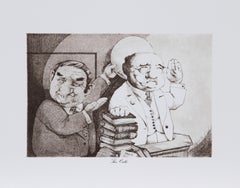
Tort, Caricature Lithograph by Charles Bragg
By Charles Bragg
Located in Long Island City, NY
Tort
Charles Bragg, American (1931–2017)
Date: 1976
Lithograph
Image Size: 5.5 x 8 inches
Size: 11.5 in. x 14.5 in. (29.21 cm x 36.83 cm)
Category
1970s Post-Modern Figurative Prints
Materials
Lithograph
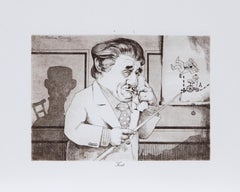
Witness, Caricature Lithograph by Charles Bragg
By Charles Bragg
Located in Long Island City, NY
Witness
Charles Bragg, American (1931–2017)
Date: 1976
Lithograph
Image Size: 5.5 x 7 inches
Size: 11.5 in. x 14.5 in. (29.21 cm x 36.83 cm)
Category
1970s Post-Modern Figurative Prints
Materials
Lithograph
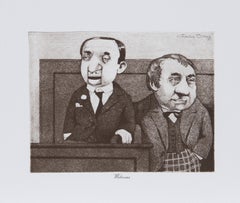
Beach
By Marcia Marx
Located in Long Island City, NY
Artist: Marcia Marx, American (1931 - 2005)
Title: Beach
Year: circa 1975
Medium: Lithograph, signed and numbered in pencil
Edition: 250
Paper Size: 25 x 38 inches
Category
Late 20th Century Post-Modern Figurative Prints
Materials
Lithograph
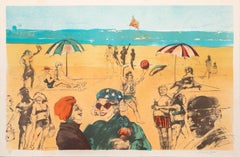
$450
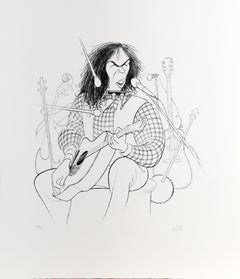
Neil Young, Caricature Lithograph by Al Hirschfeld
By Albert Al Hirschfeld
Located in Long Island City, NY
Al Hirschfeld’s Rock'n in the Free World Neil Young. This print is signed and numbered in pencil.
Al Hirschfeld, American (1903–2003)
Date: 2000
Lithograph, signed and numbered in p...
Category
Early 2000s Post-Modern Figurative Prints
Materials
Lithograph
Recently Viewed
View AllRead More
Al Hirschfeld’s Take on Judy Garland Stands out among His Many Love Letters to Broadway
The revered artist created delightful caricatures of stage and screen performers for more than 75 years. This one is a prime example.
Romare Bearden’s Humanity Infuses His Bright, Bold Art
Through collage, painting and printmaking, the artist foregrounded Black life in America in revolutionary new ways.
More Ways To Browse
Phillip Russell
Piano Artwork
Planetary Folklore
Pomeranian Dog
Portrait Of Cows
Portrait Of Dora Maar
Raccoon Painting
Racing Race Painting
Richard Bankes Harraden
Robert Buck
Robert Colquhoun
Robert Rey
Roman Architectural Engraving
Ruby Throated Hummingbird
Russian Cubist Art
Salsa Dance
San Francisco Travel Poster
Sawrey Gilpin