Want more images or videos?
Request additional images or videos from the seller
1 of 12
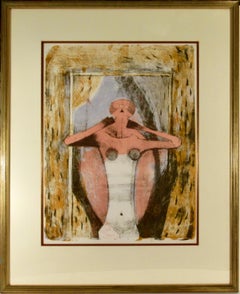
Guy BuffetLe Sommelierc.1985
c.1985
Price:$850
$925List Price
About the Item
- Creator:Guy Buffet (1943)
- Creation Year:c.1985
- Dimensions:Height: 34.5 in (87.63 cm)Width: 27.65 in (70.24 cm)Depth: 1 in (2.54 cm)
- Medium:
- Movement & Style:
- Period:
- Condition:
- Gallery Location:San Francisco, CA
- Reference Number:Seller: guy/som/011stDibs: LU666316656022
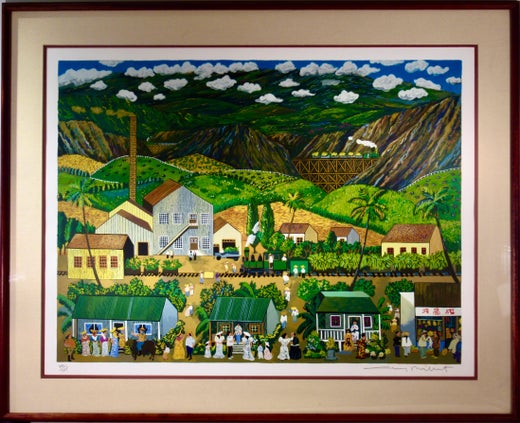
Guy Buffet
I was born in Paris in the district of Montparnasse on January 13, 1943. My Father, Jules Cesar Buffet, was 65 years old at the time and still the Postmaster of that district far beyond his retirement due to post war circumstances. My father knew and loved Montparnasse. During my early youth, my father loved to take "his son" for walks in the district and show me the famous landmarks such as, "La Coupole" , one of my favorite eateries even today, where famous artists such as Modigliani, Picasso, Chagall, Braque and Foujita would spend most of their days and evenings. As a Postmaster, he also knew where those artists lived and would show me their houses and studios and tell endless stories about their works and their lives.
About the Seller
5.0
Platinum Seller
Premium sellers with a 4.7+ rating and 24-hour response times
Established in 1999
1stDibs seller since 2017
869 sales on 1stDibs
Authenticity Guarantee
In the unlikely event there’s an issue with an item’s authenticity, contact us within 1 year for a full refund. DetailsMoney-Back Guarantee
If your item is not as described, is damaged in transit, or does not arrive, contact us within 7 days for a full refund. Details24-Hour Cancellation
You have a 24-hour grace period in which to reconsider your purchase, with no questions asked.Vetted Professional Sellers
Our world-class sellers must adhere to strict standards for service and quality, maintaining the integrity of our listings.Price-Match Guarantee
If you find that a seller listed the same item for a lower price elsewhere, we’ll match it.Trusted Global Delivery
Our best-in-class carrier network provides specialized shipping options worldwide, including custom delivery.You May Also Like
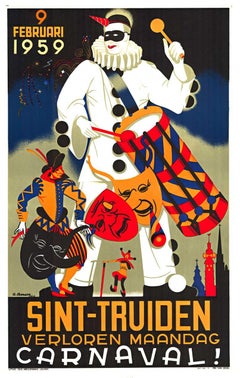
Original "Sint-Truiden Carnaval!" vintage festival poster
Located in Spokane, WA
Original 1959 “Sint-Truiden Carnaval!” vintage lithograph poster. Archivally linen backed in very good condition, ready to frame. No paper loss, no tears, no stains. Excellent gr...
Category
1950s Modern Figurative Prints
Materials
Lithograph
$1,196 Sale Price
20% Off
H 39 in W 24.5 in D 0.05 in
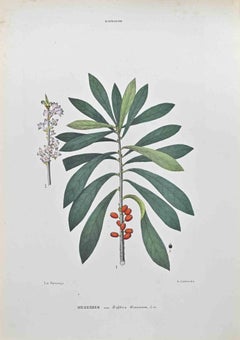
Daphne Mezereum - Lithograph by Vincenzo Tenore - 1870s
Located in Roma, IT
Lithograph hand watercolored.
Belongs to the Series "Atlante di Botanica popolare ossia Illustrazione di Piante Notevoli di ogni famiglia" (Atlas of popular botany or illustration o...
Category
1870s Modern Figurative Prints
Materials
Lithograph
$237
H 15.36 in W 11.42 in D 0.04 in
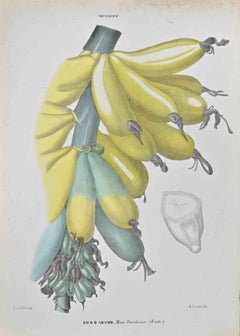
Adam's Fig - Lithograph by Vincenzo Tenore - 1870s
Located in Roma, IT
Lithograph hand watercolored.
Belongs to the Series "Atlante di Botanica popolare ossia Illustrazione di Piante Notevoli di ogni famiglia" (Atlas of popular botany or illustration o...
Category
1870s Modern Figurative Prints
Materials
Lithograph
$237
H 15.36 in W 11.42 in D 0.04 in
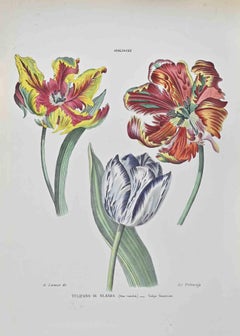
Dutch Tulip - Lithograph by Vincenzo Tenore - 1870s
Located in Roma, IT
Lithograph hand watercolored.
Belongs to the Series "Atlante di Botanica popolare ossia Illustrazione di Piante Notevoli di ogni famiglia" (Atlas of popular botany or illustration o...
Category
1870s Modern Figurative Prints
Materials
Lithograph
$237
H 15.36 in W 11.42 in D 0.04 in
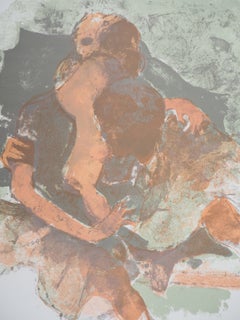
Lovers : The Erotic Hug - Original handsigned lithograph
By Michel Rodde
Located in Paris, IDF
Michel RODDE
Lovers : The Erotic Hug, 1966
Original lithograph
Handsigned in pencil
On Auvergne vellum 37 x 28 cm (c. 15 x 11 inch)
Excellent condition
Category
1960s Modern Figurative Prints
Materials
Lithograph
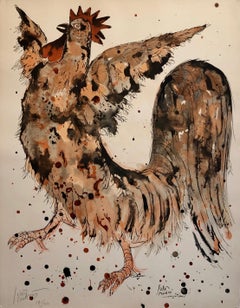
Modern Israeli Lithograph Reuven Rubin Views Of Israel Judaica Crowing Rooster
By Reuven Rubin
Located in Surfside, FL
Lithograph printed by Chez Daniel Jacomet, Paris, France 1960 offset lithograph in colors on Arches, signed in crayon on the justification sheet (this auction is just for the one lithograph pictured as the 1st photo, the justification sheet with the original drawing is just included for provenance and is not part of this sale), on Arches deckle edged paper. limited edition of 250. plate signed and hand signed in pencil.
Israeli views Lithograph by Israeli Master.
Reuven Rubin 1893 -1974 was a Romanian-born Israeli painter and Israel's first ambassador to Romania.
Rubin Zelicovici (later Reuven Rubin) was born in Gala?i to a poor Romanian Jewish Hasidic family. He was the eighth of 13 children. In 1912, he left for Ottoman-ruled Palestine to study art at Bezalel Academy of Art and Design in Jerusalem. Finding himself at odds with the artistic views of the Academy's teachers, he left for Paris, France, in 1913 to pursue his studies at the École Nationale Supérieure des Beaux-Arts. At the outbreak of World War I, he was returned to Romania, where he spent the war years.
In 1921, he traveled to the United States with his friend and fellow artist, Arthur Kolnik, with whom he had shared a studio in Cernovitzu. In New York City, the two met artist Alfred Stieglitz, who was instrumental in organizing their first American show at the Anderson Gallery.Following the exhibition, in 1922, they both returned to Europe. In 1923, Rubin emigrated to Mandate Palestine.
Rubin met his wife, Esther, in 1928, aboard a passenger ship to Palestine on his return from a show in New York. She was a Bronx girl who had won a trip to Palestine in a Young Judea competition. He died in 1974
Artistic career
Joseph Zaritsky...
Category
1960s Modern Figurative Prints
Materials
Lithograph, Offset
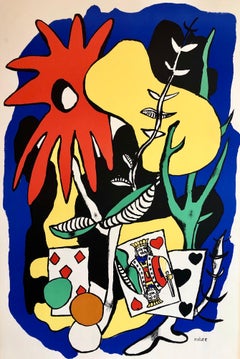
Fernand Leger School Prints Colorful Modernist King of Hearts Drawing Lithograph
By (after) Fernand Léger
Located in Surfside, FL
Bright vibrant blue, orange, red, yellow, green lithograph in color. This is signed in the plate and dated. Leger's abstract drawing lithograph was drawn by the artist direct on to p...
Category
1940s Modern Abstract Prints
Materials
Lithograph
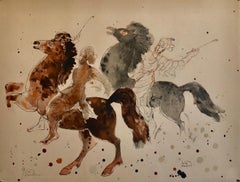
Modern Israeli Lithograph Reuven Rubin Views Of Israel Judaica Horses, Riders
By Reuven Rubin
Located in Surfside, FL
Lithograph printed by Chez Daniel Jacomet, Paris, France 1960 offset lithograph in colors on Arches, signed in crayon on the justification sheet (this auction is just for the one lithograph pictured as the 1st photo, the justification sheet with the original drawing is just included for provenance and is not part of this sale), on Arches deckle edged paper. limited edition of 250. plate signed and hand signed in pencil.
Israeli views Lithograph by Israeli Master.
Reuven Rubin 1893 -1974 was a Romanian-born Israeli painter and Israel's first ambassador to Romania.
Rubin Zelicovici (later Reuven Rubin) was born in Gala?i to a poor Romanian Jewish Hasidic family. He was the eighth of 13 children. In 1912, he left for Ottoman-ruled Palestine to study art at Bezalel Academy of Art and Design in Jerusalem. Finding himself at odds with the artistic views of the Academy's teachers, he left for Paris, France, in 1913 to pursue his studies at the École Nationale Supérieure des Beaux-Arts. At the outbreak of World War I, he was returned to Romania, where he spent the war years.
In 1921, he traveled to the United States with his friend and fellow artist, Arthur Kolnik, with whom he had shared a studio in Cernovitzu. In New York City, the two met artist Alfred Stieglitz, who was instrumental in organizing their first American show at the Anderson Gallery.Following the exhibition, in 1922, they both returned to Europe. In 1923, Rubin emigrated to Mandate Palestine.
Rubin met his wife, Esther, in 1928, aboard a passenger ship to Palestine on his return from a show in New York. She was a Bronx girl who had won a trip to Palestine in a Young Judea competition. He died in 1974
Artistic career
Joseph Zaritsky...
Category
1960s Modern Figurative Prints
Materials
Lithograph, Offset
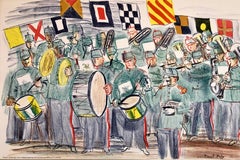
Raoul Dufy School Prints Colorful Modernist Drawing Lithograph Marching Band
By (after) Raoul Dufy
Located in Surfside, FL
Bright vibrant blue, yellow lithograph in color. This is signed in the plate and dated. Dufy's abstract drawing lithograph was drawn by the artist direct on to plastic plates newly d...
Category
1940s Modern Abstract Prints
Materials
Lithograph
$1,400
H 25.25 in W 35.5 in
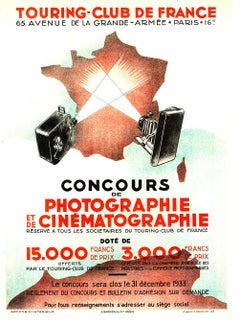
Original 1933 Concours de Photographie e Cinematographie vintage French poster
Located in Spokane, WA
Original 1933 French Poster — Touring Club de France “Concours de Photographie et de Cinématographie” — Art Deco — Linen Backed Vintage Advertising Grade a- condition with minor r...
Category
1930s American Modern Figurative Prints
Materials
Lithograph
$440
H 21.25 in W 15.3 in D 0.3 in
More From This Seller
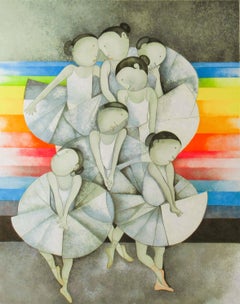
View AllLes Petit Rats, Ballerinas VI
By Graciela Rodo Boulanger
Located in San Francisco, CA
This artwork titled "Les Petit Rats, Ballerinas VI" c.1980 is an original color lithograph on Japan paper by noted Bolivian artist Graciela Rodo Boulanger, b.1935. It is hand signed and numbered XLII/C in pencil by the artist. The image size is 22.75 x 18 inches, sheet size is 30 x 22.15 inches.
About the artist:
Born in La Paz, Bolivia in 1935, Graciela Rodo Boulanger was raised in an artistic environment. Her mother, a concert pianist, and her father, a businessman and art connoisseur, nurtured her talents. She studied the piano and at age 11 enrolled in the School of Fine Arts. At 17 she went to Vienna to study both art and music, and at 22 shetravelled to Argentina for the stimulating artistic environment of Buenos Aires. Continuing to study both piano and painting...
Category
Late 20th Century Modern Figurative Prints
Materials
Lithograph
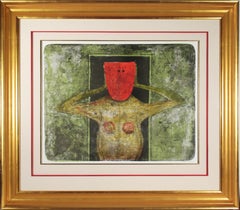
Mascara Roja
By Rufino Tamayo
Located in San Francisco, CA
This artwork titled "Mascara Roja" 1969 is an original colors lithograph on B.F.K. Rives paper by renown Mexican artist Rufino Tamayo, 1899-1991. It is hand signed and inscribed H.C. (Hors Commerce) in pencil by the artist. The image size is 21 x 27.25 inches, framed size is 37.25 x 42 inches. Published by Touchtone Publisher, New York, printed by Ateliers Desjobert, Paris. Referenced and pictured in the artist's catalogue raisonne by Pereda, plate #124. Custom framed in a wooden gold leaf frame, with gold and red spacer and fabric matting. It is in excellent condition.
About the artist:
A native of Oaxaca in Southern Mexico, Rufino Tamayo's father was a shoemaker, and his mother a seamstress. Some accounts state that he was descended from Zapotec Indians, but he was actually 'mestizo' - of mixed indigenous/European ancestry. (Santa Barbara Museum of Art). He began painting at age 11. Orphaned at the age of 12, Tamayo moved to Mexico City, where he was raised by his maternal aunt who owned a wholesale fruit business.
In 1917, he entered the San Carlos Academy of Fine Arts, but left soon after to pursue independent study. Four years later, Tamayo was appointed the head designer of the department of ethnographic drawings at the National Museum of Archaeology in Mexico City. There he was surrounded by pre-Colombian objects, an aesthetic inspiration that would play a pivotal role in his life. In his own work, Tamayo integrated the forms and tones of pre-Columbian ceramics into his early still lives and portraits of Mexican men and women.
In the early 1920s he also taught art classes in Mexico City's public schools. Despite his involvement in Mexican history, he did not subscribe to the idea of art as nationalistic propaganda. Modern Mexican art at that time was dominated by 'The Three Great Ones' : Diego Rivera, Jose Clemente Orozco, and David Alfaro Siqueros, but Tamayo began to be noted as someone 'new' and different' for his blending of the aesthetics of post Revolutionary Mexico with the vanguard artists of Europe and the United States.
After the Mexican Revolution, he focused on creating his own identity in his work, expressing what he thought was the traditional Mexico, and refusing to follow the political trends of his contemporary artists. This caused some to see him as a 'traitor' to the political cause, and he felt it difficult to freely express himself in his art. As a result, he decided to leave Mexico in 1926 and move to New York, along with his friend, the composer Carlos Chavez. The first exhibition of Tamayo's work in the United States was held at the Weyhe Gallery, New York, in that same year. The show was successful, and Tamayo was praised for his 'authentic' status as a Mexican of 'indigenous heritage', and for his internationally appealing Modernist aesthetic. (Santa Barbara Museum of Art).
Throughout the late thirties and early forties New York's Valentine Gallery gave him shows. For nine years, beginning in 1938, he taught at the Dalton School in New York.
In 1929, some health problems led him to return to Mexico for treatment. While there he took a series of teaching jobs. During this period he became romantically involved with the artist Maria Izquierdo...
Category
Mid-20th Century Modern Figurative Prints
Materials
Lithograph
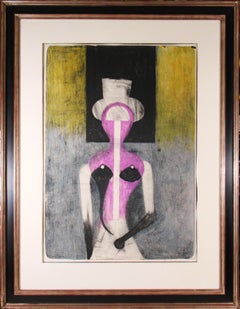
"Mujer Con Sombrero" Large lithograph
By Rufino Tamayo
Located in San Francisco, CA
This artwork titled "Mujer Con Sombrero (Woman with Hat)" 1972 is a large original colors lithograph on Arches paper by renown Mexican artist Rufino Tamayo, 1899-1991. It is hand signed and numbered 81/100. in pencil by the artist. The artwork size 36.35 x 25.85 inches, sheet size is 37.25 x 26.25 inches, framed size is 52.25 x 40.5 inches. Published by Transworld Art, New York , Printed by Bank Street Atelier, New York. Referenced and pictured in the artist's catalogue raisonne by Pereda, plate #132 page 123. Custom framed in a wooden black and silver frame, with silver bevel and fabric matting. It is in excellent condition.
About the artist:
A native of Oaxaca in Southern Mexico, Rufino Tamayo's father was a shoemaker, and his mother a seamstress. Some accounts state that he was descended from Zapotec Indians, but he was actually 'mestizo' - of mixed indigenous/European ancestry. (Santa Barbara Museum of Art). He began painting at age 11. Orphaned at the age of 12, Tamayo moved to Mexico City, where he was raised by his maternal aunt who owned a wholesale fruit business.
In 1917, he entered the San Carlos Academy of Fine Arts, but left soon after to pursue independent study. Four years later, Tamayo was appointed the head designer of the department of ethnographic drawings at the National Museum of Archaeology in Mexico City. There he was surrounded by pre-Colombian objects, an aesthetic inspiration that would play a pivotal role in his life. In his own work, Tamayo integrated the forms and tones of pre-Columbian ceramics into his early still lives and portraits of Mexican men and women.
In the early 1920s he also taught art classes in Mexico City's public schools. Despite his involvement in Mexican history, he did not subscribe to the idea of art as nationalistic propaganda. Modern Mexican art at that time was dominated by 'The Three Great Ones' : Diego Rivera, Jose Clemente Orozco, and David Alfaro Siqueros, but Tamayo began to be noted as someone 'new' and different' for his blending of the aesthetics of post Revolutionary Mexico with the vanguard artists of Europe and the United States.
After the Mexican Revolution, he focused on creating his own identity in his work, expressing what he thought was the traditional Mexico, and refusing to follow the political trends of his contemporary artists. This caused some to see him as a 'traitor' to the political cause, and he felt it difficult to freely express himself in his art. As a result, he decided to leave Mexico in 1926 and move to New York, along with his friend, the composer Carlos Chavez. The first exhibition of Tamayo's work in the United States was held at the Weyhe Gallery, New York, in that same year. The show was successful, and Tamayo was praised for his 'authentic' status as a Mexican of 'indigenous heritage', and for his internationally appealing Modernist aesthetic. (Santa Barbara Museum of Art).
Throughout the late thirties and early forties New York's Valentine Gallery gave him shows. For nine years, beginning in 1938, he taught at the Dalton School in New York.
In 1929, some health problems led him to return to Mexico for treatment. While there he took a series of teaching jobs. During this period he became romantically involved with the artist Maria Izquierdo...
Category
Mid-20th Century Modern Figurative Prints
Materials
Lithograph
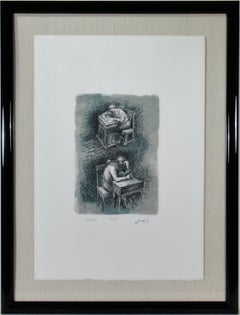
Girls Seated at Desk IX
By Henry Moore
Located in San Francisco, CA
Artist: Henry Moore (British, 1898-1986)
Title: Girls Seated at Desk IX
Year: 1974
Medium: Color lithograph
Edition: Numbered 40/50 in pencil
Paper: Wove
Paper size: 20.25 x...
Category
Late 20th Century Modern Figurative Prints
Materials
Lithograph
La Negra (The Black Woman)
By Rufino Tamayo
Located in San Francisco, CA
This artwork titled "La Negra (The Black Woman)" from the suite "The Mujeres File" 1969 is an original colors lithograph on B.F.K. Rives paper by renown Mexican artist Rufino Tamayo, 1899-1991. It is hand signed and numbered 150/150 in pencil by the artist. The image size is 26.85 x 21.25 inches, sheet size is 29.5 x 22.15 inches, framed size is 42 x 35 inches. Published by Touchtone Publisher, New York, printed by Ateliers Desjobert, Paris. Referenced and pictured in the artist's catalogue raisonne by Pereda, plate #109 page 107. Custom framed in a wooden silver frame, with silver spacer and fabric matting. It is in excellent condition.
About the artist:
A native of Oaxaca in Southern Mexico, Rufino Tamayo's father was a shoemaker, and his mother a seamstress. Some accounts state that he was descended from Zapotec Indians, but he was actually 'mestizo' - of mixed indigenous/European ancestry. (Santa Barbara Museum of Art). He began painting at age 11. Orphaned at the age of 12, Tamayo moved to Mexico City, where he was raised by his maternal aunt who owned a wholesale fruit business.
In 1917, he entered the San Carlos Academy of Fine Arts, but left soon after to pursue independent study. Four years later, Tamayo was appointed the head designer of the department of ethnographic drawings at the National Museum of Archaeology in Mexico City. There he was surrounded by pre-Colombian objects, an aesthetic inspiration that would play a pivotal role in his life. In his own work, Tamayo integrated the forms and tones of pre-Columbian ceramics into his early still lives and portraits of Mexican men and women.
In the early 1920s he also taught art classes in Mexico City's public schools. Despite his involvement in Mexican history, he did not subscribe to the idea of art as nationalistic propaganda. Modern Mexican art at that time was dominated by 'The Three Great Ones' : Diego Rivera, Jose Clemente Orozco, and David Alfaro Siqueros, but Tamayo began to be noted as someone 'new' and different' for his blending of the aesthetics of post Revolutionary Mexico with the vanguard artists of Europe and the United States.
After the Mexican Revolution, he focused on creating his own identity in his work, expressing what he thought was the traditional Mexico, and refusing to follow the political trends of his contemporary artists. This caused some to see him as a 'traitor' to the political cause, and he felt it difficult to freely express himself in his art. As a result, he decided to leave Mexico in 1926 and move to New York, along with his friend, the composer Carlos Chavez. The first exhibition of Tamayo's work in the United States was held at the Weyhe Gallery, New York, in that same year. The show was successful, and Tamayo was praised for his 'authentic' status as a Mexican of 'indigenous heritage', and for his internationally appealing Modernist aesthetic. (Santa Barbara Museum of Art).
Throughout the late thirties and early forties New York's Valentine Gallery gave him shows. For nine years, beginning in 1938, he taught at the Dalton School in New York.
In 1929, some health problems led him to return to Mexico for treatment. While there he took a series of teaching jobs. During this period he became romantically involved with the artist Maria Izquierdo...
Category
Mid-20th Century Modern Figurative Prints
Materials
Lithograph
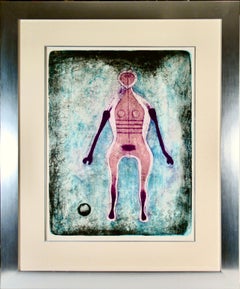
Torso de Mujer
By Rufino Tamayo
Located in San Francisco, CA
This artwork titled "Torso de Mujer (Torso de Femmee)" from the suite "The Mujeres File" 1969 is an original colors lithograph on Wove paper by renown Mexican artist Rufino Tamayo, 1899-1991. It is hand signed and inscribed H.C. (Hors Commerce) in pencil by the artist. The image size is 26.85 x 21 inches, framed size is 40.75 x 33 inches. Published by Touchtone Publisher, New York, printed by Ateliers Desjobert, Paris. Referenced and pictured in the artist's catalogue raisonne by Pereda, plate #108 page 107. Custom framed in a wooden gold frame, with gold bevel and light beige fabric matting. It is in excellent condition.
About the artist:
A native of Oaxaca in Southern Mexico, Rufino Tamayo's father was a shoemaker, and his mother a seamstress. Some accounts state that he was descended from Zapotec Indians, but he was actually 'mestizo' - of mixed indigenous/European ancestry. (Santa Barbara Museum of Art). He began painting at age 11. Orphaned at the age of 12, Tamayo moved to Mexico City, where he was raised by his maternal aunt who owned a wholesale fruit business.
In 1917, he entered the San Carlos Academy of Fine Arts, but left soon after to pursue independent study. Four years later, Tamayo was appointed the head designer of the department of ethnographic drawings at the National Museum of Archaeology in Mexico City. There he was surrounded by pre-Colombian objects, an aesthetic inspiration that would play a pivotal role in his life. In his own work, Tamayo integrated the forms and tones of pre-Columbian ceramics...
Category
Mid-20th Century Modern Figurative Prints
Materials
Lithograph
Recently Viewed
View AllMore Ways To Browse
Vintage Linen Napkin
Vintage Linen Napkins
French Waiter
Hirschfeld Marx Brothers
Hirschfeld Phantom
Hisashi Otsuka
Invader Kit
Ivan Valtchev
Jack Eisner
Jacob Lawrence Signed
James Jacques Joseph Tissot On Sale
James L Thomas
Japanese Linocut
Japanese Woodcuts 18th Century
Jayme Odgers
Jean Cocteau Lovers
Jean Yves Commere
Jehudo Epstein