Items Similar to Andrew Wyeth, Canvasbacks, The Four Seasons (after)
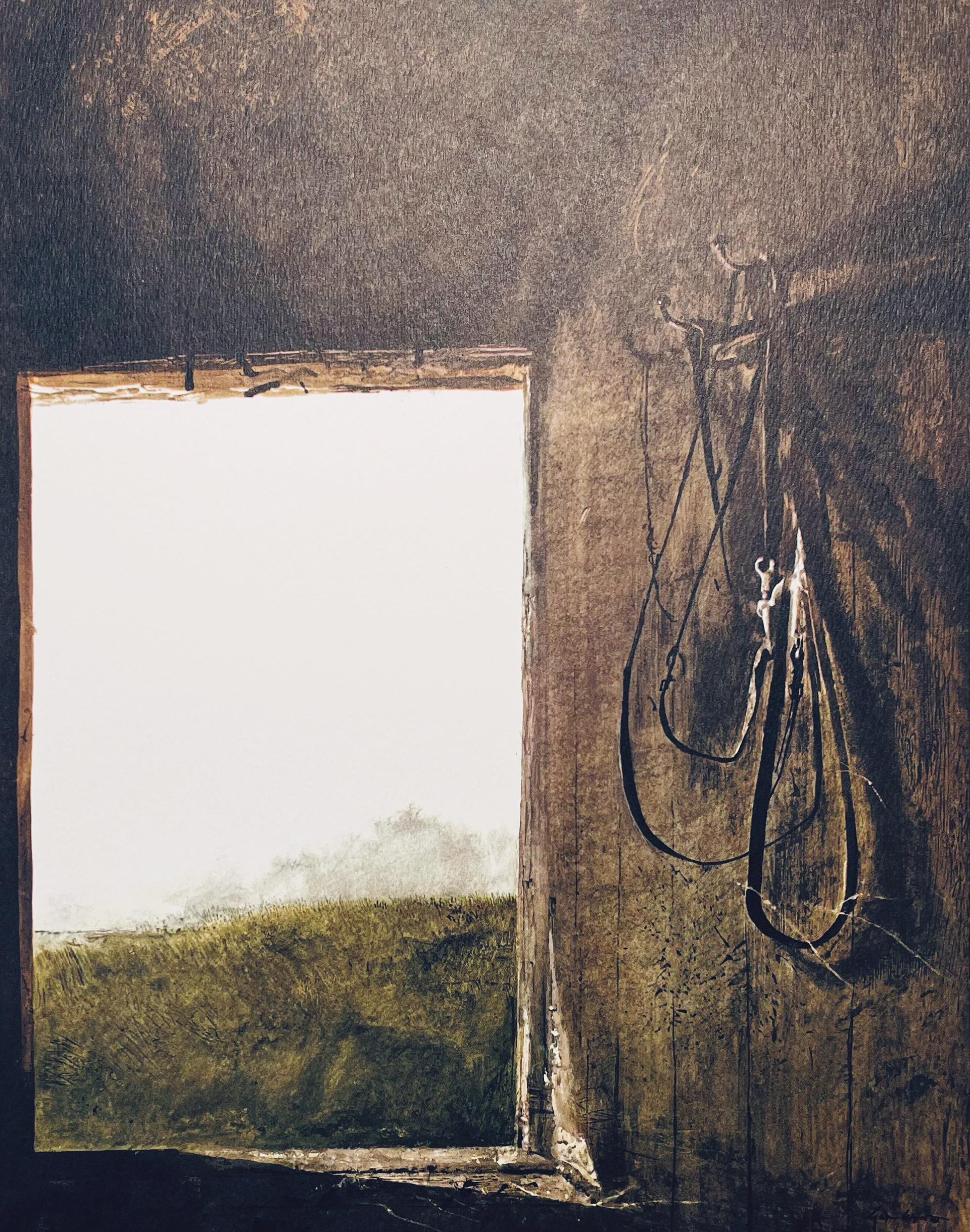
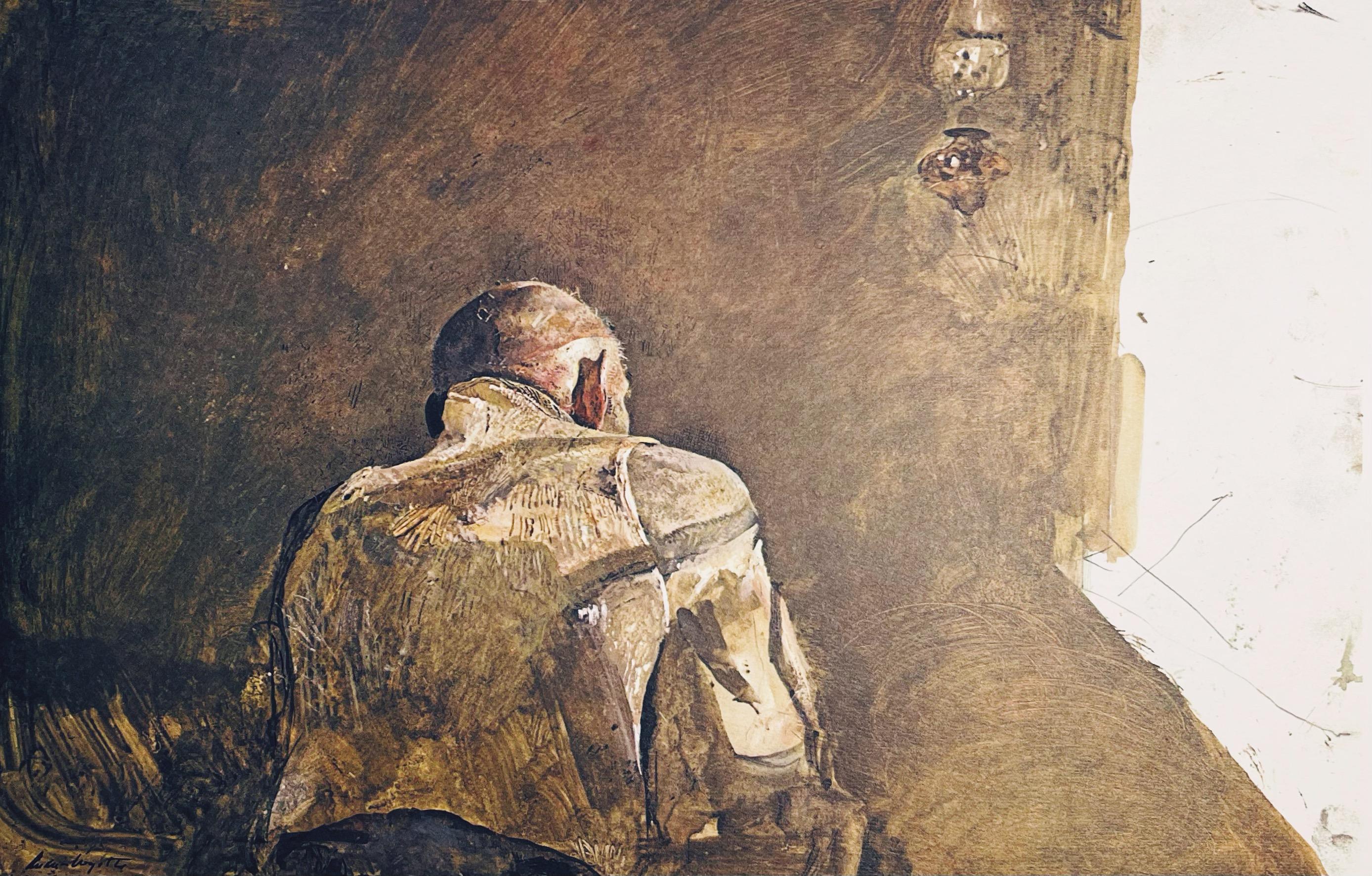
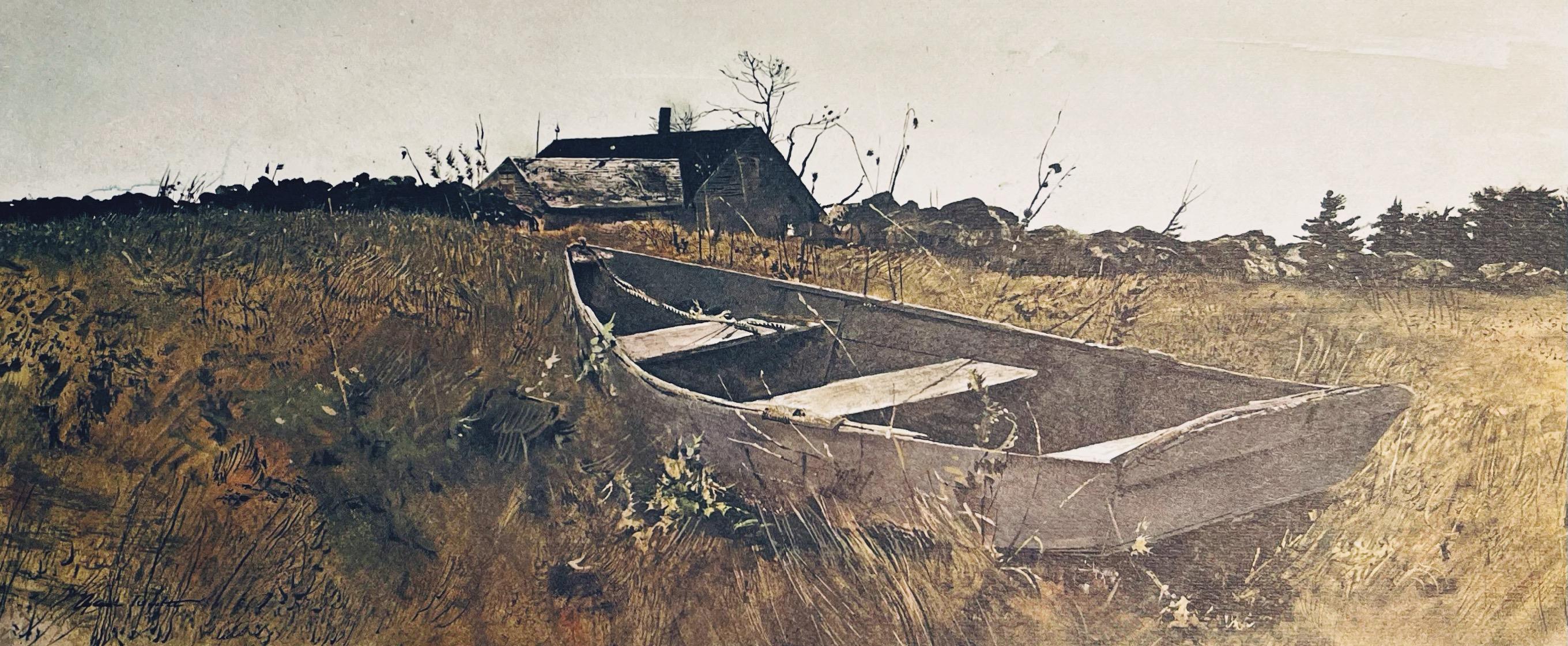
Want more images or videos?
Request additional images or videos from the seller
1 of 10
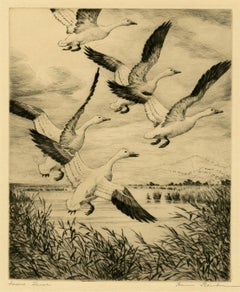
Andrew Wyeth, Canvasbacks, The Four Seasons (after)1962
1962
$716
$89520% Off
£547.61
£684.5220% Off
€626.69
€783.3620% Off
CA$1,019.06
CA$1,273.8320% Off
A$1,103.35
A$1,379.1920% Off
CHF 586.60
CHF 733.2520% Off
MX$13,307.16
MX$16,633.9520% Off
NOK 7,376.83
NOK 9,221.0420% Off
SEK 6,877.31
SEK 8,596.6320% Off
DKK 4,680.58
DKK 5,850.7320% Off
About the Item
This exquisite lithograph after Andrew Wyeth (1917–2009), titled Canvasbacks, originates from the distinguished 1962 folio The Four Seasons: Paintings and Drawings by Andrew Wyeth. Published and printed by Art in America Company, Inc., New York, the edition reflects Wyeth’s masterful study of nature and mood through his dry-brush technique. The composition captures the serene grace of waterfowl, rendered with Wyeth’s characteristic precision and quiet introspection that bridge realism and emotional depth.
Executed on velin paper, this lithograph measures 17 x 13 inches (43.2 x 33 cm). As issued, it is unsigned and unnumbered, representing the folio’s authentic format. The Four Seasons series was conceived by the editors of Art in America in collaboration with Andrew and Betsy Wyeth, who chose the theme to reflect the central role of seasonal transformation in his art. Each image reveals Wyeth’s profound sensitivity to light, time, and atmosphere—his ability to distill the poetry of the natural world into tangible form.
Artwork Details:
Artist: After Andrew Wyeth (1917–2009)
Title: Canvasbacks, from The Four Seasons, Paintings and Drawings by Andrew Wyeth, 1962
Medium: Lithograph on velin paper
Dimensions: 17 x 13 inches (43.2 x 33 cm)
Inscription: Unsigned and unnumbered, as issued
Date: 1962
Publisher: Art in America Company, Inc., New York
Printer: Art in America Company, Inc., New York
Condition: Well preserved, consistent with age and medium
Provenance: From the 1962 folio The Four Seasons, Paintings and Drawings by Andrew Wyeth, published and printed by Art in America Company, Inc., New York
Notes:
Excerpted from the 1962 folio:
"In 1962 the editors of Art in America proposed to Wyeth a portfolio of images of his recent dry-brush drawings. The artist and his wife suggested the theme, 'The Four Seasons,' because of the essential role played in his work by the cycle of the seasons. The drawings were selected by Andrew and Betsy Wyeth from works in the house and studio at Chadds Ford, supplemented by some owned by friends. With a few exceptions they had never been exhibited or reproduced. The plates were made directly from the originals. In these drawings Wyeth's loving concentration on the object is fully revealed. But as always in his work, this concern with the tangible is balanced by sensibility to mood, to the emotion arising from the actual. They are pervaded with a sense of the season—the exact time of year, the hour of the day, the quality of the light. To the truth and subtlety with which he captures these intangible factors, these drawings owe their poignant poetry."
About the Artist:
Andrew Wyeth (1917–2009) was an American visual artist and one of the best-known painters of the mid-20th century. Although he considered himself an abstractionist, Wyeth’s work is characterized by a meticulous realism imbued with psychological depth and atmosphere. He often painted the landscapes and people surrounding his homes in Chadds Ford, Pennsylvania, and Cushing, Maine, creating an intimate record of American rural life. The son of the celebrated illustrator N. C. Wyeth, Andrew trained under his father before developing his own deeply personal visual language inspired by Winslow Homer, Henry David Thoreau, and King Vidor. His wife, Betsy Wyeth, was both his muse and career manager, while his son Jamie Wyeth continued the family’s artistic legacy.
Among Wyeth’s best-known works is Christina’s World (1948), housed in the Museum of Modern Art, New York—a quintessential image of 20th-century American art. His other notable series include The Helga Pictures and his window studies, each reflecting a profound meditation on solitude, memory, and perception. Wyeth was the first painter to receive both the Presidential Medal of Freedom and the Congressional Gold Medal, and was elected to the French Académie des Beaux-Arts in 1980.
In 2022, Andrew Wyeth's painting Day Dream sold for USD 23.29 million at Christie’s New York, setting a world record for the artist.
Andrew Wyeth lithograph, Canvasbacks Wyeth, The Four Seasons Wyeth, Wyeth 1962 portfolio, Art in America Company New York, Wyeth velin paper lithograph, Wyeth dry-brush drawings, Andrew Wyeth after lithograph, Wyeth nature study, Wyeth waterfowl print, American realism, 20th century American art, Brandywine School, Chadds Ford artist, Wyeth collectible print, Wyeth modern art edition, Andrew Wyeth signed folio, Wyeth collectible lithograph, Art in America 1962 Wyeth edition, Wyeth landscape drawing.
- Creation Year:1962
- Dimensions:Height: 17 in (43.18 cm)Width: 13 in (33.02 cm)
- Medium:
- Movement & Style:
- After:Andrew Wyeth (1917-2009, American)
- Period:
- Condition:
- Gallery Location:Southampton, NY
- Reference Number:1stDibs: LU1465216985312
About the Seller
4.9
Platinum Seller
Premium sellers with a 4.7+ rating and 24-hour response times
Established in 1978
1stDibs seller since 2021
1,237 sales on 1stDibs
Typical response time: <1 hour
- ShippingRetrieving quote...Shipping from: Southampton, NY
- Return Policy
More From This Seller
View AllAndrew Wyeth, Storing Up, from The Four Seasons (after)
By Andrew Wyeth
Located in Southampton, NY
This exquisite lithograph after Andrew Wyeth (1917–2009), titled Storing Up, originates from the distinguished 1962 folio The Four Seasons: Pai...
Category
1960s American Realist Landscape Prints
Materials
Lithograph
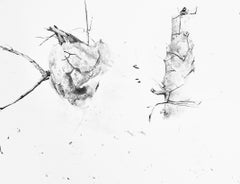
Andrew Wyeth, New Leaves, from The Four Seasons (after)
By Andrew Wyeth
Located in Southampton, NY
This exquisite lithograph after Andrew Wyeth (1917–2009), titled New Leaves, originates from the distinguished 1962 folio The Four Seasons: Paintings and Drawings by Andrew Wyeth. Published and printed by Art in America Company, Inc., New York, the edition exemplifies Wyeth’s quiet observation of nature and the passage of time. New Leaves captures the delicate stir of spring renewal—the subtle emergence of life in the landscape—rendered with Wyeth’s hallmark balance of precision, restraint, and emotional depth.
Executed on velin paper, this lithograph measures 17 x 13 inches (43.2 x 33 cm). As issued, it is unsigned and unnumbered, representing the folio’s authentic format. The Four Seasons series was conceived by the editors of Art in America in collaboration with Andrew and Betsy Wyeth, who selected drawings from the artist’s studio and personal archive to embody the poetic rhythm of the changing seasons. Each composition reveals Wyeth’s mastery of atmosphere, mood, and the quiet intensity of natural experience.
Artwork Details:
Artist: After Andrew Wyeth (1917–2009)
Title: New Leaves, from The Four Seasons, Paintings and Drawings by Andrew Wyeth, 1962
Medium: Lithograph on velin paper
Dimensions: 17 x 13 inches (43.2 x 33 cm)
Inscription: Unsigned and unnumbered, as issued
Date: 1962
Publisher: Art in America Company, Inc., New York
Printer: Art in America Company, Inc., New York
Condition: Well preserved, consistent with age and medium
Provenance: From the 1962 folio The Four Seasons, Paintings and Drawings by Andrew Wyeth, published and printed by Art in America Company, Inc., New York
Notes:
Excerpted from the 1962 folio:
"In 1962 the editors of Art in America proposed to Wyeth a portfolio of images of his recent dry-brush drawings. The artist and his wife suggested the theme, 'The Four Seasons,' because of the essential role played in his work by the cycle of the seasons. The drawings were selected by Andrew and Betsy Wyeth from works in the house and studio at Chadds Ford, supplemented by some owned by friends. With a few exceptions they had never been exhibited or reproduced. The plates were made directly from the originals. In these drawings Wyeth's loving concentration on the object is fully revealed. But as always in his work, this concern with the tangible is balanced by sensibility to mood, to the emotion arising from the actual. They are pervaded with a sense of the season—the exact time of year, the hour of the day, the quality of the light. To the truth and subtlety with which he captures these intangible factors, these drawings owe their poignant poetry."
About the Artist:
Andrew Wyeth (1917–2009) was an American visual artist and one of the best-known painters of the mid-20th century. Although he considered himself an abstractionist, Wyeth’s work is characterized by a meticulous realism imbued with psychological depth and atmosphere. He often painted the landscapes and people surrounding his homes in Chadds Ford, Pennsylvania, and Cushing, Maine, creating an intimate record of American rural life. The son of the celebrated illustrator N. C. Wyeth, Andrew trained under his father before developing his own deeply personal visual language inspired by Winslow Homer, Henry David Thoreau, and King Vidor. His wife, Betsy Wyeth, was both his muse and career manager, while his son Jamie Wyeth continued the family’s artistic legacy.
Among Wyeth’s best-known works is Christina’s World (1948), housed in the Museum of Modern Art, New York—a quintessential image of 20th-century American art. His other notable series include The Helga Pictures and his window studies, each reflecting a profound meditation on solitude, memory, and perception. Wyeth was the first painter to receive both the Presidential Medal of Freedom and the Congressional Gold Medal, and was elected to the French Académie des Beaux-Arts in 1980.
In 2022, Andrew Wyeth's painting Day Dream sold for USD 23.29 million at Christie’s New York, setting a world record for the artist.
Andrew Wyeth lithograph...
Category
1960s American Realist Landscape Prints
Materials
Lithograph
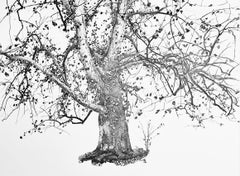
Andrew Wyeth, Quaker Ladies, from The Four Seasons (after)
By Andrew Wyeth
Located in Southampton, NY
This exquisite lithograph after Andrew Wyeth (1917–2009), titled Quaker Ladies, originates from the distinguished 1962 folio The Four Seasons: Paintings and Drawings by Andrew Wyeth. Published and printed by Art in America Company, Inc., New York, the edition exemplifies Wyeth’s deep reverence for nature and his mastery of tonal subtlety. Quaker Ladies captures the full flowering of spring—an intimate study of delicate wild blossoms rendered with Wyeth’s signature restraint and sensitivity to atmosphere, texture, and light.
Executed on velin paper, this lithograph measures 17 x 13 inches (43.2 x 33 cm). As issued, it is unsigned and unnumbered, representing the folio’s authentic format. The Four Seasons series was conceived by the editors of Art in America in collaboration with Andrew and Betsy Wyeth, who selected drawings from the artist’s studio to express the cyclical beauty of nature’s transformations. Each image demonstrates Wyeth’s ability to translate fleeting seasonal impressions into works of quiet emotional resonance and painterly poetry.
Artwork Details:
Artist: After Andrew Wyeth (1917–2009)
Title: Quaker Ladies, from The Four Seasons, Paintings and Drawings by Andrew Wyeth, 1962
Medium: Lithograph on velin paper
Dimensions: 17 x 13 inches (43.2 x 33 cm)
Inscription: Unsigned and unnumbered, as issued
Date: 1962
Publisher: Art in America Company, Inc., New York
Printer: Art in America Company, Inc., New York
Condition: Well preserved, consistent with age and medium
Provenance: From the 1962 folio The Four Seasons, Paintings and Drawings by Andrew Wyeth, published and printed by Art in America Company, Inc., New York
Notes:
Excerpted from the 1962 folio:
"In 1962 the editors of Art in America proposed to Wyeth a portfolio of images of his recent dry-brush drawings. The artist and his wife suggested the theme, 'The Four Seasons,' because of the essential role played in his work by the cycle of the seasons. The drawings were selected by Andrew and Betsy Wyeth from works in the house and studio at Chadds Ford, supplemented by some owned by friends. With a few exceptions they had never been exhibited or reproduced. The plates were made directly from the originals. In these drawings Wyeth's loving concentration on the object is fully revealed. But as always in his work, this concern with the tangible is balanced by sensibility to mood, to the emotion arising from the actual. They are pervaded with a sense of the season—the exact time of year, the hour of the day, the quality of the light. To the truth and subtlety with which he captures these intangible factors, these drawings owe their poignant poetry."
About the Artist:
Andrew Wyeth (1917–2009) was an American visual artist and one of the best-known painters of the mid-20th century. Although he considered himself an abstractionist, Wyeth’s work is characterized by a meticulous realism imbued with psychological depth and atmosphere. He often painted the landscapes and people surrounding his homes in Chadds Ford, Pennsylvania, and Cushing, Maine, creating an intimate record of American rural life. The son of the celebrated illustrator N. C. Wyeth, Andrew trained under his father before developing his own deeply personal visual language inspired by Winslow Homer, Henry David Thoreau, and King Vidor. His wife, Betsy Wyeth, was both his muse and career manager, while his son Jamie Wyeth continued the family’s artistic legacy.
Among Wyeth’s best-known works is Christina’s World (1948), housed in the Museum of Modern Art, New York—a quintessential image of 20th-century American art. His other notable series include The Helga Pictures and his window studies, each reflecting a profound meditation on solitude, memory, and perception. Wyeth was the first painter to receive both the Presidential Medal of Freedom and the Congressional Gold Medal, and was elected to the French Académie des Beaux-Arts in 1980.
In 2022, Andrew Wyeth's painting Day Dream sold for USD 23.29 million at Christie’s New York, setting a world record for the artist.
Andrew Wyeth lithograph...
Category
1960s American Realist Landscape Prints
Materials
Lithograph
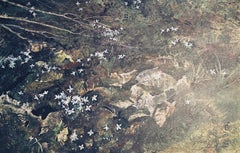
Andrew Wyeth, Burning Off, from The Four Seasons (after)
By Andrew Wyeth
Located in Southampton, NY
This exquisite lithograph after Andrew Wyeth (1917–2009), titled Burning Off, originates from the distinguished 1962 folio The Four Seasons: Paintings and Drawings by Andrew Wyeth. Published and printed by Art in America Company, Inc., New York, the edition captures Wyeth’s poetic meditation on atmosphere and transformation. Burning Off depicts a summer morning’s sea fog gradually lifting from the landscape, revealing the tranquil geometry of field and horizon. Through restrained tonal contrasts and delicate textural nuance, Wyeth conveys both the mystery and stillness of the natural world in transition.
Executed on velin paper, this lithograph measures 17 x 13 inches (43.2 x 33 cm). As issued, it is unsigned and unnumbered, representing the folio’s authentic format. The Four Seasons series was conceived by the editors of Art in America in collaboration with Andrew and Betsy Wyeth, who selected drawings from the artist’s studio and personal collection to embody the cyclical poetry of the seasons. Each image reflects Wyeth’s profound sensitivity to light, time, and emotion—his ability to evoke the spiritual essence of landscape through quiet realism.
Artwork Details:
Artist: After Andrew Wyeth (1917–2009)
Title: Burning Off, from The Four Seasons, Paintings and Drawings by Andrew Wyeth, 1962
Medium: Lithograph on velin paper
Dimensions: 17 x 13 inches (43.2 x 33 cm)
Inscription: Unsigned and unnumbered, as issued
Date: 1962
Publisher: Art in America Company, Inc., New York
Printer: Art in America Company, Inc., New York
Condition: Well preserved, consistent with age and medium
Provenance: From the 1962 folio The Four Seasons, Paintings and Drawings by Andrew Wyeth, published and printed by Art in America Company, Inc., New York
Notes:
Excerpted from the 1962 folio:
"In 1962 the editors of Art in America proposed to Wyeth a portfolio of images of his recent dry-brush drawings. The artist and his wife suggested the theme, 'The Four Seasons,' because of the essential role played in his work by the cycle of the seasons. The drawings were selected by Andrew and Betsy Wyeth from works in the house and studio at Chadds Ford, supplemented by some owned by friends. With a few exceptions they had never been exhibited or reproduced. The plates were made directly from the originals. In these drawings Wyeth's loving concentration on the object is fully revealed. But as always in his work, this concern with the tangible is balanced by sensibility to mood, to the emotion arising from the actual. They are pervaded with a sense of the season—the exact time of year, the hour of the day, the quality of the light. To the truth and subtlety with which he captures these intangible factors, these drawings owe their poignant poetry."
About the Artist:
Andrew Wyeth (1917–2009) was an American visual artist and one of the best-known painters of the mid-20th century. Although he considered himself an abstractionist, Wyeth’s work is characterized by a meticulous realism imbued with psychological depth and atmosphere. He often painted the landscapes and people surrounding his homes in Chadds Ford, Pennsylvania, and Cushing, Maine, creating an intimate record of American rural life. The son of the celebrated illustrator N. C. Wyeth, Andrew trained under his father before developing his own deeply personal visual language inspired by Winslow Homer, Henry David Thoreau, and King Vidor. His wife, Betsy Wyeth, was both his muse and career manager, while his son Jamie Wyeth continued the family’s artistic legacy.
Among Wyeth’s best-known works is Christina’s World (1948), housed in the Museum of Modern Art, New York—a quintessential image of 20th-century American art. His other notable series include The Helga Pictures and his window studies, each reflecting a profound meditation on solitude, memory, and perception. Wyeth was the first painter to receive both the Presidential Medal of Freedom and the Congressional Gold Medal, and was elected to the French Académie des Beaux-Arts in 1980.
In 2022, Andrew Wyeth's painting Day Dream sold for USD 23.29 million at Christie’s New York, setting a world record for the artist.
Andrew Wyeth lithograph...
Category
1960s American Realist Landscape Prints
Materials
Lithograph
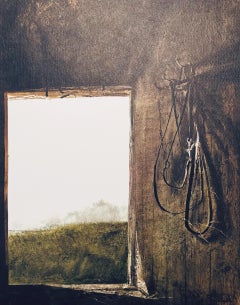
Andrew Wyeth, Spring Sun, from The Four Seasons (after)
By Andrew Wyeth
Located in Southampton, NY
This exquisite lithograph after Andrew Wyeth (1917–2009), titled Spring Sun, originates from the distinguished 1962 folio The Four Seasons: Paintings and Drawings by Andrew Wyeth. Published and printed by Art in America Company, Inc., New York, the edition captures Wyeth’s luminous portrayal of seasonal awakening. Spring Sun evokes the thin sunlight and faint warmth of early spring—the quiet renewal of life after winter’s retreat—rendered with Wyeth’s characteristic restraint, tonal subtlety, and contemplative emotional depth.
Executed on velin paper, this lithograph measures 17 x 13 inches (43.2 x 33 cm). As issued, it is unsigned and unnumbered, representing the folio’s authentic format. The Four Seasons series was conceived by the editors of Art in America in collaboration with Andrew and Betsy Wyeth, who selected drawings from the artist’s studio and personal collection to illustrate the intimate relationship between nature, time, and memory. Each composition distills Wyeth’s gift for transforming the familiar into visual poetry through mastery of texture, light, and mood.
Artwork Details:
Artist: After Andrew Wyeth (1917–2009)
Title: Spring Sun, from The Four Seasons, Paintings and Drawings by Andrew Wyeth, 1962
Medium: Lithograph on velin paper
Dimensions: 17 x 13 inches (43.2 x 33 cm)
Inscription: Unsigned and unnumbered, as issued
Date: 1962
Publisher: Art in America Company, Inc., New York
Printer: Art in America Company, Inc., New York
Condition: Well preserved, consistent with age and medium
Provenance: From the 1962 folio The Four Seasons, Paintings and Drawings by Andrew Wyeth, published and printed by Art in America Company, Inc., New York
Notes:
Excerpted from the 1962 folio:
"In 1962 the editors of Art in America proposed to Wyeth a portfolio of images of his recent dry-brush drawings. The artist and his wife suggested the theme, 'The Four Seasons,' because of the essential role played in his work by the cycle of the seasons. The drawings were selected by Andrew and Betsy Wyeth from works in the house and studio at Chadds Ford, supplemented by some owned by friends. With a few exceptions they had never been exhibited or reproduced. The plates were made directly from the originals. In these drawings Wyeth's loving concentration on the object is fully revealed. But as always in his work, this concern with the tangible is balanced by sensibility to mood, to the emotion arising from the actual. They are pervaded with a sense of the season—the exact time of year, the hour of the day, the quality of the light. To the truth and subtlety with which he captures these intangible factors, these drawings owe their poignant poetry."
About the Artist:
Andrew Wyeth (1917–2009) was an American visual artist and one of the best-known painters of the mid-20th century. Although he considered himself an abstractionist, Wyeth’s work is characterized by a meticulous realism imbued with psychological depth and atmosphere. He often painted the landscapes and people surrounding his homes in Chadds Ford, Pennsylvania, and Cushing, Maine, creating an intimate record of American rural life. The son of the celebrated illustrator N. C. Wyeth, Andrew trained under his father before developing his own deeply personal visual language inspired by Winslow Homer, Henry David Thoreau, and King Vidor. His wife, Betsy Wyeth, was both his muse and career manager, while his son Jamie Wyeth continued the family’s artistic legacy.
Among Wyeth’s best-known works is Christina’s World (1948), housed in the Museum of Modern Art, New York—a quintessential image of 20th-century American art. His other notable series include The Helga Pictures and his window studies, each reflecting a profound meditation on solitude, memory, and perception. Wyeth was the first painter to receive both the Presidential Medal of Freedom and the Congressional Gold Medal, and was elected to the French Académie des Beaux-Arts in 1980.
In 2022, Andrew Wyeth's painting Day Dream sold for USD 23.29 million at Christie’s New York, setting a world record for the artist.
Andrew Wyeth lithograph...
Category
1960s American Realist Landscape Prints
Materials
Lithograph
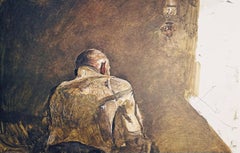
Andrew Wyeth, Teel’s Island, from The Four Seasons (after)
By Andrew Wyeth
Located in Southampton, NY
This exquisite lithograph after Andrew Wyeth (1917–2009), titled Teel’s Island, originates from the distinguished 1962 folio The Four Seasons: Paintings and Drawings by Andrew Wyeth....
Category
1960s American Realist Landscape Prints
Materials
Lithograph
You May Also Like
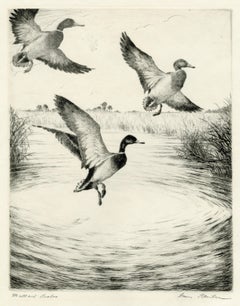
Mallard Drakes (Louisiana Honkers)
Located in Fairlawn, OH
Mallard Drakes (Louisiana Honkers)
Drypoint, c. 1940
Signed in pencil lower right (see photo)
Titled in pencil lower left (see photo)
Note: A famous image by Kleiber. It is was made in a hand colored version which commands a large premium.
Condition: Excellent
Image/Plate size: 9 7/8 x 7 7/8 inches
Hans Kleiber (1887-1967)
Hans Norbert Kleiber, painter, etcher, illustrator, and naturalist, was born in Cologne, Germany on August 24, 1887. He emigrated from Germany to the United States in 1900, settling in Massachusetts before moving to Wyoming. Kleiber first worked in lumber camps before working for the United States Forest Service from 1906 until 1924. One of his duties as a ranger was to monitor the logging camps in the Bighorn Mountains.
Kleiber was primarily self-taught as an artist and it was in the 1920s that he began devoting himself to art. It appears that he first began to work in watercolor and oil but was producing etchings and drypoints as early as 1924. He traversed the mountains of Wyoming, Montana, and Idaho, and his subjects are drawn from the pristine landscapes and wildlife.
Kleiber's first exhibition of his etchings was mounted in 1928 at Goodspeed's Book Shop in Boston. His etching, Crossing the Platte, was included in the 1939 New York World's Fair exhibition, American Art Today. There was an exhibition of fifty of his etchings at the National Museum in 1944, and an exhibition of his watercolors was mounted at the Grand Central Galleries in New York in 1950. Kleiber was a member of the Society of American Etchers and the California Society of Printmakers. He received a silver medal in 1931 from the Printmakers Society of California for his print, Leaving the High Country...
Category
1940s American Realist Animal Prints
Materials
Drypoint
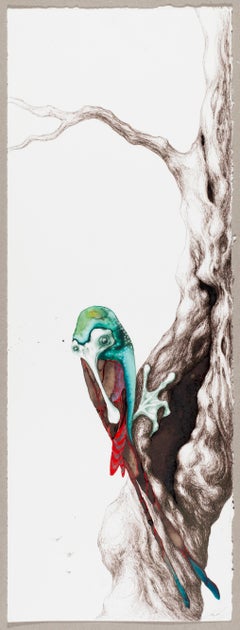
Amphibious Spoonbill Flycatcher
Located in Columbia, MO
John Selburg was born and raised in Peoria, Illinois. He holds a BFA in Drawing, Sculpture, and Graphic Design from Bradley University (2006), and an MFA from the University of Misso...
Category
21st Century and Contemporary Contemporary Drawings and Watercolor Paint...
Materials
Ink, Watercolor, Archival Paper
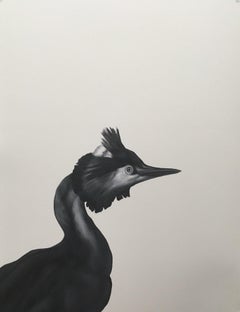
Great Crested Grebe (after Duranti)
By Shelley Reed
Located in Bozeman, MT
This is a unframed painting and is painted in the influence of the artist Duranti. This painting is oil on paper, and is monochromatic black.
Reed's primary focus has been the rich vein of Northern European art from the mid-17th through 18th centuries, a period of enlightenment and profound interest in science, nature, and the animal world. Animals were assigned human traits (peacock:vanity; dog:fidelity), and nature itself was considered a symbol of God...
Category
2010s Realist Animal Paintings
Materials
Oil, Archival Paper
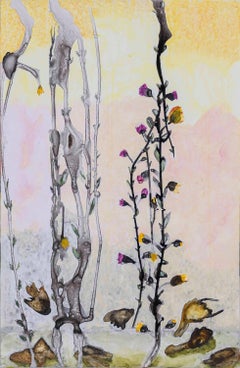
End of Season Mixed Media on Yupo paper Image 37 x 24 Framed 46 x 32 .75
Located in Houston, TX
End of Season by Texas artist Julie England is mixed media on Yupo paper. The size of End of End of Season is 37″ x 24″ Image 46″ x 32 3/4″ Framed. Ar...
Category
2010s American Realist Mixed Media
Materials
Mixed Media
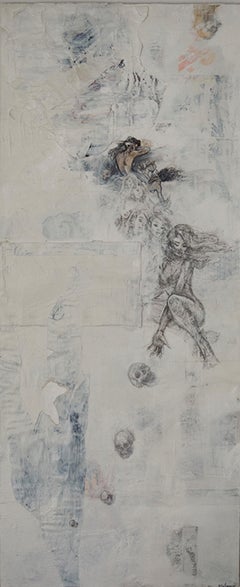
Un Cadeau de Quatres Cranes
By Darren LeGallo
Located in West Hollywood, CA
We are proud to premiere the latest works by American artist Darren LeGallo.
Our second exhibition, Darren LeGallo, "From Destruction" has just opened at our West Hollywood gallery...
Category
2010s Contemporary Figurative Paintings
Materials
Mixed Media
Price Upon Request
Snow Geese (Wyoming)
Located in Fairlawn, OH
Snow Geese (Wyoming)
Drypoint, c. 1947
Signed in pencil lower right (see photo)
Title in pencil lower left (see photo)
Note: This image is reprodcued in a Photogravure for Ducks Unlimited in 1947. This is the first original drypoint version.
Condition: Excellent
Image/Plate size: 8 3/8 x 6 7/8 inches
Reference: Archives West #101
Kleiber 134
Hans Kleiber (1887-1967)
Hans Norbert Kleiber, painter, etcher, illustrator, and naturalist, was born in Cologne, Germany on August 24, 1887. He emigrated from Germany to the United States in 1900, settling in Massachusetts before moving to Wyoming. Kleiber first worked in lumber camps before working for the United States Forest Service from 1906 until 1924. One of his duties as a ranger was to monitor the logging camps in the Bighorn Mountains.
Kleiber was primarily self-taught as an artist and it was in the 1920s that he began devoting himself to art. It appears that he first began to work in watercolor and oil but was producing etchings and drypoints as early as 1924. He traversed the mountains of Wyoming, Montana, and Idaho, and his subjects are drawn from the pristine landscapes and wildlife.
Kleiber's first exhibition of his etchings was mounted in 1928 at Goodspeed's Book Shop in Boston. His etching, Crossing the Platte, was included in the 1939 New York World's Fair exhibition, American Art Today. There was an exhibition of fifty of his etchings at the National Museum in 1944, and an exhibition of his watercolors was mounted at the Grand Central Galleries in New York in 1950. Kleiber was a member of the Society of American Etchers and the California Society of Printmakers. He received a silver medal in 1931 from the Printmakers Society of California for his print, Leaving the High Country...
Category
1940s American Realist Animal Prints
Materials
Drypoint