19th Century Prints and Multiples

to
479
8,310
1,601
376
101
102
Overall Width
to
Overall Height
to
5,708
560
193
74
68
35
31
19
12
2
309
132
125
121
114
4,816
57,667
24,853
721
976
2,295
2,318
2,438
4,983
7,800
13,553
8,024
4,245
3,985
6,087
4,350
50
6,570
3,222
2,480
2,099
1,860
1,343
1,216
746
705
691
642
623
580
379
324
322
311
284
276
271
5,685
3,099
1,097
886
745
671
6,544
4,956
2,227
Period: 19th Century
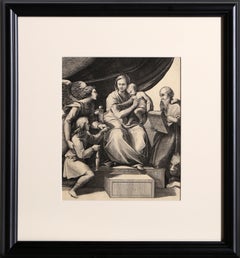
La Vierge au Poisson (d'apres Raphael), Old Masters Heliogravure by Marco Dente
Located in Long Island City, NY
Marco Dente, After by Amand Durand, Italian (1493 - 1527) - La Vierge au Poisson (d'apres Raphael), Year: circa 1878, Medium: Heliogravure, Image Size: 10...
Category

Old Masters 19th Century Prints and Multiples

Materials

Etching

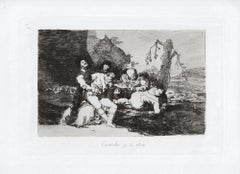
Curarlos y a Otra - Etching by Francisco Goya - 1863
Located in Roma, IT
Curarlos y a otra is an original artwork realized by the great Spanish artist Francisco Goya in 1810. Original etching on paper. The artwork belongs to the famous print collection L...
Category

Old Masters 19th Century Prints and Multiples

Materials

Etching, Aquatint

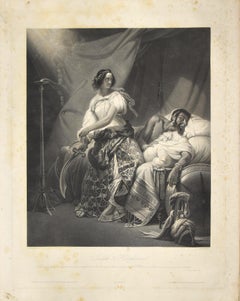
Judith & Holophernes - Etching by J.P.M. Jazet after H. Vernet - 19th Century
Located in Roma, IT
Judith & Holophernel is an original engraving, realized by Jean-Pierre-Marie Jazet after a painting of Horace Vernet. In very good conditions. The artwork represents the key scene of the story of Judith and Holophernes. Horace Vernet (1789 -1863): The French painter of military and historical scenes Horace Vernet was born on 30 June 1789 in Paris at the Louvre, where his parents found refuge during the war. The artist mainly painted sports subjects and extensive battle scenes. Son and grandson of two well-known painters, Carle Vernet and Joseph Vernet, Horace developed a remarkable facility for working on a large scale making him one of the most important painters of military France. In favor of Napoleon Bonaparte, the painter specialized in glorifying the Napoleonic era with his art. During the restoration of the monarchy after 1815, his studio became a center of political intrigue, as well as a meeting place for sportsmen, artists and writers. One of his most famous paintings dates back to 1826, Battle of the Bridge of Arcole, and shows the young Napoleon grabbing a torn flag and leading his men across the bridge on November 17, 1796. After spending a period with the French army in Algiers (1833), Horace Vernet's works present elements of the Arab world. Later he also obtained commissions from Louis Philippe and Napoleon III to produce battle scene paintings...
Category

Old Masters 19th Century Prints and Multiples

Materials

Etching

Napoleon Bonaparte in Toulon - Etching by Hippolyte Bellangé - 1837
Located in Roma, IT
Napoleon Bonaparte in Toulon is an etching that belongs to the suite AtlasBatt realized within Jacques Norvins' Histoire de Napoleon, published in 1837. Author Jacques Norvins publ...
Category

Modern 19th Century Prints and Multiples

Materials

Etching

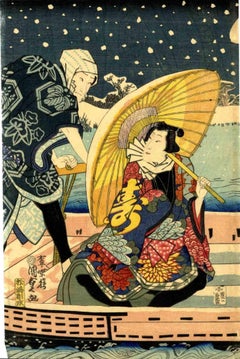
Kabuki - Woodcut by Utagawa Kunisada II - 1862
Located in Roma, IT
Kabuki is an original artwork realized in 1862 by Utagawa Kunisada II (1823-1880). Boatman with elegant passenger in snowy landscape. Sign: Kochoro Kuni...
Category

Modern 19th Century Prints and Multiples

Materials

Woodcut

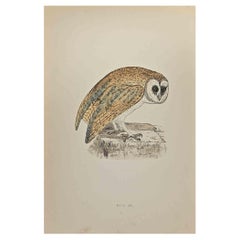
White Owl - Woodcut Print by Alexander Francis Lydon - 1870
Located in Roma, IT
White Owl is a modern artwork realized in 1870 by the British artist Alexander Francis Lydon (1836-1917) . Woodcut print, hand colored, published by Londo...
Category

Modern 19th Century Prints and Multiples

Materials

Woodcut

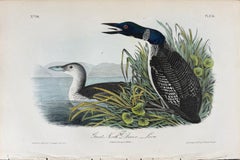
Great North Diver Bird: Original 19th C. 1st Ed. Audubon Hand-colored Lithograph
Located in Alamo, CA
This is an original rare and extremely collectible first edition John James Audubon hand-colored royal octavo lithograph entitled "Great North Diver or Loon", No. 96, Plate 476, from...
Category

Naturalistic 19th Century Prints and Multiples

Materials

Lithograph

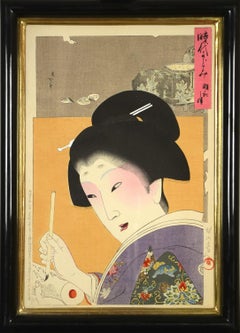
A Set of Six Bust Portraits of Beauties - Jidai Kagami (Mirror of the Ages).
Located in London, GB
CHIKANOBU, Yoshu (1838–1912) A Set of Six Bust Portraits of Beauties - Jidai Kagami (Mirror of the Ages). 1896-1898 A Set of Six oban tate-e woodblock prints of okubi-e (bust portraits) of beauties, titled Jidai kagami (Mirror of the Ages), documenting the fashions of former times (from the Keicho to the Meiji era) in chronological order, each sheet with a beautiful woman in sumptuous costume depicted at the lower section and a rectangular panel at the top which makes a reference to the era, some sheets with lacquer and embossed details, published by Matsuki Heikichi, variously dated Meiji 29, 30 and 31 (1896-8), all signed Yoshu Chikanobu. Each sheet approx. 36 x 23.7 cm (14 1/8 x 9 3/8 in). oyohara Chikanobu (1838–1912), better known to his contemporaries as Yōshū Chikanobu, was one of the most successful woodblock print artists of Japan's Meiji period. He lived at a time when Japan saw the reinstatement of the emperor as ruler and underwent rapid westernization. He worked both with traditional subjects, such as actors, courtesans, scenes of famous sites, beautiful women, and with topical subjects, such as the Satsuma Rebellion (1877) and the Sino-Japanese War (1894-1895). Chikanobu used the flat planes and decorative patterning of the ukiyo-e tradition to striking effect, adding brilliant colors, especially reds, purples, and blues to his compositions. More precisely, Ukiyo-e, or ukiyo-ye (in Japanese: "pictures of the floating world"), is a genre of woodblock prints and paintings that flourished in Japan from the 17th through 19th centuries. It was aimed at the prosperous merchant class in the urbanizing Edo period (1603–1867). Amongst the popular themes were depictions of beautiful women, as is the case here with these okubi-e prints (i.e. bust portraits); kabuki actors and sumo wrestlers; scenes from history and folk tales; travel scenes and landscapes; flora and fauna; and erotica. One of Chikanobu’s best series, A Mirror of the Ages shows women by fashion and hair style throughout history. Despite a sense of longing for the past, these prints are unmistakably modern and of their time. Each print depicts a beauty from a certain period in the lower part and customs at that time, in grisaille, in the upper part - a way to tell viewers about the latest fashion and historical backgroud at that time. The quality of printing is outstanding, especially in Chikanobu’s use of white for the rendering of the powdered faces. Indeed, Chikanobu was known as a master of bijinga (images of beautiful women), and for illustrating changes in women's fashion, including both traditional and Western clothing...
Category

Other Art Style 19th Century Prints and Multiples

Materials

Wood

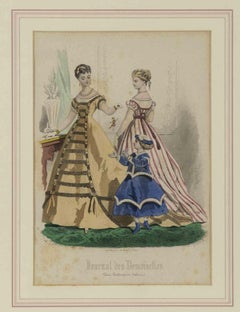
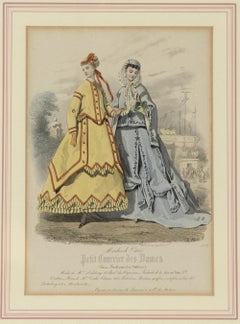
Journal Des Demoiselles - Original Lithograph by Paul Lacourière - 19th Century
Located in Roma, IT
Plate from Journal Des Demoiselles is an original artwork realized in the 19th century by Paul Lacourière Mixed colored lithograph from the Le...
Category

Modern 19th Century Prints and Multiples

Materials

Lithograph

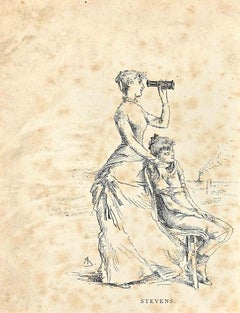
The View - Lithograph by Alfred Stevens - 1880s
Located in Roma, IT
The View is a print realized by Alfred Stevens (1823-1906), in the late 1880s. Lithograph on ivory-colored paper. Signed on the plate on the lower. Good conditions with diffused foxing due to the time. The artwork is realized by soft strokes, the tender...
Category

Modern 19th Century Prints and Multiples

Materials

Lithograph

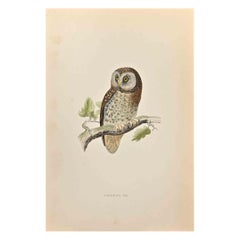
Tengmalm's Owl - Woodcut Print by Alexander Francis Lydon - 1870
Located in Roma, IT
Tengmalm's Owl is a modern artwork realized in 1870 by the British artist Alexander Francis Lydon (1836-1917). Woodcut print on ivory-colored paper. Hand-colored, published by Lond...
Category

Modern 19th Century Prints and Multiples

Materials

Woodcut

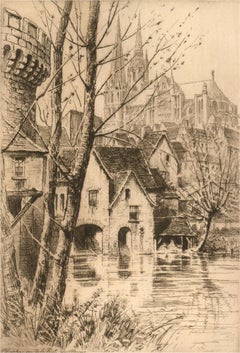
Charles Pinet (1867-1932) - Pair of Late 19th Century Etching, French Towns
Located in Corsham, GB
A charming pair of etchings of a French town scenes overlooking the cathedral. The artist has signed in graphite to the lower edge and has inscribed t...
Category

19th Century Prints and Multiples

Materials

Etching

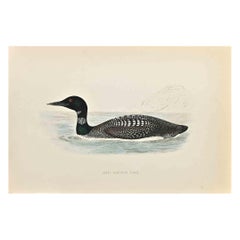
Great Northern Diver - Woodcut Print by Alexander Francis Lydon - 1870
Located in Roma, IT
Great Northern Diver is a modern artwork realized in 1870 by the British artist Alexander Francis Lydon (1836-1917). Woodcut print on ivory-colored pap...
Category

Modern 19th Century Prints and Multiples

Materials

Woodcut

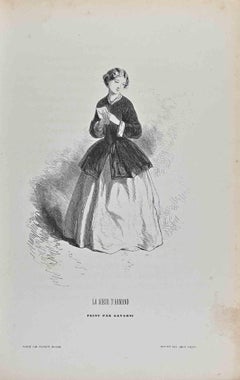
La Soeur D'Armand - Lithograph By Paul Gavarni - mid 19th century
Located in Roma, IT
La Soeur D'Armand is a lithograph on ivory-colored paper, realized by the French draftsman Paul Gavarni (alias Guillaume Sulpice Chevalier Gavarni, 1804-1866) in the mid-19th Century...
Category

Modern 19th Century Prints and Multiples

Materials

Lithograph

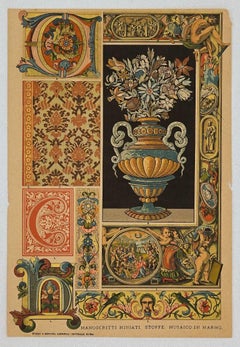
Patterns and Decorations of the Italian Renaissance - 19th century
Located in Roma, IT
Patterns and Decorations of the Italian Renaissance is a beautiful cromolitograph realized after motifs by Modes & Mendels in the Central Librar...
Category

19th Century Prints and Multiples

Materials

Lithograph

Stern Looking - Original Lithograph by Paul Gavarni - 1881
Located in Roma, IT
Stern looking is an original lithograph on ivory-colored paper, realized by the French draftsman Paul Gavarni (after) (alias Guillaume Sulpice Chevalier Gavarni, 1804-1866) in Paris,...
Category

Modern 19th Century Prints and Multiples

Materials

Paper, Lithograph

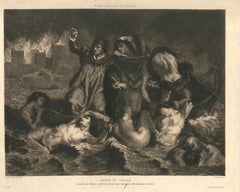
Dante et Virgile - Original Etching by Lucian Carred - 1886
By Lucian Carred
Located in Roma, IT
Dante et Virgile is an original artwork realized by Lucian Carred in 1886. Original etching on paper. Passepartout included (cm 32.5 x 50). Artist Proof after Eugène Delacroix. Bon à tirer...
Category

Modern 19th Century Prints and Multiples

Materials

Etching

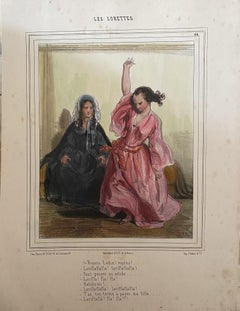
Les Lorettes - Original Lithograph - 19th Century
Located in Roma, IT
"Les Lorettes" is an original hand-watercolored lithograph on ivory-colorated paper by Anonymous Artist of XX Century. In excellent conditions: As good as new. Sheet dimension: 32...
Category

Modern 19th Century Prints and Multiples

Materials

Lithograph

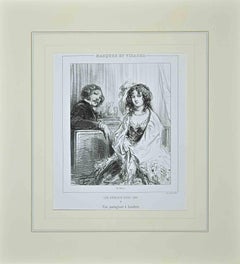
Une Partegeuse à Londres - Lithograph by Paul Gavarni - 1850s
Located in Roma, IT
Une partegeuse a Londres is a lithograph on ivory-colored paper, realized by the French draftsman Paul Gavarni (alias Guillaume Sulpice Chevalier Gavarni, 1804-1866) in the mid-19th Century. From series of "Masques et Visages". Titled on the lower. Good conditions except for some foxings. Paul Gavarni (Paris, 1804 – 1866). Gavarni's father, Sulpice Chevalier, was from a family line of coopers from Burgundy. Paul began work as mechanical work in a machine factory but he saw that to make any progress in his profession, he had to be able to draw; accordingly, in his spare time in the evenings, he took classes in drawing. He devoted his special attention to architectural and mechanical drawing and worked at land surveying...
Category

Modern 19th Century Prints and Multiples

Materials

Lithograph

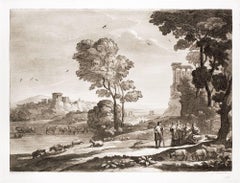
Liber Veritatis - Original B/W Etching after Claude Lorrain - 1815
Located in Roma, IT
Image dimensions: 21 x 27 cm. Liber Veritatis - Plate 190 is a beautiful black and white etching and aquatint on paper realized by the Italian artist Ludovico Caracciolo, after Clau...
Category

Old Masters 19th Century Prints and Multiples

Materials

Etching, Aquatint

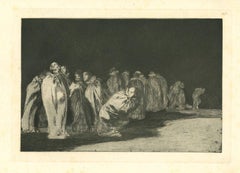
Los Ensacados - Etching - 1875
Located in Roma, IT
Los Ensacados - from Los Proverbios is an original black and white etching realized by Francisco Goya (1746-1828). The artwork is the plate n. 8 from ...
Category

Old Masters 19th Century Prints and Multiples

Materials

Etching, Aquatint

"La Vache Enragee" iconic vintage poster by Toulouse-Lautrec
Located in Hinsdale, IL
TOULOUSE-LAUTREC, HENRI DE (1864-1901) "LA VACHE ENRAGÉE" Wittrock P27B, Adhemar 197 Original color lithograph Wittrock’s State III of III with letters Printed on buff wove paper, c. 1896 Bears artist stamp “TL” upper right, dated 96 Image size: 22 1/2” x 23 5/8” Several examples are known where Lautrec drew on work by other artists whom he admired. In this poster there are clear references to Adolphe Willette's humorous themes and rococo style of illustration. Willette was the founder and illustrator of the short-lived monthly “La Vache Enragee”(the angry cow) edited by the cartoonist Adolphe Roedel. This colored poster of the same title was commissioned for the appearance of the magazine March 1896. As a reference to the wretched financial state of most artists, the term “manger de la vache enrage” (meaning roughly, “meaning not having enough to eat”) was adopted as the motto for the “Vachalcade”which was held on Montmarte annually from 1896. This was an artists' procession, with fanfares and allegories on fame and the muses; it also included a furious cow and a troupe of pretty girls as a satire on Europa with the bull. The event was organized by Roedel"(Adriani p.217) Toulouse-Lautrec took up lithography at a high point in its history, when technical advances in color printing and new possibilities for large scale led to a proliferation of posters as well as prints for the new bourgeois collector. In his short career, he created more than three hundred fifty prints and thirty posters, as well as lithographed theater programs...
Category

Art Nouveau 19th Century Prints and Multiples

Materials

Lithograph

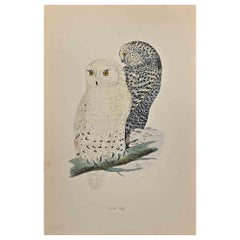
Snowy Owl - Woodcut Print by Alexander Francis Lydon - 1870
Located in Roma, IT
Snowy Owl a modern artwork realized in 1870 by the British artist Alexander Francis Lydon (1836-1917) . Woodcut print, hand colored, published by London, Bell & Sons, 1870. Name ...
Category

Modern 19th Century Prints and Multiples

Materials

Woodcut

Robin Hood's Bay - Engraving by Edward Frencis Finden - 1845
Located in Roma, IT
Robin Hood's Bay is an original etching realized in 1845 by E.Finden. Signed in plate. The artwork is realized in a well-balanced composition.
Category

Modern 19th Century Prints and Multiples

Materials

Engraving

Little Spring Horse - Woodcut Print by Keisai Eisen - 1830s
Located in Roma, IT
Little Spring Horse is an original modern artwork realized by Keisai Eisen in 1820-30. Woodcut Print Oban Format From the series "Osana asobi" (Children'...
Category

Modern 19th Century Prints and Multiples

Materials

Woodcut

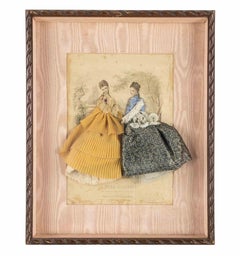
Toilettes de Mme Bréant-Castel - Etching - 1876
Located in Roma, IT
Toilettes de Mme Bréant-Castel, from La Mode Illustrée is a modern artwork realized in 1876. Mixed colored etching and collages on paper. Fabric miniatures of dresses were added to ...
Category

Modern 19th Century Prints and Multiples

Materials

Etching, Mixed Media

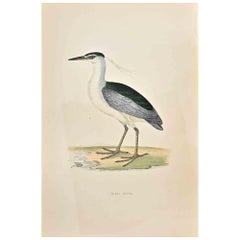
Night Heron - Woodcut Print by Alexander Francis Lydon - 1870
Located in Roma, IT
Night Heron is a modern artwork realized in 1870 by the British artist Alexander Francis Lydon (1836-1917). Woodcut print on ivory-colored paper. Hand-colored, published by London,...
Category

Modern 19th Century Prints and Multiples

Materials

Woodcut

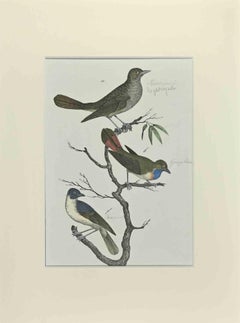
Nightingale - Etching by Johann Friedrich Naumann - 1840
Located in Roma, IT
Nightingale is a Etching hand colored realized by Gotthilf Heinrich von Schubert - Johann Friedrich Naumann, Illustration from Natural history of birds in pictures, published by Stut...
Category

Modern 19th Century Prints and Multiples

Materials

Etching

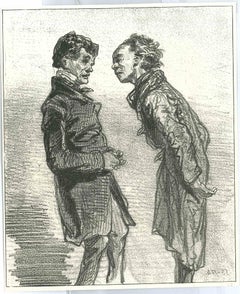
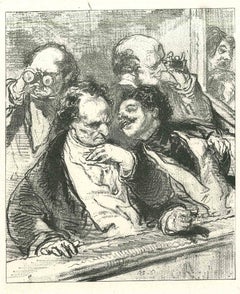
The Conversation - Original Lithograph by Paul Gavarni - 1881
Located in Roma, IT
The conversation is an original lithograph on ivory-colored paper, realized by the French draftsman Paul Gavarni (after) (alias Guillaume Sulpice Chevalier Gavarni, 1804-1866) in Par...
Category

Modern 19th Century Prints and Multiples

Materials

Paper, Lithograph

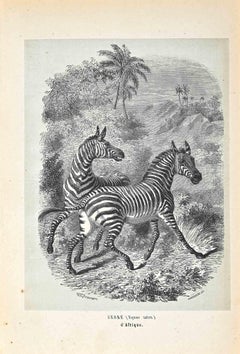
Zebra - Original Lithograph by Paul Gervais - 1854
Located in Roma, IT
Zebra is an original lithograph on ivory-colored paper, realized by Paul Gervais (1816-1879). The artwork is from The Series of "Les Trois Règnes de la Nature", and was published in ...
Category

Modern 19th Century Prints and Multiples

Materials

Lithograph

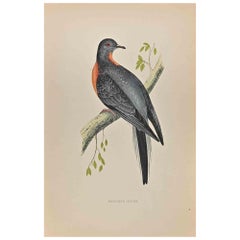
Passenger Pigeon - Woodcut Print by Alexander Francis Lydon - 1870
Located in Roma, IT
Passenger Pigeon is a modern artwork realized in 1870 by the British artist Alexander Francis Lydon (1836-1917) . Woodcut print, hand colored, publi...
Category

Modern 19th Century Prints and Multiples

Materials

Woodcut

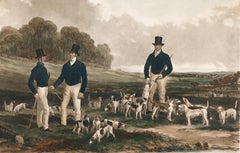
Merry Beaglers: Hunting Lithograph
Located in New York, NY
Color printed aquatint engraving with additional contemporary hand-colored details. Engraved by John Harris after the painting by Harry Hall. London, 1897. ...
Category

19th Century Prints and Multiples

Materials

Paper

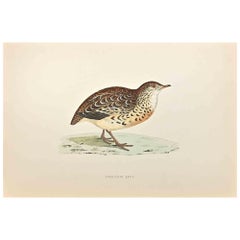
Andalusian Quail - Woodcut Print by Alexander Francis Lydon - 1870
Located in Roma, IT
Andalusian Quail is a modern artwork realized in 1870 by the British artist Alexander Francis Lydon (1836-1917). Woodcut print on ivory-colored paper. Hand-colored, published by Lo...
Category

Modern 19th Century Prints and Multiples

Materials

Woodcut

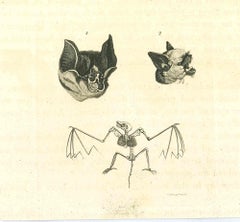
The Physiognomy - The Bats - Original Etching by Thomas Holloway - 1810
Located in Roma, IT
The Physiognomy - The Bats is an original etching artwork realized by Thomas Holloway for Johann Caspar Lavater's "Essays on Physiognomy, Designed to Promote the Knowledge and the Lo...
Category

Modern 19th Century Prints and Multiples

Materials

Etching

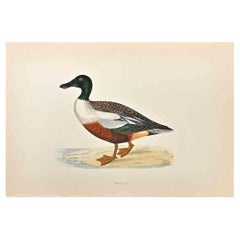
Shoveler - Woodcut Print by Alexander Francis Lydon - 1870
Located in Roma, IT
Shoveler is a modern artwork realized in 1870 by the British artist Alexander Francis Lydon (1836-1917) . Woodcut print, hand colored, published by London, Bell & Sons, 1870. Nam...
Category

Modern 19th Century Prints and Multiples

Materials

Woodcut

Duck on the Lake - Original Etching on Paper - 19th Century
Located in Roma, IT
Duck on the Lake is an original modern artwork realized in the 19th Century. Original Etching on paper. Mint condition. Duck on the Lake is an excellent artwork realized in the...
Category

Modern 19th Century Prints and Multiples

Materials

Etching

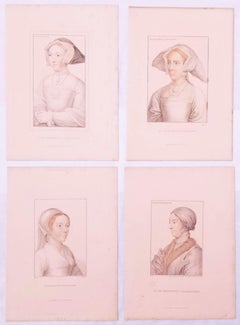
Set of Four Stipple Engravings from "Drawings by Hans Holbein" /// Henry VIII
Located in Saint Augustine, FL
Artist: (after) Hans Holbein (the Younger) (German-Swiss, c. 1497-1543) Title: "Catherine Howard Queen", "Jane Seymour Queen", "Anna Bollein Queen", a...
Category

Old Masters 19th Century Prints and Multiples

Materials

Engraving, Intaglio

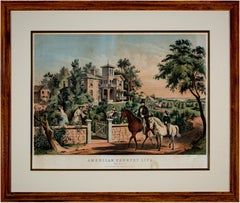
19th century color lithograph landscape figures horseback house scene trees sky
Located in Milwaukee, WI
The present print is one of several examples produced for Nathaniel Currier by his longtime collaborator Frances F. "Fanny" Palmer. Harry T. Peters wrote of her: "There is no more interesting and appealing character among the group of artists who worked for Currier & Ives than Fanny Palmer. In an age when women, well-bred women in particular, did not generally work for a living Fanny Palmer for years did exacting, full-time work in order to support a large and dependent family ... Her work ... had great charm, homeliness, and a conscientious attention to detail." One of a series of four prints showing American country life in different seasons, the image presents the viewer with a picturesque view of a successful American farm. In the foreground, a gentleman rides a horse with a young boy before a respectable Italianate country house. Two women and a young girl pick flowers in the garden and several farm workers attend to their duties. Beyond are other homes and a city on the coast. 16.63 x 23.75 inches, artwork 28.13 x 33.38 inches, frame Entitled bottom center "American Country Life - May Morning" Signed in the stone, lower left "F.F. Palmer, Del." Signed in the stone, lower right "Lith. by N. Currier" Copyrighted lower center "Entered according to Act of Congress in the year 1855 by N. Currier in the Clerk's office of the Southern District of N.Y." Inscribed bottom center "New York, Published by N. Currier 152 Nassau Street" Framed to conservation standards using silk-lined 100 percent rag matting and Museum Glass with a gold gilded liner, all housed in a stained wood moulding. Nathaniel Currier was a tall introspective man with a melancholy nature. He could captivate people with his piercing stare or charm them with his sparkling blue eyes. Nathaniel was born in Roxbury, Massachusetts on March 27th, 1813, the second of four children. His parents, Nathaniel and Hannah Currier, were distant cousins who lived a humble yet spartan life. When Nathaniel was eight years old, tragedy struck. Nathaniel’s father unexpectedly passed away leaving Nathaniel and his eleven-year-old brother Lorenzo to provide for the family. In addition to their mother, Nathaniel and Lorenzo had to care for six-year-old sister Elizabeth and two-year-old brother Charles. Nathaniel worked a series of odd jobs to support the family, and at fifteen, he started what would become a life-long career when he apprenticed in the Boston lithography shop of William and John Pendleton. A Bavarian gentleman named Alois Senefelder invented lithography just 30 years prior to young Nat Currier’s apprenticeship. While under the employ of the brothers Pendleton, Nat was taught the art of lithography by the firm’s chief printer, a French national named Dubois, who brought the lithography trade to America. Lithography involves grinding a piece of limestone flat and smooth then drawing in mirror image on the stone with a special grease pencil. After the image is completed, the stone is etched with a solution of aqua fortis leaving the greased areas in slight relief. Water is then used to wet the stone and greased-ink is rolled onto the raised areas. Since grease and water do not mix, the greased-ink is repelled by the moisture on the stone and clings to the original grease pencil lines. The stone is then placed in a press and used as a printing block to impart black on white images to paper. In 1833, now twenty-years old and an accomplished lithographer, Nat Currier left Boston and moved to Philadelphia to do contract work for M.E.D. Brown, a noted engraver and printer. With the promise of good money, Currier hired on to help Brown prepare lithographic stones of scientific images for the American Journal of Sciences and Arts. When Nat completed the contract work in 1834, he traveled to New York City to work once again for his mentor John Pendleton, who was now operating his own shop located at 137 Broadway. Soon after the reunion, Pendleton expressed an interest in returning to Boston and offered to sell his print shop to Currier. Young Nat did not have the financial resources to buy the shop, but being the resourceful type he found another local printer by the name of Stodart. Together they bought Pendleton’s business. The firm ‘Currier & Stodart’ specialized in "job" printing. They produced many different types of printed items, most notably music manuscripts for local publishers. By 1835, Stodart was frustrated that the business was not making enough money and he ended the partnership, taking his investment with him. With little more than some lithographic stones, and a talent for his trade, twenty-two year old Nat Currier set up shop in a temporary office at 1 Wall Street in New York City. He named his new enterprise ‘N. Currier, Lithographer’ Nathaniel continued as a job printer and duplicated everything from music sheets to architectural plans. He experimented with portraits, disaster scenes and memorial prints, and any thing that he could sell to the public from tables in front of his shop. During 1835 he produced a disaster print Ruins of the Planter's Hotel, New Orleans, which fell at two O’clock on the Morning of the 15th of May 1835, burying 50 persons, 40 of whom Escaped with their Lives. The public had a thirst for newsworthy events, and newspapers of the day did not include pictures. By producing this print, Nat gave the public a new way to “see” the news. The print sold reasonably well, an important fact that was not lost on Currier. Nat met and married Eliza Farnsworth in 1840. He also produced a print that same year titled Awful Conflagration of the Steamboat Lexington in Long Island Sound on Monday Evening, January 18, 1840, by which melancholy occurrence over One Hundred Persons Perished. This print sold out very quickly, and Currier was approached by an enterprising publication who contracted him to print a single sheet addition of their paper, the New York Sun. This single page paper is presumed to be the first illustrated newspaper ever published. The success of the Lexington print launched his career nationally and put him in a position to finally lift his family up. In 1841, Nat and Eliza had their first child, a son they named Edward West Currier. That same year Nat hired his twenty-one year old brother Charles and taught him the lithography trade, he also hired his artistically inclined brother Lorenzo to travel out west and make sketches of the new frontier as material for future prints. Charles worked for the firm on and off over the years, and invented a new type of lithographic crayon which he patented and named the Crayola. Lorenzo continued selling sketches to Nat for the next few years. In 1843, Nat and Eliza had a daughter, Eliza West Currier, but tragedy struck in early 1847 when their young daughter died from a prolonged illness. Nat and Eliza were grief stricken, and Eliza, driven by despair, gave up on life and passed away just four months after her daughter’s death. The subject of Nat Currier’s artwork changed following the death of his wife and daughter, and he produced many memorial prints and sentimental prints during the late 1840s. The memorial prints generally depicted grief stricken families posed by gravestones (the stones were left blank so the purchasers could fill in the names of the dearly departed). The sentimental prints usually depicted idealized portraits of women and children, titled with popular Christian names of the day. Late in 1847, Nat Currier married Lura Ormsbee, a friend of the family. Lura was a self-sufficient woman, and she immediately set out to help Nat raise six-year-old Edward and get their house in order. In 1849, Lura delivered a son, Walter Black Currier, but fate dealt them a blow when young Walter died one year later. While Nat and Lura were grieving the loss of their new son, word came from San Francisco that Nat’s brother Lorenzo had also passed away from a brief illness. Nat sank deeper into his natural quiet melancholy. Friends stopped by to console the couple, and Lura began to set an extra place at their table for these unexpected guests. She continued this tradition throughout their lives. In 1852, Charles introduced a friend, James Merritt Ives, to Nat and suggested he hire him as a bookkeeper. Jim Ives was a native New Yorker born in 1824 and raised on the grounds of Bellevue Hospital where his father was employed as superintendent. Jim was a self-trained artist and professional bookkeeper. He was also a plump and jovial man, presenting the exact opposite image of his new boss. Jim Ives met Charles Currier through Caroline Clark, the object of Jim’s affection. Caroline’s sister Elizabeth was married to Charles, and Caroline was a close friend of the Currier family. Jim eventually proposed marriage to Caroline and solicited an introduction to Nat Currier, through Charles, in hopes of securing a more stable income to support his future wife. Ives quickly set out to improve and modernize his new employer’s bookkeeping methods. He reorganized the firm’s sizable inventory, and used his artistic skills to streamline the firm’s production methods. By 1857, Nathaniel had become so dependent on Jims’ skills and initiative that he offered him a full partnership in the firm and appointed him general manager. The two men chose the name ‘Currier & Ives’ for the new partnership, and became close friends. Currier & Ives produced their prints in a building at 33 Spruce Street where they occupied the third, fourth and fifth floors. The third floor was devoted to the hand operated printing presses that were built by Nat's cousin, Cyrus Currier, at his shop Cyrus Currier & Sons in Newark, NJ. The fourth floor found the artists, lithographers and the stone grinders at work. The fifth floor housed the coloring department, and was one of the earliest production lines in the country. The colorists were generally immigrant girls, mostly German, who came to America with some formal artistic training. Each colorist was responsible for adding a single color to a print. As a colorist finished applying their color, the print was passed down the line to the next colorist to add their color. The colorists worked from a master print displayed above their table, which showed where the proper colors were to be placed. At the end of the table was a touch up artist who checked the prints for quality, touching-in areas that may have been missed as it passed down the line. During the Civil War, demand for prints became so great that coloring stencils were developed to speed up production. Although most Currier & Ives prints were colored in house, some were sent out to contract artists. The rate Currier & Ives paid these artists for coloring work was one dollar per one hundred small folios (a penny a print) and one dollar per one dozen large folios. Currier & Ives also offered uncolored prints to dealers, with instructions (included on the price list) on how to 'prepare the prints for coloring.' In addition, schools could order uncolored prints from the firm’s catalogue to use in their painting classes. Nathaniel Currier and James Merritt Ives attracted a wide circle of friends during their years in business. Some of their more famous acquaintances included Horace Greeley, Phineas T. Barnum, and the outspoken abolitionists Rev. Henry Ward, and John Greenleaf Whittier (the latter being a cousin of Mr. Currier). Nat Currier and Jim Ives described their business as "Publishers of Cheap and Popular Pictures" and produced many categories of prints. These included Disaster Scenes, Sentimental Images, Sports, Humor, Hunting Scenes, Politics, Religion, City and Rural Scenes, Trains, Ships, Fire Fighters, Famous Race Horses, Historical Portraits, and just about any other topic that satisfied the general public's taste. In all, the firm produced in excess of 7500 different titles, totaling over one million prints produced from 1835 to 1907. Nat Currier retired in 1880, and signed over his share of the firm to his son Edward. Nat died eight years later at his summer home 'Lion’s Gate' in Amesbury, Massachusetts. Jim Ives remained active in the firm until his death in 1895, when his share of the firm passed to his eldest son, Chauncey. In 1902, faced will failing health from the ravages of Tuberculosis, Edward Currier sold his share of the firm to Chauncey Ives...
Category

Romantic 19th Century Prints and Multiples

Materials

Watercolor, Lithograph

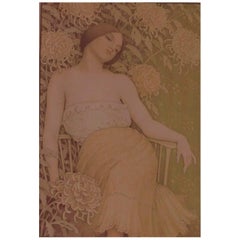
Paul Berthon Original Color Lithograph, 1899. “Les Chrysanthemes”
Located in Phoenix, AZ
Wonderful original color lithograph by Paul Berthon (1872-1909). In excellent condition with great color. Unframed. Presents in a 4-Ply Archival Mat. Titled: "Les Chrysanthemes.” Cre...
Category

19th Century Prints and Multiples

Materials

Paper

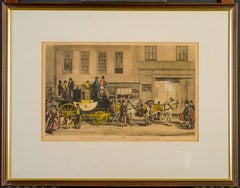
Quicksilver Royal Mail and The Blenheim
Located in Douglas, Isle of Man
James Pollard 1792-1867, was an English painter and watercolourist. Pollard was born in North London he was the son of a painter and publisher. He exhibited at the Royal Academy, Suf...
Category

19th Century Prints and Multiples

Materials

Paper, Printer's Ink, Watercolor

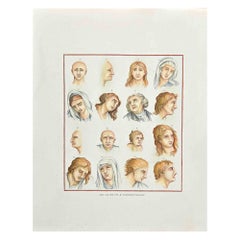
Portraits - The Physiognomy - Etching by Thomas Holloway - 1810
Located in Roma, IT
Portraits , original Etching, 1810. The Physiognomy - The Noses is an original etching artwork realized by Thomas Holloway for Johann Caspar Lavater's "Essays on Physiognomy, Designe...
Category

Modern 19th Century Prints and Multiples

Materials

Etching

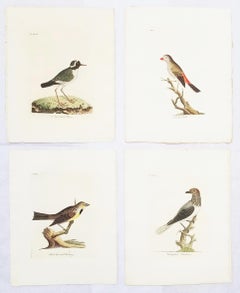
Set of Four Hand-Colored Ornithological Engravings by John Latham /// Bird UK
Located in Saint Augustine, FL
Artist: John Latham (English, 1740-1837) Title: "New-Zealand Plover", "Nilid Grosbeak", "Black-throated Bunting", and "Variegated Chatterer" Portfolio: A General History of Birds Year: 1821-1828 (second edition) Medium: Set of Four Original Hand-Colored Engravings on wove paper Limited edition: Unknown Printer: Jacob & Johnson, Winchester, UK Publisher: John Latham, Winchester, UK Reference: Brunet III, 872; Lowndes II, page 1314; Fine Bird Books page 87; Nissen IVB 532; Zimmer page 376 Sheet size (each): approx. 11.13" x 8.75" Image size (each): approx. 4.75" x 4.5" Condition: "New-Zealand Plover" has some light offsetting and a few faint areas of discoloration at top in margin. "Nilid Grosbeak" has some faint areas of discoloration. They are all otherwise in excellent condition with strong colors Rare Notes: Provenance: acquired from Christie's, New York, NY, December 19, 1990. Comes from Latham's famous eleven volume portfolio "A General History of Birds" (1821-1828) (second edition), which consists of 193 hand-colored prints, made from engraved plates. "New-Zealand Plover" has an unidentified "1823" watermark lower right. Biography: John Latham (27 June 1740 – 4 February 1837) was an English physician, naturalist and author. His main works were A General Synopsis of Birds (1781–1801) and General History of Birds (1821–1828). He was able to examine specimens of Australian birds...
Category

Victorian 19th Century Prints and Multiples

Materials

Watercolor, Engraving, Intaglio

The Conversation - Original Lithograph by Paul Gavarni - 1881
Located in Roma, IT
The Conversation is an original lithograph artwork on ivory-colored paper, realized by the French draftsman Paul Gavarni (after) (alias Guillaume Sulpice Chevalier Gavarni, 1804-1866...
Category

Modern 19th Century Prints and Multiples

Materials

Lithograph

The Delightful Chit-Chat - Original Lithograph - 1881
Located in Roma, IT
The delightful chit-chatis an original lithograph artwork on ivory-colored paper, realized by the French draftsman Paul Gavarni (after) (alias Guillaume Sulpice Chevalier Gavarni, 18...
Category

Modern 19th Century Prints and Multiples

Materials

Lithograph

Avanzi della Biblioteca ... - Etching by Luigi Rossini - 1824
Located in Roma, IT
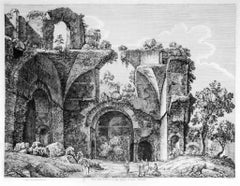
Avanzi della Biblioteca in Villa Adriana, di opera retticolata is an original etching realized by Luigi Rossini. From the collection “Le antichità de’ c...
Category

Old Masters 19th Century Prints and Multiples

Materials

Etching

Sumo - Woodcut by Utagawa Kunisada - Mid 19th century
Located in Roma, IT
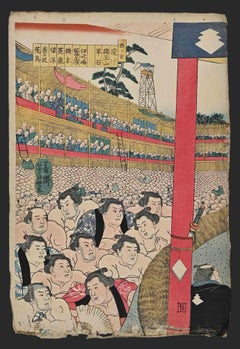
Sumo Tournament is a Woodcut print realized in the first half of the 19th century by Utagawa Kunisada. Good condition and Beautiful colored woodblock print. This wonderful modern artwork represents Japanese Sumo...
Category

Modern 19th Century Prints and Multiples

Materials

Woodcut

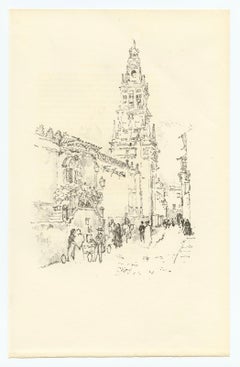
"Alhambra" original lithograph
Located in Henderson, NV
Medium: original lithograph. This impression on cream wove paper was printed in 1896 for the deluxe large paper edition of "The Alhambra" by Washington Irving. Sheet size: 10 x 6 1/2...
Category

19th Century Prints and Multiples

Materials

Lithograph

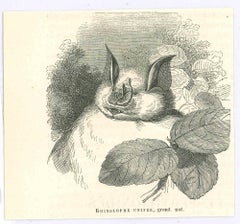
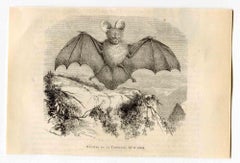
The Bat - Lithograph by Paul Gervais - 1854
Located in Roma, IT
The Bat is an original lithograph on ivory-colored paper, realized by Paul Gervais (1816-1879). The artwork is from The Series of "Les Trois Règnes de la Nature", and was published i...
Category

Modern 19th Century Prints and Multiples

Materials

Paper, Lithograph

The Bat - Lithograph by Paul Gervais - 1854
Located in Roma, IT
The Bat is an original lithograph on ivory-colored paper, realized by Paul Gervais (1816-1879). The artwork is from The Series of "Les Trois Règnes de la Nature", and was published i...
Category

Modern 19th Century Prints and Multiples

Materials

Paper, Lithograph

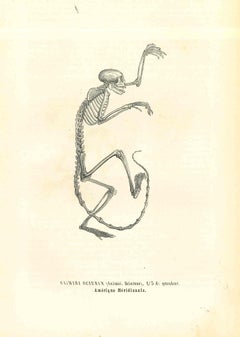
The Animal Skeleton - Original Lithograph by Paul Gervais - 1854
Located in Roma, IT
The Animal Skeleton is an original lithograph on ivory-colored paper, realized by Paul Gervais (1816-1879). The artwork is from The Series of "Les Troi...
Category

Modern 19th Century Prints and Multiples

Materials

Lithograph

The Bat - Original Lithograph by Paul Gervais - 1854
Located in Roma, IT
The Bat is an original lithograph on ivory-colored paper, realized by Paul Gervais (1816-1879). The artwork is from The Series of "Les Trois Règnes de la Nature", and was published i...
Category

Modern 19th Century Prints and Multiples

Materials

Paper, Lithograph

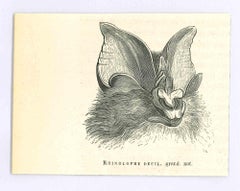
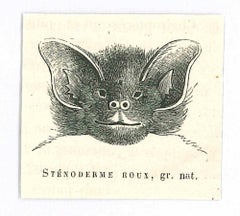
Egyptian slit-faced Bat - Lithograph by Paul Gervais - 1854
Located in Roma, IT
Egyptian slit-faced Bat is an original lithograph on ivory-colored paper, realized by Paul Gervais (1816-1879). The artwork is from The Series of "Les Trois Règnes de la Nature", and...
Category

Modern 19th Century Prints and Multiples

Materials

Paper, Lithograph

Journal Des Demoiselles - Original Lithograph by Paul Lacourière - 19th Century
Located in Roma, IT
Plate from Journal Des Demoiselles is an original artwork realized in the 19th century by Paul Lacourière Mixed colored lithograph from the Le...
Category

Modern 19th Century Prints and Multiples

Materials

Lithograph

Bath in Algeria - Original Lithograph - 1846
Located in Roma, IT
Bath in Algeria is an original Hand-colored lithograph on paper realized in 1846 by an Anonymous artist of the 19th century. Titled in Italian on the lower center. The state of pr...
Category

19th Century Prints and Multiples

Materials

Lithograph

Gate in Algeria - Original Lithograph - 1846
Located in Roma, IT
Gate in Algeria is an original Hand-colored lithograph on paper realized in 1846 by an Anonymous artist of the XIX century. Titled in Italian on the lower center "Porta Bab-Azoun i...
Category

19th Century Prints and Multiples

Materials

Lithograph

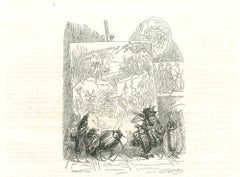
Majestic Painting of Beetle Painter - Lithograph by J.J. Grandville - 1852
Located in Roma, IT
Majestic Painting Of Beetle Painter is an original lithograph on ivory-colored paper realized by J.J. Grandville from Scènes de la vie privée et publique des animaux, 1852. Published...
Category

Old Masters 19th Century Prints and Multiples

Materials

Lithograph

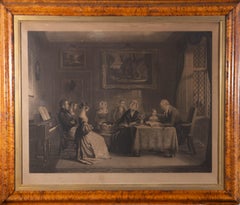
James Scott after E. Prentis - 19th Century Engraving, Family Devotion, Evening
Located in Corsham, GB
This charming print depicts a Victorian family at prayer in a drawing room. The head of the household reads from the bible as the family pay close attention. Engraver and original ar...
Category

19th Century Prints and Multiples

Materials

Oil

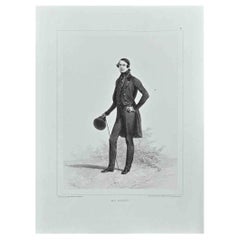
Portrait of Paul Kolounoff- Original Lithograph by Auguste Raffet - 1848
Located in Roma, IT
Portrait of Paul Kolounoff is an original artwork realized in 1848 by French artist Denis Auguste Marie Raffet (1804 – 1860) Lithograph print. Signed on the plate. Very good co...
Category

Modern 19th Century Prints and Multiples

Materials

Lithograph

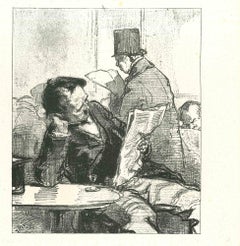
The Men Reading - Original Lithograph by Paul Gavarni - 1881
Located in Roma, IT
The Men Reading the news is an original lithograph artwork on ivory-colored paper, realized by the French draftsman Paul Gavarni (after) (alias Guillaume Sulpi...
Category

Modern 19th Century Prints and Multiples

Materials

Lithograph

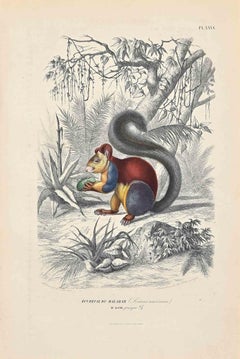
Indian Giant Squirrel - Original Lithograph by Paul Gervais - 1854
Located in Roma, IT
Indian Giant Squirrel is an original lithograph on ivory-colored paper, realized by Paul Gervais (1816-1879). The artwork is from The Series of "Les Trois Règnes de la Nature", and w...
Category

Modern 19th Century Prints and Multiples

Materials

Lithograph

Still Thinking About These?

All Recently Viewed