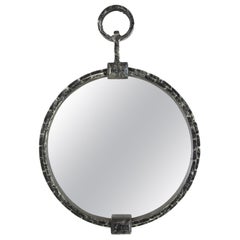
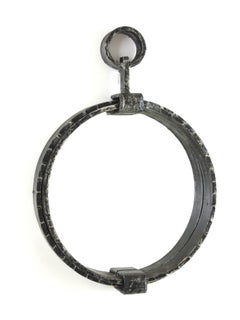
Brutalist Pocket Watch Wall Mirror in Wrought Iron, Spain
Located in Barcelona, ES
Spanish Pocket Watch Mirror, Wrought Iron, Silver Patinated
Category
20th Century Spanish Brutalist Wall Mirrors
Materials
Iron, Wrought Iron
Brutalist Pocket Watch Wall Mirror in Wrought Iron, Spain
Located in Barcelona, ES
Spanish Pocket Watch Mirror, Wrought Iron, Silver Patinated
Iron, Wrought Iron
$1,650 / item
H 16.1 in Dm 11.5 in
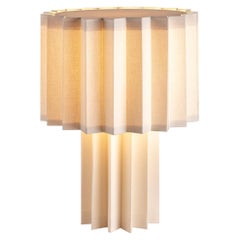
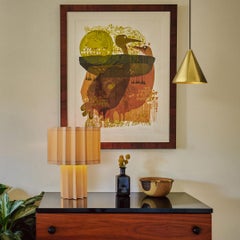
'Plissé White Edition' Pleated Textile Table Lamp by Folkform for Örsjö
By Örsjö Industri AB
Located in Glendale, CA
'Plissé White Edition' pleated textile table lamp by Folkform for Örsjö. This unique table lamp was awarded “Lighting of the Year 2022” by Residence Magazine Sweden, who called it “...
Textile
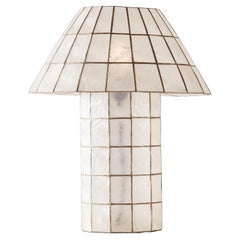
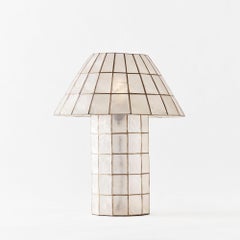
Capiz Shell Table Lamp, Model Cornelia
By Dusty Deco
Located in Los Angeles, CA
Cornelia Table Lamp is a lamp that is made from capiz shells which gives the material an irregular structure. This makes each lamp unique, something that adds to its character and pe...
Brass
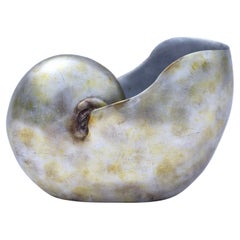
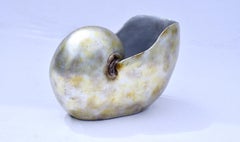
Monumental Nautilus Shell Container Vase or Planter
Located in Southampton, NJ
Vintage Palm Beach Nautilus Shell Seashell Resin Planter vase or container with gorgeous pearly silver leaf opalescent finish. Al lovely decorative option for multi- functional uses.
Silver Leaf
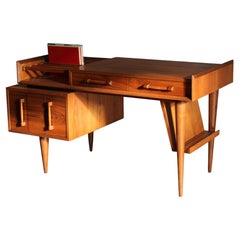
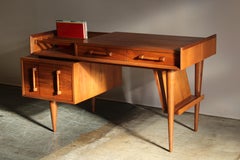
Greta Grossman for Sherman Bertram Desk
By Greta Magnusson Grossman, Sherman Bertram
Located in Coronado, CA
A solid walnut desk designed by Greta Grossman and produced by Sherman Bertram in the 1950s. The desk features sculpted wood pulls, raised edges, walnut slats (for books or papers), ...
Walnut

$42,000 / set
H 30.52 in W 41.74 in D 33.08 in
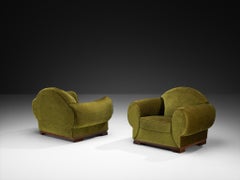
René Drouet Pair of Lounge Chairs in Olive Green Corduroy and Walnut
By René Drouet
Located in Waalwijk, NL
René Drouet, pair of lounge chairs, corduroy velvet, walnut, France, 1930s Designed by French decorator René Drouet, these club chairs are a quintessential example of French Art Dec...
Velvet, Walnut
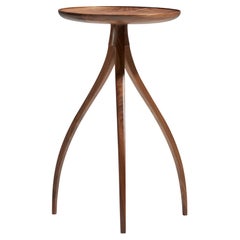
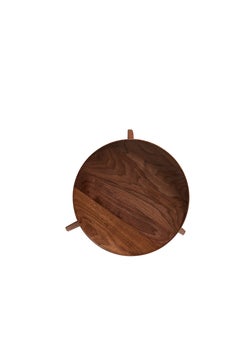
4947 Golightly Table designed by Edward Wormley for DUNBAR
By Edward Wormley
Located in High Point, NC
A table gathers light, defines intimate space, creates a moment of pause. The Model 4947 Golightly Table by Edward Wormley understands this fundamental truth through its deceptively ...
Wood, Ash, Walnut
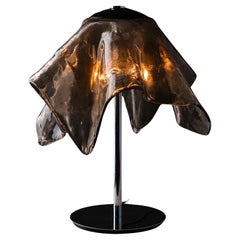
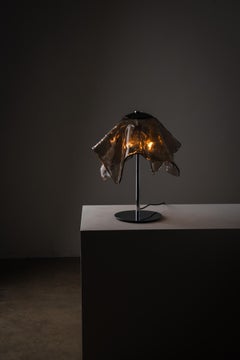
Large Carlo Nason for Mazzega Smoked Glass Table Lamp, 1970s
By Carlo Nason, Mazzega
Located in Mortsel, BE
Murano Glass Table Lamp by Carlo Nason for Mazzega, Scavo Style, Chrome Base Sculptural table lamp, by Carlo Nason for A.V. Mazzega, is an example of Italian Space Age design from th...
Metal, Chrome
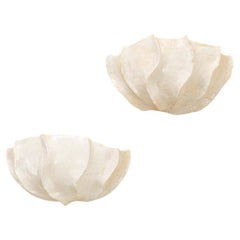
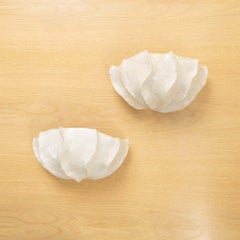
Thala Sculptural Ceramic Sconce
Located in Los Angeles, CA
Glazed sculptural sconce by Lucia Mondadori Ceramiques. Lucia Mondadori is a Brazilian ceramic artist based in Paris. Her sculptural work explores the aesthetic interplay between the...
Ceramic
$1,898
H 7.56 in W 7.09 in D 4.41 in
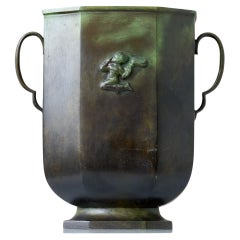
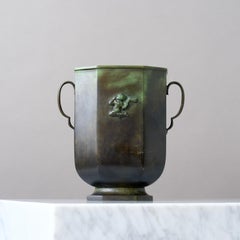
Art Deco Bronze Vase by GAB Guldsmedsaktiebolaget, Sweden, 1930s.
By Just Andersen, Sune Bäckström, GAB Guldsmedsaktiebolaget
Located in Malmö, SE
A large and beautiful bronze vase with amazing patina. Made by GAB Guldsmedsaktiebolaget, Sweden, 1930s. Great condition, with only a few light scratches. Stamped 'BRONS' and mak...
Bronze
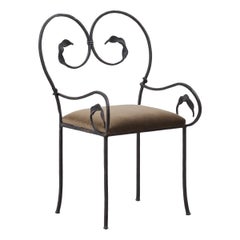
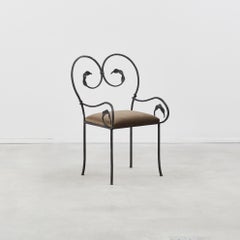
Salvino Marsura 'Cuore' armchair - Treviso Italy, 2000s
By Salvino Marsura
Located in London, GB
The Cuore armchair is defined by two sinuous vines that curve into a heart-shaped backrest. Its recently reupholstered velvet seat lends a complementary softness to the tender iron f...
Wrought Iron
$2,300
H 19 in W 13 in D 0.01 in
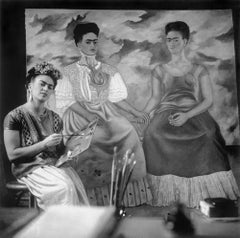
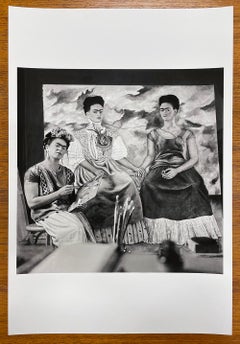
Frida Painting "Two Fridas" - Black and White Photograph, Portrait, Frida Kahlo
By Nickolas Muray
Located in Denton, TX
Frida Painting "Two Fridas" by Nickolas Muray is a limited edition black and white portrait of Mexican painter Frida Kahlo in her studio, sitting in front of her famous painting, The...
Archival Pigment
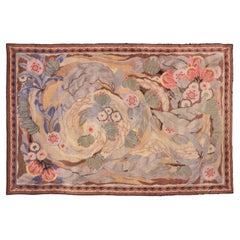

Maurice Dufrêne for La Maitrise art deco tapestry 1922
By La Maitrise, Maurice Dufrêne
Located in Paris, IDF
Maurice Dufrene designed this tapestry for the studio La Maitrise, Les Galeries Lafayette, in Paris in 1922, just as he became the director of the studio. Crafted from handspun wool,...
Wool
$370 / item
H 8.27 in Dm 4.93 in
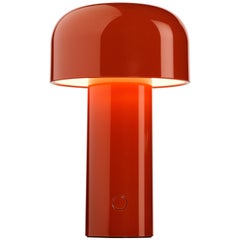
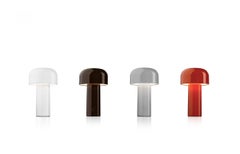
Bellhop Burnt Orange Portable Rechargeable Wireless Desk & Table Lamp for FLOS
By Edward Barber and Jay Osgerby, Flos
Located in Brooklyn, NY
FLOS Bellhop T Table Lamp in Burnt Orange by Edward Barber & Jay Osgerby This sleek tabletop lamp was originally created by renowned designers Edward Barber and Jay Osgerby for ...
Resin
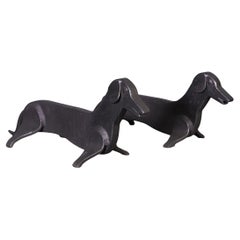
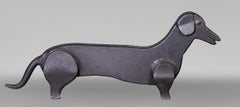
Pair of Wrought Iron Dachshund Andirons
Located in SAINT-OUEN-SUR-SEINE, FR
Elegant and original, this pair of wrought iron andirons takes the form of charming stylized dachshunds. Their minimalist and geometric design highlights the elongated silhouette cha...
Wrought Iron
$2,160 / set
H 26.5 in W 6 in D 10.5 in
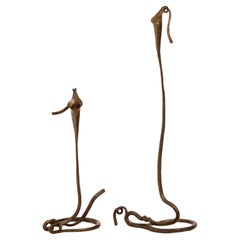
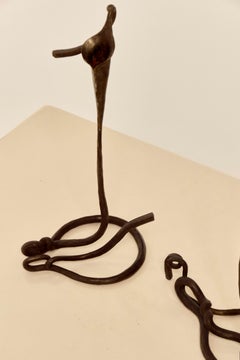
Pair of Large Calla Lily Shaped Candle Holders by Jack Brubaker
By Jack Brubaker
Located in Brooklyn, NY
1980s. A large pair of sculptural art nouveau style wrought iron calla lily candleholders by metal artist Jack Brubaker. The iron has a sinuous windy form and a beautiful patina. Mar...
Wrought Iron
$750 / item
H 4 in Dm 16 in
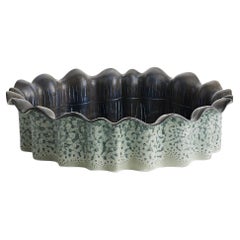
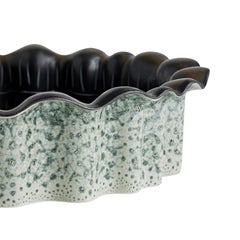
Spirograph Centerpiece - Hand-carved & Hand-painted Glazed Porcelain Centerpiece
Located in Dallas, TX
An impressive object entirely shaped and finished by hand, it reveals very different glaze treatments inside and out. While expertly worked to achieve a scalloped edge and channeled ...
Ceramic, Porcelain
The design of brutalist furniture encompasses that which is crafted, hewn and worked by hand — an aesthetic rebuke (or, at least, a counterpoint) to furniture that is created using 21st-century materials and technology. Lately, the word “brutalist” has been adopted by the realms of furniture design and the decorative arts to refer to chairs, cabinets, tables and accessory pieces such as mirror frames and lighting that are made of rougher, deeply textured metals and other materials that are the visual and palpable antithesis of the sleek, smooth and suave.
ORIGINS OF BRUTALIST FURNITURE DESIGN
CHARACTERISTICS OF BRUTALIST FURNITURE DESIGN
BRUTALIST FURNITURE DESIGNERS TO KNOW
VINTAGE BRUTALIST FURNITURE ON 1STDIBS
The term brutalism — which derives from the French word brut, meaning “raw” — was coined by architecture critic Reyner Banham to describe an architectural style that emerged in the 1950s featuring monumental buildings, usually made of unornamented concrete, whose design was meant to project an air of strength and solidity.
Le Corbusier essentially created the brutalist style; its best-known iterations in the United States are the Whitney Museum of American Art, which was designed by Marcel Breuer, and Paul Rudolph's Yale Art and Architecture Building. The severe style might have been the most criticized architectural movement of the 20th century, even if it was an honest attempt to celebrate the beauty of raw material. But while the brutalist government buildings in Washington, D.C., seemingly bask in their un-beauty, brutalist interior design and decor is much more lyrical, at times taking on a whimsical, romantic quality that its exterior counterparts lack.
Paul Evans is Exhibit A for brutalist furniture design. His Sculpture Front cabinets laced with high-relief patinated steel mounts have become collector's items nonpareil, while the chairs, coffee table and dining table in his later Cityscape series and Sculpted Bronze series for Directional Furniture are perhaps the most expressive, attention-grabbing pieces in American modern design. Other exemplary brutalist designers are Silas Seandel, the idiosyncratic New York furniture designer and sculptor whose works in metal — in particular his tables — have a kind of brawny lyricism, and Curtis Jere, a nom-de-trade for the California team of Curtis Freiler and Jerry Fels, the bold makers of expressive scorched and sheared copper and brass mirror frames and wall-mounted sculptures.
Brutalist furniture and sculptures remain popular with interior designers and can lend unique, eccentric, human notes to an art and design collection in any home.
Find authentic vintage brutalist chairs, coffee tables, decorative objects and other furniture on 1stDibs.
The road from early innovations in reflective glass to the alluring antique and vintage mirrors in trendy modern interiors has been a long one but we’re reminded of the journey everywhere we look.
In many respects, wall mirrors, floor mirrors and full-length mirrors are to interior design what jeans are to dressing. Exceedingly versatile. Universally flattering. Unobtrusively elegant. And while all mirrors are not created equal, even in their most elaborate incarnation, they're still the heavy lifters of interior design, visually enlarging and illuminating any space.
We’ve come a great distance from the polished stone that served as mirrors in Central America thousands of years ago or the copper mirrors of Mesopotamia before that. Today’s coveted glass Venetian mirrors, which should be cleaned with a solution of white vinegar and water, were likely produced in Italy beginning in the 1500s, while antique mirrors originating during the 19th century can add the rustic farmhouse feel to your mudroom that you didn’t know you needed.
By the early 20th century, experiments with various alloys allowed for mirrors to be made inexpensively. The geometric shapes and beveled edges that characterize mirrors crafted in the Art Deco style of the 1920s can bring pizzazz to your entryway, while an ornate LaBarge mirror made in the Hollywood Regency style makes a statement in any bedroom. Friedman Brothers is a particularly popular manufacturer known for decorative round and rectangular framed mirrors designed in the Rococo, Louis XVI and other styles, including dramatic wall mirrors framed in gold faux bamboo that bear the hallmarks of Asian design.
Perhaps unsurprisingly, mid-century modernism continues to influence the design of contemporary mirrors. Today’s simple yet chic mantel mirror frames, for example, often neutral in color, owe to the understated mirror designs introduced in the postwar era.
Sculptor and furniture maker Paul Evans had been making collage-style cabinets since at least the late 1950s when he designed his Patchwork mirror — part of a series that yielded expressive works of combined brass, copper and pewter — for Directional Furniture during the mid-1960s. Several books celebrating Evans’s work were published beginning in the early 2000s, as his unconventional furniture has been enjoying a moment not unlike the resurgence that the Ultrafragola mirror is seeing. Designed by the Memphis Group’s Ettore Sottsass in 1970, the Ultrafragola mirror, in all its sensuous acrylic splendor, has become somewhat of a star thanks to much-lauded appearances in shelter magazines and on social media.
On 1stDibs, we have a broad selection of vintage and antique mirrors and tips on how to style your contemporary mirror too.