Hideo Ishihara

Modern Creative Kokeshi Doll by Hideo Ishihara, Japan
Located in Point Richmond, CA
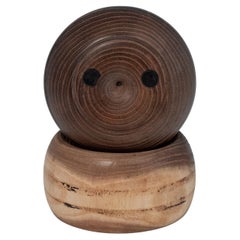
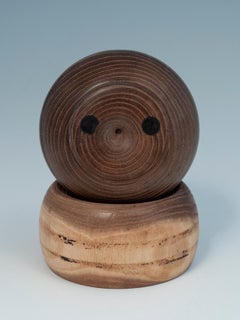
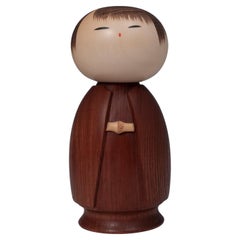
Rare Modern creative Kokeshi doll by Hideo Ishihara, Japan This rare whimsical sosaku kokeshi
Category

Mid-20th Century Japanese Mid-Century Modern Sculptures and Carvings

Materials

Wood

Ishihara Hideo Japanese Kokeshi Doll Sculptures Signed
Located in San Diego, CA
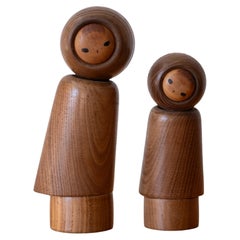
A pair of Kokeshi dolls by Hideo Ishihara (1925 - 1999). The title of this set is "Mitinoku Okako
Category

Vintage 1970s Japanese Mid-Century Modern Sculptures and Carvings

Materials

Wood

Recent Sales

Sosaku Kokeshi Dolls by Hideo Ishihara and Kichisuke Agatsuma, Japan
Located in Point Richmond, CA
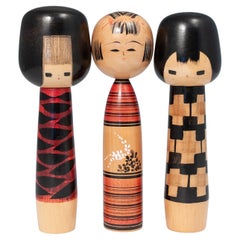
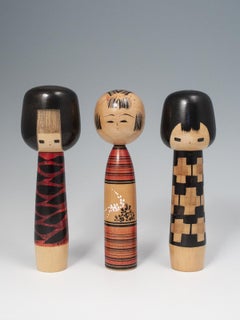
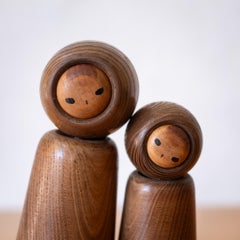
Sosaku Kokeshi dolls by Hideo Ishihara and Kichisuke Agatsuma, Japan Two of these vintage
Category

Mid-20th Century Japanese Mid-Century Modern Sculptures and Carvings

Materials

Wood

Sosaku Kokeshi Doll by Masao Watanabe, Japan
Located in Point Richmond, CA
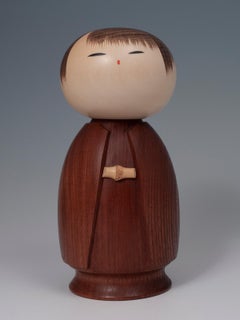
Rare Modern creative Kokeshi doll by Hideo Ishihara, Japan The name of this kokeshi is Samui Asa
Category

Mid-20th Century Japanese Mid-Century Modern Sculptures and Carvings

Materials

Wood

People Also Browsed

Antique Vintage Wooden Ebony Lapis Lazuli Walking Stick Cane Sterling Silver 19C
Located in Dublin, Ireland
Very Stylish Fine Quality Polished Ebony Lady’s or Gentleman’s Walking Cane of English origin, mid to late Nineteenth Century. The extremely elegant beautifully grained Lapis Lazul...
Category

Antique Late 19th Century English Victorian Sports Equipment and Memorab...

Materials

Sterling Silver

Japanese Antique Chest of Drawers 1860s-1900s / Tansu Nightstand Wabi Sabi
Located in Chōsei District Nagara, JP
This is an old drawer storage made in Japan. This furniture was made during the Meiji period (1860s-1900s) and is a valuable piece of furniture that has transcended time and remains ...
Category

Early 20th Century Japanese Meiji Commodes and Chests of Drawers

Materials

Iron

Japanese Antique Chest of Drawers 1860s-1900s / Tansu Nightstand Wabi Sabi
$680 Sale Price
32% Off
H 18.12 in W 23.82 in D 13 in
Japanese Antique Wabi Sabi Small Drawer 1860s-1900s
Located in Sammu-shi, Chiba
Very old Japanese small drawer. This furniture is from the Meiji period (1860s-1900s). It is made of cedar wood. The round handles are made of iron. These drawers are tasteful, rust...
Category

Early 20th Century Japanese Meiji Commodes and Chests of Drawers

Materials

Cedar

Japanese Antique Wabi Sabi Small Drawer 1860s-1900s
$800
H 14.97 in W 17.92 in D 12.01 in
Japanese Antique Small Door Wall Decoration 1860s-1900s / Abstract Art Wabi Sabi
Located in Chōsei District Nagara, JP
This is an old small window frame made in Japan. It was originally used as a traditional Japanese mud wall fixture. It dates back to the Meiji period (1860s-1900s) and has been in us...
Category

Early 20th Century Japanese Meiji Decorative Art

Materials

Bamboo, Cedar

Luigi Colani Drumbo Green Elephant Money Bank for Dresdner Bank, 1970s
By Luigi Colani
Located in Nuernberg, DE
Gorgeous vintage money Piggy bank. A beautiful decorative item, designed by Luigi Colani, for Dresden Bank Germany. Made in Europe, circa 1970s. Nice addition to any collection, desk...
Category

Vintage 1970s German Mid-Century Modern More Desk Accessories

Materials

Metal

Antique Meiji Era Japanese Cloisonné Enamel Vase
Located in Long Island City, NY
A rare elegant Japanese vase cast of metal, possibly brass, featuring a baluster shaped body and a wide short neck. The surface is decorated with a delicate image of a thistle flowe...
Category

Antique Late 19th Century Japanese Meiji Vases

Materials

Metal

Michael Powolny Rare Pottery Pair Sparrows Figure c.1907
By Michael Powolny
Located in Bishop's Stortford, Hertfordshire
A delightful and rare Austrian Wiener Keramik pair of pottery sparrows by renowned sculptor and ceramicist Michael Powolny (Austrian, 1871-1954) and dating from around 1907. Michael...
Category

Antique Early 1900s Austrian Art Nouveau Animal Sculptures

Materials

Pottery

Antique French Silver Topped Walking Stick Cane 19th Century 94cm / 37 inches
Located in London, GB
This is a beautiful antique French Art Noveau silver pommel handled walking stick, circa 1890 in date. The striking stick features an ornate silver handle featuring superb leaf cast...
Category

Antique 1890s French Sports Equipment and Memorabilia

Materials

Silver

Japanese Antique Wood Carving Daruma 1860-1920s / Sculpture Wabi Sabi Mingei
Located in Chōsei District Nagara, JP
This is an old wooden form of Daruma made in Japan. It is estimated to have been made between the Meiji and Taisho periods (1860s-1920s) and seems to have been made of cedar wood. De...
Category

Early 20th Century Japanese Meiji Sculptures and Carvings

Materials

Cedar

1990s Modern Sculpture
Located in Milano, IT
1990s modern sculpture, realized with different metals such as iron copper and brass.
Category

1990s French Modern Abstract Sculptures

Materials

Brass, Copper, Iron

1990s Modern Sculpture
$7,194
H 45.28 in W 9.85 in D 9.85 in
Striking Japanese Handmade Bronze and Polished Brass Vase
Located in Hopewell, NJ
Beautiful handmade art deco style vase from Japan having blackened cast bronze with polished brass overlay of stylized deer.
Category

Vintage 1960s Japanese Art Deco Vases

Materials

Brass, Bronze

Japanese Antique Thatching Tools "Gangi" 1860s-1920s / Wall Decoration Wabisabi
Located in Chōsei District Nagara, JP
This is a traditional Japanese thatched roof tool known as a “Gangi.” A Gangi is used to trim the cut ends of the thatch and smooth the roof’s surface, symbolizing the craftsmanship ...
Category

Early 20th Century Japanese Meiji Antiquities

Materials

Cedar

Pablo Picasso Signed Limited Ed. Madoura Pottery Pitcher Têtes , 1956 A.R. 368
By Pablo Picasso, Madoura
Located in Studio City, CA
A wonderful, original Mid-Century Modern Madoura pottery pitcher/vase by renowned Spanish artist Pablo Picasso titled "Têtes (Heads)". The piece features two hand painted images of ...
Category

Vintage 1950s French Mid-Century Modern Vases

Materials

Ceramic, Earthenware, Pottery, Paint

Art Deco Pink Alabaster Light
Located in New York, NY
A circa 1920's French pink alabaster pendant light fixture with 3 interior lights. Measurements: Drop: 16" Diameter: 13.75"
Category

Vintage 1920s French Chandeliers and Pendants

Materials

Alabaster

Art Deco Pink Alabaster Light
$5,400
H 16 in Dm 13.75 in
Antique Golden Age Japanese Cloisonne Enamel Chrysanthemums And Sparrows Vase
Located in Long Island City, NY
An antique Japanese, late Meiji era, footed enamel over copper vase in the Hayashi Tanigoro manner, c.1895 to 1935, a Japanese artist. The urn shaped vase is enameled with a polyc...
Category

Antique Late 19th Century Japanese Meiji Vases

Materials

Enamel, Copper

Mid-Century Italian Ceramic Black Top Hat Wine Cooler Champagne Ice Bucket
Located in Pearland, TX
A stylish Mid-Century Modern Italian ceramic black top hat wine cooler or champagne ice bucket. Enjoy a drink in style with this sleek top hat! This ice bucket displays beautifully, ...
Category

Mid-20th Century Italian Wine Coolers

Materials

Ceramic

Get Updated with New Arrivals
Save "Hideo Ishihara", and we’ll notify you when there are new listings in this category.

A Close Look at Mid-century-modern Furniture

Organically shaped, clean-lined and elegantly simple are three terms that well describe vintage mid-century modern furniture. The style, which emerged primarily in the years following World War II, is characterized by pieces that were conceived and made in an energetic, optimistic spirit by creators who believed that good design was an essential part of good living.

ORIGINS OF MID-CENTURY MODERN FURNITURE DESIGN

CHARACTERISTICS OF MID-CENTURY MODERN FURNITURE DESIGN

MID-CENTURY MODERN FURNITURE DESIGNERS TO KNOW

ICONIC MID-CENTURY MODERN FURNITURE DESIGNS

VINTAGE MID-CENTURY MODERN FURNITURE ON 1STDIBS

The mid-century modern era saw leagues of postwar American architects and designers animated by new ideas and new technology. The lean, functionalist International-style architecture of Le Corbusier and Bauhaus eminences Ludwig Mies van der Rohe and Walter Gropius had been promoted in the United States during the 1930s by Philip Johnson and others. New building techniques, such as “post-and-beam” construction, allowed the International-style schemes to be realized on a small scale in open-plan houses with long walls of glass.

Materials developed for wartime use became available for domestic goods and were incorporated into mid-century modern furniture designs. Charles and Ray Eames and Eero Saarinen, who had experimented extensively with molded plywood, eagerly embraced fiberglass for pieces such as the La Chaise and the Womb chair, respectively. 

Architect, writer and designer George Nelson created with his team shades for the Bubble lamp using a new translucent polymer skin and, as design director at Herman Miller, recruited the Eameses, Alexander Girard and others for projects at the legendary Michigan furniture manufacturer

Harry Bertoia and Isamu Noguchi devised chairs and tables built of wire mesh and wire struts. Materials were repurposed too: The Danish-born designer Jens Risom created a line of chairs using surplus parachute straps for webbed seats and backrests.

The Risom lounge chair was among the first pieces of furniture commissioned and produced by celebrated manufacturer Knoll, a chief influencer in the rise of modern design in the United States, thanks to the work of Florence Knoll, the pioneering architect and designer who made the firm a leader in its field. The seating that Knoll created for office spaces — as well as pieces designed by Florence initially for commercial clients — soon became desirable for the home.

As the demand for casual, uncluttered furnishings grew, more mid-century furniture designers caught the spirit.

Classically oriented creators such as Edward Wormley, house designer for Dunbar Inc., offered such pieces as the sinuous Listen to Me chaise; the British expatriate T.H. Robsjohn-Gibbings switched gears, creating items such as the tiered, biomorphic Mesa table. There were Young Turks such as Paul McCobb, who designed holistic groups of sleek, blond wood furniture, and Milo Baughman, who espoused a West Coast aesthetic in minimalist teak dining tables and lushly upholstered chairs and sofas with angular steel frames.

Generations turn over, and mid-century modern remains arguably the most popular style going. As the collection of vintage mid-century modern chairs, dressers, coffee tables and other furniture for the living room, dining room, bedroom and elsewhere on 1stDibs demonstrates, this period saw one of the most delightful and dramatic flowerings of creativity in design history.

Finding the Right Folk-art for You

Folk art refers to a genre of art that shares the creator’s traditions, offering not just an artistic display but an opportunity to learn about a culture. Vintage, new and antique folk art typically reflects a heritage or location. It can include utilitarian objects and handmade art as diverse as weather vanes, portraiture and paintings, carnival art, quilts and duck decoys.

American folk art is frequently valued because of the traditional skills involved, like weaving, hand-carving wood and even stonework. Many folk artists are self-taught, while some train as apprentices within their community. By using available materials and taking a personal approach to their creations, artists ensure each piece is unique and conveys a story. Native American folk art includes functional objects reflecting their heritage, such as baskets, textiles and wooden pieces.

During the Great Depression, artistic materials in America were hard to come by, so artisans used discarded wood from cigar boxes and shipping crates to make highly stylized, notched pieces — most often picture frames and boxes — that are today sought after by collectors. This folk art style is called tramp art and was popular from roughly 1870 until the 1940s.

Folk art brings vibrant culture and traditions into your home. Browse an extensive collection of folk art on 1stDibs.