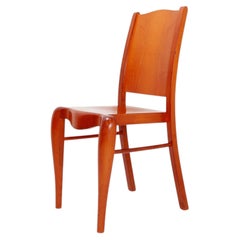
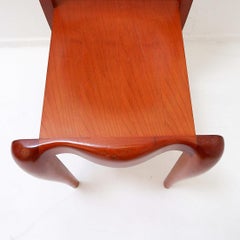
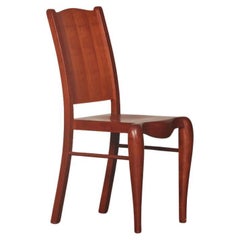
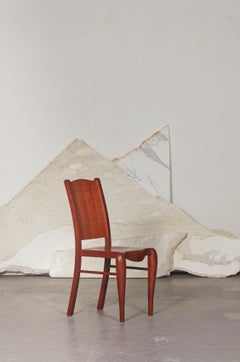
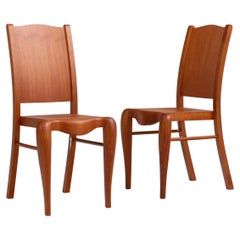
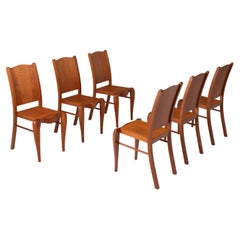
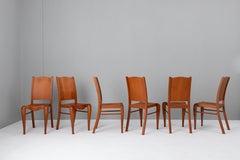
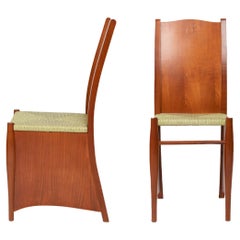
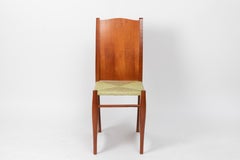
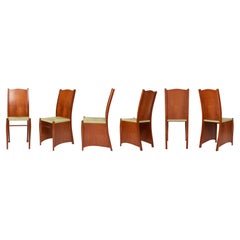
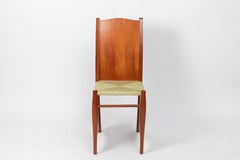
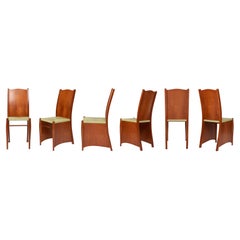
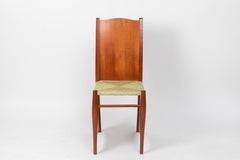
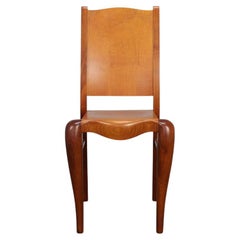
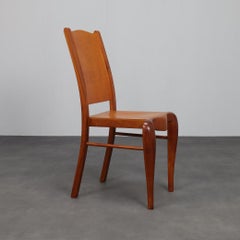
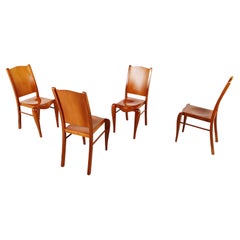
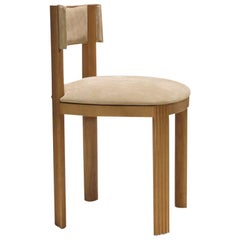
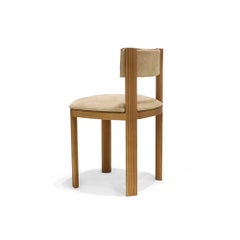
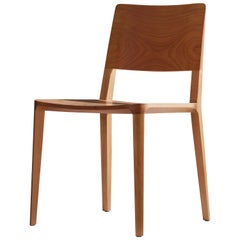
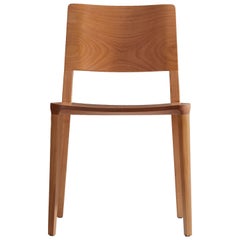
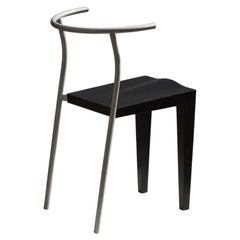
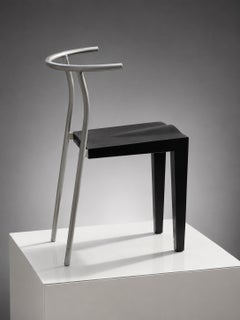
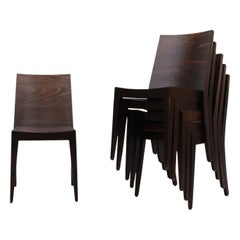
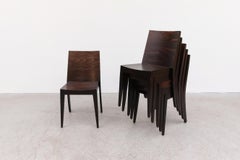
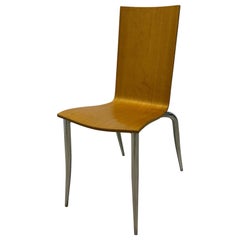
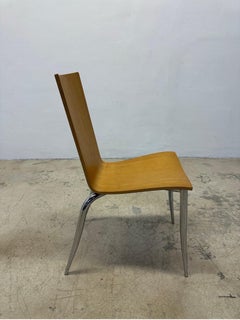
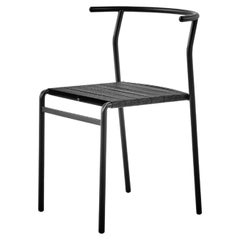
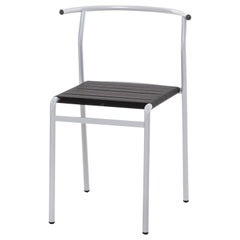
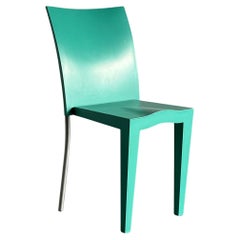
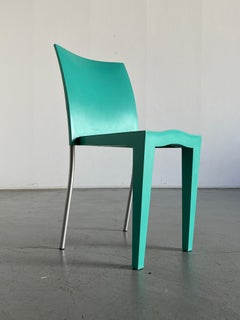
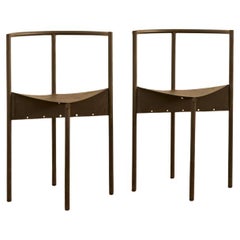
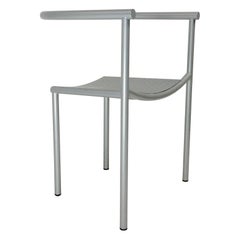
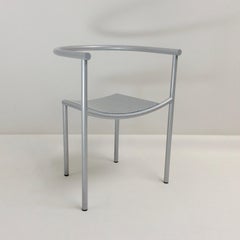
A ubiquitous name in the world of contemporary architecture and design, Philippe Starck has created everything from hotel interiors and luxury yachts to toothbrushes and teakettles. Yet for every project in his diverse portfolio, Starck has maintained an instantly recognizable signature style: a look that is dynamic, sleek, fluid and witty.
The son of an aircraft engineer, Starck studied interior design at the École Nissim de Camondo in Paris. He started his design career in the 1970s decorating nightclubs in the city, and his reputation for spirited and original interiors earned him a commission in 1983 from French president François Mitterrand to design the private apartments of the Élysée Palace. Starck made his name internationally in 1988 with his design for the interiors of the Royalton Hotel in New York, a strikingly novel environment featuring jewel-toned carpeting and upholstery and furnishings with organically shaped cast-aluminum frames. He followed that up in 1990 with an equally impressive redesign of the Paramount Hotel in Manhattan, a project that featured over-scaled furniture as well as headboards that mimicked Old Masters paintings.
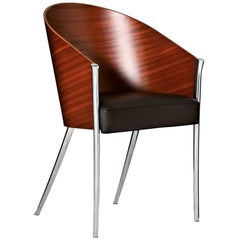
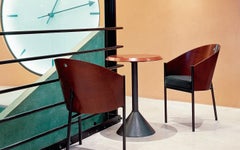
Like their designer, furniture pieces by Starck seem to enjoy attention. Designs such as the wedge-shaped J Series club chair; the sweeping molded-mahogany Costes chair; the provocative Ara table lamp; or the sinuous WW stool never fail to raise eyebrows. Other Starck pieces make winking postmodern references to historical designs. His polycarbonate Louis Ghost armchair puts a new twist on Louis XVI furniture; his Out-In chair offers a futuristic take on the classic English high-back chair. But for all his flair, Starck maintains a populist vision of design. While one of his limited-edition Prince de Fribourg et Treyer armchairs might be priced at $7,000, a plastic Starck chair for the Italian firm Kartell is available for around $250. As you will see on 1stDibs, Philippe Starck’s furniture makes a bold statement — and it can add a welcome bit of humor to even the most traditional decor.
Postmodern design was a short-lived movement that manifested itself chiefly in Italy and the United States in the early 1980s. The characteristics of vintage postmodern furniture and other postmodern objects and decor for the home included loud-patterned, usually plastic surfaces; strange proportions, vibrant colors and weird angles; and a vague-at-best relationship between form and function.
ORIGINS OF POSTMODERN FURNITURE DESIGN
- Emerges during the 1960s; popularity explodes during the ’80s
- A reaction to prevailing conventions of modernism by mainly American architects
- Architect Robert Venturi critiques modern architecture in his Complexity and Contradiction in Architecture (1966)
- Theorist Charles Jencks, who championed architecture filled with allusions and cultural references, writes The Language of Post-Modern Architecture (1977)
- Italian design collective the Memphis Group, also known as Memphis Milano, meets for the first time (1980)
- Memphis collective debuts more than 50 objects and furnishings at Salone del Milano (1981)
- Interest in style declines, minimalism gains steam
CHARACTERISTICS OF POSTMODERN FURNITURE DESIGN
- Dizzying graphic patterns and an emphasis on loud, off-the-wall colors
- Use of plastic and laminates, glass, metal and marble; lacquered and painted wood
- Unconventional proportions and abundant ornamentation
- Playful nods to Art Deco and Pop art
POSTMODERN FURNITURE DESIGNERS TO KNOW
VINTAGE POSTMODERN FURNITURE ON 1STDIBS
Critics derided postmodern design as a grandstanding bid for attention and nothing of consequence. Decades later, the fact that postmodernism still has the power to provoke thoughts, along with other reactions, proves they were not entirely correct.
Postmodern design began as an architectural critique. Starting in the 1960s, a small cadre of mainly American architects began to argue that modernism, once high-minded and even noble in its goals, had become stale, stagnant and blandly corporate. Later, in Milan, a cohort of creators led by Ettore Sottsass and Alessandro Mendini — a onetime mentor to Sottsass and a key figure in the Italian Radical movement — brought the discussion to bear on design.
Sottsass, an industrial designer, philosopher and provocateur, gathered a core group of young designers into a collective in 1980 they called Memphis. Members of the Memphis Group, which would come to include Martine Bedin, Michael Graves, Marco Zanini, Shiro Kuramata, Michele de Lucchi and Matteo Thun, saw design as a means of communication, and they wanted it to shout. That it did: The first Memphis collection appeared in 1981 in Milan and broke all the modernist taboos, embracing irony, kitsch, wild ornamentation and bad taste.
Memphis works remain icons of postmodernism: the Sottsass Casablanca bookcase, with its leopard-print plastic veneer; de Lucchi’s First chair, which has been described as having the look of an electronics component; Martine Bedin’s Super lamp: a pull-toy puppy on a power-cord leash. Even though it preceded the Memphis Group’s formal launch, Sottsass’s iconic Ultrafragola mirror — in its conspicuously curved plastic shell with radical pops of pink neon — proves striking in any space and embodies many of the collective’s postmodern ideals.
After the initial Memphis show caused an uproar, the postmodern movement within furniture and interior design quickly took off in America. (Memphis fell out of fashion when the Reagan era gave way to cool 1990’s minimalism.) The architect Robert Venturi had by then already begun a series of plywood chairs for Knoll Inc., with beefy, exaggerated silhouettes of traditional styles such as Queen Anne and Chippendale. In 1982, the new firm Swid Powell enlisted a group of top American architects, including Frank Gehry, Richard Meier, Stanley Tigerman and Venturi to create postmodern tableware in silver, ceramic and glass.
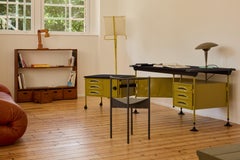
On 1stDibs, the vintage postmodern furniture collection includes chairs, coffee tables, sofas, decorative objects, table lamps and more.
With entire areas of our homes reserved for “sitting rooms,” the value of quality antique and vintage seating cannot be overstated.
Fortunately, the design of side chairs, armchairs and other lounge furniture — since what were, quite literally, the early perches of our ancestors — has evolved considerably.
Among the earliest standard seating furniture were stools. Egyptian stools, for example, designed for one person with no seat back, were x-shaped and typically folded to be tucked away. These rudimentary chairs informed the design of Greek and Roman stools, all of which were a long way from Sori Yanagi's Butterfly stool or Alvar Aalto's Stool 60. In the 18th century and earlier, seats with backs and armrests were largely reserved for high nobility.
The seating of today is more inclusive but the style and placement of chairs can still make a statement. Antique desk chairs and armchairs designed in the style of Louis XV, which eventually included painted furniture and were often made of rare woods, feature prominently curved legs as well as Chinese themes and varied ornaments. Much like the thrones of fairy tales and the regency, elegant lounges crafted in the Louis XV style convey wealth and prestige. In the kitchen, the dining chair placed at the head of the table is typically reserved for the head of the household or a revered guest.
Of course, with luxurious vintage or antique furnishings, every chair can seem like the best seat in the house. Whether your preference is stretching out on a plush sofa, such as the Serpentine, designed by Vladimir Kagan, or cozying up in a vintage wingback chair, there is likely to be a comfy classic or contemporary gem for you on 1stDibs.
With respect to the latest obsessions in design, cane seating has been cropping up everywhere, from sleek armchairs to lounge chairs, while bouclé fabric, a staple of modern furniture design, can be seen in mid-century modern, Scandinavian modern and Hollywood Regency furniture styles.
Admirers of the sophisticated craftsmanship and dark woods frequently associated with mid-century modern seating can find timeless furnishings in our expansive collection of lounge chairs, dining chairs and other items — whether they’re vintage editions or alluring official reproductions of iconic designs from the likes of Hans Wegner or from Charles and Ray Eames. Shop our inventory of Egg chairs, designed in 1958 by Arne Jacobsen, the Florence Knoll lounge chair and more.
No matter your style, the collection of unique chairs, sofas and other seating on 1stDibs is surely worthy of a standing ovation.