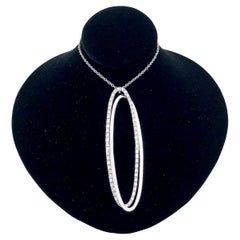
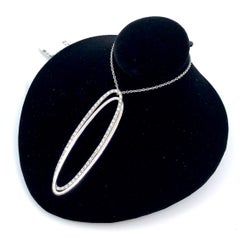
Contemporary jewelry is inextricably linked with the moment in which it is created, frequently reflecting current social, cultural and political issues such as environmental consciousness, identity and sustainability. It’s informed by fashion trends, from the chokers of the 1990s to the large chain necklaces of the early 2000s.
Jewelry is one of the oldest forms of adornment. Lockets made of silver or gold have been treasured gifts for hundreds of years, for example, and charm bracelets, which have existed since prehistoric times, didn’t become especially popular until the 19th-century reign of Queen Victoria. For many centuries, fine jewelry was used primarily to express wealth or status through lavish materials. Then, in the 1960s, a concept known as the “critique of preciousness” emerged, with jewelers creating pieces that did not get their value from gemstones or precious metals. Instead, it was the jeweler’s artistic vision that was prized and elevated.
This shift still informs Contemporary jewelry being made by artists today. Whether they are using cheap, found materials and working with provocative geometric shapes or seeking out the rarest stones, they are imbuing their work with meaning through their skills, techniques and ideas. Innovative designers such as Elsa Peretti, who popularized sculptural sterling-silver jewelry for Tiffany & Co., and David Yurman, who twisted metal into the simple yet striking Cable bracelet, have also influenced the direction of Contemporary jewelry’s forms and aesthetics.
Meanwhile, technological advancements like metal alloys and laser engraving have led to new possibilities in jewelry design. Now, edgy makers and brands as well as minimalist designers are pushing Contemporary jewelry forward into the 21st century.
Find a collection of Contemporary rings, earrings, necklaces and other jewelry on 1stDibs.
Antique diamond rings, diamond tiaras and dazzling vintage diamond earrings are on the wish lists of every lover of fine jewelry. And diamonds and diamond jewelry are primarily associated with storybook engagements and red-carpet grand entrances — indeed, this ultra-cherished gemstone has a dramatic history on its hands.
From “A Diamond Is Forever” to “Diamonds Are a Girl’s Best Friend,” pop culture has ingrained in our minds that diamonds are the most desired, the most lasting and the most valuable gemstone. But what makes the diamond so special? Each stone — whether it’s rubies, sapphires or another stone — is unique and important in its own right. April babies might claim diamonds for themselves, but just about everyone wants this kind of sparkle in their lives!
There are several factors that set diamonds apart from other stones, and these points are important to our gem education.
Diamonds are minerals. They are made up of almost entirely of carbon (carbon comprises 99.95 percent; the remainder consists of various trace elements). Diamonds are the hardest gemstones, ranking number 10 on the Mohs Hardness Scale. Even its name, diamond, is rooted in the Greek adamas, or unconquerable. The only object that can scratch a diamond is another diamond. Diamonds are formed deep within the earth at very high temperatures (1,652–2,372 degrees Fahrenheit at depths between 90 and 120 miles beneath the earth’s surface) and are carried up by volcanic activity. Diamonds are quite rare, according to the Gemological Institute of America, and only 30 percent of all the diamonds mined in the world are gem quality.
In the 1950s, the Gemological Institute of America developed the 4Cs grading system to classify diamonds: clarity, color, cut and carat weight. Not all diamonds are created equal (there are diamonds, and then there are diamonds). The value of the diamond depends on the clarity (flawless diamonds are very rare but a diamond's value decreases if there are many blemishes or inclusions), color (the less color the higher the grade), cut (how the diamond’s facets catch the light, certain cuts of diamonds show off the stone better than others) and carat weight (the bigger, the better).
When you start shopping for a diamond engagement ring, always prioritize the cut, which plays the largest role in the diamond's beauty (taking the time to clean your diamond ring at least every six months or so plays a role in maintaining said beauty). And on 1stDibs, a range of buying guides can be found for those in the market for antique engagement rings, vintage engagement rings or Art Deco engagement rings.
Shop antique and vintage diamond rings, diamond necklaces and other extraordinary diamond jewelry on 1stDibs.
Whether they’re chunky, statement-making accessories or a single strand of the understated sort, antique and vintage beaded necklaces are versatile pieces of jewelry. Indeed, the unique beaded necklaces in your jewelry box likely go with everything, from casual summer tops and shorts to dazzling evening gowns.
From the fish-bone and seashell jewelry of the prehistoric era to the breathtaking amulets and pendants of ancient Egypt to modern sapphire beads, people have been accessorizing with beaded necklaces for eternity.
Beaded necklaces — as well as other kinds of necklaces — were common in prehistoric times. Personal adornment was important, and jewelry was made for every part of the body. Beadwork is among the best known art forms attributed to Native Americans, and just as they had for saddlery and clothing, early populations would fashion beads for necklaces with stone tools or instruments made of wood. The making of colorful glass beads for beaded necklaces likely originated in Venice, Italy, during the 14th century, particularly given the growth of the decorative glass industry on the series of Venetian islands called Murano. During the Neolithic period, humans were buried with coral beaded necklaces from the Mediterranean, even as far north as the Alps.
Whether you’re seeking the pop of color you’ll get in a double-row jade beaded necklace from the Art Deco era — which encompasses the 1920s and ’30s and ushered in a very distinct look in jewelry design — or perhaps a simple strand of pearls for a blouse that leaves your neck bare, remember that different necklines call for different pieces of jewelry.
When accessorizing with a beaded necklace, a long piece with a pendant will likely pair best with your favorite vintage V-neck dress or V-neck tee, while beaded chokers and collar necklaces are a stylish fit for strapless tops. Bigger beads will hit your neckline in a different way than a more minimalist necklace might, so you’ll want to keep that in mind. Choose colors you like and pick items that will go with what is in your closet. When the occasion calls for it, don’t be afraid to stack. “More is more” for some, so pairing a delicate strand with a bolder piece might be the move for you.
On 1stDibs, find a collection of pearl beaded necklaces, antique emerald beaded necklaces, diamond beaded necklaces and more.