Reginald Brill Art

to
2
1
1
Overall Width
to
Overall Height
to
4
4
2
1
1
1
1
3
1
1
4
11,099
2,853
2,494
1,436
4
4
Artist: Reginald Brill
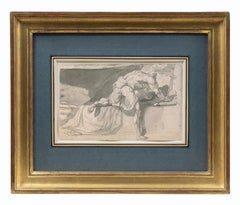
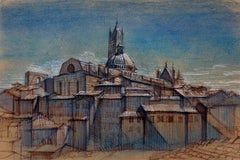
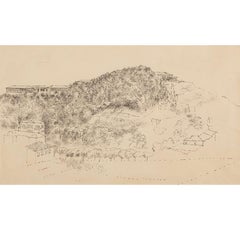
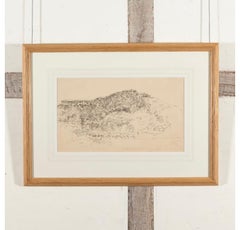
Italian Landscape, Pen Painting by Reginald Brill, 1950 circa

Italian Landscape, Pen Painting by Reginald Brill, 1950 circa

By Reginald Brill

Located in Kingsclere, GB

Italian Landscape, Pen Painting by Reginald Brill, 1950 circa Additional information: Medium: Ink 20 x 34 cm 7 7/8 x 13 3/8 in Reginald " Reggie" Brill was a versastile 20th century artist and teacher. Brill was born in London in 1902 and spent his early childhood there and in Yorkshire. By the time of the First World War, at the age of 13, he was living in lodgings in London, working in a City office and attending St Martins School of Art in the evenings. Considering his lack of education, winning a scholarship to The Slade (now part of University College London) in 1921 where he studied under Henry Tonks for three years, was a huge achievement. On leaving The Slade he found patronage in Lincolnshire, but by the time of the General Strike (1926) he had returned to London and was working on Lansbury's Labour Weekly. He married Rosalie, also an artist, and in 1927 won the Prix de Rome in Decorative Painting. Following two years at The British School in Rome, Brill went to teach at Blackheath School of Art. During 1930 he spent three months painting in Egypt and it was there that he met Col. T G Gayer-Anderson, one of the twin brothers who were to bequeath The Little Hall in Lavenham as a hostel for art students. It was there that Brill retired to act as warden, thus continuing his nurturing of art students until his death in 1972. Brill took up his appointment at The School of Art, Kingston upon Thames in January 1934. It was situated in the Technical Institute (Kingston Hall Road) and Brill found it bohemian and disorganised. He proceeded to inject enthusiasm, order and discipline. Within 5 years of his appointment a purpose-built School of Art was opened in Knights Park. It remained open throughout the war and by 1945 there was a waiting list for places. Under the skilled and totally dedicated direction of Brill, Kingston School of Art became established with national reputation for excellence. In 1961 Sir Charles Wheeler opened the new building at Knights Park. Costing £100,000, this more than doubled the size of the Art School. Brill, was a well-known figure in Kingston. His eloquence made him popular as a guest speaker and his promotion of Art and Design stretched well beyond the doors of Knights Park. Apart from establishing two of the main buildings which makeup what is now known as the Faculty of Design, one of the most visible local contributions he made was the setting up of a topographical collection of paintings depicting Kingston, which has since become known as The Brill Collection at Kingston Museum. Brill gained huge respect and admiration from the hundreds of pupils who studied at Kingston during his 30-year leadership. He published two books, Modern Painting 1946 and Art as a Career 1962, both bearing a strong educational angle. He regularly exhibited along with leading artists of his era at The Royal Academy, both his paintings and his acutely observed drawings. All the while he was a prolific artist, although reading his diaries, intensely self-critical. His perfectionism, acute powers of observation and relentless research can be seen in his drawings, which via the media and methods he explored throughout his life reflect mid 20th century British Art at its most typical. His major series of work, known as 'The Martyrdom of Man', was carried on in parallel to his career as a teacher. These paintings reflect his care for fellow man and depict people at work, e.g., The Operation, The Jury, Linemen, Waiting Room and Rest, which recently sold at Sotheby’s and was specially restored for The Brill Retrospective. His smaller works also play with the theme of everyday events and communication amongst people, such as The Bull Ring and Market Place paintings. Brill's name is associated particularly with human figure compositions, but he also worked on landscapes, portraits and details of plants, animals, interiors etc. As one would expect he moved from one media to another, and his unusual hand painted and cut paper mosaics...

Category

20th Century Reginald Brill Art

Materials

Pen

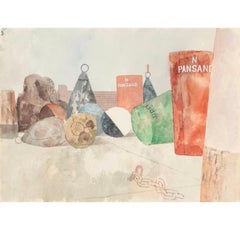
Buoys No.3, Watercolour Painting by Reginald Brill

Buoys No.3, Watercolour Painting by Reginald Brill

By Reginald Brill

Located in Kingsclere, GB

Buoys No.3, Watercolour Painting by Reginald Brill Additional information: Medium: Watercolour 24 x 34 cm 9 1/2 x 13 3/8 in Titled verso This is part of a group of keenly observed ...

Category

20th Century Reginald Brill Art

Materials

Watercolor

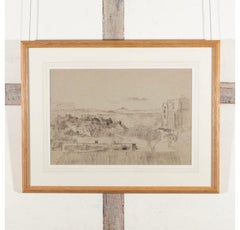
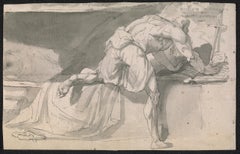
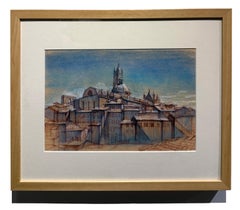
Italian Scene, Pen and Ink with Wash Painting by Reginald Brill, 1950s circa

Italian Scene, Pen and Ink with Wash Painting by Reginald Brill, 1950s circa

By Reginald Brill

Located in Kingsclere, GB

Italian Scene, Pen and Ink with Wash Painting by Reginald Brill, 1950s circa Additional information: Medium: Pen and ink with wash 33 x 48.3 cm 13 x 19 in Reginald " Reggie" Brill was a versastile 20th century artist and teacher. Brill was born in London in 1902 and spent his early childhood there and in Yorkshire. By the time of the First World War, at the age of 13, he was living in lodgings in London, working in a City office and attending St Martins School of Art in the evenings. Considering his lack of education, winning a scholarship to The Slade (now part of University College London) in 1921 where he studied under Henry Tonks for three years, was a huge achievement. On leaving The Slade he found patronage in Lincolnshire, but by the time of the General Strike (1926) he had returned to London and was working on Lansbury's Labour Weekly. He married Rosalie, also an artist, and in 1927 won the Prix de Rome in Decorative Painting. Following two years at The British School in Rome, Brill went to teach at Blackheath School of Art. During 1930 he spent three months painting in Egypt and it was there that he met Col. T G Gayer-Anderson, one of the twin brothers who were to bequeath The Little Hall in Lavenham as a hostel for art students. It was there that Brill retired to act as warden, thus continuing his nurturing of art students until his death in 1972. Brill took up his appointment at The School of Art, Kingston upon Thames in January 1934. It was situated in the Technical Institute (Kingston Hall Road) and Brill found it bohemian and disorganised. He proceeded to inject enthusiasm, order and discipline. Within 5 years of his appointment a purpose-built School of Art was opened in Knights Park. It remained open throughout the war and by 1945 there was a waiting list for places. Under the skilled and totally dedicated direction of Brill, Kingston School of Art became established with national reputation for excellence. In 1961 Sir Charles Wheeler opened the new building at Knights Park. Costing £100,000, this more than doubled the size of the Art School. Brill, was a well-known figure in Kingston. His eloquence made him popular as a guest speaker and his promotion of Art and Design stretched well beyond the doors of Knights Park. Apart from establishing two of the main buildings which makeup what is now known as the Faculty of Design, one of the most visible local contributions he made was the setting up of a topographical collection of paintings depicting Kingston, which has since become known as The Brill Collection at Kingston Museum. Brill gained huge respect and admiration from the hundreds of pupils who studied at Kingston during his 30-year leadership. He published two books, Modern Painting 1946 and Art as a Career 1962, both bearing a strong educational angle. He regularly exhibited along with leading artists of his era at The Royal Academy, both his paintings and his acutely observed drawings. All the while he was a prolific artist, although reading his diaries, intensely self-critical. His perfectionism, acute powers of observation and relentless research can be seen in his drawings, which via the media and methods he explored throughout his life reflect mid 20th century British Art at its most typical. His major series of work, known as 'The Martyrdom of Man', was carried on in parallel to his career as a teacher. These paintings reflect his care for fellow man and depict people at work, e.g., The Operation, The Jury, Linemen, Waiting Room and Rest, which recently sold at Sotheby’s and was specially restored for The Brill Retrospective. His smaller works also play with the theme of everyday events and communication amongst people, such as The Bull Ring and Market Place paintings. Brill's name is associated particularly with human figure compositions, but he also worked on landscapes, portraits and details of plants, animals, interiors etc. As one would expect he moved from one media to another, and his unusual hand painted and cut paper mosaics...

Category

20th Century Reginald Brill Art

Materials

Pen

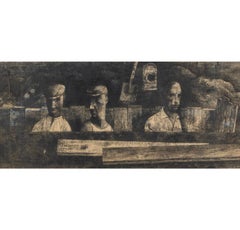
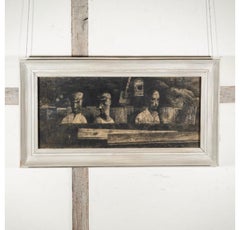
Study for Men in the Trench, Pen, Ink & Watercolour on Paper Painting 1950 circa

Study for Men in the Trench, Pen, Ink & Watercolour on Paper Painting 1950 circa

By Reginald Brill

Located in Kingsclere, GB

Study for Men in the Trench, Pen, Ink & Watercolour on Paper Painting 1950 circa Additional information: Medium: Pen, ink and watercolour on paper 11 3/4 x 26 in 29.8 x 68.5 cm Reginald " Reggie" Brill was a versastile 20th century artist and teacher. Brill was born in London in 1902 and spent his early childhood there and in Yorkshire. By the time of the First World War, at the age of 13, he was living in lodgings in London, working in a City office and attending St Martins School of Art in the evenings. Considering his lack of education, winning a scholarship to The Slade (now part of University College London) in 1921 where he studied under Henry Tonks for three years, was a huge achievement. On leaving The Slade he found patronage in Lincolnshire, but by the time of the General Strike (1926) he had returned to London and was working on Lansbury's Labour Weekly. He married Rosalie, also an artist, and in 1927 won the Prix de Rome in Decorative Painting. Following two years at The British School in Rome, Brill went to teach at Blackheath School of Art. During 1930 he spent three months painting in Egypt and it was there that he met Col. T G Gayer-Anderson, one of the twin brothers who were to bequeath The Little Hall in Lavenham as a hostel for art students. It was there that Brill retired to act as warden, thus continuing his nurturing of art students until his death in 1972. Brill took up his appointment at The School of Art, Kingston upon Thames in January 1934. It was situated in the Technical Institute (Kingston Hall Road) and Brill found it bohemian and disorganised. He proceeded to inject enthusiasm, order and discipline. Within 5 years of his appointment a purpose-built School of Art was opened in Knights Park. It remained open throughout the war and by 1945 there was a waiting list for places. Under the skilled and totally dedicated direction of Brill, Kingston School of Art became established with national reputation for excellence. In 1961 Sir Charles Wheeler opened the new building at Knights Park. Costing £100,000, this more than doubled the size of the Art School. Brill, was a well-known figure in Kingston. His eloquence made him popular as a guest speaker and his promotion of Art and Design stretched well beyond the doors of Knights Park. Apart from establishing two of the main buildings which makeup what is now known as the Faculty of Design, one of the most visible local contributions he made was the setting up of a topographical collection of paintings depicting Kingston, which has since become known as The Brill Collection at Kingston Museum. Brill gained huge respect and admiration from the hundreds of pupils who studied at Kingston during his 30-year leadership. He published two books, Modern Painting 1946 and Art as a Career 1962, both bearing a strong educational angle. He regularly exhibited along with leading artists of his era at The Royal Academy, both his paintings and his acutely observed drawings. All the while he was a prolific artist, although reading his diaries, intensely self-critical. His perfectionism, acute powers of observation and relentless research can be seen in his drawings, which via the media and methods he explored throughout his life reflect mid 20th century British Art at its most typical. His major series of work, known as 'The Martyrdom of Man', was carried on in parallel to his career as a teacher. These paintings reflect his care for fellow man and depict people at work, e.g., The Operation, The Jury, Linemen, Waiting Room and Rest, which recently sold at Sotheby’s and was specially restored for The Brill Retrospective. His smaller works also play with the theme of everyday events and communication amongst people, such as The Bull Ring and Market Place paintings. Brill's name is associated particularly with human figure compositions, but he also worked on landscapes, portraits and details of plants, animals, interiors etc. As one would expect he moved from one media to another, and his unusual hand painted and cut paper mosaics...

Category

20th Century Reginald Brill Art

Materials

Pen

Related Items
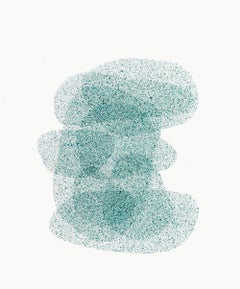
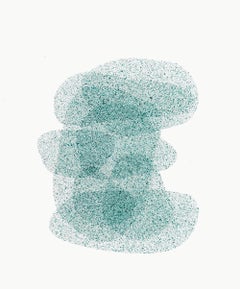
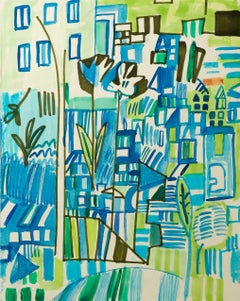
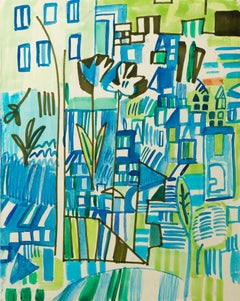
Flower in Bowl - Abstract Cool Tone Botanical Mixed Media Painting on Paper

Flower in Bowl - Abstract Cool Tone Botanical Mixed Media Painting on Paper

By Krisanne Souter

Located in Los Angeles, CA

Krisanne Souter weaves together elements of nature and ancient feminine archetypes, such as the Mother and the Mystic. Botanical themes, playful elements, and unexpected surprises ar...

Category

21st Century and Contemporary Abstract Reginald Brill Art

Materials

Paper, Ink, Acrylic, Watercolor, Color Pencil

Le Ministère du Commerce - Original Penmark on Paper by H.-P. Pecqueriaux

Le Ministère du Commerce - Original Penmark on Paper by H.-P. Pecqueriaux

By Henri-Paul Pecqueriaux

Located in Roma, IT

Le Ministère du Commerce is an artwork realized by the satirical artist Henri-Paul Pecqueriaux (1889-1935) in the XX Century. Black penmark on paper. Signed on the lower left corner. Excellent conditions. Fresh sketch representing a satirical cartoon in b/w. A man is taking a bag full of money...

Category

Early 20th Century Modern Reginald Brill Art

Materials

Felt Pen

ABSTRACT American Woman Abstract Non-objective Mid 20th Century Modern Drawing

ABSTRACT American Woman Abstract Non-objective Mid 20th Century Modern Drawing

By Irene Rice Pereira

Located in New York, NY

ABSTRACT American Woman Abstract Non-objective Mid 20th Century Modern Drawing Irene Rice Pereira (1902-1971) Abstract 8 1/2 x 5 1/2 inches Watercolor, gouache, and ink on black paper Signed lower right Framed by Bark BIO rene Pereira was born in 1902 in Chelsea, Massachusetts and grew up in Great Barrington. She was strongly influenced by her mother who was an amateur artist. Irene began art lessons at the age of fifteen; she took a secretarial job because her father had died. She took art classes at the Art Students League in New York City. At the age of twenty-one she married the first of three husbands, Humberto Pereira, whose name she kept. She traveled extensively in Europe and North Africa and was much inspired by the expansive vistas of the Sahara Desert. Returning to New York, she began incorporating these visions into her work, increasingly experimental in her styles and methods. At first she painted on canvas, then she devised a means of actually incorporating light into her works by painting on layers of glass and mounting the layers together. In 1942 she married George Brown, an engineer, who helped her experiment with a variety of materials. By the 1950s she became more interested in writing poetry and, divorced from Brown in 1952, she married George Reavey, an Irish Poet...

Category

1950s Abstract Reginald Brill Art

Materials

Paper, Watercolor, Gouache

A Carriage in Paris
A Carriage in Paris

A Carriage in Paris

By Bernard Lamotte

Located in North Clarendon, VT

A beautiful mixed media painting by Bernard Lamotte. A crowded park in Paris is focused on a horse drawn carriage with French flags in the background. Watercolor, pen, mixed media o...

Category

1930s Fauvist Reginald Brill Art

Materials

Mixed Media, Watercolor, Pen

Moon Flower Potted Plant - Lively Abstract Colorful Botanical Painting on Paper

Moon Flower Potted Plant - Lively Abstract Colorful Botanical Painting on Paper

By Krisanne Souter

Located in Los Angeles, CA

Krisanne Souter weaves together elements of nature and ancient feminine archetypes, such as the Mother and the Mystic. Botanical themes, playful elements, and unexpected surprises ar...

Category

21st Century and Contemporary Abstract Reginald Brill Art

Materials

Paper, Ink, Acrylic, Watercolor, Color Pencil

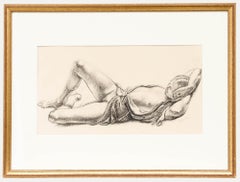
Female Figure - Drawing by Jean Chapin- 1930s

Female Figure - Drawing by Jean Chapin- 1930s

By Jean Chapin

Located in Roma, IT

Female Figure is an original china ink drawing realized by Jean Chapin in 1930s. Not signed. Good conditions. Jean Chapin is a French painter and lithographer born on 21 February ...

Category

Mid-20th Century Modern Reginald Brill Art

Materials

Ink, Ballpoint Pen

Expressive Figurative Ink and Ballpoint Pen Drawing on Paper, Signed, 1991

Expressive Figurative Ink and Ballpoint Pen Drawing on Paper, Signed, 1991

By Menachem Gueffen

Located in NANTES, FR

This 1991 drawing presents a female figure rendered with unusual freedom and urgency, built from layered contour lines, looping marks, and repeated adjustments in black ink and ballp...

Category

1990s Expressionist Reginald Brill Art

Materials

Paper, India Ink, Ballpoint Pen

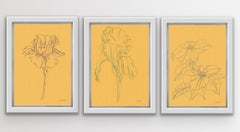
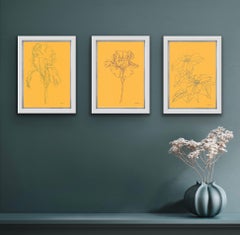
Clematis 4, Iris 4 and Iris 5, Original painting, Flowers, Nature, Spring art

Clematis 4, Iris 4 and Iris 5, Original painting, Flowers, Nature, Spring art

By Ellen Williams

Located in Deddington, GB

This drawing is one in a series of botanical line drawings depicting the seasonal flowers of English gardens and the countryside. ADDITIONAL INFORMATION: Pen on Paper 30 H x 20 W ...

Category

2010s Contemporary Reginald Brill Art

Materials

Paper, Pen

Two Golfers and a Caddy

Two Golfers and a Caddy

By Frederick Conway

Located in Missouri, MO

Fred Conway “Two Golfers and a Caddy” c. 1965 Pen, Ink & Watercolor on Paper 13 x 17 inches Signed A member of the faculty of the Washington University Art School from 1929 to 1970, Frederick Conway...

Category

1960s Abstract Reginald Brill Art

Materials

Ink, Watercolor, Archival Paper, Pen

Preparations for the fireworks display held in Piazza Navona in 1729

Preparations for the fireworks display held in Piazza Navona in 1729

Located in Paris, Île-de-France

VERY IMPORTANT DRAWING BY JACQUES DUMONT called « LE ROMAIN" (Paris 1701-1781) Preparations for the fireworks display held in Piazza Navona in Rome on November 30, 1729, for the bi...

Category

1730s French School Reginald Brill Art

Materials

Chalk, Ink, Pen

BP39 Ballpoint Pen Drawing on Paper, Landscape, Framed, 2026

BP39 Ballpoint Pen Drawing on Paper, Landscape, Framed, 2026

By Rob Van Hoek

Located in BARCELONA, ES

The artist develops each drawing through multiple layers of ballpoint pen, gradually building depth, texture, and atmosphere. By repeatedly working over the surface with fine lines, ...

Category

2010s Naturalistic Reginald Brill Art

Materials

Paper, Ballpoint Pen

Previously Available Items
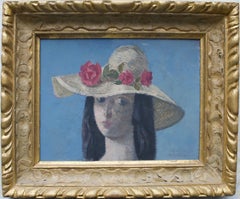
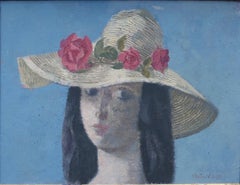
Reginald Brill, The Sun hat, Modern British oil portrait of a young lady

Reginald Brill, The Sun hat, Modern British oil portrait of a young lady

By Reginald Brill

Located in Harkstead, GB

Reginald Brill (1902-1974) The Sun hat, Signed, Oil on board, 9 x 12 inches. 14 x 17 inches with frame ​ Exhibited: The Phoenix Gallery, Lavenham, Suffolk, 1975. ​ Provenance: Privat...

Category

Mid-20th Century Modern Reginald Brill Art

Materials

Oil, Board

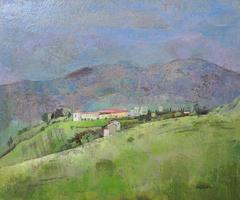
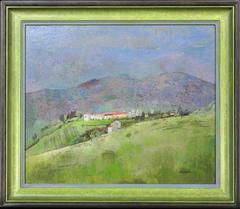
Italian hilltop town

Reginald BrillItalian hilltop town

Sold

H 13.78 in W 17.33 in

Italian hilltop town

By Reginald Brill

Located in Sutton Poyntz, Dorset

This original oil painting by Reginald Brill, dating from around 1950s, is presented and supplied in its original frame that has been redressed and freshened with colouring to suit t...

Category

Mid-20th Century Modern Reginald Brill Art

Materials

Canvas, Oil

Reginald Brill art for sale on 1stDibs.

Find a wide variety of authentic Reginald Brill art available for sale on 1stDibs. Customers who are interested in this artist might also find the work of Philip Gilbert Hamerton, John Wilkes, and Jonathan Chritchley.

Artists Similar to Reginald Brill