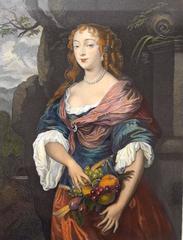
Sir Peter Lely Art

Dutch, 1618-1680
Sir Peter Lely (1618-1680) was born in Germany at Soest in Westphalia in 1618. Though his family name was van der Faes, he assumed the name Lely after the lily that was carved on the gable of his father’s home in The Hague. He moved to England in 1641, the year that Van Dyck died, and succeeded Van Dyck. He was court painter to Kind Charles I and King Charles II. By working for many of the patrons of the late van Dyck, Lely rapidly established himself as one of the country’s most important portrait painters.
to
2
1
1
3
Overall Width
to
Overall Height
to
5
1
5
4
4
4
1
1
5
5
3
3
5
10,083
2,779
1,379
1,375
4
5
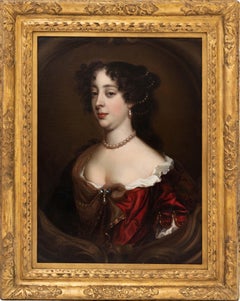
Artist: Sir Peter Lely
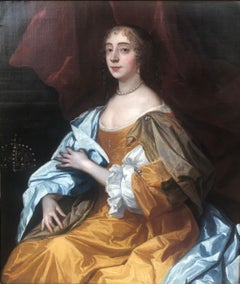
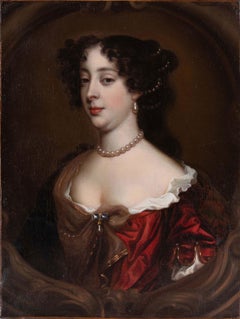
Portrait of Barbara Palmer 1st Duchess of Cleveland
By Sir Peter Lely
Located in Taunton, GB
Portrait of Barbara Palmer 1st Duchess of Cleveland 1640-1709, half-length wearing a red dress and portrayed within a cartouche. Circa 1680 Oil On...
Category

17th Century Sir Peter Lely Art

Materials

Oil

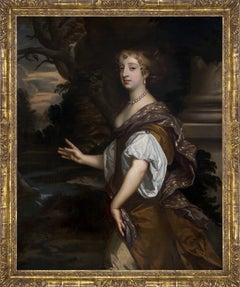
Portrait of Bridget Drury Lady Shaw, formerly Viscountess Kilmorey
By Sir Peter Lely
Located in London, GB
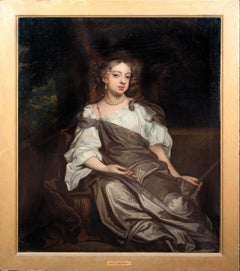
Sir Peter Lely (Soest 1618 – 1680 London) Portrait of lady with a crown, possibly Bridget Drury Lady Shaw, formerly Viscountess Kilmorey, later Lady Baber (d.1696) c.1665 Oil on canvas 46 1/2 x 40 3/4 inches, Framed 42 1/4 x 36 1/4 inches, Unframed Inscribed left [……….]Isabella James Mulraine wrote the following for this piece: This portrait dates to the middle of the 1660s, the decade when Lely’s career took off as successor to Sir Anthony van Dyck. At the Restoration Charles II had appointed him Principal Painter to the King and paid a pension £200 per annum ‘as formerly to Sr. Vandyke...’1 Lely had trained in Haarlem and he was in his early twenties when he came to London in 1643. He was an astute businessman and a wise courtier. In 1650 he painted a portrait of Oliver Cromwell (Birmingham Museum and Art Gallery) while maintaining links with the Royalist exiles through the 1650s. He had arrived in England as a painter of small-scale portraits and lush scenes of nymphs in landscapes in a Dutch style. His experience of Van Dyck in English collections transformed his painting. His lavish and alluring vision of Arcadia exactly captured the spirit of the Court and as Principal Painter he dominated English portraiture for the next twenty years. Lely ran a highly efficient studio along Netherlandish lines, employing a team of specialists like the drapery painter John Baptist Gaspars and young artists-in-training like Nicolas de Largilliere. He had numerous rivals during that period, and by 1670 he had introduced numbered standard poses to speed up production, while collaborating with printmakers for further revenue and advertising. He died in 1680 of a stroke while painting, working to the last. The portrait, painted at a date when Lely’s poses and execution were still individual and inventive shows a lady sitting at three-quarter length facing away from the viewer. She has begun to turn towards the viewer, a pose with a long pedigree in art, first used by Leonardo da Vinci in the Mona Lisa (Louvre). She steadies her blue drapery where it might slip from her arm with the movement, a flash of realism beautifully captured. Like Van Dyck, Lely painted his female sitters in a timeless costume rather than contemporary fashion, showing a loose gown and floating silk draperies. It presented the sitter as a classical ideal. The portrait would not date. The saffron dress may be the work of a drapery painter but the brown scarf must be by Lely himself, and appears unfinished, broadly sketched in behind the shoulder. The delicate blue glaze and nervous highlights suggest shimmering translucence. Lely was a master of painting hands – his hand studies are marvels of drawing – and the lady’s hands are superb, exactly drawn, delicately modelled and expressive. The fidgety gestures, clutching the gown, fiddling with the edge of the scarf, give the portrait psychological bite, suggesting the personality behind the calm courtier’s expression, adding to the sense shown in the look of the eyes and mouth that the lady is about to speak. The portrait’s language is Vandykian. The inspiration comes directly from Van Dyck’s English portraits of women. Lely owned Van Dyck’s Portrait of Lady Elizabeth Thimbleby and Dorothy Viscountess Andover (National Gallery, London) and the sitter’s costume quotes Lady Andover’s saffron dress and brown scarf. But Lely paints a generation who sat nearer to the ground and through a dialogue of expression and gesture he shows sitters who are more flesh and blood than Van Dyck’s. The background with a column and curtain is different to those shown in most of Lely’s portraits of women. They tend to include trees or fountains, with a glimpse of landscape. But there are other examples. A portrait of the King’s reigning mistress, Barbara Villiers Duchess of Cleveland...
Category

1660s Sir Peter Lely Art

Materials

Oil

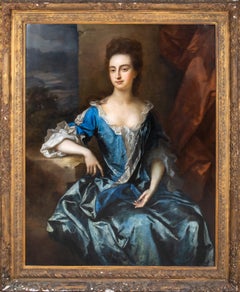
English 17th century portrait of a lady
By Sir Peter Lely
Located in Bath, Somerset
A 17th century English portrait of a lady by Sir Peter Lely (1618-1680), half-length in a painted feigned oval, wearing a green silk gown with chestnut coloured cloak over one shoulder, her fair hair curled in the fashionable ringlet style of the period. Oil on canvas in an English giltwood 'Lely' frame. We are grateful to Diana Dethloff and Catharine MacLeod (who are currently working on a Lely catalogue raisonné) for their confirmation of Lely as the artist from photograph analysis of this previously unidentified early work. Provenance: Private collection Nottingham until 2021 Mellors and Kirk sale December 2000, lot 1173 The sitter is likely to have been from an upper class or aristocratic family in court circles, who were the main source of Lely`s patronage. The simple composition serves to highlight the beauty of the sitter through portraying her pale decolletage and complexion, set against the gentle gaze of her blue eyes, the soft blush of her cheeks and her full red lips. Peter Lely (1618-1680) was originally of dutch origin and became Principle Painter to the King in 1661, following in the footsteps of Van Dyck who had died in 1641. He dominated the portrait painting scene in England for over 20 years, creating a distinctive 'court look' in his work which had a strong influence on many other artists. He had an extremely successful and popular portrait practice which meant that he soon had to develop production methods that could accommodate the high demand for portraits, and also for copies and versions of them which were given as gifts to family and courtiers. The use of studio assistants was a common practice for busy artists and as with Van Dyck, Lely is known to have used specialist assistants to execute particular parts of his paintings. Artists who worked in Lely`s studio included John Baptist Gaspars who specialised in drapery painting, William Wissing, John Greenhill...
Category

17th Century Baroque Sir Peter Lely Art

Materials

Canvas, Oil

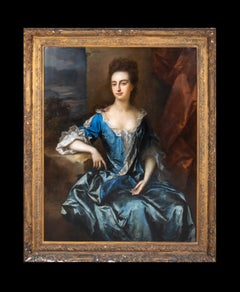
Portrait Of Philadelphia, 17th Century Probably Philadelphia Carey Of Aske Hall
By Sir Peter Lely
Located in Blackwater, GB
Portrait Of Philadelphia, 17th Century Probably Philadelphia Carey Of Aske Hall, Richmond, North Yorkshire, English Courier & Lady In Waiting to Princess Elizabeth Studio Of Sir Pe...
Category

17th Century Sir Peter Lely Art

Materials

Canvas, Oil

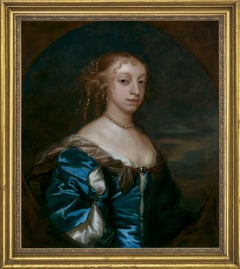
Portrait of Lady, Elizabeth Wriothesley, Countess of Northumberland, Peter Lely
By Sir Peter Lely
Located in London, GB
Portrait of Elizabeth Wriothesley, Countess of Northumberland (1646-1690) (later Duchess of Montagu) c.1665-1669 Studio of Peter Lely (1618-1680) This exemplary three-quarter-length...
Category

17th Century Old Masters Sir Peter Lely Art
Materials

Canvas, Oil

Related Items
Study Of A Head
By Artus Wolfort
Located in Paris, Île-de-France
Artus WOLFAERTS (1581-1641) Study of a head Oil on paper, transferred on panel. 39,5 x 29 cm Unsigned Provenance Private collection, France Firstly thought to be from Rubens’s S...
Category

17th Century Old Masters Sir Peter Lely Art
Materials

Oil, Laid Paper

Study Of A Head
Study Of A Head
$9,007
H 15.56 in W 11.42 in
17th C, Baroque, Flemish School, Saint Francis in Ecstasy.Oil on oak panel.
Located in brussel, BE
During the Counter-Reformation, the traditional cult of saints was encouraged, and spiritual exercises were recommended to come closer to God. In the pai...
Category

17th Century Baroque Sir Peter Lely Art

Materials

Oil

"Currency #201" Blue Portrait Artwork with French Text on Red Background
By Natasha Lelenco
Located in FISTERRA, ES
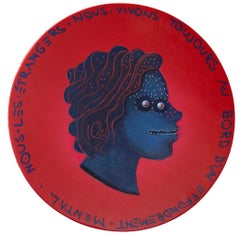
“Currency #201” is a circular mixed media portrait on wood featuring a surreal blue figure against a vibrant red background. Around the head, the French inscription reads: “Nous, les...
Category

2010s Pop Art Sir Peter Lely Art

Materials

Wood, Spray Paint, Acrylic

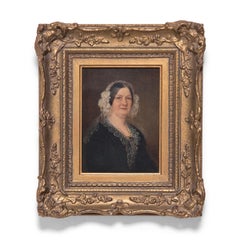
Oil Portrait of a Victorian Lady, c. 1850
Located in Chicago, IL
Painted in the 19th century, this exquisite miniature portrait wonderfully exemplifies realism in traditional oil painting. The small artwork is painted in the conventional portraiture style of the Old Masters, and achieves soft realism with fine brushwork and a subdued, neutral palette. The half length portrait depicts a fine Victorian woman dressed in all black with a delicate lace collar and bonnet. She wears a ruby broach...
Category

Mid-19th Century Old Masters Sir Peter Lely Art
Materials

Oil

Oil Portrait of a Victorian Lady, c. 1850
$1,480
H 13.75 in W 11.5 in D 1.75 in
Portrait of a French Bulldog, oil painting on canvas early 20th c.
Located in Gavere, BE
Description Title: Portrait of a French Bulldog Materials: oil on canvas Signature: signed lower right Provenance: private collection Germany Dimensions canvas: 40 cm x 50 cm Framed...
Category

1920s Other Art Style Sir Peter Lely Art

Materials

Canvas, Oil

18th century antique portrait Edmund Hoyle Circle of James Latham, Edmund Hoyle
Located in York, GB
18th century Bust portrait of a gentleman in a blue coat with gold buttons (Said to be Edmund Hoyle, inventor of Whist) oil on canvas circle of James Latham. Housed in a gilt frame the size overall is 71 x 84 cm (28 x 33 inches approx) whilst the painting is 56 x 69 cm ( 22 x 27 inches approx) unsigned The overall condition is very good having had some restoration. The painting has been relined, cleaned and re varnished. There has been some strengthening/overpainting. There is a Rectangular patch repair along lower edge, centre, reverse approximately 5 x 7cm with associated retouching to front,all essentially done sympathetically. some fine stable craquelure throughout. Some minor self coloured losses to frame. None of the above detracting from a very attractive portrait. Edmond Hoyle Edmond Hoyle English card game authority, "the Father of whist" Born 1672 England Died 29 August 1769 (aged 96–97) London, England Edmond Hoyle (1672 – 29 August 1769)[1] was a writer best known for his works on the rules and play of card games. The phrase "according to Hoyle" came into the language as a reflection of his generally perceived authority on the subject James Latham James Latham was born in Thurles, County Tipperary, Ireland and possibly related to the family of Lathams of Meldrum and Ballysheehan. After some practice of his art, Latham studied for an academic year in Antwerp (1724–25) where he became a Master of the Guild of St Luke. He returned to Dublin by 1725, and may have visited England in the 1740s, as the influence of Joseph Highmore, as well as Charles Jervas and William Hogarth, is evident in his work of this period. Anthony Pasquin memorably dubbed Latham "Ireland's Van Dyck". Latham died in Dublin on 26 January 1747. Several of James Latham's portraits are in the National Gallery of Ireland collection in Dublin; one is of the famous MP Charles Tottenham (1694–1758) of New Ross, Co. Wexford, "Tottenham in his Boots" (Cat. No.411) and a second is a portrait of Bishop...
Category

Mid-18th Century Old Masters Sir Peter Lely Art
Materials

Oil

Portrait Of A Noblewoman. Attributed To Carlo Ceresa. About 1640.
By Carlo Ceresa
Located in Firenze, IT
Portrait of a noblewoman. Attributed to Carlo Ceresa. (1609 - 1679, Bergamo) Oil on canvas. Size cm 110x86,5cm with frame Around 1640. This portrait depicts a middle-aged woman with great realism, typical of Lombard and Bergamo painters in particular. Carlo Ceresa, probable author of this unsigned painting, had studied with Daniele Crespi...
Category

Mid-17th Century Baroque Sir Peter Lely Art

Materials

Canvas, Oil

Portrait Of A Noblewoman. Attributed To Carlo Ceresa. About 1640.
$2,709 Sale Price
43% Off
H 43.31 in W 34.06 in D 1.58 in
Portrait of a Boy
Located in Astoria, NY
Michael Conrad Hirt (German, 1613-1671), Portrait of a Boy, Oil on Canvas, possibly dated 1647, signed and dated lower left, marked "Kal 103" to the verso, unframed. 26.25" H x 22.5"...
Category

Mid-17th Century Baroque Sir Peter Lely Art

Materials

Canvas, Oil

Portrait of a Boy
Portrait of a Boy
$5,500
H 26.25 in W 22.5 in D 1 in
Male and female portrait, both in silk kimono, possibly textile dealers
By Christoffel Lubieniecki
Located in Amsterdam, NL
CHRISTOFFEL LUBIENIECKI (1659-1729) Pair of portraits of a gentleman and a lady, both in silk kimono, before a country house (circa 1680) Indistinctly signed “C.......” on a box under the man’s left hand Oil on canvas, 79.5 x 67 cm each Both sitters are portrayed wearing a silk “Japanese” coat. During the second half of the seventeenth the Japanese silk coat, an adapted Japanese kimono, became a real vogue in the Dutch elite. The exclusive Dutch trade contacts with Japan can explain the popularity of the kimono-style silk coats in the Netherlands. Everybody who could afford one, dressed in such a fashionable and comfortable coat and, like the present sitters, some proud owners had themselves portrayed in a “Japanese” coat often together with an oriental carpet to underline their standing and international connections. These portraits are the work of the Polish-born portraitist Christoffel Lubieniecki (also known as Lubienitski, Lubinitski or Lubiniecki) Lubieniecki was first trained in Hamburg under Julian Stuhr and after 1675 in Amsterdam under Adriaen Backer and Gerard de Lairesse. He specialized in landscapes, generally of an Italianate character, and in portraits. The loving execution of these contented burghers, enjoying the garden vistas of their country house, places him alongside Amsterdam portraitists such as Constantijn Netscher and Michiel van Musscher...
Category

1680s Old Masters Sir Peter Lely Art
Materials

Canvas, Oil

17th Century Onorio Marinari Italian Religious Painting
By Onorio Marinari
Located in Roma, IT
A very important painting by the great artist of the Florentine school, Onorio Marinari. Dr. Silvia Benassai has confirmed Marinari’s authorship of the Saint Margaret of Antioch; ava...
Category

Mid-17th Century Baroque Sir Peter Lely Art

Materials

Canvas, Oil

Eastern European Mannerist Portrait in traditional dress 19th/18thC
Located in Hillsborough, NC
Eastern European young woman in traditional dress with silver lacings and jewelry holding an open book. This portrait pose is in the Renaissance period Mannerist style, and the young...
Category

17th Century Mannerist Sir Peter Lely Art

Materials

Canvas, Oil

"The Virgen de Huápulo" Depiction of the Virgin Mary by Martha Ochoa
By Martha Ochoa
Located in Austin, TX
By Martha Ochoa Oil on Canvas Canvas Size: 23.75" x 15.75" Framed Size: 27" x 19.25" This lovely painting by Martha Ochoa is from the Cusco tradition. The Cusco School was an artist...
Category

1990s Baroque Sir Peter Lely Art

Materials

Canvas, Oil

Previously Available Items
Portrait Of Mrs Elizabeth Levinz (nee Livesay), 17th Century by SIR PETER LELY
By Sir Peter Lely
Located in Blackwater, GB
Portrait Of Mrs Elizabeth Levinz (nee Livesay), 17th Century by SIR PETER LELY (1618-1680) Large 17th Century portrait of Mrs Elizabeth Levinz (nee Livesay), oil on canvas by Sir P...
Category

17th Century Sir Peter Lely Art

Materials

Canvas, Oil

Elizabeth Lady Denham
By Sir Peter Lely
Located in Saint Augustine, FL
An original hand colored copper plate engraving after Dutch artist Sir Peter Lely (1618-1680) titled "Elizabeth Lady Denham", 1833. Engraved by English artist Thomas Wright (1792-1849) in 1833. Incredibly framed with moulding from Spain, matting from Holland, all archival. Framed size: 21" x 17.75". Image size: 6.5" x 5". Mint condition. Sir Peter Lely (14 September 1618 – 30 November 1680) was a painter of Dutch origin, whose career was nearly all spent in England, where he became the dominant portrait painter to the court. Thomas Wright (1792–1849) was an engraver and portrait-painter. After serving an apprenticeship with Henry Meyer, and worked for four years as assistant to William Thomas Fry, for whom he engraved the popular plate of Princess Charlotte and Prince Leopold in a box at Covent Garden Theatre. About 1817 he began to practise independently as a stipple-engraver, and also found employment in taking portraits in pencil...
Category

1830s Old Masters Sir Peter Lely Art
Materials

Copper

Sir Peter Lely art for sale on 1stDibs.

Find a wide variety of authentic Sir Peter Lely art available for sale on 1stDibs. You can also browse by medium to find art by Sir Peter Lely in oil paint, paint, canvas and more. Not every interior allows for large Sir Peter Lely art, so small editions measuring 21 inches across are available. Customers who are interested in this artist might also find the work of Giovan Battista Viola, and Suzi Fadel Nassif. Sir Peter Lely art prices can differ depending upon medium, time period and other attributes. On 1stDibs, the price for these items starts at $11,379 and tops out at $83,120, while the average work can sell for $30,579.

Artists Similar to Sir Peter Lely

Questions About Sir Peter Lely Art
  • 1stDibs ExpertJanuary 19, 2025
    Sir Peter Blake was famous for his influence on the art world. He is widely regarded as the godfather of British Pop art and the Young British Artists (YBA) movement. Blake created paintings, collages and prints that blended modernity and nostalgia. Though best known for designing the album cover for the Beatles’s Sgt. Pepper’s Lonely Hearts Club Band, he considered painting to be central to his oeuvre. While celebrity figures such as Marilyn Monroe informed Blake's work, folk art, fairground signs and an overall sense of nostalgia also influenced his style. On 1stDibs, explore an assortment of Peter Blake art.

Still Thinking About These?

All Recently Viewed