About R. Louis Bofferding Decorative and Fine Art
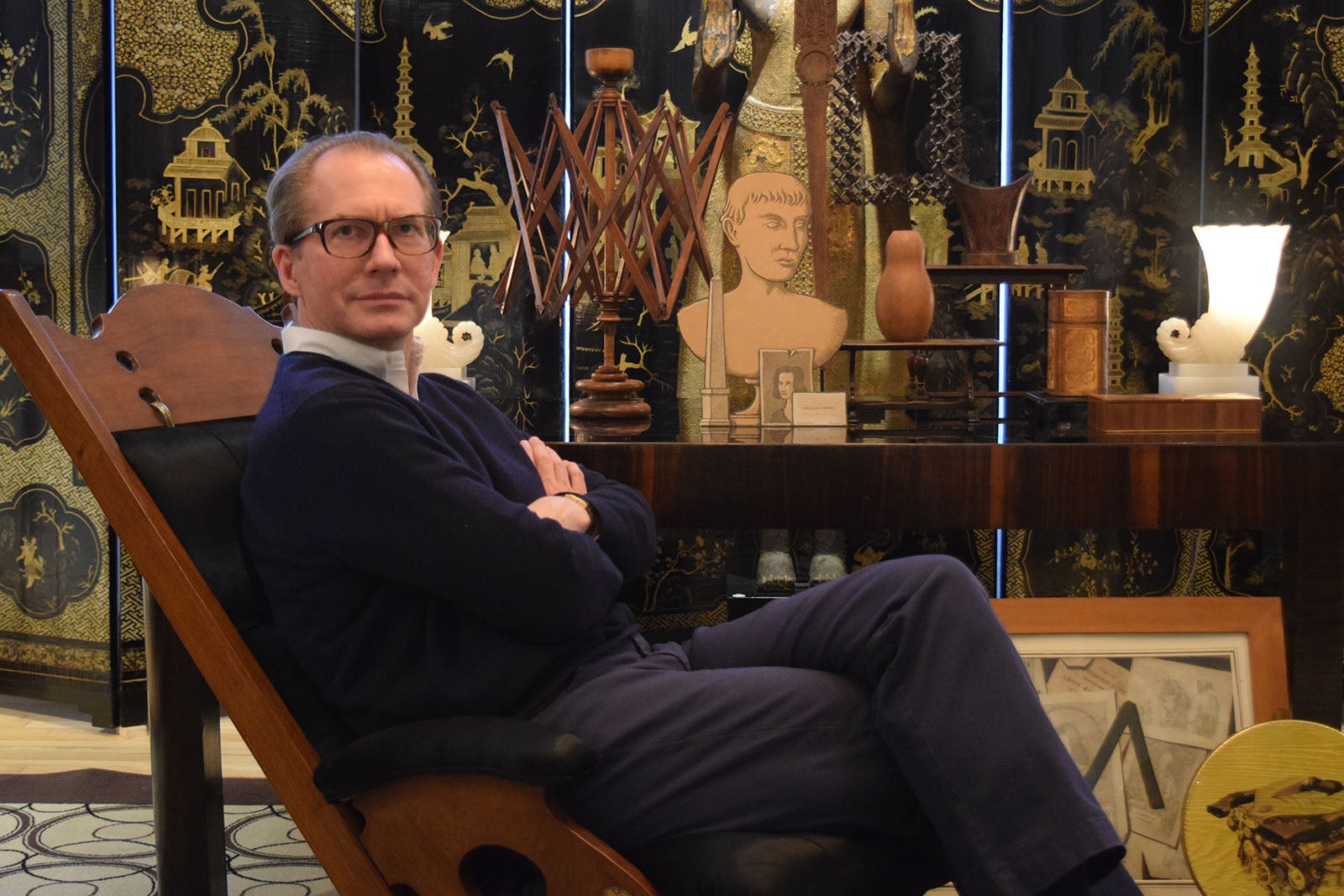
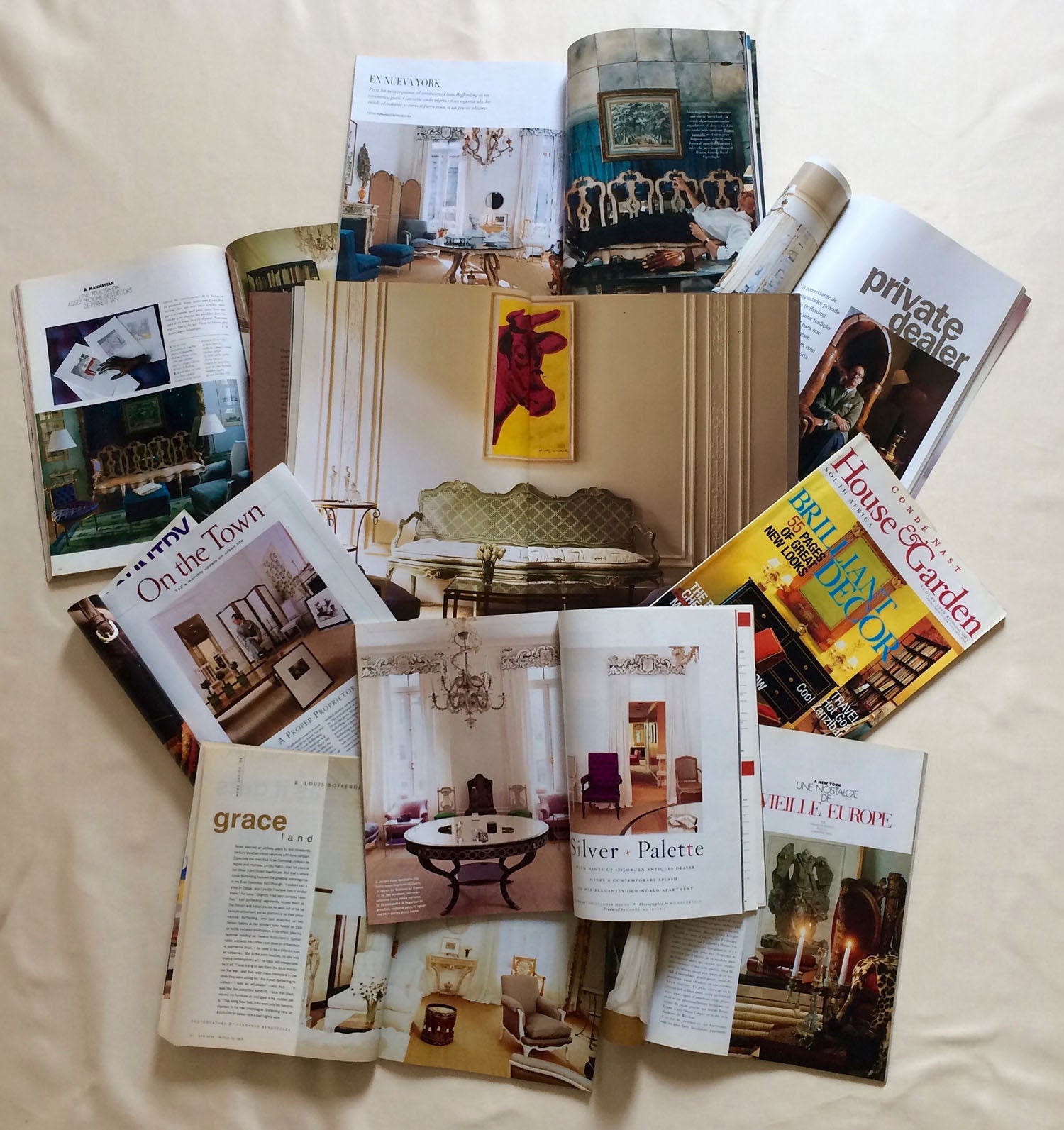
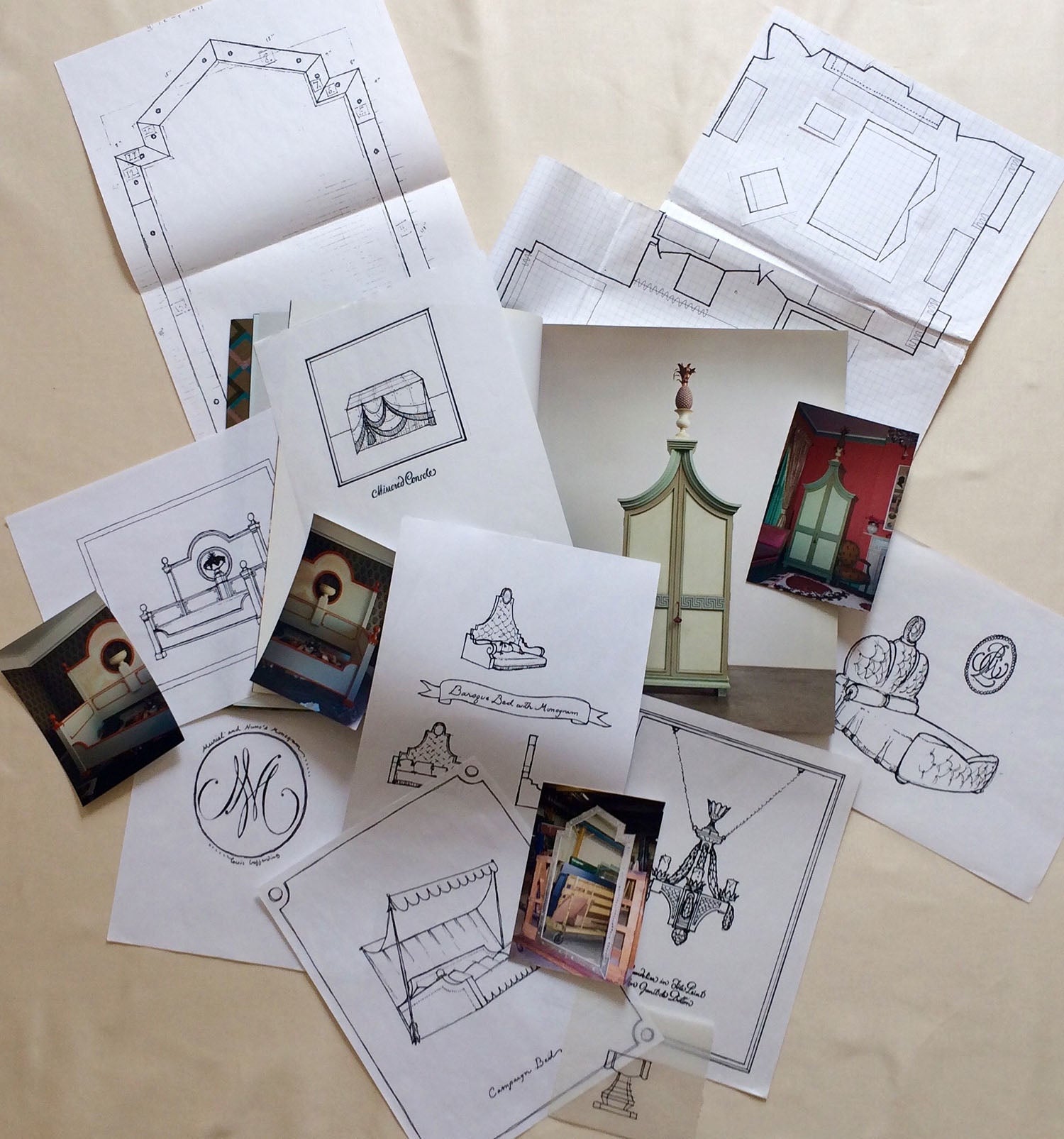
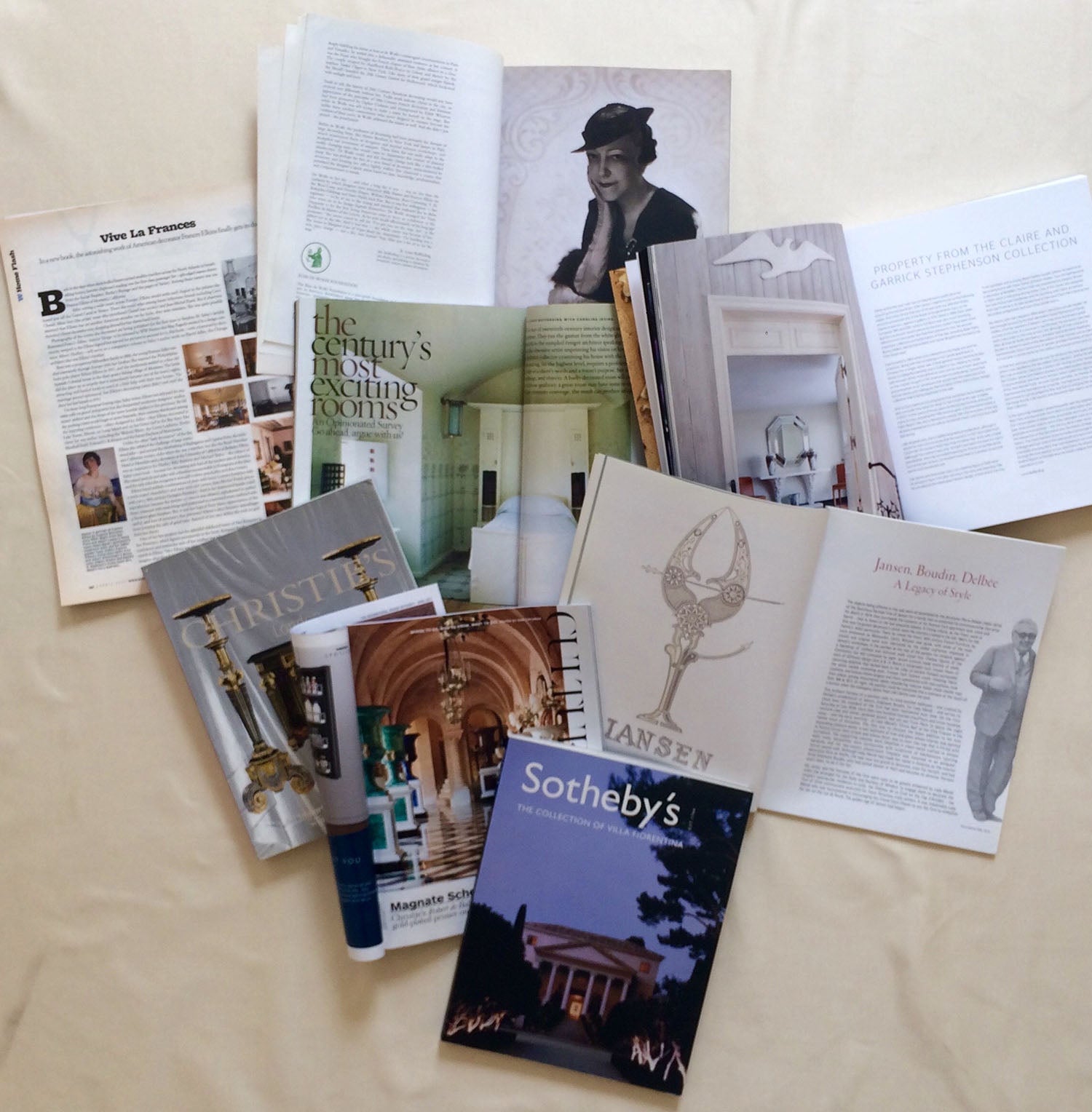
A former museum curator and contemporary art consultant, Bofferding has been dealing in art and design from the 18th century to the present since 1994. He first gained recognition for reintroducing the high-style 20th-century furniture of Jansen, Baguès, and Syrie Maugham. He has since mounted the first selling exhibitions of John Dickinson and Alessandro Albrizzi, both in collaboration with their estates. Bofferding’s taste encompasses the rarefied – an ancient marble Pompeian head -- the unusual – an Elsie de Wolfe mirrored fireplace – and the important – a monumenta...Read More
Established in 19941stDibs seller since 2014
Featured Pieces
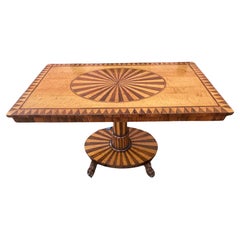
19th-Century Neo-Classical Table
Located in New York, NY
This table’s bold, graphic, and geometrical marquetry in satinwood and rosewood recalls the paintings of Bridget Riley and other 1960s Op Art artists. The patterning even extends to...
Category
Antique 1840s Czech Neoclassical Tables
Materials
Brass
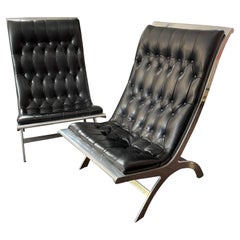
Pair of John Vesey "Maximilian Lounge Chairs"
By John Vesey
Located in New York, NY
The “Maximilian Lounge Chair” was John Vesey’s finest and most celebrated chair design — it was also his most expensive one to produce, and appeared in a 1959 issue of Vogue. The aluminum frame was wrought rather than cast, solid rather than assembled, and polished to a seamless satiny sheen. An industrial-aluminum screen supports the black-leather upholstery tufted in a pattern that harks back to the 19th century. So too does the chair’s form that’s based on low-slung Latin American planters’ chairs. One that belonged to the ill-fated Emperor Maximilian of Mexico...
Category
Vintage 1950s American Modern Chairs
Materials
Aluminum
Large 1920s Danish Porcelain Sculpture
By Arno Malinowski
Located in New York, NY
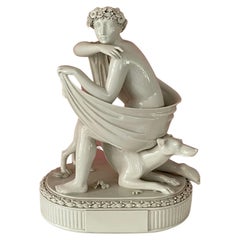
This 1927 Royal Copenhagen porcelain sculpture is exceptionally large in scale, and appears to represent an Amazon with her hound. It is remarkable for the...
Category
Vintage 1920s Danish Neoclassical Revival Figurative Sculptures
Materials
Porcelain
Pair of 18th-Century Italian Console Tables
Located in New York, NY
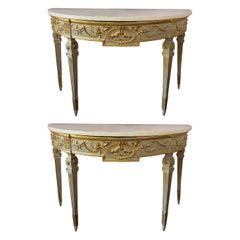
This pair of Italian Neo-Classical console tables were carved, painted battleship-grey, gilded, and topped with slabs of Carrara marble. Each has a carved cartouche — one with a pair...
Category
Antique Late 18th Century Italian Neoclassical Credenzas
Materials
Marble
Paul Poiret's Two Editions de Luxe
By Paul Poiret
Located in New York, NY
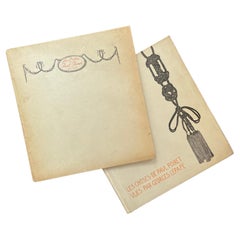
Paul Poiret's career began in the Belle Epoque, when fashion was defined by imprisoning corsets, restrictive tailoring, and ethereal colors. Opening his own fashion house in 1904, he...
Category
Antique Early 1900s French Art Deco Books
Materials
Paper
1934 Remie Lohse Photograph for Vogue
By Remie Lohse
Located in New York, NY
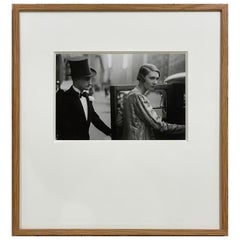
Remie Lohse was born in Puerto Rico, studied painting in Denmark, and settled in New York in 1928, where he became a professional photographer. In the 1930s he was a freelancer who specialized in advertising and magazine features, and shot covers for Vogue. If he often focused on the high life, seen in this couple stepping out on the town, he also shot humble subjects. He was more interested in his art than a particular milieu, and many of his photographs are little masterpieces. His contemporary Gilbert Seldes, the noted Vanity Fair media critic and “public intellectual” (not to mention father of actress Marian Seldes), featured Lohse in his 1934 book 'This is New York, The First Modern Photographic Book of New York.' In 1939 Lohse came out with his own book titled 'The Miniature Camera in Professional Hands.'
Our photograph was one of three shot by Lohse for a 1934 Vogue article titled “High Spots and Low Music." If the photograph (image size 4 1/4" x 6") show a couple making the nocturnal rounds of Manhattan restaurants, bars, and jazz clubs, the story itself also covers the daytime meeting places of the ladies who lunch. The twist is that Lohse’s model was the author herself, Elena Mumm Thornton, and her husband James Worth...
Category
Vintage 1930s American Art Deco Photography
Materials
Paper
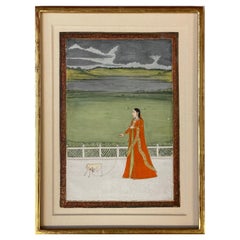
Mughal Indian Miniature
Located in New York, NY
This Mughal miniature was painted at one of the princely courts of India. It depicts a raven-haired princess in a gold-trimmed saffron-colored silk sari. Under a glowering evening sky she dawdles on a white marble terrace, with a pet fawn on a leash, before a landscape dotted with buildings nestled amongst trees beyond a river. Her hair, falling loosely about her shoulders, rather than carefully dressed on her head, indicates that she is a maiden. The overall mood is one of expectancy. Perhaps walking a pet and catching an evening breeze is a pretext to escape palace scrutiny for a lovers’ assignation. In Mughal India tender sentiments were a bridge to the erotic – and if this seems contradictory, so too is the balance of realism and caricature, and naturalism with the schematic. Both are hallmarks of miniatures painted in this place and time.
The earliest Mughal Indian miniatures date to the 16th century. They were inspired by those painted at the refined Moslem courts of the neighboring Persian empire. They incorporated figures in spite of the Moslem faith’s proscription against depicting the human form. Such was the nature of sophisticated courtly life everywhere that beauty and pleasure trumped systems of morality. This was no less the case at the provincial Indian courts, where our miniature, marked by a charming pictorial naiveté, was most likely painted. Yet the artist was undeniably accomplished. His command of perspective, introduced by Jesuit missionaries in the 17th century, is seen in the landscape, which rolls back to a distant horizon, contrary to the flat two-dimensional ones following Indian-painting traditions. And if Mughal artists were influenced by Western art, the compliment was returned by Rembrandt and Sir Joshua Reynolds, among others, who collected Indian miniatures (as did, perhaps, Giovanni Bellini who painted in Mughal style the famous miniature of a Persian man...
Category
Antique 18th Century Indian Anglo-Indian Paintings
Materials
Paper
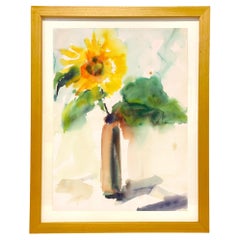
Joe Eula Watercolor of a Sunflower
By Joe Eula
Located in New York, NY
From the 1950s to the 80s, Joe Eula cut quite a figure on the New York scene as a graphic, costume, fashion, stage-set, and film-set designer, as well as a stylist, party giver, and, briefly, a model agency macher. In addition, he was an artist. You could say that Eula was the art director extempore of Manhattan. And if you’ve never heard of Eula (or hadn’t before David Pittu played him in the recent Netflix Halston series), it’s because he was famous as an eminence grise, to employ a contradiction in terms. That’s why Andy Warhol called him, in typical Warholian hyperbole, “the most important man in New York.”
Eula came from a hardscrabble background in South Norwalk, Connecticut. After serving in World War II, he took classes on the GI Bill at the Art Students League, and formed a partnership with photographer Milton Greene to produce features for Life and Look magazines, and a couple of films, with Greene behind the camera, and Eula painting backdrops and styling. On his own, Eula illustrated Eugenia Sheppard’s famous newspaper fashion column, did illustration work for Vogue and Harper’s Bazaar, designed ballet costumes and sets for Jerome Robbins, an album cover for Miles Davis, and a benefit invitation for Cesar...
Category
Vintage 1980s American Modern Contemporary Art
Materials
Paper
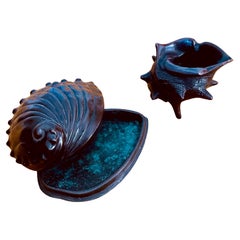
Two Japanese Bronze Shells
Located in New York, NY
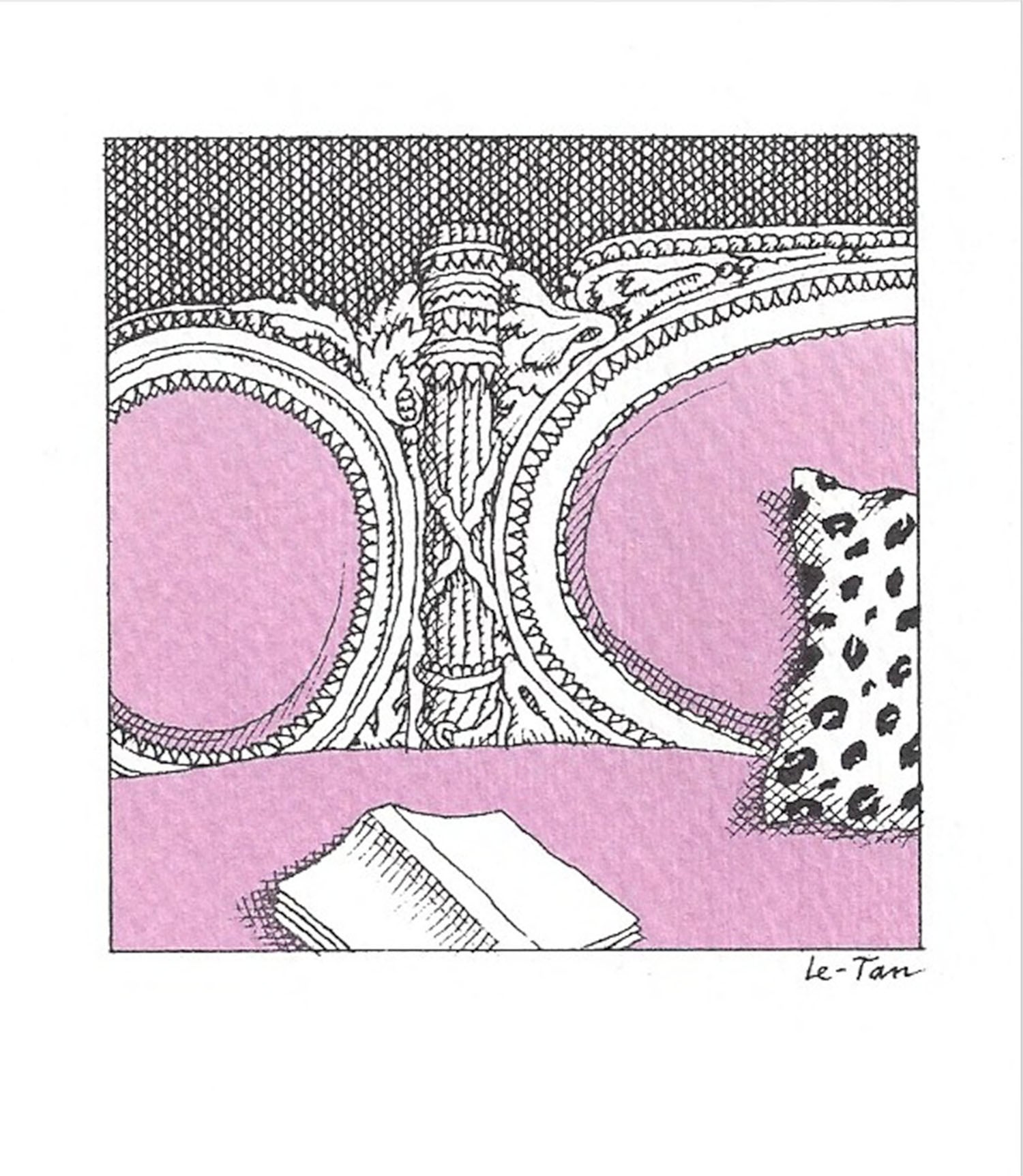
These charming bronze shells were cast in Japan in the 19th century. They lived for many years in the collection of the Paris artist Pierre Le-Tan. One of...
Category
Antique 19th Century Japanese Edo Scholar's Objects
Materials
Bronze
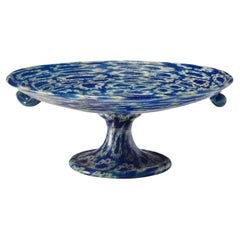
Salviati Miniature Glass Tazza
By Antonio Salviati
Located in New York, NY
In 19th-century Venice, glassmaking studios were pokey little family affairs. The craft was passed on from father to son, and conducted in a studio, with an assistant or two, and per...
Category
Antique 1880s Italian Classical Roman Urns
Materials
Glass
1930s Italian Bench
By Pier Luigi Colli
Located in New York, NY
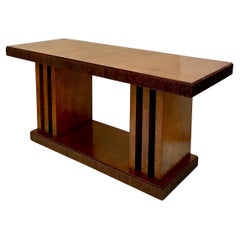
This 1930s Italian bench is so over-scaled, and monumental in appearance, that it seems to have been made for the large room it was destined, rather than the comfort of a typical sitter. As such, it would function equally well as a low side table or a high cocktail table. We’ll allow the buyer to determine its use.
The designer was Pierluigi Colli, and the fabricator Martinotti, the Turin furniture and interior decorating firm that was established in 1831, and exhibited at the 1876 Philadelphia Centennial Exhibition and the 1904 St Louis World’s Fair. Colli’s family owned a textile company that supplied Martinotti with upholstery fabrics, suggesting nepotism had something to do with his being hired as the firm's director in 1926. Nevertheless, he proved himself worthy as a designer and a businessman. Having studied in Paris at the Ecole des Arts Decoratifs, he befriended leading French designers, and arranged for Martinotti to retail Lalique glass and Jean Perzel lighting. In addition, the quality of their work, and Colli’s dedication to the modern design movement, prompted Carlo Mollino, Gio Ponti, and Gino Levi-Montalcini, among others, to have Martinotti fabricate some of their furniture. Colli’s claim to fame, however, is his own work as a designer, and his ability to master the vocabularies of every trend from Art Deco to midcentury modern.
During the Great Depression, when nearly every nation floundered economically, fascist Italy...
Category
Vintage 1930s Italian Modern Benches
Materials
Other
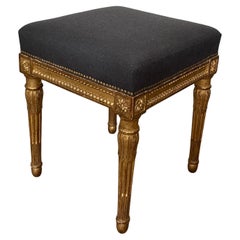
Louis XVI Stool by Claude Sené
By Claude I Sené
Located in New York, NY
One could be forgiven for thinking Claude Sené was a poor speller and dyslexic, since his stamp has a ‘G’ initial for Claude, and an inverted ‘N’ in Sené. ...
Category
Antique 1770s French Louis XVI Benches
Materials
Wood
More About R. Louis Bofferding Decorative and Fine Art