Items Similar to Derby Porcelain Figure of Neptune and Dolphin on a Shell, ca 1785
Want more images or videos?
Request additional images or videos from the seller
1 of 17
Derby Porcelain Figure of Neptune and Dolphin on a Shell, ca 1785
$1,680
$2,10020% Off
£1,262.92
£1,578.6520% Off
€1,464.12
€1,830.1520% Off
CA$2,345.54
CA$2,931.9320% Off
A$2,627.13
A$3,283.9120% Off
CHF 1,366.98
CHF 1,708.7320% Off
MX$31,906.32
MX$39,882.8920% Off
NOK 17,329.87
NOK 21,662.3420% Off
SEK 16,352.03
SEK 20,440.0420% Off
DKK 10,924.42
DKK 13,655.5320% Off
Shipping
Retrieving quote...The 1stDibs Promise:
Authenticity Guarantee,
Money-Back Guarantee,
24-Hour Cancellation
About the Item
This is a stunning porcelain figure of Neptune with a dolphin standing on a sea shell, made by Derby around the year 1785. The figure is in beautiful original condition.
We have one other Neptune figure from 1765, please see separate listing.
The Derby Porcelain factory has its roots in the late 1740s, when Andrew Planché, a Walloon Huguenot refugee, started making simple porcelain toys shaped like animals in his back yard. In 1756 Staffordshire enameller William Duysbury and banker John Heath started a new porcelain factory with Planché and this was to grow out to the largest factory of its time, buying up the bankrupted Chelsea and Bow factories, as well as the stock of several other workshops including that of James Giles. The combination of various traditions, porcelain making skills and sophisticated clients enabled Duesbury to create one of the best porcelain factories of the 18th and 19th Centuries, which after many ups and downs is still operative today.
The Neptune figure was first brought out in about 1752, and then in various versions but never very different. This version has the number 300 and was made around 1785. It is a rare one as most Neptunes of this era were either standing on rocky shell encrusted mounds or on a shallow mound, but this one stands on the large shell that its original creator, Agostino Carlini, had given it. The original Neptune by Carlini was recently sold in the white at Bonhams for £8,500.
The bearded Neptune, crowned with an ochre and gilt crown, is standing naked except a large fluttering cape, pink on the inside and pale yellow with blue and red floral sprays on the outside; his left hand reached up to hold a trident, which has gone missing. The dolphin is scaled in deep green with huge yellow and red rings around its eyes; water spouting out of his toothy mouth. Both Neptune and the dolphin are placed upon a white shell with gilt icicle rims.
Figures like these were used to adorn the dinner table when dessert was served; groups of figures could serve to express something about the host, the guests, or to direct the conversation. Allegory was a popular pastime and every well-respected society figure was expected to be able to identify the seasons, trades, elements, senses or Greek and Roman gods and goddesses.
The item is marked with an inscribed "D"; "No 300"; "Second", which indicates that this was the middle of three available sizes; and some illegible initials, possibly a workman's cypher. It also has three vague "patch marks".
This figure is described on page 348 in Peter Bradshaw's "Derby Porcelain Figures 1750-1848", although he indicates that it usually had a shallow mound base.
Condition report: The figure is mostly in beautiful original condition with some very minor age related wear. It has slight restoration to right foot toes, the hem of the cape in the centre back. It has some firing cracks in the tail of the dolphin and left leg of Neptune; these are from production and not damage.
Antique British porcelain is never perfect. Kilns were fired on wood or coal in the 1700s, and this meant that china from that period can have some firing specks from flying particles. British makers were also known for their experimentation, and sometimes this resulted in technically imperfect results. Due to the shrinkage in the kiln, items can have small firing lines or develop crazing over time, which should not be seen as damage but as an imperfection of the maker's recipes, probably unknown at the time of making. Items have often been used for many years and can have normal signs of wear, and gilt can have signs of slight disintegration even if never handled. I will reflect any damage, repairs, obvious stress marks, crazing or heavy wear in the item description but some minor scratches, nicks, stains and gilt disintegration can be normal for vintage items and need to be taken into account.
There is widespread confusion on the internet about the difference between chips and nicks, or hairlines and cracks. I will reflect any damage as truthfully as I can, i.e. a nick is a tiny bit of damage smaller than 1mm and a chip is something you can easily see with the eye; a glazing line is a break in the glazing only; hairline is extremely tight and/or superficial and not picked up by the finger; and a crack is obvious both to the eye and the finger.
Dimensions: Height 16cm (6.25").
- Creator:Derby (Maker)
- Dimensions:Height: 6.25 in (15.88 cm)Width: 4.25 in (10.8 cm)Depth: 3.25 in (8.26 cm)
- Style:Rococo (Of the Period)
- Materials and Techniques:
- Place of Origin:
- Period:1780-1789
- Date of Manufacture:circa 1785
- Condition:Repaired: some very minor repairs to one foot and rim of cape. Wear consistent with age and use. In beautiful near-original condition with very minor wear and restoriation.
- Seller Location:London, GB
- Reference Number:Seller: A-DER263b1stDibs: LU4805132174382
About the Seller
5.0
Gold Seller
Premium sellers maintaining a 4.3+ rating and 24-hour response times
Established in 2016
1stDibs seller since 2019
225 sales on 1stDibs
Typical response time: 2 hours
- ShippingRetrieving quote...Shipping from: London, United Kingdom
- Return Policy
Authenticity Guarantee
In the unlikely event there’s an issue with an item’s authenticity, contact us within 1 year for a full refund. DetailsMoney-Back Guarantee
If your item is not as described, is damaged in transit, or does not arrive, contact us within 7 days for a full refund. Details24-Hour Cancellation
You have a 24-hour grace period in which to reconsider your purchase, with no questions asked.Vetted Professional Sellers
Our world-class sellers must adhere to strict standards for service and quality, maintaining the integrity of our listings.Price-Match Guarantee
If you find that a seller listed the same item for a lower price elsewhere, we’ll match it.Trusted Global Delivery
Our best-in-class carrier network provides specialized shipping options worldwide, including custom delivery.More From This Seller
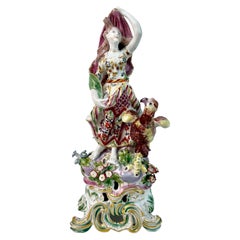
View AllBow Porcelain Figure of Juno with Eagle 'Jupiter', Rococo Ca 1765
By Bow Porcelain
Located in London, GB
This is a very rare and impressive large figure of Juno with an eagle, made by the Bow Porcelain factory in about 1765. This figure formed part of a series of the Four Elements, with...
Category
Antique 1760s English Rococo Figurative Sculptures
Materials
Porcelain
$2,400 Sale Price
20% Off
Free Shipping
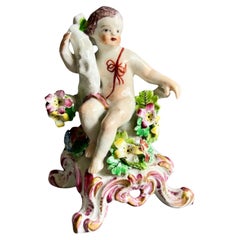
Bow Porcelain Figure of Boy Putto on C-Scroll Base, Georgian circa 1760
By Bow Porcelain
Located in London, GB
This is a wonderful little figure of a boy or putto made by the Bow Porcelain factory in about 1760.
The Bow Porcelain Factory was one of the first potteries in Britain to make soft...
Category
Antique 1760s English Rococo Figurative Sculptures
Materials
Porcelain
$548 Sale Price
45% Off
Free Shipping
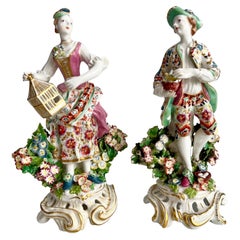
Bow Pair of Porcelain Figures of Liberty & Matrimony, Rococo 1760-1764
By Bow Porcelain
Located in London, GB
This is a fabulous pair of figures of Liberty and Matrimony made by the Bow Porcelain factory between 1760 and 1764. These figures were a popular pair portraying marriage.
The bow...
Category
Antique 1760s English Rococo Figurative Sculptures
Materials
Porcelain
$2,960 Sale Price / set
20% Off
Free Shipping
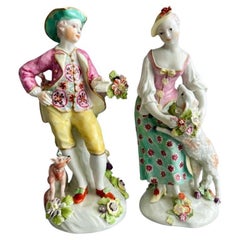
Derby Exceptional Pair of Porcelain Figures of the Garland Shepherds, ca 1765
By Derby
Located in London, GB
This is a beautiful pair of Derby figures called the "Garland Shepherds", made in about 1765. The pair is one of Derby's most famous figure pairs and it bears the catalogue number E2...
Category
Antique 1760s English Rococo Figurative Sculptures
Materials
Porcelain
$1,160 Sale Price / set
20% Off
Free Shipping
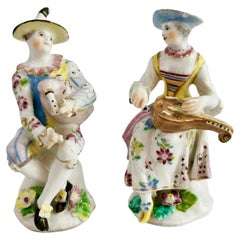
Bow Pair of Porcelain Figures, Arlecchino and Columbina, Rococo ca 1758
By Bow Porcelain
Located in London, GB
This is a wonderful pair of figures of Arlecchino and Columbina, made by the Bow Porcelain factory in about 1758. These figures formed part of a series of the Commedia dell'Arte, a very popular series of theatrical figures that served as decoration at the dinner table in the 18th Century.
The Bow Porcelain Factory was one of the first potteries in Britain to make soft paste porcelain, and most probably the very first to use bone ash, which later got perfected by Josiah Spode to what is now the universally used "bone china". Bow was the main competitor of the Chelsea Porcelain Factory, but where Chelsea made very fine slipcast porcelain, Bow made a different soft paste porcelain that tended to be softer and could be pressed into moulds. Bow served a larger public generally at lower prices. The factory was only in operation between 1743 and 1774, after which the tradition got incorporated into some of the later famous potteries such as Worcester and Derby.
These figures were used to adorn the dinner table when dessert was served; groups of figures served to express something about the host, the guests, or to direct the conversation. The Italian Commedia Dell'Arte, a comical form of masked theatre, was very popular in those days and Bow copied many figures of the German Meissen series that were brought out in the decades before.
This pair dates from about 1758, which was at the height of Bow's ability to make beautiful figurines often copied from Chelsea or Meissen. The pair is modelled after a Meissen pair by Kaendler. The porcelain is translucent with a beautiful milky glaze - Bow was probably the first pottery using bone in its porcelain recipe. Arlecchino (Harlequin) is playing the bagpipes, dressed in an odd costume of mismatched chintz and playing cards and wearing a funny black trumpet...
Category
Antique 1750s English Rococo Figurative Sculptures
Materials
Porcelain
$2,880 Sale Price / set
20% Off
Free Shipping
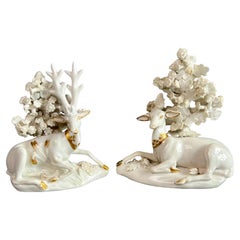
Bloor Derby Pair of Porcelain Figures, Stag and Doe, circa 1765-1820
By Bloor Derby, Derby
Located in London, GB
This is a very charming pair of porcelain figures of a stag and a doe, probably cast by Derby in about 1760 and decorated by Bloor Derby in 1820. The figures are a simple white porce...
Category
Antique 1760s English Rococo Figurative Sculptures
Materials
Porcelain
$668 Sale Price / set
20% Off
Free Shipping
You May Also Like
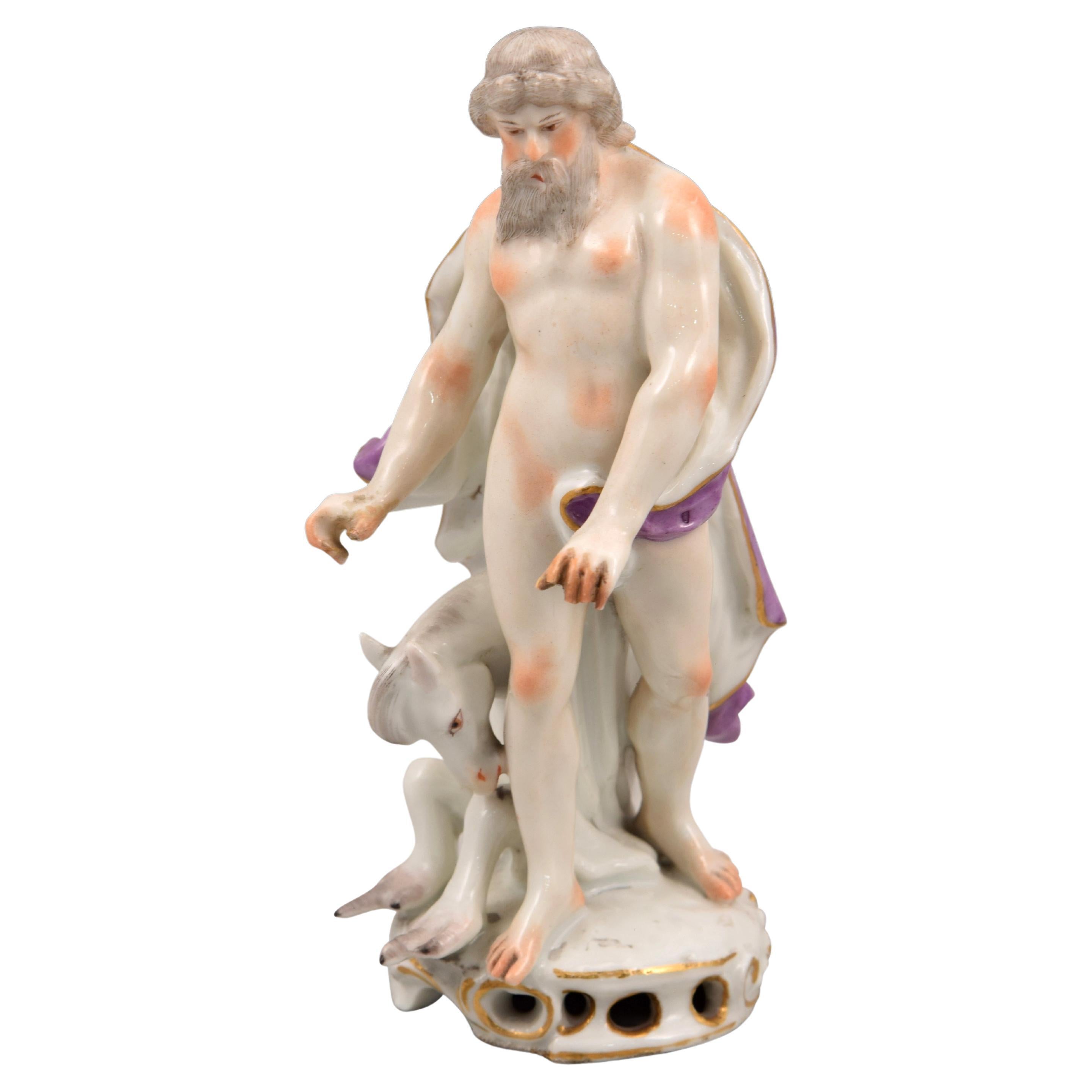
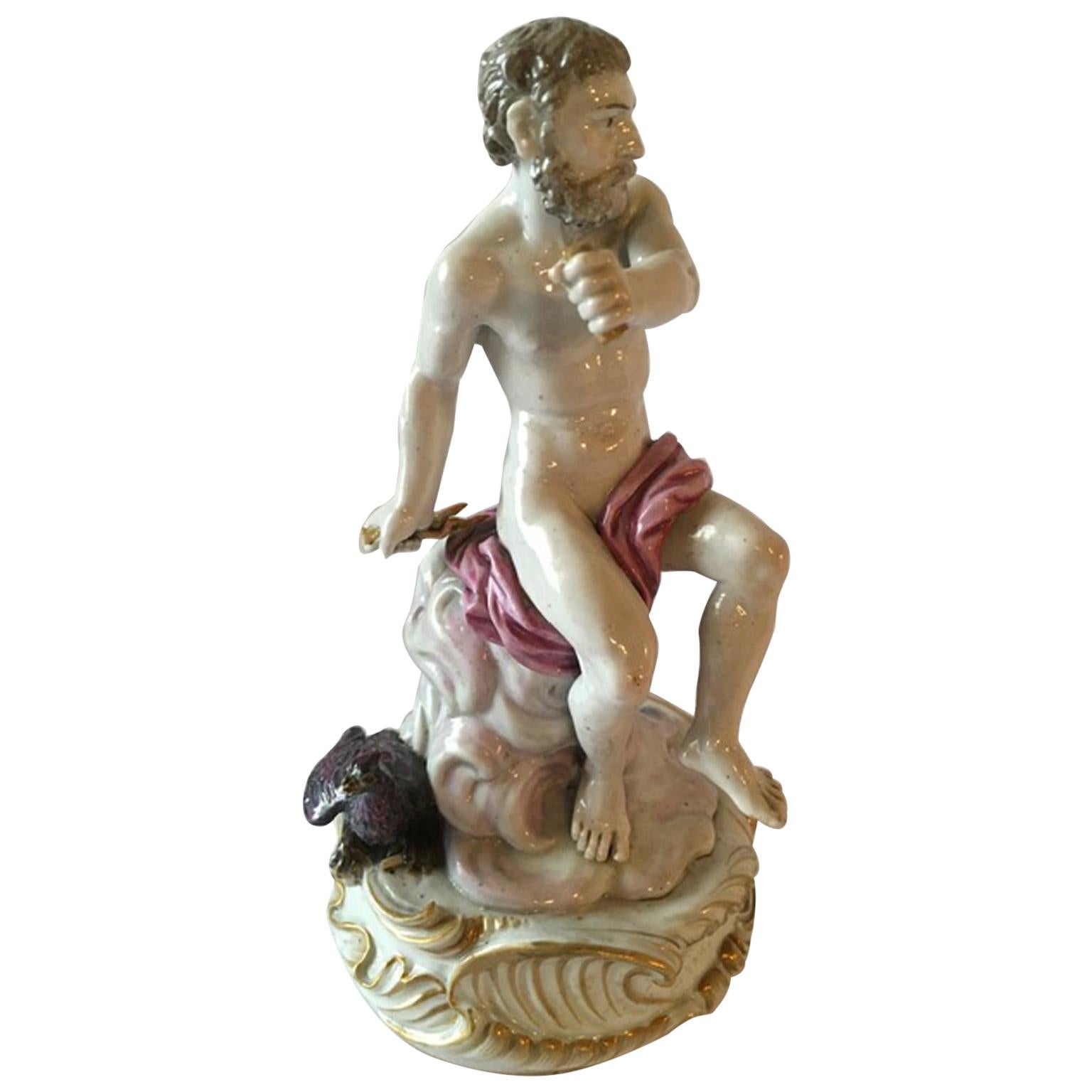
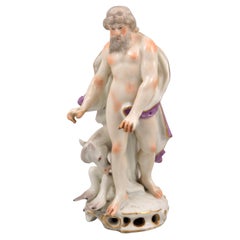
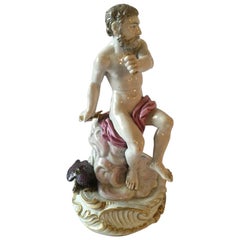
Poseidon or Neptune with hippocampus. Glazed porcelain. Europe, 19th century.
Located in Madrid, ES
Poseidon or Neptune with hippocampus. Glazed porcelain. Europe, 19th century.
Enamelled porcelain figurine with a circular base, decorated with openwork elements and rococo-inspired motifs enhanced with golden touches, which presents a semi-nude, bearded male figure, standing, with a purple and white cloak...
Category
Antique 19th Century European Neoclassical Revival Porcelain
Materials
Porcelain
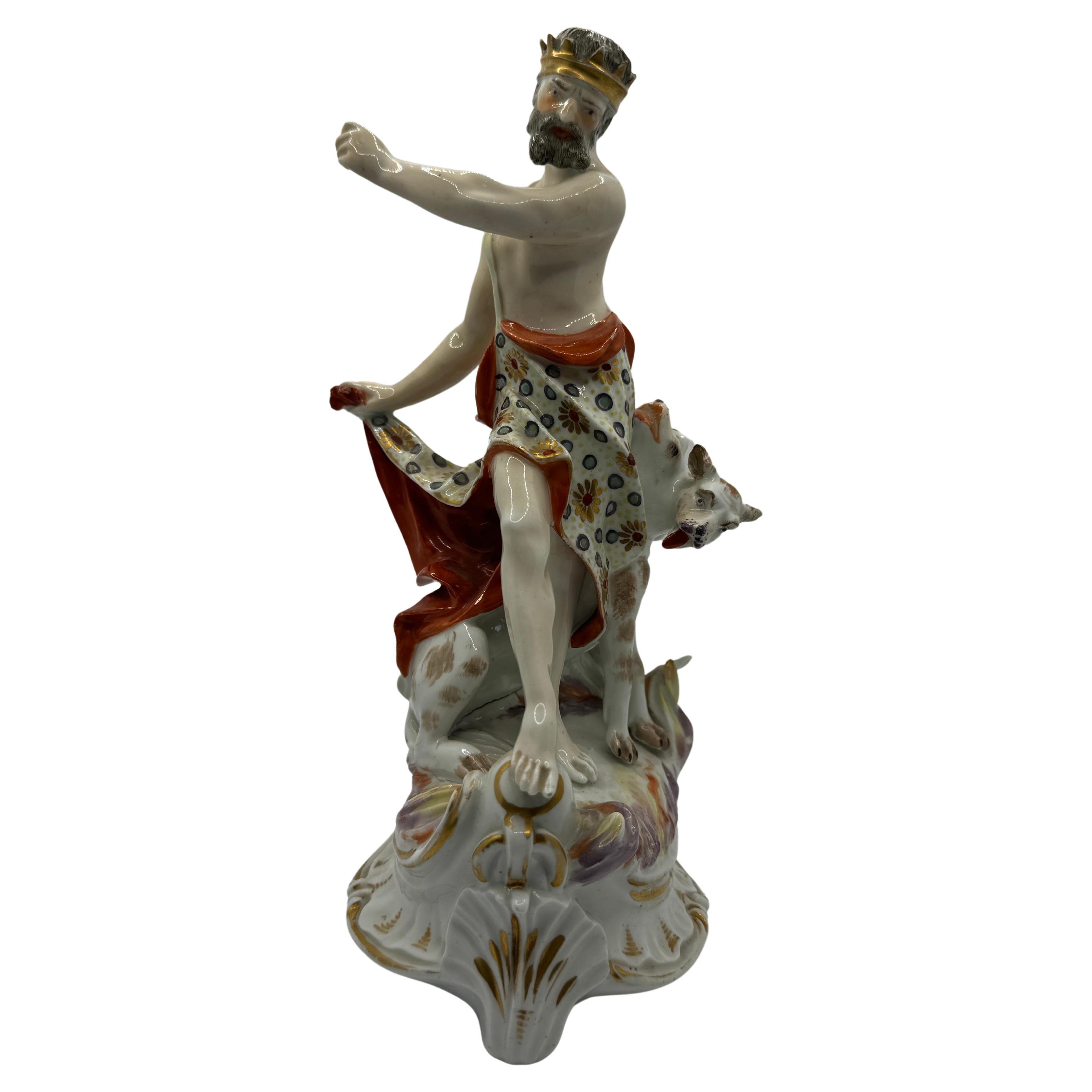
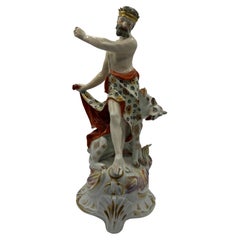
18th Century Derby Porcelain Figure Group of Pluto and Cerberus
By Derby
Located in Basildon, GB
18th Century Derby Porcelain Figure Group of Pluto and Cerberus, spotted red lined drape on gilt scroll base, circa 1770
Category
Antique Late 18th Century English Rococo Porcelain
Materials
Porcelain
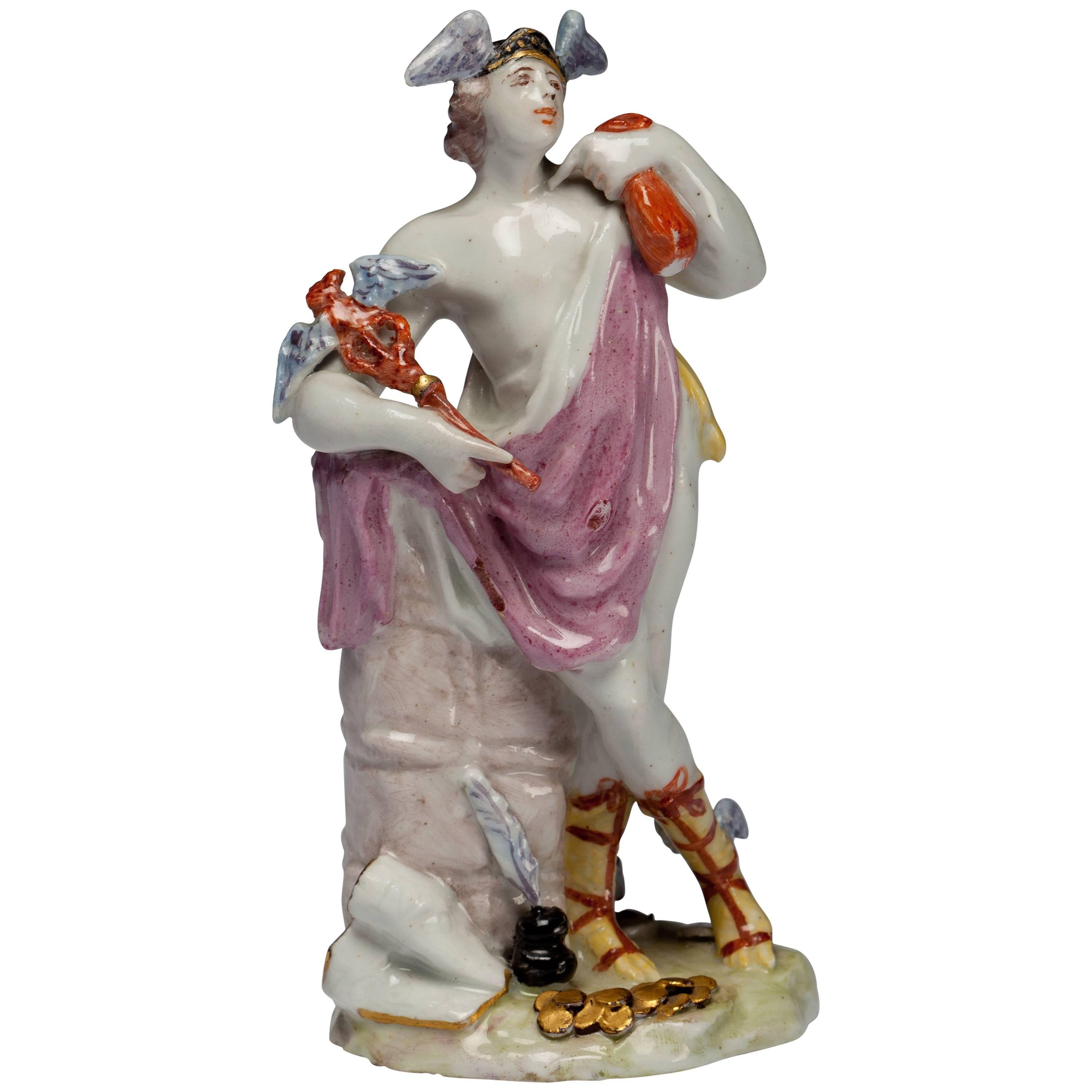
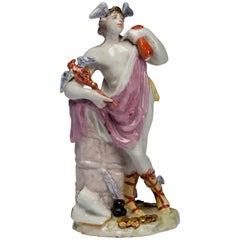
Figure, Mercury, Bow Porcelain, circa 1748
By Bow Porcelain
Located in Melbourne, Victoria
He wears a winged helmet and sandals, a loosely draped pink, white, and yellow washed cloak over a short tunic, and leans arrogantly against bales, his message sack over his left sho...
Category
Antique Mid-18th Century English Neoclassical Figurative Sculptures
Materials
Porcelain
$8,400 Sale Price
30% Off
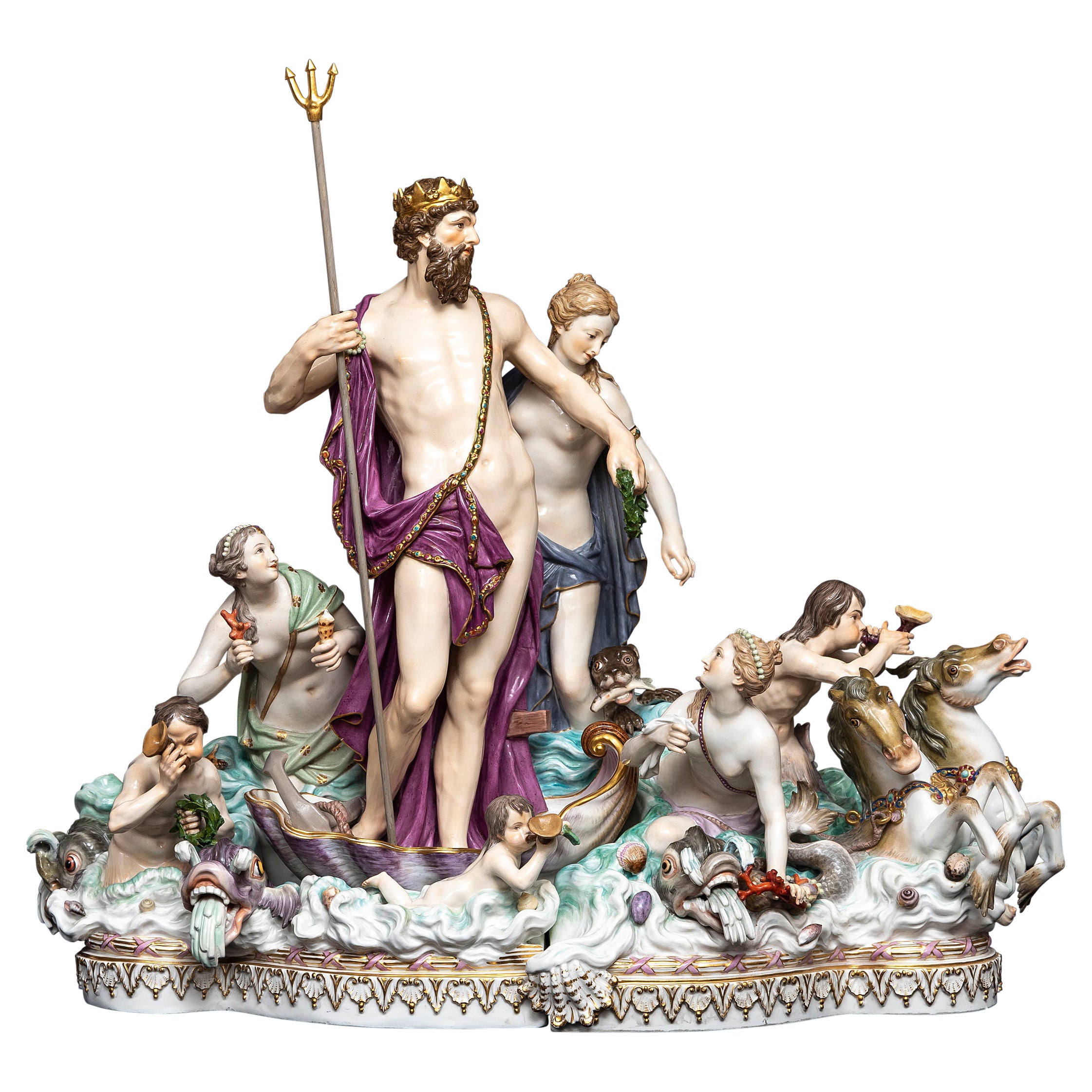
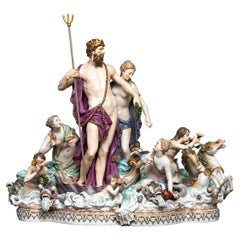
A Large Meissen Porcelain Mythological Figure Centerpiece, *Neptune and Thetis*
By Meissen Porcelain
Located in New York, NY
An exceptionally rare and large Meissen porcelain mythological figure centerpiece titled *Neptune and Thetis*, produced in the late 19th century by the renowned Meissen porcelain man...
Category
Antique 1880s German Rococo Porcelain
Materials
Porcelain
Europe 18th Century Attribuited to Meissen Porcelain Giove Figurine
By Meissen Porcelain
Located in Brescia, IT
Elegant 18th century porcelain figurine of Giove, attribuited to Meissen. As to put in evidence the armony and beauty of colors.
With certificate of authenticity.
Category
Antique Mid-18th Century German Baroque Porcelain
Materials
Porcelain
$1,814 Sale Price
20% Off
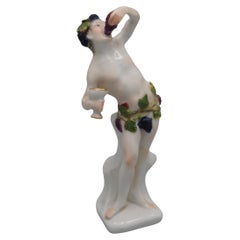
Meissen - figurine of a Bacchant by Kaendler, 1740
By J.J. Kaendler, Meissen Porcelain
Located in DELFT, NL
Early Meissen figurine of a bacchant eating from a grapes, as an allegory of autumn.
Model by Joachim Kaendler.
unmarked, ca 1740-60.
Category
Antique Mid-18th Century German Rococo Porcelain
Materials
Porcelain
More Ways To Browse
Large Shells
Antique Shell Sign
Painted Sea Shells
Gilt Dolphin
Antique Derby Porcelain
Used Neptune Furniture
19th Century Shell Sculpture
Greek Red Figure
Blue Dolphin
White Porcelain Enamel Table
Dolphin Figure
Staffordshire Enamel
Antique Crown Derby
Bankers Table
Shell Encrusted
18th Century Bow Porcelain
Vintage Bow Ring
Antique Chelsea Porcelain