Items Similar to Henry Clay Papier Mâché Lacquered Tray and Base
Want more images or videos?
Request additional images or videos from the seller
1 of 17
Henry Clay Papier Mâché Lacquered Tray and Base
$6,500
£4,973.01
€5,687.41
CA$9,255.43
A$10,024.75
CHF 5,309.55
MX$121,284.41
NOK 66,749.26
SEK 62,224.49
DKK 42,476.20
About the Item
Georgian Opulence: Henry Clay's Lacquered Papier-mâché Tray on Faux Bamboo Stand
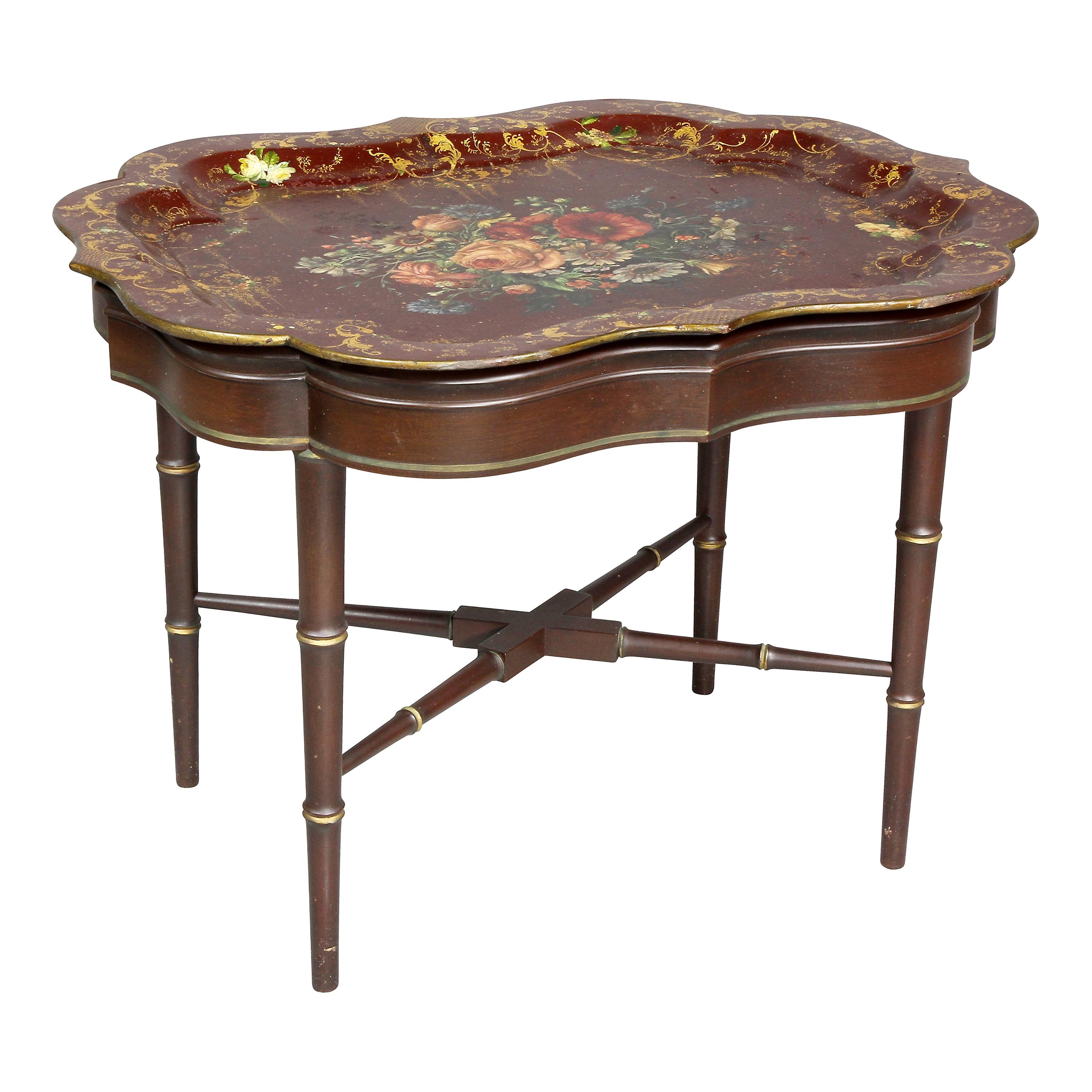
This striking piece is a Burgundy-Ground Lacquered Papier-mâché Tray on a Faux Bamboo Stand, dating to circa 1815. The tray is a product of the renowned English manufacturer Henry Clay, whose patented process revolutionized the use of papier-mâché.
The Tray: The broad, scalloped tray is coated in a deep, rich burgundy lacquer. The surface is exuberantly decorated with a dense, all-over pattern of stylized natural forms: luxuriant gilt leaves, swirling acanthus scrolls, and various coloured and gilt butterflies. The decoration is executed in the decorative tradition known as Japanning, a European imitation of Asian lacquerwork that was highly fashionable in Georgian England. The rich gold and contrasting deep red create a sense of lavish opulence suited for a wealthy domestic interior.
The Stand: The tray rests upon a contemporary double-legged stand designed to mimic bamboo. The stand is finished in a matching burgundy lacquer, with gilded rings emphasizing the joints of the 'bamboo' sections, reflecting the enduring 18th and 19th-century taste for Chinoiserie.
Mark & Dimensions:
Mark: Impressed: CLAY/KING ST/COV GARDEN (King Street, Covent Garden, London).
Dimensions: Tray: 24 inches wide x 18 1/4 inches deep. Overall Height (with stand): 22 inches (60.96cm wide x 46.36cm deep x 55.88cm high).
The combination of Henry Clay's durable material and the elegant Rococo-revival decoration makes this a highly characteristic piece of early 19th-century English decorative art.
Historical Context: Henry Clay and the Rise of English Papier-mâché
The history of fine English papier-mâché is indelibly linked to Henry Clay (1735–1812), who is credited with transforming the material from a fragile novelty into a robust medium capable of imitating wood and even competing with the quality of imported Asian lacquers.
The Patented Process: Clay, originally an apprentice to the well-known bookbinder and typefounder John Baskerville, took over Baskerville's japanning business in Birmingham and later patented his breakthrough invention in 1772. This process involved gluing specially prepared sheets of paper under heat and high pressure to create thick, laminated panels that were far tougher and more heat-resistant than earlier methods. This "Clay's Patent Papier-mâché" made the material viable for larger, more permanent objects like carriage panels and, most famously, durable tea trays and furniture.
The Market and Style: After setting up a warehouse in King Street, Covent Garden, London, Clay catered to the aristocratic and wealthy clientele who desired high-end decorative accessories. The taste for Japanning—European lacquering inspired by Asian work—was a major driver of his success. While the tray's decorative style is based on Chinese/Japanese lacquer, the scrolling acanthus leaves are firmly rooted in the European Rococo and its later revival, blending Eastern technique with Western aesthetics.
By the time this piece was made, shortly after Clay's death, his original patent had expired, leading to a boom in papier-mâché manufacturing, particularly in the Birmingham/Wolverhampton area. Pieces bearing Clay's mark, however, retain a status associated with the highest quality and the pioneering phase of the English industry.
Reference
Henry Clay's Patent and the Japanning Tradition: Clay's method of creating tough, heat-resistant papier-mâché panels by gluing specially prepared paper under heat and pressure allowed English manufacturers to successfully imitate highly prized lacquered pieces from Japan, leading to the coining of the term "japanning."
- Creator:Henry Clay (Manufacturer)
- Dimensions:Height: 22 in (55.88 cm)Width: 24 in (60.96 cm)Depth: 18.25 in (46.36 cm)
- Style:Regency (Of the Period)
- Materials and Techniques:
- Place of Origin:
- Period:
- Date of Manufacture:1815
- Condition:Wear consistent with age and use. very slight ware on leg of the base.
- Seller Location:Downingtown, PA
- Reference Number:Seller: Ref: ny7359-cimr1stDibs: LU861017599912
About the Seller
5.0
Recognized Seller
These prestigious sellers are industry leaders and represent the highest echelon for item quality and design.
Gold Seller
Premium sellers maintaining a 4.3+ rating and 24-hour response times
Established in 1916
1stDibs seller since 2009
431 sales on 1stDibs
Typical response time: 1 hour
Associations
The Art and Antique Dealers League of AmericaAntiques Associations Members
- ShippingRetrieving quote...Shipping from: Downingtown, PA
- Return Policy
More From This Seller
View AllChinese Export Black Lacquered Writing Table or Desk with Gilt Landscapes
Located in Downingtown, PA
Chinese Export Black Lacquered Writing Desk with Gilt Landscape and Floral Decoration,
Canton,
Early 19th Century
An early 19th century Chinese Export writing desk, produced for the...
Category
Antique Early 19th Century Chinese Chinese Export Desks and Writing Tables
Materials
Wood, Lacquer
Piero Fornasetti Coffee Table-Neoclassical Bordo Bassorilievo Pattern
By Piero Fornasetti
Located in Downingtown, PA
Piero Fornasetti Bordo Bassorilievo Pattern Coffee Table
Circa 1955
Dimensions: 17-3/4 in H × 39-1/4 in W × 19-5/8 in D (45.1 × 99.7 × 49.8 cm)
Mark: Fornasetti Milano label on u...
Category
Mid-20th Century Italian Mid-Century Modern Coffee and Cocktail Tables
Materials
Wood
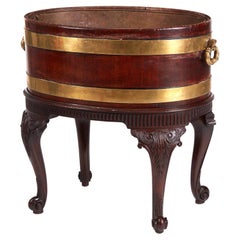
George III Brass Bound Mahogany Cellaret with Liner on Beautifully Carved Stand
By Thomas Chippendale
Located in Downingtown, PA
Flowers or Champagne? Or Both?
George III Brass Bound Mahogany Wine Cooler or Cellaret,
Third-quarter of 18th century
The George III brass-bound mahogany wine cooler or cellar...
Category
Antique Late 18th Century English George III Planters and Jardinieres
Materials
Brass
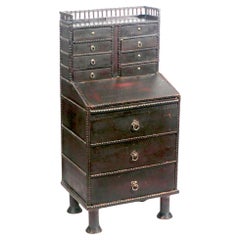
A Cabinet of Curiosities: Diminutive Tramp Art Secretary Desk
Located in Downingtown, PA
A Cabinet of Curiosities: Diminutive Tramp Art Secretary Desk
________________________________________
This remarkable Tramp Art Secretary Desk is ...
Category
Early 20th Century American Folk Art Desks
Materials
Wood
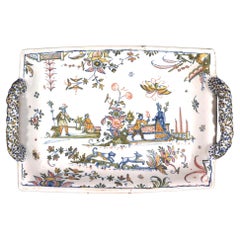
Early 18th-century Marseille Faïence Chinoiserie Footed Tray
Located in Downingtown, PA
Marseille Faïence Chinoiserie Footed Tray (Bannette),
Attributed to the Leroy Workshop,
Circa 1730
The center with two vignettes of courting couples separated by a central flowering...
Category
Antique Early 18th Century Rococo Delft and Faience
Materials
Faience
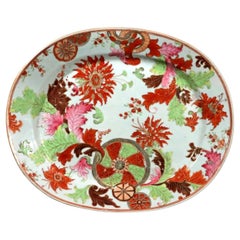
18th-century Chinese Export Pseudo Tobacco Leaf Oval Dish
Located in Downingtown, PA
Opulent Botanicals: Chinese Export "Pseudo Tobacco Leaf" Oval Dish,
Circa 1765
This magnificent Chinese Export porcelain oval dish, dating from circa 1765, represents a bold and hig...
Category
Antique 1760s Chinese Chinese Export Platters and Serveware
Materials
Porcelain
You May Also Like
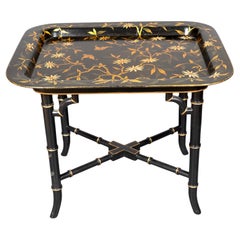
Victorian Papier Mache Tray Table
Located in Essex, MA
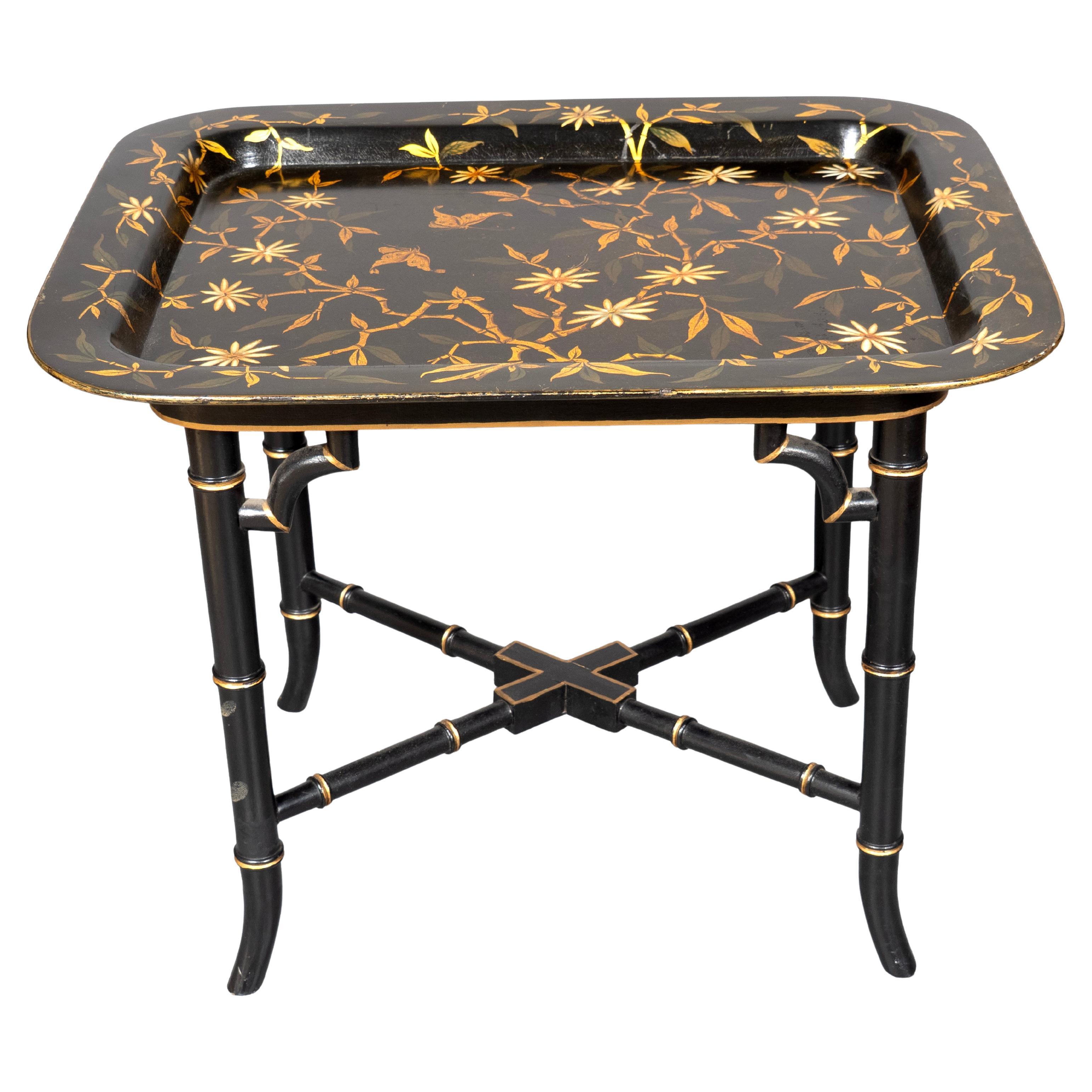
Rectangular tray with trailing flower decoration. The faux bamboo reproduction base with X form stretcher.
Category
Antique 1870s English Late Victorian Tables
Materials
Papercord, Wood
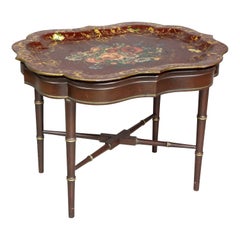
Victorian Papier Mache Tray Table
Located in Essex, MA
Scalloped shape reddish brown tray with vibrant floral design, later faux bamboo base. Provenance; Estate of John Volk. Noted Palm Beach architect.
Category
Antique Mid-19th Century English Victorian Tray Tables
Materials
Wood
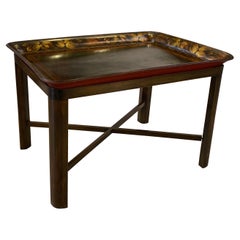
Antique 19 Century English Papier-mâché Tray Table
Located in Lambertville, NJ
A circa 1870's Papier Mache had gilt and decorated tray with a later custom dark wood base. The tray table with the tray fitting into the custom base. Can be removed and used for ser...
Category
Antique 1870s English Regency Tray Tables
Materials
Hardwood
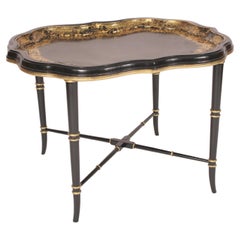
English Regency Style Paper Mache Tray Table
Located in Laguna Beach, CA
Antique English Regency style paper mache tray made by B. Watson & Co, circa 1900. Now on an English Regency wood, lacquer and painted stand made circa late 20th century.
Category
Antique Early 1900s English Regency End Tables
Materials
Gold Leaf
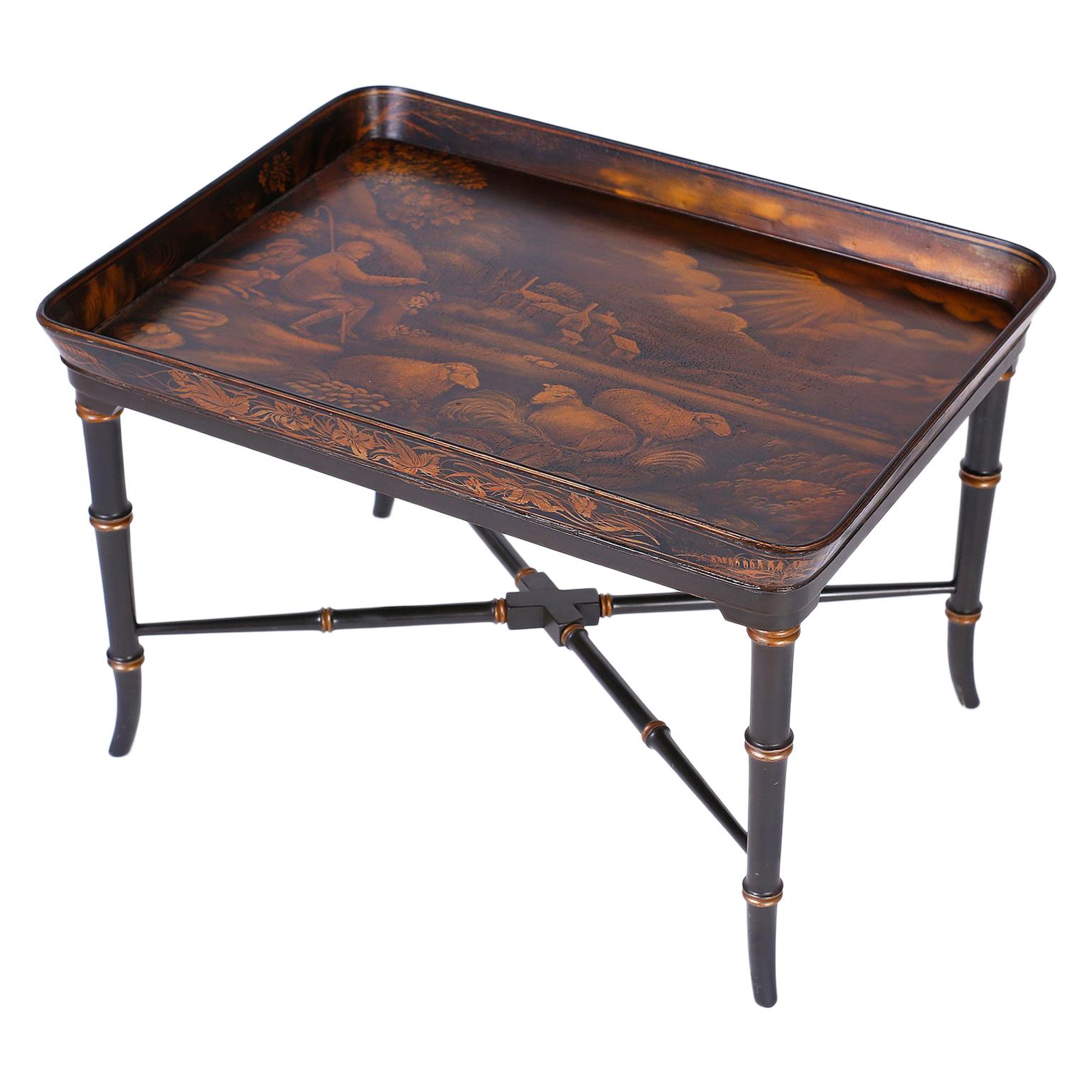
English Hand Painted Lacquered Papier Mâché Tray Table
Located in Palm Beach, FL
Antique English tray table with a lacquered paper mâché tray painted with a landscape depicting a shepherd and his flock in the countryside ...
Category
Antique Early 19th Century English Regency Tray Tables
Materials
Faux Bamboo
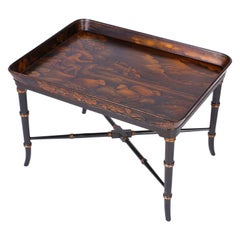
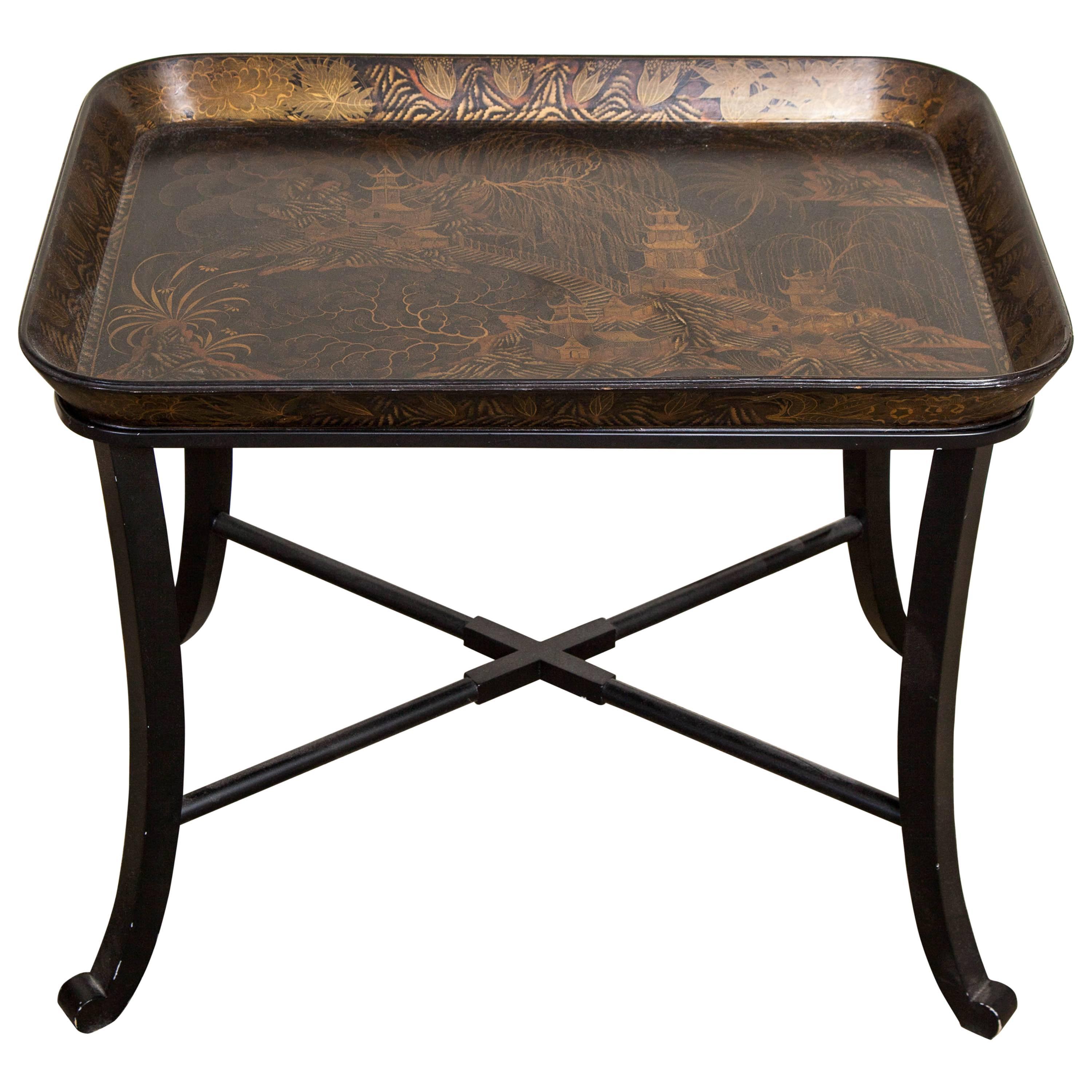
Regency Black and Gilt Papier Mache Lacquer Tray with Later Stand, 19th Century
By Henry Clay
Located in Spencertown, NY
The Chinoiserie decorated black and gilt rectangular tray stamped on the reverse "Clay, King St. Covent Garden.”.
Category
Antique Early 19th Century English Regency Tray Tables
Materials
Lacquer
$2,660 Sale Price
46% Off
More Ways To Browse
Papier Mache Tray Tables
Papier Mache Lacquer Tray
Papier Mache Tray On Stand
Metal Tray Table Italy
Antique Tole Painted Trays
Moorish Brass Table
Drinks Tray Table
Mahogany Butlers Trays
Moroccan Brass Tray
Brass Tray India
Butlers Trays On A Stand
Oval Mahogany Tray With Brass
Black Tole Trays
Georgian Mahogany Tray
Paper Mache Trays
Vintage Black Painted Tray
Wood Art Nouveau Tray
Antique Paper Mache Tray