German Wall Decorations

3,575 Results
to
187
3,484
76
64
2,969
623

Use search to find more

333
146
142
123
61
60
52
17
14
12
8
5
5
3
1
1
316
1,359
1,809
140
459
739
484
96
36
86
187
27
116
206
279
70
48
2,280
787
477
392
313

Use search to find more

82
31
24
22
22

Use search to find more

Place of Origin: German
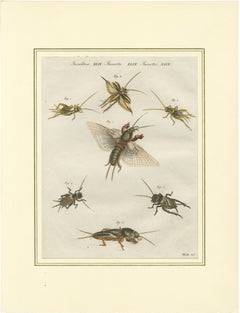
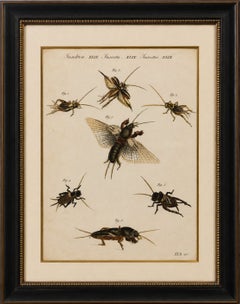
Antique Crickets & Mole Cricket Engraving – Bertuch, 1807

Antique Crickets & Mole Cricket Engraving – Bertuch, 1807

Located in Langweer, NL

Title: Antique Crickets & Mole Cricket Engraving – Bertuch, 1807 Original antique hand-colored copper engraving depicting seven different native crickets and related insects, published in Friedrich Justin Bertuch’s celebrated “Bilderbuch für Kinder” in Weimar in 1807. The plate is headed “Insekten XLIX / Insecta XLIX / Insectes XLIX” and is historically described as: “Verschiedene Einheimische Grillen-Arten” – Various Native Species of Crickets. The engraving presents seven different cricket forms, including field and ground crickets and the extraordinary mole cricket, shown both at rest and with its wings fully extended. Fig. 1–5 – Various Crickets The smaller insects surrounding the central figure represent several forms of true crickets and related Orthoptera. Their characteristic features include exceptionally long antennae, powerful hind legs adapted for jumping and compact bodies. Crickets were familiar inhabitants of European fields, gardens and houses, but their remarkable anatomy and characteristic chirping made them popular subjects in early natural-history publications. The sound commonly associated with crickets is produced principally by males rubbing specialized parts of their wings together, a process known as stridulation. Fig. 6 – Mole Cricket The remarkable insect at the bottom is a Mole Cricket, recognizable by its elongated body and enormously developed front legs. Common name: European Mole Cricket Scientific name: Gryllotalpa gryllotalpa Unlike ordinary crickets, the Mole Cricket spends much of its life underground. Its powerful front legs have evolved into broad digging structures that function almost like miniature shovels. With them the insect excavates extensive tunnels through moist soil. The name Gryllotalpa literally combines the Latin words for “cricket” and “mole” – an exceptionally appropriate description of this unusual insect. Fig. 7 – Winged Mole Cricket The spectacular central figure shows a Mole Cricket with its wings fully extended. This is particularly interesting because the familiar burrowing insect is rarely depicted in flight. The large, delicately veined wings contrast dramatically with its heavy body and powerful digging forelegs. Despite their subterranean lifestyle, adult mole crickets possess functional wings and some species are capable of considerable flight, particularly when dispersing or seeking mates. The central winged specimen gives this plate considerably more visual impact than a conventional cricket illustration. Friedrich Justin Bertuch (1747–1822) was a German publisher, writer and patron of the arts. His monumental “Bilderbuch für Kinder” (Picture Book for Children), first published in Weimar in 1790, became one of the great illustrated educational encyclopedias of the late 18th and early 19th centuries. Its hundreds of engraved and hand-colored plates introduced readers to animals, plants, geography, science, technology, antiquity and cultures from around the world. This attractive entomological plate combines scientific observation with decorative composition. Seven insects are arranged almost like specimens in a natural-history cabinet, while the unusually large winged Mole Cricket forms a dramatic centerpiece. Technique: Original hand-colored copper engraving Publisher: Friedrich Justin Bertuch / Industrie-Comptoir Publication: Bilderbuch für Kinder Place: Weimar, Germany Date: 1807 Plate: Insekten XLIX / Insecta XLIX / Insectes XLIX Historical subject: Verschiedene Einheimische Grillen-Arten – Various Native Species of Crickets Subjects: Crickets, Field Crickets and Mole Cricket Mole Cricket scientific name: Gryllotalpa gryllotalpa Plate reference: XI B. 26 Condition: The engraving is loosely inserted in an acid-free matting board. Please study the photographs carefully as they form part of the condition description. Please note: This is an original antique hand-colored copper engraving from 1807, not a modern reproduction. The print is sold unframed. Framed images or interior views, if shown, are for presentation and inspiration only. Other companion insect and natural-history plates from Bertuch’s “Bilderbuch für Kinder” are also available separately. Keywords: Friedrich Justin Bertuch, Bilderbuch für Kinder, cricket engraving, antique cricket print...

Category

Early 19th Century Neoclassical Antique German Wall Decorations

Materials

Paper
Christian Sell, German Military Painting, On Panel, 19th Century

Christian Sell, German Military Painting, On Panel, 19th Century

Located in Bilzen, BE

Christian Sell (August 14, 1831, Altona, Germany - April 21, 1883, Düsseldorf, Germany) Military scene, fine quality Unrestored Oil painting on panel 18 x 24.2 cm

Category

19th Century Belle Époque Antique German Wall Decorations

Materials

Wood

very decorative mid century COPPER PICTURE relief picture sailboat sun vintage d

very decorative mid century COPPER PICTURE relief picture sailboat sun vintage d

Located in Mannheim, DE

Very beautiful and decorative mid century copper wall decoration with a stylized depiction of a sailboat in the sun. 1950s. Dimensions in cm: Length 48 cm, width 39 cm, depth 5 cm. ...

Category

1950s Mid-Century Modern Vintage German Wall Decorations

Materials

Copper

Early Christian Period Costume Plate, Antique Hand-Colored Print c.1880

Early Christian Period Costume Plate, Antique Hand-Colored Print c.1880

Located in Langweer, NL

Early Christian Period Costume Plate, Antique Hand-Colored Print c.1880 This finely detailed antique costume plate presents a richly composed visual record of clothing styles from t...

Category

1880s Antique German Wall Decorations

Materials

Paper
Small Majolica Sunflower Plate Villeroy & Boch, circa 1900

Small Majolica Sunflower Plate Villeroy & Boch, circa 1900

By Villeroy & Boch

Located in Austin, TX

Small Majolica sunflower plate Villeroy & Boch, circa 1900. Diameter / 6.6 inches.

Category

Early 1900s Art Nouveau Antique German Wall Decorations

Materials

Ceramic

Antique Egyptian Costume, Culture and Primitive Time Plates, c.1900

Antique Egyptian Costume, Culture and Primitive Time Plates, c.1900

Located in Langweer, NL

Complete Set of 10 Antique Plates on Primitive and Ancient Egypt by Max Tilke, c.1900 This impressive complete set of ten antique plates offers a richly detailed visual survey of ea...

Category

Early 1900s Antique German Wall Decorations

Materials

Paper
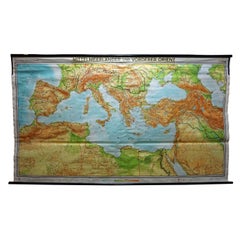
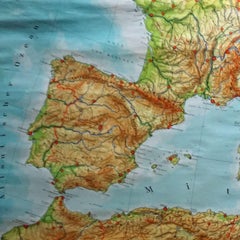
Vintage Mural Map Mediterranean Sea Near East Countries Rollable Wall Chart

Vintage Mural Map Mediterranean Sea Near East Countries Rollable Wall Chart

Located in Berghuelen, DE

A large countrycore pull-down map showing the countries surrounding the Mediterranean Sea, published by Westermann. Colorful print on paper reinforced with canvas. Measurements: Width 269 cm (105.91 inch) Height 149 cm (58.66 inch) The measurements shown refer just to the canvas and do not include the poles. Background information on the history of school wall charts: The idea to upgrade every day school life by using pictures...
Category

1970s Country Vintage German Wall Decorations

Materials

Canvas, Wood, Paper
Byzantine Costume Plate 800–1100, Antique Hand-Colored Print c.1880

Byzantine Costume Plate 800–1100, Antique Hand-Colored Print c.1880

Located in Langweer, NL

Byzantine Costume Plate 800–1100, Antique Hand-Colored Print c.1880 This beautifully rendered antique costume plate presents a vivid overview of Byzantine dress from the years 800–1...

Category

1880s Antique German Wall Decorations

Materials

Paper
Knightly Pageantry of Germany c.1500, Antique Colored Print, Published 1880

Knightly Pageantry of Germany c.1500, Antique Colored Print, Published 1880

Located in Langweer, NL

Antique Crusading Knights Plate, Hand-Colored Medieval Print c.1880 This dramatic antique costume plate presents an evocative depiction of Crusading knights, vividly capturing the m...

Category

1880s Antique German Wall Decorations

Materials

Paper
Papaya and Insects – 19th-Century Hand-Coloured Lithograph after Merian Plate 45

Papaya and Insects – 19th-Century Hand-Coloured Lithograph after Merian Plate 45

Located in Langweer, NL

Heliconia with Insects – After Maria Sibylla Merian, Plate 54 from Metamorphosis insectorum Surinamensium, 19th-century lithograph Description: A fine 19th-century hand-coloured lit...

Category

1870s Antique German Wall Decorations

Materials

Paper
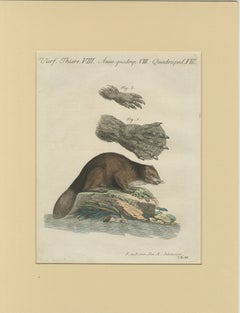
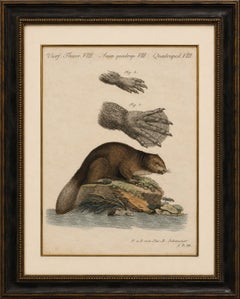
Antique Beaver with Webbed Feet Engraving – Bertuch, c. 1792

Antique Beaver with Webbed Feet Engraving – Bertuch, c. 1792

Located in Langweer, NL

Title: Antique Beaver with Webbed Feet Engraving – Bertuch, c. 1792 Original antique hand-colored copper engraving depicting a beaver together with detailed anatomical studies of it...

Category

Late 18th Century Neoclassical Antique German Wall Decorations

Materials

Paper
Antique African Sanga Longhorn Cattle Engraving – Bertuch, c.1810

Antique African Sanga Longhorn Cattle Engraving – Bertuch, c.1810

Located in Langweer, NL

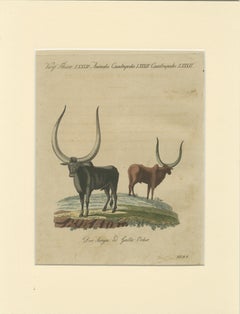
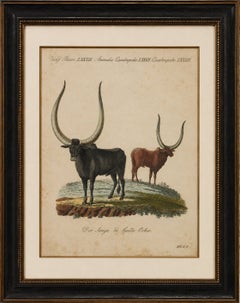
Title: Antique African Sanga Longhorn Cattle Engraving – Bertuch, c. 1810 Original antique hand-colored copper engraving depicting the extraordinary African Sanga or long-horned cattle, published in Friedrich Justin Bertuch’s celebrated “Bilderbuch für Kinder” in Weimar in the early 19th century. The plate is headed “Vierfüßige Thiere LXXXVI / Animalia Quadrupedia LXXXVI / Quadrupèdes LXXXVI” and bears the original German caption: “Der Sanga od. Galla-Ochse” – The Sanga or Galla Ox. The Sanga Ox / African Longhorn The engraving depicts two African cattle, dominated by the spectacular dark animal in the foreground with exceptionally long, slender horns sweeping dramatically upward. Behind it stands a smaller reddish-brown animal, likewise displaying the characteristic elongated horns of the Sanga cattle group. Sanga cattle are an ancient group of African cattle associated particularly with eastern, central and southern Africa. They are immediately recognizable by their impressive horns, which in certain breeds can reach extraordinary dimensions. The term Sanga is still used for a broad group of indigenous African cattle. They are historically related to some of the spectacular long-horned cattle breeds surviving today, including the famous Ankole and Ankole-Watusi cattle of East and Central Africa. The enormous horns are not simply decorative. In some African long-horned cattle they contain a large internal network of blood vessels, helping the animal regulate body temperature in hot climates. Historical “Galla Ox” Bertuch gives the animal the alternative historical name “Galla-Ochse.” “Galla” was a name historically used in European literature for the Oromo people and regions associated with them in East Africa, particularly present-day Ethiopia and neighboring areas. The term is now outdated and is retained here solely as part of the original historical title printed on the engraving. Around 1800, animals such as these were still extraordinary sights for European audiences. Natural-history publications introduced readers to cattle breeds and wild animals known through exploration, travellers’ accounts, imported specimens and earlier zoological works. The immense horns of African cattle made them particularly fascinating subjects. The engraving beautifully emphasizes this feature: the foreground animal’s horns extend far above its head, creating an almost architectural silhouette. Friedrich Justin Bertuch (1747–1822) was a German publisher, writer and patron of the arts. His monumental “Bilderbuch für Kinder” (Picture Book for Children), first published in Weimar in 1790, became one of the great illustrated educational encyclopedias of the late 18th and early 19th centuries. Its hundreds of engraved and hand-colored plates introduced readers to animals, plants, geography, science, technology, antiquity and cultures from around the world. This is an especially striking Bertuch animal plate. The extraordinary sweeping horns, restrained original hand coloring and simple landscape setting give the composition considerable decorative impact. It would work particularly well in a natural-history collection, country-house interior, study, library, African-inspired interior or cabinet-of-curiosities setting. Technique: Original hand-colored copper engraving Publisher: Friedrich Justin Bertuch / Industrie-Comptoir Publication: Bilderbuch für Kinder Place: Weimar, Germany Date: early 19th century, circa 1810 Plate: Vierfüßige Thiere LXXXVI / Animalia Quadrupedia LXXXVI / Quadrupèdes LXXXVI Original title: Der Sanga od. Galla-Ochse Subject: Sanga Cattle / African Long-Horned Cattle Also associated with: Ankole / Ankole-Watusi cattle Geographical association: East and Central Africa Condition: Good antique condition with overall age-related toning, scattered foxing and spotting and some visible show-through or offsetting from printed text. There are minor stains and marks, particularly toward the lower portion of the sheet, consistent with an original print more than 200 years old. The original hand coloring remains attractive, with restrained black, brown, green and blue-grey tones. Please study the photographs carefully as they form part of the condition description. The engraving is loosely inserted in an acid-free matting board. Please note: This is an original antique hand-colored copper engraving from the early 19th century, not a modern reproduction. The print is sold unframed. Framed images or interior views, if shown, are for presentation and inspiration only. Other companion animal and natural-history plates from Bertuch’s “Bilderbuch für Kinder” are also available separately. Keywords: Friedrich Justin Bertuch, Bilderbuch für Kinder, Sanga cattle, Sanga ox, African cattle, African longhorn, long horned cattle, Ankole cattle, Ankole-Watusi, Watusi cattle, African ox, Galla Ox, Ethiopia, East Africa, African livestock, cattle engraving, antique cow print, antique cattle print...

Category

Early 19th Century Neoclassical Antique German Wall Decorations

Materials

Paper
Antique Exotic Crabs & Fiddler Crab Engraving – Bertuch, c. 1813

Antique Exotic Crabs & Fiddler Crab Engraving – Bertuch, c. 1813

Located in Langweer, NL

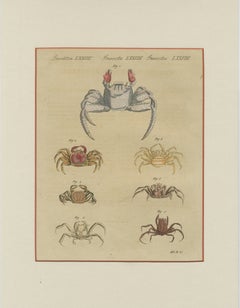
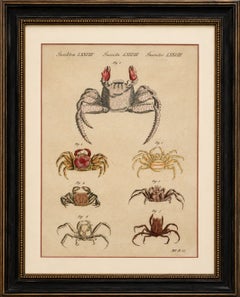
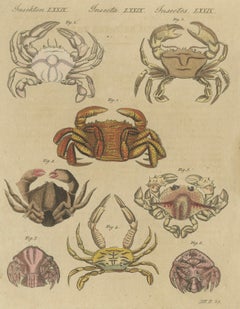
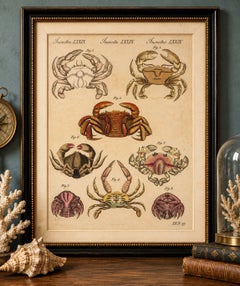
Title: Antique Exotic Crabs & Fiddler Crab Engraving – Bertuch, c. 1813 Original antique hand-colored copper engraving depicting seven unusual and highly decorative crabs, published in Friedrich Justin Bertuch’s celebrated “Bilderbuch für Kinder” in Weimar in the early 19th century. The plate is headed “Insekten LXXVIII / Insecta LXXVIII / Insectes LXXVIII” and presents seven different crab forms, ranging from the spectacular large-clawed specimen at the top to a series of smaller tropical shore and marine crabs below. As was customary in zoological literature of Bertuch’s period, crustaceans were included within the broad historical category of “Insects.” Under modern zoological classification, all of the animals represented here are crustaceans. Fig. 1 – Fiddler Crab / Calling Crab Type The spectacular principal figure shows a long-legged crab with prominently raised red claws. Crabs with enlarged or conspicuously displayed claws became popularly known as fiddler crabs or calling crabs. The exaggerated claws are used for display, communication and competition between individuals. Its almost symmetrical pose and bright red claws make this the visual centerpiece of the engraving. Fig. 2 – Red Shore Crab A compact and particularly colorful crab with a rounded red carapace, yellow-green legs and contrasting red claws. Fig. 3 – Pale Tropical Crab A delicately colored crab with a pale yellow-orange body, elongated legs and prominent claws. Fig. 4 – Spotted Crab A small decorative crab with a beautifully patterned orange-red carapace and contrasting darker legs. Fig. 5 – Horned / Spiny Crab A remarkable small crab distinguished by its strongly sculpted body and projecting points or spines. Its unusual shape reflects the extraordinary diversity of tropical crab species that fascinated European naturalists. Fig. 6 – Long-Legged Crab A pale crab with a compact central body and comparatively long, slender legs. Fig. 7 – Dark Shore Crab A dark reddish-brown crab with angular claws and legs, represented in a characteristically defensive or elevated stance. The exact scientific classification of many crabs illustrated in early natural-history works has changed substantially since Bertuch’s time. For that reason, the descriptive common names above are preferable to assigning modern species names where the historical illustration alone does not permit a secure identification. Friedrich Justin Bertuch (1747–1822) was a German publisher, writer and patron of the arts. His monumental “Bilderbuch für Kinder” (Picture Book for Children), first published in Weimar in 1790, became one of the great illustrated educational encyclopedias of the late 18th and early 19th centuries. Its hundreds of engraved and hand-colored plates introduced readers to animals, plants, geography, science, technology, antiquity and cultures from around the world. This is an especially attractive marine natural-history plate. The seven crabs are presented almost like specimens in a cabinet of curiosities, while the restrained but varied original coloring in red, pink, yellow, green and brown gives the composition considerable decorative appeal. The companion Bertuch plate “Insekten LXXVII,” illustrating Calappa or box crabs, is also available separately and makes an especially attractive pairing with this engraving. Technique: Original hand-colored copper engraving Publisher: Friedrich Justin Bertuch / Industrie-Comptoir Publication: Bilderbuch für Kinder Place: Weimar, Germany Date: early 19th century, circa 1813 Plate: Insekten LXXVIII / Insecta LXXVIII / Insectes LXXVIII Subject: Exotic Crabs / Marine Crustaceans Number of figures: Seven Condition: Good antique condition with overall age-related toning, scattered foxing and spotting and some visible show-through or offsetting from printed text. Minor marks and imperfections are present consistent with a print more than 200 years old. The original hand coloring remains attractive, particularly the red and pink coloring of the claws and shells. Please study the photographs carefully as they form part of the condition description. The engraving is loosely inserted in an acid-free matting board. Please note: This is an original antique hand-colored copper engraving from the early 19th century, not a modern reproduction. The print is sold unframed. Framed images or interior views, if shown, are for presentation and inspiration only. Other companion marine-life, crustacean and natural-history plates from Bertuch’s “Bilderbuch für Kinder” are also available separately. Keywords: Friedrich Justin Bertuch, Bilderbuch für Kinder, antique crab print...

Category

Early 19th Century Neoclassical Antique German Wall Decorations

Materials

Paper
Antique Yak, Indian Cattle, Buffalo & Musk Ox Engraving – Bertuch, 1796

Antique Yak, Indian Cattle, Buffalo & Musk Ox Engraving – Bertuch, 1796

Located in Langweer, NL

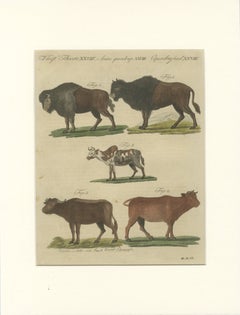
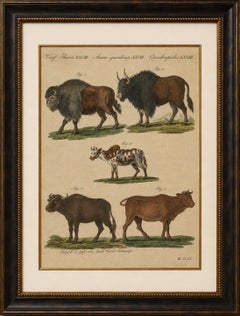
Title: Antique Yak, Indian Cattle, Buffalo & Musk Ox Engraving – Bertuch, 1796 Original antique hand-colored copper engraving depicting five remarkable cattle and bovids from Asia, Africa and the northern regions, published in Friedrich Justin Bertuch’s celebrated “Bilderbuch für Kinder” in Weimar in 1796. The plate is headed “Vierfüßige Thiere XXVIII / Anim. quadrup. XXVIII / Quadrupèdes XXVIII” and illustrates several exotic members and varieties of the ox and cattle family. Bertuch’s original subject description identifies the animals represented on this plate as the Sarluk or Grunting Ox, the Indian Cow, the African Buffalo and the Musk Ox. Fig. 1 – Sarluk / Grunting Ox / Yak The large shaggy animal at upper right represents the Sarluk, historically also known as the Grunting Ox. Today this animal is generally associated with the Yak (Bos grunniens), the famous long-haired bovine of the highlands of Central Asia and the Himalayan region. Its heavy shaggy coat provides protection against extreme cold, while its powerful build makes the yak exceptionally well adapted to mountainous environments. The historical name “Grunting Ox” derives from the characteristic grunting sounds made by the animal. Fig. 2 – Indian Cow / Indian Cattle The reddish-brown animal at lower right represents an Indian form of domestic cattle. Indian cattle were of considerable interest to European naturalists because their appearance differed noticeably from familiar European breeds. Their distinctive characteristics eventually became associated particularly with zebu-type cattle (Bos indicus), although historical classifications and illustrations do not always correspond exactly with modern breeds. Fig. 3 – Sarluk / Yak The second shaggy animal at upper left represents another example or variety of the Sarluk or Grunting Ox. Its massive forequarters, dark shaggy mane and shorter hindquarters give it a remarkably bison-like appearance, illustrating why early European naturalists sometimes struggled to distinguish and classify the various wild and domesticated bovids encountered through travel and exploration. Fig. 4 – Indian Cow The smaller centrally positioned animal represents another Indian cattle variety, attractively depicted with a distinctive brown-and-white patterned coat. Fig. 5 – African Buffalo The dark horned animal at lower left represents the African Buffalo. Today the African or Cape Buffalo is classified as Syncerus caffer. It is one of Africa’s largest and most powerful bovids and is distinguished by its massive body and heavy horns. Musk Ox Bertuch’s original description of this plate also includes the Musk Ox, historically grouped with ox-like animals because of its heavy build and exceptionally thick coat. The Musk Ox (Ovibos moschatus) is native to the Arctic regions of North America and Greenland. Despite its traditional name and ox-like appearance, modern zoology places it closer to goats and sheep than to true cattle. The plate is particularly interesting as a record of late 18th-century zoological classification. European naturalists were attempting to understand relationships between domestic cattle, yaks, buffaloes, musk oxen and other bovids at a time when many exotic species were known principally through travellers’ descriptions, preserved specimens and earlier natural-history illustrations. Friedrich Justin Bertuch (1747–1822) was a German publisher, writer and patron of the arts. His monumental “Bilderbuch für Kinder” (Picture Book for Children), first published in Weimar in 1790, became one of the great illustrated educational encyclopedias of the late 18th and early 19th centuries. Its hundreds of engraved and hand-colored plates introduced readers to animals, plants, geography, science, technology, antiquity and cultures from around the world. The plate is inscribed at the bottom: “Gezeich. u. gest. von Jacob Xaver Schmuzer” meaning “drawn and engraved by Jacob Xaver Schmuzer.” The combination of shaggy exotic cattle, buffalo and unusual regional breeds makes this an especially decorative natural-history plate, well suited to a country-house, farmhouse, library, study or natural-history interior. Technique: Original hand-colored copper engraving Publisher: Friedrich Justin Bertuch / Industrie-Comptoir Publication: Bilderbuch für Kinder Place: Weimar, Germany Date: 1796 Plate: Vierfüßige Thiere XXVIII / Anim. quadrup. XXVIII / Quadrupèdes XXVIII Artist / Engraver: Jacob Xaver Schmuzer Subjects: Sarluk or Grunting Ox, Indian Cattle, African Buffalo and Musk Ox Modern names associated with the historical subjects: Yak / Grunting Ox – Bos grunniens Indian Cattle / Zebu – Bos indicus African Buffalo / Cape Buffalo – Syncerus caffer Musk Ox – Ovibos moschatus Condition: Good antique condition with overall age-related toning, scattered foxing and spotting and some visible show-through or offsetting from printed text. Minor marks and imperfections are present consistent with a print dating from 1796. The original hand coloring remains attractive, with restrained shades of brown, black, green and ochre. Please study the photographs carefully as they form part of the condition description. The engraving is loosely inserted in an acid-free matting board. Please note: This is an original antique hand-colored copper engraving from 1796, not a modern reproduction. The print is sold unframed. Framed images or interior views, if shown, are for presentation and inspiration only. Other companion animal and natural-history plates from Bertuch’s “Bilderbuch für Kinder” are also available separately. Keywords: Friedrich Justin Bertuch, Bilderbuch für Kinder, yak, Sarluk, grunting ox, Bos grunniens, Indian cow, Indian cattle, zebu, Bos indicus, African buffalo, Cape buffalo, Syncerus caffer, musk ox, Ovibos moschatus, antique cattle print...
Category

Early 19th Century Neoclassical Antique German Wall Decorations

Materials

Paper

Antique Jaguar & Jaguarundi Engraving – Bertuch, 1813

Antique Jaguar & Jaguarundi Engraving – Bertuch, 1813

Located in Langweer, NL

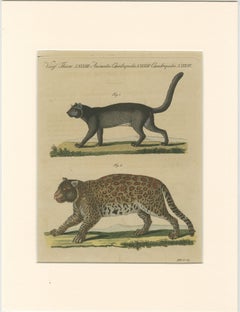
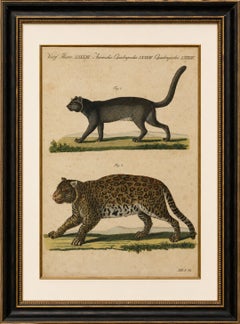
Title: Antique Jaguar & Jaguarundi Engraving – Bertuch, 1813 Original antique hand-colored copper engraving depicting two remarkable South American wil...

Category

Early 19th Century Neoclassical Antique German Wall Decorations

Materials

Paper

Antique Moose / Eurasian Elk & Antler Anatomy Lithograph – 1845

Antique Moose / Eurasian Elk & Antler Anatomy Lithograph – 1845

Located in Langweer, NL

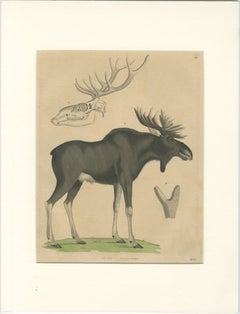
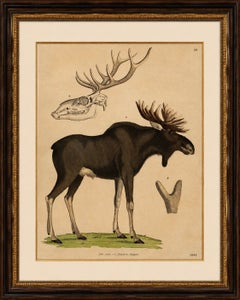
Title: Antique Moose / Eurasian Elk & Antler Anatomy Lithograph – 1845 Original antique hand-colored lithograph depicting a magnificent male Moose or Eurasian Elk (Alces alces), accompanied by detailed anatomical studies of its skull, antlers and cloven hoof. Published in Stuttgart and dated 1845, this striking zoological plate is numbered 38 and was produced by the Lithographische Anstalt von C. Schach, an important Stuttgart lithographic establishment responsible for natural-history illustrations associated with the works of German naturalist Lorenz Oken. Fig. 1 – Moose / Eurasian Elk (Alces alces) The large central figure depicts an adult male Moose, known in British and European English as the Elk. Alces alces is the largest living member of the deer family (Cervidae) and is immediately recognizable by its massive body, long legs, elongated muzzle and the spectacular broad, palmate antlers carried by mature males. The terminology can sometimes cause confusion: in North American English the animal is called a Moose, while in British English it is traditionally called an Elk. The North American animal commonly called an “elk” is a different species, the Wapiti (Cervus canadensis). Fig. 2 – Moose Skull and Antlers Above the main animal is a finely drawn anatomical study of the skull and enormous antlers. The illustration clearly shows the distinctive broad, flattened or palmate antlers of the mature male, which distinguish the Moose from most other deer species. Fig. 3 – Cloven Hoof A separate anatomical detail illustrates the characteristic divided or cloven hoof. Moose are superbly adapted to forests, wetlands and cold northern environments. Their large spreading hooves help support their considerable weight when moving across soft marshland, mud and snow. The combination of a complete animal portrait with separate anatomical details reflects the increasingly scientific approach to zoological illustration during the first half of the 19th century. The lithograph bears the inscription: “Lith. Anst. v. C. Schach in Stuttgart” and is dated: 1845 The C. Schach lithographic establishment in Stuttgart produced finely illustrated zoological and natural-history plates during the 19th century. Comparable plates were used in connection with the extensive natural-history publications of Lorenz Oken (1779–1851), one of the most influential German naturalists and philosophers of his generation. This particularly handsome plate has considerable decorative appeal. The monumental dark silhouette of the Moose, its spectacular antlers and the almost museum-like anatomical studies make it suitable for a country-house, hunting lodge, library, study or natural-history interior. Technique: Original hand-colored lithograph Lithographer / Printer: Lithographische Anstalt von C. Schach Place: Stuttgart, Germany Date: 1845 Plate Number: 38 Subject: Moose / Eurasian Elk Scientific name: Alces alces Family: Cervidae Additional subjects: Moose skull, antlers and cloven hoof Condition: Good antique condition with overall age-related toning and scattered small spots and foxing. Some minor marks and imperfections are present consistent with a lithograph dating from 1845. The original coloring remains attractive, particularly the subtle green coloring beneath the animal. Please study the photographs carefully as they form part of the condition description. The lithograph is loosely inserted in an acid-free matting board. Please note: This is an original antique lithograph dating from 1845, not a modern reproduction. The print is sold unframed. Framed images or interior views, if shown, are for presentation and inspiration only. Keywords: antique moose print, moose lithograph, Eurasian elk, elk print, Alces alces, antique deer print...

Category

Early 19th Century Neoclassical Antique German Wall Decorations

Materials

Paper

Antique Calappa Box Crabs & Exotic Crabs Engraving – Bertuch, 1813

Antique Calappa Box Crabs & Exotic Crabs Engraving – Bertuch, 1813

Located in Langweer, NL

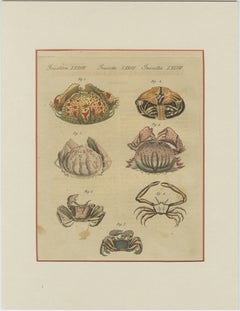
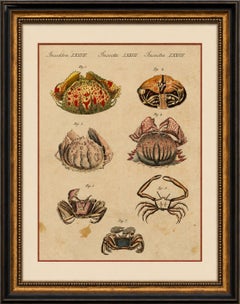
Title: Antique Calappa Box Crabs & Exotic Crabs Engraving – Bertuch, 1813 Original antique hand-colored copper engraving depicting a fascinating selection of exotic crabs, particularly Calappa or box crabs, published in Friedrich Justin Bertuch’s celebrated “Bilderbuch für Kinder” in Weimar in the early 19th century. The plate is headed “Insekten LXXVII / Insecta LXXVII / Insectes LXXVII” and is devoted to “Verschiedene Arten Calappen und Krabben” – Various Species of Calappas and Crabs. Although classified by Bertuch under the historical heading “Insects,” the animals shown are of course crustaceans according to modern zoological classification. Such broad classifications were common in natural-history publications of the period. The plate illustrates several remarkable crab forms, including: Calappa / Box Crab Several of the beautifully patterned animals belong to the genus Calappa, commonly known as box crabs, shame-faced crabs or bashful crabs. These unusual marine crabs are immediately recognizable by their broad, rounded shells and greatly enlarged flattened claws. When folded tightly against the front of the body, the claws partly conceal the crab’s face, giving rise to the charming English names “shame-faced crab” and “bashful crab.” Bertuch’s original accompanying contents identify the species represented on this plate under historical names including: Vaulted Calappa / Arched Box Crab – “Der gewölbte Calappe” Granulated Calappa – “Der körnige Calappe” Lophos Calappa – “Der Lophos-Calappe” Running Calappa – “Der laufende Calappe” Rhomboid Crab – “Die rhomboidische Krabbe” Whitish Crab – “Die weißliche Krabbe” The seven numbered illustrations show these remarkable crabs from different viewpoints, emphasizing the great variation in their shells, claws and body structures. Particularly striking are the large rounded Calappa specimens in the upper and middle part of the composition. Their shells are decorated with intricate red, pink, orange and green markings, demonstrating the elaborate original hand coloring characteristic of Bertuch’s finest natural-history plates. Box crabs are sometimes also called “shame-faced crabs” because their enormous claws can be held directly in front of the face. These powerful claws are specially adapted for breaking open mollusc shells. Friedrich Justin Bertuch (1747–1822) was a German publisher, writer and patron of the arts. His monumental “Bilderbuch für Kinder” (Picture Book for Children), first published in Weimar in 1790, became one of the great illustrated educational encyclopedias of the late 18th and early 19th centuries. Its hundreds of engraved and hand-colored plates introduced readers to animals, plants, geography, science, technology, antiquity and cultures from around the world. This is an especially decorative marine natural-history plate. The almost symmetrical arrangement of the crabs, combined with their extraordinary forms and delicate red, pink, green and ochre coloring, gives the engraving a highly appealing graphic quality. Technique: Original hand-colored copper engraving Publisher: Friedrich Justin Bertuch / Industrie-Comptoir Publication: Bilderbuch für Kinder Place: Weimar, Germany Date: early 19th century, circa 1813 Plate: Insekten LXXVII / Insecta LXXVII / Insectes LXXVII Subject: Calappa Box Crabs and Exotic Crabs Common names: Box Crab, Shame-Faced Crab, Bashful Crab, Calappa Crab Historical subjects listed by Bertuch: Vaulted Calappa Granulated Calappa Lophos Calappa Running Calappa Rhomboid Crab Whitish Crab Condition: Good antique condition with overall age-related toning, scattered foxing and spotting and some visible show-through or offsetting from printed text. A few more noticeable brown spots and stains are present in the lower half of the plate. The original hand coloring remains particularly attractive, with strong red, pink, green and ochre tones. Please study the photographs carefully as they form part of the condition description. The engraving is loosely inserted in an acid-free matting board. Please note: This is an original antique hand-colored copper engraving from the early 19th century, not a modern reproduction. The print is sold unframed. Framed images or interior views, if shown, are for presentation and inspiration only. Other companion marine-life, crustacean and natural-history plates from Bertuch’s “Bilderbuch für Kinder” are also available separately. Keywords: Friedrich Justin Bertuch, Bilderbuch für Kinder, Calappa crab, box crab, shame-faced crab, bashful crab, antique crab print...

Category

Early 19th Century Neoclassical Antique German Wall Decorations

Materials

Paper

Antique Exotic Cattle, Yak & Buffalo Engraving – Bertuch, c. 1800

Antique Exotic Cattle, Yak & Buffalo Engraving – Bertuch, c. 1800

Located in Langweer, NL

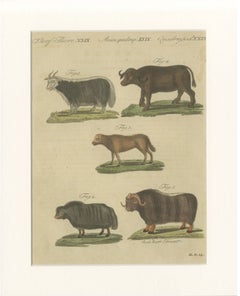
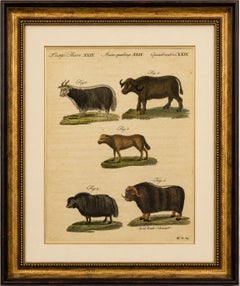
Title: Antique Exotic Cattle, Yak & Buffalo Engraving – Bertuch, c.1800 Original antique hand-colored copper engraving depicting five unusual breeds and species of cattle and bovids from different parts of the world, published in Friedrich Justin Bertuch’s celebrated “Bilderbuch für Kinder” around 1800. The plate is headed “Vierfüßige Thiere XXIX / Anim. quadrup. XXIX / Quadrupèdes XXIX” and presents five striking horned and domesticated or semi-wild bovids. Fig. 1 – Yak / Grunting Ox A long-haired, horned bovine of Central Asia and the Himalayan regions, recognizable by its heavy shaggy coat, bushy tail and sweeping horns. Yaks were still highly exotic animals to European readers around 1800 and frequently appeared in early natural-history works under names such as the Grunting Ox or Tartarian Ox. Fig. 2 – Small Shaggy Cattle / Dwarf Ox Type A compact, heavily coated bovine represented with a low body and short legs. Such unusual regional cattle varieties were of considerable interest to 18th-century European naturalists, who attempted to classify both wild bovids and the many geographically distinct forms of domestic cattle. Fig. 3 – Small Wild or Dwarf Bovid A smaller brown bovine shown in profile. Its compact proportions distinguish it clearly from the larger cattle represented elsewhere on the plate. Fig. 4 – Buffalo A powerful dark buffalo distinguished by its massive body and heavy curved horns. Buffaloes were widely described in European natural-history literature as exotic relatives of domestic European cattle and were associated particularly with Asia and warmer regions of the Old World. Fig. 5 – Shaggy Yak or Musk-Ox Type An impressive long-haired horned animal with a dense dark coat, curved horns and contrasting lower legs. The image reflects the fascination of early European naturalists with heavily coated cattle and bovids from the colder regions of Asia and the far north. The plate provides an appealing glimpse into late 18th-century zoological classification. At the time, relationships between domestic cattle, buffaloes, yaks, wild oxen and other bovids were still being investigated, and historical names do not always correspond neatly with modern zoological classifications. Friedrich Justin Bertuch (1747–1822) was a German publisher, writer and patron of the arts. His monumental “Bilderbuch für Kinder” (Picture Book for Children), first published in Weimar in 1790, became one of the great illustrated educational encyclopedias of the late 18th and early 19th centuries. Its hundreds of engraved and hand-colored plates introduced readers to animals, plants, geography, science, technology, antiquity and cultures from around the world. The engraving is signed in the plate “Jacob Xaver Schmuzer.” The combination of five unusual cattle types, their contrasting horns and coats, and the restrained original hand coloring makes this an especially decorative natural-history plate for a country-house, farmhouse, library or natural-history interior. Technique: Original hand-colored copper engraving Publisher: Friedrich Justin Bertuch / Industrie-Comptoir Publication: Bilderbuch für Kinder Place: Weimar, Germany Date: circa 1800 Plate: Vierfüßige Thiere XXIX / Anim. quadrup. XXIX / Quadrupèdes XXIX Engraver: Jacob Xaver Schmuzer Subject: Exotic cattle, bovids, yak and buffalo Condition: Good antique condition with overall age-related toning, scattered foxing and spotting and some visible offsetting or show-through from printed text. Minor marks and imperfections are consistent with the age of the engraving. The original hand coloring remains attractive. Please study the photographs carefully as they form part of the condition description. The engraving is loosely inserted in an acid-free matting board. Please note: This is an original antique hand-colored copper engraving from around 1800, not a modern reproduction. The print is sold unframed. Framed images or interior views, if shown, are for presentation and inspiration only. Other companion animal and natural-history plates from Bertuch’s “Bilderbuch für Kinder” are also available separately. Keywords: Friedrich Justin Bertuch, Bilderbuch für Kinder, antique cattle print...

Category

Early 19th Century Neoclassical Antique German Wall Decorations

Materials

Paper

Antique South American Horned Frog Engraving – Bertuch, c. 1807

Antique South American Horned Frog Engraving – Bertuch, c. 1807

Located in Langweer, NL

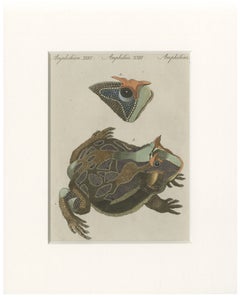
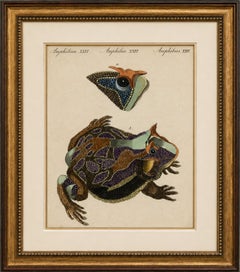
Antique South American Horned Frog Engraving – Bertuch, c. 1807 Original antique hand-colored copper engraving depicting an extraordinary South American horned frog, published in Fr...

Category

Late 18th Century Neoclassical Antique German Wall Decorations

Materials

Paper

Antique Greater Rhea & Black Swan Engraving – Bertuch, 1798

Antique Greater Rhea & Black Swan Engraving – Bertuch, 1798

Located in Langweer, NL

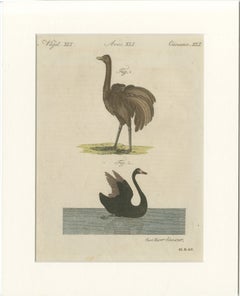
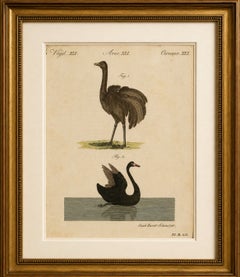
Antique Greater Rhea & Black Swan Engraving – Bertuch, 1798 Original antique hand-colored copper engraving depicting the Greater Rhea of South America and the Black Swan of Aust...

Category

Late 18th Century Neoclassical Antique German Wall Decorations

Materials

Paper

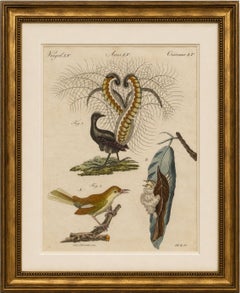
Antique Lyrebird & Tailorbird Engraving – Bertuch, 1796

Antique Lyrebird & Tailorbird Engraving – Bertuch, 1796

Located in Langweer, NL

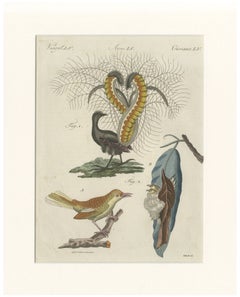
Title: Antique Lyrebird & Tailorbird Engraving – Bertuch, 1796 Original antique hand-colored copper engraving depicting the Superb Lyrebird and the Common Tailorbird, published in F...

Category

Late 18th Century Neoclassical Antique German Wall Decorations

Materials

Paper

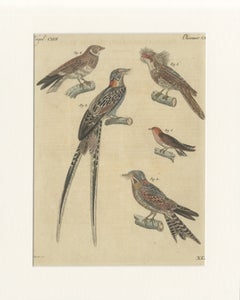
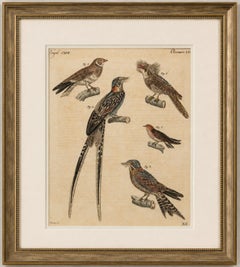
Antique Hand-Colored Bird Engraving – Swallow & Nightjars – Bertuch, c.1800

Antique Hand-Colored Bird Engraving – Swallow & Nightjars – Bertuch, c.1800

Located in Langweer, NL

Title: Antique Hand-Colored Bird Engraving – Swallow & Nightjars – Bertuch, c. 1800 Original antique hand-colored copper engraving depicting five swallow- and nightjar-type birds, p...

Category

Early 19th Century Neoclassical Antique German Wall Decorations

Materials

Paper

Antique Engraving of a Leopard, Drawn by Ihle and Engraved by Bock, c.1800

Antique Engraving of a Leopard, Drawn by Ihle and Engraved by Bock, c.1800

Located in Langweer, NL

Antique Engraving of a Leopard (Felis chalybeata Hermann), drawn by Ihle, engraved by Bock, circa 1800 Description: This finely detailed zoological engraving depicts a leopard ident...

Category

Early 19th Century Antique German Wall Decorations

Materials

Paper

Blow Up 1967 German A0 Film Poster, Braun

Blow Up 1967 German A0 Film Poster, Braun

Located in Bath, Somerset

Fabulous German first-year-of-release poster for the 1967 classic Blow-up.Striking design by Braun features on the impressively sized German A0 poster. Superb colours. This vintage ...

Category

20th Century German Wall Decorations

Materials

Linen, Paper

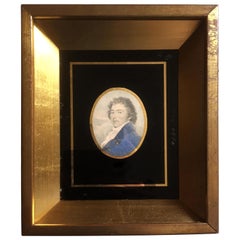
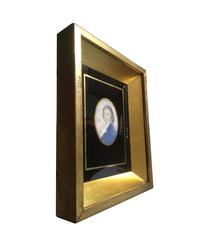
Early 19th Century Hand-Colored Portrait Engraving of a Gentleman

Early 19th Century Hand-Colored Portrait Engraving of a Gentleman

Located in Brooklyn, NY

A fine portrait miniature of a man with long tousled hair and blue high-collared frock coat. The image is encased by parcel-gilt and black lacquered glass with a thick giltwood shado...

Category

1810s Neoclassical Antique German Wall Decorations

Materials

Giltwood, Laid Paper

Giant Anteater – Antique Zoological Engraving by De Sève & Leitner, ca.1800

Giant Anteater – Antique Zoological Engraving by De Sève & Leitner, ca.1800

Located in Langweer, NL

Antique Engraving of a Giant Anteater (Myrmecophaga jubata Linn.), drawn by De Sève, engraved by T.S. Leitner, circa 1800 Description: This striking zoological engraving depicts the...

Category

Early 19th Century Antique German Wall Decorations

Materials

Paper

Opening of Vienna Water Supply – Schwarzenbergplatz Fountain Celebration, 1873

Opening of Vienna Water Supply – Schwarzenbergplatz Fountain Celebration, 1873

Located in Langweer, NL

Opening of the Vienna Water Supply – Schwarzenbergplatz Fountain Celebration, 1873 Description: A striking hand-colored engraving depicting the grand public celebration for the Eröf...

Category

1870s Antique German Wall Decorations

Materials

Paper

Antique Botanical Engraving of Tree Mallow Flowers – Weinmann, 1737

Antique Botanical Engraving of Tree Mallow Flowers – Weinmann, 1737

Located in Langweer, NL

Althaea arborescens (Tree Mallow) – Antique Botany Print by Weinmann, 1737 This finely detailed botanical engraving depicts three varieties of Althaea arborescens, known as the tree...

Category

Mid-18th Century Antique German Wall Decorations

Materials

Paper

Beautiful Lobster Wall Sculpture Plaque Sign Brutalist Vintage, German, 1960s

Beautiful Lobster Wall Sculpture Plaque Sign Brutalist Vintage, German, 1960s

Located in Nuernberg, DE

A large metal copper wall plaque showing a lobster animal. Made of treated copper with a nice patina. Typically made in Germany in the 1960s, as a statement piece on your wall hangin...

Category

1960s Brutalist Vintage German Wall Decorations

Materials

Metal

Antique Zoological Engraving of a Rodent, D.R. Nitschmann & J. Nußbiegel, c.1800

Antique Zoological Engraving of a Rodent, D.R. Nitschmann & J. Nußbiegel, c.1800

Located in Langweer, NL

Antique Engraving of a Rodent (Mus Caraco Pall.), drawn by D.R. Nitschmann, engraved by J. Nußbiegel, circa 1800 This finely detailed natural history engraving depicts a species ide...

Category

Early 19th Century Antique German Wall Decorations

Materials

Paper

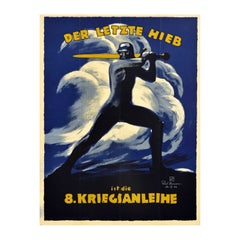
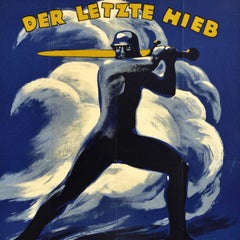
Original Antique World War One Poster Der Letzte Hieb WWI War Loan Soldier Art

Original Antique World War One Poster Der Letzte Hieb WWI War Loan Soldier Art

Located in London, GB

Original antique World War One poster - Der letzte Hieb ist die 8. Kriegsanleihe / The last blow is the 8th War Loan - featuring a dynamic image on a blue backg...

Category

1910s Vintage German Wall Decorations

Materials

Paper

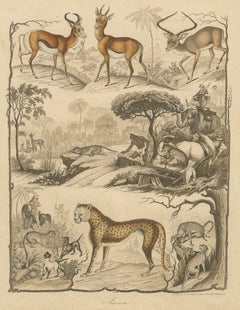
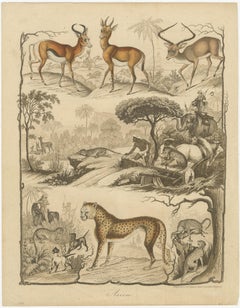
Asian Wildlife and Hunting Scene – Antique German Engraving, c.1840

Asian Wildlife and Hunting Scene – Antique German Engraving, c.1840

Located in Langweer, NL

Asian Wildlife and Hunting Scene – Antique German Engraving, c.1840 Description: This captivating antique engraving titled “Asien” depicts Asian wildlife alongside traditional hunting scenes in a decorative tripartite composition. At the top are three finely engraved and partially hand-colored antelopes: a blackbuck (Antilope cervicapra) with its distinctive spiral horns, an Indian gazelle or chinkara (Gazella bennettii), and a greater kudu (Tragelaphus strepsiceros) or similar large antelope species with lyre-shaped horns. Their detailed anatomical rendering and warm coloration highlight the European natural history fascination of the early 19th century. The middle register portrays an elaborate hunting expedition with an elephant bearing a howdah and rider, accompanied by horsemen and handlers. Surrounding them are multiple cheetahs (Acinonyx jubatus...

Category

Mid-19th Century Antique German Wall Decorations

Materials

Paper

Mid-Century German Studio Pottery Wall Plaque Plate by Heinz Theo Dietz, 1960s

Mid-Century German Studio Pottery Wall Plaque Plate by Heinz Theo Dietz, 1960s

Located in Hamburg, DE

Mid-Century German Studio Pottery Wall Plaque Plate by Heinz Theo Dietz, 1960s, in Very Good conditions. Designed 1960 to 1969 This piece has an attribution mark. Additional informa...

Category

20th Century Mid-Century Modern German Wall Decorations

Materials

Ceramic

Antique Engraving of Cuckoo & Little Owl, Cuculus canorus & Strix passerina 1800

Antique Engraving of Cuckoo & Little Owl, Cuculus canorus & Strix passerina 1800

Located in Langweer, NL

Antique Engraving of Cuckoo and Little Owl, Cuculus canorus & Strix passerina, c.1800 This beautifully engraved natural history plate from around 1800 presents two finely observed b...

Category

Early 19th Century Antique German Wall Decorations

Materials

Paper

Nature’s Pair: The Artistic Depiction of Great Tits, Engraving ca.1780

Nature’s Pair: The Artistic Depiction of Great Tits, Engraving ca.1780

Located in Langweer, NL

This illustration beautifully depicts two Great Tits (Parus major) in vivid detail, a common subject in ornithological studies due to their distinct appearance and widespread presenc...

Category

Late 18th Century Antique German Wall Decorations

Materials

Paper

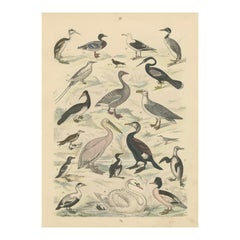
Water Birds Print: Swan, Pelican, Cormorant, Ducks – Antique 1867

Water Birds Print: Swan, Pelican, Cormorant, Ducks – Antique 1867

Located in Langweer, NL

Water Birds Print: Swan, Pelican, Cormorant, Ducks – Antique 1867 This detailed antique print depicts a diverse range of water birds, including swans, pelicans, cormorants, ducks, g...

Category

1860s Antique German Wall Decorations

Materials

Paper

Antique Allegorical Print – Dutch Victory over France, Hand-Coloured, ca.1750

Antique Allegorical Print – Dutch Victory over France, Hand-Coloured, ca.1750

Located in Langweer, NL

Batavian Victory Allegory – Antique Hand-Coloured Engraving by J. Müller, c.1750 This richly symbolic 18th-century hand-coloured engraving, titled Has Iterum Batavi a Gallis Victori...

Category

Mid-18th Century Antique German Wall Decorations

Materials

Paper

Chinese Peacock-Pheasant – Hand-Colored Engraving by Edwards & Seligmann, c.1770

Chinese Peacock-Pheasant – Hand-Colored Engraving by Edwards & Seligmann, c.1770

Located in Langweer, NL

Chinese Peacock-Pheasant – Hand-Colored Bird Engraving by Edwards & Seligmann, c.1750–1776 This fine hand-colored engraving depicts the Chinese Peacock-Pheasant (Phasianus alis et caudâ oculatis), an exotic species admired in Europe for its ornate plumage. The bird is shown perched gracefully on a flowering branch, its feathers marked with striking blue and green eye-like spots. Decorative peonies frame the composition, enhancing the print’s ornamental character. The engraving bears multilingual titles: “Der chinesische Phasanenpfau” (German), “Le Paon-Phaisan de la Chine” (French), and the Latin classification Phasianus, alis et caudâ, oculatis. At the lower left, the note G. Edwards ad viv. delin. credits the original life drawing...

Category

1770s Antique German Wall Decorations

Materials

Paper

Antique & Top Quality Wall Bracket / Shelf w. Hand Painted Glazed Porcelain Tile

Antique & Top Quality Wall Bracket / Shelf w. Hand Painted Glazed Porcelain Tile

Located in Lisse, NL

Stylish and beautiful antique wall bracket with large hand-painted & glazed porcelain tile (marked and numbered on the back, see image 10). If you are looking for decorative and stylish antiques and you have a space to fill on your wall then this very rare bracket could be ideal. What makes this good size shelf stand out from others is the stunning handcrafted large tile with colorful floral painting...

Category

Early 20th Century Arts and Crafts German Wall Decorations

Materials

Porcelain, Oak, Paint

Etching by Karl Bauer (1905–1993), bust portrait of Frederick the Great

Etching by Karl Bauer (1905–1993), bust portrait of Frederick the Great

Located in Langweer, NL

Etching by Karl Bauer (1905–1993), bust portrait of Frederick the Great An expressive etching by Austrian artist Karl Bauer, depicting a bust-length portrait of Frederick II of Prus...

Category

Early 20th Century German Wall Decorations

Materials

Paper

Pair of Large Carved Wooden Cornucopias with Polychrome Fruit, Circa 1850

Pair of Large Carved Wooden Cornucopias with Polychrome Fruit, Circa 1850

Located in ALHAURÍN EL GRANDE, Malaga

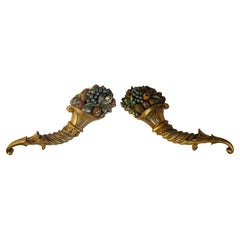
A rare pair of large wood-carved cornucopias filled with fruit, dating from around 1850 in the 19th century. Each cornucopia is elaborately carved in the form of a spiralling horn th...

Category

Mid-19th Century Gothic Revival Antique German Wall Decorations

Materials

Wood

18th-Century German Engraving – Allegory of War, Poem & Naval View

18th-Century German Engraving – Allegory of War, Poem & Naval View

Located in Langweer, NL

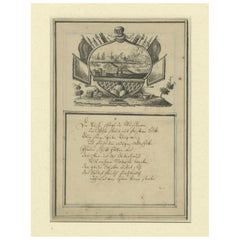
A rare and intriguing 18th-century German engraving combining a finely detailed allegorical scene of naval warfare with a poetic handwritten reflection on military life, ambition, an...

Category

Early 18th Century Antique German Wall Decorations

Materials

Paper

!922 Collection of German Prewar 50000 Marks Bills

!922 Collection of German Prewar 50000 Marks Bills

Located in San Diego, CA

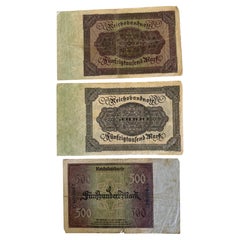
Great collection of 3 German bills from 1022 , they can be framed these are beautiful in very clean condition considering age great piece of history.

Category

Early 20th Century Art Deco German Wall Decorations

Materials

Paper

African Wildlife and Hunting Scene – Antique German Engraving, c.1840

African Wildlife and Hunting Scene – Antique German Engraving, c.1840

Located in Langweer, NL

African Wildlife and Hunting Scene – Antique German Engraving, c.1840 Description: This striking antique engraving titled “Afrika” depicts a vivid tripartite composition portraying African wildlife and traditional hunting scenes. At the top are three finely engraved and partially hand-colored animals: a red river hog (Potamochoerus porcus) on the left, a zebra in the centre, and an African wild dog...

Category

Mid-19th Century Antique German Wall Decorations

Materials

Paper

Original Antique Print of a Lioness and Her Cubs by Bertuch, 1810

Original Antique Print of a Lioness and Her Cubs by Bertuch, 1810

Located in Langweer, NL

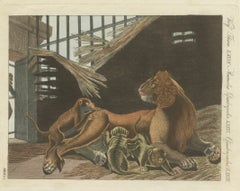
Original Antique Print of a Lioness and Her Cubs by Bertuch, 1810 The composition shows a large reclining lioness surrounded by several playful cubs inside a rustic animal enclosure...

Category

Early 19th Century Neoclassical Antique German Wall Decorations

Materials

Paper

Original Antique Natural History Print of Shipworm and Sea Pen by Bertuch, 1800

Original Antique Natural History Print of Shipworm and Sea Pen by Bertuch, 1800

Located in Langweer, NL

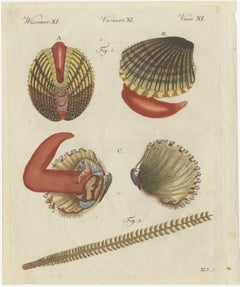
Original Antique Natural History Print of Shipworm and Sea Pen by Bertuch, c. 1800 Original antique hand-colored copper engraving depicting two remarkable marine invertebrates, publ...

Category

Early 19th Century Neoclassical Antique German Wall Decorations

Materials

Paper

Original Antique Print of Eight Exotic Crabs by Bertuch, c.1820

Original Antique Print of Eight Exotic Crabs by Bertuch, c.1820

Located in Langweer, NL

Original Antique Print of Eight Exotic Crabs by Bertuch, c.1820 Original antique hand-colored engraving depicting eight remarkable species and forms of crabs, published as part of Friedrich Justin Bertuch’s celebrated “Bilderbuch für Kinder” in Weimar during the early 19th century. The plate is titled “Insecten LXXXIX / Insecta LXXXIX / Insectes LXXXIX” and bears the reference “XII.B.29” at lower right. Although classified under “Insects” according to the broader historical terminology of the period, the subjects are crustaceans. Eight individually numbered crabs are represented, displaying an extraordinary variety of body shapes, claws, legs and shell structures. Several specimens are shown from above, allowing the different forms of their carapaces and claws to be compared. Others, particularly Figs. 6, 7 and 8, are illustrated from below, revealing the complex structure of the underside, folded legs and abdominal plates. The central Fig. 1 is particularly decorative, with a strongly colored reddish-orange shell and substantial claws. Other specimens range from pale cream and ochre to yellow, pink and deep brown. The combination of dorsal and ventral views reflects the educational purpose of Bertuch’s publication and the increasing scientific interest in comparative zoology during the late 18th and early 19th centuries. The engraving is enhanced with original hand coloring in attractive shades of coral red, pink, ochre, yellow and brown. The symmetrical arrangement of the eight crustaceans gives the plate considerable decorative appeal, making it particularly suitable for coastal, maritime and natural-history inspired interiors. Friedrich Justin Bertuch (1747–1822) was a German publisher, writer and patron of the arts. His monumental “Bilderbuch für Kinder” was one of the most ambitious illustrated educational encyclopedias of its period, covering zoology, botany, geography, science, technology, antiquity and many other subjects. Creator: Friedrich Justin Bertuch (1747–1822) Source: Bilderbuch für Kinder Plate: Insecten LXXXIX / Insecta LXXXIX / Insectes LXXXIX Reference: XII.B.29 Subject: Eight Crabs / Crustaceans Place of Publication: Weimar, Germany Date of Manufacture: Circa 1820 Period: Early 19th Century Style: Neoclassical – In the Period of Medium: Original hand-colored engraving on paper Condition: Good. Wear consistent with age and use. General age-related toning and scattered foxing and spotting. Noticeable brown staining and discoloration along the right side. Minor marginal wear, handling marks and small edge imperfections. Original hand coloring remains attractive. Please refer to the photographs for further details of condition. Please note: This is an original antique engraving, not a modern reproduction. The print is sold unframed. Framed images or interior views, if shown, are for presentation and inspiration only. Other companion marine-life and natural-history plates from Bertuch’s “Bilderbuch für Kinder” are also available separately. Keywords: antique crab print...

Category

Early 19th Century Neoclassical Antique German Wall Decorations

Materials

Paper

Antique 1880s Brass & Porcelain Plates, Set of 3 Hand Painted Portraits, Germany

Antique 1880s Brass & Porcelain Plates, Set of 3 Hand Painted Portraits, Germany

Located in Andernach, DE

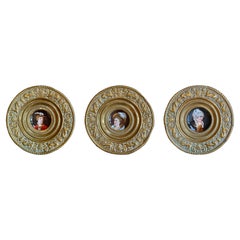
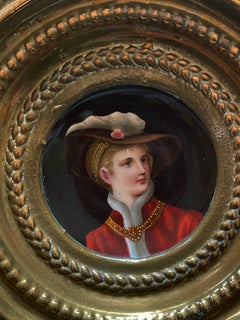
A set of three beautifully executed porcelain plates from around 1880-1890. Attributed to KPM Kaulbach, Dresden, Germany. German craftsmanship and artistic skill, both in the beautif...

Category

Late 19th Century Baroque Antique German Wall Decorations

Materials

Brass

Antique Animal Print of Lemur Species by Bertuch, circa 1800

Antique Animal Print of Lemur Species by Bertuch, circa 1800

Located in Langweer, NL

Original antique print of various lemur species including lori, maki, a flying lemur and others. This print originates from 'Bilderbuch fur Kinder' by F.J. Bertuch. Published, circa ...

Category

Early 19th Century Antique German Wall Decorations

Materials

Paper

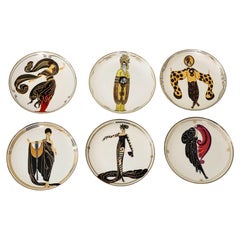
House of Erté (Romain de Tirtoff) Set of 6 Sevenarts Porcelain Collector Plates

House of Erté (Romain de Tirtoff) Set of 6 Sevenarts Porcelain Collector Plates

By Sevenarts Ltd., Franklin MInt, Erté

Located in Moreno Valley, CA

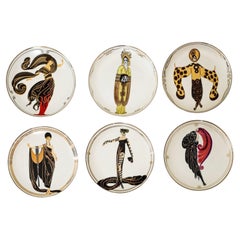
House of Erté Plates Set of 6 Franklin Mint decorative porcelain plates with design realized by Erté (Romain de Tirtoff) . House of Erté Set of 6 Franklin M...

Category

1990s Art Deco German Wall Decorations

Materials

Porcelain

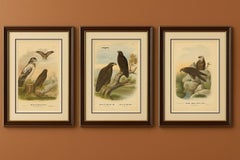
Birds of Prey Prints – Antique Set of Three, Raptors & Hawks, 19th Century

Birds of Prey Prints – Antique Set of Three, Raptors & Hawks, 19th Century

Located in Langweer, NL

Set of Three Antique Prints of Birds of Prey by Oskar von Riesenthal, 1894 Description: A rare and beautifully preserved set of three chromolithographs from Oskar von Riesenthal’s D...

Category

Late 19th Century Antique German Wall Decorations

Materials

Paper

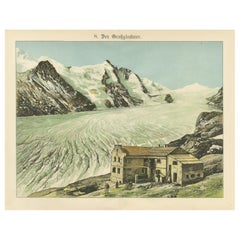
Antique Chromolithograph of the Großglockner Glacier and Alpine Lodge, ca. 1885

Antique Chromolithograph of the Großglockner Glacier and Alpine Lodge, ca. 1885

Located in Langweer, NL

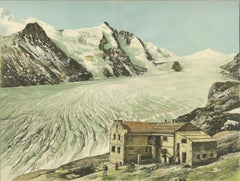
Antique Chromolithograph of the Großglockner Glacier and Alpine Lodge, ca. 1890 This impressive chromolithograph, titled “Der Großglockner,” captures the dramatic alpine landscape s...

Category

Late 19th Century Antique German Wall Decorations

Materials

Paper

Echinoderms Print: Starfish, Sea Urchins, Brittle Stars, Sea Cucumbers – 1867

Echinoderms Print: Starfish, Sea Urchins, Brittle Stars, Sea Cucumbers – 1867

Located in Langweer, NL

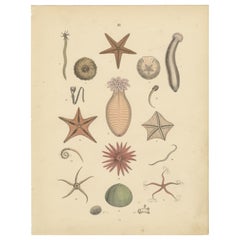
Echinoderms Print: Starfish, Sea Urchins, Brittle Stars, Sea Cucumbers – Antique 1867 This captivating antique print depicts a variety of echinoderms, including starfish, sea urchin...

Category

1860s Antique German Wall Decorations

Materials

Paper

Antique engraving of a state prison in Sicily by Zeyer & French, c.1850

Antique engraving of a state prison in Sicily by Zeyer & French, c.1850

Located in Langweer, NL

Antique engraving of a state prison in Sicily by Zeyer & French, c.1840–1860 This dramatic antique engraving presents a coastal view of a state prison in Sicily, titled in German “...

Category

1850s Antique German Wall Decorations

Materials

Paper

Mid-Century German Studio Pottery Wall Plate with Sunflower Design, 1960s

Mid-Century German Studio Pottery Wall Plate with Sunflower Design, 1960s

By Ruscha

Located in Hamburg, DE

Mid-Century German Studio Pottery Wall Plate with Sunflower Design from Ruscha, 1960s, in Very Good conditions. Designed 1960 to 1969 official proof of authenticity such as vintage c...

Category

20th Century Mid-Century Modern German Wall Decorations

Materials

Ceramic

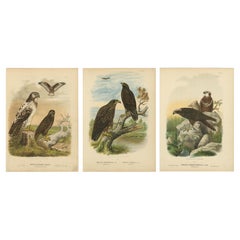
Eagles Prints – Antique Set of Three, Raptors & Ornithology Wall Art, 1894

Eagles Prints – Antique Set of Three, Raptors & Ornithology Wall Art, 1894

Located in Langweer, NL

Set of Three Antique Prints of Eagles by Oskar von Riesenthal, 1894 Description: A striking trio of chromolithographs (unframed!) from Oskar von Riesenthal’s Die Raubvögel Deutschla...

Category

Late 19th Century Antique German Wall Decorations

Materials

Paper

Fritz Winter "black, light English red " color aquatint of 2 plates, 1967

Fritz Winter "black, light English red " color aquatint of 2 plates, 1967

Located in Münster, DE

Fritz Winter (1905 Altenbögge - 1976 Herrsching am Ammersee) “black, light English red” Color aquatint of 2 plates, created in 1967 Edition of 100 numbered and signed copies on Ri...

Category

1960s Modern Vintage German Wall Decorations

Materials

Paint, Paper

Expressive Carved Wooden Lady Towel Holder ca. 1900

Expressive Carved Wooden Lady Towel Holder ca. 1900

Located in Berghuelen, DE

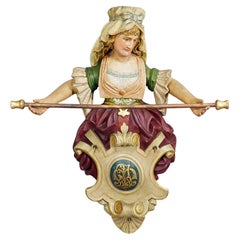
Expressive Carved Wooden Lady Towel Holder ca. 1900 Item e7351 A large unique towel rail, hand carved and painted. Modeled as a beautiful Victorian maid carrying a bar as a towel hol...

Category

Early 20th Century Victorian German Wall Decorations

Materials

Wood

High Mountain Landscape with Alpine Lake near Kufstein, circa 1950s

High Mountain Landscape with Alpine Lake near Kufstein, circa 1950s

Located in Berghuelen, DE

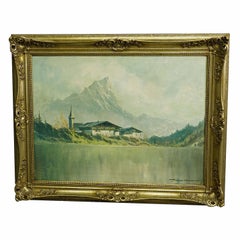
High Mountain Landscape with Alpine Lake near Kufstein, circa 1950s A large impressionistic oil painting depicting a high mountain landscape with mountain lake and folksy mountain hut in front of the imperial mountains (Kaisergebirge) near Kufstein in Austria. Oil painting on canvas with pastell colors. Painted by Passy-Cornet around 1950s. Framed with vintage decorative gilded frame. Artist signature on the front and paper lable of the reseller on the back. Mid-20th Century oil paintings often reflect people´s deep longing for security, beauty and a peaceful world. The natural landscapes show their beauty and majesty with powerful colors. The paintings of that time leave room for romantic feelings and sentimentality. The artist of the time gave people a sense of just be happy...

Category

Mid-20th Century Biedermeier German Wall Decorations

Materials

Canvas, Wood

Read More

Punk Rock and Rebellion Animate London’s Hit Yoshitomo Nara Show

The exhibition includes his portraits of wide-eyed kids with mayhem on their minds, as well as some of the artist’s personal belongings.

Whether Painted or Papered, Muraled Walls Make Bold Statements in the Home

The ancient practice of covering walls in artistic scenery is back.

In Francks Deceus’s ‘Mumbo Jumbo #5,’ the Black Experience Is . . . Complicated

Despite the obstacles, the piece’s protagonist navigates the chaos without losing his humanity.

12 Floral-Accented Rooms with a Handmade, Folkloric Feel

Who needs a flower garden? Just use your imagination — and some beautifully patterned wallpaper or fabric — to bring the outdoors in.

This Wolf Kahn Pastel Is the Epitome of Beauty at Its Most Essential

A longtime admirer of Kahn’s work, 1stDibs editorial director Anthony Barzilay Freund explores why it’s relevant now more than ever.

Why Jules Chéret Was the King of the Modern Poster

The streets of fin-de-siècle Paris were set aglow with colorful poster ads, thanks to the printing techniques invented by Jules Chéret. Now, the Milwaukee Art Museum is celebrating this undersung talent in America's first solo show dedicated his exuberant works.

Anna Condo’s Multifaceted Career Spans Film, Photography and NFTs

From her historic Manhattan townhouse, the talented creator and curator of 1stDibs' latest NFT exhibition tells us about the art in her home and how she got involved with cryptoart.

How Keith Rivers Went from NFL Linebacker to Blue-Chip Art Aficionado

The former football player is as serious about becoming a great contemporary-art patron as he once was about making tackles. Here, Rivers tells us how he got the collecting bug and how his tastes have evolved over the years.