Art by Medium: Engraving

4,606 Results
to
774
2,801
901
810
224
137
Overall Width
to
Overall Height
to
1,060
953
2,279
653
38
151
185
162
125
165
202
438
174
185
742
685
659
362
352
318
113
74
33
27
17
12
11
5
2
2,398
1,152
1,068
741
669
532
392
353
258
202
197
196
175
160
149
144
114
113
109
108
2,724
1,817

Use search to find more

322
111
105
69
67

Use search to find more

Medium: Engraving
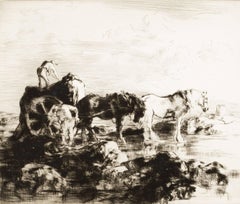
The Vraic Season (No 1).

The Vraic Season (No 1).

By Edmund Blampied

Located in Plano, TX

The Vraic Season (No 1). 1936. Etching. Appleby 181. 12 x 14 1/4 (sheet 15 1/4 x 20). Edition 125 for The American College Society of Print Collectors (alternatively titled Seaweed H...

Category

1930s Modern Art by Medium: Engraving

Materials

Drypoint, Etching

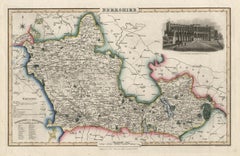
Berkshire, English County Antique map, 1847

Berkshire, English County Antique map, 1847

By Isaac Slater

Located in Melbourne, Victoria

Steel-engraved map with original outline colouring by Isaac Slater. A detailed engraved map of the English county with title, scale, and key. Decorated with an uncoloured engraved v...

Category

19th Century Naturalistic Art by Medium: Engraving

Materials

Engraving

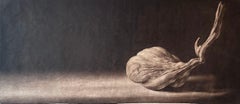
Millenium Garlic, by Konstantin Chmutin

Millenium Garlic, by Konstantin Chmutin

By Konstantin Chmutin

Located in Palm Springs, CA

Signed, titled and numbered from the edition of 55. This is one of Chmutin's largest prints, a portrait of a large millenium Garlic in dramatic pose. Most of his mezzotints are tiny,...

Category

Early 2000s Contemporary Art by Medium: Engraving

Materials

Mezzotint

Champignon de la France, a French antique mushroom engraving, 1791

Champignon de la France, a French antique mushroom engraving, 1791

By Jean Baptiste Francois Buillard

Located in Melbourne, Victoria

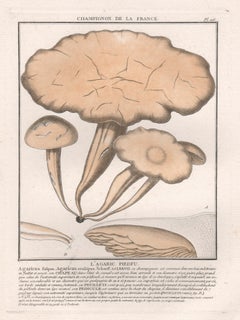
'L'Agaric Couleuvre' A French copper-line engravings with original printed colouring of mushrooms by Jean Baptiste Francois Buillard (1742-1793). From Bulliard's 'Histoire des Champignons de la France', a series of engravings describing the mushrooms of France, published in Paris in 1791. This series of engravings are 'probably the first botanical work completely colour-printed without retouching by hand' (Great Flower Books...

Category

Late 18th Century Naturalistic Art by Medium: Engraving

Materials

Engraving

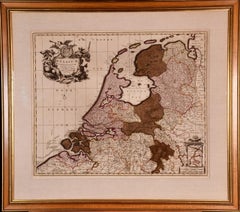
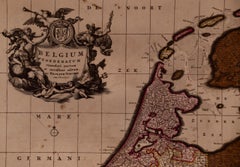
Belgium and the Netherlands: A Hand-colored 17th Century Map by Visscher

Belgium and the Netherlands: A Hand-colored 17th Century Map by Visscher

By Nicolaus Visscher

Located in Alamo, CA

This is an original hand-colored 17th century map of Belgium by Nicolaus (Nicolas) Visscher II entitled "Belgium Foederatum emendate auctum et novissime editum", published in Amsterdam in 1678. The map shows the seven provinces comprising the Belgium federation or the Republic of the Seven United Netherlands or the Dutch Republic as it was also known. The republic was formed when an alliance of seven Dutch provinces in the Spanish Netherlands revolted against rule by Spain in 1579 (the Union of Utrecht) and declared their independence in 1581 (the Act of Abjuration). The seven provinces were Groningen, Frisia, Overijssel, Guelders, Utrecht, Holland and Zeeland. This was a predecessor state to the Netherlands and the first fully independent Dutch nation state. Amsterdam, Delft, Rouen, Utrecht, Brugge, Ghent, and Antwerp are all included on the map. A small inset map in the lower right depicts the course of the Maas River from Maastricht to Wessem. There is a decorative cartouche in the upper left corner and a distance scale cartouche in the lower right corner. The map is presented in an attractive antiqued medium brown-colored wood frame with gold-colored inner and outer trim and a light tan-colored fabric mat. The frame measures 26.63" high by 30" wide by 0.75" deep. There is some darkening of the red areas in the map, presumably related to oxidation of the original iron containing pigment over time. There are also a few scattered spots. The map is otherwise in very good condition. The Visscher family were one of the great cartographic families of the 17th century. Begun by Claes Jansz Visscher...

Category

Late 17th Century Other Art Style Art by Medium: Engraving

Materials

Engraving

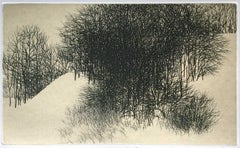
Trees and Snow II
Trees and Snow II

Peter MiltonTrees and Snow II, 1961

$1,360Sale Price|20% Off

Trees and Snow II

By Peter Milton

Located in Palm Springs, CA

Medium: lift-ground etching and engraving Edition: 15 Year: 1961 Plate: zinc 9 x 15 inches (22.9 x 38.1 cm) Paper: Murillo, 16 x 21 inches (40.6 x 53.3 cm) Signed, titled and number...

Category

2010s Contemporary Art by Medium: Engraving

Materials

Engraving, Etching

Untitled

Untitled

By Dado (Miodrag Djuric)

Located in Paris, FR

Engraving, 1980 Handsigned by the artist in pencil 91.00 cm. x 63.00 cm. 35.83 in. x 24.8 in. (paper) 49.00 cm. x 45.50 cm. 19.29 in. x 17.91 in. (image) Etching, drypoint and aqua...

Category

1980s Abstract Art by Medium: Engraving

Materials

Engraving

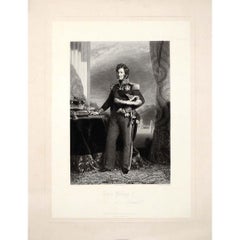
Circa 1838 engraving by Franz Xaver Winterhalter portrait of Louis‑Philippe I

Circa 1838 engraving by Franz Xaver Winterhalter portrait of Louis‑Philippe I

By Franz Xaver Winterhalter

Located in PARIS, FR

This elegant circa 1838 engraving presents a formal portrait of Louis‑Philippe I, based on a composition by the renowned portrait painter Franz Xaver Winterhalter. The work reflects ...

Category

1830s Art by Medium: Engraving

Materials

Paper, Engraving

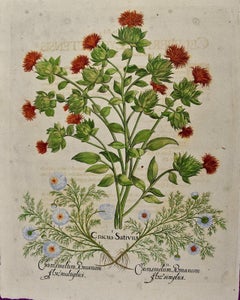
Chamomile & Safflower: A 17th-18th C. Besler Hand-colored Botanical Engraving

Chamomile & Safflower: A 17th-18th C. Besler Hand-colored Botanical Engraving

By Basilius Besler 1

Located in Alamo, CA

This is a hand-colored copper plate engraving entitled "Chamemelum Romanum flore simplici (Chamomile), Cincus Sativus (False saffron, Safflower), Chamaemelum Romanum Flore (Roman Chamomile)", depicting flowering Chamomile, Safflower and Roman Chamomile plants respectively from Basilius Besler's landmark work, Hortus Eystettensis (Garden at Eichstatt), first published in 1613 in Eichstatt, Germany near Nuremberg and later in 1640 and 1713. This beautiful colorful engraving is printed on thin laid chain-linked paper with wide margins. There are a few small spots and some irregularity of the lower edge. There is some bleed-through of text from the verso. The print is otherwise in excellent condition with striking hand-coloring. The sheet measures 22.25" high and 17.38" wide. Basilius Besler (1561–1629) was an apothecary and botanist. He was curator of the Willibaldsburg Castle garden of Johann Konrad von Gemmingen, prince bishop...

Category

Early 18th Century Academic Art by Medium: Engraving

Materials

Engraving

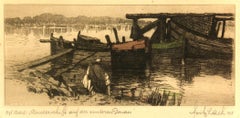
Moored Boats, 1915
Moored Boats, 1915

Moored Boats, 1915

Located in Houston, TX

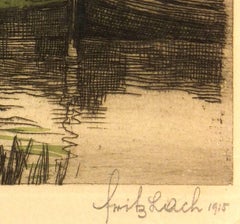
Early century engraving on row boats by artist Fritz Lach, 1915. Signed and dated lower right. Original artwork on paper displayed on a white mat with a gold border. Mat fits a...

Category

1910s Art by Medium: Engraving

Materials

Engraving

Chertsey Bridge, Surrey, Thames, late 18th century English sepia aquatint, 1799

Chertsey Bridge, Surrey, Thames, late 18th century English sepia aquatint, 1799

By Samuel Ireland

Located in Melbourne, Victoria

'Chertsey Bridge, Surrey' Aquatint published by Samuel Ireland. From his 'Picturesque Views on the River Thames'. Ireland was an author and engraver who published several series of ...

Category

Late 18th Century Naturalistic Art by Medium: Engraving

Materials

Engraving, Etching, Aquatint

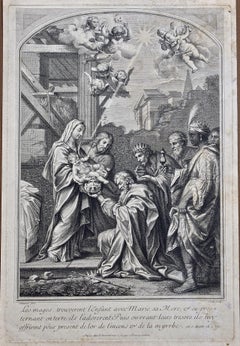
The Gift of the Magi: An 18th C. Religious Engraving by Vale, After Calmarat

The Gift of the Magi: An 18th C. Religious Engraving by Vale, After Calmarat

Located in Alamo, CA

This is a very rare early 18th century old master religious themed engraving entitled "Les Mages...Trouverent l'Enfant avec Marie sa Mere, et se prosternant entere ils l'adorent Puis ouvrant leurs tresors ils tuy offrirent pour present de lor de l'encens et de la myrrhe" by S. Vale after Calmaret, published in Paris by Pierre Drevet (1663-1738). The scene depicts the Magi bowing before Jesus, who is held by his mother Mary, and bringing him gifts of gold, frankincense and myrrh to demonstrate their adoration and respect. Winged cherubs fly overhead and a ray of light is focused on the spiritual couple. A cattle stall and buildings are in the background and a crown and scepter are dropped in the foreground, symbolically demonstrating that these nobles place Jesus above their titles and rank. Little is known about the artist Calmarat or the engraver S...

Category

Early 18th Century Old Masters Art by Medium: Engraving

Materials

Engraving

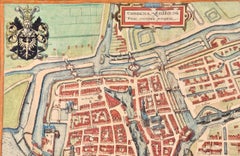
View of Emden, Germany: A 16th Century Hand-colored Map by Braun & Hogenberg

View of Emden, Germany: A 16th Century Hand-colored Map by Braun & Hogenberg

By Franz Hogenberg

Located in Alamo, CA

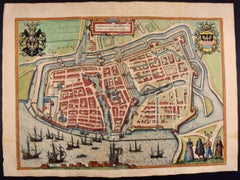
This is a 16th century original hand-colored copperplate engraved map of a bird's-eye View of Embden, Germany entitled " Emuda, vulgo Embden vrbs Frisia orientalis primaria" by Georg Braun & Franz Hogenberg, in volume II of their famous city atlas "Civitates Orbis Terrarum", published in Cologne, Germany in 1575. This is a beautifully colored and detailed map of Emden, a seaport in northwestern Germany, along the Ems River and perhaps portions of over Dollart Bay, near the border with the Netherland. The map depicts a bird's-eye view of the city from the southwest, as well as a view of the harbor and an extensive system of canals. Numerous ships of various sizes, as well as two rowboats containing numerous occupants are seen in the main waterway in the foreground and additional boats line two canals in the center of the city. Two men and two women are shown on a hill in the foreground on the right, dressed in the 16th century style of nobility. Two ornate crests are included in each corner. A title strap-work cartouche is in the upper center with the title in Latin. The crest on the right including Engelke up de Muer (The Little Angel on the Wall) was granted by Emperor Maximilian I in 1495. This is an English translation of an excerpt of Braun's description of Embden: "In Emden, the capital of East Frisia, rich merchants live in very fine houses. The city has a broad and well-situated harbour, which in my opinion is unique in Holland. Frisia and the whole of the Netherlands, for the ships can anchor here right under the city walls. They have also extended the harbour as far as the New Town, so that up to 400 ships can now find shelter here when the sea is rough." The emphasis on the harbor and waterways within the city highlights the importance of Emden's place as a seaport at this time. Embden developed from a Dutch/Flemish trading settlement in the 7th-8th centuries into a city as late as late 14th century. In 1494 it was granted staple rights, and in 1536 the harbour was extended. In the mid-16th century Emden's port was thought to have the most ships in Europe. Its population then was about 5,000, rising to 15,000 by the end of the 16th century. The Ems River flowed directly under the city walls, but its course was changed in the 17th century by the construction of a canal. Emden has canals within its city limits, a typical feature of Dutch towns, which also enabled the extension of the harbor. In 1744 Emden was annexed by Prussia and is now part of Germany. It was captured by French forces in 1757 during the Seven Years' War, but recaptured by Anglo-German forces in 1758. During the Napoleonic French era, Emden and the surrounding lands of East Frisia were part of the short-lived Kingdom of Holland. References:Van der Krogt 4, 1230, State 2; Taschen, Braun and Hogenberg...

Category

16th Century Old Masters Art by Medium: Engraving

Materials

Engraving

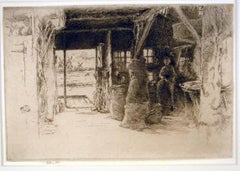
The Mill, Amsterdam, 1889

The Mill, Amsterdam, 1889

By James Abbott McNeill Whistler

Located in New York, NY

James Whistler (1834-1903), The Mill, 1889, etching and drypoint, signed in pencil with the butterfly on the tab and inscribed “imp”, and inscribed “first state” (twice) and annotated “Wunderlich” and signed again with the butterfly verso. Reference: Kennedy 413, first state (of 5). Glasgow 457, second state (of 6; see discussion below) (cf. Margaret F. MacDonald, Grischka Petri, Meg Hausberg, and Joanna Meacock, James McNeill Whistler: The Etchings, a catalogue raisonné, University of Glasgow, 2011) On laid paper, in very good condition, trimmed just outside of the platemark all around except for the tab by the artist, 6 1/4 x 9 3/8 inches. A very fine impression of this great rarity, printed in black/brown ink with a slight veil of plate tone. provenance: H. Wunderlich & Co., New York Louis B. Dailey, New York (Lugt 4500) sale, Sotheby’s, New York, October 31, 2003, lot 69 literature; Neue Lagerliste 122: James McNeill Whistler – Etchings...

Category

1880s Impressionist Art by Medium: Engraving

Materials

Drypoint, Etching

Chelsea Old Church, London

Chelsea Old Church, London

Chelsea Old Church. 1924. Etching, drypoint, and aquatint. Dickins 94. 5 3/8 x 8 (sheet 8 1/2 x 9 3/4). Edition 100 for The Print Collector's Club. A fine proof with tonal wiping, printed on cream wove paper. Signed and dedicated "W.R. Button from W. Walcot London 1930" in pencil. Chelsea Old Church, also known as All Saints, is an Anglican church, on Old Church Street, Chelsea, London SW3, England, near Albert Bridge. It is the church for a parish in the Diocese of London, part of the Church of England. Inside the Grade I listed building, there is seating for 400 people. There is a memorial plaque to the author Henry James (1843–1916) who lived nearby on Cheyne Walk. To the west of the church is a small public garden containing a sculpture by Sir Jacob Epstein. When he was seventeen,William Walcot began to study architecture under Louis Benois at the Imperial Academy of Art in Saint Petersburg. He went to Paris where he continued his studies at the Ecole des Beaux-Arts and the Atelier Redon. He practiced as an architect briefly in Moscow, designing the Hotel Metropole...

Category

Early 20th Century Modern Art by Medium: Engraving

Materials

Drypoint, Etching, Aquatint

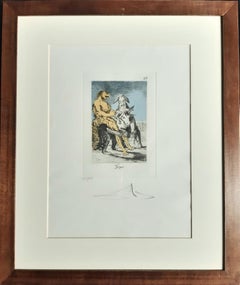
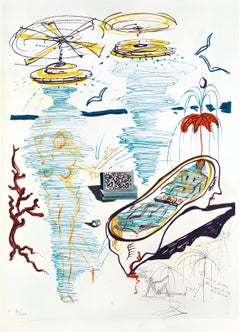
Baignoire à tornade liquide (Michler/Löpsinger 822-831; Field 75-13)

Baignoire à tornade liquide (Michler/Löpsinger 822-831; Field 75-13)

By Salvador Dalí­

Located in Fairfield, CT

Artist: Salvador Dali (1904-1989) Title: Baignoire à tornade liquide (Michler/Löpsinger 822-831; Field 75-13), Imaginations et Objets du Futur (Liquid tornado bathtub, Imaginations a...

Category

1970s Surrealist Art by Medium: Engraving

Materials

Mixed Media, Lithograph, Drypoint, Screen

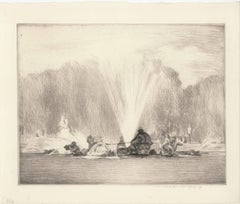
Rome, Palatine Hill - Etching and Dry-point by Cesare Biseo - 1898

Rome, Palatine Hill - Etching and Dry-point by Cesare Biseo - 1898

Located in Roma, IT

Rome, Palatine Hill is a wonderful etching and dry-point on paper by realized by Cesare Biseo in 1898. Hand-signed and dated with the description on the lower in pencil. In very go...

Category

1890s Art by Medium: Engraving

Materials

Drypoint, Etching

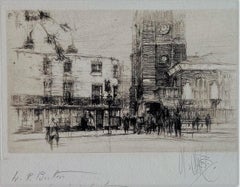
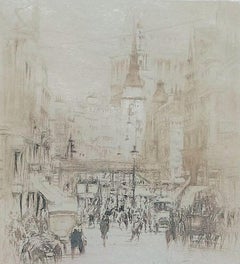
Ludgate Hill
Ludgate Hill

Ludgate Hill

Ludgate Hill. 1921. Etching, aquatint, and drypoint. Dickins 69. 5 5/8 x 5 1/8 (sheet 13 5/8 x 9 3/4). A fine proof with plate tone, printed on 'J Wha[tman] cream wove paper. Edition of 275 for the UK and 125 for the US. Signed in pencil. Ludgate Hill is a street that runs west from St. Paul's Churchyard to Ludgate Circus (built in 1864), and from there becomes Fleet Street. The Ludgate Hill railway station, between Water Lane and New Bridge Street, is a station of the London, Chatham, and Dover Railway. It was closed before World War II and the railway bridge and viaduct between Holborn Viaduct and Blackfriars stations was demolished in 1990 to enable the construction of the City Thameslink railway station in a tunnel. This also involved the regrading of the slope of Ludgate Hill at the junction. About halfway up Ludgate Hill is St Martin, Ludgate church. This was physically joined to the Ludgate. When he was seventeen, William Walcot began to study architecture under Louis Benois at the Imperial Academy of Art in Saint Petersburg. He went to Paris where he continued his studies at the Ecole des Beaux-Arts and the Atelier Redon. He practiced as an architect briefly in Moscow, designing the Hotel...

Category

Early 20th Century Modern Art by Medium: Engraving

Materials

Drypoint, Etching, Aquatint

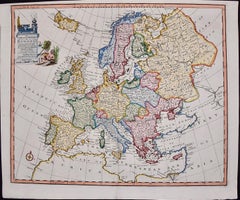
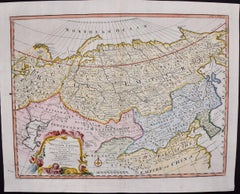
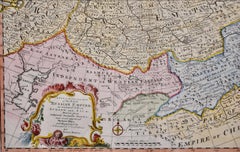
Map of the Russian Empire: An Original 18th Century Hand-colored Map by E. Bowen

Map of the Russian Empire: An Original 18th Century Hand-colored Map by E. Bowen

By Emanuel Bowen 1

Located in Alamo, CA

This is an original 18th century hand-colored map entitled "A New & Accurate Map of The Whole Russian Empire, As Contain'd Both In Europe and Asia, Drawn from Authentic Journals, Sur...

Category

Mid-18th Century Old Masters Art by Medium: Engraving

Materials

Engraving

Shere Mill Pond II (Large Plate)

Shere Mill Pond II (Large Plate)

By Seymour Haden

Located in New York, NY

Seymour Haden (1818-1910), Shere Mill Pond II (Large Plate), etching and drypoint, 1860, signed in pencil lower right [also signed in the plate lower right]. Schneiderman 37, sixth state (of 9). In generally good condition (see note below) with margins, on a cream/ivory laid paper, 7 x 13 1/2, the sheet 8 1/8 x 13 3/4 inches. A very good impression, with rich burr especially in the reeds toward the right. Provenance: Frederick Keppel and Co., New York, NY. Illustrated: Guichard, British...

Category

1860s Impressionist Art by Medium: Engraving

Materials

Drypoint, Etching

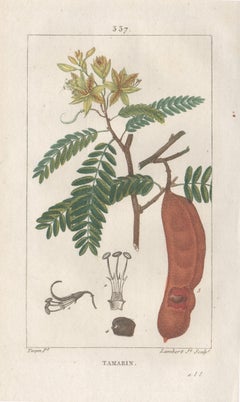
Tamarin (Tamarind), French botanical herbal medicinal flower engraving, 1818

Tamarin (Tamarind), French botanical herbal medicinal flower engraving, 1818

By After Pierre Turpin

Located in Melbourne, Victoria

French botanical flower engraving, 1818. Colour-printed stipple engraving by J Lambert after Pierre Turpin (1775-1840) From Francois Pierre Chaumeton's 'Flore Medicale' which portrayed a variety of flowers, trees and herbs which could be used for treating illnesses. The engravings were produced during the great period of French colour printing using the stipple-engraving process pioneered by the great botanical artist Pierre-Jospeh Redoute. The artist is the celebrated Pierre Jean Francois Turpin...

Category

Early 19th Century Victorian Art by Medium: Engraving

Materials

Engraving

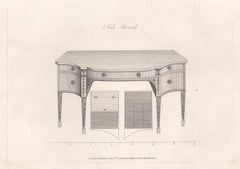
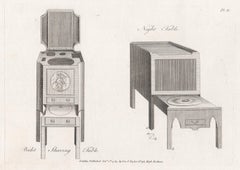
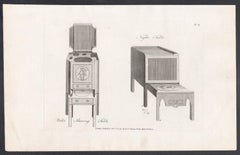
Side Board, Hepplewhite English Georgian furniture design engraving

Side Board, Hepplewhite English Georgian furniture design engraving

By George Hepplewhite 1

Located in Melbourne, Victoria

'Side Board' From George Hepplewhite's 'Cabinet-Maker and Upholsterer's Guide', published by I. and J. Taylor in 1788. These engravings are the only evidence of Hepplewhite's style ...

Category

Late 18th Century English School Art by Medium: Engraving

Materials

Engraving

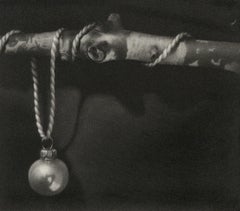
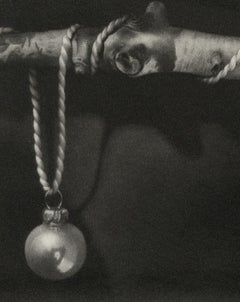
Bambalina (Are ornaments, decorations mere backdrop for true Christmas story)

Bambalina (Are ornaments, decorations mere backdrop for true Christmas story)

By Francisco Souto

Located in New Orleans, LA

Souto named this image Bambalina (backstage). It is an exclusive publication of Stone and Press Gallery. Francisco Souto was born in Venezuela. He received a BFA from Herron Schoo...

Category

21st Century and Contemporary American Modern Art by Medium: Engraving

Materials

Mezzotint

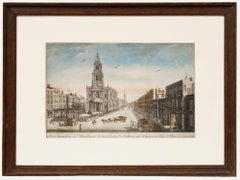
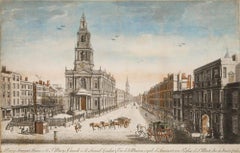
Thomas Bowles (c.1712-1767) - 1753 Engraving, A View of Somerset House

Thomas Bowles (c.1712-1767) - 1753 Engraving, A View of Somerset House

Located in Corsham, GB

A View of Somerset House, with St. Mary's Church in the Strand, London,' a 1753 engraving with hand colouring by Thomas Bowles (c.1712-1767). Inscribed in English and French below th...

Category

Early 18th Century Art by Medium: Engraving

Materials

Engraving

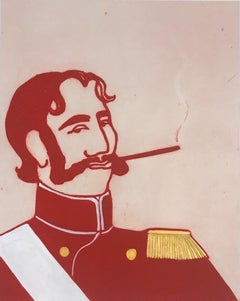
Flashman, Original art print, Kate Boxer

Flashman, Original art print, Kate Boxer

By Kate Boxer

Located in Deddington, GB

Flashman by Kate boxer consists of  red and orange tones that display a man in uniform  Additional information: Sold unframed Limited Edition of 30 Made with Drypoint, carborundu...

Category

21st Century and Contemporary Minimalist Art by Medium: Engraving

Materials

Paper, Drypoint

Salvador Dali "The Sun"

Salvador Dali "The Sun"

By Salvador Dalí­

Located in Boston, MA

Artist: Dali, Salvador Title: The Sun Series: The Hippies Date: 1969 Medium: drypoint with added color Framed Dimensions: 33" x 28" Unframed Dimensions: 25.5" x 20" Signature:...

Category

1960s Surrealist Art by Medium: Engraving

Materials

Drypoint

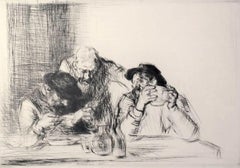
The Letter
The Letter

Edmund BlampiedThe Letter, 1921

$1,250Sale Price|28% Off

The Letter

By Edmund Blampied

Located in Plano, TX

The Letter. 1921. Drypoint. Appleby 107. 7 x 9 3/8 (sheet 10 1/2 x 15 7/16). Edition 100. Illustrated: Fine Prints of the Year, 1925; Salaman, Modern Masters of Etching: Edmund Blamp...

Category

Early 20th Century Modern Art by Medium: Engraving

Materials

Drypoint, Etching

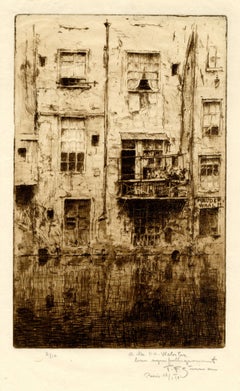
Old Houses in Amsterdam

Old Houses in Amsterdam

By T.F. Simon

Located in Fairlawn, OH

Old Houses in Amsterdam Drypoint, 1909 Signed and dedicated in pencil lower right. "A Mr. H. A. Webster, bien sympathiquement, T.F. Simon, Paris 26/10" Simon...

Category

Early 1900s American Impressionist Art by Medium: Engraving

Materials

Drypoint

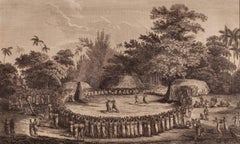
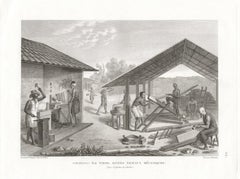
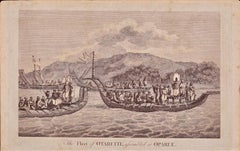
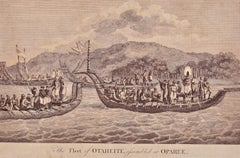
Coupang : Ile Timor. Divers Travaux Mécaniques. Early 19th century engraving.

Coupang : Ile Timor. Divers Travaux Mécaniques. Early 19th century engraving.

Located in Melbourne, Victoria

'Coupang : Ile Timor. Divers Travaux Mécaniques' Steel-engraving by Friedrich Schroeder (1768-1839) after F Garnier after Alphonse Pellion. Alphonse Pellion, artist and naval draughtsman, was a midshipman aboard l'Uranie on Louis de Freycinet's three-year scientific and ethnographic expedition around the world in 1817-1820. From Louis Freycinet's 'Voyage Autour du Monde, Entrepris par Ordre du Roi ... Execue sur les Corvettes de S. M. l'Uranie et la Physicienne Pendant les Annees 1817, 1818, 1819 et 1820', published in Paris in 1825. Louis Claude de Saulces de Freycinet (1779-1842) joined the French Navy in 1793 and was a veteran of the Baudin's voyage of discovery (1801-1803). He also completed the narrative of the expedition which appeared under the title of 'Voyage de Decouvertes aux Terres Australes'. In 1817 de Freycinet successfully lobbied the Government and King Louis XVIII agreed to support a new global campaign. Its mission was to finally determine the shape of the earth and return with detailed reports on geography, people, government, commerce and art of this new world. The 350-ton corvette Uranie had a complement of 120 men and 23 officers including the artist Jacques Arago and a priest. Over the next three years Uranie visited Australia, East Timor...

Category

Early 19th Century Victorian Art by Medium: Engraving

Materials

Engraving

Carlos Garcia De La Nuez Cuban Artist Original Hand Signed engraving

Carlos Garcia De La Nuez Cuban Artist Original Hand Signed engraving

By Carlos García de la Nuez

Located in Miami, FL

"Carlos Garcia De La Nuez (Cuba, 1959) 'El juego', 2005 engraving on iron 27.6 x 39.4 in. (70 x 100 cm.) Edition of 106 ID: GAR1649-001-106" ____________________________________________ "Carlos García de la Nuez. Born in Havana, Cuba, 1959. Lives and works in Mexico City, Mexico. He is a member of the renowned 1980s generation of Cuban artists, whose works differentiated from other contemporaries, noticeably in their intentional distancing from political criticism as a form of expression. This generation was interested in establishing and legitimizing new values of art for art’s sake, gathering inspiration from art movements happening outside of Cuba. Born in Havana, Cuba in 1959, the artist’s paintings explore abstraction and semiotics through the use of color, texture and scale. García de la Nuez participated in the historic 1982 exhibition titled 4x4 with colleagues Gustavo Acosta...

Category

Early 2000s Contemporary Art by Medium: Engraving

Materials

Paper, Ink, Engraving, Aquatint

Keresan Dancers
Keresan Dancers

Keresan Dancers

By Gene Kloss

Located in Fairlawn, OH

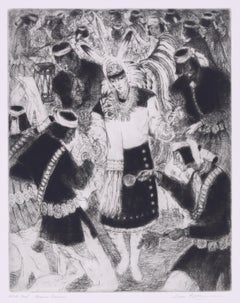
Keresan Dancers Etching & drypoint, 1962 Signed lower right (see photo) Inscribed lower left: "Artist's Proof Keresan Dancers" Depicts Keresan speaking peoples at Sam Felipe Pueblo Contemporary Puebloans are customarily described as belonging to either the eastern or the western division. The eastern Pueblo villages are in New Mexico along the Rio Grande and comprise groups who speak Tanoan and Keresan languages. Tanoan languages such as Tewa are distantly related to Uto-Aztecan, but Keresan has no known affinities. The western Pueblo villages include the Hopi villages of northern Arizona and the Zuni, Acoma, and Laguna villages, all in western New Mexico. Born Alice Glasier in Oakland, CA, Kloss grew up amid the worldly bustle of the San Francisco Bay Area. She attended the University of California at Berkeley, graduating with honors in art in 1924. She discovered her talents in intaglio printmaking during a senior-year course in figurative drawing. The professor, Perham Nahl, held up a print from Kloss’ first plate, still damp from the printing process, and announced that she was destined to become a printmaker. In 1925, Gene married Phillips Kloss, a poet and composer who became her creative partner for life. The match was uncanny, for in her own way Gene, too, was a poet and a composer. Like poetry, her artworks capture a moment in time; like music, her compositions sing with aesthetic harmony. Although she was largely self-taught, Kloss was a printmaking virtuoso. On their honeymoon the Klosses traveled east from California, camping along the way. They spent two week is Taos Canyon – with a portable printing press cemented to a rock near their campsite – where Gene learned to appreciate the wealth of artistic subject matter in New Mexico. The landscape, the cultures, and the immense sky left an indelible impression on the couple, who returned every summer until they made Taos their permanent home 20 years later. Throughout her life, Kloss etched more than 625 copper plates, producing editions ranging from five to 250 prints. She pulled every print in every edition herself, manually cranking the wheel of her geared Sturges press until she finally purchased a motorized one when she was in her 70s. Believing that subject matter dictated technique, she employed etching, drypoint, aquatint, mezzotint, roulette, softground, and a variety of experimental approaches, often combining several techniques on the same plate. She also produced both oil and watercolor paintings. Kloss’ artworks are filled with drama. Her prints employ striking contrasts of darkness and light, and her subjects are often illuminated by mysterious light sources. Though she was a devout realist, there is also a devout abstraction on Kloss’ work that adds an almost mythical quality. For six decades Kloss documented the cultures of the region-from images of daily life to those of rarely seen ceremonies. She and her husband shared a profound respect for the land and people, which made them welcome among the Native American and Hispanic communities. Kloss never owned a camera but relied instead on observation and recollection. Her works provide an inside look at the cultures she depicted yet at the same time communicate the awe and freshness of an outsider’s perspective. Although Kloss is best known for her images of Native American and Penitente scenes, she found artistic inspiration wherever she was. During the early years of their marriage, when she and Phil returned to the Bay Area each winter to care for their aging families, she created images of the California coast. And when the Klosses moved to southwestern Colorado in 1965, she etched the mining towns and mountainous landscapes around her. In 1970 the Klosses returned to Taos and built a house north of town. Though her artwork continued to grow in popularity, she remained faithful to Taos’ Gallery A, where she insisted that owner Mary Sanchez keep the prices of her work reasonable regardless of its market value. Kloss continued to etch until 1985, when declining health made printmaking too difficult. From her first exhibition at San Francisco’s exclusive Gump’s in 1937 to her 1972 election to full membership in the National Academy of Design, Kloss experienced a selective fame. She received numerous awards, and though she is not as well known as members of the Taos Society of Artists...

Category

1960s American Realist Art by Medium: Engraving
Materials

Drypoint

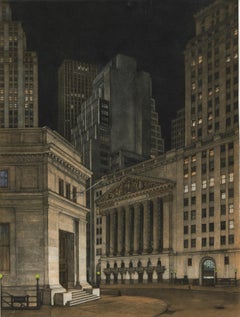
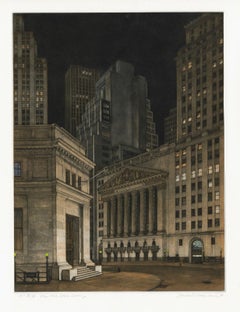
New York Stock Exchange (Symbolic icon of Wall St.'s vast power and wealth)

New York Stock Exchange (Symbolic icon of Wall St.'s vast power and wealth)

By Frederick Mershimer

Located in New Orleans, LA

This color intaglio of the "New York Stock Exchange" was issued in a limited edition of 100. This impression is one of the Artist Proofs from the edition. The Stock Exchange is seen from Federal Hall...

Category

21st Century and Contemporary Contemporary Art by Medium: Engraving
Materials

Mezzotint, Aquatint

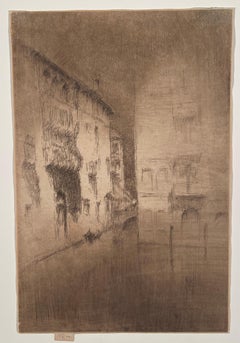
NOCTURNE: PALACES

NOCTURNE: PALACES

By James Abbott McNeill Whistler (circle)

Located in Portland, ME

Whistler, James A. M. NOCTURNE: PALACES. Glascow 200, Kennedy 202. Etching and drypoint with platetone, 1879-80. From the Second Venice Set. Signed on the tab with the butterfly in pencil. Printed in sepia on laid paper with no visible watermark. Trimmed just outside the platemark, leaving the tab. In excellent condition. As with all of the Whistler Nocturnes, each impressions of this print is different, dependng on how Whistler wiped and manipulated the platetone. 11 5/8 x 7 7/8 inches (plate and sheet, plus the tab). Framed to 20 x 16 inches. Provenance: Collection of Thomas Jefferson Coolidge, Jr. with his collection stamp (Lugt 1429) verso; Kennedy Galleries, with its inventory number a65609 in pencil verso, and with another inscription, "FWCX" in pencil, verso. Thomas Jefferson Coolidge, 1831-1920, was a great-grandson of Thomas Jefferson, a powerful Boston businessman, and an Ambassador to France. In 1875 he became the manager of the largest textile mill in America, the Amoskeag Mill in Manchester New Hampshire, and had major financial interests in the textile, banking, railroad, publishing and electrical industries. In 1880 he became the President of the Atchison, Topeka & Santa Fe Railway. He was one of the founders of the United Fruit Company...

Category

1870s Art by Medium: Engraving
Materials

Drypoint, Etching

Rockbear House, Devon, English Regency country house colour aquatint, 1818

Rockbear House, Devon, English Regency country house colour aquatint, 1818

Located in Melbourne, Victoria

'Rockbear House, Seat of Thos Porter Esq'. Rockbear House was originally built c. 1760-70 and owned by Sir John Duntze, the wealthy Exeter woollen merchant and banker. About 1820 t...

Category

Early 19th Century Victorian Art by Medium: Engraving

Materials

Engraving, Etching, Aquatint

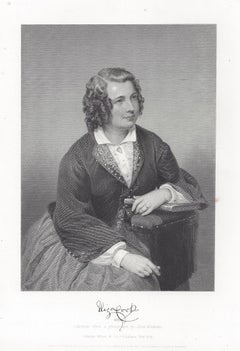
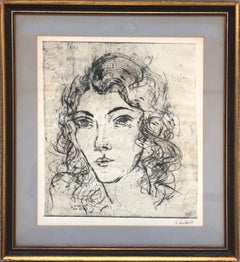
Eliza Cook, English author and Chartist poet, antique portrait engraving print

Eliza Cook, English author and Chartist poet, antique portrait engraving print

Located in Melbourne, Victoria

'Eliza Cook' Steel-engraving after a photograph by John Watkins, 1872. Facsimile signature below the image. Eliza Cook (1818 - 1889) was an English author, Chartist poet and writer...

Category

Early 19th Century Victorian Art by Medium: Engraving
Materials

Engraving

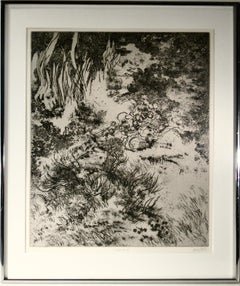
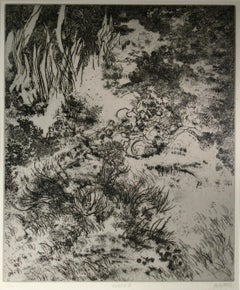
Vegetation III
Vegetation III

Vegetation III

By Peter Milton

Located in San Francisco, CA

This artwork titled "Vegetation III" 1963, is an original drypoint etching by noted American artist Peter Winslow Milton, b.1930. It is hand signed, titled, dated and numbered 14/50 ...

Category

Mid-20th Century American Modern Art by Medium: Engraving
Materials

Drypoint, Etching

Champignons, French antique mushroom chromolithograph, 1910

Champignons, French antique mushroom chromolithograph, 1910

Located in Melbourne, Victoria

'5 Amanita Mappa 6 Amanita junquillea' Antique French mushroom / fungi chromolithograph. From "Atlas des champignons de France, Suisse et Belgique," an atlas of French, Swiss, and Belgian fungi, illustrated by chromolithographs from watercolours by the illustrator Aimé Bessin...

Category

Early 20th Century Naturalistic Art by Medium: Engraving
Materials

Engraving, Lithograph

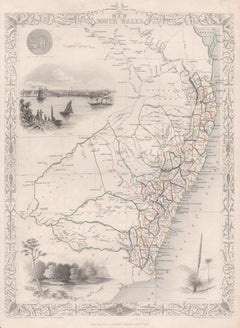
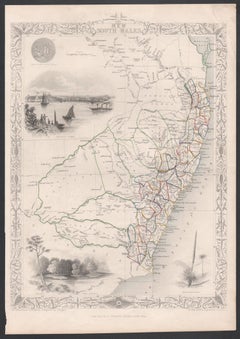
New South Wales, Australia, antique mid 19th century engraved John Tallis map

New South Wales, Australia, antique mid 19th century engraved John Tallis map

Located in Melbourne, Victoria

'New South Wales' With decorative border surrounds and vignettes of 'Sydney Cove'. 'The Murray' and 'Xanthorrhea'. 'Drawn and engraved by J Rapkin'. Published by John Tallis. 375m...

Category

1840s Victorian Art by Medium: Engraving
Materials

Engraving

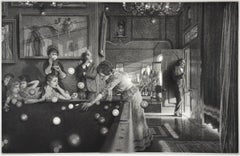
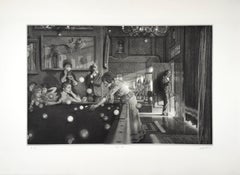
Points of Departure: Mary's Turn, by Peter Milton

Points of Departure: Mary's Turn, by Peter Milton

By Peter Milton

Located in Palm Springs, CA

Peter Milton’s Mary’s Turn reimagines a scene where Mary Cassatt and Edgar Degas engage in a game of billiards, reflecting their real-life friendship and rivalry. Cassatt leans forwa...

Category

1990s Contemporary Art by Medium: Engraving
Materials

Engraving, Etching

View of Greenwich from Deptford Yard, Thames, London, C18th English aquatint

View of Greenwich from Deptford Yard, Thames, London, C18th English aquatint

Located in Melbourne, Victoria

'View of Greenwich from Deptford Yard, Thames, London' Aquatint by JC Stadler after J Farmington. Published c1795 for Boydell's 'History of the River Thames'. Joseph Constantine St...

Category

Late 18th Century Naturalistic Art by Medium: Engraving

Materials

Engraving
Engraving art for sale on 1stDibs.
Find a wide variety of authentic Engraving art available on 1stDibs. There are many well-known artists whose body of work includes ceramic sculptures. Not every interior allows for large Engraving art, so small editions measuring 0.4 inches across are also available Prices for art made by famous or emerging artists can differ depending on medium, time period and other attributes. On 1stDibs, the price for these items starts at $106 and tops out at $981,948, while the average work can sell for $3,322.