By Bernhard Zimmer
Located in Los Angeles, CA
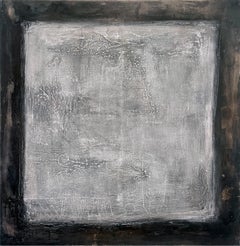
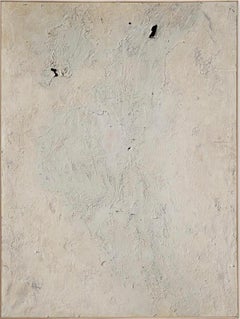
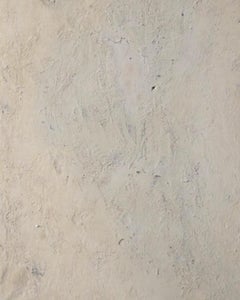
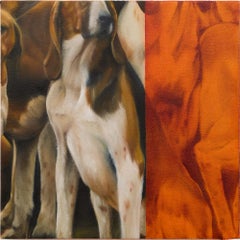
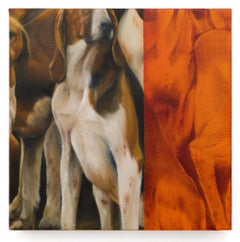
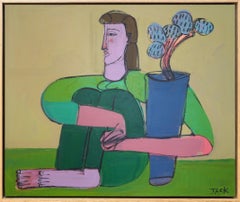
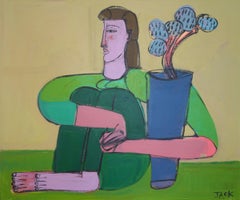
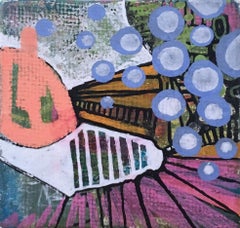
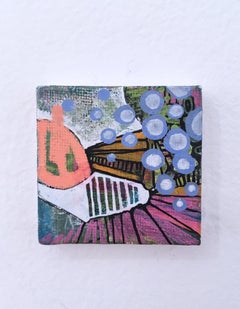
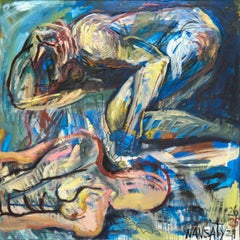
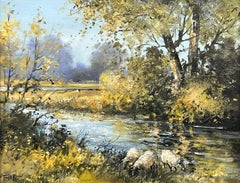
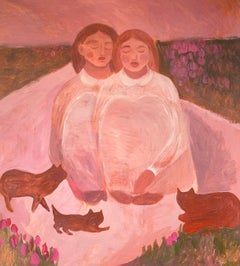
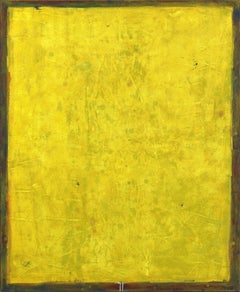
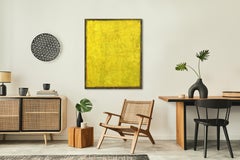
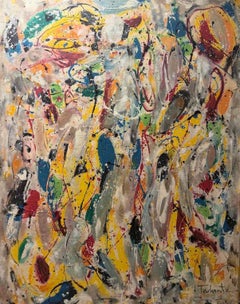
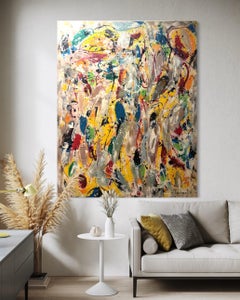
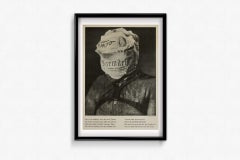
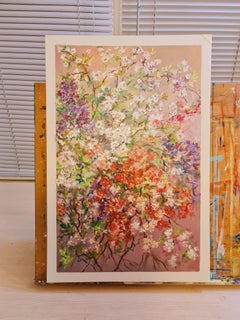
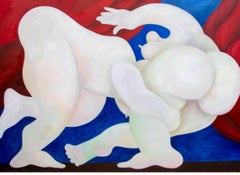
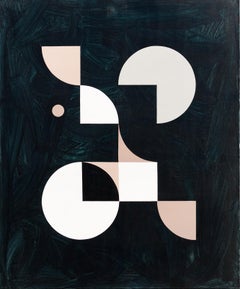
Bernhard Zimmer produces deeply layered, subtly textured abstract paintings that contain diametrically opposed elements—order and chaos, abstraction and representation, boldness and subtlety—in exquisite tension. Working with oil and mixed media on canvas, he paints in color fields of soft shapes and delicate lines. Grids of diaphanous faces and blocks of illegible text emerge in rich washes of color. Like reliefs, his compositions are built up from numerous layers of material and mark-making. Their surfaces shift with the light and the changing position of the viewer. Full of strength and fragility, Zimmer’s works reward patient viewing, revealing their rich visual nuances to those who take time to delve into their layers.
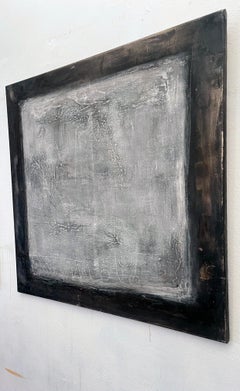
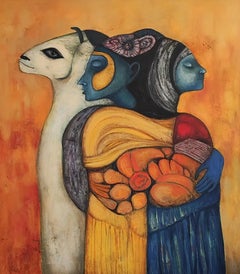
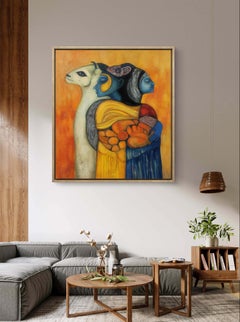
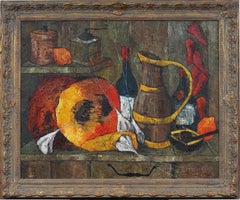
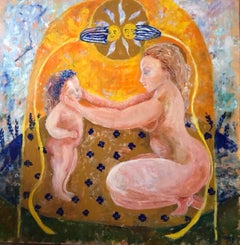
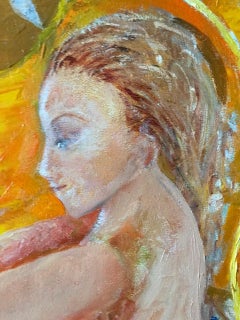
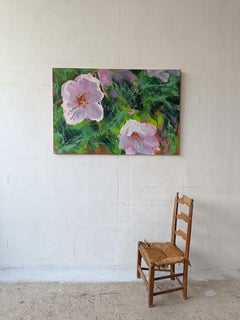
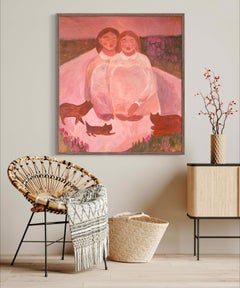
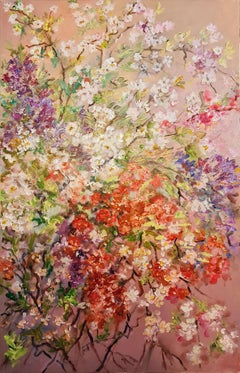
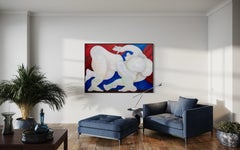
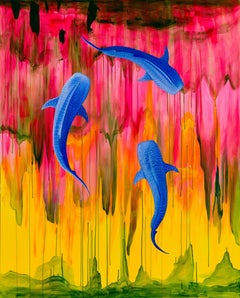
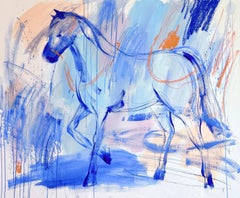
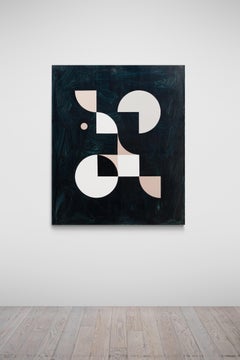
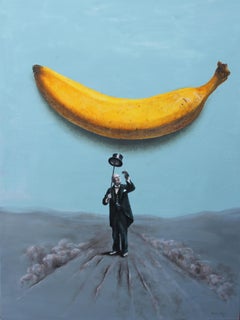
This 43 inch high by 35 inch wide original artwork is created with many layers of mixed media and oil on canvas. This painting is wired and ready to hang. The sides of the artwork are painted as a continuation of the front. It does not require framing. It is signed by the artist on the back of the artwork. Free local Los Angeles area delivery. Affordable Continental U.S. and worldwide shipping available. A certificate of authenticity issued by the art gallery is included.
Whether figurative or abstract, Zimmer’s artworks inherently alter the feeling of a space. One is absorbed in contemplation as perfectly layered colors and etched hieroglyphic text vibrate from within. Zimmer’s work oscillates between the Geometric Abstraction of Josef Albers and the sublimely layered color fields of Mark Rothko; with added figures that seem to be composed of shadows. This tension between form, color, and text creates canvases with glowing compositions that reverberate with emotion.
Bernhard Zimmer was born in 1957 in Stuttgart, Germany. From 1978 to 1984, he completed his education in Cultural Studies at Hildesheim. Zimmer continues to live and work in Cologne. He has exhibited in Hanover, Munich, Dusseldorf, Basel, Gent, Hong Kong, and Singapore to name a few. Zimmer has created a positive stir at major international art fairs such as Art Basel and Kunst Köln. His mysterious compositions pique the taste of the serious art collector.
Artspace Warehouse has been representing and exhibiting Bernhard Zimmer's original artworks since 2010. The gallery has been a 1stdibs partner since 2014 with consistently excellent reviews from clients worldwide. The gallery exhibits a large selection of affordable original artworks from established and emerging international artists with diverse backgrounds at high standards. Artspace Warehouse is known to provide accurate descriptions, images, reliable services, communication, and delivery.
REPRESNTATION
Artspace Warehouse, Los Angeles, CA
EXHIBTIONS
2021–2026 Artspace Warehouse, Los Angeles, USA
2018 Artspace Warehouse, Los Angeles, USA
2017 Galerie Manoel Nunes, Köln, Germany; Kunstwarenhaus, Zürich, Switzerland
2016 Galerie J. Huber, Rapperswil, Switzerland; “New Figuration and Neo-Expressionism,” Galerie Henze & Ketterer, Switzerland
2015 Art-co. Galerie, Aachen, Germany; Galerie Reitz, Köln, Germany; Artspace Warehouse, Los Angeles, USA
2014 Kunstwarenhaus, Zürich, Switzerland
2013 Galerie Biesenbach, Köln, Germany; “Suspended Moments,” Artspace Warehouse, Los Angeles, CA; HLP Galerie, Wesseling, Germany; Galerie Wilmsen, Hergatz, Germany
2012 Galerie Artco, Aachen, Germany; Artspace Warehouse, Los Angeles, USA
2011 Galerie Reitz, Köln, Germany
2010 Galerie Artco, Aachen, Germany; Galerie Reitz, Köln, Germany
2008 Galerie Reitz, Köln, Germany; Galerie Muenchow, Zürich, Switzerland
2006 Galerie Reitz, Köln, Germany; Wolkenburg, Köln, Germany; Galeria Sineu Estacio, Mallorca, Spain
2005 Galerie Muenchow, Zürich, Switzerland; Art Forum Riehen, Basel/Köln
2004 Fesser, Trier, Germany
2003 Hesse, Hannover; Hiscox, München, Germany; Döres, Köln, Germany
2002 CBH, Köln, Germany
2001 Galerie Depelmann, Hannover, Germany; Galerie Glanz, Erftstadt, Austria; Credit Suisse, Switzerland; Art Forum Riehen/Basel, Switzerland
1988–2001 Inter Art Galerie, Köln, Germany
1998 A. Hansrod, Singapore
1997 Museum Langes Tannen, Hamburg, Germany
1995 Alte Feuerwache, Köln, Germany
1993 Stollwerck-Museum, Köln, Germany
1992 EP Galerie, Düsseldorf, Germany
1990 Galerie Pului, Praterinsel München, Germany
1984 Kunstverein Holzminden, Germany; Kunstverein Hildesheim, Germany
1982 Galerie Berger, Bochum, Germany
PUBLIC COLLECTIONS
LB Bank Baden-Württemberg, Germany
Stadtsparkasse, Köln, Germany
R+V Versicherung, Köln, Germany
Oberpostdirektion, Köln, Germany
ART FAIRS
2017 AAF Hong Kong
2015 AAF New York, USA
2014 Houston Fine Art...
Category
21st Century and Contemporary Minimalist Art by Medium: Fabric
MaterialsCanvas, Mixed Media, Oil