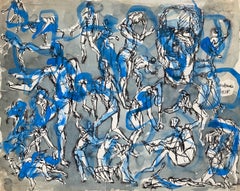
Want more images or videos?
Request additional images or videos from the seller
1 of 17
Sandu DarieUntitled (Cuban Artist Geometric Collage Composition)
Price:$5,500
$6,000List Price
About the Item
- Creator:Sandu Darie (1908, Romanian)
- Dimensions:Height: 36.5 in (92.71 cm)Width: 16 in (40.64 cm)Depth: 0.75 in (1.91 cm)
- Medium:
- Movement & Style:
- Period:
- Condition:
- Gallery Location:Wilton Manors, FL
- Reference Number:1stDibs: LU24527704582
About the Seller
4.9
Platinum Seller
Premium sellers with a 4.7+ rating and 24-hour response times
Established in 2007
1stDibs seller since 2015
444 sales on 1stDibs
Typical response time: 4 hours
Authenticity Guarantee
In the unlikely event there’s an issue with an item’s authenticity, contact us within 1 year for a full refund. DetailsMoney-Back Guarantee
If your item is not as described, is damaged in transit, or does not arrive, contact us within 7 days for a full refund. Details24-Hour Cancellation
You have a 24-hour grace period in which to reconsider your purchase, with no questions asked.Vetted Professional Sellers
Our world-class sellers must adhere to strict standards for service and quality, maintaining the integrity of our listings.Price-Match Guarantee
If you find that a seller listed the same item for a lower price elsewhere, we’ll match it.Trusted Global Delivery
Our best-in-class carrier network provides specialized shipping options worldwide, including custom delivery.You May Also Like
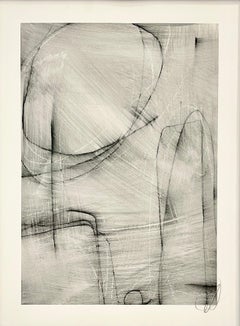
Geometric Line Studies C-1 by Murray Duncan Mix Media on Paper
By Murray Duncan
Located in Toronto, Ontario
Geometric Line Studies C-1 is an original mixed-media work on paper by Toronto artist Murray Duncan, part of his ongoing exploration of gestural geometry, spatial rhythm, and atmosph...
Category
21st Century and Contemporary Abstract Geometric Abstract Paintings
Materials
Paint, Paper, Ink, Pencil
$495
H 24 in W 18 in D 0.05 in
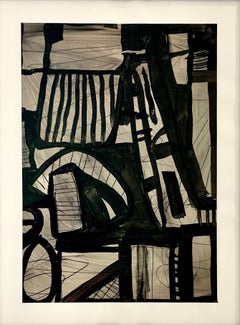
Untitled AP-120 — Mixed Media Work on Paper by Murray Duncan
Located in Toronto, Ontario
Untitled AP-120 is an expressive mixed-media work on paper by Toronto artist Murray Duncan, measuring 18 x 24 inches. In this composition, Duncan builds a dynamic interplay of bold b...
Category
21st Century and Contemporary Abstract Geometric Abstract Paintings
Materials
Paint, Paper, Ink, Pencil
$495
H 24 in W 18 in D 0.05 in
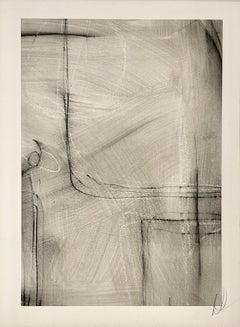
Geometric Line Studies C-2 by Murray Duncan Mix Media on Paper
By Murray Duncan
Located in Toronto, Ontario
Geometric Line Studies C-2 is an original mixed-media work on paper by Toronto artist Murray Duncan, part of his ongoing exploration of gestural geometry, spatial rhythm, and atmosph...
Category
21st Century and Contemporary Abstract Geometric Abstract Paintings
Materials
Paint, Paper, Ink, Pencil
$495
H 24 in W 18 in D 0.05 in
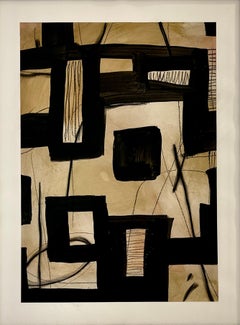
Untitled AP-121 — Mixed Media Work on Paper by Murray Duncan
Located in Toronto, Ontario
Untitled AP-121 is an expressive mixed-media work on archival cold-press watercolor paper, measuring 18 × 24 inches. In this composition, Toronto artist Murray Duncan builds a dynami...
Category
21st Century and Contemporary Abstract Geometric Abstract Paintings
Materials
Paint, Paper, Ink, Pencil
$495
H 24 in W 18 in D 0.05 in
Geometric Line Studies — Charcoal by Murray Duncan
By Murray Duncan
Located in Toronto, Ontario
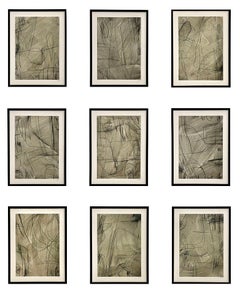
Geometric Line Studies —Charcoal - Nine-Piece Series is an exceptional collection of original mixed-media works on paper by Toronto artist Murray Duncan, presented as a cohesive gri...
Category
21st Century and Contemporary Abstract Geometric Abstract Paintings
Materials
Paint, Paper, Ink, Pencil
$4,200
H 24 in W 18 in D 0.05 in
Geometric Line Study C- 5 by Murray Duncan Mix Media on Paper
By Murray Duncan
Located in Toronto, Ontario
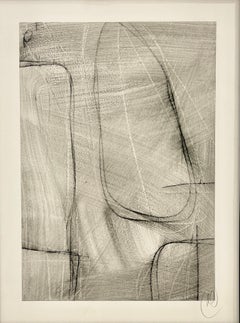
Geometric Line Studies C- 5 is an original mixed-media work on paper by Toronto artist Murray Duncan, part of his ongoing exploration of gestural geometry, spatial rhythm, and atmosp...
Category
21st Century and Contemporary Abstract Geometric Abstract Paintings
Materials
Paint, Paper, Ink, Pencil
$495
H 24 in W 314 in D 0.05 in
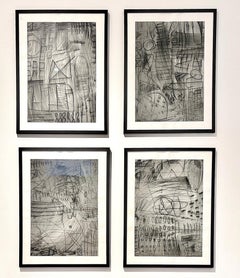
Field Study — Group of Four Mixed Media Works on Paper by Murray Duncan
Located in Toronto, Ontario
Field Study is a group of four mixed-media works on archival cold-press watercolor paper by Toronto artist Murray Duncan, each measuring 18 × 24 inches. Part of his ongoing Untitled ...
Category
21st Century and Contemporary Abstract Geometric Abstract Paintings
Materials
Paint, Paper, Ink, Pencil
$1,745
H 24 in W 18 in D 0.05 in
Geometric Line Studies C-4 by Murray Duncan Mix Media on Paper
By Murray Duncan
Located in Toronto, Ontario
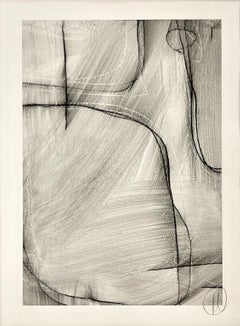
Geometric Line Studies C-4 is an original mixed-media work on paper by Toronto artist Murray Duncan, part of his ongoing exploration of gestural geometry, spatial rhythm, and atmosph...
Category
21st Century and Contemporary Abstract Geometric Abstract Paintings
Materials
Paint, Paper, Ink, Pencil
$495
H 24 in W 18 in D 0.05 in
Geometric Line Studies Neutral — Nine-Piece Drawing Series by Murray Duncan
By Murray Duncan
Located in Toronto, Ontario
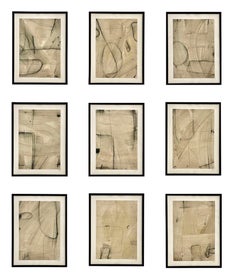
Geometric Line Studies Neutral — Nine-Piece Series is an exceptional collection of original mixed-media works on paper by Toronto artist Murray Duncan, presented as a cohesive grid i...
Category
21st Century and Contemporary Abstract Geometric Abstract Paintings
Materials
Paint, Paper, Ink, Pencil
$4,200
H 24 in W 18 in D 0.05 in
Untitled AP-122 is an expressive mixed-media work on archival cold-press waterco
By Murray Duncan
Located in Toronto, Ontario
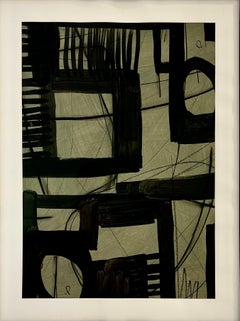
Untitled AP-122 is an expressive mixed-media work on archival cold-press watercolor paper, measuring 18 × 24 inches. In this composition, Toronto artist Murray Duncan builds a dynami...
Category
21st Century and Contemporary Abstract Geometric Abstract Paintings
Materials
Paint, Ink, Archival Paper, Pencil
Murray Duncan Untitled AP-122 is an expressive mixed-media work on archival cold-press waterco, 2025
$495
H 24 in W 19 in D 0.05 in
More From This Seller
View AllAbstract Constructivist Composition
By Alexander Rodchenko
Located in Wilton Manors, FL
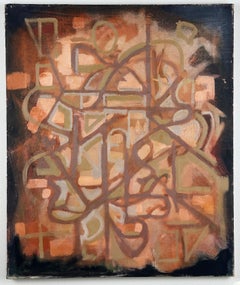
Constructivist abstract painting, ca. 1940
Oil on canvas, 20 x 24 inches.
Unframed, unsigned.
In all likelihood, the painting is American, not European or Russian.
Marking on ver...
Category
Mid-20th Century Abstract Geometric Abstract Paintings
Materials
Oil
Symphonic Forms
By Benny Collin
Located in Wilton Manors, FL
Stunning Synchromist abstract by Danish/American artist, Benny Collin (1896-1980). Symphonic Forms, 1955. Oil on wood panel measures 22 x 29 inches. Measures 24 x 31 inches in custo...
Category
Mid-20th Century Abstract Geometric Abstract Paintings
Materials
Oil, Wood Panel
$3,200 Sale Price
20% Off
Untitled (Hard Edge minimalist abstraction)
By Edward Landon
Located in Wilton Manors, FL
Edward August Landon (1911-1984). Untitled, ca. 1960. Oil on wood panel, 4 x 4 inches. Measures 7 x 7.25 inches framed. Signed lower right. Excellent condition. Minor staining in matting.
Birth place: Hartford, CT
Death place: Hartford
Addresses: NYC, 1947; Weston, VT, 1973
Profession: Printmaker, painter
Studied: Hartford Art School; ASL; also with Carlos Merida, Mexico.
Exhibited: S. Indp. A., 1940; Nat. Serigraph Soc., 1940-60; Am. Color Print Soc. Ann., 1945-65; Northwest Printmakers Ann., 1950-60; U.S. Info Agency Int. Circulating Exhib., 1952; Boston Printmakers Ann., 1955-70; nationally in print exhibs., since 1941; Doris Meltzer...
Category
Mid-20th Century Abstract Geometric Abstract Paintings
Materials
Wood, Oil

$960 Sale Price
20% Off
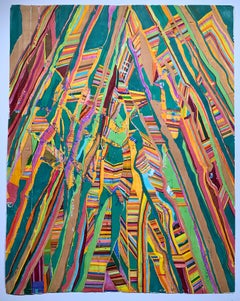
Untitled
By Roland Ayers
Located in Wilton Manors, FL
Roland Ayers (1932-2017). Untitled, 1983. Ink on paper, measures 17 x 23 inches. Unframed and unmounted. Signed and dated lower left. Ayers holds the distinction of having participated in the first important survey of African-Americans, Contemporary Black Artists in America, a 1971 show at The Whitney.
Biography:
Artist and art educator, Roland Ayers was born on July 2, 1932, the only child of Alice and Lorenzo Ayers, and grew up in the Germantown district of Philadelphia. Ayers served in the US Army (stationed in Germany) before studying at the Philadelphia College of Art (currently University of the Arts). He graduated with a BFA in Art Education, 1954. He traveled Europe 1966-67, spending time in Amsterdam and Greece in particular. During this period, he drifted away from painting to focus on linear figurative drawings of a surreal nature. His return home inaugurated the artist’s most prolific and inspired period (1968-1975). Shorty before his second major trip abroad in 1971-72 to West Africa, Ayers began to focus on African themes, and African American figures populated his work almost exclusively.
In spite of Ayers’ travel and exploration of the world, he gravitated back to his beloved Germantown, a place he endowed with mythological qualities in his work and literature. His auto-biographical writing focuses on the importance of place during his childhood. Ayers’ journals meticulously document the ethnic and cultural make-up of Germantown, and tell a compelling story of class marginalization that brought together poor families despite racial differences. The distinctive look and design of Germantown inform Ayers’ visual vocabulary. It is a setting with distinctive Gothic Revival architecture and haunting natural beauty. These characteristics are translated and recur in the artist’s imagery.
During his childhood, one of the only books in the Ayers household was an illustrated Bible. The images within had a profound effect on the themes and subjects that would appear in his adult work. Figures in an Ayers’ drawing often seem trapped in a narrative of loss and redemption. Powerful women loom large in the drawings: they suggest the female role models his journals record in early life. The drawings can sometimes convey a strong sense of conflict, and at other times, harmony. Nature and architecture seem to have an antagonistic relationship that is, ironically, symbiotic.
A critical turning point in the artist’s career came in 1971 when he was included in the extremely controversial Whitney Museum show, Contemporary Black Artists in America. The exhibition gave Ayers an international audience and served as a calling card for introductions he would soon make in Europe.
Ayers is a particularly compelling figure in a period when black artists struggled with the idea of authenticity. A questioned often asked was “Is your work too black, or not black enough?” Abstractionists were considered by some peers to be sell-outs, frauds or worse. Figurative* work was accused of being either sentimental or politically radical depending on the critical source. Ayers made the choice early on to be a figurative artist, but considered his work devoid of political content.
Organizations such as Chicago’ s Afri-Cobra in the late 1960‘s asserted that the only true black art of any relevance must depict the black man and woman...
Category
1980s Abstract Abstract Paintings
Materials
Paper, Ink
$960 Sale Price
20% Off
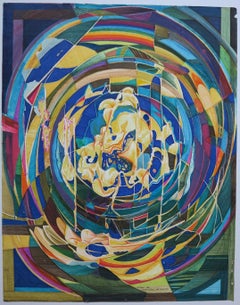
Improvisation abstract African-American artist painting.
By Roland Ayers
Located in Wilton Manors, FL
Roland Ayers (1932-2017). Improvisation, 2nd Series, #5. Ink on paper, measures 19 x 24 inches. Unframed and unmounted. Signed and dated lower right, titled lower left. There are a few minor areas of loss in margins as depicted in close-up photos. Additionally, there a a few minor tears in margins. Ayers holds the distinction of having participated in the first important survey of African-Americans, Contemporary Black Artists in America, a 1971 show at The Whitney.
Biography:
Artist and art educator, Roland Ayers was born on July 2, 1932, the only child of Alice and Lorenzo Ayers, and grew up in the Germantown district of Philadelphia. Ayers served in the US Army (stationed in Germany) before studying at the Philadelphia College of Art (currently University of the Arts). He graduated with a BFA in Art Education, 1954. He traveled Europe 1966-67, spending time in Amsterdam and Greece in particular. During this period, he drifted away from painting to focus on linear figurative drawings of a surreal nature. His return home inaugurated the artist’s most prolific and inspired period (1968-1975). Shorty before his second major trip abroad in 1971-72 to West Africa, Ayers began to focus on African themes, and African American figures populated his work almost exclusively.
In spite of Ayers’ travel and exploration of the world, he gravitated back to his beloved Germantown, a place he endowed with mythological qualities in his work and literature. His auto-biographical writing focuses on the importance of place during his childhood. Ayers’ journals meticulously document the ethnic and cultural make-up of Germantown, and tell a compelling story of class marginalization that brought together poor families despite racial differences. The distinctive look and design of Germantown inform Ayers’ visual vocabulary. It is a setting with distinctive Gothic Revival architecture and haunting natural beauty. These characteristics are translated and recur in the artist’s imagery.
During his childhood, one of the only books in the Ayers household was an illustrated Bible. The images within had a profound effect on the themes and subjects that would appear in his adult work. Figures in an Ayers’ drawing often seem trapped in a narrative of loss and redemption. Powerful women loom large in the drawings: they suggest the female role models his journals record in early life. The drawings can sometimes convey a strong sense of conflict, and at other times, harmony. Nature and architecture seem to have an antagonistic relationship that is, ironically, symbiotic.
A critical turning point in the artist’s career came in 1971 when he was included in the extremely controversial Whitney Museum show, Contemporary Black Artists in America. The exhibition gave Ayers an international audience and served as a calling card for introductions he would soon make in Europe.
Ayers is a particularly compelling figure in a period when black artists struggled with the idea of authenticity. A questioned often asked was “Is your work too black, or not black enough?” Abstractionists were considered by some peers to be sell-outs, frauds or worse. Figurative* work was accused of being either sentimental or politically radical depending on the critical source. Ayers made the choice early on to be a figurative artist, but considered his work devoid of political content.
Organizations such as Chicago’ s Afri-Cobra in the late 1960‘s asserted that the only true black art of any relevance must depict the black man and woman...
Category
1980s Abstract Abstract Paintings
Materials
Paper, Ink
$1,080 Sale Price
40% Off
Abstract Expressionist Dancers
Located in Wilton Manors, FL
Joseph Kardonne (1911-1985). Dancers, 1978. Gouache, watercolor and ink on paper, sheet measures 12 x 14.25 inches; 12 1/2 x 17 5/8 inches mounted on cardboard. Signed, dated and t...
Category
Mid-20th Century Abstract Expressionist Abstract Paintings
Materials
Ink, Watercolor, Gouache