Items Similar to Vue du Viviers (View of Viviers)
Want more images or videos?
Request additional images or videos from the seller
1 of 6
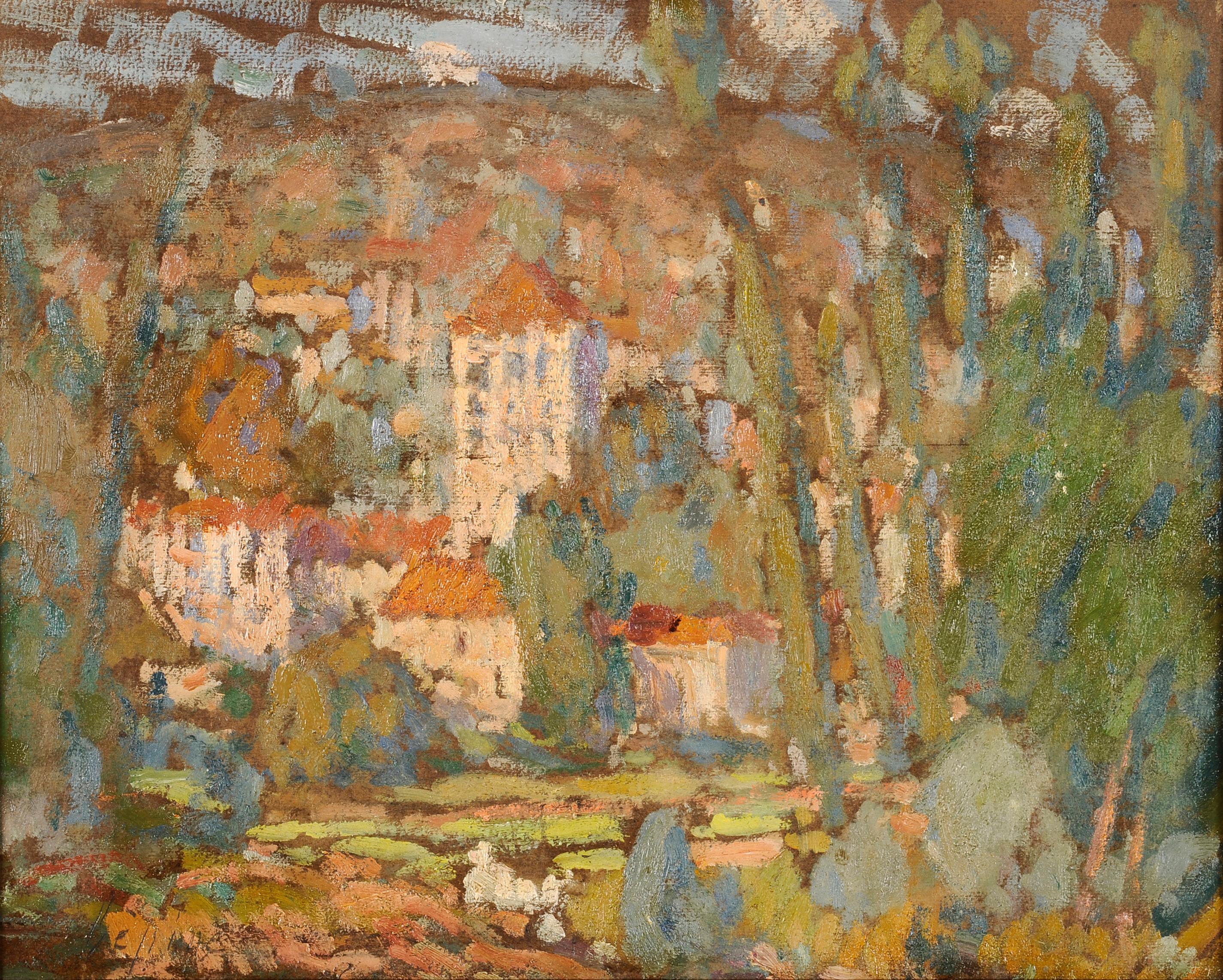
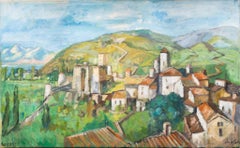
Robert DeborneVue du Viviers (View of Viviers)
$35,073.83
£25,715
€29,883.12
CA$48,329.99
A$52,726.74
CHF 27,918.49
MX$631,816.53
NOK 355,557.48
SEK 325,130.93
DKK 223,132.71
About the Item
Robert Deborne
Vue du Viviers (View of Viviers)
1870-1944
Oil on board, signed lower right
Image size: 27 x 41 1/4 inches (68.8 x 104.7 cm)
Contemporary-style frame
Provenance
Artist's estate
Vue du Viviers (View of Viviers)
Robert Deborne
Vue du Viviers (View of Viviers)
1870-1944
Oil on board, signed lower right
Image size: 27 x 41 1/4 inches (68.8 x 104.7 cm)
Contemporary-style frame
Provenance
Artist's estate
Enquire
View in Room
The most noticeable aspect of this image is, without a doubt, its heavy emphasis on geometry. Deborne has refined the town of Viviers to a series of white and copper blocks that denote houses, villas, and the Saint Vincent Cathedral, demonstrating what he considered to be the identifying features of his home town. In this particular composition, Cezanne’s influence on Deborne is readily apparent. Cezanne sought to limit all forms to their most basic shapes, and to utilise colour over light to create a sense of depth. Deborne has incorporated Cezanne’s approach into his own, breaking the topography of Viviers down into a series of quadrangles and utilising warmer and cooler tones to denote areas in light and in shade. This results in an almost two-dimensional perspective in which the buildings seem to rise towards the sky, rather than recede into the background.
As well as employing Cezanne’s approaches to composition, Deborne has also used a number of Impressionist and Post-Impressionist techniques. The work has been painted en plein air, an approach that was only made possible by the invention of ready-mixed tubes of paint. Deborne’s career indicates that he favoured this approach to art, as his oeuvre consists almost entirely of landscapes painted in situ. The use of broad brushstrokes and impasto also indicate Deborne’s Post-Impressionist alignment, expressing a more expressive and emotional approach to the act of painting. This is especially pertinent in Deborne’s case, due to his attachment to his hometown and its surroundings. The preference for emotion over realism is further accentuated by the vibrancy of the colours, which veer into the unnatural. The intense greens used for the trees and the brightness of the white utilised for the buildings offer a visual precursor to Deborne’s eventual Fauvist leanings.
Robert Deborne
Robert François Abel Deborne was born in 1870 in Viviers, a small cathedral city in the south of France. His father was a wealthy landowner and his mother was a member of a prestigious wine producing dynasty, located in nearby Gigondas. Little is known about Deborne’s childhood, but given his parentage it is likely to have been a comfortable one. He attended school in Viviers and then went to the École Nationale Supérieure des Beaux-Arts in Lyon. Here he resided in the Rue Fournet in the Brotteaux district.
In 1900, Deborne moved to Meudon, a suburb in Paris. Here he married Marie Morel and they had two children Jacques (1904 – 1976) and May (dates unknown).
At the Paris Salon of 1903, Deborne exhibited a nude study entitled Femme au Miroir, which has sadly since been lost. In 1905, he participated in the Salon d’Automne, a breakaway exhibition established by Renoir and Rodin as a rival to the summer Salon, which many artists felt had become too bureaucratic and conservative. At this very Salon, in 1905, the Fauvism movement was sensationally launched - a movement that Deborne was part of.
The Deborne family moved to Corsica in 1911, but the happiness was not to last. Shortly before the First World War, Deborne abandoned his family on the island and returned to his birthplace in Viviers. Here, he was able to pursue his passion for painting without encumbrance or distraction.
He exhibited many times at the Salon du Sud-Est over the following years, mainly landscapes of Vivarais and the neighbouring Rhone regions. There is no evidence that Deborne followed any profession at all, preferring instead to dedicate his life to his painting. Given his wealthy background, it is no great surprise that he felt no need to host solo exhibitions or engage with any patrons or dealers during his lifetime, as he had no need to earn his living. A legacy from a maiden aunt named Anna Barruol (on the wine-producing side of the family) also helped in this regard, enabling him to set up a studio at number 4, Avenue de la Station in Viviers in 1929.
Leading a rather solitary existence, Deborne was often to be seen carrying his easel, canvas and paintbox down the quiet country lanes of Viviers , apparently usually under the shelter of an oversized hat. He mainly stayed within the Vivirais region, with occasional excursions to the banks of the Rhone nearer to the location of his maternal family’s chateau and vineyards. He painted en plein air, returning again and again to the same locations to capture the differences in the seasons. In fact, all his known paintings only depict the various landscapes during the spring, summer and autumn – there are no known winter scenes. This seasonal approach is also part of the reason that Deborne did not exhibit at the Paris Salon and instead favoured the Salon d’Automne. The Paris Salon took place in summer, when Deborne was on his painting excursions in his local area. One of his few companions on these expeditions was the Post-Impressionist artist Paul Signac, who became close friends with Deborne after they exhibited together at the Salon du Sud-Est. Signac would often visit Deborne in Viviers, where he would reside at the Villa les Maraniousques.
In 1942, the Nazi forces occupied Viviers. Deborne hid his works in his studio, but passed away in July of 1944, only two months before the liberation of his hometown. His works remained safely hidden in his workshop for over 80 years, until the artist’s grandson stumbled across Deborne’s hidden trove. It is perhaps for this reason that Deborne’s works have been neglected by the Post-Impressionist canon.
- Creator:Robert Deborne (1870 - 1944, French)
- Dimensions:Height: 27 in (68.58 cm)Width: 41.25 in (104.78 cm)
- Medium:
- Movement & Style:
- Period:
- Condition:
- Gallery Location:London, GB
- Reference Number:1stDibs: LU52417339542
Robert Deborne Robert Deborne was born in 1870 in Viviers, a small cathedral town in the South of France. Little is known of the finer details of Deborne’s life and he remains rather an enigma. He was the son of a rich farmer, which gave him the opportunity to concentrate on his painting without financial pressures. Indeed, he was so dedicated that he abandoned his family just before the First World War, enabling him to focus completely on his work. Despite his prolificacy, he decided never to hold a solo exhibition nor had any connection with an art dealer to sell his works, although he exhibited often at the Salon d’Automne in Paris (becoming a member in 1923) and the Salon du Sud-Est. A noted talent in his day, Deborne exhibited with major artists at the Salon du Sud-Est. This salon exhibition was on during the winter, which was perfect for Deborne as he was able to paint all summer, his preferred season. The Salon was a forum for unknown, innovative, emerging artists. His paintings were hung alongside works by Paul Cézanne, Henri Matisse, Paul Gaugin, Georges Rouault, André Derain, Albert Marquet, Felix Vallotton and Edouard Vullard, to name but a few. Deborne was exhibiting at the Salon du Sud-Est in 1905, the year when the press coined the then rather disparaging term of ‘Fauves’ (French for ‘wild beasts’) to describe artists using strong, separate, unnatural colours in a representational manner, moving away from the realism of impressionism. The phrase stuck and the new movement of Fauvism was recognised, of which Deborne was certainly a part and influenced by. Deborne had a close friendship with Paul Signac with whom he exhibited on several occasions at the Salon de Sud-Est. Signac spent some time in Viviers with Deborne, and the two are known to have been together on the banks of the Rhône, sketching and painting. He mostly painted scenes of Viviers, his home town on the Rhône and its environs. He also featured Nebbio in Corsica in many of his paintings. His works are very much centered on these places that he loved, and his depictions of the Rhône, its banks and the hills beside it are poetically marked by variations in time, weather and season. He was particularly fond of painting at dawn and dusk. Robert Deborne returned to the same landscapes again and again, portraying them from different perspectives and in changing light. This was a deliberate choice – he wanted to share the beauty of these inspiring places that were immediately before him. Vivarais to Deborne was what the Montagne Sainte-Victoire was for Cézanne or the banks of the Creuse were for Guillaumin. These landscapes were his life, and every brushstroke illuminates the beauty of these places for others to experience.
About the Seller
5.0
Gold Seller
Premium sellers maintaining a 4.3+ rating and 24-hour response times
Established in 2007
1stDibs seller since 2014
85 sales on 1stDibs
Typical response time: 3 hours
- ShippingRetrieving quote...Shipping from: London, United Kingdom
- Return Policy
More From This Seller
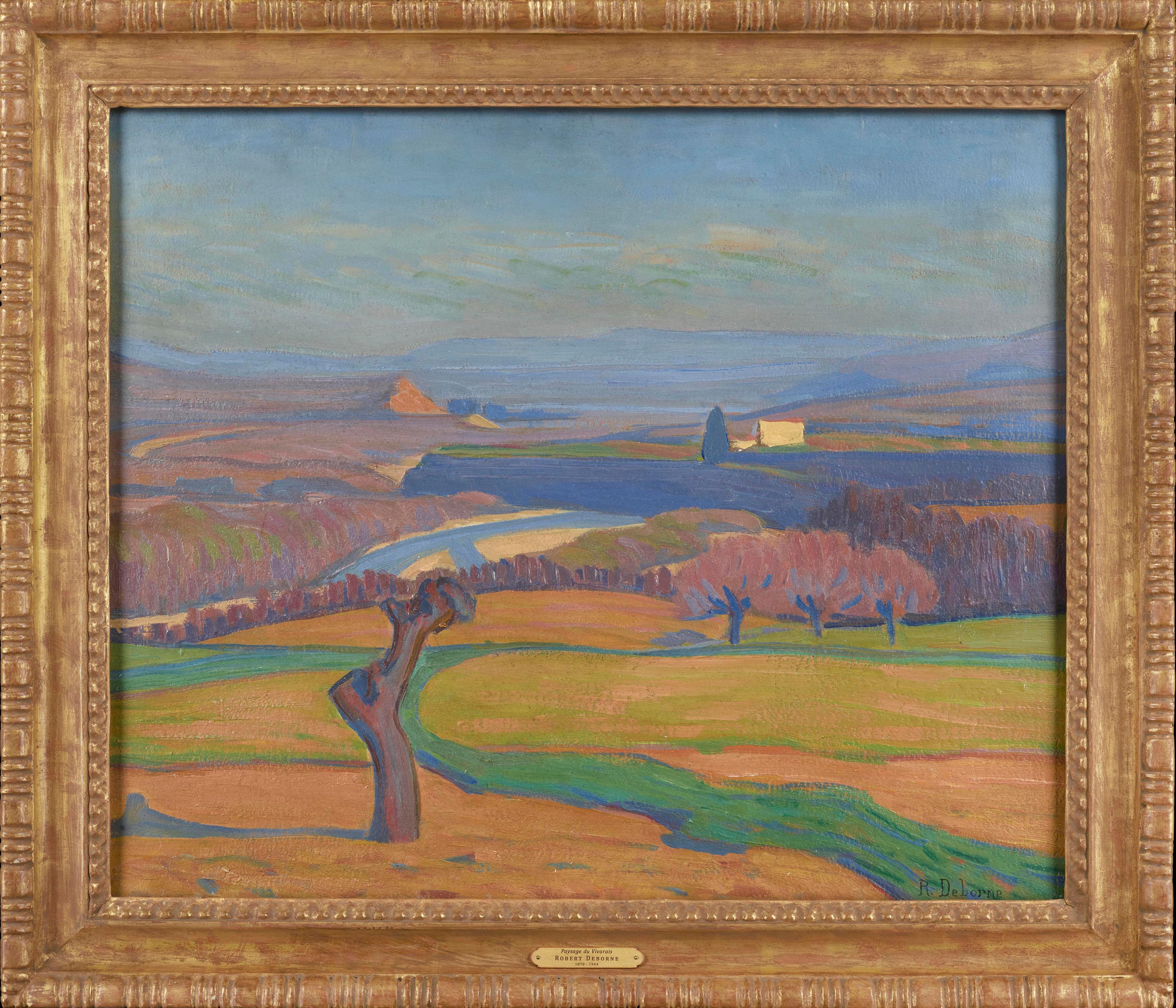
View AllPaysage du Viviers, French Post-Impressionist Oil Painting
Located in London, GB
Robert Deborne
French 1870 - 1944
Viviers
Oil on canvas, signed lower right
Image size: 25 3/4 x 20 1/2 inches
Gilt frame
Robert Deborne (1870-1944) ...
Category
Late 19th Century Post-Impressionist Landscape Paintings
Materials
Canvas, Oil
Paysage du Vivarais avec une Ferme, French Post-Impressionist, Signed Painting
Located in London, GB
Oil on canvas, signed bottom right
Image size: 26 1/4 x 19 3/4 inches (41.5 x 50 cm)
Hand made gilt frame
Provenance
Artist's Estate
This work is sold with a certificate of authe...
Category
Early 20th Century Post-Impressionist Landscape Paintings
Materials
Canvas, Oil
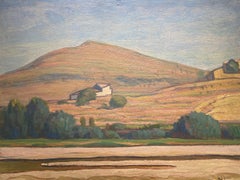
Ferme à Vivarais (Farm in Vivarais)
Located in London, GB
Robert Deborne
Ferme à Vivarais (Farm in Vivarais)
1870-1944
Oil on board, signed lower right
Image size: 20 1/3 x 26 3/4 inches (51.8 x 68 cm)
Contemporary-style hand-made frame
Th...
Category
Early 20th Century Post-Impressionist Landscape Paintings
Materials
Oil, Board
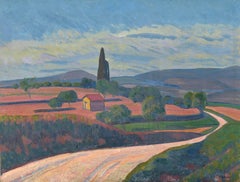
Les Cypres, French Post-Impressionist Landscape Painting, Signed
Located in London, GB
Robert Deborne
Les Cypres (The Cypresses)
1870 - 1944
Oil on canvas, signed lower right
Image size: 30 x 41 1/3 inches (76 x 105 cm)
Contemporary style handmade frame
This work is d...
Category
Early 20th Century Post-Impressionist Landscape Paintings
Materials
Canvas, Oil
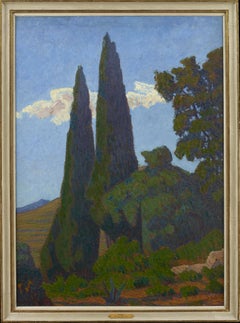
La Tour St Martin, par rapport au Ciel (St Martin's Tower against the Sky)
Located in London, GB
Robert Deborne
La Tour St Martin, par rapport au Ciel (St Martin's Tower against the Sky)
1870-1944
Oil on board, signed lower right
Image size: 26 1/2 x 21 inches (67.4 x 53 cm)
Han...
Category
Early 20th Century Post-Impressionist Landscape Paintings
Materials
Oil, Board
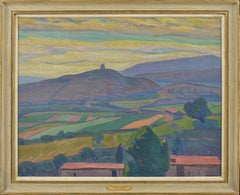
Champ de Blé au Vivarais (Wheat Field in Vivarais)
Located in London, GB
Robert Deborne
Champ de Blé au Vivarais (Wheat Field in Vivarais)
1870-1944
Oil on canvas, signed lower right
Image size: 27 x 41 inches (68.5 x 104 cm)
Hand made giltwood frame
Deb...
Category
Early 20th Century Post-Impressionist Landscape Paintings
Materials
Canvas, Oil
You May Also Like
View of Caillac in Lot department
Located in BELEYMAS, FR
Joseph LÉPINE
(Rochefort 1867 – Paris 1943)
The Church of Caillac - Lot
Oil on cardboard
H. 33 cm; W. 41 cm
Signed lower left
Joseph Lépine quickly moved to Bordeaux, where he studied under Louis-Alexandre Cabié, a well-known landscape painter in the region and teacher of many early 20th-century artists. Despite the master's warnings, he sought to confront the Parisian modernity of the late 19th century and discover Impressionist and even early Post-Impressionist styles. There, he became a student of the neoclassical painters Courtois and Girardot, both former students of the great Jean-Léon Gérôme.
In 1897, he exhibited at the Salon, where he sent landscapes of Provence. He became a member of the Société des Artistes Indépendants in 1905, the same year that the Fauves Matisse, Derain, and Vlaminck participated in and became known at the Salon d'Automne. A purchase by the French government of the 1908 Salon des Indépendants, "Vieille boutique," now housed at the Menton Museum, officially launched his career. He exhibited that year in London at the Royal Albert Hall, at the invitation of the Allied Artists' Association, demonstrating the painter's distinguished status within the international art scene. In Paris, the artist met several well-known painters of the time in the Montmartre and Montparnasse neighborhoods, including Matisse and Signac.
His painting is based in particular on his approach to material, light, and color, whose juxtapositions present a play of saturation and composition based on apparent reserves. After the First World War, Lépine returned more to his home region, where he painted landscapes around Bordeaux and up the Dordogne River to the charming landscapes of the lower Corrèze. He painted Beaulieu-sur-Dordogne, Argentat, and also the Lot region, with the built-up escarpments of Saint Circq Lapopie.
The city of Bordeaux and the French government acquired two of his works, representing a landscape near Verdelais and a view of the Saint-Michel Church in Bordeaux, in 1939 and 1941.
Considered today a very important figure in Bordeaux painting...
Category
1920s French School Landscape Paintings
Materials
Oil, Cardboard
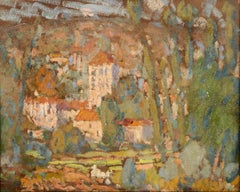
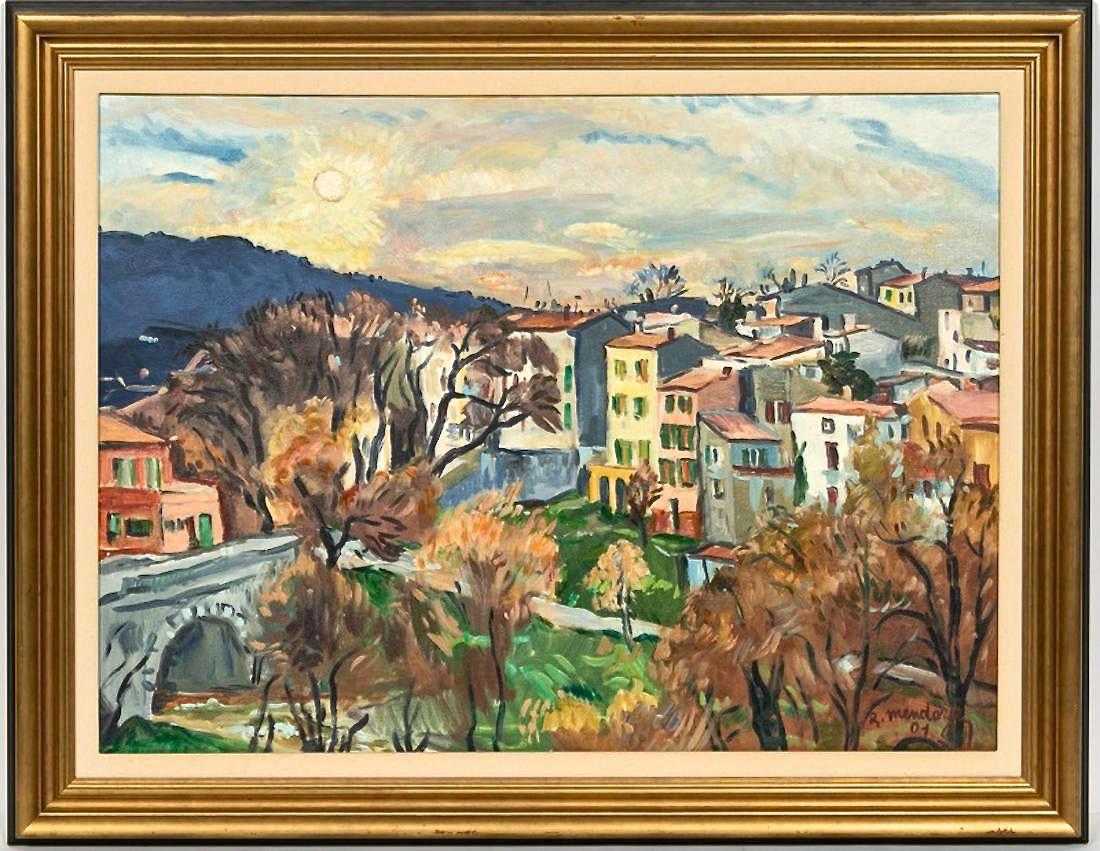
View of Sainte Anastasie France
By Robert Mendoze
Located in Lake Worth Beach, FL
View of Sainte Anastasie France.
Signed and dated 2001.
Robert Mendoze was a French Post Impressionist painter who was born in 1930- 2014.
After gradua...
Category
Early 2000s Post-Impressionist Landscape Paintings
Materials
Canvas, Oil

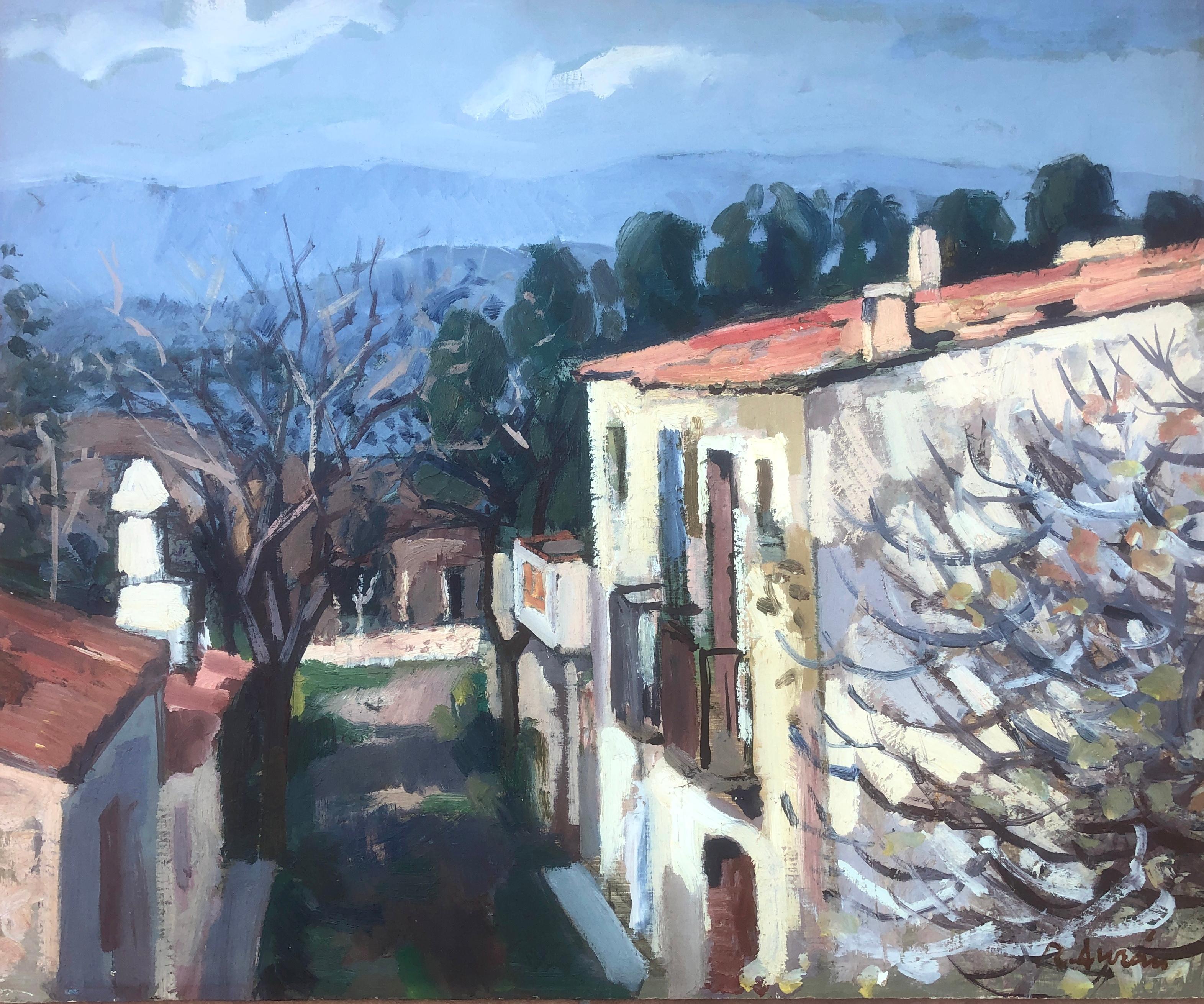
View of Spanish town Spain oil on board painting landscape
By Rafael Duran Benet
Located in Sitges, Barcelona
Rafael Duran Benet (1931-2015) - View of a Spanish town - Oil on panel
Oil measurements 53x64 cm.
Frameless.
Rafael Duran Benet (Terrassa, 1931 - Barcelona, 2015) is a Catalan paint...
Category
1990s Post-Impressionist Landscape Paintings
Materials
Oil, Board
$957 Sale Price
33% Off
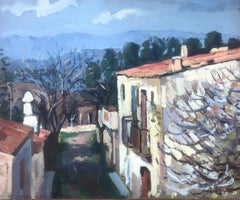
View over Provence Village French Impressionist Oil on Canvas
Located in Cirencester, Gloucestershire
View towards the Village (Provence)
by Guy Pichon (French 1933-2007)
oil on canvas, unframed
signed
canvas: 21 x 26 inches
provenance: private collection,...
Category
Late 20th Century Impressionist Landscape Paintings
Materials
Oil
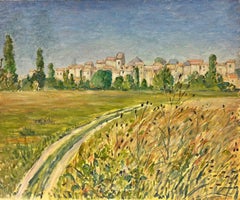
"Saissac" Impressionist Landscape of Southern French Commune
Located in Austin, TX
By Julian Petrie
This painting depicts the French commune Saissac in Southern France.
48" x 77.5" Oil on Canvas
Category
20th Century Impressionist Landscape Paintings
Materials
Canvas, Oil
Roussillion, Provence. Original Oil landscape, Impressionist, French countryside
Located in Maricopa, AZ
"Roussillion, Provence" by Richard Boyer is an original oil painting, with a dark wood frame and gold accent decorative molding. A picturesque French countryside landscape suited for...
Category
Early 2000s Italian School Landscape Paintings
Materials
Oil
$1,430 Sale Price
35% Off