Want more images or videos?
Request additional images or videos from the seller
1 of 8
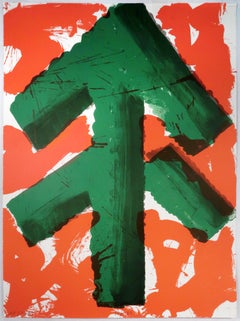
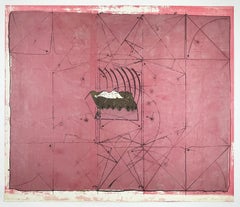
Howard HodgkinWelcome (Commissioned by Andy Warhol for Winter Olympics 1984, Sarajevo) Hodgkin1983
1983
Price:$1,600
About the Item
- Creator:Howard Hodgkin (1932, British)
- Creation Year:1983
- Dimensions:Height: 33.5 in (85.09 cm)Width: 24.4 in (61.98 cm)
- Medium:
- Movement & Style:
- Period:
- Condition:This print is not previously owned and has been in the archives of the original publisher since its publication.
- Gallery Location:New York, NY
- Reference Number:1stDibs: LU121126545362
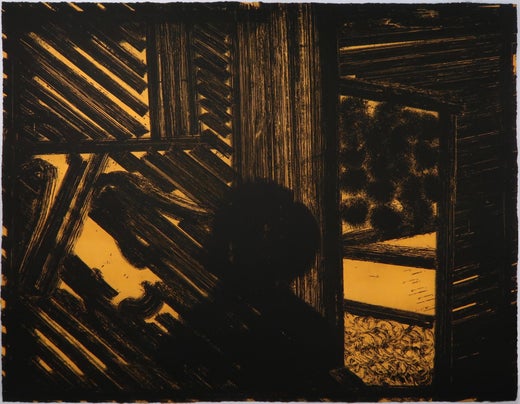
Howard Hodgkin
Sir Gordon Howard Eliott Hodgkin was a British painter and printmaker. His work is most often associated with abstraction.
About the Seller
5.0
Recognized Seller
These prestigious sellers are industry leaders and represent the highest echelon for item quality and design.
Gold Seller
Premium sellers maintaining a 4.3+ rating and 24-hour response times
Established in 1968
1stDibs seller since 2019
330 sales on 1stDibs
Typical response time: 1 hour
Authenticity Guarantee
In the unlikely event there’s an issue with an item’s authenticity, contact us within 1 year for a full refund. DetailsMoney-Back Guarantee
If your item is not as described, is damaged in transit, or does not arrive, contact us within 7 days for a full refund. Details24-Hour Cancellation
You have a 24-hour grace period in which to reconsider your purchase, with no questions asked.Vetted Professional Sellers
Our world-class sellers must adhere to strict standards for service and quality, maintaining the integrity of our listings.Price-Match Guarantee
If you find that a seller listed the same item for a lower price elsewhere, we’ll match it.Trusted Global Delivery
Our best-in-class carrier network provides specialized shipping options worldwide, including custom delivery.You May Also Like
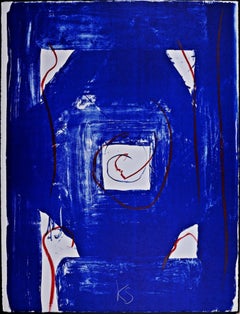
Kimber Smith, Abstract Expressionist Geometric Abstraction signed/n lithograph
By Kimber Smith
Located in New York, NY
KIMBER SMITH
Untitled Abstract Expressionist Geometric Abstraction, 1967
Lithograph on Rives paper
25 × 19 3/5 inches
Signed in silver...
Category
1960s Abstract Geometric Abstract Prints
Materials
Lithograph
$2,800
H 25 in W 29.75 in
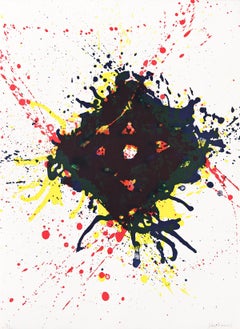
Untitled
By Sam Francis
Located in New York, NY
A very good impression of this scarce color lithograph on Rives BFK. Signed and numbered 13/50 in pencil by Francis. Published by Editions Daniel Papierski, Paris. From "Papierski Po...
Category
1990s Abstract Expressionist Abstract Prints
Materials
Color, Lithograph
Thistle
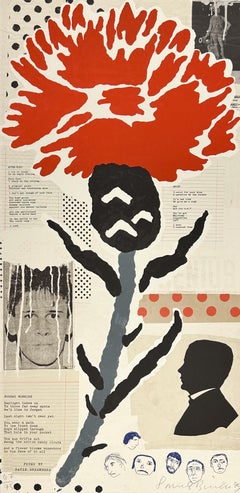
By Donald Baechler
Located in Washington, DC
Artist: Donald Baechler
Title: Thistle
Medium: Lithograph
Year: 1999
Edition: 67/75
Sheet Size: 45 1/2" x 22"
Signed: Hand signed and numbered in pencil
Category
1990s Abstract More Prints
Materials
Lithograph
Derriere le Miroir #201
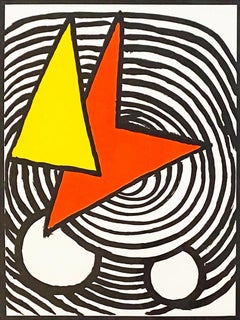
By Alexander Calder
Located in Washington, DC
Artist: Alexander Calder
Title: Derriere le Miroir #201
Portfolio: Derriere le Miroir #201
Medium: Lithograph
Date: 1973
Edition: Unnumbered
Frame Size: 21 1/4" x 17 1/4"
Sheet Size:...
Category
1970s Abstract Abstract Prints
Materials
Lithograph
An 8 Set--3 * An 8 Set--5
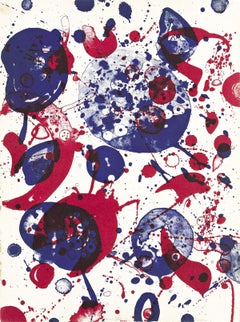
By Sam Francis
Located in New York, NY
Very good impressions of these extremely scarce, early color lithograph proofs, double-sided, on Rives BFK. Each an unique proof with color variations, aside from the edition of 100. One side signed, inscribed "monoprint" and numbered 10/16 in pencil. Printed by Joe Funk at Joseph Press...
Category
1960s Abstract Expressionist Abstract Prints
Materials
Color, Lithograph
Salon de Mai (After) Joan Miro
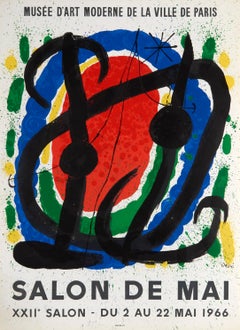
By Joan Miró
Located in New York, NY
This colorful abstract lithographic poster was printed in 1966 at the Atelier Mourlot in Paris to promote an exhibition of Miro's works at the Musee d'Art Moderne De La Ville in Paris.
Certificate of Provenance:
Each individual work of art carefully curated by Mourlot Editions comes with a Certificate of Provenance, signed, dated, stamped, and numbered by Eric Mourlot...
Category
1960s Abstract Expressionist Abstract Prints
Materials
Lithograph
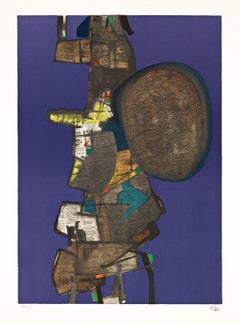
Bank Street
By Maurice Estève
Located in New York, NY
A very good impression of this color lithograph on Rives BFK. Signed and numbered 89/125 in pencil. Printed by Mourlot, Paris. Published by Atelier Mourlot, Ltd., New York.
Category
1960s Abstract Abstract Prints
Materials
Color, Lithograph
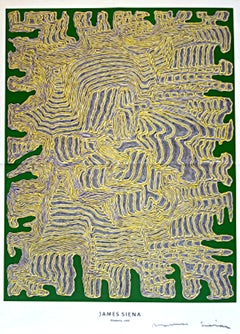
James Siena at PACE poster Hand signed by James Siena complex linear abstraction
By James Siena
Located in New York, NY
James Siena at PACE Gallery, 2019
Offset lithograph exhibition invitation (Hand signed by James Siena)
19 1/2 × 14 1/2 inches
Unframed
This exquisite fold...
Category
2010s Abstract Geometric Abstract Prints
Materials
Offset, Graphite, Pencil, Lithograph
$1,000
H 19.5 in W 14.5 in
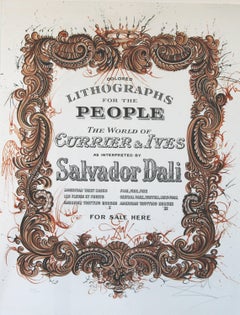
Dali's Presentation title page Interpretation of Currier & Ives series 1971
By Salvador Dalí
Located in Paonia, CO
Dali's Presentation is the title page for Dali's interpretation of the Currier & Ives series which reproduces the original ornate border used for the Currier & Ives logo with a Dalian touch by turning it upside down and putting his own crown on the top and adding calligraphic flourishes. It reads.... Colored Lithographs For the People... The World of Currier & Ives as interpreted by Salvador Dali Les Fleurs et Fruit, Fire, Fire, Fire, American Yacht Race, Central Park Winter New York, American Trotting...
Category
1970s Abstract Abstract Prints
Materials
Lithograph
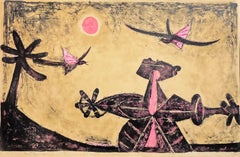
Observador de Pajaros
By Rufino Tamayo
Located in Missouri, MO
"Observador de Pajaros" 1950
By. Rufino Tamayo (Mexican, 1899-1991)
Edition 83/200 Lower Right
Signed Lower Left
Unframed: 15.5" x 22.5"
Framed: 21.75" x 28.25"
Rufino Tamayo (August 26, 1899- June 24, 1991)
A native of Oaxaca in Southern Mexico, Rufino Tamayo's father was a shoemaker, and his mother a seamstress. Some accounts state that he was descended from Zapotec Indians, but he was actually 'mestizo' - of mixed indigenous/European ancestry. (Santa Barbara Museum of Art). He began painting at age 11. Orphaned at the age of 12, Tamayo moved to Mexico City, where he was raised by his maternal aunt who owned a wholesale fruit business.
In 1917, he entered the San Carlos Academy of Fine Arts, but left soon after to pursue independent study. Four years later, Tamayo was appointed the head designer of the department of ethnographic drawings at the National Museum of Archaeology in Mexico City. There he was surrounded by pre-Colombian objects, an aesthetic inspiration that would play a pivotal role in his life. In his own work, Tamayo integrated the forms and tones of pre-Columbian ceramics into his early still lives and portraits of Mexican men and women.
In the early 1920s he also taught art classes in Mexico City's public schools. Despite his involvement in Mexican history, he did not subscribe to the idea of art as nationalistic propaganda. Modern Mexican art at that time was dominated by 'The Three Great Ones' : Diego Rivera, Jose Clemente Orozco, and David Alfaro Siqueros, but Tamayo began to be noted as someone 'new' and different' for his blending of the aesthetics of post Revolutionary Mexico with the vanguard artists of Europe and the United States.
After the Mexican Revolution, he focused on creating his own identity in his work, expressing what he thought was the traditional Mexico, and refusing to follow the political trends of his contemporary artists. This caused some to see him as a 'traitor' to the political cause, and he felt it difficult to freely express himself in his art. As a result, he decided to leave Mexico in 1926 and move to New York, along with his friend, the composer Carlos Chavez. The first exhibition of Tamayo's work in the United States was held at the Weyhe Gallery, New York, in that same year. The show was successful, and Tamayo was praised for his 'authentic' status as a Mexican of 'indigenous heritage', and for his internationally appealing Modernist aesthetic. (Santa Barbara Museum of Art).
Throughout the late thirties and early forties New York's Valentine Gallery gave him shows. For nine years, beginning in 1938, he taught at the Dalton School in New York.
In 1929, some health problems led him to return to Mexico for treatment. While there he took a series of teaching jobs. During this period he became romantically involved with the artist Maria...
Category
20th Century Abstract Abstract Prints
Materials
Lithograph
More From This Seller
View AllWelcome (Commissioned by Andy Warhol for Winter Olympics 1984, Sarajevo) Hodgkin
By Howard Hodgkin
Located in New York, NY
In 1983, Hodgkin was asked by Andy Warhol to contribute to the official art portfolio of the Olympic Winter games to be held in Sarajevo in 1984. He produced this striking print, wit...
Category
Late 20th Century Abstract Abstract Prints
Materials
Lithograph
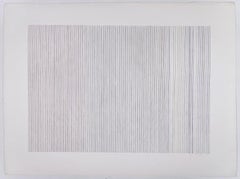
Narcissus Gene Davis minimalist abstract color field lithography with blue
By Gene Davis
Located in New York, NY
Vertical lines in muted colors take on the organic quality of handmade paper, resulting in this subtle iteration of Gene Davis’ iconic color field stripe paintings. The title "Narcis...
Category
1970s Abstract Abstract Prints
Materials
Lithograph
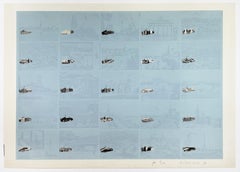
Düsseldorf (German Cities) by Dieter Roth monuments vintage postcard light blue
By Dieter Roth
Located in New York, NY
Düsseldorf (German Cities), 1970
24 x 33.8 in. / 61 x 86 cm
Screen print in one color on offset lithograph, black on white card. “for Paul” written in pencil lower middle. Signed and...
Category
1960s Abstract Abstract Prints
Materials
Lithograph, Screen
Goodbye Sharpie Dieter Roth black and white geometric abstract print
By Dieter Roth
Located in New York, NY
Dieter Roth
Goodbye Sharpie, 1972
44.5 x 54.3 / 113 x 138 cm
Planographic printing from zinc, white on dyed grey card
Edition of 30, this copy marked "Artist's Copy" and annotated II/IV
Dieter Roth was a printmaker from childhood: his first etching at the age of 16 was scratched into a soda can, and despite the failure of the can to print anything but a shadow of ink, he continued his study and by 20 was a serious apprentice in lithography to a well-known commercial artist, Eugen Jordi. Later he would continue to print and publish much of his own work. From the 1960s onward, his collaborations with Petersburg Press brought him international recognition and produced some of his most celebrated work: Six Piccadillies (1970), and Containers (1972).
Interested in chance and spontaneity, Roth was drawn to make prints using unorthodox means: according to mathematical principles, using equations, or by randomly rearranging blocks before they were run through the press. The artist often printed plates repeatedly in different colors, producing many variations from just a few images. He used the printing press and materials to interrogate the creative process rather than just as tools to achieve an edition of identical prints: for example, overprinting or under-inking, or running objects through the press (in 1968, a box of chocolates). Roth was not just interested in the chance of making pictures but the unpredictability of decay: allowing the grease from slices of meat to slowly contaminate paper, immersing a print in vegetable juice, clamping metal to paper to produce rust, and pouring chocolate over a finished work.
Roth would make hundreds of print editions and books over his career and blurred the line between genres and mediums, embarking on prodigious collaborations and experimentation with music, poetry...
Category
1970s Abstract Abstract Prints
Materials
Lithograph
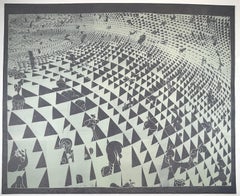
Wrapper by Dieter Roth abstract pink unique one of a kind print with shimmer
By Dieter Roth
Located in New York, NY
Wrapper, 1971
34 x 39.75 in. / 86.5 x 101 cm
Lithograph (Zinc) in 6 colours, 4 printing forms on white paper.
Edition of 19, numbered and signed, each a unique print, 3 AP.
Numbere...
Category
1970s Abstract Abstract Prints
Materials
Lithograph
A Muse by Dieter Roth set of ten abstract black and white lithographs
By Dieter Roth
Located in New York, NY
This series of abstract black and white Roth prints is full of movement, wildly diverse mark making, visceral, three-dimensional shapes and dynamic sketched lines. The artist worked on the same stone, erasing and adding elements with each step of the process to create a new print. Working on a lithography stone allowed him to scratch away areas with precision, revealing tightly hatched white lines that complement swaths of smokey gray. A Muse reflects Roth’s interest in permutations, decay, and a mathematical approach to making images. Each week the artist created a new variant: the series was originally planned as a set of 52.
Dieter Roth, A Muse 1971-1972
series of 12 prints (this set is an incomplete set of ten prints), lithographs from stone printed in black on white handmade paper
image 18.9 × 14.6 in / 48 x 37 cm paper 30.7 × 20.9 in / 78 x 53 cm
edition of 30 each, numbered and signed, 6 artists copies
this series 1/30
printed by Karl Schulz, Braunschweig and published by Petersburg Press, London
weekly variant printed from the same stone, began October 1971
(52 prints were planned, but only 12 were executed)
Condition: excellent with some dimples and wear commensurate with age
Catalogue Reference: Roth 185-196
Dieter Roth was a printmaker from childhood: his first etching at the age of 16 was scratched into a soda can, and despite the failure of the can to print anything but a shadow of ink, he continued his study and by 20 was a serious apprentice in lithography to a well-known commercial artist, Eugen Jordi. Later he would continue to print and publish much of his own work. From the 1960s onward, his collaborations with Petersburg Press brought him international recognition and produced some of his most celebrated work: Six Piccadillies (1970), and Containers (1972).
Interested in chance and spontaneity, Roth was drawn to make prints using unorthodox means: according to mathematical principles, using equations, or by randomly rearranging blocks before they were run through the press. The artist often printed plates repeatedly in different colors, producing many variations from just a few images. He used the printing press and materials to interrogate the creative process rather than just as tools to achieve an edition of identical prints: for example, overprinting or under-inking, or running objects through the press (in 1968, a box of chocolates). Roth was not just interested in the chance of making pictures but the unpredictability of decay: allowing the grease from slices of meat to slowly contaminate paper, immersing a print in vegetable juice, clamping metal to paper to produce rust, and pouring chocolate over a finished work.
Roth would make hundreds of print editions and books over his career and blurred the line between genres and mediums, embarking on prodigious collaborations and experimentation with music, poetry...
Category
1970s Abstract Abstract Prints
Materials
Lithograph