1970s Animal Prints
to
235
189
92
275
68
15
Overall Width
to
Overall Height
to
161
158
120
36
30
9
6
1
1
1
59
57
44
33
27
696
1,444
2,617
1,835
35
30
66
163
99
145
245
639
355
314
663
353
275
11
279
149
145
141
122
100
60
60
56
54
36
26
22
21
19
19
17
15
13
13
370
162
77
58
29
43
286
385
235
Period: 1970s
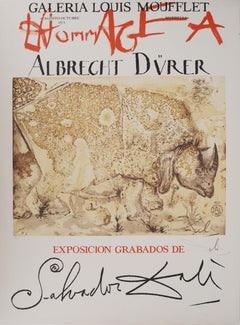
Rhinoceros, Tribute to Albrecht DURER - Lithograph poster SIGNED (Gaspar #1503)
Located in Paris, IDF
Salvador Dali (1904-1989)
Rhinoceros, Tribute to Albrecht DURER, 1971
Original lithograph
Hand Signed in pencil
Numbered / 300
On Guarro vellum 76 x 56.5 cm (c. 30 x 22 in)
REFEREN...
Category
Surrealist 1970s Animal Prints
Materials
Lithograph
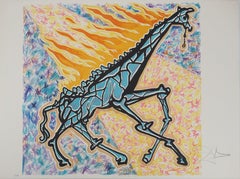
The Vitraux : Giraffe Afire - Original Lithograph Handsigned
Located in Paris, IDF
Salvador DALI
The Vitraux : Giraffe Afire, 1973
Original lithograph
Handsigned in pencil
Numbered edition of 250 copies
On Arches vellum, 48 x 65 cm (c. 18.9 x 25.6 inch)
Refere...
Category
1970s Animal Prints
Materials
Lithograph
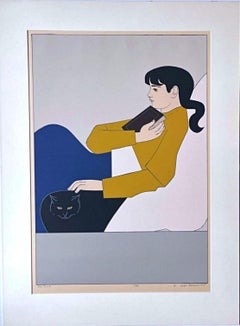
The Book, Silkscreen, S/N from the 1776-1976: USA Bicentennial Prints portfolio
By Will Barnet
Located in New York, NY
Will Barnet
The Book, from the 1776 USA 1976: Bicentennial Prints portfolio, 1975
Silkscreen in colors on white Arches wove paper
Pencil signed, titled and numbered 65/75 on the fron...
Category
Contemporary 1970s Animal Prints
Materials
Screen
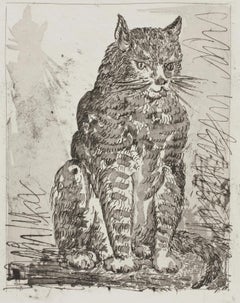
Picasso, Le Chat, Histoire naturelle (after)
Located in Auburn Hills, MI
Lithograph on papier bouffant des Papeteries de Casteljoux paper. Unsigned and unnumbered, as issued. Good condition. Notes: From the folio, Eaux-fortes originale pour des textes de ...
Category
Modern 1970s Animal Prints
Materials
Lithograph

$716 Sale Price
20% Off
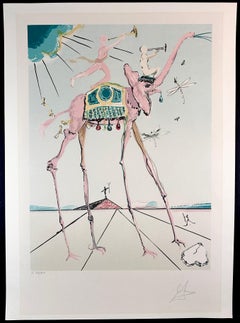
Celestial Elephant
Located in Hollywood, FL
ARTIST: Salvador Dali
TITLE: Celestial Elephant or Space Elephant
MEDIUM: Lithograph
SIGNED: Hand Signed
PUBLISHER: Levine and Levine for DALART
EDITION NUMBER: I 285/350
MEAS...
Category
Surrealist 1970s Animal Prints
Materials
Lithograph
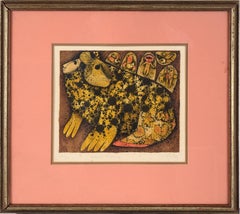
"Leopard Dreaming" - Fantasy Lithograph in Ink on Paper
Located in Soquel, CA
"Leopard Dreaming" - Fantasy Lithograph in Ink on Paper
Bold lithograph of a leopard by Carol Jablonsky (American, 1932-1992). A leopard is depicted in a fantastical, surrealist man...
Category
Modern 1970s Animal Prints
Materials
Paper, Ink, Lithograph
$360 Sale Price
20% Off
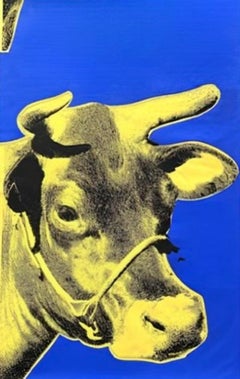
Cow (Feldman & Schellmann II.12), Andy Warhol
By Andy Warhol
Located in Auburn Hills, MI
Silkscreen in colours on wallpaper. Inscription: printed, “Andy Warhol” and “© Copyright Factory Additions 1971” in margins, as issued. Excellent condition. Notes: Published by Facto...
Category
Pop Art 1970s Animal Prints
Materials
Screen
$39,996 Sale Price
20% Off
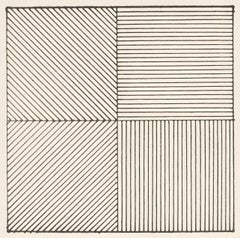
Lines in Four Directions, Rubber Stamp Portfolio, Sol LeWitt
By Sol LeWitt
Located in Auburn Hills, MI
Printer’s ink from rubber stamp on vélin d’Arches Satine paper. Paper Size: 8 x 8 inches. Inscription: Unsigned, as issued. Notes: From the folio, Rubber Stamp Portfolio, 1977. Publi...
Category
Minimalist 1970s Animal Prints
Materials
Printer's Ink
$5,996 Sale Price
20% Off
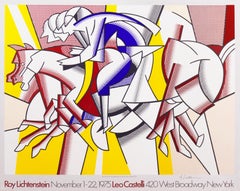
'The Red Horseman', Hand Signed, Leo Castelli Gallery Exhibition Poster, Pop Art
Located in Santa Cruz, CA
Vintage, 1975, Leo Castelli New York Gallery exhibition poster; signed, lower right, in felt pen, 'R. Lichtenstein' for Roy Lichtenstein (American, 1923-1997).
Roy Lichtenstein firs...
Category
Pop Art 1970s Animal Prints
Materials
Paper, Offset
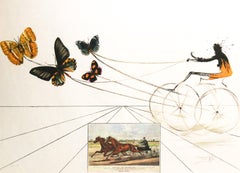
American Trotting Horses No. I
Located in Paonia, CO
American Trotting Horses No.1 is from the series “The World Of Currier And Ives as interpreted by Salvador Dali” published by Phyllis...
Category
Surrealist 1970s Animal Prints
Materials
Lithograph
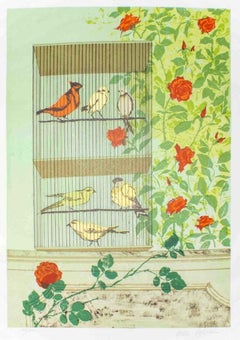
BIrds - Lithograph by Aldo Pagliacci - 1970s
Located in Roma, IT
Hand signed.
Edition of 130 copies (105/130).
Category
Contemporary 1970s Animal Prints
Materials
Lithograph
$270 Sale Price
25% Off
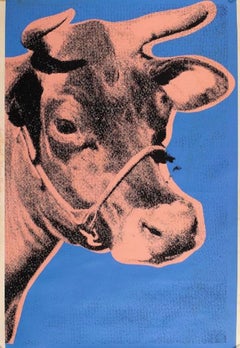
Cow
By Andy Warhol
Located in New York, NY
Color screenprint on wallpaper, 1976. With the printed text in the left margin "Andy Warhol Whitney Musemm".
Printed by Bill Miller's Wallpaper Studio, Inc., New York. Published b...
Category
Pop Art 1970s Animal Prints
Materials
Screen
$10,000
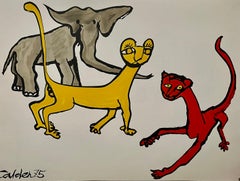
Elephant, Lions Bold Color Lithograph Alexander Calder Unfinished Revolution
Located in Surfside, FL
1975 Color Lithograph by Alexander Calder
from Our Unfinished Revolution portfolio
One of 250 copies, with the printed signature and date on offset paper.
This is not pencil signed ...
Category
American Modern 1970s Animal Prints
Materials
Lithograph
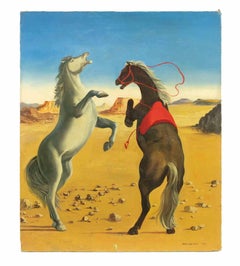
Horses - Oil on Canvas by Aldo Pagliacci - 1973
Located in Roma, IT
Bizarre Horses is an original contemporary artwork realized by Aldo Pagliacci in 1973.
Mixed colored oil on canvas.
Hand signed and dated on the lower right margin.
Titled and sig...
Category
Contemporary 1970s Animal Prints
Materials
Canvas, Oil
$1,441 Sale Price
25% Off
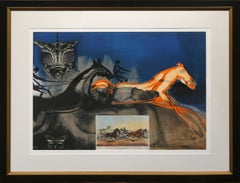
Salvador Dali, American Trotting Horses No. 2, Lithograph with collage
Located in Long Island City, NY
Artist: Salvador Dali
Title: American Trotting Horses No. 2
Date: 1971
Portfolio: Currier & Ives as Interpreted by Salvador Dali
Medium: Litho...
Category
Surrealist 1970s Animal Prints
Materials
Mixed Media, Lithograph
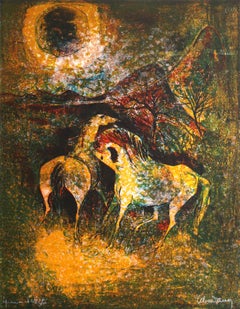
Horses in the Moonlight, Lithograph by Lebadang
By Hoi Lebadang
Located in Long Island City, NY
Artist: Lebadang, Vietnamese (1922 - 2015)
Title: Horses in Moonlight
Year: circa 1975
Medium: Lithograph, signed in pencil
Edition: Epreuve d'Artiste
Size: 25.25 x 19.5 in. (64.14 x...
Category
Modern 1970s Animal Prints
Materials
Lithograph
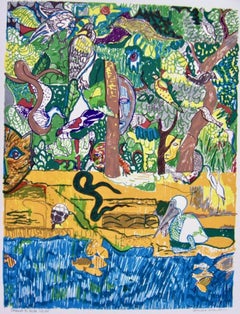
Romare Bearden, Dreams of Exile (Green Snake), 1971, by African-American, signed
Located in New York, NY
A North Carolina native, the African-American Romare Bearden spent most of his career in New York City. For several decades he was a social worker in Harlem. But of course he traveled widely, read and studied with great care, and created a phenomenal body of work.
This 1971 lithograph is a good example of his oeuvre -- far reaching though it may be. It speaks to his skill and knowledge of contemporary printmaking while featuring a complex subject representative of his interests.
A lush jungles is packed with flora and fauna. 'Green Snake' is part of the title and there is a particularly winsome reptile showing up so well on the sand-colored border between the dense forest and the aquamarine water. There are of course many other land and sea animals showing themselves -- even a curious ginger cat...
Category
Contemporary 1970s Animal Prints
Materials
Lithograph
Le Girafe en Feu (Field 76-2-A; Michler & Lopsinger 1449), Salvador Dali
Located in Fairfield, CT
Artist: Salvador Dali (1904-1989)
Title: Le Girafe en Feu
Year: 1976
Medium: Lithograph on Arches paper
Edition: CXLII/CCL; 250 Roman Numerals, plus proofs...
Category
Surrealist 1970s Animal Prints
Materials
Lithograph

$4,400 Sale Price
20% Off
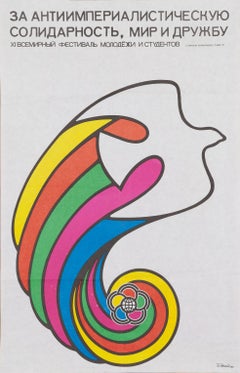
Cuba Youth Festival Havana USSR
Located in Columbia, MO
Ramon
Cuba Youth Festival Havana USSR
1978
Lithograph
Unknown edition
21.75 x 14 inches
Category
1970s Animal Prints
Materials
Lithograph
Meditation and Minou
By Will Barnet
Located in Buffalo, NY
Artist: Will Barnet, American (1911 - 2012)
Title: Meditation and Minou
Year: 1980
Medium: Lithograph and Serigraph on BFK Rives, signed and numbered in pencil
Edition: 40/150
Category
American Realist 1970s Animal Prints
Materials
Archival Paper, Lithograph

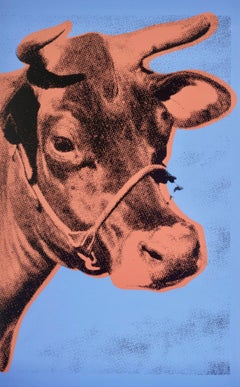
Cow (Feldman & Schellmann II.11A), Andy Warhol
By Andy Warhol
Located in Auburn Hills, MI
Silkscreen in colours on wallpaper. Inscription: printed, “Andy Warhol Whitney Museum,” in margin, as issued. Excellent condition. Notes: Published by Factory Additions, New York; pr...
Category
Pop Art 1970s Animal Prints
Materials
Screen
$39,996 Sale Price
20% Off
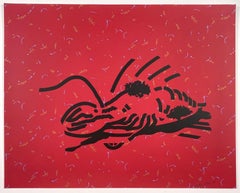
Dressed Lobster by Patrick Caulfield red British pop art still life
Located in New York, NY
Patrick Caulfield's cheeky, Pop Art take on a seaside favorite, dressed lobster, abstracted in graphic black strokes atop a field of red decorated with tiny sprigs. Signed by the art...
Category
Pop Art 1970s Animal Prints
Materials
Screen
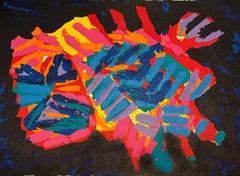
Devil Cat
By Karel Appel
Located in Washington, DC
Artist: Karel Appel
Title: Devil Cat
Portfolio: 1978 Cats
Medium: Lithograph in colors on Japon paper
Date: 1978
Edition: XV/LXV
Sheet Size: 24 3/4" x 32 1/4"
Signature: Hand signed ...
Category
Abstract 1970s Animal Prints
Materials
Lithograph
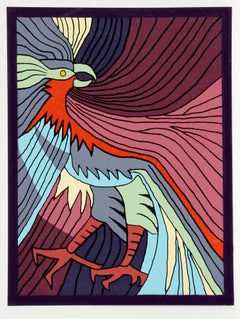
Baby Condor, Peruvian Art by Victor Delfin 1979
Located in Long Island City, NY
This print was created by Peruvian artist Victor Delfin. Delfin found the source of his inspiration in the ancient Paracan culture of Peru, part of the broader Incan civilization. De...
Category
Folk Art 1970s Animal Prints
Materials
Screen
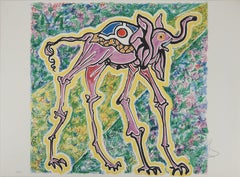
The Vitraux : Pink Elephant - Original Lithograph Handsigned (Field #76-2F)
Located in Paris, IDF
Salvador DALI
The Vitraux : Elephant-stork, 1973
Original lithograph
Handsigned in pencil
Numbered edition of 250 copies
On Arches vellum, 65 x 48 cm (c. 25.6 x 18.9 inch)
Refer...
Category
Surrealist 1970s Animal Prints
Materials
Lithograph
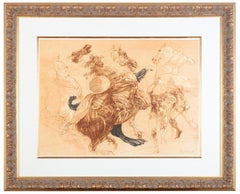
Homage a Leonardo d'Vinci (Battle Scene I from De La Bataille Vol. I)
Located in Milwaukee, WI
Art: 17" x 23 1/4"
Frame: 27 5/8" x 33 7/8"
Original color lithograph (VIII/L)
Signed lower right.
This original Weisbuch lithograph comes from th...
Category
1970s Animal Prints
Materials
Lithograph
20th century color lithograph poster cartoon Snoopy animal print dog bird text
Located in Milwaukee, WI
"Snoopy Come Home" is an original lithograph poster by Charles Schulz. It features the popular characters from Peanuts, Snoopy and Woodstock, on top of ...
Category
Pop Art 1970s Animal Prints
Materials
Lithograph

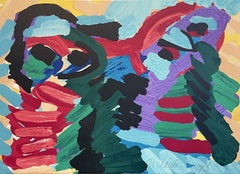
WITH MY BIRD Signed Lithograph, Figurative Abstract, Dutch Expressionist artist
By Karel Appel
Located in Union City, NJ
WITH MY BIRD is a rarely seen original limited edition lithograph by the Dutch artist Karel Appel printed using hand lithography techniques on archival printmaking paper, 100% acid f...
Category
Abstract 1970s Animal Prints
Materials
Lithograph
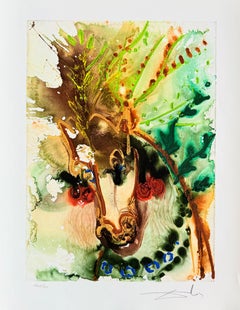
$2,890 Sale Price
24% Off
Bucéphale
Located in OPOLE, PL
Salvador Dali (1904-1989) - Bucéphale
Lithograph from 1970.
Dimensions of work: 68 x 50 cm
On B.F.K Rives paper as stated in the Field catalogue.
Reference: Field 72-6G
The work...
Category
Surrealist 1970s Animal Prints
Materials
Etching, Aquatint, Lithograph
$6,631 Sale Price
20% Off
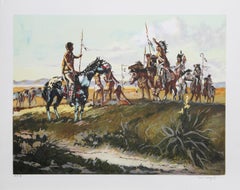
Mustangs on the Run, American Western Art Lithograph by Noel Daggett
By Noel Daggett
Located in Long Island City, NY
Noel Daggett, American (1925 - 2005) - Mustangs on the Run, Year: circa 1979, Medium: Lithograph, signed and numbered in pencil, Edition: 300, AP 40, Image Size: 19 x 23.5 inches...
Category
American Realist 1970s Animal Prints
Materials
Lithograph

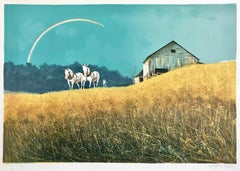
COOPER'S RAINBOW Signed Lithograph, Farm Landscape, Horses, Golden Field, Barn
By Wayne Cooper
Located in Union City, NJ
COOPER'S RAINBOW is an original, hand drawn, limited edition lithograph by the American painter Wayne Cooper printed in NYC using traditional hand lithogr...
Category
Realist 1970s Animal Prints
Materials
Lithograph
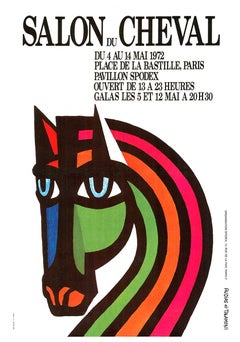
Original Salon du Cheval Place de la Bastille French Horse Racing affiche
Located in Spokane, WA
Original 1972 Salon du Cheval French Poster – Vintage Equestrian Art. Archival linen backed in Grade A condition, ready to frame
Step into the golden age of French equestrian culture...
Category
85 New Wave 1970s Animal Prints
Materials
Lithograph
We Shall Not Talk of War, American Western Art Lithograph by Noel Daggett
By Noel Daggett
Located in Long Island City, NY
Noel Daggett, American (1925 - 2005) - We Shall Not Talk of War, Year: circa 1979, Medium: Lithograph, signed and numbered in pencil, Edition: 300, AP 40, Image Size: 19 x 25 inc...
Category
American Realist 1970s Animal Prints
Materials
Lithograph
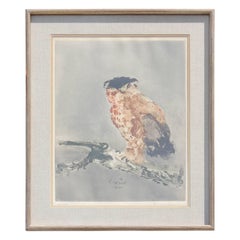
Owl On Branch Print Edition 92/120
By Kaiko Moti
Located in Houston, TX
Aquatint print of an owl perched on a branch with bright yellow eyes. The work is signed by the artist. It is framed in a wooden frame with a burlap matte.
Artist Biography: Kaiko M...
Category
Naturalistic 1970s Animal Prints
Materials
Aquatint
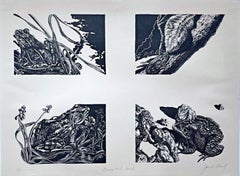
Frogs and Toad, Signed lithograph (AP), from Conspiracy: The Artist as Witness
By Jack Beal
Located in New York, NY
Jack Beal
Frogs and Toad, 1971
Hand signed in pencil by Jack Beal, annotated AP
One-color lithograph proofed by hand and pulled by machine from a zinc plate on Arches buff paper with deckled edges at the Shorewood Bank Street Atelier
Stamped, hand numbered AP, aside from the regular edition of 150 Stamped on reverse: COPYRIGHT © 1971 BY JACK BEAL, bears blind stamp
18 × 24 inches
Unframed
18 x 24 inches
Stamped on reverse: COPYRIGHT © 1971 BY JACK BEAL, bears distinctive blind stamp of publisher (shown) Publisher: David Godine, Center for Constitutional Rights, Washington, D.C.
Jack Beal's "Frogs and Toads" is a classic example of protest art from the early 1970s - the most influential era until today. This historic graphic was created for the legendary portfolio "CONSPIRACY: the Artist as Witness", to raise money for the legal defense of the Chicago 8 - a group of anti-Vietnam War activists indicted by President Nixon's Attorney General John Mitchell for conspiring to riot during the 1968 Democratic National Convention. (1968 was also the year Bobby Kennedy was killed and American casualties in Vietnam exceeded 30,000.) The eight demonstrators included Abbie Hoffman, Jerry Rubin, David Dellinger, Tom Hayden, Rennie Davis, John Froines, Lee Weiner, and Bobby Seale. (The eighth activist, Bobby Seale, was severed from the case and sentenced to four years for contempt after being handcuffed, shackled to a chair and gagged.) Although Abbie Hoffman would later joke that these radicals couldn't even agree on lunch, the jury convicted them of conspiracy, with one juror proclaiming the demonstrators "should have been shot down by the police." All of the convictions were ultimately overturned by the 7th Circuit Court of Appeals.
This lithograph has fine provenance: it comes directly from the original Portfolio: "Conspiracy The Artist as Witness" which also featured works by Alexander Calder, Nancy Spero and Leon Golub, Romare Bearden Sol Lewitt, Robert Morris, Claes Oldenburg, Larry Poons, Peter Saul, Raphael Soyer and Frank Stella - as well as this one by Jack Beal. It was originally housed in an elegant cloth case, accompanied by a colophon page. This is the first time since 1971 that this important work has been removed from the original portfolio case for sale. It is becoming increasingly scarce because so many from this edition are in the permanent collections of major museums and institutions worldwide.
Jack Beal wrote a special message about this work on the Portfolio's colophon page. It says, "In 1956, shortly after Sondra and I moved to New York, two friends were arrested and jailed for protesting air-raid drills. From them and their friends came our education. This work is dedicated to them and their families. "In Memory of Patricia McClure Daw and AL Uhrie" - This print was made for their children.
Jack Beal Biography:
Early in his career Walter Henry “Jack” Beal Jr. painted abstract expressionist canvases, because he believed it was “the only valid way to paint.” By the early 1960s he totally altered his approach and fully repudiated abstraction. Turning to representation, he painted narrative and figurative subjects, often enhanced by bright colors and dramatic perspectives.
Beal was born in Richmond, Virginia, and from 1950 to 1953 he attended the Norfolk Division of William and Mary College Polytechnic Institute, (now Old Dominion University) where he studied biology and anatomy. Shifting gears, he sought art training at the School of the Art Institute of Chicago where he focused on drawing, and met his wife, artist Sondra Freckelton. His art history instructor encouraged her students to paint in the manner of established artists, and to that end he frequented the Institute’s galleries. For Beal this was significant: “Until I saw pictures of real quality I had tended to think of painting as just so much self-indulgent smearing around, but when I saw masterpieces by Cézanne and Matisse, and other painters of similar stature, I was bowled over; suddenly I realized the force of art.”
After spending three years (1953–1956) at the Art Institute, Beal concluded his studies there without getting a terminal degree, thinking it was only useful if he wanted to teach, which, at the time, he did not. He also took courses at the University of Chicago in 1955 and 1956. During this period he married Freckelton, a fellow student and sculptor who began her career working in wood and plastic. Together they moved to New York’s SoHo District before its transformation from a wasteland of sweatshops and small factories into an arts district. They were active with the Artist Tenants Association which was instrumental in getting zoning laws changed so that artists could live and work in the well-lit lofts.
Embracing what came to be called “New Realism,” Beal initially painted an occasional landscape as well as earthy-toned still lifes which consisted of jumbled collections filled with personal objects. His signature style started with a series of female nudes—all modeled by Freckelton—based on Greek mythology. These were large canvases with flat paint surfaces, dramatic foreshortening, and unusual perspectives. He further enlivened them with vivid colors, stark lighting, and dynamic patterns derived from textiles and overstuffed furniture. He stopped painting nudes after two episodes. The first came as he was loading a canvas of his naked wife onto a truck in lower Manhattan; several laborers walked by and started to fondle and kiss the painting. On the one hand he felt his wife had been violated, while on the other he was pleased that his realism was so convincing. The second occurred after a solo exhibition in Chicago at which the reception had been sponsored by Playboy magazine. A few days later he was approached by a publicist and asked if Playboy bunnies could be photographed in front of his paintings. He refused.
Some portrait commissions came Beal’s way, but he preferred only portraying friends. More significant were four large murals on the History of Labor in America, the 20th Century: Technology (1975), which he undertook for the headquarters of the United States Department of Labor in Washington. Following a historical timeline, the themes were: colonization, settlement, nineteenth century industry, and twentieth century technology. The unveiling ceremony was attended by government officials and Joan Mondale, an arts advocate and wife of the vice-president. The reviewer for the Washington Post wrote enthusiastically: “They’re heartfelt and they’re big (each is 12 feet square). Their many costumed actors (the Indian, the trapper, the scientist, the hardhat, the capitalist in striped pants, the union maid, etc.) strike dramatic poses in dramatic settings (a seaside wood at dawn, an outdoor blacksmith’s forge, a 19th-century mill, a 20th-century lab). The lighting is theatrical. Beal’s compositions, with their swooping curves and bunched diagonals, are as complicated as his interwoven plots.” To accomplish the murals Beal assembled a team of assistants and models, much in the manner of Renaissance masters, which included artist friends and Freckelton. who by then was painting brightly colorful still lifes.
A second mural commission ensued from New York City’s Metropolitan Transit Authority for two twenty-foot long installations for the Times Square Interborough Rapid Transit Company subway station. Beal’s designs for The Return of Spring (installed in 2001, three days after the terrorist attacks in New York, Washington, DC and Philadelphia) and The Onset of Winter (installed in 2005), Beal captured the appearance of his models in an oil painting made to the scale of the intended mosaic. A collaboration with Miotto Mosaics, the canvases were shipped to the Travisanutto Workshop, in Spilimbergo, Italy, where craftsmen fabricated the design to glass mosaics. The Return of Spring depicted construction workers and other New Yorkers in front of a subway kiosk and an outdoor produce market and in The Onset of Winter, a crowd watches a film crew recording a woman entering the subway as snow falls against the city’s skyline. Harkening back to some of his early nudes based on Greek myth, Persephone, goddess of fertility and wife of Hades, appears in both. The symbolism is pertinent, since she spent six months each year below ground.
Although he disparaged teaching early on, Beal and Freckelton offered four summertime workshops on their farm in Oneonta, New York. He was an instructor at the New York Academy of Art, a graduate art school he helped to establish in 1982. Returning to Virginia, he taught at Hollins College...
Category
Realist 1970s Animal Prints
Materials
Lithograph
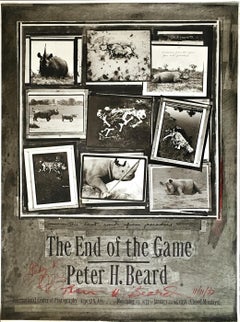
The End of the Game Rare 1970s ICP print (Hand Signed, inscribed by Peter Beard)
By Peter Beard
Located in New York, NY
Peter Beard
The End of the Game (Hand Signed by Peter Beard), 1977
Offset Lithograph Poster (hand signed by Peter Beard and inscribed with a heart)
Han...
Category
Contemporary 1970s Animal Prints
Materials
Lithograph, Offset
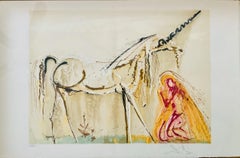
La Licorne (The Unicorn), Surrealist Lithograph by Salvador Dali
Located in Long Island City, NY
A woman with flowing gold hair kneels before a unicorn. The horse theme was frequently used by Dali throughout his career. The horse is seen as a symbol of beauty and elegance as wel...
Category
Surrealist 1970s Animal Prints
Materials
Lithograph
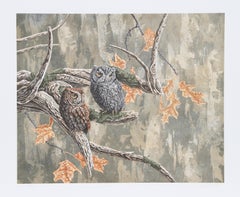
Owl Haven, American Realist Lithograph by Chris Forrest
Located in Long Island City, NY
Chris Forrest, American (1946 - ) - Owl Haven, Year: circa 1979, Medium: Lithograph, Signed and numbered in pencil, Edition: 300, AP 40, Image Size: 18 x 22 inches, Size: 23 in....
Category
American Realist 1970s Animal Prints
Materials
Lithograph
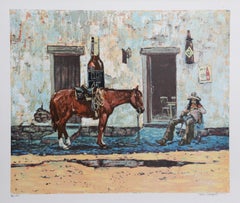
Roll your own, American Western Art Lithograph by Noel Daggett
By Noel Daggett
Located in Long Island City, NY
Noel Daggett, American (1925 - 2005) - Roll your own, Year: circa 1979, Medium: Lithograph, signed and numbered in pencil, Edition: 300, AP 40, Image Size: 20 x 22 inches, Size: ...
Category
American Realist 1970s Animal Prints
Materials
Lithograph
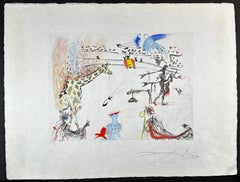
Tauromachie Surrealiste The Giraffe on Fire
Located in Hollywood, FL
ARTIST: Salvador Dali
TITLE: Tauramachie Surrealiste The Giraffe on Fire
MEDIUM: Etching
SIGNED: Hand Signed
EDITION NUMBER: LXIV/C
MEASUREMENTS: 20" x 26"
YEAR: 1970
FRAMED:...
Category
Surrealist 1970s Animal Prints
Materials
Etching
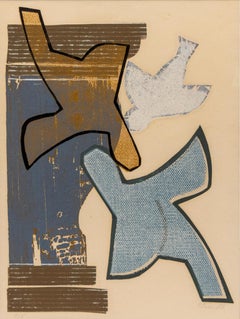
Original Signed 1970s Blue Birds Colored Lithograph - Mid Century Modern Artwork
Located in Denver, CO
This vintage original lithograph by renowned artist Mary Chenoweth features an abstract depiction of birds in flight, showcasing her unique technique of layering various textures of ...
Category
American Modern 1970s Animal Prints
Materials
Lithograph
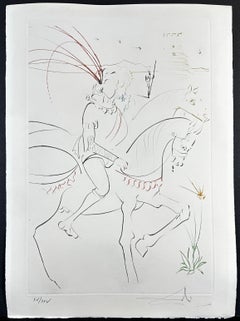
La Quete du Graal Viviane et Lancelot di Lac
Located in Hollywood, FL
ARTIST: Salvador Dali
TITLE: La Quete du Graal Viviane et Lancelot di Lac
MEDIUM: Etching
EDITION NUMBER: XV/XXV
SIGNED: Hand Signed by Salvador Dali
PUBLISHER: Pamela Verlog
...
Category
Surrealist 1970s Animal Prints
Materials
Etching
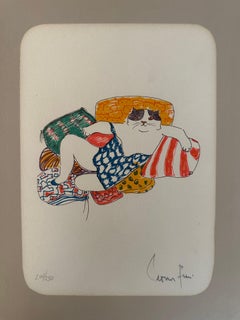
Leonor Fini, from La Grande Parade des Chats, hand signed color lithograph
By Leonor Fini
Located in Chatsworth, CA
Leonor Fini
Untitled from La Grande Parade des Chats (The Great Parade of the Cats)
Color lithograph on Arches paper
Hand signed in pencil by the artist
numbered 204/230
Published b...
Category
Modern 1970s Animal Prints
Materials
Lithograph
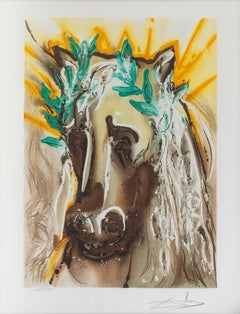
Le Cheval du Printemps, Signed Surrealist Lithograph by Salvador Dali
Located in Long Island City, NY
A close portrait of a horse wearing a laurel crown with the rays of the sun emanating from behind its head. The horse theme was frequently used by Dali throughout his career. The hor...
Category
Surrealist 1970s Animal Prints
Materials
Lithograph
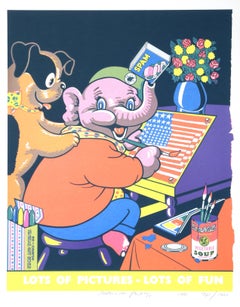
Lots of Pictures, Lots of Fun - Pop Art Screenprint by Eduardo Paolozzi
Located in Long Island City, NY
Artist: Eduardo Paolozzi, British (1924 - 2005)
Title: Lots of Pictures, Lots of Fun
Year: 1971
Medium: Screenprint, signed and numbered in pencil
Edition: 1000
Image: 25.5 x 20.5 in...
Category
Pop Art 1970s Animal Prints
Materials
Screen
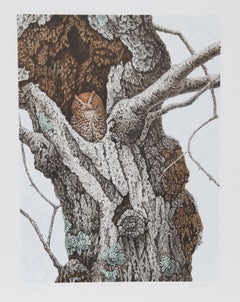
Screech Owl, American Realist Lithograph by Chris Forrest
Located in Long Island City, NY
Chris Forrest, American (1946 - ) - Screech Owl, Year: circa 1979, Medium: Lithograph, Signed and numbered in pencil, Edition: 300, AP XL, Image Size: ...
Category
American Realist 1970s Animal Prints
Materials
Lithograph
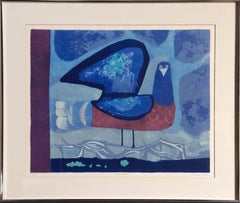
Love Dove, Signed Screenprint by Earl Klein
Located in Long Island City, NY
Love Dove
Earl Klein
American (1915–1993)
Screenprint, signed, titled and numbered in pencil
Edition of 40/75
Image Size: 18 x 22.5 inches
Size: 24.5 x 29...
Category
Folk Art 1970s Animal Prints
Materials
Screen
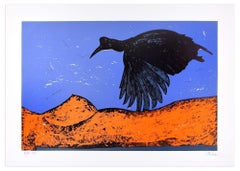
Black Bird - Original Lithograph by Nino Terziari - 1970s
Located in Roma, IT
Black Bird is an original colored lithograph realized by the artist Nino Terziari in the 1970s.
Hand-signed by the artist on lower right. Artis's Proof (P.A is handwritten in pencil...
Category
Contemporary 1970s Animal Prints
Materials
Lithograph
$216 Sale Price
25% Off
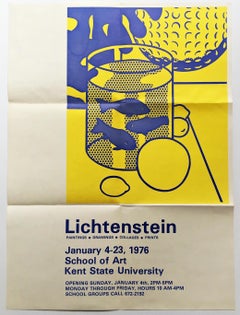
Paintings Drawings Collages Prints at Kent State University
Located in New York, NY
Roy Lichtenstein (after)
Paintings Drawings Collages Prints at Kent State University, 1976
Historic Offset Lithograph Poster
Unsigned
21 × 15 3/4 inches
Unframed
Vintage Roy Lichtenstein poster. It was acquired from the estate of Ohio artist Joseph O' Sickey, a personal friend of Roy Lichtenstein, who was involved with the creation of the show. Very few of these posters remain, and in fact the only other one we have seen in recent years also came from O'Sickey's estate.
"Lichtenstein", 1976, exhibition invite/poster, Kent State University School of Art,
January 4-23-1976, lithograph on paper.
This image is a 2 color version of Lichtenstein's 1972 work "still life with goldfish bowl and painting of a golf ball", which was inspired by Henri Matisses's 1912 work "goldfish."
In very good condition with original folds, as issued
Over the course of his career, Roy Lichtenstein designed 70 posters...
Category
Pop Art 1970s Animal Prints
Materials
Offset
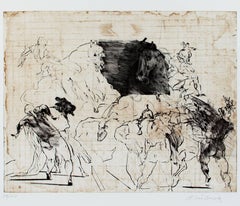
20th century drypoint etching figurative animal print horses sketch signed
Located in Milwaukee, WI
"Combat Equestre" is an original lithograph by Claude Weisbuch. The artist signed the piece lower right and wrote the edition number (24/100) in the lower left. This piece depicts mu...
Category
Modern 1970s Animal Prints
Materials
Drypoint, Etching
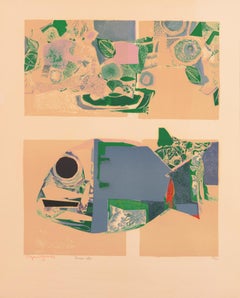
'Blue Fish', Musee National d'Art Moderne, Grand Prix de Rome, Salon d'Automne
Located in Santa Cruz, CA
Signed lower left, 'Roger Bezombes' (French, 1913-1994) and titled, 'Poisson bleu' with number and limitation, lower right, '25/150'.
Roger Bezombes first attended the Ècole des Beaux-Arts (1934) and was the recipient of numerous prizes, medals and juried awards including the Grand Prix de Rome...
Category
Modern 1970s Animal Prints
Materials
Paper, Lithograph
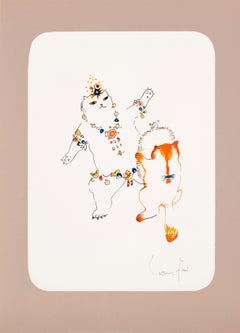
Bejeweled Cats
By Leonor Fini
Located in Columbia, MO
LEONOR FINI
Bejeweled Cats
1973
Color lithograph
Ed. 157/230
12.5 x 9 inches
Category
Surrealist 1970s Animal Prints
Materials
Lithograph
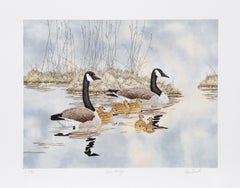
Canada Geese Family, American Realist Lithograph by Chris Forrest
Located in Long Island City, NY
Chris Forrest, American (1946 - ) - Canada Geese Family, Year: circa 1979, Medium: Lithograph, signed and numbered in pencil, Edition: 300, AP 40, Image Size: 17 x 22 inches, Siz...
Category
American Realist 1970s Animal Prints
Materials
Lithograph
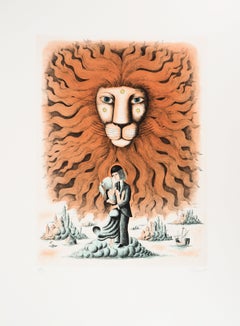
Astrology and Zodiac : Leo (Lion) - Original Etching Handisigned, 1979
Located in Paris, IDF
Raymond PEYNET
Astrology - Zodiac : Leo (Lion), 1979
Original etching
Handsigned in pencil
Numbered /22
On Arches vellum 76 x 56 cm (c. 30 x 22 inches)
This etching is authentified ...
Category
Modern 1970s Animal Prints
Materials
Etching
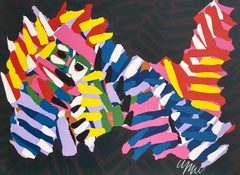
NIGHT ANIMAL Signed Lithograph, Abstract Cat, Color Stripes Pink Yellow Red Blue
By Karel Appel
Located in Union City, NJ
NIGHT ANIMAL is an original limited edition lithograph by the Dutch artist Karel Appel on printed using traditional hand lithography techniques on archival printmaking paper, 100% ac...
Category
Abstract 1970s Animal Prints
Materials
Lithograph
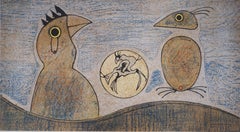
Surrealist Dream : Couple of Roosters - Original lithograph (Spies #p. 438)
By Max Ernst
Located in Paris, IDF
Max Ernst (1891-1976)
Surrealist Dream : Couple of Roosters, 1970
Original color lithograph
Printed signature in the plate
On Arches vellum 33.5 × 61 cm (c. 13 x 24 in)
REFERENCES...
Category
Surrealist 1970s Animal Prints
Materials
Lithograph
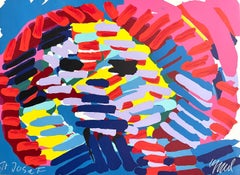
ONCE I WAS THE SUN Signed Lithograph, Abstract Face, Hot Pink Blue Yellow Red
By Karel Appel
Located in Union City, NJ
ONCE I WAS THE SUN is a limited edition lithograph by the Dutch artist Karel Appel printed using hand lithography techniques on archival printmaking paper, 100% acid free. ONCE I WAS...
Category
Abstract 1970s Animal Prints
Materials
Lithograph
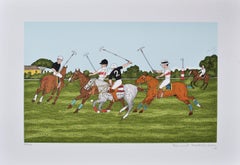
Horse : Polo Game - Original Lithograph, HANDSIGNED & Ltd /100
Located in Paris, IDF
Vincent HADDELSEY (1934-2010)
Horse : Polo Game, 1974
Original Lithograph
Handsigned in pencil
Numbered / 100
On Arches vellum 53 x 38 cm (c. 23 x 15 in)
Excellent condition
Category
Modern 1970s Animal Prints
Materials
Lithograph
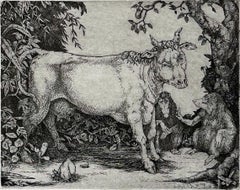
The Cow, etching by Stan Washburn
Located in Palm Springs, CA
Signed, titled and numbered etching from the edition of 100. In individual prints, and his illustrated books, Washburn cleverly skewers human frailties with Renaissance-style engravi...
Category
Contemporary 1970s Animal Prints
Materials
Etching
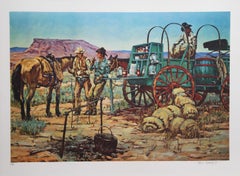
Let's Move 'Em, American Western Art Lithograph by Noel Daggett
By Noel Daggett
Located in Long Island City, NY
Noel Daggett, American (1925 - 2005) - Let's Move 'Em, Year: circa 1979, Medium: Lithograph, signed and numbered in pencil, Edition: 300, AP 40, Image Size: 18.5 x 27 inches, Siz...
Category
American Realist 1970s Animal Prints
Materials
Lithograph
Recently Viewed
View AllMore Ways To Browse
Keith Haring Secret Pastures
Kenojuak Ashevak
Le Singe Et Le Leopard
Leon Cauvy
Leon Danchin On Sale
Leroy Neiman Hunt
Manetti Saverio
Peter Klucik
Picasso Farol
Rob Pruitt Panda
Salvador Dali Argus
Salvador Dali Unicorn
Sam Savitt
Sussex Spaniel
Szabolcs Bozo
Tauromaquia Picasso
Vintage Posters Coppertone
Warhol Orangutan