Items Similar to Degas, Famille Cardinal, E. Degas Monotypes (after)

Want more images or videos?
Request additional images or videos from the seller
1 of 7
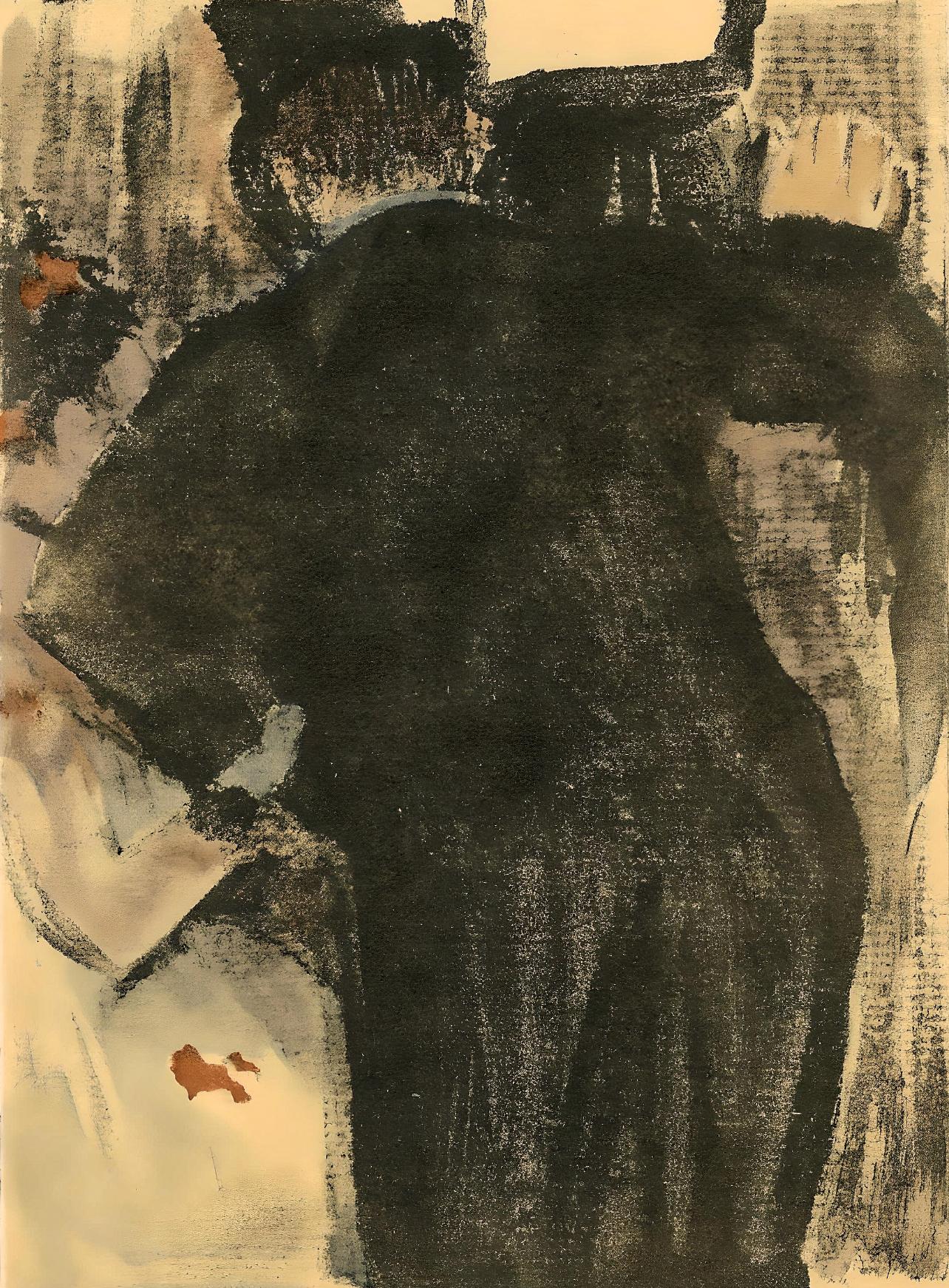
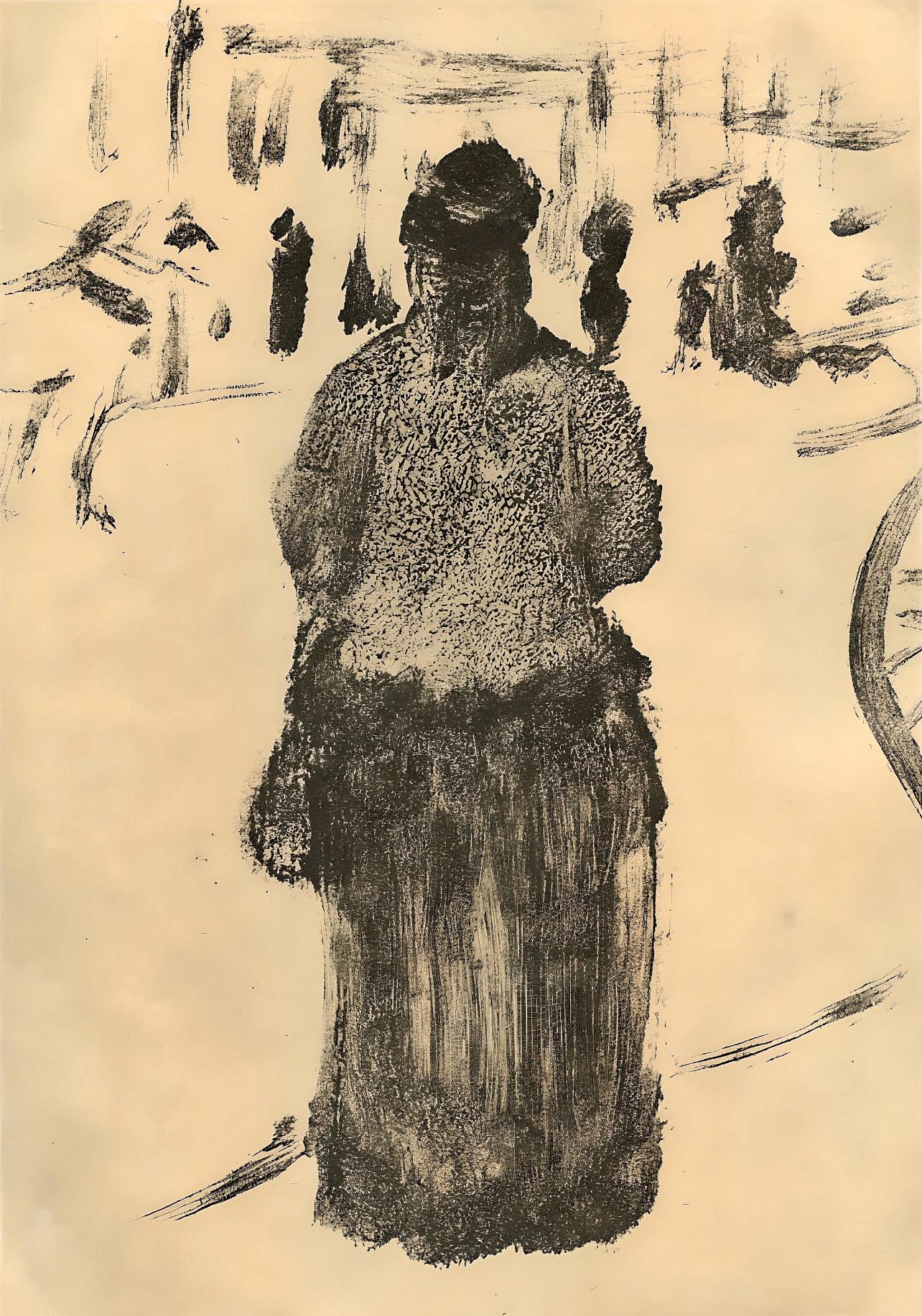
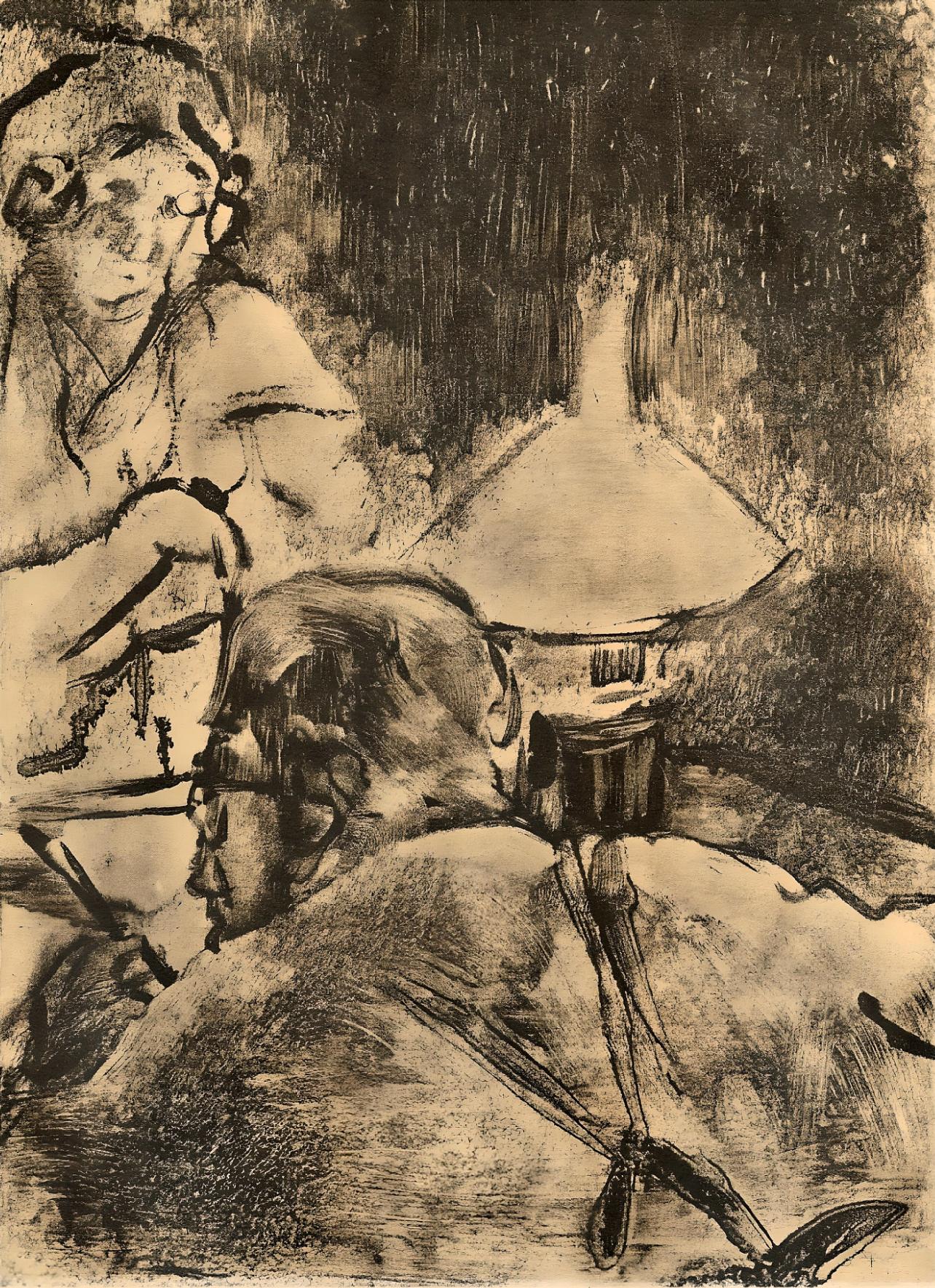
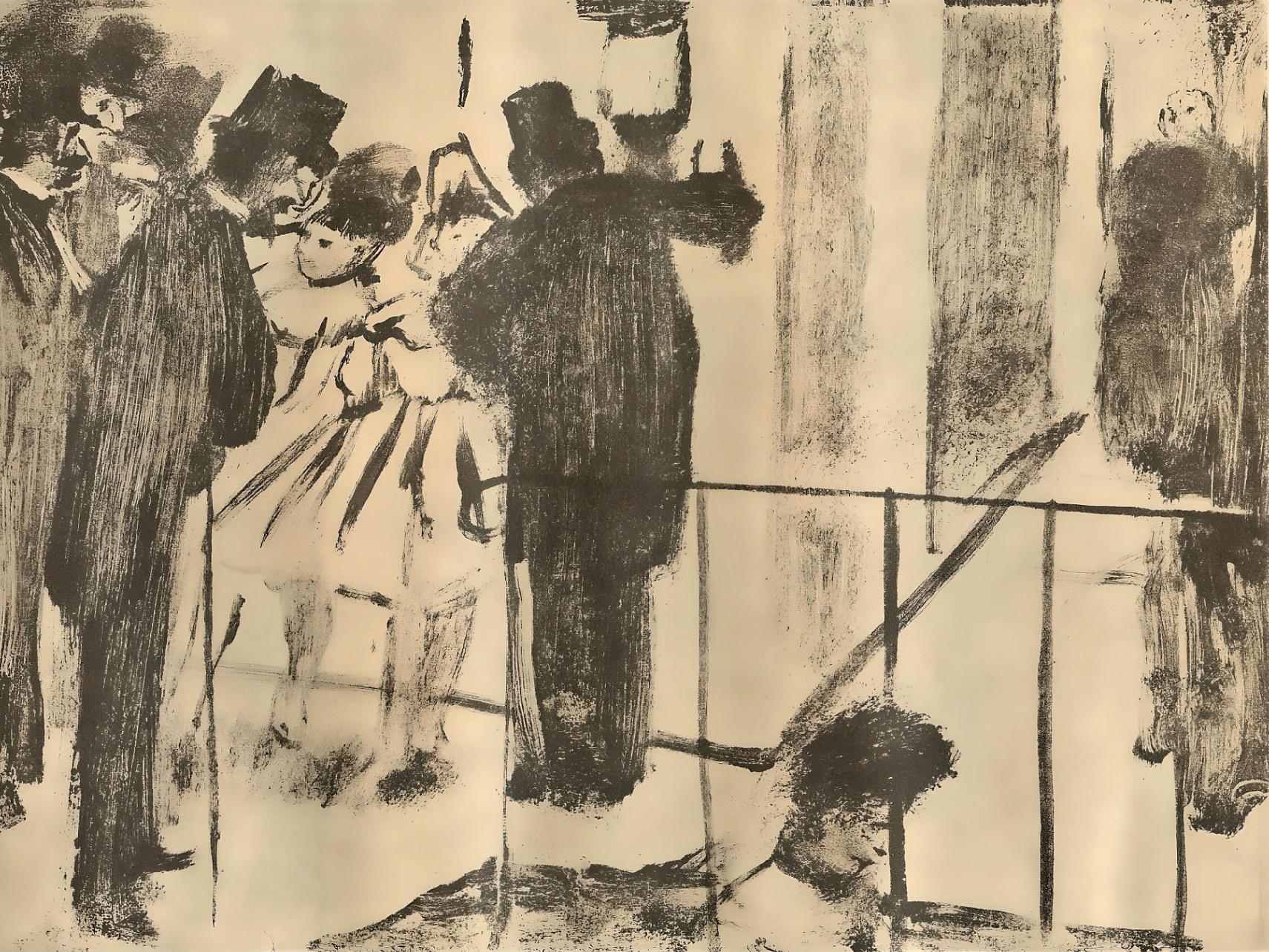
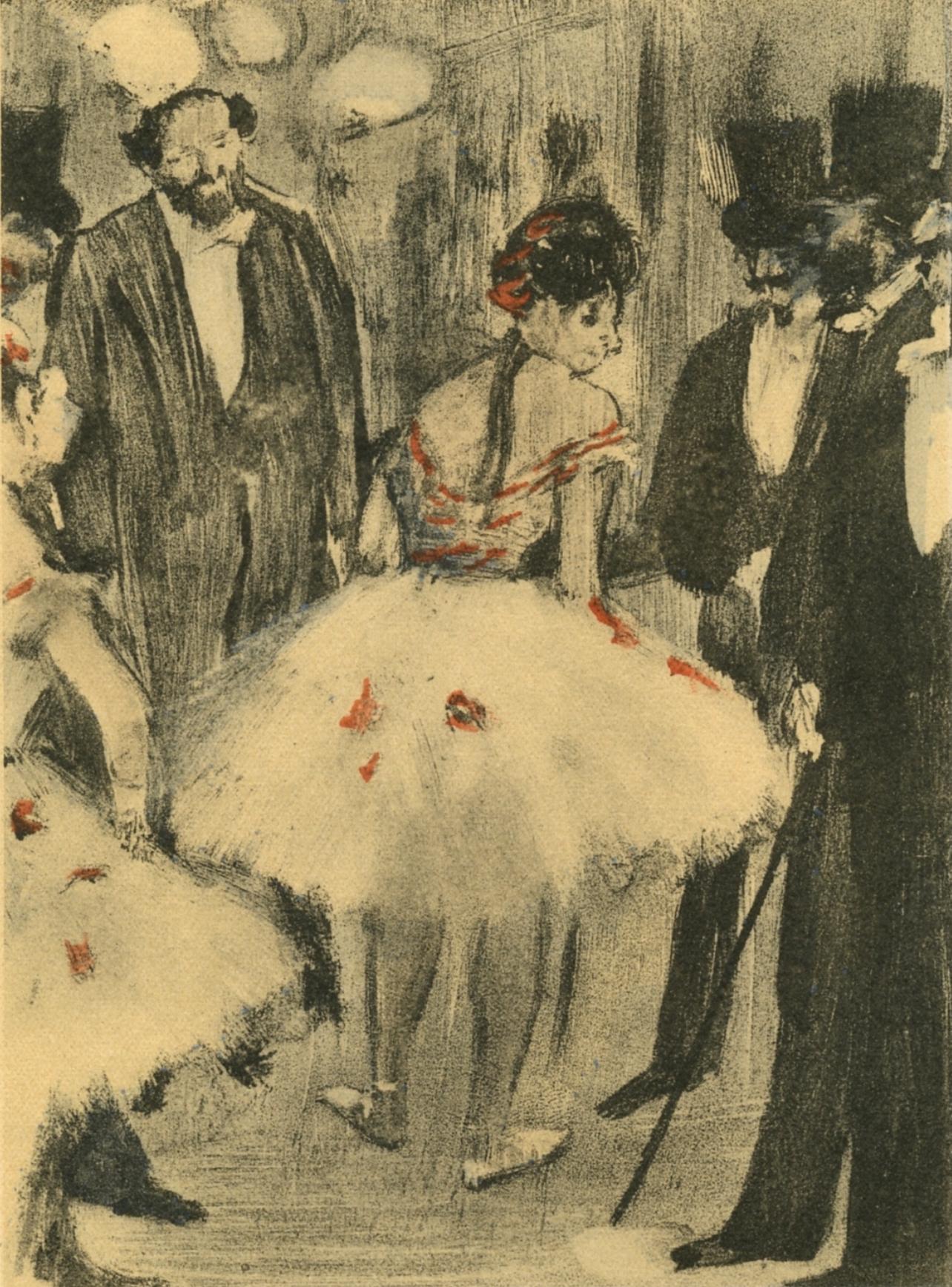
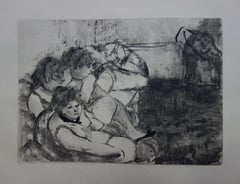
Degas, Famille Cardinal, E. Degas Monotypes (after)1948
1948
$956
$1,19520% Off
£728.31
£910.3920% Off
€831.18
€1,038.9720% Off
CA$1,343.41
CA$1,679.2620% Off
A$1,464.08
A$1,830.1020% Off
CHF 775.29
CHF 969.1120% Off
MX$17,585.10
MX$21,981.3720% Off
NOK 9,815.36
NOK 12,269.2020% Off
SEK 9,024.26
SEK 11,280.3320% Off
DKK 6,207.98
DKK 7,759.9720% Off
About the Item
Medium: Engraving on vélin du Marais paper
Year: 1948
Paper Size: 12.25 x 9.125 inches; image size: 9 x 6 inches
Inscription: Unsigned and unnumbered, as issued
Notes: From the volume, E. Degas Monotypes, 1948. Published by Quatre Chemins-Editart, Paris; printed by Les Ateliers G. Bouan, and Dreux-Barry, Paris, February 1948. Excepted from the volume (translated from French), It was taken from this work M numbered examples. The engravings were executed by the art printing G. Bouan and colours by les ateliers Dreux-Barry finished printing in February 1948. The numbered copies of I a D have been printed for Shoman Art Company, Elmhurst, Long Island, New York.
EDGAR DEGAS (1834-1917) was a French Impressionist artist famous for his pastel drawings and oil paintings. Degas also produced bronze sculptures, prints, and drawings. Degas is especially identified with the subject of dance; more than half of his works depict dancers. Although Degas is regarded as one of the founders of Impressionism, he rejected the term, preferring to be called a realist, and did not paint outdoors as many Impressionists did. Degas was a superb draftsman, and particularly masterly in depicting movement, as can be seen in his rendition of dancers and bathing female nudes. In addition to ballet dancers and bathing women, Degas painted racehorses and racing jockeys, as well as portraits. His portraits are notable for their psychological complexity and their portrayal of human isolation. At the beginning of his career, Degas wanted to be a history painter, a calling for which he was well prepared by his rigorous academic training and close study of classical Western art. In his early thirties he changed course, and by bringing the traditional methods of a history painter to bear on contemporary subject matter, he became a classical painter of modern life. Generations of artists, including Picasso, have been influenced by Degas.
- Creation Year:1948
- Dimensions:Height: 12.25 in (31.12 cm)Width: 9.125 in (23.18 cm)
- Medium:
- Movement & Style:
- After:Edgar Degas (1834-1917, French)
- Period:
- Condition:
- Gallery Location:Fairfield, CT
- Reference Number:1stDibs: LU1342116156172
About the Seller
4.8
Vetted Professional Seller
Every seller passes strict standards for authenticity and reliability
Established in 2002
1stDibs seller since 2020
916 sales on 1stDibs
Typical response time: 1 hour
- ShippingRetrieving quote...Shipping from: Fairfield, CT
- Return Policy
More From This Seller
View AllDegas, Famille Cardinal, E. Degas Monotypes (after)
By Edgar Degas
Located in Fairfield, CT
Medium: Engraving on vélin du Marais paper
Year: 1948
Paper Size: 12.25 x 9.125 inches; image size 6.24 x 4.75 inches
Inscription: Unsigned and unnumbered, as issued
Notes: From the ...
Category
1940s Impressionist Figurative Prints
Materials
Engraving

$956 Sale Price
20% Off
Degas, Famille Cardinal, E. Degas Monotypes (after)
By Edgar Degas
Located in Fairfield, CT
Medium: Engraving on vélin du Marais paper
Year: 1948
Paper Size: 12.25 x 9.125 inches; image size 6.24 x 4.75 inches
Inscription: Unsigned and unnumbered, as issued
Notes: From the ...
Category
1940s Impressionist Figurative Prints
Materials
Engraving
$956 Sale Price
20% Off
Degas, Famille Cardinal, E. Degas Monotypes (after)
By Edgar Degas
Located in Fairfield, CT
Medium: Engraving on vélin du Marais paper
Year: 1948
Paper Size: 12.25 x 9.125 inches; image size: 8.5 x 6.25 inches
Inscription: Unsigned and unnumbered, as issued
Notes: From the ...
Category
1940s Impressionist Figurative Prints
Materials
Engraving
$956 Sale Price
20% Off
Degas, Famille Cardinal, E. Degas Monotypes (after)
By Edgar Degas
Located in Fairfield, CT
Medium: Engraving on vélin du Marais paper
Year: 1948
Paper Size: 12.25 x 9.125 inches; image size: 6.375 x 8.5 inches
Inscription: Unsigned and unnumbered, as issued
Notes: From the...
Category
1940s Impressionist Figurative Prints
Materials
Engraving

$956 Sale Price
20% Off
Degas, Famille Cardinal, E. Degas Monotypes (after)
By Edgar Degas
Located in Fairfield, CT
Medium: Engraving on vélin du Marais paper
Year: 1948
Paper Size: 12.25 x 9.125 inches; image size: 8.5 x 6.75 inches
Inscription: Unsigned and unnumbered, as issued
Notes: From the ...
Category
1940s Impressionist Figurative Prints
Materials
Engraving
$716 Sale Price
20% Off
Degas, Famille Cardinal, E. Degas Monotypes (after)
By Edgar Degas
Located in Fairfield, CT
Medium: Engraving on vélin du Marais paper
Year: 1948
Paper Size: 12.25 x 9.125 inches; image size: 6.25 x 4.75 inches
Inscription: Unsigned and unnumbered, as issued
Notes: From the...
Category
1940s Impressionist Figurative Prints
Materials
Engraving
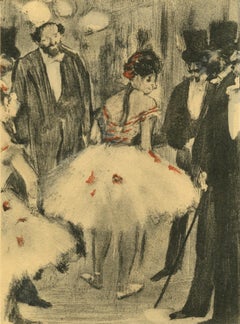
$1,036 Sale Price
20% Off
You May Also Like
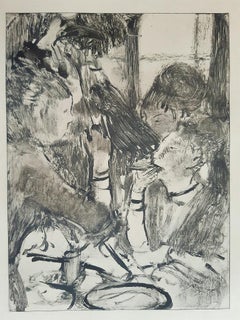
La Maison Tellier - Vintage Rare Book Illustrated after Edgar Degas - 1934
By Edgar Degas
Located in Roma, IT
La Maison Tellier is an original modern rare book illustrated by Edgar Degas (Paris, 1834 – Paris, 1917) and written by Henri-René-Albert-Guy de Maupassant (Tourville-sur-Arques, 185...
Category
1930s Impressionist More Art
Materials
Paper, Etching
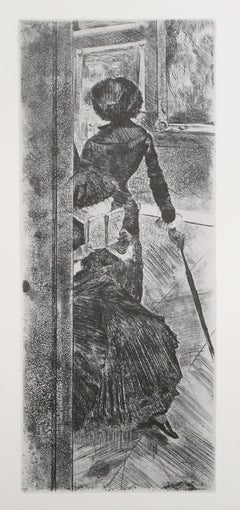
Au Louvre: La Peinture (Mary Cassatt), Impressionist Collotype after Edgar Degas
By Edgar Degas
Located in Long Island City, NY
Edgar Degas, After, French (1834 - 1917) - Au Louvre: La Peinture (Mary Cassatt), Portfolio: Twenty Four Masterpieces of Graphic Art, Year: Year Printed 1974, Medium: Collotype, I...
Category
1970s Impressionist Figurative Prints
Materials
Photogravure
Pierre-Auguste Renoir, Mother and Children, 1951 (after)
By Pierre-Auguste Renoir
Located in Southampton, NY
This exquisite lithograph after Pierre-Auguste Renoir (1841–1919), titled Mere et enfants (Mother and Children), from the album Les Lithographies de Renoir (The Lithographs of Renoir...
Category
1950s Impressionist Figurative Prints
Materials
Lithograph
Mimes des Courtisanes de Lucien: one plate
By (after) Edgar Degas
Located in Paris, IDF
Edgar DEGAS (after)
Reproduction of the monotype "Au Salon" (In the Salon) as published in the first edition of "Mimes des Courtisanes de Lucien" by Pierre Louys, 1934/35.
Etching an...
Category
1930s Modern Figurative Prints
Materials
Etching, Aquatint
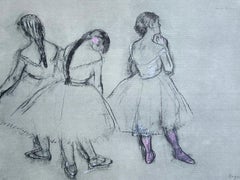
Edgar Degas, Three Dancers, 1945 (after)
By Edgar Degas
Located in Southampton, NY
This exquisite lithograph after Edgar Degas (1834–1917), titled Trois danseurs (Three Dancers), originates from the 1945 folio Degas, Ten Ballet Sketches. Published by The Studio Publications, Inc., New York, rendered and printed by Albert Carman, City Island, 1945, this work reflects Degas’s sensitive mastery of line, movement, and the intimate psychological nuances of the ballet studio.
Executed as a lithograph and pochoir on velin paper, this work measures 13 x 17 inches (33.02 x 43.18 cm). Signed in the plate and unnumbered as issued. Rendered and printed by Albert Carman, City Island.
Artwork Details:
Artist: After Edgar Degas (1834–1917)
Title: Trois danseurs (Three Dancers), from Degas, Ten Ballet Sketches, 1945
Medium: Lithograph and pochoir on velin paper
Dimensions: 13 x 17 inches (33.02 x 43.18 cm)
Inscription: Signed in the plate and unnumbered as issued
Date: 1945
Publisher: The Studio Publications, Inc., New York
Printer: Albert Carman, City Island
Condition: Well preserved, consistent with age and medium
Provenance: From the 1945 folio Degas, Ten Ballet Sketches, published by The Studio Publications, Inc., New York
Notes:
Excerpted from the album, Born in Paris in 1834, Edgar Degas lived, and surely loved the life of that city during most of his years. These continued somewhat sadly beyond those of most of his friends— into the debacle of the first World War, during which he died in 1917. Judging by the frequency with which he used them as models, he must have had an especial admiration for the ballet girls who followed a profession that at the time brought none of the glory and prosperity which attend it today. New aspects of the human body, revealed in movement, fascinated him. But his occupation with the simply anatomical side of his subjects never resulted in a cold interpretation. On the contrary there is a warmth and sympathy that pervades all of his work. The drawings here represent the painter in one important phase of his multi-sensitive view of life; and permit an insight which a more ambitious work might not do-into the operation of the creative process, the artist's transformation of reality as it passes through the mesh of his sensibilities. The Edition of this Portfolio is limited to MMMD examples. Rendered by Albert Carman.
About the Publication:
Degas, Ten Ballet Sketches (1945) is one of the earliest and most significant American postwar fine art portfolios devoted to Edgar Degas’s intimate works on paper. Published by The Studio Publications, Inc., New York, and rendered and printed by Albert Carman at City Island, the album sought to faithfully reproduce a group of Degas’s ballet-related drawings through a combination of lithography and hand-applied pochoir coloring. This hybrid technique allowed the edition to preserve the immediacy, tonal subtlety, and gestural delicacy central to Degas’s draftsmanship. Conceived as a fine art publication rather than a commercial book, the portfolio provided American audiences unprecedented access to Degas’s private, spontaneous studies—images that reveal the artist’s fascination with movement, anatomy, and the psychological atmosphere of the rehearsal studio. The album exemplifies the mid-20th-century revival of pochoir as a means of recreating the texture and coloristic nuance of original works on paper, and it remains an important document of how Degas’s legacy was translated into high-quality printed form for collectors, museums, and connoisseurs.
About the Artist:
Edgar Degas (1834–1917) was a French painter, draughtsman, printmaker, and sculptor whose groundbreaking fusion of classical draftsmanship, modern experimentation, and psychological depth helped define the trajectory of Western art, positioning him as one of the most influential figures of the nineteenth and early twentieth centuries; renowned for his depictions of ballet dancers, racehorses, theater scenes, cafe life, domestic interiors, milliners, laundresses, and women at their toilette, Degas reimagined observational realism through radical compositional innovation—employing extreme cropping, asymmetrical framing, oblique viewpoints, and dramatic lighting that anticipated photographic and cinematic language long before these technologies shaped visual culture, and although associated with Impressionism, he rejected plein-air spontaneity in favor of studio-based discipline rooted in the linear precision of Jean-Auguste-Dominique Ingres, the expressive chromaticism of Eugene Delacroix, and the modernity of Edouard Manet while also drawing inspiration from Japanese ukiyo-e prints, classical sculpture, and early photography; his independent artistic philosophy resonated with and helped shape the innovations of Pablo Picasso, Alexander Calder, Alberto Giacometti, Salvador Dali, Joan Miro, Wassily Kandinsky, Marcel Duchamp, and Man Ray, whose explorations of movement, form, dream logic, abstraction, and conceptualism all find antecedents in Degas’s investigations into seriality, temporality, and the fragmented figure, and his pioneering use of pastel, monotype, and wax sculpture fundamentally transformed each medium, influencing artists from Henri Matisse, Francis Bacon, Lucian Freud, and Giacomo Manzu to Paula Rego, contemporary realists, experimental photographers, and choreographers; his works are held in nearly every major museum collection worldwide—including the Musee dOrsay, the Louvre, the Metropolitan Museum of Art, the National Gallery of Art, the Art Institute of Chicago, the Courtauld Institute, and the National Gallery, London—affirming his central place in the history of art, and the highest auction record for Degas was achieved at Sothebys London on February 3, 2015, when Danseuses en Bleu sold for 37,033,000 GBP, cementing his status as one of the most sought-after and enduringly significant artists of the Western canon.
Degas pochoir, Degas lithograph...
Category
1940s Impressionist Figurative Prints
Materials
Lithograph
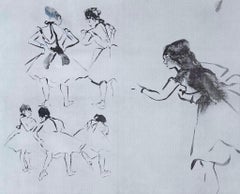
Edgar Degas, Sketch of Dancers, 1945 (after)
By Edgar Degas
Located in Southampton, NY
This exquisite lithograph after Edgar Degas (1834–1917), titled Croquis de danseurs (Sketch of Dancers), originates from the 1945 folio Degas, Ten Ballet Sketches. Published by The Studio Publications, Inc., New York, rendered and printed by Albert Carman, City Island, 1945, this work reflects Degas’s sensitive mastery of line, movement, and the intimate psychological nuances of the ballet studio.
Executed as a lithograph and pochoir on velin paper, this work measures 13 x 17 inches (33.02 x 43.18 cm). Signed in the plate and unnumbered as issued. Rendered and printed by Albert Carman, City Island.
Artwork Details:
Artist: After Edgar Degas (1834–1917)
Title: Croquis de danseurs (Sketch of Dancers), from Degas, Ten Ballet Sketches, 1945
Medium: Lithograph and pochoir on velin paper
Dimensions: 13 x 17 inches (33.02 x 43.18 cm)
Inscription: Signed in the plate and unnumbered as issued
Date: 1945
Publisher: The Studio Publications, Inc., New York
Printer: Albert Carman, City Island
Condition: Well preserved, consistent with age and medium
Provenance: From the 1945 folio Degas, Ten Ballet Sketches, published by The Studio Publications, Inc., New York
Notes:
Excerpted from the album, Born in Paris in 1834, Edgar Degas lived, and surely loved the life of that city during most of his years. These continued somewhat sadly beyond those of most of his friends— into the debacle of the first World War, during which he died in 1917. Judging by the frequency with which he used them as models, he must have had an especial admiration for the ballet girls who followed a profession that at the time brought none of the glory and prosperity which attend it today. New aspects of the human body, revealed in movement, fascinated him. But his occupation with the simply anatomical side of his subjects never resulted in a cold interpretation. On the contrary there is a warmth and sympathy that pervades all of his work. The drawings here represent the painter in one important phase of his multi-sensitive view of life; and permit an insight which a more ambitious work might not do-into the operation of the creative process, the artist's transformation of reality as it passes through the mesh of his sensibilities. The Edition of this Portfolio is limited to MMMD examples. Rendered by Albert Carman.
About the Publication:
Degas, Ten Ballet Sketches (1945) is one of the earliest and most significant American postwar fine art portfolios devoted to Edgar Degas’s intimate works on paper. Published by The Studio Publications, Inc., New York, and rendered and printed by Albert Carman at City Island, the album sought to faithfully reproduce a group of Degas’s ballet-related drawings through a combination of lithography and hand-applied pochoir coloring. This hybrid technique allowed the edition to preserve the immediacy, tonal subtlety, and gestural delicacy central to Degas’s draftsmanship. Conceived as a fine art publication rather than a commercial book, the portfolio provided American audiences unprecedented access to Degas’s private, spontaneous studies—images that reveal the artist’s fascination with movement, anatomy, and the psychological atmosphere of the rehearsal studio. The album exemplifies the mid-20th-century revival of pochoir as a means of recreating the texture and coloristic nuance of original works on paper, and it remains an important document of how Degas’s legacy was translated into high-quality printed form for collectors, museums, and connoisseurs.
About the Artist:
Edgar Degas (1834–1917) was a French painter, draughtsman, printmaker, and sculptor whose groundbreaking fusion of classical draftsmanship, modern experimentation, and psychological depth helped define the trajectory of Western art, positioning him as one of the most influential figures of the nineteenth and early twentieth centuries; renowned for his depictions of ballet dancers, racehorses, theater scenes, cafe life, domestic interiors, milliners, laundresses, and women at their toilette, Degas reimagined observational realism through radical compositional innovation—employing extreme cropping, asymmetrical framing, oblique viewpoints, and dramatic lighting that anticipated photographic and cinematic language long before these technologies shaped visual culture, and although associated with Impressionism, he rejected plein-air spontaneity in favor of studio-based discipline rooted in the linear precision of Jean-Auguste-Dominique Ingres, the expressive chromaticism of Eugene Delacroix, and the modernity of Edouard Manet while also drawing inspiration from Japanese ukiyo-e prints, classical sculpture, and early photography; his independent artistic philosophy resonated with and helped shape the innovations of Pablo Picasso, Alexander Calder, Alberto Giacometti, Salvador Dali, Joan Miro, Wassily Kandinsky, Marcel Duchamp, and Man Ray, whose explorations of movement, form, dream logic, abstraction, and conceptualism all find antecedents in Degas’s investigations into seriality, temporality, and the fragmented figure, and his pioneering use of pastel, monotype, and wax sculpture fundamentally transformed each medium, influencing artists from Henri Matisse, Francis Bacon, Lucian Freud, and Giacomo Manzu to Paula Rego, contemporary realists, experimental photographers, and choreographers; his works are held in nearly every major museum collection worldwide—including the Musee dOrsay, the Louvre, the Metropolitan Museum of Art, the National Gallery of Art, the Art Institute of Chicago, the Courtauld Institute, and the National Gallery, London—affirming his central place in the history of art, and the highest auction record for Degas was achieved at Sothebys London on February 3, 2015, when Danseuses en Bleu sold for 37,033,000 GBP, cementing his status as one of the most sought-after and enduringly significant artists of the Western canon.
Degas pochoir, Degas lithograph...
Category
1940s Impressionist Figurative Prints
Materials
Lithograph
More Ways To Browse
Kaws Share Print
Keith Haring Dolphin
Keith Haring Free South Africa Poster 1985
Keith Haring Future Primeval Poster
Keith Haring International Youth
Keith Haring Silence Death
Klossowski Pierre
L A Willette
Lausanne Vintage Poster
Le Modele Et Son Peintre 1963
Le Village Chagall
Leo Meissner
Leon Alva
Leroy Neiman Baseball
Leroy Neiman Paris
Leroy Neiman Tennis
Les Enfants Trouves
Lilian Martinez