Want more images or videos?
Request additional images or videos from the seller
1 of 8
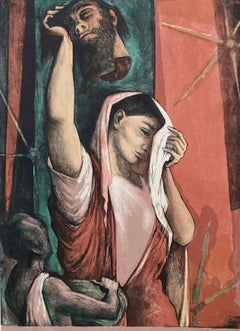
Jean CharlotQaravi Yaqona: Kava Ceremony1978
1978
$1,200List Price
About the Item
- Creator:Jean Charlot (1898 - 1979, French)
- Creation Year:1978
- Dimensions:Height: 30 in (76.2 cm)Width: 22 in (55.88 cm)Depth: 0.1 in (2.54 mm)
- Medium:
- Movement & Style:
- Period:
- Condition:The print is in very good condition. It has very slight age toning which will not be visible when the print is matted. Please see the pictures.
- Gallery Location:San Francisco, CA
- Reference Number:Seller: PM06302025-11stDibs: LU666316566322
About the Seller
5.0
Platinum Seller
Premium sellers with a 4.7+ rating and 24-hour response times
Established in 1999
1stDibs seller since 2017
869 sales on 1stDibs
Authenticity Guarantee
In the unlikely event there’s an issue with an item’s authenticity, contact us within 1 year for a full refund. DetailsMoney-Back Guarantee
If your item is not as described, is damaged in transit, or does not arrive, contact us within 7 days for a full refund. Details24-Hour Cancellation
You have a 24-hour grace period in which to reconsider your purchase, with no questions asked.Vetted Professional Sellers
Our world-class sellers must adhere to strict standards for service and quality, maintaining the integrity of our listings.Price-Match Guarantee
If you find that a seller listed the same item for a lower price elsewhere, we’ll match it.Trusted Global Delivery
Our best-in-class carrier network provides specialized shipping options worldwide, including custom delivery.You May Also Like
“Judith”
By Benton Murdoch Spruance
Located in Southampton, NY
Strong and vibrant color lithograph by the American artist, Benton Murdoch Spruance. Edition size in pencil lower left margin 7/40. Titled in pencil middle margin and signed in penc...
Category
1950s Modern Figurative Prints
Materials
Archival Paper, Lithograph
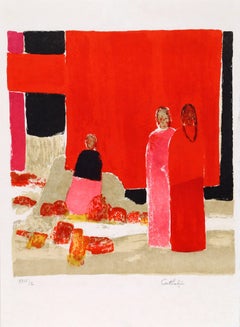
Les Mexicaines, Modern Lithograph on Rice Paper by Bernard Cathelin
By Bernard Cathelin
Located in Long Island City, NY
Artist: Bernard Cathelin, French (1919 - 2004)
Title: Les Mexicaines
Year: circa 1975
Medium: Lithograph on Japon paper, signed and numbered in pencil
Edition: 24/50
Image Size: 21.5...
Category
1970s Modern Figurative Prints
Materials
Rice Paper, Lithograph
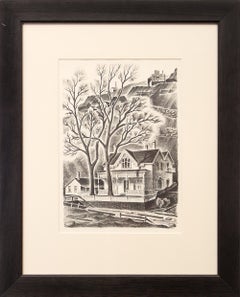
Arnold Ronnebeck Lithograph of Gregory Point, Colorado, 1930s Modernist Print
By Arnold Rönnebeck
Located in Denver, CO
This original 1930s lithograph by renowned modernist artist Arnold Ronnebeck (1885–1947) captures a historic home at Gregory Point, near Central City, Colorado. Part of a limited edi...
Category
1930s American Modern Landscape Prints
Materials
Paper, Lithograph
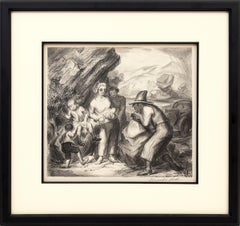
$2,650
H 23.25 in W 18.5 in D 1.5 in
Charles Wheeler Locke “Photo Opportunity” c. 1935 Garden of the Gods Lithograph
By Charles Locke
Located in Denver, CO
This rare and engaging circa 1935 original lithograph, “Photo Opportunity,” by American Modernist Charles Wheeler Locke (1899–1983), captures a lively ...
Category
1930s American Modern Figurative Prints
Materials
Paper, Lithograph
$1,250
H 17.75 in W 16.75 in D 0.75 in
Colonialism- Lithograph by Hermann Paul - 1903
Located in Roma, IT
L'Inspecteur Général "Revizor" is a Lithograph realized by Hermann Paul, in 1903.
Signed on Plate.
Good condition.
René Georges Hermann-Paul (27 Decemb...
Category
1890s Modern Figurative Prints
Materials
Paper, Lithograph
Marcelle Lender en Buste - Lithograph after H. de Toulouse-Lautrec - 1970s
By Henri de Toulouse-Lautrec
Located in Roma, IT
Marcelle Lender en Buste is a lithograph realized after the homonymous work by Toulouse-Lautrec of 1895.
Limited edition of 1.000 specimens.
Very good conditions.
Henri de Tolous...
Category
1970s Modern Portrait Prints
Materials
Paper, Lithograph
$239
H 27.56 in W 19.69 in D 0.04 in
L'Assiette au Beurre - Vintage Comic Magazine - 1904
Located in Roma, IT
L'Assiette au Beurre is an Original Comic Magazine published in January 1904, reproducing drawings by Eugene Higgins.
Signed, numbered and dated on the margins.
Category
Early 1900s Modern Figurative Prints
Materials
Paper, Lithograph
SUSANNA AND THE ELDERS - Color Poster Homage to Picasso
Located in Napoli, IT
Homage to Pablo Picasso Title "Susanna and the Elders" - Lithographic colored print -
Category
1970s Modern Figurative Prints
Materials
Paper, Lithograph
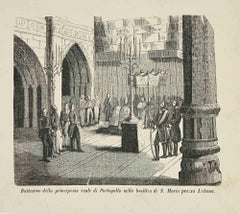
Christening of the Royal Princess in Portugal - Lithograph - 1862
Located in Roma, IT
Christening of the Royal Princess in Portugal is a lithograph on paper realized in 1862.
The artwork belongs to the Suite Uses and customs of all the peoples of the universe: " His...
Category
1860s Modern Figurative Prints
Materials
Paper, Lithograph
$167
H 6.7 in W 7.09 in D 0.08 in
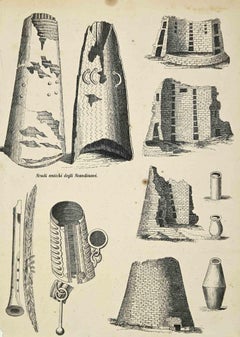
Ancient Studies of the Scandinavians - Lithograph - 1862
Located in Roma, IT
Ancient Studies of the Scandinavians is an original lithograph on paper realized in 1862.
The artwork belongs to the Suite Uses and customs of all the peoples of the universe: " His...
Category
1860s Modern Figurative Prints
Materials
Paper, Lithograph
More From This Seller
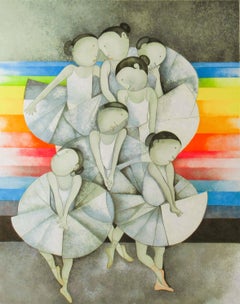
View AllLes Petit Rats, Ballerinas VI
By Graciela Rodo Boulanger
Located in San Francisco, CA
This artwork titled "Les Petit Rats, Ballerinas VI" c.1980 is an original color lithograph on Japan paper by noted Bolivian artist Graciela Rodo Boulanger, b.1935. It is hand signed and numbered XLII/C in pencil by the artist. The image size is 22.75 x 18 inches, sheet size is 30 x 22.15 inches.
About the artist:
Born in La Paz, Bolivia in 1935, Graciela Rodo Boulanger was raised in an artistic environment. Her mother, a concert pianist, and her father, a businessman and art connoisseur, nurtured her talents. She studied the piano and at age 11 enrolled in the School of Fine Arts. At 17 she went to Vienna to study both art and music, and at 22 shetravelled to Argentina for the stimulating artistic environment of Buenos Aires. Continuing to study both piano and painting...
Category
Late 20th Century Modern Figurative Prints
Materials
Lithograph
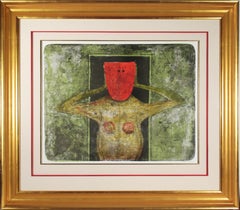
Mascara Roja
By Rufino Tamayo
Located in San Francisco, CA
This artwork titled "Mascara Roja" 1969 is an original colors lithograph on B.F.K. Rives paper by renown Mexican artist Rufino Tamayo, 1899-1991. It is hand signed and inscribed H.C. (Hors Commerce) in pencil by the artist. The image size is 21 x 27.25 inches, framed size is 37.25 x 42 inches. Published by Touchtone Publisher, New York, printed by Ateliers Desjobert, Paris. Referenced and pictured in the artist's catalogue raisonne by Pereda, plate #124. Custom framed in a wooden gold leaf frame, with gold and red spacer and fabric matting. It is in excellent condition.
About the artist:
A native of Oaxaca in Southern Mexico, Rufino Tamayo's father was a shoemaker, and his mother a seamstress. Some accounts state that he was descended from Zapotec Indians, but he was actually 'mestizo' - of mixed indigenous/European ancestry. (Santa Barbara Museum of Art). He began painting at age 11. Orphaned at the age of 12, Tamayo moved to Mexico City, where he was raised by his maternal aunt who owned a wholesale fruit business.
In 1917, he entered the San Carlos Academy of Fine Arts, but left soon after to pursue independent study. Four years later, Tamayo was appointed the head designer of the department of ethnographic drawings at the National Museum of Archaeology in Mexico City. There he was surrounded by pre-Colombian objects, an aesthetic inspiration that would play a pivotal role in his life. In his own work, Tamayo integrated the forms and tones of pre-Columbian ceramics into his early still lives and portraits of Mexican men and women.
In the early 1920s he also taught art classes in Mexico City's public schools. Despite his involvement in Mexican history, he did not subscribe to the idea of art as nationalistic propaganda. Modern Mexican art at that time was dominated by 'The Three Great Ones' : Diego Rivera, Jose Clemente Orozco, and David Alfaro Siqueros, but Tamayo began to be noted as someone 'new' and different' for his blending of the aesthetics of post Revolutionary Mexico with the vanguard artists of Europe and the United States.
After the Mexican Revolution, he focused on creating his own identity in his work, expressing what he thought was the traditional Mexico, and refusing to follow the political trends of his contemporary artists. This caused some to see him as a 'traitor' to the political cause, and he felt it difficult to freely express himself in his art. As a result, he decided to leave Mexico in 1926 and move to New York, along with his friend, the composer Carlos Chavez. The first exhibition of Tamayo's work in the United States was held at the Weyhe Gallery, New York, in that same year. The show was successful, and Tamayo was praised for his 'authentic' status as a Mexican of 'indigenous heritage', and for his internationally appealing Modernist aesthetic. (Santa Barbara Museum of Art).
Throughout the late thirties and early forties New York's Valentine Gallery gave him shows. For nine years, beginning in 1938, he taught at the Dalton School in New York.
In 1929, some health problems led him to return to Mexico for treatment. While there he took a series of teaching jobs. During this period he became romantically involved with the artist Maria Izquierdo...
Category
Mid-20th Century Modern Figurative Prints
Materials
Lithograph
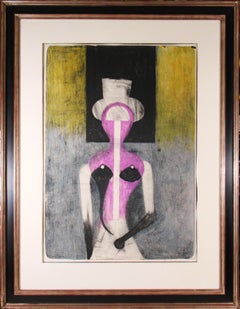
"Mujer Con Sombrero" Large lithograph
By Rufino Tamayo
Located in San Francisco, CA
This artwork titled "Mujer Con Sombrero (Woman with Hat)" 1972 is a large original colors lithograph on Arches paper by renown Mexican artist Rufino Tamayo, 1899-1991. It is hand signed and numbered 81/100. in pencil by the artist. The artwork size 36.35 x 25.85 inches, sheet size is 37.25 x 26.25 inches, framed size is 52.25 x 40.5 inches. Published by Transworld Art, New York , Printed by Bank Street Atelier, New York. Referenced and pictured in the artist's catalogue raisonne by Pereda, plate #132 page 123. Custom framed in a wooden black and silver frame, with silver bevel and fabric matting. It is in excellent condition.
About the artist:
A native of Oaxaca in Southern Mexico, Rufino Tamayo's father was a shoemaker, and his mother a seamstress. Some accounts state that he was descended from Zapotec Indians, but he was actually 'mestizo' - of mixed indigenous/European ancestry. (Santa Barbara Museum of Art). He began painting at age 11. Orphaned at the age of 12, Tamayo moved to Mexico City, where he was raised by his maternal aunt who owned a wholesale fruit business.
In 1917, he entered the San Carlos Academy of Fine Arts, but left soon after to pursue independent study. Four years later, Tamayo was appointed the head designer of the department of ethnographic drawings at the National Museum of Archaeology in Mexico City. There he was surrounded by pre-Colombian objects, an aesthetic inspiration that would play a pivotal role in his life. In his own work, Tamayo integrated the forms and tones of pre-Columbian ceramics into his early still lives and portraits of Mexican men and women.
In the early 1920s he also taught art classes in Mexico City's public schools. Despite his involvement in Mexican history, he did not subscribe to the idea of art as nationalistic propaganda. Modern Mexican art at that time was dominated by 'The Three Great Ones' : Diego Rivera, Jose Clemente Orozco, and David Alfaro Siqueros, but Tamayo began to be noted as someone 'new' and different' for his blending of the aesthetics of post Revolutionary Mexico with the vanguard artists of Europe and the United States.
After the Mexican Revolution, he focused on creating his own identity in his work, expressing what he thought was the traditional Mexico, and refusing to follow the political trends of his contemporary artists. This caused some to see him as a 'traitor' to the political cause, and he felt it difficult to freely express himself in his art. As a result, he decided to leave Mexico in 1926 and move to New York, along with his friend, the composer Carlos Chavez. The first exhibition of Tamayo's work in the United States was held at the Weyhe Gallery, New York, in that same year. The show was successful, and Tamayo was praised for his 'authentic' status as a Mexican of 'indigenous heritage', and for his internationally appealing Modernist aesthetic. (Santa Barbara Museum of Art).
Throughout the late thirties and early forties New York's Valentine Gallery gave him shows. For nine years, beginning in 1938, he taught at the Dalton School in New York.
In 1929, some health problems led him to return to Mexico for treatment. While there he took a series of teaching jobs. During this period he became romantically involved with the artist Maria Izquierdo...
Category
Mid-20th Century Modern Figurative Prints
Materials
Lithograph
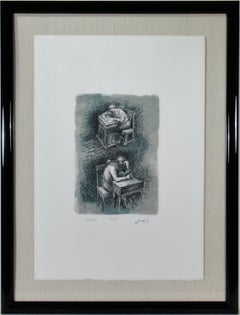
Girls Seated at Desk IX
By Henry Moore
Located in San Francisco, CA
Artist: Henry Moore (British, 1898-1986)
Title: Girls Seated at Desk IX
Year: 1974
Medium: Color lithograph
Edition: Numbered 40/50 in pencil
Paper: Wove
Paper size: 20.25 x...
Category
Late 20th Century Modern Figurative Prints
Materials
Lithograph
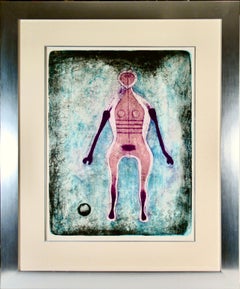
La Negra (The Black Woman)
By Rufino Tamayo
Located in San Francisco, CA
This artwork titled "La Negra (The Black Woman)" from the suite "The Mujeres File" 1969 is an original colors lithograph on B.F.K. Rives paper by renown Mexican artist Rufino Tamayo, 1899-1991. It is hand signed and numbered 150/150 in pencil by the artist. The image size is 26.85 x 21.25 inches, sheet size is 29.5 x 22.15 inches, framed size is 42 x 35 inches. Published by Touchtone Publisher, New York, printed by Ateliers Desjobert, Paris. Referenced and pictured in the artist's catalogue raisonne by Pereda, plate #109 page 107. Custom framed in a wooden silver frame, with silver spacer and fabric matting. It is in excellent condition.
About the artist:
A native of Oaxaca in Southern Mexico, Rufino Tamayo's father was a shoemaker, and his mother a seamstress. Some accounts state that he was descended from Zapotec Indians, but he was actually 'mestizo' - of mixed indigenous/European ancestry. (Santa Barbara Museum of Art). He began painting at age 11. Orphaned at the age of 12, Tamayo moved to Mexico City, where he was raised by his maternal aunt who owned a wholesale fruit business.
In 1917, he entered the San Carlos Academy of Fine Arts, but left soon after to pursue independent study. Four years later, Tamayo was appointed the head designer of the department of ethnographic drawings at the National Museum of Archaeology in Mexico City. There he was surrounded by pre-Colombian objects, an aesthetic inspiration that would play a pivotal role in his life. In his own work, Tamayo integrated the forms and tones of pre-Columbian ceramics into his early still lives and portraits of Mexican men and women.
In the early 1920s he also taught art classes in Mexico City's public schools. Despite his involvement in Mexican history, he did not subscribe to the idea of art as nationalistic propaganda. Modern Mexican art at that time was dominated by 'The Three Great Ones' : Diego Rivera, Jose Clemente Orozco, and David Alfaro Siqueros, but Tamayo began to be noted as someone 'new' and different' for his blending of the aesthetics of post Revolutionary Mexico with the vanguard artists of Europe and the United States.
After the Mexican Revolution, he focused on creating his own identity in his work, expressing what he thought was the traditional Mexico, and refusing to follow the political trends of his contemporary artists. This caused some to see him as a 'traitor' to the political cause, and he felt it difficult to freely express himself in his art. As a result, he decided to leave Mexico in 1926 and move to New York, along with his friend, the composer Carlos Chavez. The first exhibition of Tamayo's work in the United States was held at the Weyhe Gallery, New York, in that same year. The show was successful, and Tamayo was praised for his 'authentic' status as a Mexican of 'indigenous heritage', and for his internationally appealing Modernist aesthetic. (Santa Barbara Museum of Art).
Throughout the late thirties and early forties New York's Valentine Gallery gave him shows. For nine years, beginning in 1938, he taught at the Dalton School in New York.
In 1929, some health problems led him to return to Mexico for treatment. While there he took a series of teaching jobs. During this period he became romantically involved with the artist Maria Izquierdo...
Category
Mid-20th Century Modern Figurative Prints
Materials
Lithograph
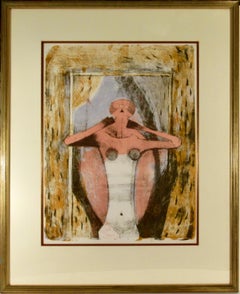
Torso de Mujer
By Rufino Tamayo
Located in San Francisco, CA
This artwork titled "Torso de Mujer (Torso de Femmee)" from the suite "The Mujeres File" 1969 is an original colors lithograph on Wove paper by renown Mexican artist Rufino Tamayo, 1899-1991. It is hand signed and inscribed H.C. (Hors Commerce) in pencil by the artist. The image size is 26.85 x 21 inches, framed size is 40.75 x 33 inches. Published by Touchtone Publisher, New York, printed by Ateliers Desjobert, Paris. Referenced and pictured in the artist's catalogue raisonne by Pereda, plate #108 page 107. Custom framed in a wooden gold frame, with gold bevel and light beige fabric matting. It is in excellent condition.
About the artist:
A native of Oaxaca in Southern Mexico, Rufino Tamayo's father was a shoemaker, and his mother a seamstress. Some accounts state that he was descended from Zapotec Indians, but he was actually 'mestizo' - of mixed indigenous/European ancestry. (Santa Barbara Museum of Art). He began painting at age 11. Orphaned at the age of 12, Tamayo moved to Mexico City, where he was raised by his maternal aunt who owned a wholesale fruit business.
In 1917, he entered the San Carlos Academy of Fine Arts, but left soon after to pursue independent study. Four years later, Tamayo was appointed the head designer of the department of ethnographic drawings at the National Museum of Archaeology in Mexico City. There he was surrounded by pre-Colombian objects, an aesthetic inspiration that would play a pivotal role in his life. In his own work, Tamayo integrated the forms and tones of pre-Columbian ceramics...
Category
Mid-20th Century Modern Figurative Prints
Materials
Lithograph
Still Thinking About These?
All Recently ViewedMore Ways To Browse
Erte Zodiac
Fabio Mauroner
Faith Ringgold Groovin High
Ferdinand Ludwig Graf
Ferdinand Schmutzer
Fini Tristan Isolde
For The Sake Of A Single Verse
Francisco Zuniga Woman Drinking
Franciska Clausen
Francois Roux
Fritzi Brod
George Rouault Crucifixion
Girard Thibault
Giuseppe Tarantino
Gockel Etching
H A Rey
Hand Colored James Gillray
Hand Signed Salvador Dali Divine Comedy