Stencil Figurative Prints

to
262
270
88
19
9
7
Overall Width
to
Overall Height
to
253
48
17
15
9
9
4
2
2
1
18
17
16
15
10
10
365
18
4
3
54
50
28
145
39
8
1
2
295
95
3
249
138
136
103
65
63
56
55
40
21
20
17
13
13
12
11
10
10
9
8
1,002
16,861
12,434
6,163
3,247
24
15
301
87
Medium: Stencil
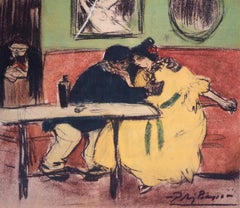
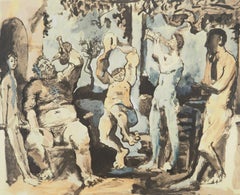
Pablo Picasso, The Divan, The Blues of Barcelona, 1963 (after)
Located in Southampton, NY
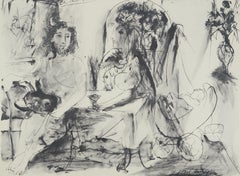
This exquisite lithograph and pochoir after Pablo Picasso (1881–1973), titled Le divan (The Divan), from the folio Les Bleus de Barcelone, 12 aquarelles et pastels (The Blues of Barc...
Category

1960s Modern Stencil Figurative Prints

Materials

Lithograph, Stencil

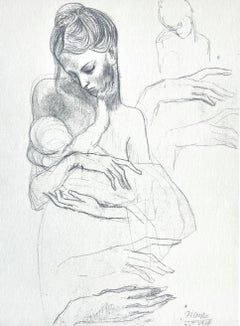
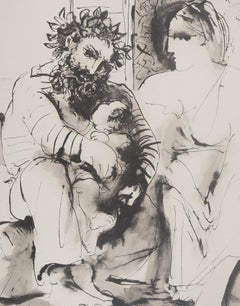
Pablo Picasso, Mother and Child, from Fifteen Drawings, 1946 (after)
Located in Southampton, NY
This exquisite lithograph and pochoir after Pablo Picasso (1881–1973), titled Mother and Child, from the folio Picasso, Fifteen Drawings, 1946, originates from the 1946 edition published by Pantheon Books, Inc., New York, and rendered and printed by Albert Carman, City Island, New York, 1946. Mother and Child conveys Picassos timeless exploration of tenderness, intimacy, and the human bond, distilling the universal theme of maternal love through graceful line and lyrical composition. With rhythmic simplicity and emotional clarity, the work captures the purity of affection and the quiet strength of motherhood—an enduring motif throughout Picassos artistic life. Executed as a lithograph and pochoir on velin paper, this work measures 18.75 x 12.63 inches. Signed in the plate and unnumbered as issued. The edition exemplifies the exemplary standards and artistic integrity of the fine art publishing and printmaking of Pantheon Books, Inc., and Albert Carman whose next collaborative project following this edition was with Marc Chagall in the creation of his monumental suite, Four Tales from the Arabian Nights in 1948. Artwork Details: Artist: After Pablo Picasso (1881–1973) Title: Mother and Child, from the folio Picasso, Fifteen Drawings, 1946 Medium: Lithograph and pochoir on velin paper Dimensions: 18.75 x 12.63 inches (47.6 x 32.1 cm) Inscription: Signed in the plate and unnumbered as issued Date: 1946 Edition: D, primary edition; L, out of commerce, hand signed by Pablo Picasso Publisher: Pantheon Books, Inc., New York Printer: Albert Carman, City Island, New York Catalogue raisonne reference: Orozco, Miguel. Picasso Interpretation Prints II - Etchings, Pochoirs & Woodcuts. Catalogue Raisonne. 2023, illustration 388–402 Condition: Well preserved, consistent with age and medium Provenance: From the folio Picasso, Fifteen Drawings, 1946, published by Pantheon Books, Inc., New York; printed by Albert Carman, City Island, New York, 1946 About the Publication: Picasso, Fifteen Drawings (1946) was one of the earliest fine art portfolios issued in the United States to feature the work of Pablo Picasso in the mediums of lithography and pochoir. Published by Pantheon Books, Inc., New York—a press renowned for its pioneering role in introducing European modernism to American audiences—the portfolio marked an important cultural bridge between postwar Paris and the emerging art scene in New York. The suite comprised fifteen images selected from Picassos prolific oeuvre, including depictions of mythological figures, musicians, and introspective portraits. Each work was rendered using a combination of lithography and pochoir, printed by Albert Carman at his atelier in City Island, New York, whose craftsmanship ensured a remarkable fidelity to the tonal and chromatic nuances of Picassos originals. The portfolio was produced in an edition of D, primary edition; L, out of commerce, hand signed by Pablo Picasso, issued unbound within a printed paper folder, and distributed primarily through Pantheons art book division under the direction of Kurt Wolff and Monroe Wheeler—key figures in shaping the intellectual reception of modern art in the United States. Picasso, Fifteen Drawings helped establish the artists postwar reputation among American collectors, scholars, and institutions, introducing a generation of viewers to the expressive immediacy and psychological depth of his draftsmanship. The publication also exemplified Pantheons broader mission to make modern European art accessible to an American audience, alongside their landmark editions devoted to Henri Matisse, Georges Rouault, and Marc Chagall. Technically refined and historically significant, the portfolio stands as a testament to the transatlantic exchange of modernist aesthetics during the mid-20th century and remains one of the most sought-after Picasso print editions issued in the United States before 1950. About the Artist: Pablo Picasso (1881–1973) was a Spanish painter, sculptor, printmaker, and ceramicist whose extraordinary vision revolutionized modern art and defined the visual language of the 20th century. A child prodigy from Malaga, Spain, Picassos career spanned more than seven decades and encompassed an astonishing range of styles and innovations—from the melancholic Blue and romantic Rose periods to his pioneering invention of Cubism with Georges Braque, which shattered conventional notions of perspective and form. Influenced by the bold expressiveness of El Greco, the structure of Cezanne, and the vitality of African and Iberian sculpture, Picasso became a central figure of the Paris avant-garde, working in creative dialogue with contemporaries such as Henri Matisse, Alexander Calder, Alberto Giacometti, Salvador Dali, Joan Miro, Wassily Kandinsky, Marcel Duchamp, and Man Ray. His insatiable experimentation extended across painting, drawing, printmaking, ceramics, and sculpture, forever expanding the boundaries of artistic expression. A master of reinvention, Picasso profoundly shaped generations of artists who followed—from Andy Warhol, Roy Lichtenstein, David Hockney, and Jean-Michel Basquiat to Jeff Koons and Banksy—cementing his status as a timeless cultural icon whose works remain among the most sought after worldwide. His landmark painting Les Femmes d'Alger (Version O) achieved a record-breaking sale of 179,365,000 USD at Christie's, New York, on May 11, 2015, affirming Picassos enduring legacy as one of the most influential and valuable artists in history. Pablo Picasso Mother and Child...
Category

1940s Modern Stencil Figurative Prints

Materials

Lithograph, Stencil

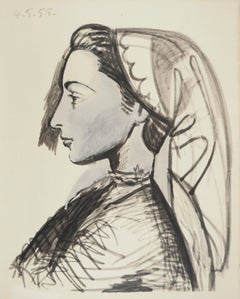
Pablo Picasso, Portrait of Jacqueline, from The Double Flute, 1967 (after)
Located in Southampton, NY
This exquisite lithograph and pochoir after Pablo Picasso (1881–1973), titled Portrait de Jacqueline (Portrait of Jacqueline), from the folio Picasso, La flute double, 16 Dessins, Aq...
Category

1960s Cubist Stencil Figurative Prints

Materials

Lithograph, Stencil

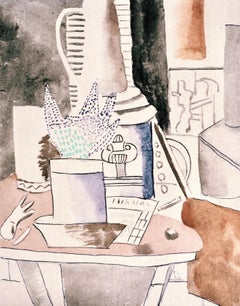
Fernand Leger, Still Life with Newspaper, from Contrastes, 1959 (after)
Located in Southampton, NY
This exquisite lithograph and pochoir after Fernand Leger (1881–1955), titled Nature Morte au Journal (Still Life with Newspaper), from the folio Contrastes, 13 Aquarelles, Gouache, ...
Category

1950s Modern Stencil Figurative Prints

Materials

Lithograph, Stencil

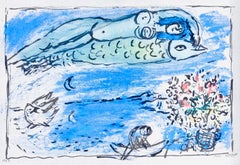
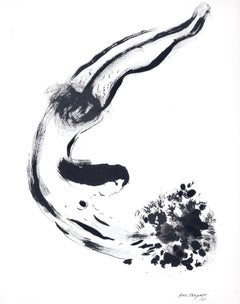
Marc Chagall, The Flying Fish, from Color of Love, 1958 (after)
Located in Southampton, NY
This exquisite lithograph and pochoir after Marc Chagall (1887–1985), titled Le Poisson Volant (The Flying Fish), from the folio Couleur amour, 13 Aquarelles, Gouaches, Lavis (Color ...
Category

1950s Modern Stencil Figurative Prints

Materials

Lithograph, Stencil

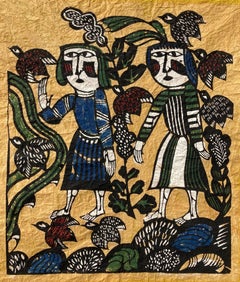
GIRLS WITH LOTS OF QUAILS
Located in Santa Monica, CA
SADAO WATANABE (Japanese 1913-1996) GIRLS WITH LOTS OF QUAILS, 1965 鶉と少女 Hand colored stencil print on momigami textured paper. Signed and numbered in white. Edition 50, Image 17 x 2...
Category

1960s Modern Stencil Figurative Prints

Materials

Stencil

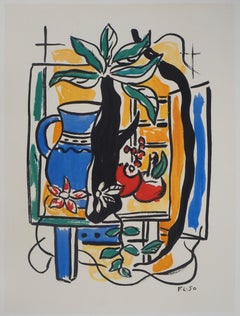
Still life with Blue Pitcher and Fruits - Lithograph and Stencil, 1950
Located in Paris, IDF
Fernand LÉGER Still life with Blue Pitcher and Fruits, c. 1950 Original lithograph and stencil (Jacomet workshop) Printed signature in the plate On paper 43 x 33 cm (c. 17 x 13 Inc...
Category

1950s Modern Stencil Figurative Prints

Materials

Lithograph, Stencil

Marc Chagall, The Blue Beast, from Color of Love, 1958 (after)
Located in Southampton, NY
This exquisite lithograph and pochoir after Marc Chagall (1887–1985), titled La Bete Bleu (The Blue Beast), from the folio Couleur amour, 13 Aquarelles, Gouaches, Lavis (Color of Lov...
Category

1950s Modern Stencil Figurative Prints

Materials

Lithograph, Stencil

Diurnes : Midas - Original Collotype and Stencil (Cramer #115)
Located in Paris, IDF
Pablo PICASSO (1881-1973) Diurnes, Midas, 1962 Original collotype and stencil (Jacomet workshop) Unsigned Limited to 1000 copy On paper 40 x 30 cm (c. 15.7 x 11.2 in) REFERENCE : ...
Category

Mid-20th Century Modern Stencil Figurative Prints

Materials

Stencil

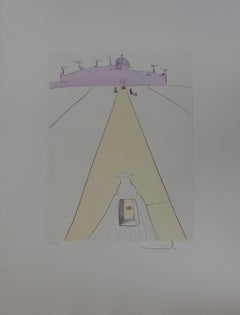
God, Time, Space, and the Pope - orignal etching - signed - 1974
Located in Paris, IDF
Salvador Dali God, Time, Space, and the Pope Original etching and stencil Handsigned in the right corner with the blind stamp of the editor in the left corner On BFK Rives vellum...
Category

1970s Surrealist Stencil Figurative Prints

Materials

Etching, Stencil

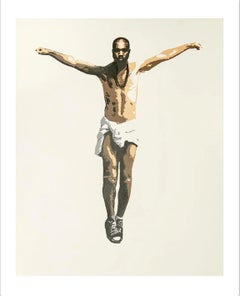
"The New Messiah" – Acrylic Stencil on Paper
Located in West Hollywood, CA
Plastic Jesus is a Los Angeles based street artist that specializes in bold stencil and installation work, inspired by world news events, society, the urban environment, culture and politics. His work is more about shining a small light into some of those dark corners of society then standing back and watching reactions and opinions. his work combines humor, irony, criticism and unique opinion to create art that engages on many levels. Works usually begin on the streets and then expand to limited edition prints and originals on canvas. "The New Messiah" – Acrylic Stencil on Paper...
Category

2010s Pop Art Stencil Figurative Prints

Materials

Acrylic, Stencil

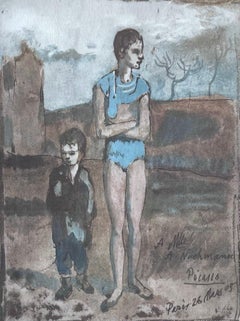
Pablo Picasso, Harlequin and Boy, from Fifteen Drawings, 1946 (after)
Located in Southampton, NY
This exquisite lithograph and pochoir after Pablo Picasso (1881–1973), titled Harlequin and Boy, from the folio Picasso, Fifteen Drawings, 1946, originates from the 1946 edition published by Pantheon Books, Inc., New York, and rendered and printed by Albert Carman, City Island...
Category

1940s Modern Stencil Figurative Prints

Materials

Lithograph, Stencil

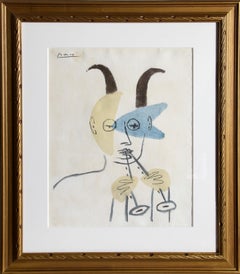
Buste de Faune, Modern Stencil after Pablo Picasso
Located in Long Island City, NY
Pablo Picasso, After, Spanish (1881 - 1973) - Buste de Faune. Portfolio: Femme et Faunes, Year: 1956, Medium: Pochoir, signed in the plate, Edition: 200, Size: 19.5 x 16 in. (49.53 x...
Category

1950s Modern Stencil Figurative Prints

Materials

Stencil

Pablo Picasso, Bacchanal, from The Double Flute, 1967 (after)
Located in Southampton, NY
This exquisite lithograph and pochoir after Pablo Picasso (1881–1973), titled Bacchanale (Bacchanal), from the folio Picasso, La flute double, 16 Dessins, Aquarelles Lavis (The Doubl...
Category

1960s Cubist Stencil Figurative Prints

Materials

Lithograph, Stencil

Faune a la Diaule, Modern Stencil after Pablo Picasso
Located in Long Island City, NY
Pablo Picasso, After, Spanish (1881 - 1973) - Faune a la Diaule. Portfolio: Femme et Faunes, Year: 1956, Medium: Pochoir, signed in the plate, Edition: 200, Size: 19.5 x 16 in. (49.5...
Category

1950s Modern Stencil Figurative Prints

Materials

Stencil

Pablo Picasso, Family Scene, from The Double Flute, 1967 (after)
Located in Southampton, NY
This exquisite lithograph and pochoir after Pablo Picasso (1881–1973), titled Scene de famille (Family Scene), from the folio Picasso, La flute double, 16 Dessins, Aquarelles Lavis (...
Category

1960s Cubist Stencil Figurative Prints

Materials

Lithograph, Stencil

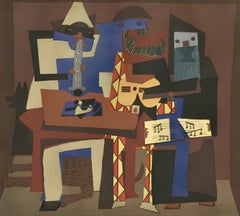
Pablo Picasso, The Three Musicians, from Chroniques du Jour, 1930 (after)
Located in Southampton, NY
This exquisite lithograph and pochoir after Pablo Picasso (1881–1973), titled Les Trois Musiciens (The Three Musicians), from the album, Pablo Picasso, 1930, originates from the 1930 edition published by Editions des Chroniques du Jour, Paris, and printed by L'Atelier Desjobert, Paris, 1930. Les Trois Musiciens (The Three Musicians) captures Picasso’s Cubist mastery at its height, translating one of his most celebrated compositions into the refined medium of lithograph and pochoir. The scene depicts three abstracted figures—a harlequin, a monk, and a pierrot—arranged in a complex geometric harmony that embodies both the structure and rhythm of modernity. Through vivid color and precise pochoir layering, Picasso’s interplay of form, shadow, and light transforms the musicians into a symphony of shape and sound, reflecting the artist’s enduring fascination with the relationship between visual art and music. Executed as a lithograph and pochoir on velin paper, this work measures 9.09 x 11.38 inches. Unsigned and unnumbered as issued. The edition exemplifies the refined craftsmanship of Editions des Chroniques du Jour and the technical excellence of L'Atelier Desjobert, one of the premier Parisian workshops specializing in pochoir and fine art lithography. Artwork Details: Artist: After Pablo Picasso (1881–1973) Title: Les Trois Musiciens (The Three Musicians), from the album, Pablo Picasso, 1930 Medium: Lithograph and pochoir on velin paper Dimensions: 9.09 x 11.38 inches (23.1 x 28.9 cm) Inscription: Unsigned and unnumbered as issued Date: 1930 Publisher: Editions des Chroniques du Jour, Paris Printer: L'Atelier Desjobert, Paris Catalogue raisonne references: Cramer, Patrick. Pablo Picasso, The Illustrated Books: Catalogue Raisonne. Patrick Cramer, 1983, illustration 18; Bloch, Georges. Pablo Picasso: Catalogue of the Printed Graphic Work 1904–1967. Kornfeld & Klipstein, 1968, illustration 98; Reusse, Gerhard. Pablo Picasso: The Illustrated Books, Catalogue Raisonne. Verlag Gerd Hatje, 1983, illustration 31 Condition: Well preserved, consistent with age and medium Provenance: From the album, Pablo Picasso, published by Editions des Chroniques du Jour, Paris, and printed by L'Atelier Desjobert, Paris, 1930 Notes: Excerpted from the album, This volume has been printed in MCC numbered examples, of which DL (LI to DC) constitute the edition in French and DCL (DCI to MCCL). The edition in English has been printed on behalf of E. Weyhe, 794 Lexington Avenue, New York (DCI to MC) and of A. Zwemmer, 78 Charing Cross Road, London, W. C.2. (MCI to MCCL). There have also been printed L examples on Arches paper with a lithograph by Picasso (I to L) distributed between the two editions, and some press examples. About the Publication: The album Pablo Picasso, published in 1930 by Editions des Chroniques du Jour, Paris, under the direction of Christian Zervos, stands among the earliest major printed tributes to the artist’s emerging international acclaim. Conceived as part of the publisher’s broader initiative to document and celebrate the modernist vanguard, the volume presented a series of lithographs and pochoirs interpreting Picasso’s drawings, watercolors, and gouaches from the preceding decade. Executed at the esteemed Atelier Desjobert, the edition combined the lithographic precision of line with the pochoir method’s hand-applied color, producing images of exceptional tonal depth and fidelity. Issued in both French and English, with distribution in Paris, New York, and London through E. Weyhe and A. Zwemmer, the album was limited to MCC copies, including a special suite of L examples on Arches paper containing an original lithograph by Picasso. The publication represented a vital collaboration between artist, publisher, and printer—uniting the intellectual rigor of Zervos’s art criticism with the material beauty of fine French printmaking. Today, Pablo Picasso, 1930 is recognized as a landmark in 20th-century art publishing, reflecting both the refinement of interwar Parisian craftsmanship and the international reach of Picasso’s genius. About the Artist: Pablo Picasso (1881–1973) was a Spanish painter, sculptor, printmaker, and ceramicist whose extraordinary vision revolutionized modern art and defined the visual language of the 20th century. A child prodigy from Malaga, Spain, Picasso's career spanned more than seven decades and encompassed an astonishing range of styles and innovations—from the melancholic Blue and romantic Rose periods to his pioneering invention of Cubism with Georges Braque, which shattered conventional notions of perspective and form. Influenced by the bold expressiveness of El Greco, the structure of Cezanne, and the vitality of African and Iberian sculpture, Picasso became a central figure of the Paris avant-garde, working in creative dialogue with contemporaries such as Henri Matisse, Alexander Calder, Alberto Giacometti, Salvador Dali, Joan Miro, Wassily Kandinsky, Marcel Duchamp, and Man Ray. His insatiable experimentation extended across painting, drawing, printmaking, ceramics, and sculpture, forever expanding the boundaries of artistic expression. A master of reinvention, Picasso profoundly shaped generations of artists who followed—from Andy Warhol, Roy Lichtenstein, David Hockney, and Jean-Michel Basquiat to Jeff Koons and Banksy—cementing his status as a timeless cultural icon whose works remain among the most sought after worldwide. His landmark painting Les Femmes d'Alger (Version O) achieved a record-breaking sale of 179,365,000 USD at Christie's, New York, on May 11, 2015, affirming Picasso's enduring legacy as one of the most influential and valuable artists in history. Pablo Picasso Les Trois Musiciens (The Three Musicians), Picasso 1930, Picasso Desjobert, Picasso pochoir...
Category

1930s Cubist Stencil Figurative Prints

Materials

Lithograph, Stencil

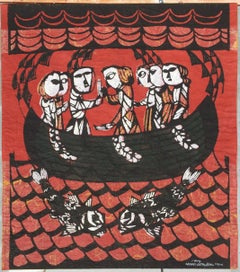
Jonah
Located in Santa Monica, CA
SADAO WATANABE (Japanese 1913-1996) JONAH, 1959 Color stencil, signed, numbered and dated in white ink. Sheet, 25 5/8 x 22 5/8 inches. Edition: 44/50. Good color and generally good ...
Category

1950s Modern Stencil Figurative Prints

Materials

Woodcut, Stencil

Jonah
Jonah
$1,200 Sale Price
20% Off
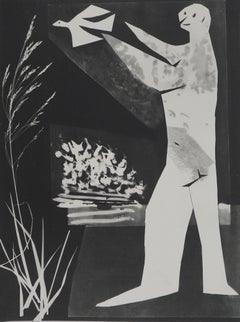
Diurnes : Birdman - Original Collotype and Stencil (Cramer #115)
Located in Paris, IDF
Pablo PICASSO (1881-1973) Diurnes, Birdman, 1962 Original collotype and stencil (Jacomet workshop) Unsigned Limited to 1000 copy On paper 40 x 30 cm (c. 15.7 x 11.2 in) REFERENCE ...
Category

Mid-20th Century Modern Stencil Figurative Prints

Materials

Stencil

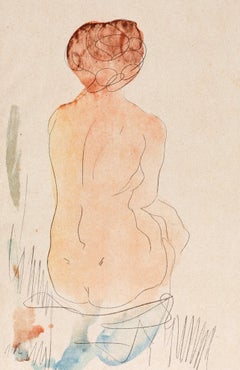
Francois Auguste Rene Rodin, Untitled, from Twelve Watercolors, 1920 (after)
Located in Southampton, NY
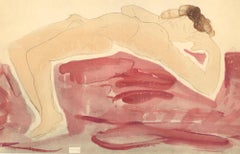
This exquisite lithograph after Francois Auguste Rene Rodin (1840–1917), titled Sans titre (Untitled), from the folio Douze aquarelles de Auguste Rodin (Twelve Watercolors by Auguste...
Category

1920s Modern Stencil Figurative Prints

Materials

Lithograph, Stencil

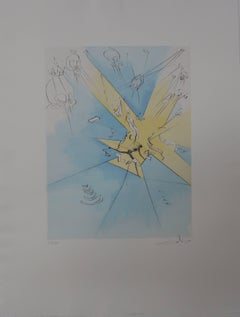
A Shattering Entrance upon the American Stage - orignal etching - signed - 1974
Located in Paris, IDF
Salvador Dali A Shattering Entrance upon the American Stage Original etching and stencil Handsigned in the right corner with the blind stamp of the editor in the left corner On B...
Category

1970s Surrealist Stencil Figurative Prints

Materials

Etching, Stencil

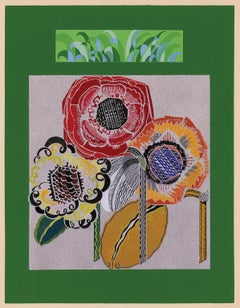
'Poppy' — Art Deco Pochoir from the acclaimed portfolio 'RELAIS'
Located in Myrtle Beach, SC
Edouard Benedictus, 'Poppy' from the portfolio 'Relais', plate 14, color pochoir, 1930. Signed in the matrix, in the center bottom margin. A superb, richly-inked impression, with fresh, vibrant colors, including metallic gold and silver inks, on heavy, cream wove paper; the full sheet with margins (1 3/8 inches), in excellent condition. Published by Éditions Vincent, Fréal et Cie, Paris. The pochoir production is by Jean Saudé, the French printmaker known for his mastery of the technique and the author of the first how-to book on the pochoir process. Matted to museum standards, unframed. Image size 14 3/8 x 11 inches (365 x 279 mm); sheet size 17 1/4 x 13 7/8 inches (438 x 352 mm). Impressions of this work are held in the following museum collections: Cooper-Hewitt National Design Museum Library (Smithsonian), Metropolitan Museum of Art, Minneapolis Institute of Art, New York Public Library, Toledo Museum of Art, Victoria and Albert Museum (London), Virginia Museum of Fine Arts. ABOUT THIS WORK The Pochoir process is a refined stencil-based technique employed to create multiples or to add color to prints produced in other mediums. Characterized by its crisp lines and rich color, the print-making process was most popular from the late 19th century through the 1930s, with its center of activity in Paris. The pochoir process began with the analysis of an image’s composition, including color tones and densities. The numerous stencils (made of aluminum, copper, or zinc) necessary to create a complete image were then designed and hand-cut by the 'découpeur.' The 'coloristes' applied watercolor or gouache pigments through the stencils, skillfully employing a variety of different brushes and methods of paint application to achieve the desired depth of color and textural and tonal nuance. The pochoir process, by virtue of its handcrafted methodology, resulted in the finished work producing the effect of an original painting, and in fact, each print was unique. ABOUT THE ARTIST Edouard Benedictus (1878 -1930), artist, designer, composer, and chemist, was born and died in Paris. A highly-regarded designer and art critic of the Art Nouveau era, Benedictus gained renown as a colorist and creator of Art Deco-inspired geometric and floral motifs. His work had a significant influence on international fashions in clothing, home furnishings, graphic design, and decorative objects of the period, earning him commissions from leading European design firms. In 1925 he was invited to represent Art Deco textile design...
Category

1930s Art Nouveau Stencil Figurative Prints

Materials

Stencil

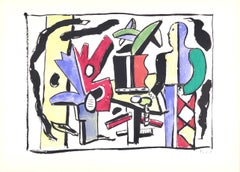
Fernand Leger, Untitled, from Twelve Contemporaries, 1959 (after)
Located in Southampton, NY
This exquisite lithograph and pochoir after Fernand Leger (1881–1955), titled Sans titre (Untitled), from the album Douze Contemporains (Twelve Contemporaries), originates from the 1959 edition published by Editions d'art du lion, Paris, and Boston Book and Art Shop, Inc., Boston, rendered by Daniel Jacomet, Paris, and printed by Atelier Daniel Jacomet et Cie, Paris, December 1959. The work captures Leger's bold geometric visual language and his celebration of modernity, distilling mechanical rhythm and sculptural clarity into a composition emblematic of his innovative machine-age aesthetic. Executed as a lithograph and pochoir on velin paper, this work measures 13.25 x 18.25 inches (33.7 x 46.4 cm). Signed in the plate and unnumbered, as issued. The edition exemplifies the refined craftsmanship of Atelier Daniel Jacomet et Cie, Paris. Artwork Details: Artist: After Fernand Leger (1881–1955) Title: Sans titre (Untitled), from the album Douze Contemporains (Twelve Contemporaries) Medium: Lithograph and pochoir on velin paper Dimensions: 13.25 x 18.25 inches (33.7 x 46.4 cm) Inscription: Signed in the plate and unnumbered, as issued Date: 1959 Publisher: Editions d'art du lion, Paris, and Boston Book and Art Shop, Inc., Boston Printer: Atelier Daniel Jacomet et Cie, Paris Condition: Well preserved, consistent with age and medium Provenance: From the album Douze Contemporains (Twelve Contemporaries), published by Editions d'art du lion, Paris, and Boston Book and Art Shop, Inc., Boston; rendered by Daniel Jacomet, Paris; printed by Atelier Daniel Jacomet et Cie, Paris, December 1959 Notes: Excerpted from the folio (translated from French), This album finished printing in December 1959 drawn to CMLXX examples numbered from I to CMLXX and XXX non-commerce examples numbered from I to XXX, was directed by Daniel Jacomet. Typography of L'Imprimerie Union in Paris. About the Publication: Douze Contemporains (Twelve Contemporaries), published in 1959 by Editions d'art du lion in collaboration with Boston Book and Art Shop, Inc., is a landmark example of mid-century French printmaking, bringing together leading modern artists in a unified portfolio of lithographs and pochoirs. The album exemplifies Jacomet's meticulous approach to color separation and hand-stenciled execution, preserving the tonal richness and structural clarity of each composition. Issued in a substantial edition of numbered and non-commerce impressions, the publication reflects the vitality of postwar Parisian art and the technical excellence of Daniel Jacomet, whose workshop played a central role in the preservation and dissemination of twentieth-century modernist imagery. About the Artist: Fernand Leger (1881–1955) was a French painter, sculptor, and filmmaker whose pioneering fusion of modern life, mechanization, and visual abstraction made him one of the most influential artists of the 20th century. Emerging from the Cubist movement, Leger developed a highly personal style distinguished by bold contrasts, cylindrical forms, and rhythmic compositions that celebrated the beauty of industrial progress and the vitality of modern urban life. Deeply influenced by the innovations of Paul Cezanne and the structural experimentation of Pablo Picasso and Georges Braque, Leger transformed Cubism's fragmented perspective into a dynamic, machine-age aesthetic that bridged fine art, architecture, and design. His work often depicted workers, machinery, and everyday objects as monumental symbols of harmony between humanity and technology, reflecting both his optimism for modernity and his belief in the democratization of art. During his career, Leger was part of an extraordinary artistic circle that included Henri Matisse, Marc Chagall, Alexander Calder, Alberto Giacometti, Salvador Dali, Joan Miro, Wassily Kandinsky, Marcel Duchamp, and Man Ray—visionaries who shared his commitment to pushing the boundaries of artistic form and expression. A leading figure in the international avant-garde, Leger also explored large-scale murals, public art, and film, expanding the reach of modern art beyond the gallery. His works are represented in major museum collections worldwide, including the Museum of Modern Art, the Centre Pompidou, the Tate, and the Guggenheim, where they continue to inspire admiration for their bold geometry, humanist vision, and timeless modernity. The highest price ever paid for a Fernand Leger artwork is approximately 70 million USD, achieved in 2017 at Christies New York for Contraste de formes (1913). Fernand Leger print...
Category

1950s Modern Stencil Figurative Prints

Materials

Lithograph, Stencil

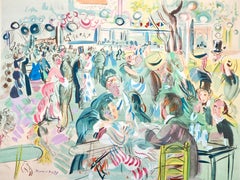
Raoul Dufy, The Ball, from Esprit de la fleur et du fruit, 1954 (after)
Located in Southampton, NY
This exquisite lithograph after Raoul Dufy (1877–1953), titled Le Bal (The Ball), from the folio Eaux-de-vie, Esprit de la fleur et du fruit (Spirits, Essence of the Flower and the F...
Category

1950s Modern Stencil Figurative Prints

Materials

Lithograph, Stencil

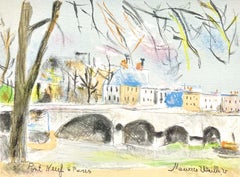
Maurice Utrillo, Pont-Neuf, from Paris Capital, 1955
Located in Southampton, NY
This exquisite lithograph by Maurice Utrillo (1883–1955), titled Pont-Neuf (Pont-Neuf), from the album Paris Capitale (Paris Capital), originates from the 1955 edition published by J...
Category

1950s Modern Stencil Figurative Prints

Materials

Lithograph, Stencil

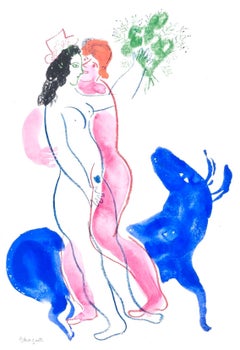
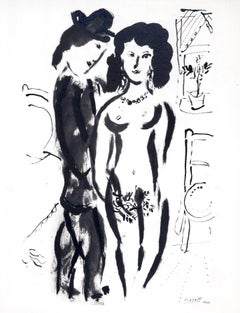
Marc Chagall, The Lovers, from Color of Love, 1958 (after)
Located in Southampton, NY
This exquisite lithograph and pochoir after Marc Chagall (1887–1985), titled Les Amoureux (The Lovers), from the folio Couleur amour, 13 Aquarelles, Gouaches, Lavis (Color of Love, 1...
Category

1950s Modern Stencil Figurative Prints

Materials

Lithograph, Stencil

Jonah Historically Regarded, from the Moby Dick Domes series (signed)
Located in Aventura, FL
From the Moby Dick Domes series. Aquatint, etching, engraving, relief, screen print and stencil with hand-coloring in acrylic on handmade, shaped TGL paper. Hand signed and dated l...
Category

1990s Contemporary Stencil Figurative Prints

Materials

Paper, Acrylic, Engraving, Etching, Aquatint, Screen, Stencil
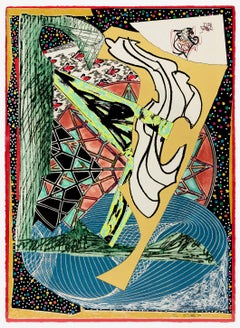
Diurnes: Werewolf (on Fire) - Original Collotype and Stencil (Cramer #115)
Located in Paris, IDF
Pablo PICASSO (1881-1973) Diurnes: Werewolf, 1962 Original collotype and stencil (Jacomet workshop) Unsigned Limited to 1000 copy On paper 40 x 30 cm (c. 15,7 x 11,8 in) REFERENCE...
Category

Mid-20th Century Modern Stencil Figurative Prints

Materials

Stencil

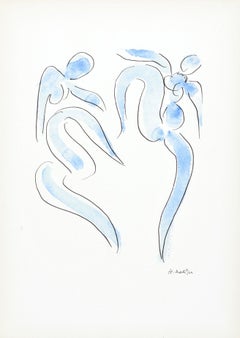
Henri Matisse, The Dance, from Twelve Contemporaries, 1959 (after)
Located in Southampton, NY
This exquisite lithograph after Henri Matisse (1869–1954), titled La danse (The Dance), from the album Douze Contemporains (Twelve Contemporaries), originates from the 1959 edition p...
Category

1950s Modern Stencil Figurative Prints

Materials

Lithograph, Stencil

Diurnes: The Bride - Original Collotype and Stencil (Cramer#115)
Located in Paris, IDF
Pablo PICASSO (1881-1973) Diurnes, The Bride, 1962 Original collotype and stencil (Jacomet workshop) Unsigned Limited to 1000 copy On paper 40 x 30 cm (c.15.7 11.2 in) REFERENCE :...
Category

Mid-20th Century Modern Stencil Figurative Prints

Materials

Stencil

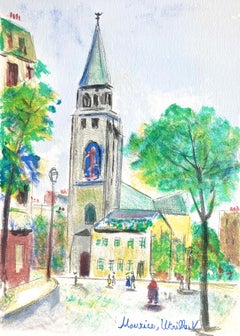
Maurice Utrillo, Saint-Germain-des-Prés, from Paris Capital, 1955
Located in Southampton, NY
This exquisite lithograph by Maurice Utrillo (1883–1955), titled Saint-Germain-des-Pres (Saint-Germain-des-Pres), from the album Paris Capitale (Paris Capital), originates from the 1...
Category

1950s Modern Stencil Figurative Prints

Materials

Lithograph, Stencil

Marc Chagall, The Offering, from Color of Love, 1958 (after)
Located in Southampton, NY
This exquisite lithograph and pochoir after Marc Chagall (1887–1985), titled L'Offrende (The Offering), from the folio Couleur amour, 13 Aquarelles, Gouaches, Lavis (Color of Love, 1...
Category

1950s Modern Stencil Figurative Prints

Materials

Lithograph, Stencil

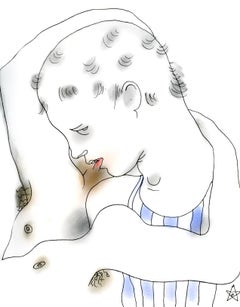
Jean Cocteau, Untitled, from The White Book, 1930
Located in Southampton, NY
This exquisite lithograph and pochoir with hand coloring by Jean Cocteau (1889–1963), titled Sans titre (Untitled), from the album Le Livre blanc (The White Book), precede dun frontispice et accompagne de 17 dessins de Jean Cocteau (preceded by a frontispiece and accompanied by 17 drawings by Jean Cocteau), originates from the 1930 edition published by Editions du Signe, Paris, printed by Maitres-Imprimeurs, Ducros et Colas, Paris, and hand colored by M.B. Armington (a probable pseudonym of Jean Cocteau), May 10, 1930. The work reflects Cocteaus mastery of linear elegance and psychological nuance, distilling intimacy, vulnerability, and symbolic clarity into a composition that occupies a pivotal place in early twentieth-century modernism and queer cultural history. Executed as a lithograph and pochoir with hand coloring on velin d'Arches paper, this work measures 11.81 x 9.06 inches. Unsigned and unnumbered, as issued. The edition exemplifies the refined craftsmanship of Ducros and Colas, Maitres-Imprimeurs, and the exceptional hand-coloring attributed to Cocteau himself. ARTWORK DETAILS Artist: After Jean Cocteau (1889–1963) Title: Sans titre (Untitled), from the album Le Livre blanc (The White Book), precede dun frontispice et accompagne de 17 dessins de Jean Cocteau (preceded by a frontispiece and accompanied by 17 drawings by Jean Cocteau) Year: 1930 Medium: Lithograph and pochoir with hand coloring on velin d'Arches paper Size: 11.81 x 9.06 inches Inscription: Unsigned and unnumbered, as issued Publisher: Editions du Signe, Paris Printer: Maitres-Imprimeurs, Ducros et Colas, Paris Catalogue Raisonne References: Bezit, Emmanuel. Dictionnaire Critique et Documentaire des Peintres, Sculpteurs, Dessinateurs et Graveurs. Gründ, 1976, vol. 3, p. 744. Carteret, Leon. Le Tresor du Bibliophile: Livres Illustres Modernes, 1875–1945. Editions Carteret, 1958, vol. 5, p. 51. van der Veen, H. In Liefde Verzameld: Homoseksualiteit en de Nederlandse Literatuur. De Buitenkant, 1992, no. 136. Monod, Luc. Manuel de Lamateur de Livres Illustres Modernes: 1875–1975. Ides & Calendes, 1992, no. 2912. Condition: Well preserved, consistent with age and medium Provenance: From the album Le Livre blanc, published by Editions du Signe, Paris; printed by Ducros et Colas, Paris; hand colored by M.B. Armington (a probable pseudonym of Jean Cocteau), May 10, 1930 NOTES Excerpted from the album (translated from French), This album, whose plates have been entirely colored by hand by M.B. Armington, an artist-painter, was completed to print on May 10, 1930, by Ducros and Colas, Maitres-Imprimeurs in Paris. The draw has been limited to: XVIII examples on japon nacre, each containing one of the XVIII original drawings and a suite on Hollande, numbered from I to XVIII; VI examples, H.C., marked from A to F; XVIII examples on japon imperial, numbered from XIX to XXXVI; VI examples, H.C., marked from G to L; CCCLXXX examples on velin d'Arches, numbered from XXXVII to CDXVI; XXII examples, H.C., marked from A to V. ABOUT THE PUBLICATION Le Livre blanc (The White Book), published in 1930 by Editions du Signe with plates printed by Ducros et Colas and hand colored by the enigmatic M.B. Armington (likely Cocteau himself), occupies a singular and foundational place in the history of LGBTQ...
Category

1930s Modern Stencil Figurative Prints

Materials

Lithograph, Stencil

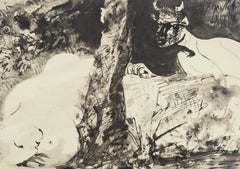
Pablo Picasso, Faun and Nude Woman, from The Double Flute, 1967 (after)
Located in Southampton, NY
This exquisite lithograph and pochoir after Pablo Picasso (1881–1973), titled Faune et femme nue (Faun and Nude Woman), from the folio Picasso, La flute double, 16 Dessins, Aquarelle...
Category

1960s Cubist Stencil Figurative Prints

Materials

Lithograph, Stencil

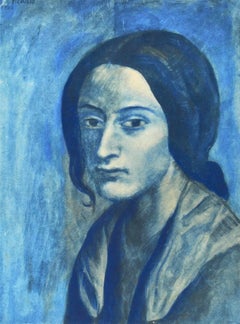
Pablo Picasso, Woman with the Lock of Hair, The Blues of Barcelona, 1963 (after)
Located in Southampton, NY
This exquisite lithograph and pochoir after Pablo Picasso (1881–1973), titled Femme a la meche (Woman with the Lock of Hair), from the folio Les Bleus de Barcelone, 12 aquarelles et ...
Category

1960s Modern Stencil Figurative Prints

Materials

Lithograph, Stencil

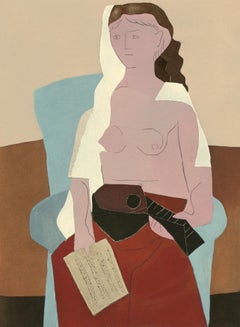
Pablo Picasso, Woman with Mandolin, from Chroniques du Jour, 1930 (after)
Located in Southampton, NY
This exquisite lithograph and pochoir after Pablo Picasso (1881–1973), titled Femme à la mandoline (Woman with Mandolin), from the album, Pablo Picasso, 1930, originates from the 1930 edition published by Editions des Chroniques du Jour, Paris, and printed by L'Atelier Desjobert, Paris, 1930. Femme à la mandoline (Woman with Mandolin) exemplifies Picasso’s lyrical interpretation of the female form during his neoclassical period, fusing harmony, sensuality, and musicality into a composition that reflects both the artist’s Mediterranean roots and his mastery of modernist form. Through the union of lithographic line and pochoir color, the work conveys a balance between intimacy and abstraction, celebrating rhythm, grace, and the timeless relationship between art and music. Executed as a lithograph and pochoir on velin paper, this work measures 11.38 x 9.09 inches. Unsigned and unnumbered as issued. The edition exemplifies the refined craftsmanship of Editions des Chroniques du Jour and the technical excellence of L'Atelier Desjobert, one of the premier Parisian workshops specializing in pochoir and fine art lithography. Artwork Details: Artist: After Pablo Picasso (1881–1973) Title: Femme à la mandoline (Woman with Mandolin), from the album, Pablo Picasso, 1930 Medium: Lithograph and pochoir on velin paper Dimensions: 11.38 x 9.09 inches (28.9 x 23.1 cm) Inscription: Unsigned and unnumbered as issued Date: 1930 Publisher: Editions des Chroniques du Jour, Paris Printer: L'Atelier Desjobert, Paris Catalogue raisonne references: Cramer, Patrick. Pablo Picasso, The Illustrated Books: Catalogue Raisonne. Patrick Cramer, 1983, illustration 18; Bloch, Georges. Pablo Picasso: Catalogue of the Printed Graphic Work 1904–1967. Kornfeld & Klipstein, 1968, illustration 98; Reusse, Gerhard. Pablo Picasso: The Illustrated Books, Catalogue Raisonne. Verlag Gerd Hatje, 1983, illustration 31 Condition: Well preserved, consistent with age and medium Provenance: From the album, Pablo Picasso, published by Editions des Chroniques du Jour, Paris, and printed by L'Atelier Desjobert, Paris, 1930 Notes: Excerpted from the album, This volume has been printed in MCC numbered examples, of which DL (LI to DC) constitute the edition in French and DCL (DCI to MCCL). The edition in English has been printed on behalf of E. Weyhe, 794 Lexington Avenue, New York (DCI to MC) and of A. Zwemmer, 78 Charing Cross Road, London, W. C.2. (MCI to MCCL). There have also been printed L examples on Arches paper with a lithograph by Picasso (I to L) distributed between the two editions, and some press examples. About the Publication: The album Pablo Picasso, published in 1930 by Editions des Chroniques du Jour, Paris, under the direction of Christian Zervos, stands among the earliest major printed tributes to the artist’s emerging international acclaim. Conceived as part of the publisher’s broader initiative to document and celebrate the modernist vanguard, the volume presented a series of lithographs and pochoirs interpreting Picasso’s drawings, watercolors, and gouaches from the preceding decade. Executed at the esteemed Atelier Desjobert, the edition combined the lithographic precision of line with the pochoir method’s hand-applied color, producing images of exceptional tonal depth and fidelity. Issued in both French and English, with distribution in Paris, New York, and London through E. Weyhe and A. Zwemmer, the album was limited to MCC copies, including a special suite of L examples on Arches paper containing an original lithograph by Picasso. The publication represented a vital collaboration between artist, publisher, and printer—uniting the intellectual rigor of Zervos’s art criticism with the material beauty of fine French printmaking. Today, Pablo Picasso, 1930 is recognized as a landmark in 20th-century art publishing, reflecting both the refinement of interwar Parisian craftsmanship and the international reach of Picasso’s genius. About the Artist: Pablo Picasso (1881–1973) was a Spanish painter, sculptor, printmaker, and ceramicist whose extraordinary vision revolutionized modern art and defined the visual language of the 20th century. A child prodigy from Malaga, Spain, Picasso's career spanned more than seven decades and encompassed an astonishing range of styles and innovations—from the melancholic Blue and romantic Rose periods to his pioneering invention of Cubism with Georges Braque, which shattered conventional notions of perspective and form. Influenced by the bold expressiveness of El Greco, the structure of Cezanne, and the vitality of African and Iberian sculpture, Picasso became a central figure of the Paris avant-garde, working in creative dialogue with contemporaries such as Henri Matisse, Alexander Calder, Alberto Giacometti, Salvador Dali, Joan Miro, Wassily Kandinsky, Marcel Duchamp, and Man Ray. His insatiable experimentation extended across painting, drawing, printmaking, ceramics, and sculpture, forever expanding the boundaries of artistic expression. A master of reinvention, Picasso profoundly shaped generations of artists who followed—from Andy Warhol, Roy Lichtenstein, David Hockney, and Jean-Michel Basquiat to Jeff Koons and Banksy—cementing his status as a timeless cultural icon whose works remain among the most sought after worldwide. His landmark painting Les Femmes d'Alger (Version O) achieved a record-breaking sale of 179,365,000 USD at Christie's, New York, on May 11, 2015, affirming Picasso's enduring legacy as one of the most influential and valuable artists in history. Pablo Picasso Femme à la mandoline (Woman with Mandolin), Picasso 1930, Picasso Desjobert, Picasso pochoir...
Category

1930s Cubist Stencil Figurative Prints

Materials

Lithograph, Stencil

L'Ete (Summer), Surrealist Pochoir Print by Joan Miro
Located in Long Island City, NY
Artist: Joan Miro, Spanish (1893 - 1983) Title: L'Ete (Summer) from Verve (Vol. 1, No. 3) Year: 1938 Medium: Color Pochoir on Wove Paper, signed, titled and dated in the plate, verso...
Category

1930s Surrealist Stencil Figurative Prints

Materials

Stencil

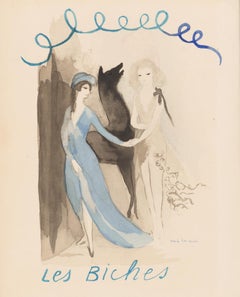
Marie Laurencin, Untitled, from Les Biches, 1924
Located in Southampton, NY
This exquisite lithograph and pochoir by Marie Laurencin (1883–1956), titled Sans titre (Untitled), from the album Les Biches (The Does), originates from the 1924 edition published b...
Category

1920s Modern Stencil Figurative Prints

Materials

Lithograph, Stencil

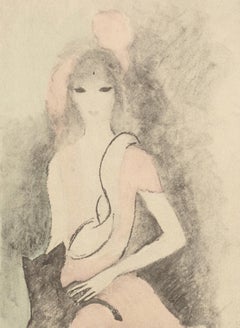
Marie Laurencin, Untitled, from Les Biches, 1924
Located in Southampton, NY
This exquisite lithograph and pochoir by Marie Laurencin (1883–1956), titled Sans titre (Untitled), from the album Les Biches (The Does), originates from the 1924 edition published b...
Category

1920s Modern Stencil Figurative Prints

Materials

Lithograph, Stencil

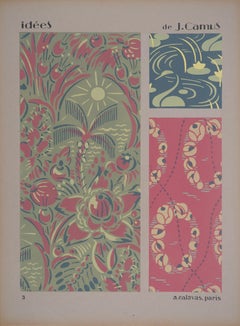
Art Deco : The Palm Tree under the Sun, 1933 - Original Lithograph
Located in Paris, IDF
Jacques Camus The Palm Tree under the Sun, 1933 Original lithograph and stencil Unsigned On paper 39 x 29 cm (c. 15.3 x 11.4 inch) INFORMATION : This lithograph is part of the "Idé...
Category

1930s Art Deco Stencil Figurative Prints

Materials

Lithograph, Stencil

Diurnes : Toros and Magician - Original Collotype and Stencil (Cramer #115)
Located in Paris, IDF
Pablo PICASSO (1881-1973) Diurnes, The Toro Magician, 1962 Original collotype and stencil (Jacomet workshop) Unsigned Limited to 1000 copy On paper 30 x 40 cm (c. 11.2 x 15.7 in) ...
Category

Mid-20th Century Modern Stencil Figurative Prints

Materials

Stencil

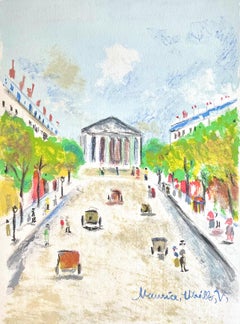
Maurice Utrillo, Rue Royale, La Madeleine, from Paris Capital, 1955
Located in Southampton, NY
This exquisite lithograph by Maurice Utrillo (1883–1955), titled Rue Royale, La Madeleine (Rue Royale, La Madeleine), from the album Paris Capitale (Paris Capital), originates from t...
Category

1950s Modern Stencil Figurative Prints

Materials

Lithograph, Stencil

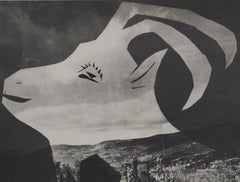
Diurnes: The Goat in a Mountain - Original Collotype and Stencil (Cramer #115)
Located in Paris, IDF
Pablo PICASSO (1881-1973) Diurnes: The Goat in a Mountain, 1962 Original collotype and stencil (Jacomet workshop) Unsigned Limited to 1000 copy On paper 40 x 30 cm (c. 15,7 x 11,8 ...
Category

Mid-20th Century Modern Stencil Figurative Prints

Materials

Stencil

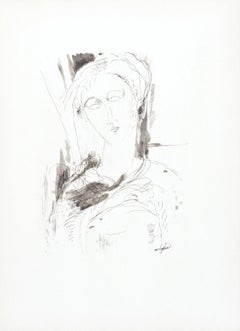
Amedeo Modigliani, Portrait, from Twelve Contemporaries, 1959 (after)
Located in Southampton, NY
This exquisite lithograph after Amedeo Modigliani (1884–1920), titled Portrait (Portrait), from the album Douze Contemporains (Twelve Contemporaries), originates from the 1959 editio...
Category

1950s Modern Stencil Figurative Prints

Materials

Lithograph, Stencil

Marie Laurencin, Untitled, from Les Biches, 1924
Located in Southampton, NY
This exquisite lithograph and pochoir by Marie Laurencin (1883–1956), titled Sans titre (Untitled), from the album Les Biches (The Does), originates from the 1924 edition published b...
Category

1920s Modern Stencil Figurative Prints

Materials

Lithograph, Stencil

Marie Laurencin, Untitled, from Les Biches, 1924
Located in Southampton, NY
This exquisite lithograph and pochoir by Marie Laurencin (1883–1956), titled Sans titre (Untitled), from the album Les Biches (The Does), originates from the 1924 edition published b...
Category

1920s Modern Stencil Figurative Prints

Materials

Lithograph, Stencil

Francois Auguste Rene Rodin, Untitled, from Twelve Watercolors, 1920 (after)
Located in Southampton, NY
This exquisite lithograph after Francois Auguste Rene Rodin (1840–1917), titled Sans titre (Untitled), from the folio Douze aquarelles de Auguste Rodin (Twelve Watercolors by Auguste...
Category

1920s Modern Stencil Figurative Prints

Materials

Lithograph, Stencil

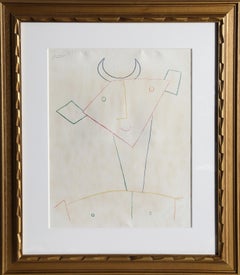
Diurnes : Woman By the Sea - Original Collotype and Stencil (Cramer #115)
Located in Paris, IDF
Pablo PICASSO (1881-1973) Diurnes, Woman By the Sea, 1962 Original collotype and stencil (Jacomet workshop) Unsigned Limited to 1000 copy On paper 40 X 30 cm (c. 15.7 x 11.2 in) R...
Category

Mid-20th Century Modern Stencil Figurative Prints

Materials

Stencil

Pablo Picasso, Young Faun, Woman and Child, from The Double Flute, 1967 (after)
Located in Southampton, NY
This exquisite lithograph and pochoir after Pablo Picasso (1881–1973), titled Jeune faune, femme et enfant (Young Faun, Woman and Child), from the folio Picasso, La flute double, 16 ...
Category

1960s Cubist Stencil Figurative Prints

Materials

Lithograph, Stencil

Pablo Picasso, Minotaur and Nude, from The Double Flute, 1967 (after)
Located in Southampton, NY
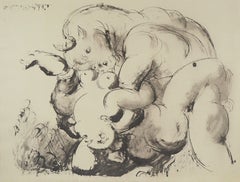
This exquisite lithograph and pochoir after Pablo Picasso (1881–1973), titled Minotaure et nue (Minotaur and Nude), from the folio Picasso, La flute double, 16 Dessins, Aquarelles La...
Category

1960s Cubist Stencil Figurative Prints

Materials

Lithograph, Stencil

Francois Auguste Rene Rodin, Untitled, from The Varende, 1944 (after)
Located in Southampton, NY
This exquisite lithograph after Francois Auguste Rene Rodin (1840–1917), titled Sans titre (Untitled), from the folio La Varende, Rodin (La Varende, Rodin), originates from the 1944 ...
Category

1940s Modern Stencil Figurative Prints

Materials

Lithograph, Stencil

Marc Chagall, Nude with Bird, from Color of Love, 1958 (after)
Located in Southampton, NY
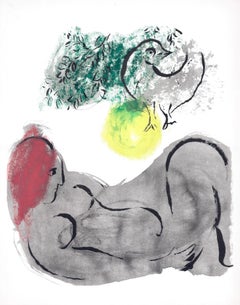
This exquisite lithograph and pochoir after Marc Chagall (1887–1985), titled Nu a l'oiseau (Nude with Bird), from the folio Couleur amour, 13 Aquarelles, Gouaches, Lavis (Color of Lo...
Category

1950s Modern Stencil Figurative Prints

Materials

Lithograph, Stencil

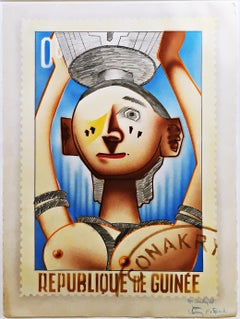
Larry Rivers Republique De Guinee Pochoir Inscribed in ink to Andy Warhol Framed
Located in New York, NY
Larry Rivers Republique De Guinee, for Andy Warhol, Inscribed in ink to Andy Warhol, 1977 Color Pochoir, Acrylic Airbrush and Pencil on paper with deckled edges Hand signed and inscr...
Category

1970s Pop Art Stencil Figurative Prints

Materials

Mixed Media, Acrylic, Pencil, Stencil
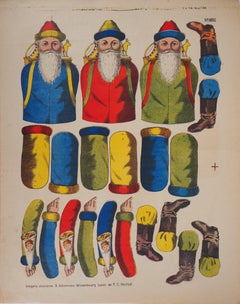
Imagerie de Wissembourg - Christmas Santa Claus - Lithograph and stencil - 1906
Located in Paris, IDF
Imagerie de Wissembourg Christmas Santa Claus, c. 1906 Lithograph, woodcut and stencil Drawing by C. Burckardt On paper 43 x 32.5 cm (c. 17 x ...
Category

Early 1900s Realist Stencil Figurative Prints

Materials

Lithograph, Stencil

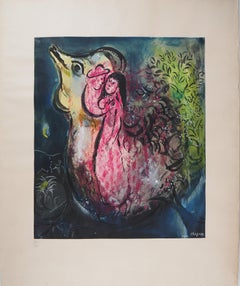
Lovers with a Rooster - Lithograph, Numbered / 500
Located in Paris, IDF
Marc CHAGALL Lovers with a Rooster Lithograph and stencil (Jacomet workshop) Printed signature in the plate Numbered /500 On vellum 65 x 54 cm (c. 26 x 21...
Category

1960s Modern Stencil Figurative Prints

Materials

Lithograph, Stencil

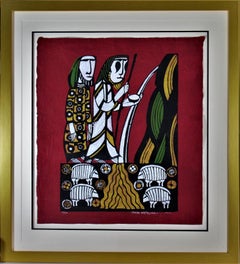
Moses Smiting the Rock of Meribah, Exodus
Located in San Francisco, CA
This artwork, "Moses Smiting the Rock of Meribah, Exodus" 1972 is an original color stencil on hand crumpled momigami paper. It is hand signed, dated and numbered 47/70 in White ink by the artist. The artwork size is 27.5 x 24.75 inches, framed size is 39 x 36 inches. It is custom framed in a wooden gold frame, with matting and black color spacer. It is in excellent condition, Please NOTE, the dark area at the lower left corner of the frame is only the shadow, the frame is in perfect condition. About the artist: Sadao Watanabe born and raised in Tokyo, was a Japanese printmaker in the 20th Century. He was famous for his Biblical prints rendered in the mingei (folk art) tradition of Japan. As a student of the master textile dye artist Serizawa Keisuke...
Category

Late 20th Century Modern Stencil Figurative Prints

Materials

Stencil

Diurnes : The Satyr with Plants - Original Collotype and Stencil (Jacomet)
Located in Paris, IDF
Pablo PICASSO (1881-1973) Diurnes, The Satyr with Plants, 1962 Original collotype and stencil (Jacomet workshop) Unsigned Limited to 1000 copy On paper 40 x 30 cm (c. 15.7 11.2 in)...
Category

Mid-20th Century Modern Stencil Figurative Prints

Materials

Stencil

Cubist Wood Logs - Lithograph and Stencil, 1959
Located in Paris, IDF
Fernand LÉGER Cubist Wood Logs, 1959 Original lithograph and stencil Printed signature in the plate On vellum Auvergne 38,9 x 50 cm (c. 15,3 x 19,6 Inches) Published in 1959, under the control of the wife of the artist, Nadia Léger...
Category

1950s Modern Stencil Figurative Prints

Materials

Lithograph, Stencil

Historic invitation poster for 1970 ACE Gallery exhibition Minimalist light art
Located in New York, NY
Dan Flavin Rare invitation poster for 1970 ACE Gallery exhibition, 1970 Letterpress and stencil on colored paper Not signed Frame included Floated in the original ACE gallery vintage wood frame. Measurements: Framed: 17.75" x 17.75" x 1.6 inches Poster: 16 inches x 16 inches Extremely uncommon letterpress and stencil poster designed by Dan Flavin on the occasion of his 1970 exhibition “Two Cornered Installations in Colored Fluorescent Light from Dan Flavin” at the legendary Ace Gallery in Los Angeles. The poster, like most exhibition invitations of that era (including those from the Leo Castelli gallery in New York) was undated, as these works were so much of the moment. This work was acquired directly from the collection of the ACE Gallery. Other than the present work, we've never seen another example of this collectors item anywhere in the world, on or off the market (If anyone is aware of others, we'd love to see!) More about the legendary ACE gallery, and the sale of some of its art collection from the bankruptcy estate, from where the present work was acquired: ACE Gallery founder Douglas Chrismas opened his own frame shop and gallery in Vancouver at the age of 17. His gallery became known as a venue where Vancouver artists could show alongside major New Yorkers, and get the feeling of belonging to a bigger scene. In the 60s and early 70s he brought artists such as Robert Rauschenberg, Carl Andre, Sol LeWitt, Bruce Nauman, and Donald Judd to Vancouver, Canada. The gallery expanded to Los Angeles in 1967 at the former Virginia Dwan Gallery space in Westwood, and then further expanded to New York in 1994. The galleries were noted for doing museum-level exhibitions by up and coming and internationally renowned artists. While in New York the gallery’s presence was amplified by doing exhibitions in conjunction with cultural institutions such as the Guggenheim Museum and the Cartier Foundation (Paris). Under Chrismas' directorship, ACE Gallery has had either offices or galleries in art centers outside of the United States, such as Mexico City, Paris, Berlin. and Beijing. In 1972, Chrismas mounted Robert Irwin’s installation Room Angle Light Volume at the first ACE/Venice, which opened at 72 Market Street in 1971. In 1977, ACE mounted exhibitions of work by Frank Stella and Robert Motherwell, along with Michael Heizer’s Displaced/Replaced Mass. Installed at ACE/Venice, the Heizer piece required that huge chunks be gouged out of the gallery floor to create recessed areas able to accommodate boulders. In April 2016, ACE Gallery emerged from a three-year bankruptcy proceeding under the leadership of Sam S. Leslie. In May 2016, founder Douglas Chrismas was terminated from all roles at the gallery. In July 2021, Douglas Chrismas was arrested by the FBI and charged with embezzlement. In May 2022, Douglas Chrismas was ordered to repay 14.2 million in ACE art sale profits, which were diverted to personal accounts. Chrismas is awaiting criminal trial in January, 2023. He faces up to 15 years in prison if convicted. Controversies In a 1983 lawsuit in Los Angeles federal court, Rauschenberg sought $500,000 from Chrismas' Flow ACE Gallery; the artist won a $140,000 judgment in the suit in 1984. Eventually the two reconciled their differences and in 1997 Robert Rauschenberg insisted that ACE Gallery New York (in conjunction with the Guggenheim Museum) host his Retrospective. In 1986, Chrismas pleaded no contest after Canadian real estate developer C. Frederick Stimpson alleged that he had improperly sold work belonging to the collector, among them pieces by Andy Warhol and Rauschenberg. Under the terms of the settlement, Chrismas agreed to pay Stimpson $650,000 over a period of five years. He continues to work with the Stimpson family in handling their art interests. In 1989, ACE Gallery wanted to borrow a work by Judd along with Carl Andre's 1968 Fall, both owned by Count Giuseppe Panza, for an exhibition devoted to minimal art called The Innovators Entering into the Sculpture. Rather than shipping the two large scale works from Italy, Panza authorized ACE Gallery to refabricate the pieces in Los Angeles. In Panza's collection archives, there is a series of signed certificates signed by Judd that granted Panza broad authority over the works by Judd in his collection. These certificates "authorized Panza and followers to reconstruct work for a variety of reasons," as long as instructions and documentation provided by Judd were followed and either he or his estate was notified. This even included the right to make "temporary exhibition copies, as long as the temporary copy was destroyed after the exhibition; and the right to recreate the work to save expense and difficulty in transportation as long as the original was then destroyed." Miwon Kwon, in her account of site specificity: "One Place After Another," presents the account of ACE Gallery recreating artworks by Donald Judd and Carl Andre without the artist's permission. Andre and Judd both publicly denounced these recreations as "a gross falsification" and a "forgery," in letters to Art in America, however, the fabrication of the pieces were permitted by Panza Collection in Italy, the owner of the works. Despite the confusion surrounding the Panza refabrications, both Carl Andre and Donald Judd maintained a professional relationship with Douglas Chrismas and ACE Gallery. Andre showcased works at ACE Gallery in 1997, 2002, 2007, 2011 and present day. In 2007, Carl Andre's show entitled "Zinc" was exhibited at ACE Gallery in Beverly Hills. Donald Judd paid a visit to The Innovators Entering into the Sculpture exhibition at ACE Gallery and agreed to keep his sculpture in the exhibition. After the exhibition was over, Chrismas planned to sell the metal used for the re-fabrication of Judd's work for scrap metal but Judd wanted to own the re-fabrication for himself. ACE Gallery then sold the re-fabrication of Donald Judd's work to Donald Judd. After having consigned more than $4 million worth of art to ACE Gallery to sell in 1997 and 1998, the sculptor Jannis Kounellis filed a lawsuit in Los Angeles Superior Court in 2006, accusing Chrismas of keeping most of the profits of artworks and refusing to return the pieces that did not sell. According to the lawsuit, the primary agreement between Kounellis and Chrismas was oral. Chrismas returned all of Kouenllis' artwork, and did a full accounting of the proceeds from Kounellis' work—minus the expense of exhibiting it. The matter was resolved between the two of them and ACE Gallery still sells and exhibits Kounellis' work today. By 2006, Chrismas had filed for Chapter 11 bankruptcy protection at least six times since 1982, barring most of his creditors from collecting the money immediately owed to them. Chrismas filed for Chapter 11 bankruptcy to protect the gallery's extensive real estate holdings from the problematic landlord. The landlord of the Wilshire Boulevard space, Wilshire Dunsmuir Company, claimed that ACE owed back rent and penalties however, the claim was disputed by Douglas Chrismas. In court papers, Chrismas Fine Art claimed that it would cure "the pre-petition" debt by Feb. 1, 2000, and was asking the court to protect its right to remain in the property. A declaration filed by Douglas Chrismas characterized this leasehold as the business' primary asset. -Courtesy Wikipedia About Dan Flavin Dan Flavin (1933–1996) was a pioneer of Minimal Art. He rose to fame in the 1960s with his work with industrially manufactured fluorescent tubes, inventing a new art form and securing his place in art history. The exhibition at the Kunstmuseum Basel focuses on his works that are dedicated to other artists or make reference to certain events. Back in 1963 Dan Flavin mounted a single, industrial fluorescent light tube at a 45-degree angle to the wall of his studio declaring it art; the act was radical, and it still is. Indeed, it was owing to this action that standard commercial products would be introduced into art: The nascent Minimal Art of the era emphasised seriality, reduction and matter-of-factness. Somewhat ironically, while the autodidact Flavin never himself sought membership to this movement in art, he would, and quite literally, go on to become one of its most illustrious exponents. Flavin began work with fluorescent light tubes from the early 1960s on; arranged in so-called ‘situations’, he would then further develop them into series and large-scale installations. The colours and dimensions of the materials he used were prescribed by industrial production. Flooded in light, viewers themselves become part of the works: The space, along with the objects within it, are set in relation to each other and thus become immersive experiences of art triggering sensual, almost spiritual experiences. Flavin liberated color from the two-dimensionality of painting. The prevalent perception of his light works has, to date, largely centred on their minimalist, industrial aspect, and thus on the inherent simplicity of their beauty. The exhibition at Kunstmuseum Basel, by contrast, places emphasis on looking at Flavin’s oeuvre in a less familiar setting: His pieces, although initially without clearly recognisable signature, frequently make reference in their titles to concrete events, such as wartime atrocities or police violence, or are dedicated to other artists—as in the work untitled (in memory of Urs Graf...
Category

1970s Minimalist Stencil Figurative Prints

Materials

Etching, Stencil

Diurnes: The Satyr - Original Collotype and Stencil (Cramer #115)
Located in Paris, IDF
Pablo PICASSO (1881-1973) Diurnes, The Satyr, 1962 Original collotype and stencil (Jacomet workshop) Unsigned Limited to 1000 copy On paper 40 x 30 cm (c. 15.7 11.2 in) REFERENCE ...
Category

Mid-20th Century Modern Stencil Figurative Prints

Materials

Stencil

Stencil figurative prints for sale on 1stDibs.

Find a wide variety of authentic Stencil figurative prints available on 1stDibs. While artists have worked in this medium across a range of time periods, art made with this material during the 21st Century is especially popular. If you’re looking to add figurative prints created with this material to introduce a provocative pop of color and texture to an otherwise neutral space in your home, the works available on 1stDibs include elements of orange, blue, yellow and other colors. There are many well-known artists whose body of work includes ceramic sculptures. Popular artists on 1stDibs associated with pieces like this include George Barbier, Salvador Dalí, Fernand Léger, and (after) Maurice Utrillo. Frequently made by artists working in the Modern, Art Deco, all of these pieces for sale are unique and many will draw the attention of guests in your home. Not every interior allows for large Stencil figurative prints, so small editions measuring 0.04 inches across are also available

Still Thinking About These?

All Recently Viewed