20th Century Figurative Prints
to
5,761
12,247
4,381
5,661
2,076
916
Overall Width
to
Overall Height
to
8,542
4,655
2,385
1,418
985
908
515
509
416
89
60
21
19
18
881
383
368
310
208
3,641
7,768
25,355
6,658
285
591
1,469
1,211
1,251
2,194
3,066
5,188
3,017
1,521
3,105
17,296
7,555
390
15,750
8,902
7,475
5,180
5,033
4,038
3,481
2,776
1,579
1,330
1,185
1,171
903
772
684
679
664
618
570
564
11,515
6,257
2,858
2,275
2,098
2,723
9,929
12,703
10,238
Period: 20th Century
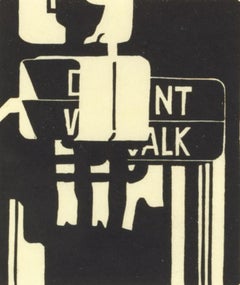
Robert Cottingham Don't Walk Unique Trial Proof, Signed & Inscribed Photorealist
Located in New York, NY
Robert Cottingham
Don't Walk, 1985
Three color Linoleum Cut on Paper
Pencil signed, inscribed to Bryan and annotated TP
Published by Chip Elwell Fine Prints
Trial Proof (unique)
This...
Category
Photorealist 20th Century Figurative Prints
Materials
Linocut
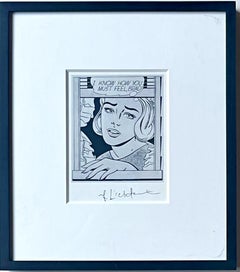
"I Know How You Made Me Feel, Brad!", VIP invite to MoMA show HAND SIGNED Framed
Located in New York, NY
Historically scarce -- hand signed museum invitations by Lichtenstein from MoMA, where the artist attended himself, rarely surface, especially when framed and preserved at this level...
Category
Pop Art 20th Century Figurative Prints
Materials
Lithograph, Offset
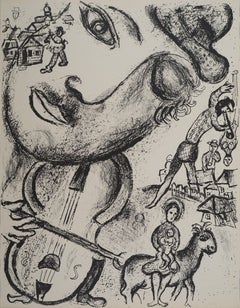
The Circus : Maternity and Violin Player - Original Lithograph (Mourlot #513)
By Marc Chagall
Located in Paris, IDF
Marc Chagall (1887-1985)
The Circus : Maternity and Violin Player, 1967
Original lithograph (Mourlot Workshop)
On Arches vellum 42 x 32 cm (c. 17 x 13 in)
REFERENCE : Catalog ra...
Category
Modern 20th Century Figurative Prints
Materials
Lithograph
Notre-Dame Cathedral from the Seine
Located in Middletown, NY
Etching with drypoint on cream wove paper, 7 x 8 3/4 inches (177 x 223 mm); sheet 10 1/2 x 11 3/4 inches (267 x 300 mm), full margins. Signed V. E. Chapel and numbered 62/250 in penc...
Category
French School 20th Century Figurative Prints
Materials
Etching, Drypoint

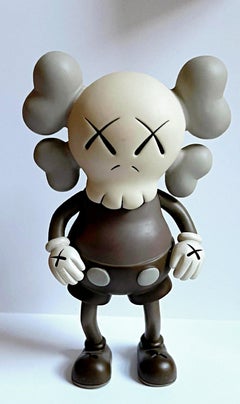
KAWS - Limited Edition Historic 1st Companion ever uniquely Hand Signed & Dated
By KAWS
Located in New York, NY
KAWS VERY FIRST COMPANION - HISTORIC
Uniquely Hand signed by the artist.
(the regular edition was unsigned)
KAWS
Limited Edition 1st Companion (Hand Signed by KAWS), 1999
Painted Ca...
Category
Street Art 20th Century Figurative Prints
Materials
Resin, Mixed Media
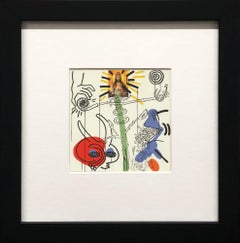
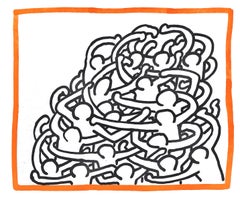
Keith Haring Apocalypse XII Pop Art
Located in Brooklyn, NY
Vintage offset lithograph postcard published by Art Unlimited Amsterdam. Printed in Holland. The postcard is framed in a black wood frame with a front profile of 1 inch and a side pr...
Category
Pop Art 20th Century Figurative Prints
Materials
Offset
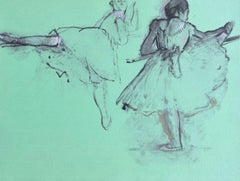
Edgar Degas, Dancer at the Barre, 1945 (after)
By Edgar Degas
Located in Southampton, NY
This exquisite lithograph after Edgar Degas (1834–1917), titled Danseur au bar (Dancer at the Barre), originates from the 1945 folio Degas, Ten Ballet Sketches. Published by The Studio Publications, Inc., New York, rendered and printed by Albert Carman, City Island, 1945, this work reflects Degas’s sensitive mastery of line, movement, and the intimate psychological nuances of the ballet studio.
Executed as a lithograph and pochoir on velin paper, this work measures 13 x 17 inches (33.02 x 43.18 cm). Signed in the plate and unnumbered as issued. Rendered and printed by Albert Carman, City Island.
Artwork Details:
Artist: After Edgar Degas (1834–1917)
Title: Danseur au bar (Dancer at the Barre), from Degas, Ten Ballet Sketches, 1945
Medium: Lithograph and pochoir on velin paper
Dimensions: 13 x 17 inches (33.02 x 43.18 cm)
Inscription: Signed in the plate and unnumbered as issued
Date: 1945
Publisher: The Studio Publications, Inc., New York
Printer: Albert Carman, City Island
Condition: Well preserved, consistent with age and medium
Provenance: From the 1945 folio Degas, Ten Ballet Sketches, published by The Studio Publications, Inc., New York
Notes:
Excerpted from the album, Born in Paris in 1834, Edgar Degas lived, and surely loved the life of that city during most of his years. These continued somewhat sadly beyond those of most of his friends— into the debacle of the first World War, during which he died in 1917. Judging by the frequency with which he used them as models, he must have had an especial admiration for the ballet girls who followed a profession that at the time brought none of the glory and prosperity which attend it today. New aspects of the human body, revealed in movement, fascinated him. But his occupation with the simply anatomical side of his subjects never resulted in a cold interpretation. On the contrary there is a warmth and sympathy that pervades all of his work. The drawings here represent the painter in one important phase of his multi-sensitive view of life; and permit an insight which a more ambitious work might not do-into the operation of the creative process, the artist's transformation of reality as it passes through the mesh of his sensibilities. The Edition of this Portfolio is limited to MMMD examples. Rendered by Albert Carman.
About the Publication:
Degas, Ten Ballet Sketches (1945) is one of the earliest and most significant American postwar fine art portfolios devoted to Edgar Degas’s intimate works on paper. Published by The Studio Publications, Inc., New York, and rendered and printed by Albert Carman at City Island, the album sought to faithfully reproduce a group of Degas’s ballet-related drawings through a combination of lithography and hand-applied pochoir coloring. This hybrid technique allowed the edition to preserve the immediacy, tonal subtlety, and gestural delicacy central to Degas’s draftsmanship. Conceived as a fine art publication rather than a commercial book, the portfolio provided American audiences unprecedented access to Degas’s private, spontaneous studies—images that reveal the artist’s fascination with movement, anatomy, and the psychological atmosphere of the rehearsal studio. The album exemplifies the mid-20th-century revival of pochoir as a means of recreating the texture and coloristic nuance of original works on paper, and it remains an important document of how Degas’s legacy was translated into high-quality printed form for collectors, museums, and connoisseurs.
About the Artist:
Edgar Degas (1834–1917) was a French painter, draughtsman, printmaker, and sculptor whose groundbreaking fusion of classical draftsmanship, modern experimentation, and psychological depth helped define the trajectory of Western art, positioning him as one of the most influential figures of the nineteenth and early twentieth centuries; renowned for his depictions of ballet dancers, racehorses, theater scenes, cafe life, domestic interiors, milliners, laundresses, and women at their toilette, Degas reimagined observational realism through radical compositional innovation—employing extreme cropping, asymmetrical framing, oblique viewpoints, and dramatic lighting that anticipated photographic and cinematic language long before these technologies shaped visual culture, and although associated with Impressionism, he rejected plein-air spontaneity in favor of studio-based discipline rooted in the linear precision of Jean-Auguste-Dominique Ingres, the expressive chromaticism of Eugene Delacroix, and the modernity of Edouard Manet while also drawing inspiration from Japanese ukiyo-e prints, classical sculpture, and early photography; his independent artistic philosophy resonated with and helped shape the innovations of Pablo Picasso, Alexander Calder, Alberto Giacometti, Salvador Dali, Joan Miro, Wassily Kandinsky, Marcel Duchamp, and Man Ray, whose explorations of movement, form, dream logic, abstraction, and conceptualism all find antecedents in Degas’s investigations into seriality, temporality, and the fragmented figure, and his pioneering use of pastel, monotype, and wax sculpture fundamentally transformed each medium, influencing artists from Henri Matisse, Francis Bacon, Lucian Freud, and Giacomo Manzu to Paula Rego, contemporary realists, experimental photographers, and choreographers; his works are held in nearly every major museum collection worldwide—including the Musee dOrsay, the Louvre, the Metropolitan Museum of Art, the National Gallery of Art, the Art Institute of Chicago, the Courtauld Institute, and the National Gallery, London—affirming his central place in the history of art, and the highest auction record for Degas was achieved at Sothebys London on February 3, 2015, when Danseuses en Bleu sold for 37,033,000 GBP, cementing his status as one of the most sought-after and enduringly significant artists of the Western canon.
Degas pochoir, Degas lithograph...
Category
Impressionist 20th Century Figurative Prints
Materials
Lithograph

$796 Sale Price
20% Off
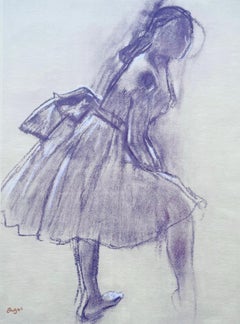
Edgar Degas, Dancer Standing in Profile, 1945 (after)
By Edgar Degas
Located in Southampton, NY
This exquisite lithograph after Edgar Degas (1834–1917), titled Danseur debout de profil (Dancer Standing in Profile), originates from the 1945 folio Degas, Ten Ballet Sketches. Published by The Studio Publications, Inc., New York, rendered and printed by Albert Carman, City Island, 1945, this work reflects Degas’s sensitive mastery of line, movement, and intimate observation, capturing the grace, poise, and psychological immediacy that define his iconic ballet imagery. In Danseur debout de profil (Dancer Standing in Profile), Degas reveals gesture and inner emotion through economical contour and lyrical nuance.
Executed as a lithograph and pochoir on velin paper, this work measures 17 x 13 inches (43.18 x 33.02 cm). Signed in the plate and unnumbered as issued. Rendered and printed by Albert Carman, City Island, one of the notable American ateliers specializing in fine art lithography during the mid-20th century.
Artwork Details:
Artist: After Edgar Degas (1834–1917)
Title: Danseur debout de profil (Dancer Standing in Profile), from Degas, Ten Ballet Sketches, 1945
Medium: Lithograph and pochoir on velin paper
Dimensions: 17 x 13 inches (43.18 x 33.02 cm)
Inscription: Signed in the plate and unnumbered as issued
Date: 1945
Publisher: The Studio Publications, Inc., New York
Printer: Albert Carman, City Island, 1945
Condition: Well preserved, consistent with age and medium
Provenance: From the 1945 folio Degas, Ten Ballet Sketches, published by The Studio Publications, Inc., New York
Notes:
Excerpted from the album, Born in Paris in 1834, Edgar Degas lived, and surely loved the life of that city during most of his years. These continued somewhat sadly beyond those of most of his friends— into the debacle of the first World War, during which he died in 1917. Judging by the frequency with which he used them as models, he must have had an especial admiration for the ballet girls who followed a profession that at the time brought none of the glory and prosperity which attend it today. New aspects of the human body, revealed in movement, fascinated him. But his occupation with the simply anatomical side of his subjects never resulted in a cold interpretation. On the contrary there is a warmth and sympathy that pervades all of his work. The drawings here represent the painter in one important phase of his multi-sensitive view of life; and permit an insight which a more ambitious work might not do-into the operation of the creative process, the artist's transformation of reality as it passes through the mesh of his sensibilities. The Edition of this Portfolio is limited to MMMD examples. Rendered by Albert Carman.
About the Publication:
Degas, Ten Ballet Sketches, published in 1945 by The Studio Publications, Inc., New York, stands as one of the most elegant and scholarly mid-century American fine art folios devoted to the ballet imagery of Edgar Degas. Conceived as a high-quality interpretive portfolio, the album presents a series of lithograph-and-pochoir renderings based on Degas’s original drawings, executed with exceptional attention to tonal subtlety, contour fidelity, and the emotional interiority that defines the artist’s draftsmanship. Rendered and printed by Albert Carman on City Island, the publication embodies an American postwar effort to restore and celebrate European masterworks through meticulous handcraft and artisanal color application, honoring Degas’s distinctive line and the atmospheric delicacy of his studio-based studies. Produced in a substantial edition of MMMD examples, the portfolio offered audiences rare access to Degas’s private working drawings—images rarely seen outside institutional collections—while exemplifying the technical refinement and interpretive care characteristic of Carman’s workshop. Today, Degas, Ten Ballet Sketches remains a sought-after historical publication, valued for its craft, fidelity to Degas’s aesthetic, and its role in preserving and disseminating the artist’s intimate ballet imagery in a beautifully executed mid-century fine art format.
About the Artist:
Edgar Degas (1834–1917) was a French painter, draughtsman, printmaker, and sculptor whose groundbreaking fusion of classical draftsmanship, modern experimentation, and psychological depth helped define the trajectory of Western art, positioning him as one of the most influential figures of the nineteenth and early twentieth centuries; renowned for his depictions of ballet dancers, racehorses, theater scenes, cafe life, domestic interiors, milliners, laundresses, and women at their toilette, Degas reimagined observational realism through radical compositional innovation—employing extreme cropping, asymmetrical framing, oblique viewpoints, and dramatic lighting that anticipated photographic and cinematic language long before these technologies shaped visual culture, and although associated with Impressionism, he rejected plein-air spontaneity in favor of studio-based discipline rooted in the linear precision of Jean-Auguste-Dominique Ingres, the expressive chromaticism of Eugene Delacroix, and the modernity of Edouard Manet while also drawing inspiration from Japanese ukiyo-e prints, classical sculpture, and early photography; his independent artistic philosophy resonated with and helped shape the innovations of Pablo Picasso, Alexander Calder, Alberto Giacometti, Salvador Dali, Joan Miro, Wassily Kandinsky, Marcel Duchamp, and Man Ray, whose explorations of movement, form, dream logic, abstraction, and conceptualism all find antecedents in Degas’s investigations into seriality, temporality, and the fragmented figure, and his pioneering use of pastel, monotype, and wax sculpture fundamentally transformed each medium, influencing artists from Henri Matisse, Francis Bacon, Lucian Freud, and Giacomo Manzu to Paula Rego, contemporary realists, experimental photographers, and choreographers; his works are held in nearly every major museum collection worldwide—including the Musee dOrsay, the Louvre, the Metropolitan Museum of Art, the National Gallery of Art, the Art Institute of Chicago, the Courtauld Institute, and the National Gallery, London—affirming his central place in the history of art, and the highest auction record for Degas was achieved at Sothebys London on February 3, 2015, when Danseuses en Bleu sold for 37,033,000 GBP, cementing his status as one of the most sought-after and enduringly significant artists of the Western canon.
Edgar Degas lithograph...
Category
Impressionist 20th Century Figurative Prints
Materials
Lithograph
$796 Sale Price
20% Off
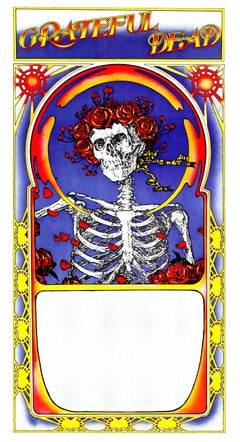
Original GRATEFUL DEAD Skull and Roses 1971 Tour poster
Located in Spokane, WA
Grateful Dead “Skeleton & Roses” Poster (1971) — Tour Blank. Grade A, A- condition, ready to frame.
A striking 1971 Grateful Dead poster featuring the band’s iconic skeleton c...
Category
Pop Art 20th Century Figurative Prints
Materials
Offset
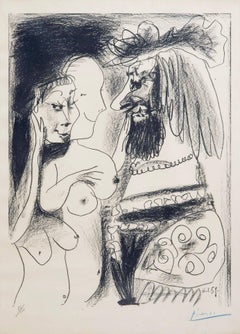
Le vieux Roi
Located in OPOLE, PL
Pablo Picasso (1881-1973) - Le vieux Roi
Lithograph from 1959.
The edition of 35/200 on Arches paper, signed in blue crayon.
Dimensions of work: 64.5 x 49.5 cm.
Hand signed.
Pub...
Category
Modern 20th Century Figurative Prints
Materials
Lithograph
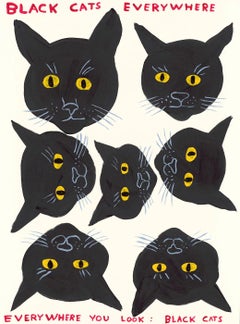
DAVID SHRIGLEY - BLACK CATS EVERYWHERE. Modern Design British Artist Blue
Located in Madrid, Madrid
DAVID SHRIGLEY - Black Cats Everywhere
Date of creation: 2021
Medium: 12 colour screenprint on Somerset satin paper
Edition: 125
Size: 75 x 56 cm
Condition: Brand new, in mint cond...
Category
Modern 20th Century Figurative Prints
Materials
Paper, Screen
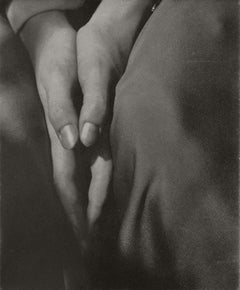
Alfred Stieglitz, Hands, Dorothy Norman, 1947 (after)
Located in Southampton, NY
This exquisite halftone print after Alfred Stieglitz (1864–1946), titled Hands, Dorothy Norman, originates from the 1947 folio Stieglitz Memorial Portfolio, 1864–1946. Published by T...
Category
American Modern 20th Century Figurative Prints
Materials
Offset
$716 Sale Price
20% Off
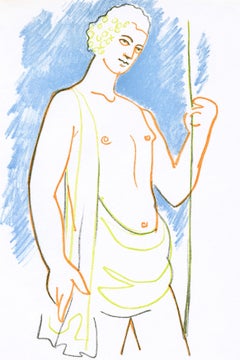
Jean Cocteau, Scene XXXV, Bacchus, from Theatre, 1957
By Jean Cocteau
Located in Southampton, NY
This exquisite lithograph by Jean Cocteau (1889–1963), titled Scene XXXV, Bacchus (Scene XXXV, Bacchus), originates from the 1957 album Jean Cocteau de l'Academie francaise, Theatre,...
Category
Modern 20th Century Figurative Prints
Materials
Lithograph
$716 Sale Price
20% Off
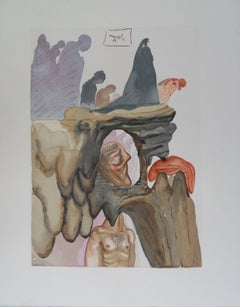
Hell 22 - The Liars - Original Woodcut 1963 (Field p 189 à 200)
Located in Paris, IDF
Salvador Dali (1904-1989)
Hell 22 - The Liars, 1963
Wood engraving from "Divine Comedy"
with the signature printed in the plate
On BFK Rives vellum 32,8 x 26,4 cm (c. 13 x 10")
REF...
Category
Surrealist 20th Century Figurative Prints
Materials
Woodcut
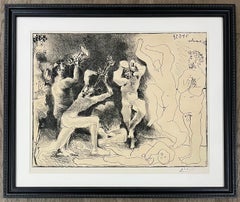
Pablo Picasso - La Danse des Faunes
Located in London, GB
Pablo Picasso
La Danse des Faunes, 1957
Lithograph on Arches paper
Artist's stamped signature, lower right on recto
Image: 41.2 x 53 cm
Sheet: 48.2 x 63.5 cm
Framed: 64 x 53.2 cm
Edi...
Category
Modern 20th Century Figurative Prints
Materials
Lithograph
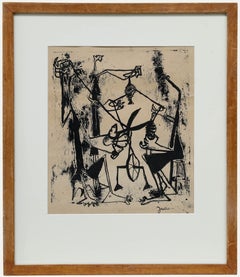
Christian Julia (1921-1991) - Mid 20th Century Linoprint, The Spinners
Located in Corsham, GB
A delightful abstract lino print with India ink by the artist Christian Julia (1921-1991) depicting figures spinning yarn. Signed to the lower right. Well presented behind glass in a...
Category
20th Century Figurative Prints
Materials
Linocut
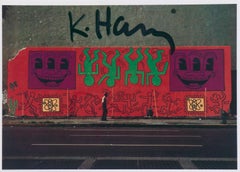
'Mural on Houston', Hand Signed by Haring, Subway Drawings, New York, Pop Art
By Keith Haring
Located in Santa Cruz, CA
Hand signed by the artist in felt pen, upper center, 'K. Haring' for Keith Haring (American, 1958-1990), circa 1982. A postcard titled, 'Mural, Houston at Bowery, New York City, July...
Category
Pop Art 20th Century Figurative Prints
Materials
Offset, Postcard
Pablo Picasso, The Divan, The Blues of Barcelona, 1963 (after)
Located in Southampton, NY
This exquisite lithograph and pochoir after Pablo Picasso (1881–1973), titled Le divan (The Divan), from the folio Les Bleus de Barcelone, 12 aquarelles et pastels (The Blues of Barc...
Category
Modern 20th Century Figurative Prints
Materials
Lithograph, Stencil
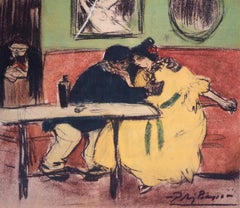
$7,596 Sale Price
20% Off
Pablo Picasso, The Blue Rider, from Verve, Revue Artistique, 1951
Located in Southampton, NY
This exquisite lithograph by Pablo Picasso (1881–1973), titled Le cavalier bleu (The Blue Rider), from Verve, Revue Artistique et Litteraire, Vol. VII, No. 25–26, originates from the...
Category
Cubist 20th Century Figurative Prints
Materials
Lithograph
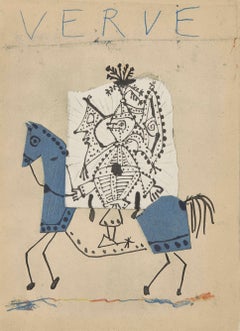
$956 Sale Price
20% Off
Marc Chagall, The Lion of Judah and the Tablets of the Law, 1962
By Marc Chagall
Located in Southampton, NY
This exquisite lithograph by Marc Chagall (1887–1985), titled Le lion de Juda et les Tables de la Loi (The Lion of Judah and the Tablets of the Law), from the album Marc Chagall, The...
Category
Expressionist 20th Century Figurative Prints
Materials
Lithograph
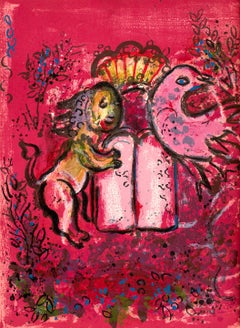
$956 Sale Price
20% Off
Pablo Picasso, Mother and Child, from Fifteen Drawings, 1946 (after)
Located in Southampton, NY
This exquisite lithograph and pochoir after Pablo Picasso (1881–1973), titled Mother and Child, from the folio Picasso, Fifteen Drawings, 1946, originates from the 1946 edition published by Pantheon Books, Inc., New York, and rendered and printed by Albert Carman, City Island, New York, 1946. Mother and Child conveys Picassos timeless exploration of tenderness, intimacy, and the human bond, distilling the universal theme of maternal love through graceful line and lyrical composition. With rhythmic simplicity and emotional clarity, the work captures the purity of affection and the quiet strength of motherhood—an enduring motif throughout Picassos artistic life.
Executed as a lithograph and pochoir on velin paper, this work measures 18.75 x 12.63 inches. Signed in the plate and unnumbered as issued. The edition exemplifies the exemplary standards and artistic integrity of the fine art publishing and printmaking of Pantheon Books, Inc., and Albert Carman whose next collaborative project following this edition was with Marc Chagall in the creation of his monumental suite, Four Tales from the Arabian Nights in 1948.
Artwork Details:
Artist: After Pablo Picasso (1881–1973)
Title: Mother and Child, from the folio Picasso, Fifteen Drawings, 1946
Medium: Lithograph and pochoir on velin paper
Dimensions: 18.75 x 12.63 inches (47.6 x 32.1 cm)
Inscription: Signed in the plate and unnumbered as issued
Date: 1946
Edition: D, primary edition; L, out of commerce, hand signed by Pablo Picasso
Publisher: Pantheon Books, Inc., New York
Printer: Albert Carman, City Island, New York
Catalogue raisonne reference: Orozco, Miguel. Picasso Interpretation Prints II - Etchings, Pochoirs & Woodcuts. Catalogue Raisonne. 2023, illustration 388–402
Condition: Well preserved, consistent with age and medium
Provenance: From the folio Picasso, Fifteen Drawings, 1946, published by Pantheon Books, Inc., New York; printed by Albert Carman, City Island, New York, 1946
About the Publication:
Picasso, Fifteen Drawings (1946) was one of the earliest fine art portfolios issued in the United States to feature the work of Pablo Picasso in the mediums of lithography and pochoir. Published by Pantheon Books, Inc., New York—a press renowned for its pioneering role in introducing European modernism to American audiences—the portfolio marked an important cultural bridge between postwar Paris and the emerging art scene in New York. The suite comprised fifteen images selected from Picassos prolific oeuvre, including depictions of mythological figures, musicians, and introspective portraits. Each work was rendered using a combination of lithography and pochoir, printed by Albert Carman at his atelier in City Island, New York, whose craftsmanship ensured a remarkable fidelity to the tonal and chromatic nuances of Picassos originals. The portfolio was produced in an edition of D, primary edition; L, out of commerce, hand signed by Pablo Picasso, issued unbound within a printed paper folder, and distributed primarily through Pantheons art book division under the direction of Kurt Wolff and Monroe Wheeler—key figures in shaping the intellectual reception of modern art in the United States. Picasso, Fifteen Drawings helped establish the artists postwar reputation among American collectors, scholars, and institutions, introducing a generation of viewers to the expressive immediacy and psychological depth of his draftsmanship. The publication also exemplified Pantheons broader mission to make modern European art accessible to an American audience, alongside their landmark editions devoted to Henri Matisse, Georges Rouault, and Marc Chagall. Technically refined and historically significant, the portfolio stands as a testament to the transatlantic exchange of modernist aesthetics during the mid-20th century and remains one of the most sought-after Picasso print editions issued in the United States before 1950.
About the Artist:
Pablo Picasso (1881–1973) was a Spanish painter, sculptor, printmaker, and ceramicist whose extraordinary vision revolutionized modern art and defined the visual language of the 20th century. A child prodigy from Malaga, Spain, Picassos career spanned more than seven decades and encompassed an astonishing range of styles and innovations—from the melancholic Blue and romantic Rose periods to his pioneering invention of Cubism with Georges Braque, which shattered conventional notions of perspective and form. Influenced by the bold expressiveness of El Greco, the structure of Cezanne, and the vitality of African and Iberian sculpture, Picasso became a central figure of the Paris avant-garde, working in creative dialogue with contemporaries such as Henri Matisse, Alexander Calder, Alberto Giacometti, Salvador Dali, Joan Miro, Wassily Kandinsky, Marcel Duchamp, and Man Ray. His insatiable experimentation extended across painting, drawing, printmaking, ceramics, and sculpture, forever expanding the boundaries of artistic expression. A master of reinvention, Picasso profoundly shaped generations of artists who followed—from Andy Warhol, Roy Lichtenstein, David Hockney, and Jean-Michel Basquiat to Jeff Koons and Banksy—cementing his status as a timeless cultural icon whose works remain among the most sought after worldwide. His landmark painting Les Femmes d'Alger (Version O) achieved a record-breaking sale of 179,365,000 USD at Christie's, New York, on May 11, 2015, affirming Picassos enduring legacy as one of the most influential and valuable artists in history.
Pablo Picasso Mother and Child...
Category
Modern 20th Century Figurative Prints
Materials
Lithograph, Stencil
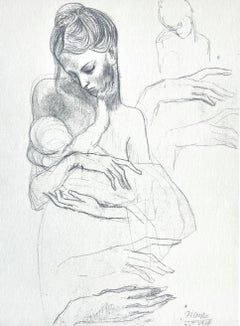
$3,996 Sale Price
20% Off
Escultor y escultura
Located in OPOLE, PL
Pablo Picasso (1881-1973) - Escultor y escultura
Etching from 1965.
Edition of 255.
Dimensions of work: 48 x 38 cm.
Imprimée à Mougins.
Référence : Bloch 1187; Baer 1156.
The w...
Category
Modern 20th Century Figurative Prints
Materials
Etching
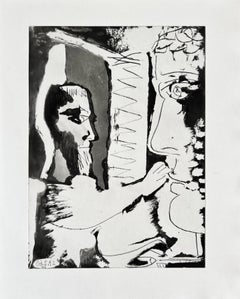
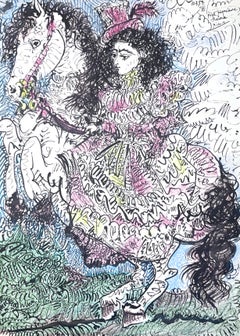
Pablo Picasso, 10.3.59. VIII, from Bulls and Bullfighters, 1961 (after)
Located in Southampton, NY
This exquisite heliogravure after Pablo Picasso (1881–1973), titled 10.3.59. VIII, from the album Pablo Picasso, Toros y Toreros (Bulls and Bullfighters), originates from the 1961 ed...
Category
Cubist 20th Century Figurative Prints
Materials
Lithograph
$796 Sale Price
20% Off
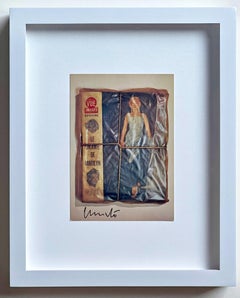
Art Card: Marilyn Monroe (Revues Empaquetees), 1962, (Hand Signed by Christo)
Located in New York, NY
Christo and Jeanne-Claude
Art Card: Wrapped Magazines with Marilyn Monroe (Revues Empaquetees), 1962, (Hand Signed by Christo), 1991
Offset lithograph postcard (hand signed by Christ...
Category
Pop Art 20th Century Figurative Prints
Materials
Postcard
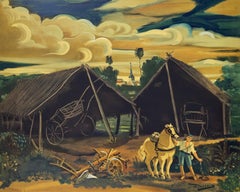
Andre Derain, The Two Hangars, 1970 (after)
By André Derain
Located in Southampton, NY
This exquisite lithograph after Andre Derain (1880–1954), titled Les deux hangars (The Two Hangars), from the folio Andre Derain entre 1935 et 1949, V (Andre Derain between 1935 and ...
Category
Fauvist 20th Century Figurative Prints
Materials
Lithograph
$716 Sale Price
20% Off
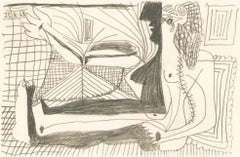
Pablo Picasso, 25.4.64., The Taste of Happiness, 1970 (after)
Located in Southampton, NY
This exquisite lithograph after Pablo Picasso (1881–1973), titled 25.4.64., from the folio Le Gout du Bonheur, trois carnets d`atelier (The Taste of Happiness, Three Studio Sketchboo...
Category
Cubist 20th Century Figurative Prints
Materials
Lithograph
$796 Sale Price
20% Off
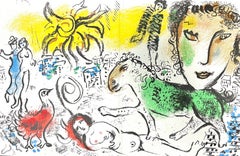
Marc Chagall, Sun Over the City, from XXe siecle, 1973
By Marc Chagall
Located in Southampton, NY
This exquisite lithograph by Marc Chagall (1887–1985), titled Soleil sur la ville (Sun Over the City), from the album Chagall Monumental Works, Special Issue of the XXe Siecle Review...
Category
Expressionist 20th Century Figurative Prints
Materials
Lithograph
$796 Sale Price
20% Off
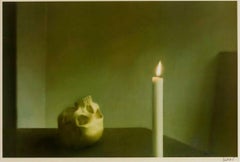
Skull and Candle by Gerhard Richter
Located in Dubai, Dubai
Skull and Candle
By Gerhard Richter
1995
Hand signed
Offset lithograph
64.5 x 48.5 cm
Edition of 500
Category
Contemporary 20th Century Figurative Prints
Materials
Lithograph
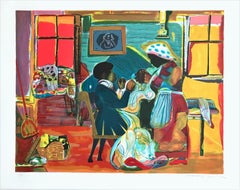
QUILTING TIME Hand Signed Lithograph, Black Family Life African American Culture
Located in Union City, NJ
QUILTING TIME is an original limited edition lithograph printed using traditional hand lithography methods on archival Somerset printmaking paper, 100% acid free. QUILTING TIME by th...
Category
Contemporary 20th Century Figurative Prints
Materials
Lithograph
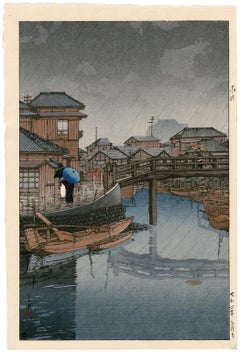
'Rain at Shinagawa, Ryoshimachi' — Showa-era Woodblock Print
By Kawase Hasui
Located in Myrtle Beach, SC
Kawase Hasui, 'Rain at Shinagawa, Ryoshimachi' from the series 'Selection of Views of the Tokaido', woodblock print, 1931. A very fine, atmospheric impression, with fresh colors; the...
Category
Showa 20th Century Figurative Prints
Materials
Woodcut
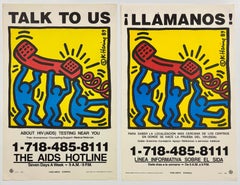
Keith Haring Talk To Us! 1989 set of 2 works (Keith Haring Aids hotline)
By Keith Haring
Located in NEW YORK, NY
Keith Haring Talk To Us! 1989 (The Aids Hotline): Set of 2 works (English & Spanish):
Designed & illustrated by Keith Haring one year after Haring's own diagnosis, these RARE...
Category
Pop Art 20th Century Figurative Prints
Materials
Lithograph, Offset
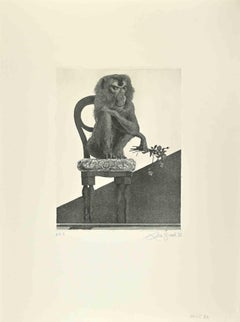
The Monkey - Etching by Leo Guida - 1972
By Leo Guida
Located in Roma, IT
The Monkey is a Contemporary artwork realized in the 1972 by the italian artist Leo Guida.
Etching on paper.
Mint conditions.
Artist proof.
Hand-signed n pencil.
Category
Contemporary 20th Century Figurative Prints
Materials
Etching
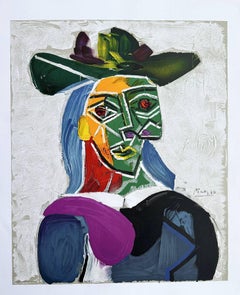
Femme au chapeau (Dora Maar)
Located in OPOLE, PL
Pablo Picasso (1881-1973) - Femme au chapeau (Dora Maar)
Lithograph from 1956.
Dated ‘7.4.39’ in the plate and inscribed with the name H. Deschamps, the master lithographer chosen ...
Category
Modern 20th Century Figurative Prints
Materials
Lithograph
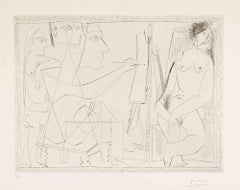
Peintre et Modèle, avec une Spectatrice - Etching by Pablo Picasso - 1963
Located in Roma, IT
Etching on wove paper, realized in 1962/63.
Image dimension: 31.6x41.7; Sheet dimension 45.4x55.4.
Hand signed in pencil lower right.
Edition of 2/50, hand numbered.
Very good co...
Category
Cubist 20th Century Figurative Prints
Materials
Etching
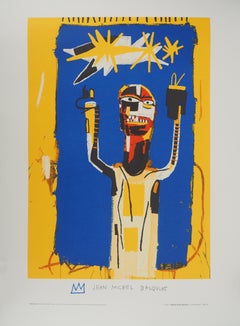
Welcoming Jeers - Lithograph, 1997
Located in Paris, IDF
Jean-Michel Basquiat (1960-1988)
Welcoming Jeers, 1997
Lithograph
Printed signature in the plate
On Arches vellum 76 x 56 cm (c. 29.9 x 22 in)
Published by Galerie Enrico Navarra
...
Category
American Modern 20th Century Figurative Prints
Materials
Lithograph
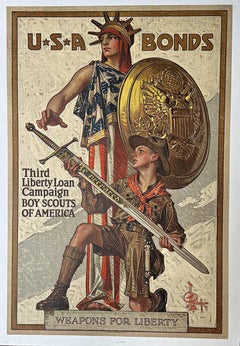
Original USA BONDS Weapons for Liberty WW1 Third Liberty Loan vintage poster
Located in Spokane, WA
Original vintage World War I poster. U.S.A. bonds: Third Liberty Loan campaign: Boy Scouts of America. Depicted: Boy Scout handing a sword inscribed "Be prepared" to a stylized warri...
Category
Art Deco 20th Century Figurative Prints
Materials
Lithograph
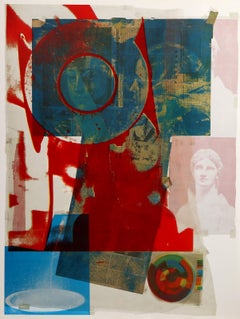
Quarry, Pop Art Offset Lithograph by Robert Rauschenberg
Located in Long Island City, NY
Robert Rauschenberg, American (1925 - 2008) - Quarry, Year: 1968, Medium: Offset Lithograph, Image Size: 33 x 25 inches, Size: 34.5 x 26 in. (87.63 x 66.04 cm), Printer/Publisher...
Category
Pop Art 20th Century Figurative Prints
Materials
Offset
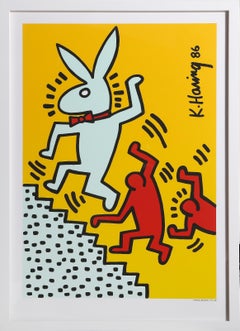
Bunny On The Run, Screenprint Poster by Keith Haring
By Keith Haring
Located in Long Island City, NY
Date: 1990
Screenprint Poster, signed and dated in plate, numbered in pencil
Edition of 1000
Image Size: 28 x 20 inches
Size: 32 x 23 in. (81.28 x 58.42 cm)
Commissioned by Playboy.
...
Category
Pop Art 20th Century Figurative Prints
Materials
Screen
$925 Sale Price
21% Off
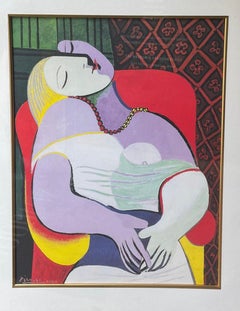
The Dream- Pablo Picasso Limited Edition Print of his model Marie-Thérèse Walter
Located in Hamburg, DE
"Le Rêve - The Dream" after the 1932 oil on canvas painting of Pablo Picasso is a limited-edition (Edition 1000) offset color print on 250g Rives-Bütten Paper, done by the Succession...
Category
Cubist 20th Century Figurative Prints
Materials
Color
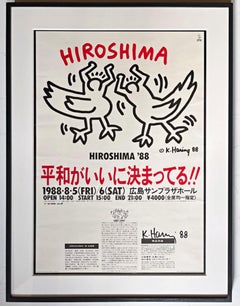
Rare Hiroshima Peace Celebration print, Hand Signed by Keith Haring + provenance
By Keith Haring
Located in New York, NY
Keith Haring
Rare Hiroshima Peace Celebration poster (hand signed by Keith Haring), from the Patrick Eddington Collection, 1988 Framed
Original offset lithograph (Hand signed by Keit...
Category
Pop Art 20th Century Figurative Prints
Materials
Lithograph, Offset
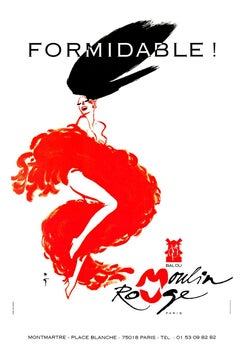
Original Formidable! - Bal du Moulin Rouge Paris vintage cabaret poster
By René Gruau
Located in Spokane, WA
Original Moulin Rouge - Striking small-format vintage poster by Rene Gruau. Archival linen-backed and in excellent condition, ready to frame. Bright, vibrant colors. Grade A.
Celebrate the electric allure of Parisian nightlife with this authentic René Gruau poster made for the Moulin Rouge. In flowing ribbons of red and a bold splash of inky black, Gruau captures the can-can's motion in a memorable silhouette. Elegant, striking, and unmistakably Paris, this piece makes a perfect addition to any collection of fashion, advertising, or mid-century graphic art.
The legendary Moulin Rouge poster...
Category
American Modern 20th Century Figurative Prints
Materials
Offset
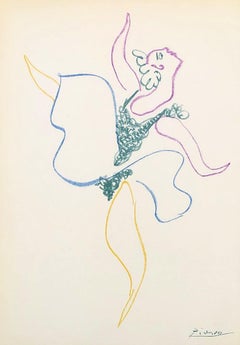
Ballet : The Dancer - Original Lithograph - Printed Signature - Ref. Bloch #767
Located in Paris, IDF
Pablo PICASSO
Ballet : The Dancer, 1954
Original lithograph
Printed signature in the plate
Unnumbered
On light vellum 31 x 22 cm (c. 12,2 x 8,7 in)
REFERENCES :
- Catalog raisonne...
Category
Modern 20th Century Figurative Prints
Materials
Lithograph
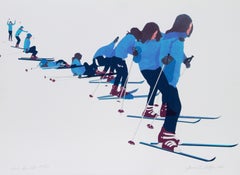
Don't Give Up, Skiing Lithograph by Joanne Seltzer
Located in Long Island City, NY
Artist: Joanne Seltzer
Title: Don't Give Up
Year: 1980
Medium: Lithograph, signed and numbered in pencil
Edition: 200 + AP's
Paper Size: 22 x 30 inches
Category
Contemporary 20th Century Figurative Prints
Materials
Lithograph
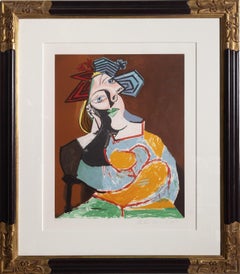
Femme Accoudée au Drapeau Bleu et Rouge, Framed Lithograph after Pablo Picasso
Located in Long Island City, NY
A lithograph from the Marina Picasso Estate Collection after the Pablo Picasso Cubist painting "Femme Accoudée au Drapeau Bleu et Rouge". The original painting was completed in 1932....
Category
Cubist 20th Century Figurative Prints
Materials
Lithograph
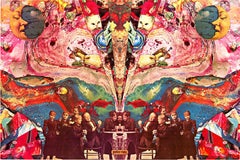
Original Midget Dream #1 psychedelic 1967 vintage poster - popart
By Peter Max
Located in Spokane, WA
Original Peter Max’s “Midget Dream #1” vintage psychedelic poster. In very fine condition, never displayed, and ready to frame. Grade...
Category
Expressionist 20th Century Figurative Prints
Materials
Offset
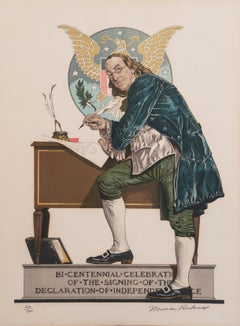
'Bicentennial Independence Celebration' Benjamin Franklin, Saturday Evening Post
Located in Santa Cruz, CA
Signed lower right, 'Norman Rockwell' (American, 1894-1978) and inscribed, lower left, with number and limitation '200/200'.
Originally created for the May 29, 1926 edition of the S...
Category
20th Century Figurative Prints
Materials
Paper, Lithograph
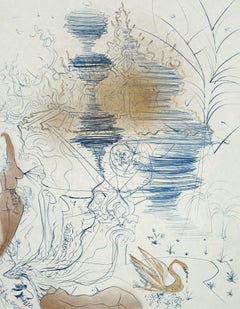
The Pagoda, from The Hippies
Located in Washington, DC
Artist: Salvador Dali
Title: The Pagoda
Portfolio: The Hippies
Medium: Color etching on Japon paper
Date: 1969
Edition: XV/C
Frame Size: 31" x 26 1/2"
Sheet Size: 26" x 20"
Image Siz...
Category
Surrealist 20th Century Figurative Prints
Materials
Etching
Rene Magritte, Gemstones, 1968 (after)
Located in Southampton, NY
This exquisite lithograph after Rene Magritte (1898–1967), titled Pierreries (Gemstones), from the folio Les Enfants Trouves de Magritte (The Found Children of Magritte), 1968, origi...
Category
Surrealist 20th Century Figurative Prints
Materials
Lithograph

$3,996 Sale Price
20% Off
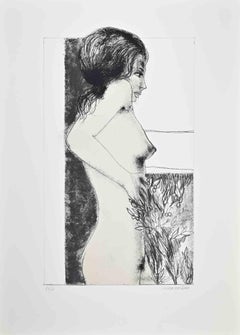
Nude - Etching by Carlo Marcantonio - 1970s
Located in Roma, IT
Nude is an etching on paper realized by Carlo Marcantonio.
Hand-signed in the lower right in pencil.
Good conditions.
Edition of 50.
Category
Contemporary 20th Century Figurative Prints
Materials
Etching
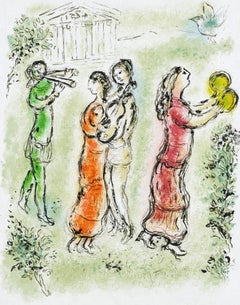
Marc Chagall, The Celebration, from Homer, The Odyssey, 1989 (after)
By Marc Chagall
Located in Southampton, NY
This exquisite lithograph after Marc Chagall (1887–1985), titled Das Fest (The Celebration), from Homer, Die Odyssee (The Odyssey), originates from the 1989 German-language folio published by Daco-Verlag Gunter Blase, Stuttgart, and printed by Lichtdruck AG, Zurich, Dielsdorf, September 1989. This authorized edition, issued under the direction of Vava Chagall, presents one of Chagall’s most joyful and expressive interpretations of Homer’s epic. In Das Fest, Chagall transforms the revelry of ancient feasts into a luminous vision of human connection, music, and harmony, rendered with his signature lyricism and dreamlike color palette.
Executed on 250 g/m² Butten Papierwerke Miliani AG, Fabriano paper, this lithograph measures 14.88 x 11.69 inches. Unsigned and unnumbered, as issued. The edition exemplifies the exceptional quality and precision of Lichtdruck AG’s craftsmanship, reproducing the depth and richness of Chagall’s original lithographs with remarkable fidelity.
Artwork Details:
Artist: After Marc Chagall (1887–1985)
Title: Das Fest (The Celebration), from Homer, Die Odyssee (The Odyssey), 1989
Medium: Lithograph on 250 g/m² Butten Papierwerke Miliani AG, Fabriano paper
Dimensions: 14.88 x 11.69 inches
Inscription: Unsigned and unnumbered, as issued
Date: 1989
Publisher: Daco-Verlag Gunter Blase, Stuttgart
Printer: Lichtdruck AG, Zurich, Dielsdorf
Condition: Well preserved, consistent with age and medium
Provenance: From the folio Homer, Die Odyssee (The Odyssey), Daco-Verlag Gunter Blase, Stuttgart, 1989
Notes:
Excerpted from the folio (translated from German), Imprint—The French edition, L'Odyssée, with the original lithographs by Marc Chagall was published in 1974/75 in a CCL-example edition by Fernand Mourlot, Paris. In 1989, with the authorization of Mrs. Vava Chagall, the German-language edition of the Odyssey in two volumes was published by Daco-Verlag Gunter Blase, Stuttgart. Volume I contains the songs I - XII with XX color plates, including IV on double pages and XIX gray printed reproductions in the text. Volume II contains the songs XIII - XXIV with XXIII color plates, including II on double pages and XX gray printed reproductions in the text. For the German text, the prose translation by Wolfgang Schadewaldt was chosen with the permission of Rowohlt Taschenbuch Verlag, Reinbek near Hamburg. Set design in the Berthold Garamond Antiqua by F+M Bauer...
Category
Expressionist 20th Century Figurative Prints
Materials
Lithograph
$716 Sale Price
20% Off
La Comédie Humaine
Located in OPOLE, PL
Pablo Picasso (1881-1973) - La Comédie Humaine
Lithograph from 1954.
Dimensions of work: 35.5 x 26.5 cm
Publisher: Tériade, Paris.
The work is in Excellent condition.
Fast and s...
Category
Modern 20th Century Figurative Prints
Materials
Lithograph

Keith Haring, Untitled, from Against All Odds, 1990
By Keith Haring
Located in Southampton, NY
This exquisite lithograph by Keith Haring (1958–1990), titled Untitled, from the album Against All Odds, 20 drawings - Oct. 3, 1989 (Against All Odds, 20 drawings - Oct. 3, 1989), originates from the 1990 edition published by Publishing House Bebert, Rotterdam, in collaboration with Mera Rubell, New York, and Donald Rubell, New York, and printed by Nieuwe Grafische, Rotterdam, Spring, 1990. Untitled embodies Haring’s signature visual vocabulary—dynamic lines, rhythmic energy, and universal symbolism—infused with the social urgency and optimism that defined his generation.
Executed as a lithograph on velin acid-free Rivoli paper, this work measures 8.5 x 10.3 inches. Unsigned and unnumbered as issued. The edition exemplifies the refined craftsmanship of Nieuwe Grafische, Rotterdam, and the bold spirit of Bebert’s late twentieth-century artist collaborations.
Artwork Details:
Artist: Keith Haring (1958–1990)
Title: Untitled, from the album Against All Odds, 20 drawings - Oct. 3, 1989 (Against All Odds, 20 drawings - Oct. 3, 1989)
Medium: Lithograph on velin acid-free Rivoli paper
Dimensions: 8.5 x 10.3 inches (21.59 x 26.16 cm)
Inscription: Unsigned and unnumbered as issued
Date: 1990
Publisher: Publishing House Bebert, Rotterdam, in collaboration with Mera Rubell, New York, and Donald Rubell, New York
Printer: Nieuwe Grafische, Rotterdam
Condition: Well preserved, consistent with age and medium
Provenance: From the album Against All Odds, 20 drawings - Oct. 3, 1989 (Against All Odds, 20 drawings - Oct. 3, 1989), Bebert, Rotterdam, 1990
Notes:
Excerpted from the album, 20 drawings - Oct. 3, 1989 was published with the collaboration of Mera and Donald Rubell by Bebert Publishing House in Spring 1990. The edition consists of MMD hard cover examples, of which D are numbered (I/D - D/D) and signed by the artist. The edition was printed on acid-free Rivoli paper by Nieuwe Grafische in Rotterdam. and bound by Stokkink B.V. in Amsterdam. ©Keith Haring, M.Y.6. 1990. Mera + Don Rubell, NYC 1990. Bebert Publishing House. Westersingel 22-3014 GP, Rotterdam, Holland - 1990.
About the Publication:
Against All Odds is both an artist’s album and memorial publication comprising twenty lithographs created by Keith Haring on October 3, 1989, just months before his death in February 1990. Conceived in collaboration with Mera and Donald Rubell and published by Bebert Publishing House, Rotterdam, the album encapsulates Haring’s final creative statement. Haring’s accompanying handwritten foreword and brief text meditate on the fragility of human life, ecological collapse, and the artist’s struggle to preserve hope “against all odds.” The drawings—executed in Haring’s immediately recognizable graphic line—depict writhing figures, embryos, skeletons, animals, and cosmic symbols that echo his lifelong concern with birth, death, sexuality, and transcendence. Together, the images and text form a narrative of resistance and endurance amid personal illness and global crisis. The album’s title encapsulates Haring’s sense of perseverance: humanity’s and the planet’s fight for survival despite overwhelming forces of destruction. Published posthumously in spring 1990, Against All Odds stands as a poignant summation of his ethos—celebrating vitality and compassion in the face of mortality and despair.
About the Artist:
Keith Haring (1958–1990) was an American artist, activist, and cultural innovator whose bold visual language and socially engaged practice redefined contemporary art and the role of the artist in society. Born in Reading, Pennsylvania, and raised in Kutztown, Haring was inspired from an early age by comic art, calligraphy, and graphic design, influences that would later shape his instantly recognizable style of radiant lines, rhythmic movement, and universal symbols. After moving to New York City in 1978 to study at the School of Visual Arts, he immersed himself in the downtown art scene, drawing influence from modernist pioneers such as Pablo Picasso, Alexander Calder, Alberto Giacometti, Salvador Dali, Joan Miro, Wassily Kandinsky, Marcel Duchamp, and Man Ray, whose innovations in form, abstraction, and conceptual art informed his radical approach to public expression. Haring began creating chalk drawings in the New York subway system, transforming urban walls into democratic spaces for creativity and communication. His imagery—radiant babies, barking dogs, flying saucers, and dancing figures—spoke a universal visual language that combined accessibility with profound emotional and political resonance. He became a leading figure in 1980s New York, working alongside Jean-Michel Basquiat, Andy Warhol, and Kenny Scharf to bridge the worlds of street art, pop culture, and fine art. Influenced by Picasso’s expressive energy, Calder’s movement, Miro’s playfulness, and Duchamp’s conceptual wit, Haring developed an art of optimism, immediacy, and activism that addressed issues of love, unity, social justice, and human rights. His work carried urgent commentary on apartheid, AIDS awareness, drug abuse, and inequality, while radiating the joy and vitality of life. In 1986, he opened the Pop Shop, a groundbreaking experiment in making art accessible to all, selling affordable objects featuring his designs without compromising his artistic vision. His monumental public murals, including Crack Is Wack in Harlem and Tuttomondo in Pisa, Italy, continue to stand as symbols of art’s power to educate and inspire collective action. Haring’s dynamic compositions merged the energy of graffiti with the structural clarity of modernism, synthesizing the spiritual abstraction of Kandinsky, the surreal imagination of Dali, and the sensual immediacy of Man Ray. His work influenced generations of artists, including Banksy, Shepard Fairey, KAWS, Takashi Murakami, and RETNA, who continue to echo his fusion of activism and aesthetics. Despite his untimely death from AIDS at age 31, Haring’s impact on art and culture endures globally through the Keith Haring Foundation, which supports children’s programs and HIV/AIDS research. His works are housed in major museums such as the Museum of Modern Art, the Whitney Museum of American Art, the Centre Pompidou, and the Tate Modern, affirming his legacy as a cornerstone of twentieth-century art. The highest auction record for Keith Haring was achieved with Untitled (1982), which sold for $6.5 million USD at Sotheby’s, New York, on May 16, 2017, solidifying his status as one of the most influential, beloved, and enduring artists of the modern era.
Keith Haring Untitled Against All Odds 20 drawings Oct 3 1989 Bebert Publishing House Rotterdam 1990 lithograph...
Category
Pop Art 20th Century Figurative Prints
Materials
Lithograph
$1,276 Sale Price
20% Off
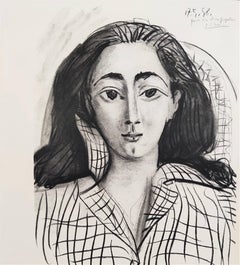
Jacqueline
Located in OPOLE, PL
Pablo Picasso (1881-1973) - Jacqueline
Lithograph from 1964.
Dimensions of work: 30 x 27 cm.
Plate signed.
Publisher: Éditions Cercle d'Art, Paris.
The work is in Excellent cond...
Category
Modern 20th Century Figurative Prints
Materials
Lithograph
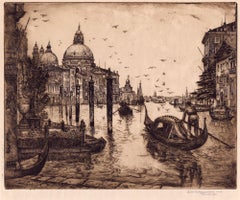
The Grand Canal, Venice
By Elias S. Mandel Grossman
Located in Middletown, NY
1926. Etching in sepia ink on Japon paper, 9 5/8 x 11 1/2 inches (245 x 292 mm), full margins with the lower margin slightly notched. Signed, titled and dated in pencil in the lower ...
Category
American Modern 20th Century Figurative Prints
Materials
Handmade Paper, Etching
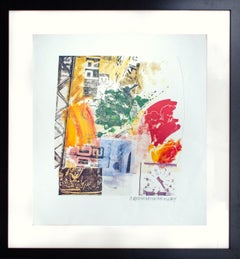
Robert Rauschenberg Signed Lithograph
Located in New York, NY
Robert Rauschenberg
American (1925-2008)
Untitled, for ROCI
offset color lithograph, signed and dated lower right "Rauschenberg 84"
25 3/4 x 22 3/4 in. (sheet)
Framed: 31 1/4 x 29 x...
Category
Post-Modern 20th Century Figurative Prints
Materials
Lithograph
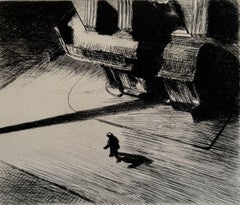
Night Shadows
By Edward Hopper
Located in Storrs, CT
Night Shadows. 1921. Etching. Levin 82. 7 x 8 3/8 (sheet 10 x 13 7 1/16).s Series: Six American Etchings: The New Republic Portfolio, 1924. Edition approximately 500-600. Illustrate...
Category
American Modern 20th Century Figurative Prints
Materials
Etching
$48,000 Sale Price
20% Off
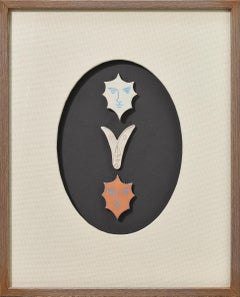
Octogones et Vé
By Jean Cocteau
Located in CANNES, FR
JEAN COCTEAU ( 1889 - 1963 )
" Octogone & Vé " framed . 3 pieces .
" Octogone " circa 1958
pendentif octogonal terre blanche
forme irrégulière 6,5 x 5 cm
4eme variante
"...
Category
Art Deco 20th Century Figurative Prints
Materials
Ceramic
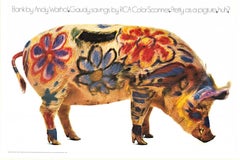
Original Bank by Andy Warhol pop art Gaudy savings vintage poster 1968
By Andy Warhol
Located in Spokane, WA
Original Andy Warhol 1968 Vintage Poster "Gaudy Savings by RCA Color Scanner" Authentic Pop Art Collectible First Edition Print. Archival linen-backed in excellent condition, Grad...
Category
Pop Art 20th Century Figurative Prints
Materials
Offset
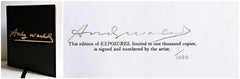
Exposures (Deluxe Edition) Monograph Hand Signed, Numbered #1 by Andy Warhol COA
By Andy Warhol
Located in New York, NY
Andy Warhol
Deluxe Collectors' Edition of Exposures (Hand Signed and Numbered), 1979
Hardcover Monograph in leather with gilt edge and stamped in gilt.
Hand signed by Andy Warhol on...
Category
Pop Art 20th Century Figurative Prints
Materials
Mixed Media, Graphite, Lithograph, Offset
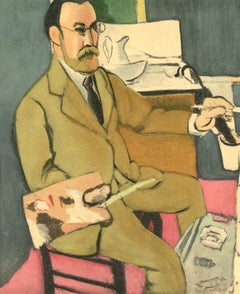
Henri Matisse, Portrait of the Artist, Portraits by Henri Matisse, 1954 (after)
Located in Southampton, NY
This exquisite lithograph after Henri Matisse (1869–1954), titled Portrait de l’Artiste (Portrait of the Artist), from the album Portraits par Henri Matisse (Portraits by Henri Matis...
Category
Fauvist 20th Century Figurative Prints
Materials
Lithograph
$716 Sale Price
20% Off
Still Thinking About These?
All Recently ViewedMore Ways To Browse
Eduardo Roca
Edward B Gay
Edward Hopper Oil Painting
Edward Simmons
Edwin Lord Weeks
Elizabeth Enders
Elizabeth Horning
Emil Holzhauer
England Church Oil Painting
English Deer Painting
English Fox Hunt Painting
English Toy Terrier
Enrique Martinez Celaya
Eric Aho
Eritrea Art
Ernest Chateignon
Erotic Art Animal
Eugene Chigot