Early 2000s Landscape Prints

to
206
202
79
78
71
28
Overall Width
to
Overall Height
to
163
132
35
28
27
14
8
7
88
23
11
11
9
1,010
2,134
10,006
4,054
117
164
691
543
592
1,140
1,457
1,650
1,303
618
658
229
200
26
134
78
74
62
53
32
30
30
29
27
27
26
25
24
20
19
18
18
17
15
192
68
57
51
34
63
75
367
84
Period: Early 2000s
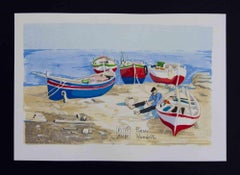
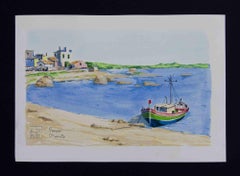
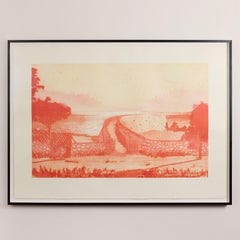
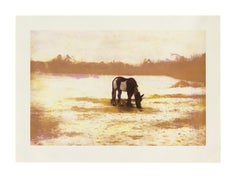
Presso Talamone - Lithograph by Aldo Riso - 2003
Located in Roma, IT
Lithograph on Magnani-Pescia paper. Paper size 17,5 cm x 24,5 cm work size 14,5 cm x22cm. Excellent condition, no defects.   Aldo Riso was born in 1927 in Santa Maria di Leuca, in th...
Category

Contemporary Early 2000s Landscape Prints

Materials

Lithograph

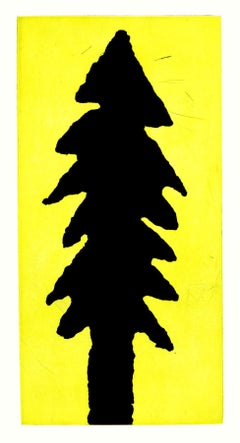
Donald Baechler Blue Spruce 2005 (Donald Baechler prints)
Located in NEW YORK, NY
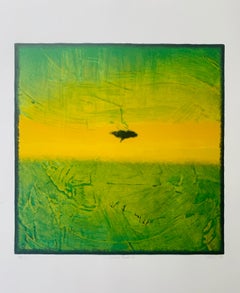
Donald Baechler, Blue Spruce, 2005 A fun, whimsical, and highly decorative signed limited edition Baechler piece that works well in any setting. Medium: Aquatint and drypoint, on ...
Category

Contemporary Early 2000s Landscape Prints

Materials

Drypoint, Aquatint

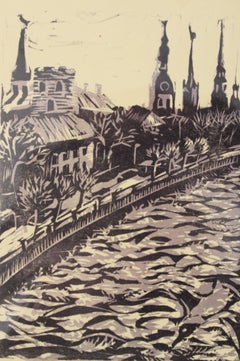
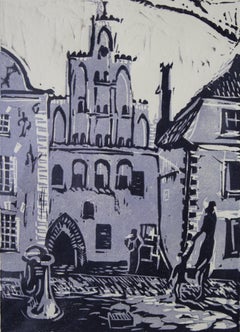
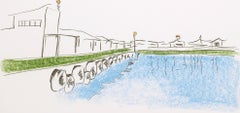
Daugava 2005, a/e paper, linocut, 14x10 cm
Located in Riga, LV
Daugava 2005, a/e paper, linocut, 14x10 cm "Daugava" depicts the Daugava River, which is a significant river in Latvia. The linocut technique allows the artist to capture the essenc...
Category

Impressionist Early 2000s Landscape Prints

Materials

Paper, Linocut

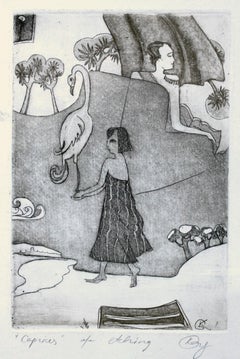
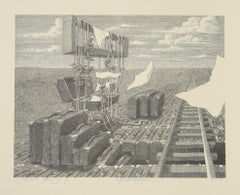
Caprices. Paper, etching, 15.5x10.5 cm
Located in Riga, LV
Caprices. Paper, etching, 15.5x10.5 cm "Caprices" is an etching artwork on paper that presents a series of whimsical and imaginative scenes or subjects. Through the intricate lines...
Category

Surrealist Early 2000s Landscape Prints

Materials

Paper, Etching

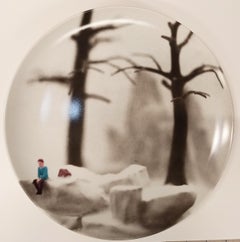
TRAVELER -Sitting Boy
Located in New York, NY
set of 6 plates Edition of 500 numbers from the edition in this set: 252,253,254,255,256,257
Category

Contemporary Early 2000s Landscape Prints

Materials

Porcelain

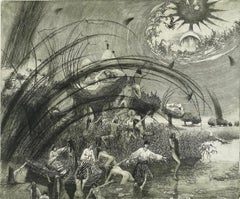
Ukrainian Dream, by Vitaly Perastyuk
Located in Palm Springs, CA
Vitaly was considered an up and coming artist in his native Ukraine, after years of training under one of the Ukraine’s greatest graphic artists. He had his first large solo exhibit...
Category

Contemporary Early 2000s Landscape Prints

Materials

Etching, Aquatint

3 Brothers 2005., a/e, linocut, paper, 23x12 cm
Located in Riga, LV
3 Brothers 2005., a/e, linocut, paper, 23x12 cm. The linocut technique involves carving a design into a block of linoleum and then transferring ink onto p...
Category

Impressionist Early 2000s Landscape Prints

Materials

Paper, Linocut

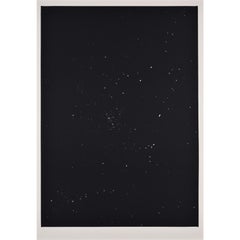
Stars - Contemporary, 21st Century, Silkscreen, Limited Edition, Skyscapes
Located in Zug, CH
Ugo Rondinone, Stars Contemporary, 21st Century, Silkscreen, Limited Edition, Skyscapes Silkscreen Edition of 300 105 x 74.7 cm (41.3 x 29.4 in) Signed and numbered, accompanied by C...
Category

Contemporary Early 2000s Landscape Prints

Materials

Screen

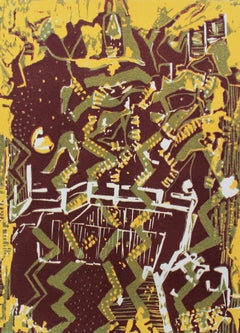
Abstract India Edition 3/5 Linocut Print Nature Sea Jetty Yellow Green Australia
Located in Norfolk, GB
There is a natural and raw understanding in Mukesh Sharma’s prints that both depict, and are influenced by, the Rajastani communities of his home town in rural India. In these Limited Edition fine-art prints, made over a period of twenty years, we are offered the colours of India’s ancient land, the textures, light and the patterns that are everywhere. In the patterns of the arable fields to the jali's (carved screens) in the architecture. This work is however not romantic nor nostalgic but shows a deeper rooted need to offer a visual heritage of place, of where the artist is from and the journey that he is taking. The results are both compelling and honest. Mukesh Sharma, Jetty 2, Lino-cut on German Ivory paper Edition: 3 of 5, 2005 Image size: 47 x 39 cm / Sheet size: 79 x 55 cm Unframed 'What mesmerised me was the meeting of the sea and the mountain peak. Where the Jetty, a special curved wooden staircase leading to one end and the deep crystal clear sea at a distance. These scenes were amazing to me.' Mukesh Sharma's work: It is often in childhood that paths are set for what we will become. Mukesh Sharma hails from a rural, agricultural village in Rajasthan, India. His Father is a craftsman who fixed and mended farm machinery and understood the working parts in the processes. Sharma followed in his Father’s footsteps, as is often the case in Indian families, but his was not the machines of the fields but the presses of the printing studio. Like his Father, Mukesh Sharma is fascinated with understanding how things work and how he can manipulate the metal in his hands. It is not surprising then that his medium of choice is printing. One of the most physically challenging of all the practices, it can often be physically challenging as well as technical and detailed. In his youth, Sharma would draw with stones on walls and floors. He was lucky his family encouraged this and he is grateful for his early art-training at the Jaipur School of Art but it was at the Baroda Art Department that he was introduced to the great printing traditions of Jyoti Bhatt...
Category

Abstract Early 2000s Landscape Prints

Materials

Archival Ink, Archival Paper, Linocut, Archival Pigment

Presso Mondello - Lithograph by Aldo Riso - 2003
Located in Roma, IT
Lithograph on Magnani-Pescia paper. Paper size 17,5 cm x 24,5 cm work size 14,5cm x 22cm. Excellent condition, no defects. Aldo Riso was born in 1927 in Santa Maria di Leuca, in the ...
Category

Contemporary Early 2000s Landscape Prints

Materials

Lithograph

Presso Otranto - Lithograph by Aldo Riso - 2003
Located in Roma, IT
Lithograph on Magnani-Pescia paper. Paper size cm.24,5x cm.17,25 work size cm. 22 x cm. 14,5 Excellent condition, no defects. Aldo Riso was born in 1927 in Santa Maria di Leuca, in t...
Category

Contemporary Early 2000s Landscape Prints

Materials

Lithograph

Landscape Series No.11, Woods & Fields
Located in Bournemouth, Dorset
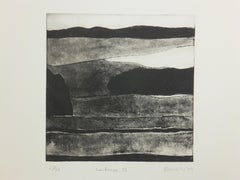
BREWSTER , Martyn (b.1952) Landscape Series No.11, Woods & Fields Image: 14.5 x 15.0 cm (5 3/4 x 6 ins.) Paper: 25.0 x 25.0 cm (9 7/8 x 9 7/8 in...
Category

Contemporary Early 2000s Landscape Prints

Materials

Etching

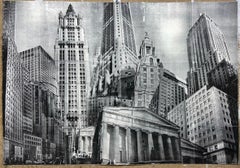
Wall Street 1, 25.5 x 36 inches, black/white lithograph, abstract urban city NY
Located in Brooklyn, NY
Wall Street 2 - plate size 25.5 x 36 - printed on 100% cotton rag - edition 3/5 monochromatic city-scape w/ Architectural elements Cubist and abstract assemblage photographic character
Category

American Realist Early 2000s Landscape Prints

Materials

Archival Ink, Archival Paper, Rag Paper, Lithograph

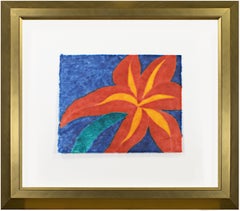
'Narcissus Braziliana' original woodcut & monotype signed by Carol Summers
Located in Milwaukee, WI
The present artwork is a vibrant and colorful example of the woodcut prints of Carol Summers. The image is dominated by the form of a red tropical flower, closely cropped around the petals like in the photographs of Imogen Cunningham and the paintings of Georgia O'Keeffe. The playfulness of the image is enhanced by Summers' signature printmaking technique, which allows the ink from the woodblock to seep through the paper, blurring the edges of each form. 9.63 x 11.63 inches, artwork 21 x 23 inches, frame Edition 16/50 in pencil, lower right Titled in pencil, lower right Signed in pencil, lower center Framed to conservation standards using archival materials including 100 percent rag matting, Museum Glass to inhibit fading, and housed in a modern profile gold gilded wood moulding. Carol Summers (1925-2016) has worked as an artist throughout the second half of the 20th century and into the first years of the next, outliving most of his mid-century modernist peers. Initially trained as a painter, Summers was drawn to color woodcuts around 1950 and it became his specialty thereafter. Over the years he has developed a process and style that is both innovative and readily recognizable. His art is known for it’s large scale, saturated fields of bold color, semi-abstract treatment of landscapes from around the world and a luminescent quality achieved through a printmaking process he invented. In a career that has extended over half a century, Summers has hand-pulled approximately 245 woodcuts in editions that have typically run from 25 to 100 in number. His talent was both inherited and learned. Born in 1925 in Kingston, a small town in upstate New York, Summers was raised in nearby Woodstock with his older sister, Mary. His parents were both artists who had met in art school in St. Louis. During the Great Depression, when Carol was growing up, his father supported the family as a medical illustrator until he could return to painting. His mother was a watercolorist and also quite knowledgeable about the different kinds of papers used for various kinds of painting. Many years later, Summers would paint or print on thinly textured paper originally collected by his mother. From 1948 to 1951, Carol Summers trained in the classical fine and studio arts at Bard College and at the Art Students League of New York. He studied painting with Steven Hirsh and printmaking with Louis Schanker. He admired the shapes and colors favored by early modernists Paul Klee (Sw: 1879-1940) and Matt Phillips (Am: b.1927- ). After graduating, Summers quit working as a part-time carpenter and cabinetmaker (which had supported his schooling and living expenses) to focus fulltime on art. That same year, an early abstract, Bridge No. 1 was selected for a Purchase Prize in a competition sponsored by the Brooklyn Museum. In 1952, his work (Cathedral, Construction and Icarus) was shown the first time at the Museum of Modern Art in New York City in an exhibition of American woodcuts. In 1954, Summers received a grant from the Italian government to study for a year in Italy. Woodcuts completed soon after his arrival there were almost all editions of only 8 to 25 prints, small in size, architectural in content and black and white in color. The most well-known are Siennese Landscape and Little Landscape, which depicted the area near where he resided. Summers extended this trip three more years, a decision which would have significant impact on choices of subject matter and color in the coming decade. After returning from Europe, Summers’ images continued to feature historical landmarks and events from Italy as well as from France, Spain and Greece. However, as evidenced in Aetna’s Dream, Worldwind and Arch of Triumph, a new look prevailed. These woodcuts were larger in size and in color. Some incorporated metal leaf in the creation of a collage and Summers even experimented with silkscreening. Editions were now between 20 and 50 prints in number. Most importantly, Summers employed his rubbing technique for the first time in the creation of Fantastic Garden in late 1957. Dark Vision of Xerxes, a benchmark for Summers, was the first woodcut where Summers experimented using mineral spirits as part of his printmaking process. A Fulbright Grant as well as Fellowships from the Louis Comfort Tiffany Foundation and the Guggenheim Foundation followed soon thereafter, as did faculty positions at colleges and universities primarily in New York and Pennsylvania. During this period he married a dancer named Elaine Smithers with whom he had one son, Kyle. Around this same time, along with fellow artist Leonard Baskin, Summers pioneered what is now referred to as the “monumental” woodcut. This term was coined in the early 1960s to denote woodcuts that were dramatically bigger than those previously created in earlier years, ones that were limited in size mostly by the size of small hand-presses. While Baskin chose figurative subject matter, serious in nature and rendered with thick, striated lines, Summers rendered much less somber images preferring to emphasize shape and color; his subject matter approached abstraction but was always firmly rooted in the landscape. In addition to working in this new, larger scale, Summers simultaneously refined a printmaking process which would eventually be called the “Carol Summers Method” or the “ Carol Summers Technique”. Summers produces his woodcuts by hand, usually from one or more blocks of quarter-inch pine, using oil-based printing inks and porous mulberry papers. His woodcuts reveal a sensitivity to wood especially its absorptive qualities and the subtleties of the grain. In several of his woodcuts throughout his career he has used the undulating, grainy patterns of a large wood plank to portray a flowing river or tumbling waterfall. The best examples of this are Dream, done in 1965 and the later Flash Flood Escalante, in 2003. In the majority of his woodcuts, Summers makes the blocks slightly larger than the paper so the image and color will bleed off the edge. Before printing, he centers a dry sheet of paper over the top of the cut wood block or blocks, securing it with giant clips. Then he rolls the ink directly on the front of the sheet of paper and pressing down onto the dry wood block or reassembled group of blocks. Summers is technically very proficient; the inks are thoroughly saturated onto the surface of the paper but they do not run into each other. The precision of the color inking in Constantine’s Dream in 1969 and Rainbow Glacier in 1970 has been referred to in various studio handbooks. Summers refers to his own printing technique as “rubbing”. In traditional woodcut printing, including the Japanese method, the ink is applied directly onto the block. However, by following his own method, Summers has avoided the mirror-reversed image of a conventional print and it has given him the control over the precise amount of ink that he wants on the paper. After the ink is applied to the front of the paper, Summers sprays it with mineral spirits, which act as a thinning agent. The absorptive fibers of the paper draw the thinned ink away from the surface softening the shapes and diffusing and muting the colors. This produces a unique glow that is a hallmark of the Summers printmaking technique. Unlike the works of other color field artists or modernists of the time, this new technique made Summers’ extreme simplification and flat color areas anything but hard-edged or coldly impersonal. By the 1960s, Summers had developed a personal way of coloring and printing and was not afraid of hard work, doing the cutting, inking and pulling himself. In 1964, at the age of 38, Summers’ work was exhibited for a second time at the Museum of Modern Art. This time his work was featured in a one-man show and then as one of MoMA’s two-year traveling exhibitions which toured throughout the United States. In subsequent years, Summers’ works would be exhibited and acquired for the permanent collections of multiple museums throughout the United States, Europe and Asia. Summers’ familiarity with landscapes throughout the world is firsthand. As a navigator-bombardier in the Marines in World War II, he toured the South Pacific and Asia. Following college, travel in Europe and subsequent teaching positions, in 1972, after 47 years on the East Coast, Carol Summers moved permanently to Bonny Doon in the Santa Cruz Mountains in Northern California. There met his second wife, Joan Ward Toth, a textile artist who died in 1998; and it was here his second son, Ethan was born. During the years that followed this relocation, Summers’ choice of subject matter became more diverse although it retained the positive, mostly life-affirming quality that had existed from the beginning. Images now included moons, comets, both sunny and starry skies, hearts and flowers, all of which, in one way or another, remained tied to the landscape. In the 1980s, from his home and studio in the Santa Cruz mountains, Summers continued to work as an artist supplementing his income by conducting classes and workshops at universities in California and Oregon as well as throughout the Mid and Southwest. He also traveled extensively during this period hiking and camping, often for weeks at a time, throughout the western United States and Canada. Throughout the decade it was not unusual for Summers to backpack alone or with a fellow artist into mountains or back country for six weeks or more at a time. Not surprisingly, the artwork created during this period rarely departed from images of the land, sea and sky. Summers rendered these landscapes in a more representational style than before, however he always kept them somewhat abstract by mixing geometric shapes with organic shapes, irregular in outline. Some of his most critically acknowledged work was created during this period including First Rain, 1985 and The Rolling Sea, 1989. Summers received an honorary doctorate from his alma mater, Bard College in 1979 and was selected by the United States Information Agency to spend a year conducting painting and printmaking workshops at universities throughout India. Since that original sabbatical, he has returned every year, spending four to eight weeks traveling throughout that country. In the 1990s, interspersed with these journeys to India have been additional treks to the back roads and high country areas of Mexico, Central America, Nepal, China and Japan. Travel to these exotic and faraway places had a profound influence on Summers’ art. Subject matter became more worldly and non-western as with From Humla to Dolpo, 1991 or A Former Life of Budha, 1996, for example. Architectural images, such as The Pillars of Hercules, 1990 or The Raja’s Aviary, 1992 became more common. Still life images made a reappearance with Jungle Bouquet in 1997. This was also a period when Summers began using odd-sized paper to further the impact of an image. The 1996 Night, a view of the earth and horizon as it might be seen by an astronaut, is over six feet long and only slightly more than a foot-and-a-half high. From 1999, Revuelta A Vida (Spanish for “Return to Life”) is pie-shaped and covers nearly 18 cubic feet. It was also at this juncture that Summers began to experiment with a somewhat different palette although he retained his love of saturated colors. The 2003 Far Side of Time is a superb example of the new direction taken by this colorist. At the turn of the millennium in 1999, “Carol Summers Woodcuts...
Category

Contemporary Early 2000s Landscape Prints

Materials

Monotype, Woodcut

"Paricutin (Volcano in Michoacan, Mexico)" Woodcut & Monotype signed by Summers
Located in Milwaukee, WI
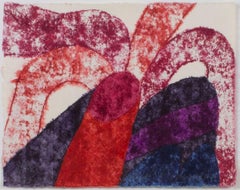
"Paricutin (Volcano in Michoacan, Mexico)" is a woodcut and monotype signed by Carol Summers. In the image, an abstracted volcano erupts in a joyous burst of purples and oranges. The playfulness of the image is enhanced by Summers' signature printmaking technique, which allows the ink from the woodblock to seep through the paper, blurring the edges of each form. Art: 8 x 11 in Frame: 17 x 19 in Carol Summers (1925-2016) has worked as an artist throughout the second half of the 20th century and into the first years of the next, outliving most of his mid-century modernist peers. Initially trained as a painter, Summers was drawn to color woodcuts around 1950 and it became his specialty thereafter. Over the years he has developed a process and style that is both innovative and readily recognizable. His art is known for it’s large scale, saturated fields of bold color, semi-abstract treatment of landscapes from around the world and a luminescent quality achieved through a printmaking process he invented. In a career that has extended over half a century, Summers has hand-pulled approximately 245 woodcuts in editions that have typically run from 25 to 100 in number. His talent was both inherited and learned. Born in 1925 in Kingston, a small town in upstate New York, Summers was raised in nearby Woodstock with his older sister, Mary. His parents were both artists who had met in art school in St. Louis. During the Great Depression, when Carol was growing up, his father supported the family as a medical illustrator until he could return to painting. His mother was a watercolorist and also quite knowledgeable about the different kinds of papers used for various kinds of painting. Many years later, Summers would paint or print on thinly textured paper originally collected by his mother. From 1948 to 1951, Carol Summers trained in the classical fine and studio arts at Bard College and at the Art Students League of New York. He studied painting with Steven Hirsh and printmaking with Louis Schanker. He admired the shapes and colors favored by early modernists Paul Klee (Sw: 1879-1940) and Matt Phillips (Am: b.1927- ). After graduating, Summers quit working as a part-time carpenter and cabinetmaker (which had supported his schooling and living expenses) to focus fulltime on art. That same year, an early abstract, Bridge No. 1 was selected for a Purchase Prize in a competition sponsored by the Brooklyn Museum. In 1952, his work (Cathedral, Construction and Icarus) was shown the first time at the Museum of Modern Art in New York City in an exhibition of American woodcuts. In 1954, Summers received a grant from the Italian government to study for a year in Italy. Woodcuts completed soon after his arrival there were almost all editions of only 8 to 25 prints, small in size, architectural in content and black and white in color. The most well-known are Siennese Landscape and Little Landscape, which depicted the area near where he resided. Summers extended this trip three more years, a decision which would have significant impact on choices of subject matter and color in the coming decade. After returning from Europe, Summers’ images continued to feature historical landmarks and events from Italy as well as from France, Spain and Greece. However, as evidenced in Aetna’s Dream, Worldwind and Arch of Triumph, a new look prevailed. These woodcuts were larger in size and in color. Some incorporated metal leaf in the creation of a collage and Summers even experimented with silkscreening. Editions were now between 20 and 50 prints in number. Most importantly, Summers employed his rubbing technique for the first time in the creation of Fantastic Garden in late 1957. Dark Vision of Xerxes, a benchmark for Summers, was the first woodcut where Summers experimented using mineral spirits as part of his printmaking process. A Fulbright Grant as well as Fellowships from the Louis Comfort Tiffany Foundation and the Guggenheim Foundation followed soon thereafter, as did faculty positions at colleges and universities primarily in New York and Pennsylvania. During this period he married a dancer named Elaine Smithers with whom he had one son, Kyle. Around this same time, along with fellow artist Leonard Baskin, Summers pioneered what is now referred to as the “monumental” woodcut. This term was coined in the early 1960s to denote woodcuts that were dramatically bigger than those previously created in earlier years, ones that were limited in size mostly by the size of small hand-presses. While Baskin chose figurative subject matter, serious in nature and rendered with thick, striated lines, Summers rendered much less somber images preferring to emphasize shape and color; his subject matter approached abstraction but was always firmly rooted in the landscape. In addition to working in this new, larger scale, Summers simultaneously refined a printmaking process which would eventually be called the “Carol Summers Method” or the “ Carol Summers Technique”. Summers produces his woodcuts by hand, usually from one or more blocks of quarter-inch pine, using oil-based printing inks and porous mulberry papers. His woodcuts reveal a sensitivity to wood especially its absorptive qualities and the subtleties of the grain. In several of his woodcuts throughout his career he has used the undulating, grainy patterns of a large wood plank to portray a flowing river or tumbling waterfall. The best examples of this are Dream, done in 1965 and the later Flash Flood Escalante, in 2003. In the majority of his woodcuts, Summers makes the blocks slightly larger than the paper so the image and color will bleed off the edge. Before printing, he centers a dry sheet of paper over the top of the cut wood block or blocks, securing it with giant clips. Then he rolls the ink directly on the front of the sheet of paper and pressing down onto the dry wood block or reassembled group of blocks. Summers is technically very proficient; the inks are thoroughly saturated onto the surface of the paper but they do not run into each other. The precision of the color inking in Constantine’s Dream in 1969 and Rainbow Glacier in 1970 has been referred to in various studio handbooks. Summers refers to his own printing technique as “rubbing”. In traditional woodcut printing, including the Japanese method, the ink is applied directly onto the block. However, by following his own method, Summers has avoided the mirror-reversed image of a conventional print and it has given him the control over the precise amount of ink that he wants on the paper. After the ink is applied to the front of the paper, Summers sprays it with mineral spirits, which act as a thinning agent. The absorptive fibers of the paper draw the thinned ink away from the surface softening the shapes and diffusing and muting the colors. This produces a unique glow that is a hallmark of the Summers printmaking technique. Unlike the works of other color field artists or modernists of the time, this new technique made Summers’ extreme simplification and flat color areas anything but hard-edged or coldly impersonal. By the 1960s, Summers had developed a personal way of coloring and printing and was not afraid of hard work, doing the cutting, inking and pulling himself. In 1964, at the age of 38, Summers’ work was exhibited for a second time at the Museum of Modern Art. This time his work was featured in a one-man show and then as one of MoMA’s two-year traveling exhibitions which toured throughout the United States. In subsequent years, Summers’ works would be exhibited and acquired for the permanent collections of multiple museums throughout the United States, Europe and Asia. Summers’ familiarity with landscapes throughout the world is firsthand. As a navigator-bombardier in the Marines in World War II, he toured the South Pacific and Asia. Following college, travel in Europe and subsequent teaching positions, in 1972, after 47 years on the East Coast, Carol Summers moved permanently to Bonny Doon in the Santa Cruz Mountains in Northern California. There met his second wife, Joan Ward Toth, a textile artist who died in 1998; and it was here his second son, Ethan was born. During the years that followed this relocation, Summers’ choice of subject matter became more diverse although it retained the positive, mostly life-affirming quality that had existed from the beginning. Images now included moons, comets, both sunny and starry skies, hearts and flowers, all of which, in one way or another, remained tied to the landscape. In the 1980s, from his home and studio in the Santa Cruz mountains, Summers continued to work as an artist supplementing his income by conducting classes and workshops at universities in California and Oregon as well as throughout the Mid and Southwest. He also traveled extensively during this period hiking and camping, often for weeks at a time, throughout the western United States and Canada. Throughout the decade it was not unusual for Summers to backpack alone or with a fellow artist into mountains or back country for six weeks or more at a time. Not surprisingly, the artwork created during this period rarely departed from images of the land, sea and sky. Summers rendered these landscapes in a more representational style than before, however he always kept them somewhat abstract by mixing geometric shapes with organic shapes, irregular in outline. Some of his most critically acknowledged work was created during this period including First Rain, 1985 and The Rolling Sea, 1989. Summers received an honorary doctorate from his alma mater, Bard College in 1979 and was selected by the United States Information Agency to spend a year conducting painting and printmaking workshops at universities throughout India. Since that original sabbatical, he has returned every year, spending four to eight weeks traveling throughout that country. In the 1990s, interspersed with these journeys to India have been additional treks to the back roads and high country areas of Mexico, Central America, Nepal, China and Japan. Travel to these exotic and faraway places had a profound influence on Summers’ art. Subject matter became more worldly and non-western as with From Humla to Dolpo, 1991 or A Former Life of Budha, 1996, for example. Architectural images, such as The Pillars of Hercules, 1990 or The Raja’s Aviary, 1992 became more common. Still life images made a reappearance with Jungle Bouquet in 1997. This was also a period when Summers began using odd-sized paper to further the impact of an image. The 1996 Night, a view of the earth and horizon as it might be seen by an astronaut, is over six feet long and only slightly more than a foot-and-a-half high. From 1999, Revuelta A Vida (Spanish for “Return to Life”) is pie-shaped and covers nearly 18 cubic feet. It was also at this juncture that Summers began to experiment with a somewhat different palette although he retained his love of saturated colors. The 2003 Far Side of Time is a superb example of the new direction taken by this colorist. At the turn of the millennium in 1999, “Carol Summers Woodcuts...
Category

Contemporary Early 2000s Landscape Prints

Materials

Monotype, Woodcut

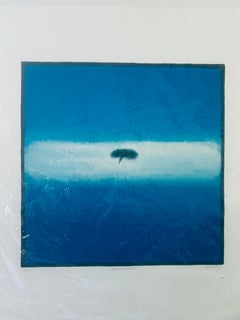
Seasons Quartet II Lithograph AP 6
Located in West Palm Beach, FL
Seasons Quartet II Lithograph AP 6 The fine French BFK Rives paper is 30 X 22 inches and the image is 17 X 17 inches. Seasons Quartet II is one of a series of the four seasons-Blue, ...
Category

Contemporary Early 2000s Landscape Prints

Materials

Lithograph

Carrieri
By Veronique Bonnardel
Located in Palm Springs, CA
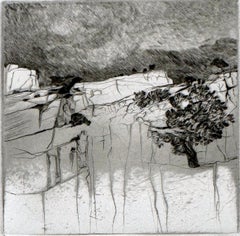
Signed and numbered in pencil from the edition of 9. Finely detailed Black and white landscape of trees along the top of a rocky outcropping. Veronique Bonnardel was born in 1961 i...
Category

Contemporary Early 2000s Landscape Prints

Materials

Engraving

Bill-Board-Walk, Burning/Coney Island, Bright colors, popular culture, New York
Located in Brooklyn, NY
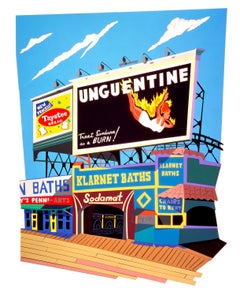
"Bill-Board-Walk, Burning/Coney Island" is a portrait of the vernacular signage and architectural wonder of the billboard attractions at America's most famous amusement park, Coney Island. The original art was created in cut paper, 50" X 37" and is in the collection of Chase Bank. It is part of Marano's "American-Dream-Land" series and was recently translated into a ltd ed. (25 ) archival pigment print, 30.5 x 24 inches. Bold, bright and with a daring figure diving in flames, this piece transcends location and time. Philomena is a daughter of Brooklyn, a master of cut paper and a former assistant to Robert Indiana where she learned the cut paper practice that she continues to explore in her work. She has been exhibited by Tabla Rasa...
Category

Hard-Edge Early 2000s Landscape Prints

Materials

Archival Pigment

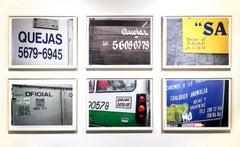
QUEJAS
Located in Pine Plains, NY
Muntadas addresses through his works social, political and communications issues, the relationship between public and private space within social frameworks, and investigations of ch...
Category

Contemporary Early 2000s Landscape Prints

Materials

Digital Pigment

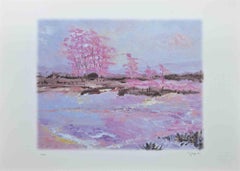
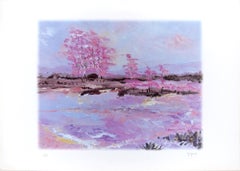
Pink Blossoms - Original Lithograph by Martine Goeyens - 2000s
Located in Roma, IT
Pink blossoms is an original colored lithograph realized by the Belgian artist Martine Goeyens. On the back, the label of the certificate of authenticity by the "Fondazione Di Paolo...
Category

Contemporary Early 2000s Landscape Prints

Materials

Lithograph

Seasons Quartet I Lithograph AP5 30 X 22
Located in West Palm Beach, FL
Seasons Quartet I Lithograph AP5 The French fine art paper is BFK Rives and is 30 X 22 inches. The image is 17 X 17 inches. This signed Artist Proof 5 depicts Sebastian Spreng's sig...
Category

Contemporary Early 2000s Landscape Prints

Materials

Lithograph

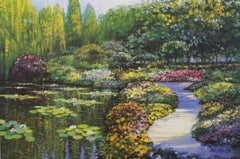
Monet's Garden-L. E. Embellished Giclee on Canvas. Signed, comes with COA
Located in Chesterfield, MI
Limited Edition Embellished Giclee on Canvas, AP 17/50 24 x 36 in. Signed by Artist, comes with Certificate of Authenticity Good Condition
Category

Early 2000s Landscape Prints

Materials

Canvas, Giclée

Ben Avon - Signed Lithograph, Royal Art, Scotland, British, Braemar, Mountains
Located in Knowle Lane, Cranleigh
Ben Avon, Near Braemar, January by His Majesty King Charles III (created when he was HRH Prince Charles, The Prince of Wales) - Hand Sign...
Category

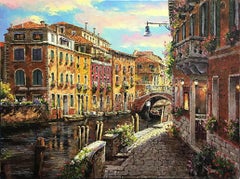
Academic Early 2000s Landscape Prints

Materials

Lithograph

Le Jour se Lève - Lithograph by Martine Goeyens - 21st Century
Located in Roma, IT
Le Jour se Lève is an original colored lithograph on cream-colored paper print realized by Martine Goeyens in the 2000's. The contemporary artwork, representing a wonderful natural ...
Category

Contemporary Early 2000s Landscape Prints

Materials

Lithograph

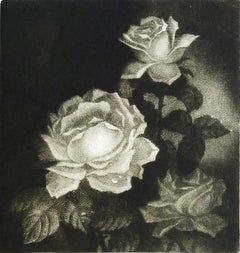
Awakening (9/40), mezzotint of rose by Marina Lazareva
By Marina Lazareva
Located in Palm Springs, CA
Signed, titled and numbered in pencil from the edition of 40. Atmospheric mezzotint still life of two roses. Marina Lazareva was born in Moscow in 1961. She is a member of Union of ...
Category

Contemporary Early 2000s Landscape Prints

Materials

Mezzotint

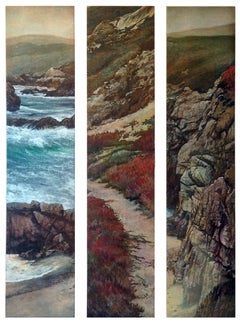
Three Fold Path:Time, etching and aquatint by Art Werger of California Coastine
Located in Palm Springs, CA
Signed, titled and numbered from the edition of 10. This image was created by cutting the copper plates of a large trilogy of prints (Memory and Presence, which are also listed here)...
Category

Contemporary Early 2000s Landscape Prints

Materials

Etching, Aquatint

Quartet
Located in New York, NY
Quartet c. 2005 Silkscreen on Arches Paper (Edition of 175) 30 x 40 inches $5,000 This work is offered by ClampArt in New York City.
Category

Contemporary Early 2000s Landscape Prints

Materials

Screen

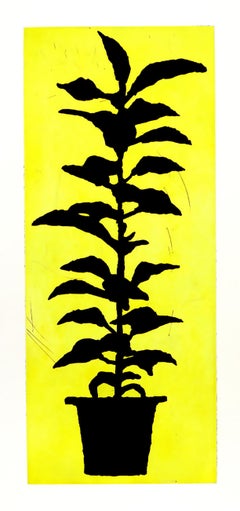
Donald Baechler Potted Plant 2005 (Donald Baechler Prints)
Located in NEW YORK, NY
Donald Baechler, Potted Plant, 2005 A fun, whimsical, and highly decorative signed limited edition Baechler piece that works well in any setting. Medium: Aquatint and drypoint on ...
Category

Pop Art Early 2000s Landscape Prints

Materials

Drypoint, Aquatint

The Tennis Court - Mandela, South African President, Signed, Robben Island, sport
Located in Knowle Lane, Cranleigh
Nelson Mandela, The Tennis Court, Signed Limited Edition Lithograph Many people are unaware that Nelson Mandela turned his hand to art in his 80's as a way of leaving a legacy for hi...
Category

Contemporary Early 2000s Landscape Prints

Materials

Lithograph

Glengairn, Aberdeenshire - Signed Lithograph, Royal Art, Scotland, British
Located in Knowle Lane, Cranleigh
Glengairn, Aberdeenshire, January by His Majesty King Charles III - Hand Signed Limited Edition Lithograph. Belgravia Gallery has been ...
Category

Academic Early 2000s Landscape Prints

Materials

Lithograph

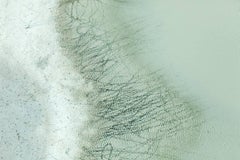
Tracks and Water
Located in New York, NY
Archival pigment print Signed and numbered, verso 26.7 x 40 inches (Edition of 10) 40 x 60 inches (Edition of 5) 48 x 72 inches (Edition of 3) This artwork is offered by ClampArt, located in New York City. Please note that prices increase as editions sell. Zack Seckler's series, “Botswana,” is comprised of a series of exquisite aerial photographs taken in the Kalahari basin in south central Africa between 2009 and 2010. The body of work offers a quite different and almost magical view of the much-photographed and iconic landscape. In order to be able to capture these breathtaking images, Seckler enlisted the services of an expert pilot who flew a small, ultra-lightweight aircraft at low altitudes under...
Category

Contemporary Early 2000s Landscape Prints

Materials

Archival Pigment

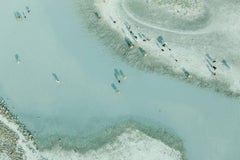
Earth Water Fade
Located in New York, NY
Archival pigment print Signed and numbered, verso 26.7 x 40 inches (Edition of 10) 40 x 60 inches (Edition of 5) 48 x 72 inches (Edition of 3) This artwork is offered by ClampArt, located in New York City. Please note that prices increase as editions sell. Zack Seckler's series, “Botswana,” is comprised of a series of exquisite aerial photographs taken in the Kalahari basin in south central Africa between 2009 and 2010. The body of work offers a quite different and almost magical view of the much-photographed and iconic landscape. In order to be able to capture these breathtaking images, Seckler enlisted the services of an expert pilot who flew a small, ultra-lightweight aircraft at low altitudes under 500 feet. Zack Seckler was born in Boston, and studied psychology at Syracuse University. Then, traveling solo with a point-and-shoot camera in northern India, his mind opened to the visual world. Upon returning to Syracuse, he took coursework in photography at the renowned Newhouse School. With an internship in a Hong Kong photo...
Category

Contemporary Early 2000s Landscape Prints

Materials

Archival Pigment

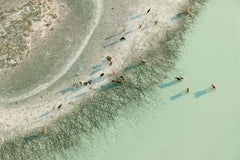
Tswana Herd
Located in New York, NY
Archival pigment print Signed and numbered, verso 26.7 x 40 inches (Edition of 10) 40 x 60 inches (Edition of 5) 48 x 72 inches (Edition of 3) This artwork is offered by ClampArt, located in New York City. Please note that prices increase as editions sell. Zack Seckler's series, “Botswana,” is comprised of a series of exquisite aerial photographs taken in the Kalahari basin in south central Africa between 2009 and 2010. The body of work offers a quite different and almost magical view of the much-photographed and iconic landscape. In order to be able to capture these breathtaking images, Seckler enlisted the services of an expert pilot who flew a small, ultra-lightweight aircraft at low altitudes under 500 feet. Zack Seckler was born in Boston, and studied psychology at Syracuse University. Then, traveling solo with a point-and-shoot camera in northern India, his mind opened to the visual world. Upon returning to Syracuse, he took coursework in photography at the renowned Newhouse School. With an internship in a Hong Kong photo...
Category

Contemporary Early 2000s Landscape Prints

Materials

Archival Pigment

Angel Lake
Located in Lyons, CO
Color Reduction woodcut with chine collé, Edition 15. Jeera Rattanangkoon has a unique printmaking approach and style. His images are stylized and s...
Category

Contemporary Early 2000s Landscape Prints

Materials

Woodcut

Traveling, Surrealist Lithograph by Wojtek Kowalczyk
Located in Long Island City, NY
Traveling Wojtek Kowalczyk, Polish (1960) Date: 2005 Lithograph, signed in pencil Size: 13.5 in. x 19.5 in. (34.29 cm x 49.53 cm)
Category

Surrealist Early 2000s Landscape Prints

Materials

Lithograph

Untitled XXII, Surrealist Lithograph by Wojtek Kowalczyk
Located in Long Island City, NY
Untitled XXII Wojtek Kowalczyk, Polish (1960) Date: 2005 Lithograph, signed in pencil Size: 19.5 in. x 13.5 in. (49.53 cm x 34.29 cm)
Category

Surrealist Early 2000s Landscape Prints

Materials

Lithograph

Untitled XXV, Surrealist Lithograph by Wojtek Kowalczyk
Located in Long Island City, NY
Untitled XXV Wojtek Kowalczyk, Polish (1960) Date: 2005 Lithograph, signed in pencil Size: 13.5 in. x 19.5 in. (34.29 cm x 49.53 cm)
Category

Surrealist Early 2000s Landscape Prints

Materials

Lithograph

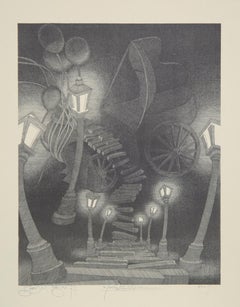
Untitled - Night Path, Surrealist Lithograph by Wojtek Kowalczyk
Located in Long Island City, NY
Untitled - Night Path Wojtek Kowalczyk, Polish (1960) Date: 2005 Lithograph, signed in pencil Size: 19.5 in. x 13.5 in. (49.53 cm x 34.29 cm)
Category

Surrealist Early 2000s Landscape Prints

Materials

Lithograph

Three Nightshades, Surrealist Lithograph by Wojtek Kowalczyk
Located in Long Island City, NY
Three Nightshades Wojtek Kowalczyk, Polish (1960) Date: 2005 Lithograph, signed in pencil Size: 19.5 in. x 13.5 in. (49.53 cm x 34.29 cm)
Category

Surrealist Early 2000s Landscape Prints

Materials

Lithograph

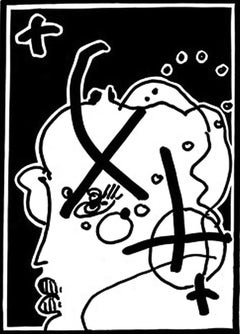
Profile, Black & White, Peter Max
Located in Fairfield, CT
Artist: Peter Max (1937) Title: Profile, Black & White Year: 2004 Edition: 500/500, plus proofs Medium: Lithograph on Lustro Saxony paper Size: 8.75 x 7 inches Condition: Excellent I...
Category

Pop Art Early 2000s Landscape Prints

Materials

Lithograph

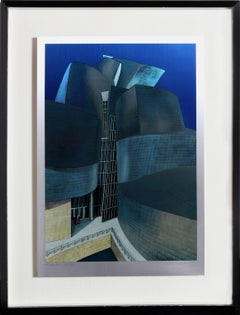
Guggenheim Bilbao, Architectural Screenprint on Aluminum by Richard Haas
Located in Long Island City, NY
Artist: Richard Haas, American (1936 - ) Title: Guggenheim Bilbao Year: 2000 Medium: Lithograph and Silkscreen on Aluminum, signed and numbered Edition: 15...
Category

American Realist Early 2000s Landscape Prints

Materials

Lithograph, Screen

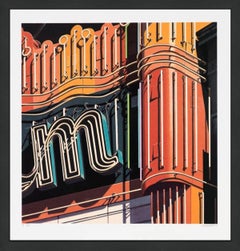
M
Located in Aventura, FL
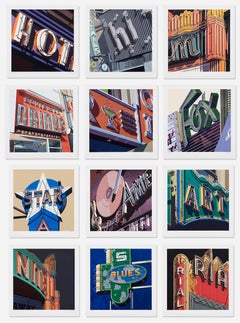
Hand signed, titled, numbered and dated, lower margin. Screen print in colors on wove paper with full margins. Sheet size: 38 x 37 inches. Image size: 32 x 32 inches. Frame size approx 41 x 40 inches. Edition of 100. From American Signs portfolio. Certificate of Authenticity included. Published by Greg Smith...
Category

Photorealist Early 2000s Landscape Prints

Materials

Paper, Screen

M
M
$2,590 Sale Price
30% Off
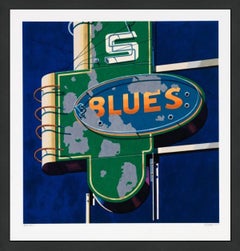
BLUES
Located in Aventura, FL
Hand signed, titled, numbered and dated, lower margin. Screen print in colors on wove paper with full margins. Sheet size: 38 x 37 inches. Image size: 32 x 32 inches. Frame size approx 41 x 40 inches. Edition of 100. From American Signs portfolio. Certificate of Authenticity included. Published by Greg Smith...
Category

Photorealist Early 2000s Landscape Prints

Materials

Paper, Screen

BLUES
BLUES
$2,590 Sale Price
30% Off
Holiday in Old Town 11/30, paper, etching, soft varnish, 15x19.5 cm
Located in Riga, LV
Holiday in Old Town 11/30, paper, etching, soft varnish, 15x19.5 cm JEKATERINA GRYAZEVA Born in Latvia, Riga 1968 Education 1979 - 1986 J.Rozentals Secondary Art Scho...
Category

Surrealist Early 2000s Landscape Prints

Materials

Paper, Etching, Varnish

Night city 2005, paper, etching, 13x16 cm 40/100
Located in Riga, LV
Night city 2005, paper, etching, 13x16 cm 40/100 The artwork depicts a surrealistic green cityscape, showcasing a unique and imaginative interpretation of a nighttime urban scene. ...
Category

Surrealist Early 2000s Landscape Prints

Materials

Paper, Etching

Mandela's Walk - Mandela, Former South African President, Signed, Robben Island
Located in Knowle Lane, Cranleigh
Nelson Mandela, The Walk, Signed Limited Edition Lithograph Many people are unaware that Nelson Mandela turned his hand to art in his 80's as a way of leaving a legacy for his family...
Category

Contemporary Early 2000s Landscape Prints

Materials

Lithograph

AMERICAN SIGNS (PORTFOLIO OF 12)
Located in Aventura, FL
Each hand signed, titled, numbered and dated, lower margin. Screen print in colors on wove paper with full margins. Each sheet size: 38 x 37. Each image size: 32 x 32. Certificate of Authenticity included. Complete Suite, edition 69/100. Published by Greg Smith...
Category

Photorealist Early 2000s Landscape Prints

Materials

Screen, Paper

Muldenberg
Located in Toronto, Ontario
In 2007, Peter Doig (b. 1959) became a household name when his painting “White Canoe” sold for $11.3 million at auction, setting the record at the time for the highest auction price ...
Category

Contemporary Early 2000s Landscape Prints

Materials

Color, Etching

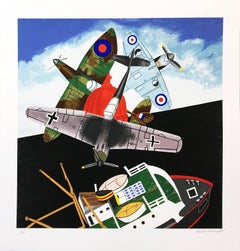
BATTLE OF BRITAIN
Located in Aventura, FL
Hand signed and numbered by the artist. Silkscreen on Arches paper. Image size 30 x 30 inches. Artwork is in excellent condition. Certificate of Authenticity included. Published by C...
Category

Photorealist Early 2000s Landscape Prints

Materials

Screen, Paper

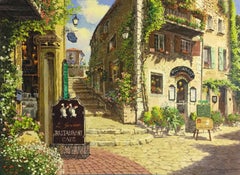
BELLA FRANCHE (HAND EMBELLISHED)
Located in Aventura, FL
Deluxe hand embellished enhanced canvas. Hand signed and numbered by the artist. Artwork is in excellent condition. Certificate of authenticity included. Edition of 325. Stretched. ...
Category

Impressionist Early 2000s Landscape Prints

Materials

Canvas, Giclée

The Courtyard - Nelson Mandela, South African, inspiration, Robben Island, hope
Located in Knowle Lane, Cranleigh
Nelson Mandela, The Courtyard, Signed Limited Edition Lithograph Many people are unaware that Nelson Mandela turned his hand to art in his 80's as a way of leaving a legacy for his f...
Category

Contemporary Early 2000s Landscape Prints

Materials

Lithograph

SHIMMERING CANAL (HAND EMBELLISHED)
Located in Aventura, FL
Deluxe hand embellished enhanced canvas. Hand signed and numbered on front by the artist. Artwork is in excellent condition. Certificate of authenticity included. Edition of 295. Str...
Category

Impressionist Early 2000s Landscape Prints

Materials

Canvas, Giclée

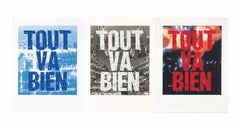
Tu Va Bien
Located in Pine Plains, NY
From his series "Sentences", Muntadas addresses through his works social, political and communications issues, the relationship between public and private space within social framewo...
Category

Conceptual Early 2000s Landscape Prints

Materials

Archival Pigment

QUARTET
Located in Aventura, FL
Hand signed and numbered by the artist. Silkscreen on Arches paper. Framed size approx 38 x 45 inches. Image size 30 x 40 inches. Artwork is in excellent condition. Certificate of Au...
Category

Photorealist Early 2000s Landscape Prints

Materials

Screen, Paper

QUARTET
QUARTET
$2,100 Sale Price
30% Off
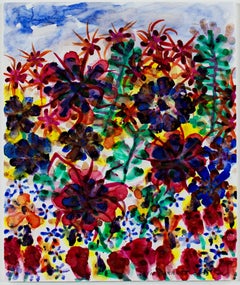
"Beaver Lake Hybrids, " Original Watercolor signed by David Barnett
Located in Milwaukee, WI
"Beaver Lake Hybrids" is an original watercolor by David Barnett. The artist signed the piece lower right. It depicts a bed of brightly-colored flowers. 10" x 8" art 17" x 15" fram...
Category

Contemporary Early 2000s Landscape Prints

Materials

Watercolor

UNTITLED (VENTANAS SERIES)
Located in Aventura, FL
From the ' Ventanas' series. Lithograph on paper. Hand signed, dated and numbered by the artist. Edition PA of 12. Sheet size: 31.5 x 24. Additional images available upon request. Ce...
Category

Contemporary Early 2000s Landscape Prints

Materials

Paper, Lithograph

The Harbour - Mandela, Former South African President, Signed Art, Robben Island
Located in Knowle Lane, Cranleigh
Nelson Mandela, The Harbour, Signed Limited Edition Lithograph Many people are unaware that Nelson Mandela turned his hand to art in his 80's as a way of leaving a legacy for his fam...
Category

Contemporary Early 2000s Landscape Prints

Materials

Lithograph

Pinto
Located in London, GB
Etching in colours, 2000-2001, on Hahnemühle etching paper, signed and numbered from the edition of 46 (there were also 6 artist’s proofs), published by Paragon Press, London, sheet:...
Category

Photorealist Early 2000s Landscape Prints

Materials

Etching

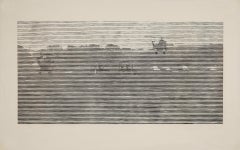
Gent - Contemporary, Woodcut, Landscape, Black and White
Located in Köln, DE
Baumgartner deals with contrasts in her work. This is already evident in her choice of technique. Christiane Baumgartner uses one of the oldest techniques in the art of printing, the...
Category

Contemporary Early 2000s Landscape Prints

Materials

Woodcut

Belfast I from "Belfast I + II" - Contemporary, Woodcut, Black and White
Located in Köln, DE
Baumgartner deals with contrasts in her work. This is already evident in her choice of technique. Christiane Baumgartner uses one of the oldest techniques in the art of printing, the...
Category

Contemporary Early 2000s Landscape Prints

Materials

Woodcut

Recently Viewed

View All