1870s Figurative Sculptures

to
3
22
4
11
2
Overall Width
to
Overall Height
to
188
654
2,300
7,477
93
37
101
112
56
108
227
174
236
277
66
26
23
20
14
14
12
6
6
6
5
3
3
2
2
2
2
2
1
1
1
26
26
6
6
4
9
3
3
2
2
26
13
Period: 1870s
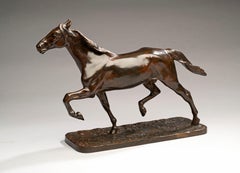
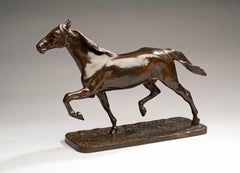
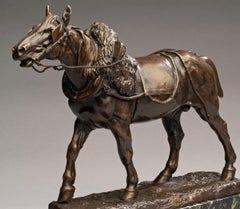
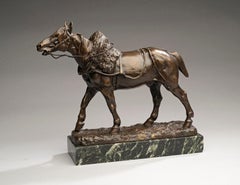
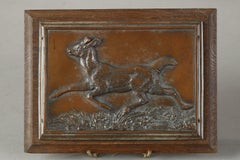
Antique Horse Bronze Trotting Stallion Isidore Jules Bonheur (France, 1827-1901)

Antique Horse Bronze Trotting Stallion Isidore Jules Bonheur (France, 1827-1901)

By Isidore Jules Bonheur

Located in SANTA FE, NM

Antique Horse Bronze Portrait of a Trotting Stallion Isidore Jules Bonheur (France, 1827-1901) Cast bronze mounted on a rectangular plinth with dark brown patina, Signed: I. BONHEUR 17 x 11 3/4 A brilliant exploration of a stallion in full trot. The patina is a deep, warm walnut brown with honey-colored tones. Isidore Bonheur was best known and the most distinguished of the 19th century French animalier sculptors. Isidore, the younger brother of Rosa Bonheur and older brother of Auguste, began his studies of painting initially with his father, who was friends with Francisco Goya. By 1848 he debuted at the Paris Salon having discontinued animal and landscape painting to concentrate on creating sculptures and in 1849, Bonheur enrolled at the Ecole des Beaux Arts. He won medals at the Paris Salon in 1859 and did so again in 1865 and in 1869. After entering the Exposition Universelle 1855, he won the Gold Medal in 1889. In the 1870s exhibited in the London at the Royal Academy of Arts where he earned great prestige and won the coveted Medaille d’Or. After winning numerous other medals and prizes, Bonheur was awarded the Legion d' Honneur in 1895 and he was Knighted in Portugal, Spain and France. Bonheur continued exhibiting at the Paris Salon until 1899. Many of his bronzes were fabricated at the foundry owned by Hippolyte Peyrol, Bonheur's brother-in-law by marriage to Isidore’s youngest sister Juliette Bonheur. The Peyrol casts for both Rosa and Isidore are exceptionally well executed which suggests a strong working relationship between the founder and sculptor. There is little doubt that Isidore Bonheur was an acute observer of nature; his animals were not anthropomorphized but modelled to catch movement or posture characteristics of the particular species he was sculpting. He achieved this most successfully with his sculptures of horses which are usually depicted as relaxed rather than spirited. These figures are among his most renowned works and his equestrian models became very popular, particularly among the British aristocracy. An acute observer of nature, his sculptures reflect his commitment to the Realist school - with precise detailing of the movements of animals in their natural habitats. Ultimately, His naturalistic studies of animals are now some of the most highly sought after works by any of the animalier. He was possibly inspired by his many visits to the Buffalo Bill Wild West Show...

Category

Realist 1870s Figurative Sculptures

Materials

Bronze

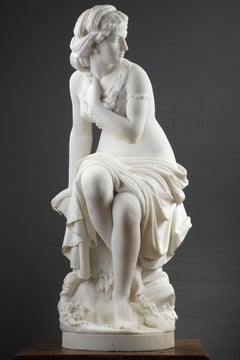
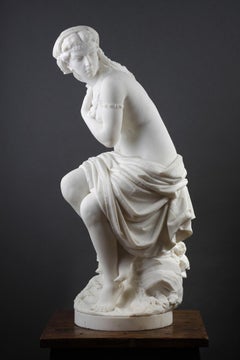
Susanna surprised at her bath

Susanna surprised at her bath

Located in PARIS, FR

"Susanna surprised at her bath" by Giovanni Battista LOMBARDI (1822-1880) Sculpture made in white Carrara marble Signed and dated "GB. Lombardi, Roma 1873" Italy 1873 height 91 cm...

Category

Italian School 1870s Figurative Sculptures

Materials

Marble

Amazone
Amazone

Amazone

By Albert-Ernest Carrier-Belleuse 1

Located in Berlin, DE

ALBERT-ERNEST CARRIER-BELLEUSE French 1824 - 1887 signed: A. CARRIER Bronze Marmor Albert-Ernest Carrier-Belleuse (1824–1887) was a prominent French sculptor of the 19th centur...

Category

Art Nouveau 1870s Figurative Sculptures

Materials

Bronze

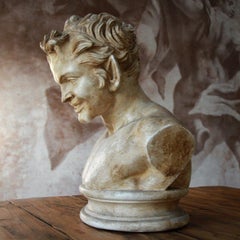
Bust in patinated plaster " terracotta style " 19th century with Louvre seal

Bust in patinated plaster " terracotta style " 19th century with Louvre seal

Located in Gavere, BE

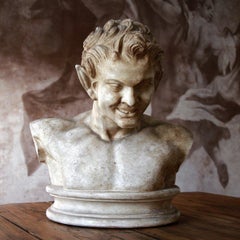
Important patinated plaster bust representing the Faun of Vienna. the original of which is in the collections of the Louvre museum (marble statue discovered in Vienna in 1820 and dat...

Category

Baroque 1870s Figurative Sculptures

Materials

Plaster

The Lily
The Lily

The Lily

Located in PARIS, FR

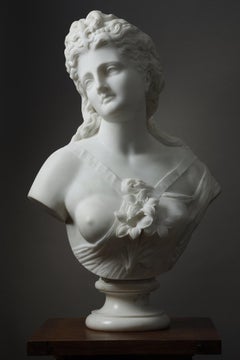
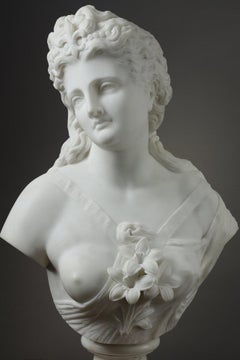
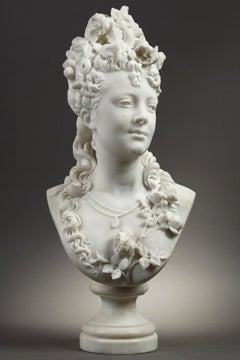
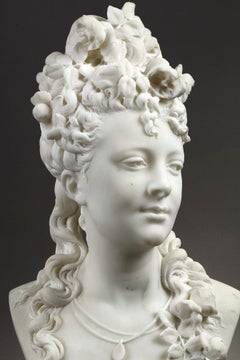
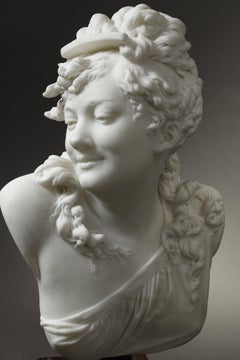
The Lily by Auguste CLESINGER (1814-1883) Outstanding bust sculpted in white Carrara marble Signed on the ribbon " J. Clésinger, 1871 " Presented on a rounded white marble base France 1871 height 76,5 cm width 48 cm depth 35 cm Noted in "Clésinger – Sa vie, ses œuvres - Le catalogue de ses œuvres", A. Estignard, Librairie H. Floury, Paris, 1900, p.169. Biography : Jean-Baptiste Auguste Clésinger, known as Auguste Clésinger (1814-1883), was a French romantic sculptor. His father, Georges-Philippe Clésinger, himself a sculptor, trained him at the School of Fine Arts in Besançon where he was a teacher. Auguste also studied sculpture under the direction of Bertel Thorwaldsen...

Category

French School 1870s Figurative Sculptures

Materials

Marble

Louis Guy  Bronze Sleeping Basset 1876

Louis Guy Bronze Sleeping Basset 1876

Located in Saint-Didier, Provence-Alpes-Côte d'Azur

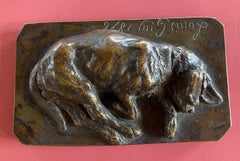
Louis Guy Bronze Sleeping Basset Signed and dated 1876 L14 x d8,5 x h4 cms

Category

1870s Figurative Sculptures

Materials

Bronze

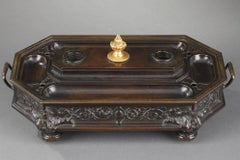
Inkwell with Arabesques

Inkwell with Arabesques

By Antoine-Louis Barye

Located in PARIS, FR

Inkwell with Arabesques by Antoine-Louis BARYE (1796-1875) Rare bronze inkwell with dark brown patina signed on the side "Barye" old cast France around 1875-80 height 5 cm length...

Category

French School 1870s Figurative Sculptures

Materials

Bronze

Bust of an Oriental Woman

Bust of an Oriental Woman

Located in PARIS, FR

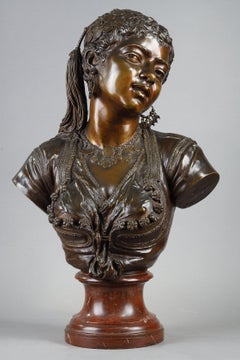
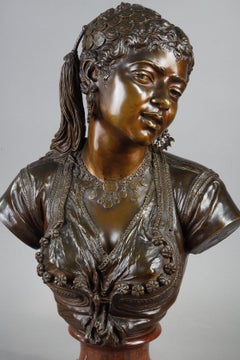
Bust of an Oriental Woman by Emile GUILLEMIN (1841-1907) Orientalist bronze sculpture with dual nuanced patina. old period cast Raised on its original red marble base. Signed on th...

Category

French School 1870s Figurative Sculptures

Materials

Bronze

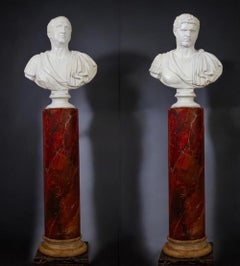
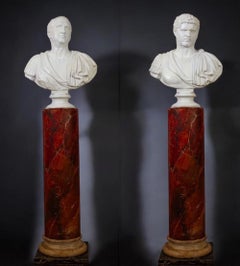
Pair of  Neoclassical  Terracotta  Bust of Emperor Caracalla and Cicero

Pair of Neoclassical Terracotta Bust of Emperor Caracalla and Cicero

Located in Rome, IT

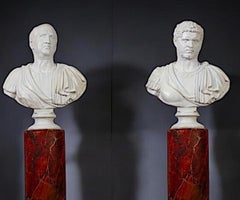
Pair of 19' century Italian Marble imitation painted Terracotta . Bust of Emperor Caracalla and Cicero . Measurements : cm 71 H x 60 Available also a pair marble imitation colum...

Category

Academic 1870s Figurative Sculptures

Materials

Terracotta

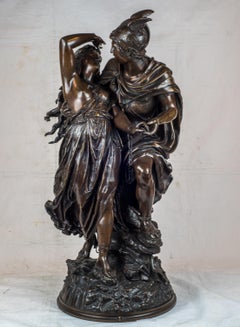
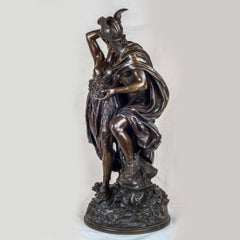
Perseus Freeing Andromeda

Perseus Freeing Andromeda

Located in New York, NY

JEAN-LÉON GRÉGOIRE French, (1840-1890) Perseus Freeing Andromeda Patinated bronze; Signed 'L. GREGOIRE’ 25 1/2 x 13 x 11 inches Notes: Jean-Léon Grégoire started to exhibit at...

Category

1870s Figurative Sculptures

Materials

Bronze

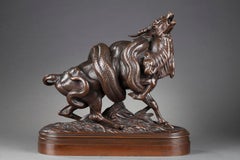
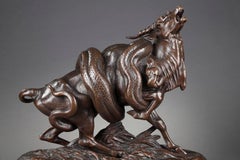
Zebu and Python
Zebu and Python

Zebu and Python

Located in PARIS, FR

Zebu and Python by Henri-Alfred JACQUEMART (1824-1896) Bronze group with nuanced brown patina signed on the base " A. Jacquemart " old cast France circa 1870 height 35,5 cm length...

Category

French School 1870s Figurative Sculptures

Materials

Bronze

Boulonnaise at Prayer

Boulonnaise at Prayer

By Aimé-Jules Dalou

Located in London, England

Aimé-Jules Dalou (1838-1902) was one of only a handful of leading late-nineteenth century French Sculptors, whose reputation was perhaps second only to his contemporaries, Henri Chapu (1833-1891) and Marius Jean Antonin Mercié (1845-1916). Dalou was hugely influential and was a founding member of the Société des Artistes Français and later a founder of the Société Nationale des Beaux-Arts. He was officially rewarded with the highest rank of the Légion d'Honneur two years before his death, with the inauguration of the Triumph of the Republic, in 1899. He started his artistic training in 1852 at the Petite Ecole after being encouraged to do so by Jean-Baptiste Carpeaux, where he studied drawing and modelling. Carpeaux continued to support Dalou throughout his career and influenced his sculpture greatly. Dalou began employment in the field of decorative sculpture working for two companies in Paris, Lefèvre and Favière goldsmiths. During this time he contributed towards the architectural features of Hôtel de la Païva, the then home of the infamous French courtesan Esther Lachmann known as La Païva. Dalou's unique approach lay in his broad range of subject, painterly and sculptural source material, though which he absorbed an impressive spectrum of inspiration. The work of an eighteenth-century sculptor, Louis-François Roubiliac, played a significant role in Dalou's artistic development, whose sculptures he studied whilst in London. Dalou's work includes friezes, maquettes, reliefs, and individual bronze figures. He is known for Baroque-inspired allegorical group compositions, as much as for his depictions of the French rural labouring classes. Dalou encouraged students of art to free themselves from the constraints of established traditions, with his style and teachings thought to have awakened a new generation of young British sculptors whose work was later aligned to the New Sculpture movement. This rough plaster model was kept in the studio of Alfred Drury...

Category

Victorian 1870s Figurative Sculptures

Materials

Plaster

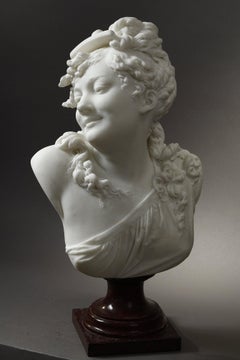
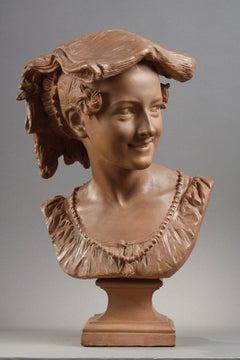
La Rieuse napolitaine

La Rieuse napolitaine

Located in PARIS, FR

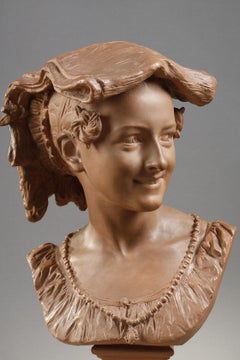
La Rieuse napolitaine (The Laughing Neapolitan Woman) by Jean-Baptiste CARPEAUX (1827-1875) Bust in terra cotta, in "Propriété Carpeaux" Signed on the side " JBte Carpeaux " Marked...

Category

French School 1870s Figurative Sculptures

Materials

Terracotta

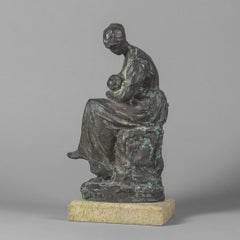
Charity, also known as Maternity

Charity, also known as Maternity

By Aimé-Jules Dalou

Located in London, England

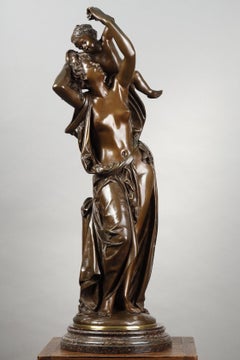
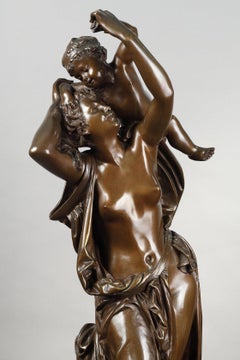
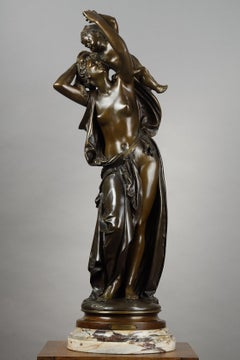
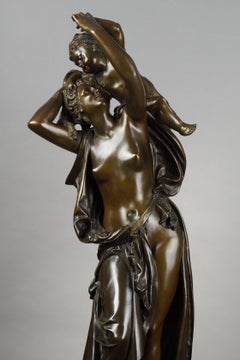
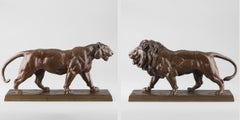
Aimé-Jules Dalou (1838-1902) was one of only a handful of leading late-nineteenth century French Sculptors, whose reputation was perhaps second only to his contemporaries, Henri Chapu (1833-1891) and Marius Jean Antonin Mercié (1845-1916). Dalou was hugely influential and was a founding member of the Société des Artistes Français and later a founder of the Société Nationale des Beaux-Arts. He was officially rewarded with the highest rank of the Légion d'Honneur two years before his death, with the inauguration of the Triumph of the Republic, in 1899. He started his artistic training in 1852 at the Petite Ecole after being encouraged to do so by Jean-Baptiste Carpeaux, where he studied drawing and modelling. Carpeaux continued to support Dalou throughout his career and influenced his sculpture greatly. Dalou began employment in the field of decorative sculpture working for two companies in Paris, Lefèvre and Favière goldsmiths. During this time he contributed towards the architectural features of Hôtel de la Païva, the then home of the infamous French courtesan Esther Lachmann known as La Païva. Dalou's unique approach lay in his broad range of subject, painterly and sculptural source material, though which he absorbed an impressive spectrum of inspiration. The work of an eighteenth-century sculptor, Louis-François Roubiliac, played a significant role in Dalou's artistic development, whose sculptures he studied whilst in London. Dalou's work includes friezes, maquettes, reliefs, and individual bronze figures. He is known for Baroque-inspired allegorical group compositions, as much as for his depictions of the French rural labouring classes. Dalou encouraged students of art to free themselves from the constraints of established traditions, with his style and teachings thought to have awakened a new generation of young British sculptors whose work was later aligned to the New Sculpture movement. Dalou’s first public commission in England was to create a large public fountain which still sits behind the Royal Exchange in London entitled Charity, featuring a mother and two children. This maquette is an early sketch, modelled in 1877. During his time in Britain, Dalou’s artistic focus shifted to increasingly domestic scenes that celebrated mothers and children of all social backgrounds. During a time when the Industrial Revolution was making life increasingly frenzied, more pastoral, idealised visions of a simpler life became an increasingly popular escape. It is thought that the shrinking of Dalou’s social circle during his exile to encompass his family and close friends prompted him to focus more on intimate family scenes such as this one. In Charity the mother and her children are fused together in their embrace. Dalou creates a sense of intimacy by focusing the mother’s gaze away from the viewer - the trio are entirely in their own world. Charity’s intended position at one of the city’s key financial centres would have acted as a provocative reminder of what Dalou considered the responsibilities owed to the poor of London by the ruling elite, as aligned with his socialist leanings. Provenance: Alfred Drury...

Category

Victorian 1870s Figurative Sculptures
Materials

Bronze

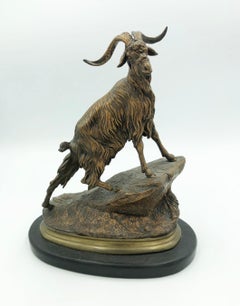
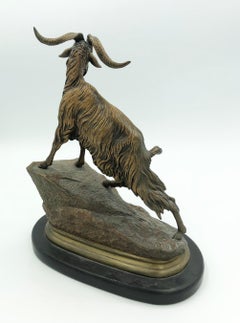
Mountain Goat
Mountain Goat

Mountain Goat

By Jules Moigniez

Located in Missouri, MO

Jules Moigniez "Mountain Goat" Bronze approx 11 x 9 x 4 inches Signed Jules Moigniez (1835-1894) Jules Moigniez was born in Senlis sur L'Oise, France ...

Category

Realist 1870s Figurative Sculptures

Materials

Bronze

St Cecilia
St Cecilia

St Cecilia

Located in London, GB

D. BRUCCIANI & CO (19th Century) St Cecilia Polychrome painted plaster bust with mould lines visible (probably later painting) 47 cm., 18 ½ in. high Dom...

Category

Renaissance 1870s Figurative Sculptures

Materials

Plaster

Boulonnaise Carrying her Infant

Boulonnaise Carrying her Infant

By Aimé-Jules Dalou

Located in London, England

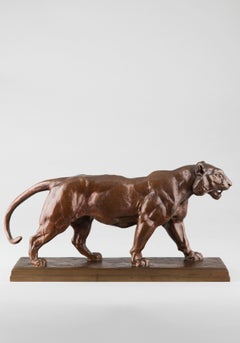
Aimé-Jules Dalou (1838-1902) was one of only a handful of leading late-nineteenth century French Sculptors, whose reputation was perhaps second only to his contemporaries, Henri Chap...

Category

Victorian 1870s Figurative Sculptures
Materials

Bronze

L' AMICO FERITO
L' AMICO FERITO

L' AMICO FERITO

Located in Padova, IT

He was a very active sculptor who gained considerable fame; he died in 1879 at the age of only 50, mourned by all. Having no heirs, he left his estate to the Brera Academy and his mo...

Category

Italian School 1870s Figurative Sculptures
Materials

Marble

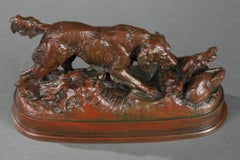
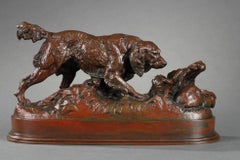
A spaniel pointing a rabbit

A spaniel pointing a rabbit

By Antoine-Louis Barye

Located in PARIS, FR

A spaniel pointing a rabbit Antoine-Louis BARYE (1796-1875) A rare bronze with nuanced reddish brown patina Signed on the base " Barye " Exceptional cast by the Barye's own workshop...

Category

French School 1870s Figurative Sculptures
Materials

Bronze

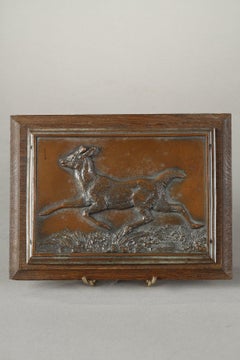
Plaque White-tailed deer

Plaque White-tailed deer

By Antoine-Louis Barye

Located in PARIS, FR

White-tailed deer by Antoine-Louis BARYE (1796-1875) Electroplating bronze plaque with a brown patina Signed "Barye" Period cast from the "Barye's workshop" (made during the artist'...

Category

French School 1870s Figurative Sculptures
Materials

Bronze

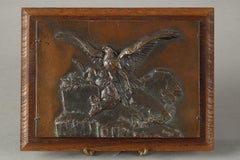
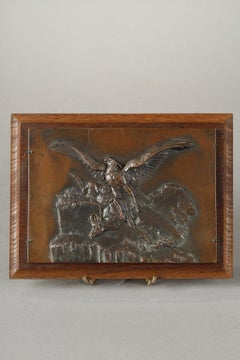
Eagle and chamois
Eagle and chamois

Eagle and chamois

By Antoine-Louis Barye

Located in PARIS, FR

Eagle and chamois by Antoine-Louis BARYE (1796-1875) Electroplating bronze plaque with a brown patina Signed "Barye" Period cast from the "Barye's workshop" (made during the artist'...

Category

French School 1870s Figurative Sculptures
Materials

Bronze

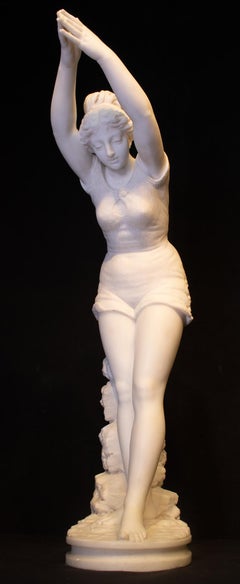
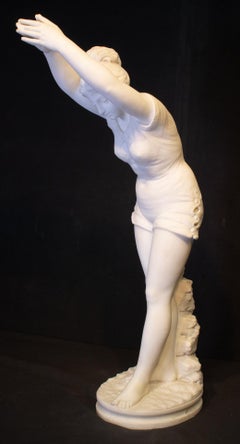
The Swimmer
The Swimmer

The Swimmer

By Pietro Barzanti

Located in Costa Mesa, CA

This very finely carved statue is of a swimmer just leaning over to dive into an unseen pool. Signed P. Barzanti, Florence for Pietro Barzanti (1825-1895) of Florence, Italy. Barzani was a well known sculptor known for classical works in marble which is reflected in this figure's very delicate facial features and the skill shown in the carving of her hair and the cloth of her bathing costume...

Category

1870s Figurative Sculptures
Materials

Marble

Pair of  Neoclassical  Terracotta  Bust of Emperor Caracalla and Cicero

Pair of Neoclassical Terracotta Bust of Emperor Caracalla and Cicero

Located in Rome, IT

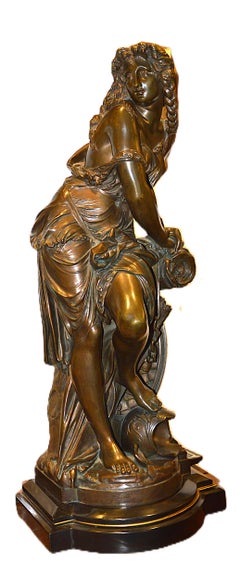
Pair of 19' century Italian Marble imitation painted Terracotta . Bust of Emperor Caracalla and Cicero . Measurements : cm 71 H x 60 Available also a pair marble imitation colum...

Category

Academic 1870s Figurative Sculptures
Materials

Terracotta

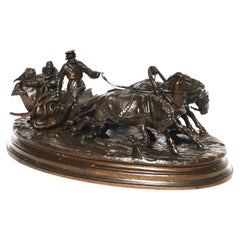
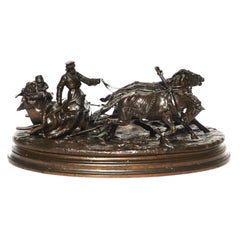
Vasili Grachev Troika Passage

Vasili Grachev Troika Passage

Located in Dallas, TX

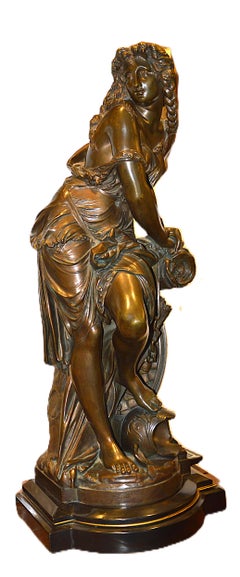
Vasili Grachev, 1831-1905. A patinated chocolate brown bronze grouping of horses pulling a troika with figures. A Classic Russian bronze grouping of three horses tearing through the ...

Category

1870s Figurative Sculptures
Materials
Bronze