Jugendstil Figurative Sculptures

to
1
5
8
6
1
Overall Width
to
Overall Height
to
9
11
1
1
5,164
731
530
303
203
99
94
77
39
22
16
8
4
3
19
19
18
14
12
10
4
1
1
1
1
19
19
2
1
1
1
1
20
Style: Jugendstil
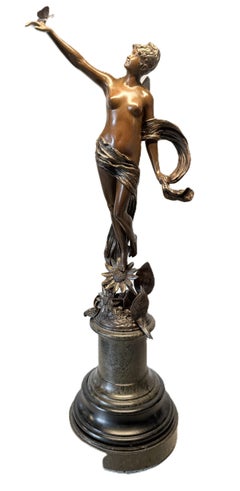
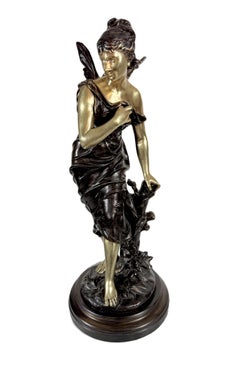
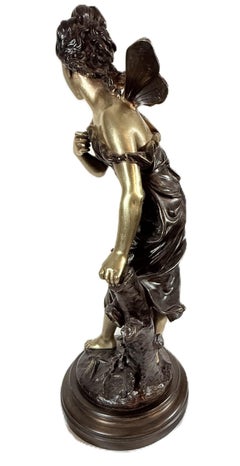
French Art Nouveau bronze by Franz Rosse 1893

French Art Nouveau bronze by Franz Rosse 1893

Located in Berlin, DE

A late 19th-century French bronze sculpture titled "Fairy with Butterfly" by Franz Rosse (1858-1900), signed and dated "Frosse 93" on the base, depicting a semi-dressed woman floatin...

Category

1890s Jugendstil Figurative Sculptures

Materials

Bronze

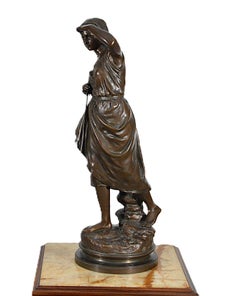
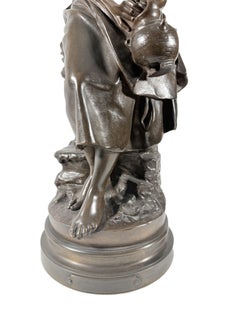
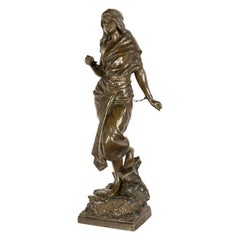
Eugène Laurent (1832-1898), The Beachcomber

Eugène Laurent (1832-1898), The Beachcomber

Located in Berlin, DE

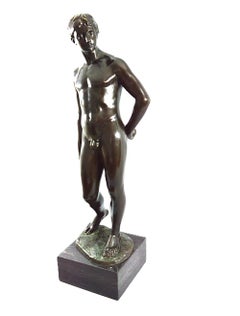
Eugène Laurent (1832-1898), The Beachcomber Inscribed "E. Laurent" on the base plate in the cast. H 63 cm Eugène Laurent studied at the École des Beaux-Arts in Paris and was awa...

Category

Early 19th Century Jugendstil Figurative Sculptures

Materials

Bronze

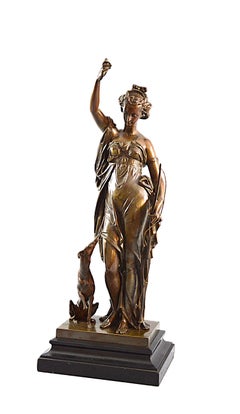
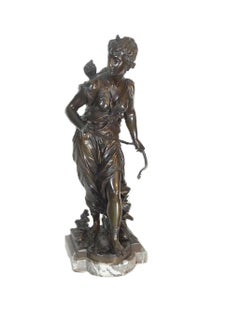
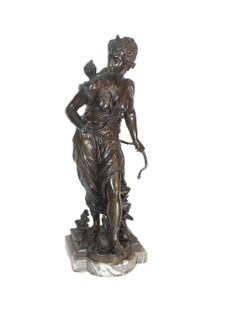
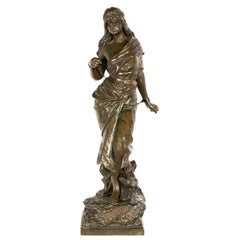
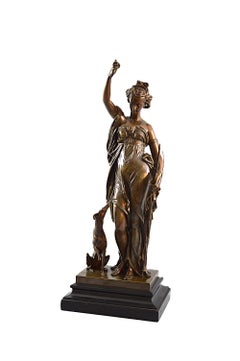
Eugene Laurent (French, 1832-1898) Diana the Huntress

Eugene Laurent (French, 1832-1898) Diana the Huntress

Located in Berlin, DE

LAURENT, Eugene, (French, 1832-1898): Diana the Huntress, bronze, 64 cm high, signed, resting on a black marble base, in an antique dress with her hunting dog. Patinated bronze....

Category

Late 19th Century Jugendstil Figurative Sculptures

Materials

Bronze

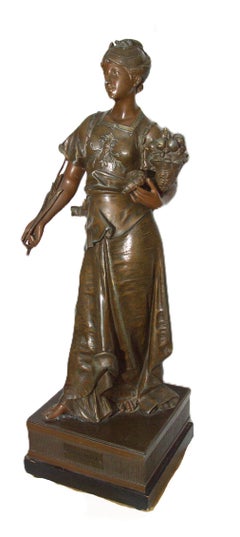
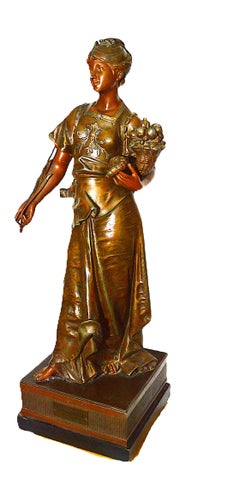
L'Abondance Art Nouveau

L'Abondance Art Nouveau

Located in Berlin, DE

Regule / a metal casting alloy 73 cm signed Vincent Désiré Faure de Broussé, "L'Abondance", large Art Nouveau sculpture, reguleVincent Désiré Faure de Broussé, 1834 - Paris - 19...

Category

Early 20th Century Jugendstil Figurative Sculptures

Materials

Other Medium

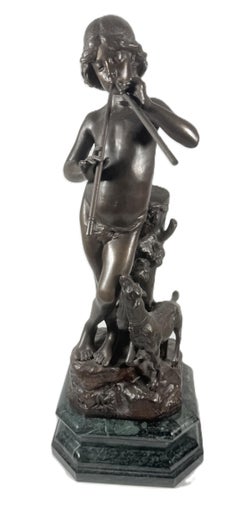
French Art Nouveau bronze JOAQUÍN ANGLÉS CAÑÉ

French Art Nouveau bronze JOAQUÍN ANGLÉS CAÑÉ

Located in Berlin, DE

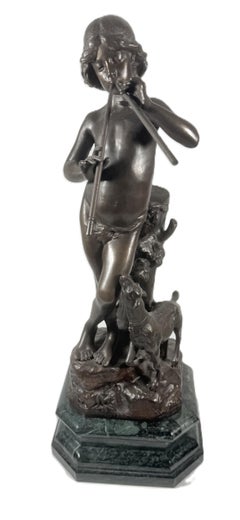
JOAQUÍN ANGLÉS CAÑÉ (Tortosa, 1859 - Paris, 1911). Joaquin Anglès Cañé (born 1859 Tortosa - c. 1925) Idyll. Original title: Bronze, dark brown patinated. Sign. 'Idyll', a bronze sta...

Category

20th Century Jugendstil Figurative Sculptures

Materials

Bronze

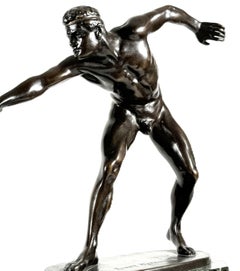
Seifert, Victor Heinrich. 1870 Wien - 1953 Berlin “Young athlete with slingshot”

Seifert, Victor Heinrich. 1870 Wien - 1953 Berlin “Young athlete with slingshot”

Located in Berlin, DE

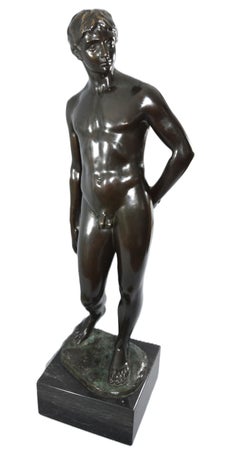
Seifert, Victor Heinrich. 1870 Vienna - 1953 Berlin "Young Athlete with Slingshot" "David" Large bronze, dark patinated, signed: Prof. V.H. Seifert Height: 71.5 cm, approx. 85 cm h...

Category

Early 20th Century Jugendstil Figurative Sculptures

Materials

Bronze

Louis Auguste Moreau children Bronze

Louis Auguste Moreau children Bronze

By Louis Auguste Moreau

Located in Berlin, DE

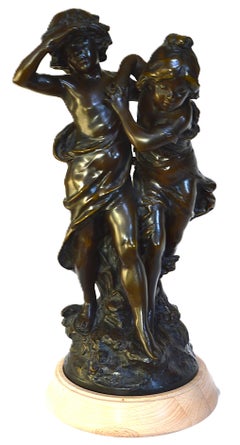
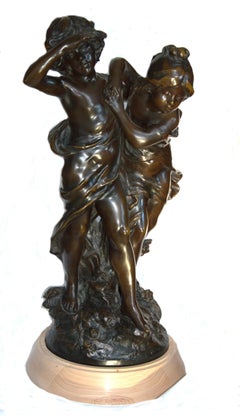
Bronze 54 x 23 cm signed Auguste Moreau (1834–1917) was a French sculptor known for his romantic and decorative style, often working in the tradition of the Belle Époque. He was p...

Category

Early 20th Century Jugendstil Figurative Sculptures

Materials

Bronze

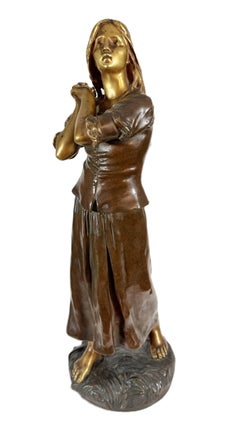
Raoul Fançois Larche Patinated bronze figure of a woman

Raoul Fançois Larche Patinated bronze figure of a woman

Located in Berlin, DE

FRANCOIS-RAOUL LARCHE 1860 SAINT-ANDRÉ-DE-CUBZAC - 1912 PARIS Signed on the base with "RAOUL LARCHE," foundry mark "SIOT DECAUVILLE PARIS FONDEUR," and number "R 276." Total height...

Category

Early 1900s Jugendstil Figurative Sculptures

Materials

Bronze

Forest idyll / - Soulmate -

Forest idyll / - Soulmate -

By Rudolf Kaesbach

Located in Berlin, DE

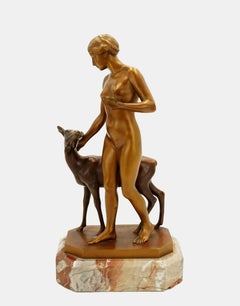
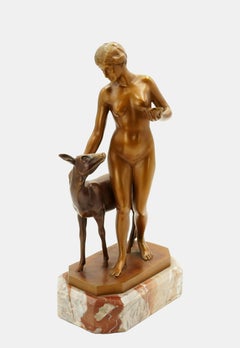
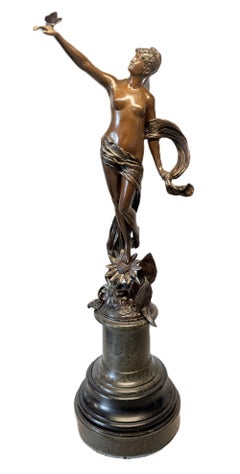
Rudolf Kaesbach (1873 Gladbach - 1955 Berlin), Forest idyll, around 1915. Bronze, gold and golden brown patina, with cast plinth, mounted on a marble base (5 cm high), total height 36 cm, dimensions of the bronze: 31 cm (height) x 17 cm (length) x 12 cm (width). Weight 4,6 kg, signed on the plinth "R.[udolf] KAESBACH". - a few rubbed areas, overall in excellent condition for its age - Soulmate - The bronze sculpture depicts a young woman in an intimate exchange with a deer that accompanies her. The animal pauses to turn toward her, while the nude beauty slows her pace to look into the deer's eyes and tenderly caress it with her hand. The woman and the deer are in inner harmony. Even though her lips remain motionless, she speaks the language of the animal with which she is deeply connected. The golden patina, which contrasts with the more naturalistic coloring of the deer, gives the young woman the appearance of a saint, even if she cannot be identified as such. At the same time, she evokes memories of Diana, the goddess of the hunt, or a nymph. But she lacks the ferocity. In her innocent naivety, she is more like a vestal virgin, who is not at home in the solitude of the forest. And yet, the young beauty, moving unclothed in the heart of nature, looks like a priestess with her hair tied up and a carefully carried bowl on her way to a sacred grove. In order to open up the above-mentioned associations, Kaesbach deliberately designed the female figure in such a way that she cannot be identified as a specific person. He has created an allegory of natural femininity, characteristic of Art Nouveau, in which the deer is far more than a companion animal. It displays the same gracefulness as the young woman, and the inner resemblance between the two makes the deer appear as her other self. In animal terms, it embodies her inner being, which also gives the deer an allegorical character. About the artist Rudolf Kaesbach studied sculpture at the Hanau Academy and worked in a bronze foundry in Paris in 1900. In order to work as an independent artist, he opened a workshop in Düsseldorf, where he cast bronzes from models he designed. In 1902 he made his debut at the German National Art Exhibition in Düsseldorf. The following year Kaesbach went to the academy in Brussels. There he was inspired by contemporary Belgian sculpture, especially the work of Constantin Meunier. He moved to Berlin, where he opened a studio in the villa district of Grunewald and devoted himself to life-size marble sculptures and the design of bronzes. From 1911, he regularly presented his works at the major art exhibitions in Berlin, as well as in Düsseldorf and Malmö. Between 1936 and 1939, he also created models for the Rosenthal porcelain factory. From 1939 to 1944, Kaesbach was represented at the major German art exhibitions in Munich. GERMAN VERSION Rudolf Kaesbach (1873 Gladbach - 1955 Berlin), Waldidyll, um 1915. Gold und goldbraun patinierte Bronze mit gegossener Plinthe, auf einem Marmorsockel montiert (5 cm Höhe), Gesamthöhe 36 cm, Maße der Bronze: 31 cm (Höhe) x 17 cm (Länge) x 12 cm (Breite). Gewicht 4,6 kg, auf der Plinthe mit „R.[udolf] KAESBACH“ signiert. - vereinzele beriebene Stellen, insgesamt in einem altersgemäß ausgezeichneten Zustand - Seelenverwandtschaft - Die Bronzeplastik veranschaulicht eine junge Frau im innigen Austausch mit einem sie begleitenden Reh. Das Tier hält inne, um sich zu ihr hochzuwenden, während die nackte Schönheit ihren Schritt verlangsamt, um dem Reh ebenfalls in die Augen zu schauen und es zärtlich mit der Hand zu liebkosen. Die Frau und das Reh sind in einem inneren Gleichklang. Auch wenn ihre Lippen unbewegt bleiben, spricht sie die Sprache des Tieres, mit dem sie auf eine tief empfundene Weise verbunden ist. Die im Kontrast zur naturalistischeren Einfärbung des Rehs aufstrahlende goldfarbene Patina lässt die junge Frau wie eine Heilige erscheinen, auch wenn sich nicht als Heilige identifizierbar ist. Zugleich ruft sie Erinnerungen an die Jagdgöttin Diana oder eine Nymphe hervor. Dafür fehlt ihr allerdings die Wildheit. In ihrer unschuldigen Naivität gemahnt sie vielmehr an eine Vestalin, die freilich nicht in der Waldeinsamkeit zu Hause ist. Und doch wirkt die sich unbekleidet im Herzen der Natur bewegende junge Schönheit wie eine Priesterin, die sich mit hochgebundenem Haar und der vorsichtig getragenen Schale und dem Wege zu einem Heiligen Hain befindet. Um die gennannten Assoziationen zu eröffnen, hat Kaesbach die Frauenfigur bewusst so gestaltet, dass sie nicht als konkrete Person identifizierbar ist. Damit hat er eine für den Jugendstil charakteristische Allegorie natürlicher Weiblichkeit geschaffen, bei der das Reh weit mehr als ein Begleittier ist. Es weist dieselbe grazile Anmut wie die junge Frau auf und der innere Gleichklag der beiden lässt das Reh als ihr anderen Ich erscheinen. Es verkörpert – ins Animalische übertragen - ihr inneres Wesen, wodurch auch dem Reh ein allegorischer Charakter zukommt. zum Künstler Rudolf Kaesbach studierte an der Akademie Hanau Bildhauerei und war im Jahr 1900 in einer Pariser Bronzegießerei tätig. Um sich als eigenständiger Künstler betätigen zu können, eröffnete er in Düsseldorf eine Werkstatt, in der er Bronzen nach selbstentworfenen Modellen goss. 1902 debütierte er auf der Deutschen Nationalen Kunstaustellung in Düsseldorf. Im Folgejahr ging Kaesbach an die Akademie nach Brüssel. Dort wurde er von der zeitgenössischen belgischen Bildhauerei, insbesondere vom Werk Constantin Meuniers, inspiriert. Zurückgekehrt zog er nach Berlin, wo er im Villenviertel Grunewald ein Atelier eröffnete und sich neben dem Entwurf für Bronzen der lebensgroßen Marmorbildhauerei widmete. Ab 1911 präsentierte er seine Werke regelmäßig auf den Großen Berliner Kunstausstellungen, aber auch in Düsseldorf und Malmö. Zwischen 1936 und 1939 fertigte er zudem Modelle für die Porzellan-Manufaktur Rosenthal an. Von 1939 bis 1944 war...

Category

1910s Jugendstil Figurative Sculptures
Materials

Bronze

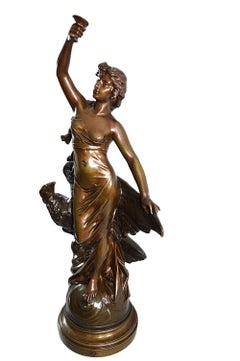
Hebe Par Drouot Edouard Drouot  (French, 1859-1945)

Hebe Par Drouot Edouard Drouot (French, 1859-1945)

Located in Berlin, DE

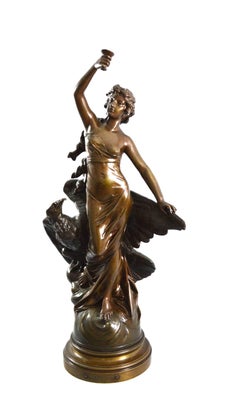
Bronze, beautifully cast, patinated. Above a fluted round base, the figure of the Greek goddess of youth. Hébé is depicted here rising in a tight-fitting robe before an eagle, the sy...

Category

Early 20th Century Jugendstil Figurative Sculptures

Materials

Bronze

Eugene Marioton - Bronze Statue

Eugene Marioton - Bronze Statue

By Eugene Marioton

Located in Berlin, DE

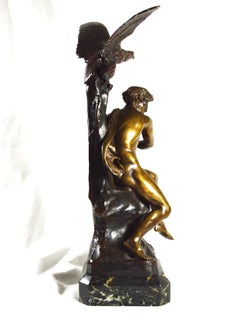
Eugène Marioton französisch, 1854 - 1933 Muscular Nude Male Bronze Eugene Marioton - Bronze Statue, um 1900 A handsome and very fit partially draped young nude male with rippling mu...

Category

19th Century Jugendstil Figurative Sculptures

Materials

Bronze

Related Items
Agathon Leonard Silvered Bronze Of Marguerite

Agathon Leonard Silvered Bronze Of Marguerite

By Agathon Léonard

Located in Dallas, TX

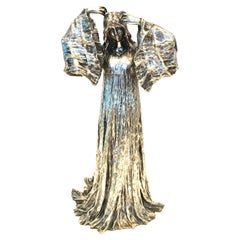
Agathon Leonard (French, 1841 - 1923) Art Nouveau Silvered Bronze A French Art Nouveau gilt bronze sculpture, "Marguerite", by Agathon Léonard of Margeruite, placing a flower in her...

Category

1890s Jugendstil Figurative Sculptures

Materials

Bronze

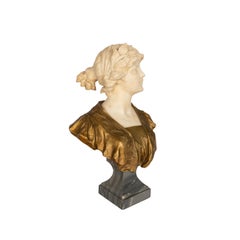
Antique Art Nouveau Female Carrara Marble Gilt Bronze Bust Statue Sculpture 1900

Antique Art Nouveau Female Carrara Marble Gilt Bronze Bust Statue Sculpture 1900

Located in Portland, OR

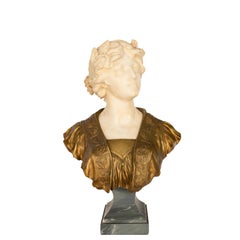
A very beautiful antique Art Nouveau bronzed Carrara marble sculpture bust of a young maiden circa 1900, by Gustave Van Vaerenbergh (1871-1927). The sculpture portrays a beautiful young maiden made from Cararra marble, she is wearing a laurel wreath in her hair. She wears a bronzed bodice with leaf decoration in relief and is raised on a varigated grey & white socle base. The sculpture is signed to the rear " G. V. Vaerenbergh" and numbered "1173", the bust is in excellent condition. Gustave Van Vaerenbergh attended classes at the Academy of Fine Arts in Ghent, Belgium from 1888 to 1890. Like many artists from a modest background (he was the son of a shoemaker) , Gustave Van Vaerenbergh went to work in companies where he could use his artistic talent and education for commercial purposes. In 1901 he moved to Saint-Josse-ten-Noode , and a year later to Schaerbeek where he would live for the rest of his life. He went to work there as a " mouleur en plâtre " (modeller or maker of matrices for plaster statues) at the company A. Carli Frères in the L'Olivierstraat in Schaerbeek, a company that produced commercial statues. This successful company, which was active from the beginning to the middle of the twentieth century , initially had about 20 employees and at its peak about 100 employees. The statues were distributed worldwide. Antonio Carli, a sculptor, was the founder of the Atelier A. Carli Frères, together with family members. They came from Bagni di Lucca...

Category

Early 1900s Jugendstil Figurative Sculptures

Materials

Marble

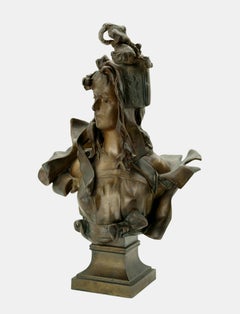
Bust of a young woman / - The Opulence of Beauty -

Bust of a young woman / - The Opulence of Beauty -

Located in Berlin, DE

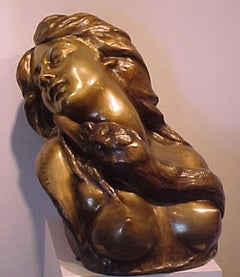
Anton Nelson (i.e. Antoine Joseph van den Kerckhoven) (1849 Brussels - after 1910 ibid.), Bust of a young woman, c. 1890. Patinated bronze on cast base, 30 cm (total height) x 20 cm ...

Category

1890s Jugendstil Figurative Sculptures

Materials

Bronze

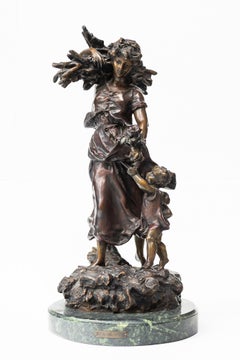
"Mother and Child" Art Nouveau Bronze Sculpture Woman Carrying Harvest Green

"Mother and Child" Art Nouveau Bronze Sculpture Woman Carrying Harvest Green

By Louis Auguste Moreau

Located in Austin, TX

20 inches tall x 11 inches wide at base. Signed. Numbered 6/100 A cast bronze sculpture that depicts an adult female, rural worker, mid-stride, holding a large bundle of wood on her...

Category

Early 20th Century Jugendstil Figurative Sculptures

Materials

Marble, Bronze

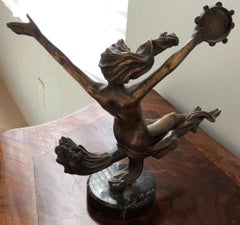
Jean Garnier Bronze of a Sea Nymph or Siren

Jean Garnier Bronze of a Sea Nymph or Siren

By Jean Garnier

Located in San Francisco, CA

Jean Garnier (1853-1910) Art Nouveau Bronze Sculpture circa 1890s A Fine bronze sculpture by listed French artist Jean Garnier. A young nude woman with long flowing hair and a tamb...

Category

Late 19th Century Jugendstil Figurative Sculptures

Materials

Bronze

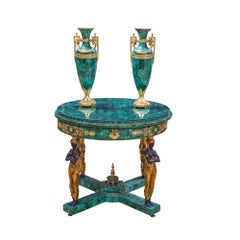
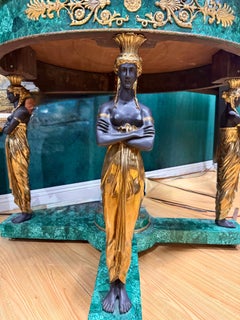
Gilded Bronze & Malachite Table with Vases

Gilded Bronze & Malachite Table with Vases, Unknown

$370,000

H 42 in W 34.5 in D 34.5 in

Gilded Bronze & Malachite Table with Vases

Located in Los Angeles, CA

Gilded Bronze & Malachite Table with Vases Malachite Table 42"H x 34.5"W Malachite Pair of Vases 27.75"H x 8.5"W x 8"D An exceptional gilded bronze and malachite guéridon tab...

Category

Late 19th Century Jugendstil Figurative Sculptures

Materials

Bronze

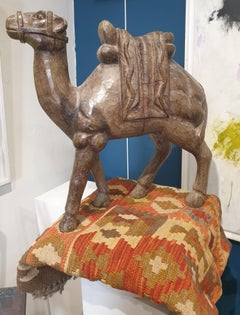
Large Neapolitan 19th Century Hardwood Sculpture of a Crèche Camel.

Large Neapolitan 19th Century Hardwood Sculpture of a Crèche Camel., 1890s

$1,706Sale Price|40% Off

H 20.08 in W 19.3 in D 5.52 in

Large Neapolitan 19th Century Hardwood Sculpture of a Crèche Camel.

Located in Cotignac, FR

Large, Neapolitan, late 19th Century hardwood sculpture of a camel. Artist unknown. A beautifully patinated hardwood sculpture. The sculpture is extremely charming and having been handled for over a century has a lovely warm and tactile patina. It is particularly nice too see the work of the craftsperson in the adze and chisel marks along the body of the sculpture. The Italians and most notably the area around Naples has a long and storied tradition in the creation of sculptures for Nativity Scenes. This camel is both an endearing item and a piece of social history. A wonderful addition in its own right to the traditional Christmas scene, by tradition this sculpture was used as a maquette for the production of papier-maché models used in Christmas Creches which have such a long tradition in Italy and throughout the world. Wonderfully carved this piece was used to create hollow models out of papier-maché which were more affordable for this Christmas tradition. Hundreds of strips of papier-maché would be layered onto the figure in all directions. Then using a sharp tool the papier-maché was pushed into all the crevices of the sculpture to give it crisp detail. Once the layers of paper were dry the papier-maché was cut at certain points and lifted off the sculpture. Then finally the resulting body parts were glued back together, painted and patinated ready to be placed in the crèche scene. In the Christian tradition, a nativity scene (also known as a manger scene...

Category

Late 19th Century Jugendstil Figurative Sculptures

Materials

Wood

Forest idyll / - Soulmate -

Rudolf KaesbachForest idyll / - Soulmate -, c. 1915

$4,976

H 14.18 in W 6.7 in D 4.73 in

Forest idyll / - Soulmate -

By Rudolf Kaesbach

Located in Berlin, DE

Rudolf Kaesbach (1873 Gladbach - 1955 Berlin), Forest idyll, around 1915. Bronze, gold and golden brown patina, with cast plinth, mounted on a marble base (5 cm high), total height 36 cm, dimensions of the bronze: 31 cm (height) x 17 cm (length) x 12 cm (width). Weight 4,6 kg, signed on the plinth "R.[udolf] KAESBACH". - a few rubbed areas, overall in excellent condition for its age - Soulmate - The bronze sculpture depicts a young woman in an intimate exchange with a deer that accompanies her. The animal pauses to turn toward her, while the nude beauty slows her pace to look into the deer's eyes and tenderly caress it with her hand. The woman and the deer are in inner harmony. Even though her lips remain motionless, she speaks the language of the animal with which she is deeply connected. The golden patina, which contrasts with the more naturalistic coloring of the deer, gives the young woman the appearance of a saint, even if she cannot be identified as such. At the same time, she evokes memories of Diana, the goddess of the hunt, or a nymph. But she lacks the ferocity. In her innocent naivety, she is more like a vestal virgin, who is not at home in the solitude of the forest. And yet, the young beauty, moving unclothed in the heart of nature, looks like a priestess with her hair tied up and a carefully carried bowl on her way to a sacred grove. In order to open up the above-mentioned associations, Kaesbach deliberately designed the female figure in such a way that she cannot be identified as a specific person. He has created an allegory of natural femininity, characteristic of Art Nouveau, in which the deer is far more than a companion animal. It displays the same gracefulness as the young woman, and the inner resemblance between the two makes the deer appear as her other self. In animal terms, it embodies her inner being, which also gives the deer an allegorical character. About the artist Rudolf Kaesbach studied sculpture at the Hanau Academy and worked in a bronze foundry in Paris in 1900. In order to work as an independent artist, he opened a workshop in Düsseldorf, where he cast bronzes from models he designed. In 1902 he made his debut at the German National Art Exhibition in Düsseldorf. The following year Kaesbach went to the academy in Brussels. There he was inspired by contemporary Belgian sculpture, especially the work of Constantin Meunier. He moved to Berlin, where he opened a studio in the villa district of Grunewald and devoted himself to life-size marble sculptures and the design of bronzes. From 1911, he regularly presented his works at the major art exhibitions in Berlin, as well as in Düsseldorf and Malmö. Between 1936 and 1939, he also created models for the Rosenthal porcelain factory. From 1939 to 1944, Kaesbach was represented at the major German art exhibitions in Munich. GERMAN VERSION Rudolf Kaesbach (1873 Gladbach - 1955 Berlin), Waldidyll, um 1915. Gold und goldbraun patinierte Bronze mit gegossener Plinthe, auf einem Marmorsockel montiert (5 cm Höhe), Gesamthöhe 36 cm, Maße der Bronze: 31 cm (Höhe) x 17 cm (Länge) x 12 cm (Breite). Gewicht 4,6 kg, auf der Plinthe mit „R.[udolf] KAESBACH“ signiert. - vereinzele beriebene Stellen, insgesamt in einem altersgemäß ausgezeichneten Zustand - Seelenverwandtschaft - Die Bronzeplastik veranschaulicht eine junge Frau im innigen Austausch mit einem sie begleitenden Reh. Das Tier hält inne, um sich zu ihr hochzuwenden, während die nackte Schönheit ihren Schritt verlangsamt, um dem Reh ebenfalls in die Augen zu schauen und es zärtlich mit der Hand zu liebkosen. Die Frau und das Reh sind in einem inneren Gleichklang. Auch wenn ihre Lippen unbewegt bleiben, spricht sie die Sprache des Tieres, mit dem sie auf eine tief empfundene Weise verbunden ist. Die im Kontrast zur naturalistischeren Einfärbung des Rehs aufstrahlende goldfarbene Patina lässt die junge Frau wie eine Heilige erscheinen, auch wenn sich nicht als Heilige identifizierbar ist. Zugleich ruft sie Erinnerungen an die Jagdgöttin Diana oder eine Nymphe hervor. Dafür fehlt ihr allerdings die Wildheit. In ihrer unschuldigen Naivität gemahnt sie vielmehr an eine Vestalin, die freilich nicht in der Waldeinsamkeit zu Hause ist. Und doch wirkt die sich unbekleidet im Herzen der Natur bewegende junge Schönheit wie eine Priesterin, die sich mit hochgebundenem Haar und der vorsichtig getragenen Schale und dem Wege zu einem Heiligen Hain befindet. Um die gennannten Assoziationen zu eröffnen, hat Kaesbach die Frauenfigur bewusst so gestaltet, dass sie nicht als konkrete Person identifizierbar ist. Damit hat er eine für den Jugendstil charakteristische Allegorie natürlicher Weiblichkeit geschaffen, bei der das Reh weit mehr als ein Begleittier ist. Es weist dieselbe grazile Anmut wie die junge Frau auf und der innere Gleichklag der beiden lässt das Reh als ihr anderen Ich erscheinen. Es verkörpert – ins Animalische übertragen - ihr inneres Wesen, wodurch auch dem Reh ein allegorischer Charakter zukommt. zum Künstler Rudolf Kaesbach studierte an der Akademie Hanau Bildhauerei und war im Jahr 1900 in einer Pariser Bronzegießerei tätig. Um sich als eigenständiger Künstler betätigen zu können, eröffnete er in Düsseldorf eine Werkstatt, in der er Bronzen nach selbstentworfenen Modellen goss. 1902 debütierte er auf der Deutschen Nationalen Kunstaustellung in Düsseldorf. Im Folgejahr ging Kaesbach an die Akademie nach Brüssel. Dort wurde er von der zeitgenössischen belgischen Bildhauerei, insbesondere vom Werk Constantin Meuniers, inspiriert. Zurückgekehrt zog er nach Berlin, wo er im Villenviertel Grunewald ein Atelier eröffnete und sich neben dem Entwurf für Bronzen der lebensgroßen Marmorbildhauerei widmete. Ab 1911 präsentierte er seine Werke regelmäßig auf den Großen Berliner Kunstausstellungen, aber auch in Düsseldorf und Malmö. Zwischen 1936 und 1939 fertigte er zudem Modelle für die Porzellan-Manufaktur Rosenthal an. Von 1939 bis 1944 war...

Category

1910s Jugendstil Figurative Sculptures
Materials

Bronze

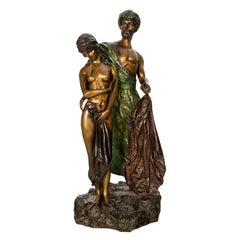
Antique Orientalist Arab Slave Trader Female Nude Group Cold Painted Bronze 1910

Antique Orientalist Arab Slave Trader Female Nude Group Cold Painted Bronze 1910

By Franz Bergmann

Located in Portland, OR

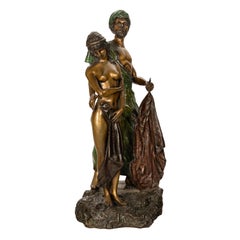
A very large 24" (61cm) Franz Xavier Bergmann (1861-1936) cold painted bronze group statue, signed, Austria, circa 1910. The bronze in the Orientalist manner & depicts a young slave ...

Category

1910s Jugendstil Figurative Sculptures
Materials

Bronze

Leda and the Swan

Leda and the Swan

Located in West Hollywood, CA

Presenting a magnificent early Art Nouveau bronze by Belgian artist Jef Lambeaux(1852-1908.) “Leda and the Swan”, is an original Art Nouveau Bronze,...

Category

1880s Jugendstil Figurative Sculptures
Materials

Bronze

Barye Rare Bronze Sculpture, "Marabou and Snake Marabout Au Serpent"

Barye Rare Bronze Sculpture, "Marabou and Snake Marabout Au Serpent"

By Antoine-Louis Barye

Located in Phoenix, AZ

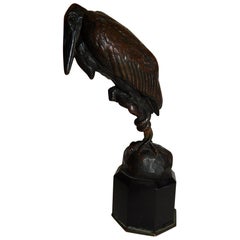
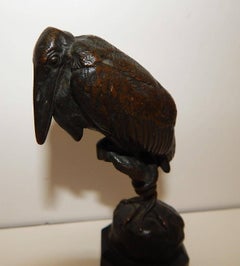
Antoine-Louis Barye (1796-1875.) Bronze maribou stork and snake with rich brown patina, signed “Barye” on the embankment. Antique edition cast marked F. Barbedienne Fondeur (caster.)...

Category

Early 20th Century Jugendstil Figurative Sculptures
Materials

Bronze

Jugendstil figurative sculptures for sale on 1stDibs.
Find a wide variety of authentic Jugendstil figurative sculptures available for sale on 1stDibs. Works in this style were very popular during the 20th Century, but contemporary artists have continued to produce works inspired by this movement. Frequently made by artists working with Bronze, and Metal and other materials, all of these pieces for sale are unique and have attracted attention over the years. Not every interior allows for large Jugendstil figurative sculptures, so small editions measuring 3.5 inches across are also available. Prices for figurative sculptures made by famous or emerging artists can differ depending on medium, time period and other attributes. On 1stDibs, the price for these items starts at $880 and tops out at $149,500, while the average work sells for $75,190.