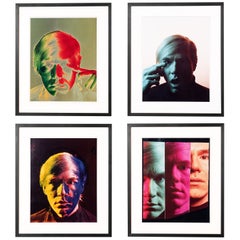
Andy Warhol by Philippe Halsman
By Philippe Halsman
Located in London, GB
Andy Warhol and Philippe Halsman need no introduction - their contribution to the art world is
Category
Late 20th Century American Modern Photography
Materials
Paper
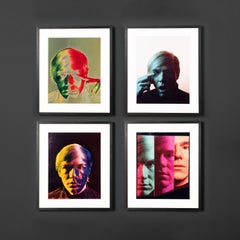
Andy Warhol by Philippe Halsman
By Philippe Halsman
Located in London, GB
Andy Warhol and Philippe Halsman need no introduction - their contribution to the art world is
Paper
$1,450
H 25.88 in W 21.88 in D 1 in
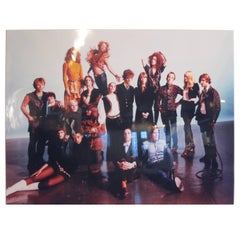
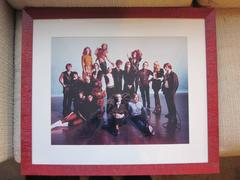
Andy Warhol and Philippe Halsman 1968 Factory Personal Portrait Photo
By Philippe Halsman
Located in Cincinnati, OH
Andy Warhol Factory portrait taken in 1968 by master photographer and printer Philippe Halsman
Paper
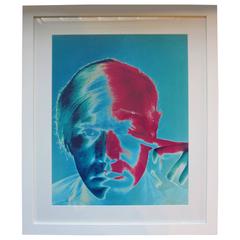
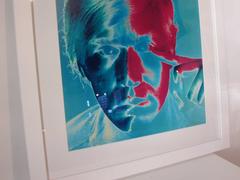
Andy Warhol 1968 Portrait by Philippe Halsman
By Philippe Halsman
Located in Cincinnati, OH
Andy Warhol portrait taken in 1968 by master photographer and printer Philippe Halsman (1906- 1979
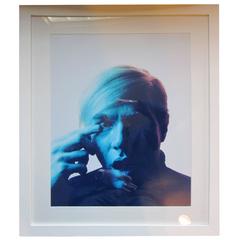
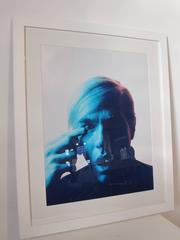
Andy Warhol, 1968 Portrait by Philippe Halsman
By Philippe Halsman
Located in Cincinnati, OH
Andy Warhol portrait taken in 1968 by master photographer and printer Philippe Halsman (1906-1979
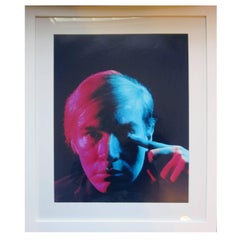
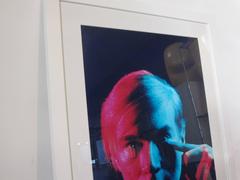
Andy Warhol 1968 Portrait by Philippe Halsman
By Philippe Halsman
Located in Cincinnati, OH
Andy Warhol portrait taken in 1968 by master photographer and printer Philippe Halsman (1906-1979
Paper
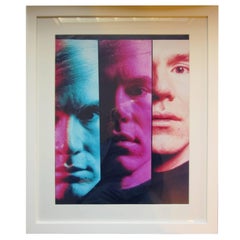
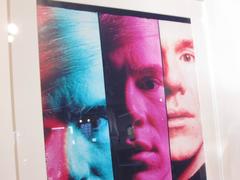
Andy Warhol 1968 Portrait by Philippe Halsman
By Philippe Halsman
Located in Cincinnati, OH
Andy Warhol portrait taken in 1968 by master photographer and printer Philippe Halsman (1906-1979
Paper
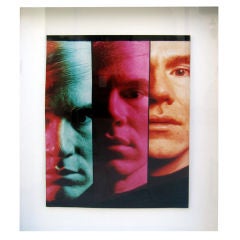

Photo of Andy Warhol by Philippe Halsman
Located in Palm Springs, CA
A photo of Andy Warhol from a portfolio entitled "Warhol" by Philippe Halsman (1906-1979). A
C Print
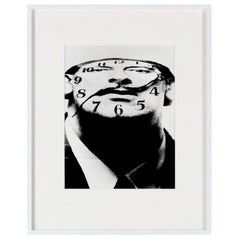
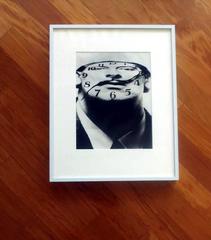
Dali Photograph by Philippe Halsman
By Philippe Halsman
Located in Atlanta, GA
Artist: Philippe Halsman (1906-1979) Medium: Gelatin Silver Print Title: Dali Clockface Date: 1953; Printed in 1981 as part of the ten-piece Dali Portfolio by Stephen Gersh and th...
Wood, Paper
Philippe Halsman’s deep interest in the human face informed a celebrated and decades-spanning career in portrait photography. Shot in black and white, his portrait photographs feature celebrities, artists, politicians and intellectuals. The iconic photographs appeared on the covers of some of the biggest magazines, including Life, Look, Esquire and Paris Match.
Halsman was born in Riga, Latvia, in 1906. When he was 15 years old, he discovered a camera in the attic. He fell in love with taking pictures and spent most of his allowance on his new hobby. He later studied engineering, but left school before earning his degree and moved to Paris to pursue photography.
In the 1930s, Halsman lived in Montparnasse, the artistic center of Paris. He caught his first big break when he approached French writer André Gide to take his portrait. After that, many more writers and actors requested photographs, and Halsman began shooting for Vogue, Viola and Vu.
When World War II broke out, Halsman sent his pregnant wife and daughter to the United States. He could not go with them due to his Latvian passport. As luck would have it, he was pen pals with famed physicist Albert Einstein, who intervened and ensured that Halsman was granted a visa. He arrived in New York City in 1940.
In America, Halsman had to start from scratch. A turning point was when beauty tycoon Elizabeth Arden used one of his photographs to advertise her Victory Red lipstick. In the early 1940s, Halsman met artist Salvador Dalí, and the two became friends and partners. One of their most notable collaborations was the 1948 photograph Dalí Atomicus, which shows Dalí, his cats, canvas, furniture and water floating in the air.
Throughout the rest of his career, Halsman was a prolific contributor to Life magazine and his photographs were on the cover 101 times. In 1958, Popular Photography named him one of the “World’s Ten Greatest Photographers”.
On 1stDibs, find a collection of Philippe Halsman’s photography.
The late 19th and early 20th centuries saw sweeping social change and major scientific advances — both of which contributed to a new aesthetic: modernism. Rejecting the rigidity of Victorian artistic conventions, modernists sought a new means of expression. References to the natural world and ornate classical embellishments gave way to the sleek simplicity of the Machine Age. Architect Philip Johnson characterized the hallmarks of modernism as “machine-like simplicity, smoothness or surface [and] avoidance of ornament.”
Early practitioners of modernist design include the De Stijl (“The Style”) group, founded in the Netherlands in 1917, and the Bauhaus School, founded two years later in Germany.
Followers of both groups produced sleek, spare designs — many of which became icons of daily life in the 20th century. The modernists rejected both natural and historical references and relied primarily on industrial materials such as metal, glass, plywood, and, later, plastics. While Bauhaus principals Marcel Breuer and Ludwig Mies van der Rohe created furniture from mass-produced, chrome-plated steel, American visionaries like Charles and Ray Eames worked in materials as novel as molded plywood and fiberglass. Today, Breuer’s Wassily chair, Mies van der Rohe’s Barcelona chair — crafted with his romantic partner, designer Lilly Reich — and the Eames lounge chair are emblems of progressive design and vintage originals are prized cornerstones of collections.
It’s difficult to overstate the influence that modernism continues to wield over designers and architects — and equally difficult to overstate how revolutionary it was when it first appeared a century ago. But because modernist furniture designs are so simple, they can blend in seamlessly with just about any type of décor. Don’t overlook them.
An empty wall in your home is a blank canvas, and that’s good news. Whether you’ve chosen to arrange a collage of paintings in a hallway or carefully position a handful of wall-mounted sculptures in your dining room, there are a lot of options for beautifying your space with the antique and vintage wall decor and decorations available on 1stDibs.
If you’re seeking inspiration for your wall decor, we’ve got some ideas (and we can show you how to arrange wall art, too).
“I recommend leaving enough space above the piece of furniture to allow for usable workspace and to protect the art from other items damaging it,” says Susana Simonpietri, of Brooklyn home design studio Chango & Co.
Hanging a single attention-grabbing large-scale print or poster over your bar or bar cart can prove intoxicating, but the maximalist approach of a salon-style hang, a practice rooted in 17th-century France, can help showcase works of various shapes, styles and sizes on a single wall or part of a wall.
If you’re planning on creating an accent wall — or just aiming to bring a variety of colors and textures into a bedroom — there is more than one way to decorate with wallpaper. Otherwise, don’t overlook what textiles can introduce to a space. A vintage tapestry can work wonders and will be easy to move when you’ve found that dream apartment in another borough.
Express your taste and personality with the right ornamental touch for the walls of your home or office — find a range of contemporary art, vintage photography, paintings and other wall decor and decorations on 1stDibs now.