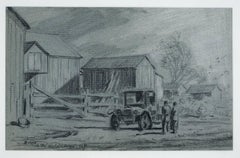
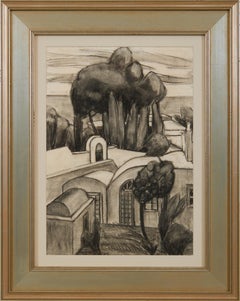
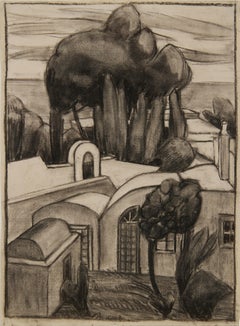
Martin Lewis was born in Castlemaine, Victoria, Australia, on June 7th, 1881. He was the second of eight children and had a passion for drawing.
At the age of 15, Lewis left home and traveled in New South Wales, Australia, and in New Zealand, working as a pothole digger and a merchant seaman. He returned to Sydney and settled into a Bohemian community outside Sydney. Two of his drawings were published in the radical Sydney newspaper, The Bulletin. He studied with Julian Ashton at the Art Society's School in Sydney. Ashton was an English-born Australian artist and teacher known for his support of the Heidelberg School and for his influential art school in Sydney.
In 1900, Lewis left Australia for the United States. His first job was in San Francisco, painting stage decorations for William McKinley's presidential campaign of 1900. By 1909, Lewis was living in New York, where he found work in commercial illustration. His earliest known etching is dated 1915. However, the level of skill in this piece suggests he had been working in the medium for some time previously. It was during this period that he helped Edward Hopper learn the basics of etching.
In 1920, after the breakup of a romance, Lewis traveled to Japan, where for two years he drew and painted and studied Japanese art. The influence of Japanese prints is very evident in Lewis's prints after that period. In 1925, he returned to etching and produced most of his well-known works between 1925 and 1935. Lewis's first solo exhibition in 1929 was successful enough for him to give up commercial work and concentrate entirely on printmaking.
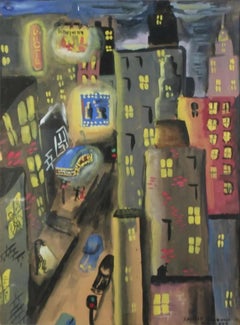
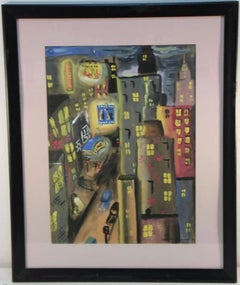
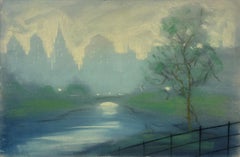
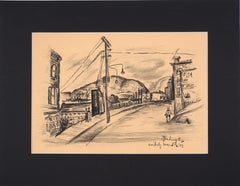
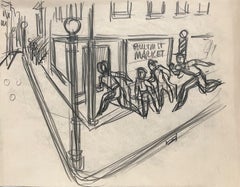
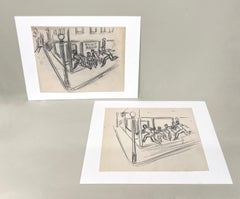
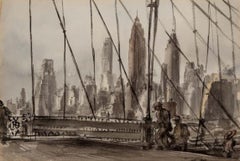
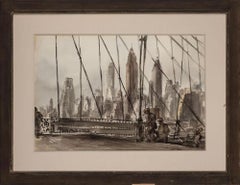
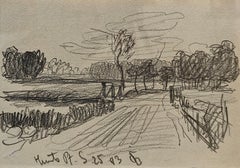
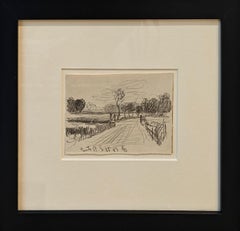
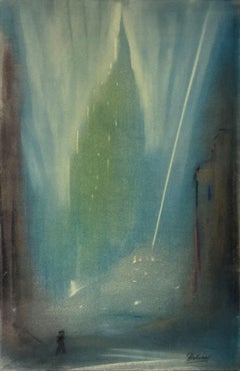
Lewis is most famous for his black and white prints, mostly of night scenes of non-tourist, real-life street scenes of New York City. During the Depression, however, he was forced to leave the city for four years between 1932 and 1936 and move to Newtown, Connecticut. His work from this period includes a number of rural, night-time, and winter landscape scenes in this area.
Lewis returned to Manhattan in 1936 and continued to etch and paint. He taught printmaking at the Art Students League of New York from 1944 until his retirement in 1952. Now he is considered one of the most important American printmakers of the twentieth century.
Find original Martin Lewis prints and other art on 1stDibs.
(Biography provided by Allinson Gallery, Inc.)