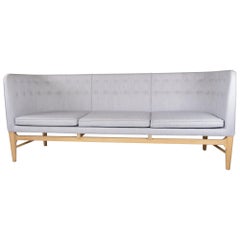
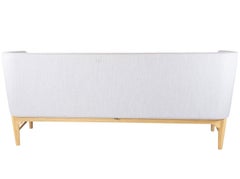
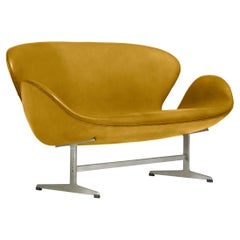
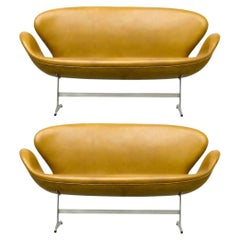
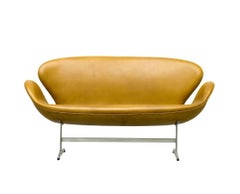
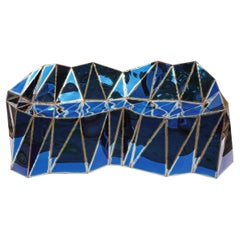
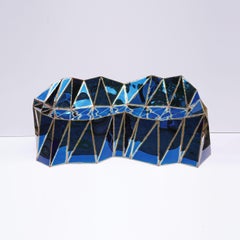
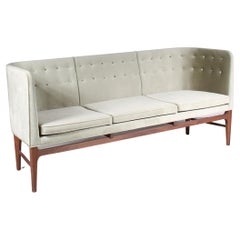
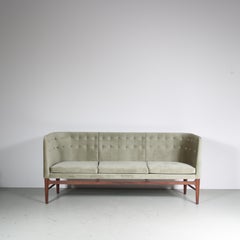
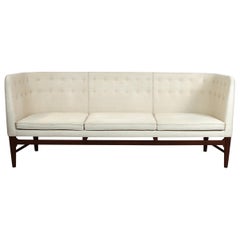
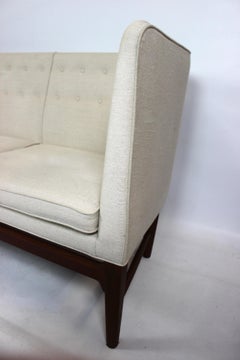
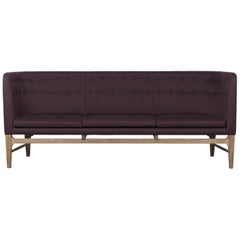
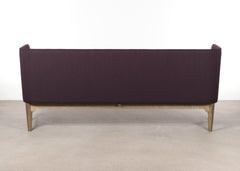
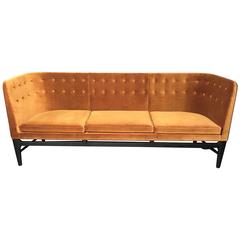
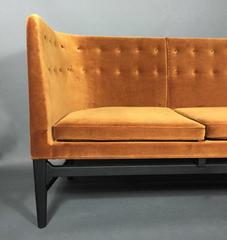
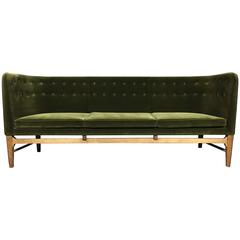
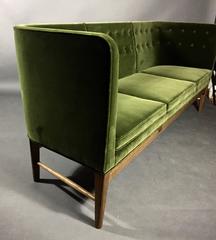
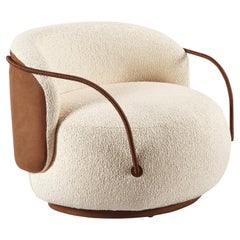
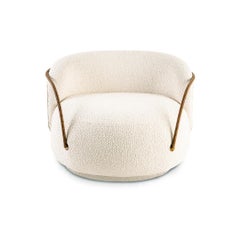
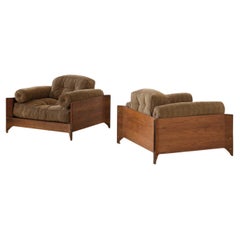
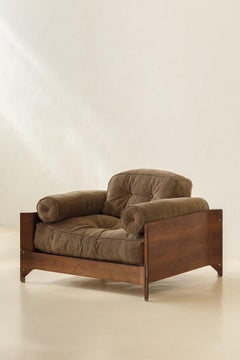
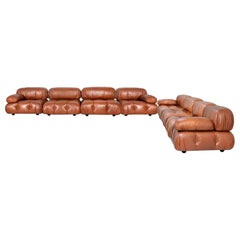
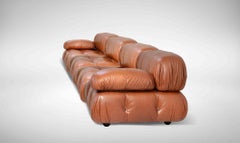
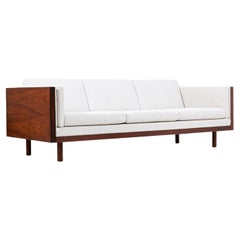
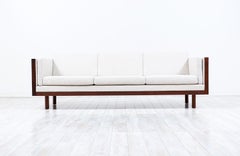
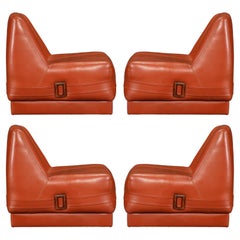
Find many varieties of an authentic mayor sofa available at 1stDibs. A mayor sofa — often made from
fabric,
metal and
wood — can elevate any home. Your living room may not be complete without a mayor sofa — find older editions for sale from the 19th Century and newer versions made as recently as the 21st Century. Each mayor sofa bearing
modern,
mid-century modern or
industrial hallmarks is very popular. Many designers have produced at least one well-made mayor sofa over the years, but those crafted by
Arne Jacobsen,
Florence Knoll and
Knoll are often thought to be among the most beautiful.
Prices for a mayor sofa can differ depending upon size, time period and other attributes — at 1stDibs, they begin at $248 and can go as high as $34,000, while the average can fetch as much as $9,900.
The eye-catching work of the Danish architect and designer Arne Jacobsen often introduces new collectors to mid-20th century furniture. With their fluid lines and sculptural presence, Jacobsen’s signature pieces — the elegant Swan chair and the cozy-yet-cutting edge Egg chair, both first presented in 1958 — are iconic representations of both the striking aesthetic of the designers of the era and their concomitant attention to practicality and comfort. Jacobsen designed furniture that had both gravitas and groove.
Though Jacobsen is a paragon of Danish modernism, his approach to design was the least “Danish” of those who are counted as his peers. The designs of Hans Wegner, Finn Juhl, Børge Mogensen and others grew out of their studies as cabinetmakers. They prized skilled craftsmanship and their primary material was carved, turned and joined wood. Jacobsen was first and foremost an architect, and while he shared his colleagues’ devotion to quality of construction, he was far more open to other materials such as metal and fiberglass.
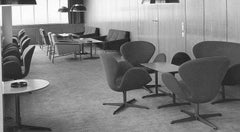
Many of Jacobsen’s best-known pieces had their origin in architectural commissions. His molded-plywood, three-legged Ant chair (1952) was first designed for the cafeteria of a pharmaceutical company headquarters. The tall-backed Oxford chair was made for the use of dons at St. Catherine’s College, Oxford, whose Jacobsen-designed campus opened in 1962 (while still under construction). The Swan, Egg and Drop chairs and the AJ desk lamp were all created as part of Jacobsen’s plan for the SAS Royal Copenhagen Hotel, which opened in 1960. (The hotel has since been redecorated, but one guest room has been preserved with all-Jacobsen accoutrements.)
To Jacobsen’s mind, the chief merit of any design was practicality. He designed the first stainless-steel cutlery set made by the Danish silver company Georg Jensen; Jacobsen’s best-selling chair — the plywood Series 7 — was created to provide lightweight, stackable seating for modern eat-in kitchens. But as you will see from the objects on 1stDibs, style never took a backseat to function in Arne Jacobsen’s work. His work merits a place in any modern design collection.
Find authentic Arne Jacobsen chairs, tables, sofas and other furniture on 1stDibs.
Black leather, silk velvet cushions, breathable bouclé fabric — when shopping for antique or vintage sofas, today’s couch connoisseurs have much to choose from in terms of style and shape. But it wasn’t always thus.
The sofa is typically defined as a long upholstered seat that features a back and arms and is intended for two or more people. While the term “couch” comes from the Old French couche, meaning to lie down, and sofa has Eastern origins, both are forms of divan, a Turkish word that means an elongated cushioned seat. Bench-like seating in Ancient Greece, which was padded with soft blankets, was called klinai. No matter how you spell it, sofa just means comfort, at least it does today.
In the early days of sofa design, upholstery consisted of horsehair or dried moss. Sofas that originated in countries such as France during the 17th century were more integral to decor than they were to comfort. Like most Baroque furnishings from the region, they frequently comprised heavy, gilded mahogany frames and were upholstered in floral Beauvais tapestry. Today, options abound when it comes to style and material, with authentic leather offerings and classy steel settees. Plush, velvet chesterfields represent the platonic ideal of coziness.
Vladimir Kagan’s iconic sofa designs, such as the Crescent and the Serpentine — which, like the sectional sofas of the 1960s created by furniture makers such as Harvey Probber, are quite popular among mid-century modern furniture enthusiasts — showcase the spectrum of style available to modern consumers. Those looking to make a statement can turn to Studio 65’s lip-shaped Bocca sofa, which was inspired by the work of Salvador Dalí. Elsewhere, the furniture of the 1970s evokes an era when experimentation ruled, or at least provided a reason to break the rules. Just about every area of society felt a sudden urge to be wayward, to push boundaries — and buttons. Vintage leather sofas of that decade are characterized by a rare blending of the showy and organic.
With so many options, it’s important to explore and find the perfect furniture for your space. Paying attention to the lines of the cushions as well as the flow from the backrest into the arms is crucial to identifying a cohesive new piece for your home or office.
Fortunately, with styles from every era — and even round sofas — there’s a luxurious piece for every space. Deck out your living room with an Art Deco lounge or go retro with a nostalgic '80s design. No matter your sitting vision, the right piece is waiting for you in the expansive collection of unique sofas on 1stDibs.