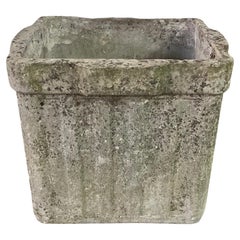
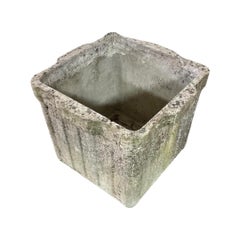
Swiss Square Ribbed Planter by Willy Guhl
Located in Dallas, TX
composite. Originates from Switzerland. Circa, 1950's. Designed by Willy Guhl.
Category
Antique 19th Century Planters and Jardinieres
Materials
Concrete
Swiss Square Ribbed Planter by Willy Guhl
Located in Dallas, TX
composite. Originates from Switzerland. Circa, 1950's. Designed by Willy Guhl.
Concrete
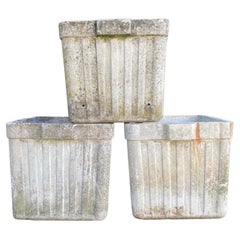
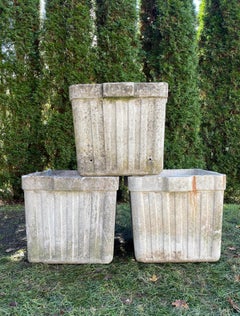
Large Square Ribbed Planters Designed by Willy Guhl
By Eternit, Willy Guhl
Located in Woodbury, CT
Designed by the iconic Willy Guhl in the 1960s and made of strong and lightweight fiber cement by
Other
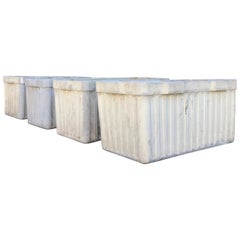
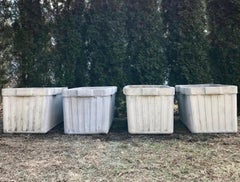
Very Large Ribbed Rectangular Willy Guhl Planters by Eternit
By Eternit, Willy Guhl
Located in Woodbury, CT
the iconic Willy Guhl and produced by Eternit of Switzerland. In very good structural condition with
Other
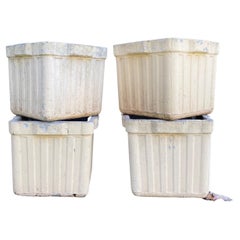
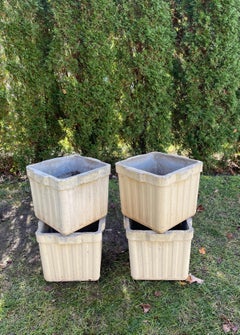
Two Pairs of Medium-Sized Square Ribbed Planters by Willy Guhl
By Eternit, Willy Guhl
Located in Woodbury, CT
Designed by the iconic Willy Guhl in the 1960s and made of strong and lightweight fiber cement by
Other
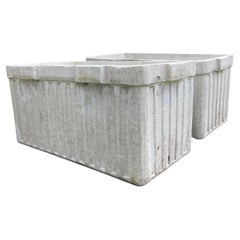
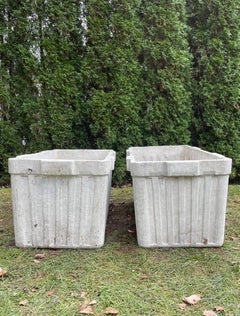
Unavailable
H 20 in W 42 in D 24 in
Pair of Very Large Ribbed Rectangular Willy Guhl Planters by Eternit
By Eternit, Willy Guhl
Located in Woodbury, CT
the iconic Willy Guhl and produced by Eternit of Switzerland. In excellent condition, they feature a
Other
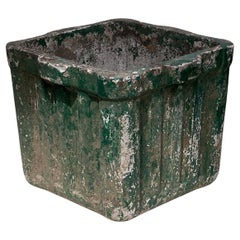

1960s Vintage Square Willy Guhl Green Ribbed Square Planter
By Willy Guhl
Located in West Hollywood, CA
Willy guhl 1960s green ribbed square planter - these iconic mid-century modern planters by willy
Cement
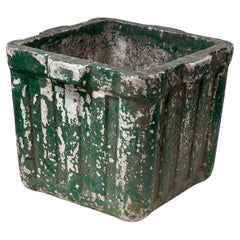

1960s Vintage Square Willy Guhl Green Ribbed Square Planter
By Willy Guhl
Located in West Hollywood, CA
Willy guhl 1960s green ribbed square planter - these iconic mid-century modern planters by willy
Cement
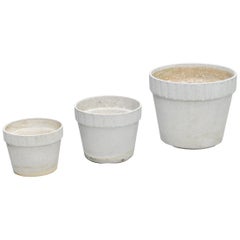

Willy Guhl Garden Planter Set Ribbed Edge Eternit, 1960
By Eternit, Willy Guhl
Located in Roosendaal, Noord Brabant
Set of 3 very nice garden planters designed by Willy Guhl and manufactured by Eternit AG
Concrete
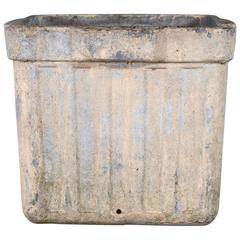

Willy Guhl Fiber Cement Ribbed Square Planter
By Willy Guhl
Located in Houston, TX
Ribbed fiber cement planter, manufactured by Swiss company Eternit Ag and designed by Willy Guhl
Cement
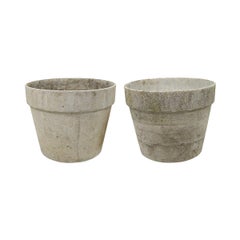

Sold
H 12.6 in Dm 15.36 in
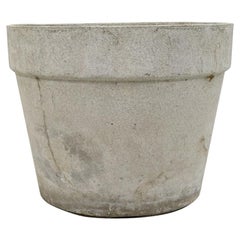
Pair of Planters in Flower Pot Shape with Ribbed Rims by Willy Guhl for Eternit
By Willy Guhl
Located in Doornspijk, NL
Pair of planters designed by famous Swiss artist, designer and architect Willy Guhl. The planters
Concrete
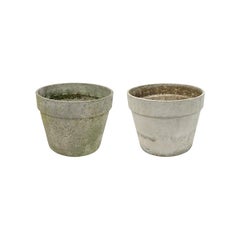

Sold
H 11.82 in Dm 12.6 in
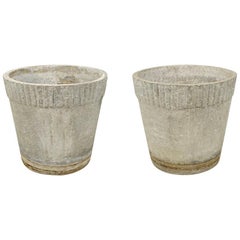
Pair of Planters in Flower Pot Shape with Ribbed Rims by Willy Guhl for Eternit
By Willy Guhl
Located in Doornspijk, NL
Pair of planters designed by famous Swiss artist, designer and architect Willy Guhl. The planters
Concrete

Sold
H 11.82 in Dm 12.6 in
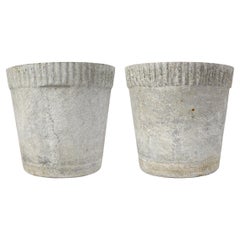
Pair of Planters in Flower Pot Shape with Ribbed Rims by Willy Guhl for Eternit
By Willy Guhl
Located in Doornspijk, NL
Pair of planters designed by famous Swiss artist, designer and architect Willy Guhl. The planters
Concrete

Sold
H 11.82 in Dm 12.6 in
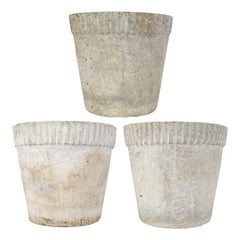
Pair of Planters in Flower Pot Shape with Ribbed Rims by Willy Guhl for Eternit
By Willy Guhl
Located in Doornspijk, NL
Pair of planters designed by famous Swiss artist, designer and architect Willy Guhl. The planters
Concrete

Sold
H 11.42 in Dm 12.6 in
Set of 2 Planters in Flower Pot Shape with Ribbed Rims by Willy Guhl for Eternit
By Willy Guhl
Located in Doornspijk, NL
Pair of planters designed by famous Swiss artist, designer and architect Willy Guhl. The planters
Concrete

Sold
H 9.85 in Dm 10.63 in
Set of 3 Planters in Flower Pot Shape with Ribbed Rims by Willy Guhl for Eternit
By Willy Guhl
Located in Doornspijk, NL
Set of 3 of planters designed by famous Swiss artist, designer and architect Willy Guhl. The
Concrete
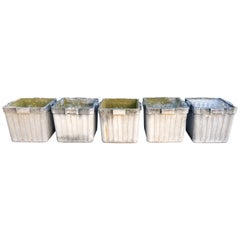

Large Ribbed Eternit Planter Designed by Willy Guhl
By Willy Guhl, Eternit
Located in Woodbury, CT
These ribbed planters with integral handles on two sides were designed by the iconic Willy Guhl and
Other
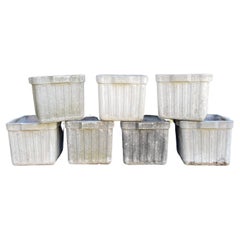
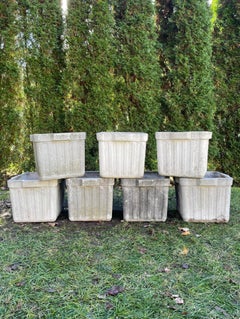
Medium-Sized Square Ribbed Planters Designed by Willy Guhl
By Willy Guhl, Eternit
Located in Woodbury, CT
Designed by the iconic Willy Guhl in the 1960s and made of strong and lightweight fiber cement by
Other
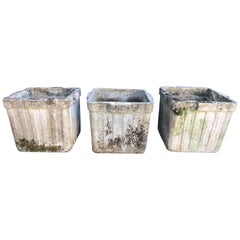

Sold
H 14.5 in W 16.63 in D 16.63 in
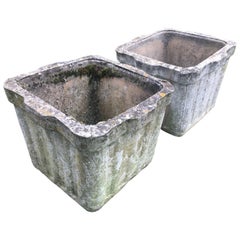
Three Medium-Sized Ribbed Eternit Planters Designed by Willy Guhl
By Willy Guhl, Eternit
Located in Woodbury, CT
These ribbed planters with integral handles on all four sides were designed by the iconic Willy

Sold
H 10.5 in W 12 in D 12 in
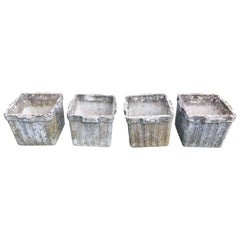
Pair of Small Square Ribbed Planters by Eternit, Attributed to Willy Guhl
By Willy Guhl, Eternit
Located in Woodbury, CT
firm, Eternit, who produced all of Willy Guhl's designs. These planters come in three sizes and this

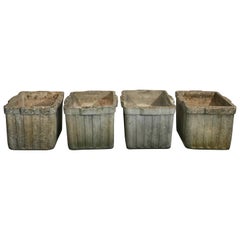
Two Pairs of Square Ribbed Planters by Eternit, Designed by Willy Guhl
By Willy Guhl, Eternit
Located in Woodbury, CT
These planters were originally made by Eternit in three different sizes and these are the medium-sized ones. They sport a fabulous weathered patina with lichen and a bit of moss and ...

Sold
H 14.25 in W 17.25 in D 17.25 in
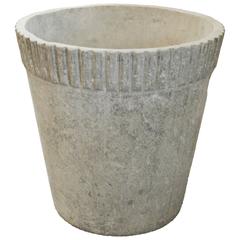
Two Pairs of Square Ribbed Willy Guhl Planters by Eternit with Lovely Patina
By Willy Guhl, Eternit
Located in Woodbury, CT
These ribbed planters with integral handles on two sides were designed by the iconic Willy Guhl and
Other

French Round Ribbed Fiber Cement Planter, in the Style of Willy Guhl
Located in Culver City, CA
French round fiber cement planter with recessed handles, in the style of Willy Guhl.
Cement
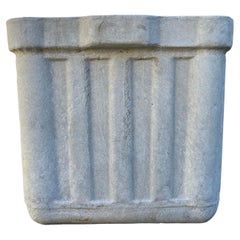

Small Willy Guhl Ribbed Planter
By Eternit, Willy Guhl
Located in Woodbury, CT
Designed by the iconic Willy Guhl in the 1960s and made of strong and lightweight fiber cement by
Other
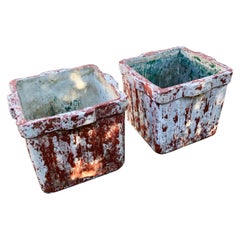

Pair of Medium Ribbed Eternit Planters Designed by Willy Guhl
By Eternit, Willy Guhl
Located in Woodbury, CT
These ribbed planters with integral handles on two sides were designed by the iconic Willy Guhl and
Other
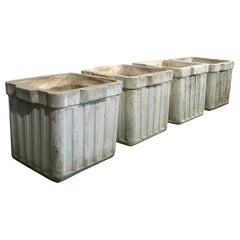

Set of Four Square Ribbed Willy Guhl Planters by Eternit
By Eternit, Willy Guhl
Located in Woodbury, CT
These ribbed planters with integral handles on two sides were designed by the iconic Willy Guhl and
Other
Decades prior to the mass popularity of neo-industrial cement floors and furniture taking shape, there was Willy Guhl. The Swiss creative is considered one of the first “industrial” designers in his home country. He pioneered a rugged, organic style of modern furniture and decor — stylish planters, shapely seating and lots more — that remains widely coveted by many today.
Guhl was born in 1915 in Stein am Rhein and worked as a carpenter before beginning studies at the Zurich School of Applied Arts (known today as the Zurich University of the Arts), where he would go on to teach for nearly 40 years.
While Guhl is well-known for his range of provocative garden elements as well as his patio and outdoor furniture, today’s legion of mid-century modern enthusiasts are likely familiar with the designer’s iconic Loop chair (introduced in 1954). For this sculptural seat and other furnishings, Guhl tended toward industrial materials, which he bent and shaped into organic forms for a striking juxtaposition. Much of his work is crafted from either concrete or Eternit, a mixture of cement and asbestos developed by the Belgian company Etex, which, in the 1950s, commissioned Guhl and his students at the School of Applied Arts to conceive planters in the material. The resulting vessels — some hourglass-shaped, some in the form of handkerchiefs, all suitable for indoors or exteriors — remain some of Guhl’s most collectible pieces.
Guhl’s affiliation with the Swiss “neo-functional” movement centered on the idea of simplifying design without sacrificing form. According to Guhl, his mission was “achieving the most with the minimum of effort.”
In addition to his work as a designer, Guhl left his mark on subsequent creatives through his 39-year tenure at his alma mater, where he was instructor to the likes of Robert Haussmann, Kurt Thut and Bruno Rey. Modern-day shoppers at IKEA owe Guhl a debt of gratitude too. He was an early advocate of flat-pack furniture, championing its ability to make good design more widely accessible.
At its core, though, Guhl’s work was inherently human-centric: “At the center of my efforts, I put people and their living requirements,” he once said. “My products must be useful to people.” Guhl died in 2004 at the age of 89.
Find a range of vintage Willy Guhl furniture and decorative objects on 1stDibs.
Organically shaped, clean-lined and elegantly simple are three terms that well describe vintage mid-century modern furniture. The style, which emerged primarily in the years following World War II, is characterized by pieces that were conceived and made in an energetic, optimistic spirit by creators who believed that good design was an essential part of good living.
ORIGINS OF MID-CENTURY MODERN FURNITURE DESIGN
CHARACTERISTICS OF MID-CENTURY MODERN FURNITURE DESIGN
MID-CENTURY MODERN FURNITURE DESIGNERS TO KNOW
ICONIC MID-CENTURY MODERN FURNITURE DESIGNS
VINTAGE MID-CENTURY MODERN FURNITURE ON 1STDIBS
The mid-century modern era saw leagues of postwar American architects and designers animated by new ideas and new technology. The lean, functionalist International-style architecture of Le Corbusier and Bauhaus eminences Ludwig Mies van der Rohe and Walter Gropius had been promoted in the United States during the 1930s by Philip Johnson and others. New building techniques, such as “post-and-beam” construction, allowed the International-style schemes to be realized on a small scale in open-plan houses with long walls of glass.
Materials developed for wartime use became available for domestic goods and were incorporated into mid-century modern furniture designs. Charles and Ray Eames and Eero Saarinen, who had experimented extensively with molded plywood, eagerly embraced fiberglass for pieces such as the La Chaise and the Womb chair, respectively.
Architect, writer and designer George Nelson created with his team shades for the Bubble lamp using a new translucent polymer skin and, as design director at Herman Miller, recruited the Eameses, Alexander Girard and others for projects at the legendary Michigan furniture manufacturer.
Harry Bertoia and Isamu Noguchi devised chairs and tables built of wire mesh and wire struts. Materials were repurposed too: The Danish-born designer Jens Risom created a line of chairs using surplus parachute straps for webbed seats and backrests.
The Risom lounge chair was among the first pieces of furniture commissioned and produced by celebrated manufacturer Knoll, a chief influencer in the rise of modern design in the United States, thanks to the work of Florence Knoll, the pioneering architect and designer who made the firm a leader in its field. The seating that Knoll created for office spaces — as well as pieces designed by Florence initially for commercial clients — soon became desirable for the home.
As the demand for casual, uncluttered furnishings grew, more mid-century furniture designers caught the spirit.
Classically oriented creators such as Edward Wormley, house designer for Dunbar Inc., offered such pieces as the sinuous Listen to Me chaise; the British expatriate T.H. Robsjohn-Gibbings switched gears, creating items such as the tiered, biomorphic Mesa table. There were Young Turks such as Paul McCobb, who designed holistic groups of sleek, blond wood furniture, and Milo Baughman, who espoused a West Coast aesthetic in minimalist teak dining tables and lushly upholstered chairs and sofas with angular steel frames.
Generations turn over, and mid-century modern remains arguably the most popular style going. As the collection of vintage mid-century modern chairs, dressers, coffee tables and other furniture for the living room, dining room, bedroom and elsewhere on 1stDibs demonstrates, this period saw one of the most delightful and dramatic flowerings of creativity in design history.
Beautiful plants deserve beautiful homes. It’s time to introduce antique and vintage planters and jardinieres to your home’s interiors and outdoor garden area.
The word “jardiniere” has roots in French, but the appeal of these vessels is global. The popularity of jardinieres — ceramic pots intended for cut flowers or plants — quickly gained traction in the United States during the start of the 20th century, when you could find them in some middle- and upper-class American homes. Jardinieres had already been coveted goods overseas for at least a couple of centuries by then, as intricate planters crafted from Chinese porcelain or gilded-bronze versions from Japan could be found in the living rooms of wealthy Europeans.
Today, the love for planters and jardinieres knows no bounds. And whether you consider yourself a proper gardener or merely a doting plant parent, there is likely a use for a planter inside or in the lively outdoor space around your home.
Outside, a pair of marble and terracotta planters or cast-iron urns designed in the neoclassical style can add a stately touch to your landscape design while helping establish boundaries between the areas you’ve created for gardening and entertaining.
Bare corners in your living room or dining room can often be difficult to populate with furnishings that fit just so, and a planter can change that. While it’s possible to get maximal impact from minimalist pottery — an understated mid-century modern planter could deliver on that front — you might be pining for an on-trend planter with pizzazz. Look to an outwardly angular fiberglass design decked out in bright colors to give your blooms a run for their money, while mounted or vintage hanging vessels can serve as the frame for nature’s organic artwork, quite literally taking your gardening skills to the next level.
Browse a broad collection of antique and vintage planters and jardinieres on 1stDibs today.