Rene Vincent Art

French, 1879-1936
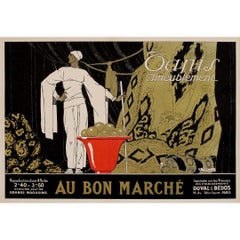
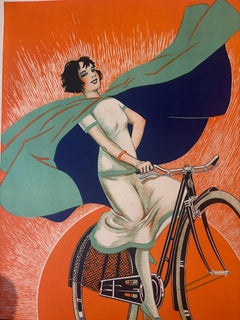
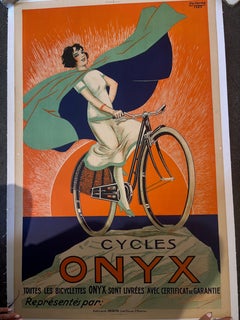
Vincent only got to devote a little time to posters once he was in his forties, after working for many years in various publications--mainly humor and fashion magazines--and decorative design. However, once he made the switch, he produced prolifically posters, even using additional pseudonyms. He preferred sleek automotive posters but also produced a large body of work for other clients. Most notable are the many designs, from about 1920 to 1930, for the Au Bon Marche department store. They combine humor, emotional appeal, and elegance in equal proportions to magnificent ends. He was influential in the Art Deco movement in the period between the two world wars. Rene Vicent was an illustrator for La Vie Parisienne, The Saturday Evening Post, L'Illustartion, and Fantiso; most of his contributions to these magazines were fashion illustrations. He created many advertisements for Bugatti, Peugeot, Michelin, and Shell Oil Company. His most recognizable work is the Porto Ramos Pinto poster.
to
2
1
1
1
1
Overall Width
to
Overall Height
to
4
2
2
3
3
1
3
3
3
3
3
1
1
4
2
1
1
7
10,223
2,785
2,504
1,384
2
2
Artist: Rene Vincent
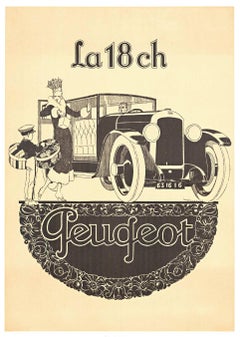
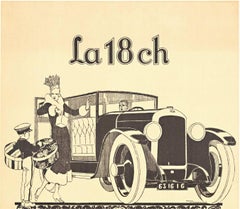
Original "La 18 ch" vintage art deco automobile poster
By Rene Vincent
Located in Spokane, WA
Original vintage poster: La 18 ch Peugeot. Archival linen-backed art deco early antique French automobile poster. Notable artist Rene Vincent. Excellent condition. Black and white lithograph on natural unbleached paper. Ready to frame. This is a full-size poster and not a magazine ad. From our research, it has been almost a decade since the last copy of this poster was available. Rare Rene Vincent automobile poster. Black and white posters are a rarity as far as vintage posters are concerned. The original idea was to catch the attention of passersby in every possible way. Color was an essential tool in advertising when posters were an essential source for name-brand recognition. The absence of color gives these auto posters a touch of class. They can also be compared to old photographs. Either way, you're looking at something special. This one is incredibly cool since it came from the talented artist Rene Vincent. If his name doesn't ring a bell, his poster "Porto Ramos" probably will if you look it up on our site. You will find that he also created automobile posters as early as 1905, which are all extremely rare and hard to find. Don’t let this excellent-condition vintage poster pass you by. Vincent only got to devote a little time to posters once he was in his forties, after working for many years in various publications--mainly humor and fashion magazines--and in decorative design. However, once he made the switch, he produced prolifically posters, even using additional pseudonyms. He preferred sleek automotive posters...
Category

1920s Art Deco Rene Vincent Art

Materials

Lithograph
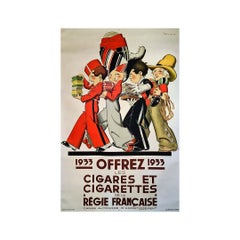
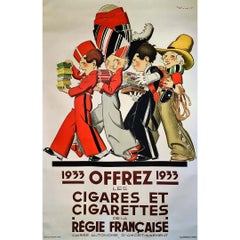
1933 Original advertising poster of Rene Vincent for the cigars and cigarettes
By Rene Vincent
Located in PARIS, FR
Beautiful advertising poster of Rene Vincent for the cigars and cigarettes of the French company. Art Deco - Tobacco - Advertising French Régie Bedos & Cie Paris
Category

1930s Art Deco Rene Vincent Art

Materials

Linen, Paper, Lithograph
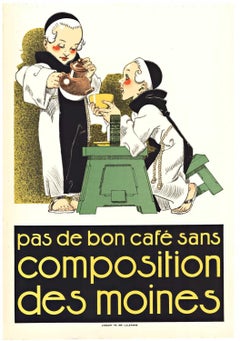
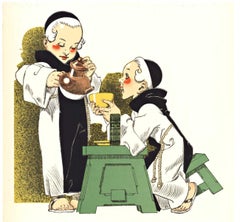
Original 'Pas de Bon Cafe sans Composition des Moines" vintage coffee poster
By Rene Vincent
Located in Spokane, WA
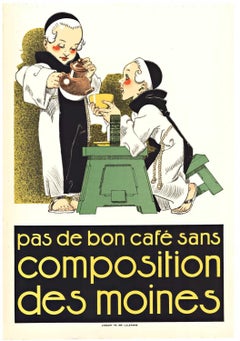
Original COMPOSITION DES MOINES. Smaller format antique poster created by the artist Rene Vincent, This lithograph was created c. 1925. Fine/ Mint condition. Professional aci...
Category

1920s Art Deco Rene Vincent Art

Materials

Lithograph
Circa 1930 original poster by René Vincent - Tapis ameublement Au Bon Marché
By Rene Vincent
Located in PARIS, FR
This circa 1930 original poster by René Vincent was designed to promote Tapis Ameublement at the prestigious Au Bon Marché department store in Paris. Reflecting the refined elegance ...
Category

1930s Rene Vincent Art

Materials

Paper, Lithograph
Related Items
Deutsche Werkbund-Ausstellung (German Workers Union Exhibition Art)
By Peter Behrens
Located in London, GB
Peter Behrens, (German 1868-1940), Deutsche Werkbund-Ausstellung, 1914, Deutsche Werkbund-Ausstellung, Kunst in Handwerk, Industrie und Handel Archit...
Category

1910s Art Deco Rene Vincent Art

Materials

Paper, Lithograph
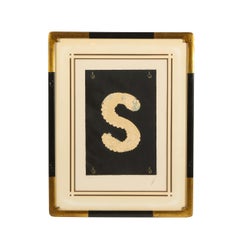
Letter "S" from Alphabet Suite (Signed Erté)
By Erté
Located in New York, NY
From the celebrated Alphabet Suite, this stunning Art Deco lithograph/serigraph was designed by the Russian-born French artist and designer known by the pseudonym Erté, and produced ...
Category

1970s Art Deco Rene Vincent Art

Materials

Lithograph

Marc Chagall - Inspiration - Original Lithograph from "Chagall Lithographe" v. 2
By Marc Chagall
Located in Collonge Bellerive, Geneve, CH
Marc Chagall Original Lithograph from Chagall Lithographe 1957-1962. VOLUME II. 1963 Dimensions: 32 x 24 cm From the unsigned edition of 10000 copies without margins Reference: Mourlot 398 Condition : Excellent Marc Chagall (born in 1887) Marc Chagall was born in Belarus in 1887 and developed an early interest in art. After studying painting, in 1907 he left Russia for Paris, where he lived in an artist colony on the city’s outskirts. Fusing his own personal, dreamlike imagery with hints of the fauvism and cubism popular in France at the time, Chagall created his most lasting work—including I and the Village (1911)—some of which would be featured in the Salon des Indépendants exhibitions. After returning to Vitebsk for a visit in 1914, the outbreak of WWI trapped Chagall in Russia. He returned to France in 1923 but was forced to flee the country and Nazi persecution during WWII. Finding asylum in the U.S., Chagall became involved in set and costume design before returning to France in 1948. In his later years, he experimented with new art forms and was commissioned to produce numerous large-scale works. Chagall died in St.-Paul-de-Vence in 1985. The Village Marc Chagall was born in a small Hassidic community on the outskirts of Vitebsk, Belarus, on July 7, 1887. His father was a fishmonger, and his mother ran a small sundries shop in the village. As a child, Chagall attended the Jewish elementary school, where he studied Hebrew and the Bible, before later attending the Russian public school. He began to learn the fundamentals of drawing during this time, but perhaps more importantly, he absorbed the world around him, storing away the imagery and themes that would feature largely in most of his later work. At age 19 Chagall enrolled at a private, all-Jewish art school and began his formal education in painting, studying briefly with portrait artist Yehuda Pen. However, he left the school after several months, moving to St. Petersburg in 1907 to study at the Imperial Society for the Protection of Fine Arts. The following year, he enrolled at the Svanseva School, studying with set designer Léon Bakst, whose work had been featured in Sergei Diaghilev's Ballets Russes. This early experience would prove important to Chagall’s later career as well. Despite this formal instruction, and the widespread popularity of realism in Russia at the time, Chagall was already establishing his own personal style, which featured a more dreamlike unreality and the people, places and imagery that were close to his heart. Some examples from this period are his Window Vitebsk (1908) and My Fianceé with Black Gloves (1909), which pictured Bella Rosenfeld, to whom he had recently become engaged. The Beehive Despite his romance with Bella, in 1911 an allowance from Russian parliament member and art patron Maxim Binaver enabled Chagall to move to Paris, France. After settling briefly in the Montparnasse neighborhood, Chagall moved further afield to an artist colony known as La Ruche (“The Beehive”), where he began to work side by side with abstract painters such as Amedeo Modigliani and Fernand Léger as well as the avant-garde poet Guillaume Apollinaire. At their urging, and under the influence of the wildly popular fauvism and cubism, Chagall lightened his palette and pushed his style ever further from reality. I and the Village (1911) and Homage to Apollinaire (1912) are among his early Parisian works, widely considered to be his most successful and representative period. Though his work stood stylistically apart from his cubist contemporaries, from 1912 to 1914 Chagall exhibited several paintings at the annual Salon des Indépendants exhibition, where works by the likes of Juan Gris, Marcel Duchamp and Robert Delaunay were causing a stir in the Paris art world. Chagall’s popularity began to spread beyond La Ruche, and in May 1914 he traveled to Berlin to help organize his first solo exhibition, at Der Sturm Gallery. Chagall remained in the city until the highly acclaimed show opened that June. He then returned to Vitebsk, unaware of the fateful events to come. War, Peace and Revolution In August 1914 the outbreak of World War I precluded Chagall’s plans to return to Paris. The conflict did little to stem the flow of his creative output, however, instead merely giving him direct access to the childhood scenes so essential to his work, as seen in paintings such as Jew in Green (1914) and Over Vitebsk (1914). His paintings from this period also occasionally featured images of the war’s impact on the region, as with Wounded Soldier (1914) and Marching (1915). But despite the hardships of life during wartime, this would also prove to be a joyful period for Chagall. In July 1915 he married Bella, and she gave birth to a daughter, Ida, the following year. Their appearance in works such as Birthday (1915), Bella and Ida by the Window (1917) and several of his “Lovers” paintings give a glimpse of the island of domestic bliss that was Chagall’s amidst the chaos. To avoid military service and stay with his new family, Chagall took a position as a clerk in the Ministry of War Economy in St. Petersburg. While there he began work on his autobiography and also immersed himself in the local art scene, befriending novelist Boris Pasternak, among others. He also exhibited his work in the city and soon gained considerable recognition. That notoriety would prove important in the aftermath of the 1917 Russian Revolution when he was appointed as the Commissar of Fine Arts in Vitebsk. In his new post, Chagall undertook various projects in the region, including the 1919 founding of the Academy of the Arts. Despite these endeavors, differences among his colleagues eventually disillusioned Chagall. In 1920 he relinquished his position and moved his family to Moscow, the post-revolution capital of Russia. In Moscow, Chagall was soon commissioned to create sets and costumes for various productions at the Moscow State Yiddish Theater...
Category

1960s Surrealist Rene Vincent Art

Materials

Lithograph

Original Loterie Nationale (Frog) vintage French poster
Located in Spokane, WA
Original Loterie Nationale vintage French poster. Mercredi prochain forte chute de millions. Loterie Nationale. (Next Wednesday, a big drop ...
Category

1960s Art Deco Rene Vincent Art

Materials

Lithograph

L'atelier de Cannes Lithograph, Modern Style, Plate Signed, 1958
By Pablo Picasso
Located in OPOLE, PL
Pablo Picasso (1881-1973) - L'atelier de Cannes Lithograph from 1958. On Arches paper. Dimensions of work: 44.8 x 33.4 cm. Plate signed. It's an enhanced version of the first st...
Category

1950s Modern Rene Vincent Art

Materials

Lithograph

Marching on a Butterbur Leaf
By Yoshitomo Nara
Located in Washington , DC, DC
Category

21st Century and Contemporary Contemporary Rene Vincent Art

Materials

Lithograph, Linen, Paper

Marching on a Butterbur Leaf
$1,480 Sale Price
73% Off
H 24 in W 18 in
Insectes.
By Eugene Alain Seguy
Located in London, London
SEGUY, E[ugene] A[lain]. Insectes. Paris, Du Chartre et van Buggenhoudt [1924] Each print is produced entirely by hand using a unique printing process called pochoir, which was p...
Category

1920s Art Deco Rene Vincent Art

Materials

Paper, Lithograph

Insectes.
Insectes.
$2,047
H 22.84 in W 17.52 in
DeVilbiss Purfume Art Deco Poster by George Petty for the A.C. Schultz Company
Located in New York, NY
This beautiful Art Deco poster was realized by the esteemed American Artist George Petty for the A.C. Schultz Company in 1926. The work is an advertisement for DeVilbiss Perfume, which depicts a "Petty Girl" (as they came to be known) in the center of the composition floating in a pentagonal black color block. With short cropped silvery white hair and red lipstick, the female figure in center (suggestive of a stylized flapper) squeezes the atomizer of her perfume bottle misting herself in fragrance. Skyscraper style geometric forms suggesting elaborately faceted gemstones- in hues of rose, lavender, orange sapphire and yellow diamond- explode around her, suggesting the stage design for the set of the iconic film "Metropolis". The top of the composition features a bronze color block reading "DeVilbiss Perfume sprays" and in scrolling Deco lettering text reads “A drop of perfume bursting into myriad atoms of fragrance makes the use of perfume an added delight” near the bottom of the piece. Additionally, there is a solid black color block with crystalline black forms emanating outwards at the base of the composition, as well as a geometric abstract form on the right side of the piece imbuing it with a distinctly modernist inflection. With its quintessentially Art Deco sensibility, this piece is sure to delight discerning collectors of the period as well as those with a distinct appreciation for unusual (and stunning) fine art pieces. its vibrant palate and clean modernist lines make this piece a winning addition to any style of interior from classic Deco to contemporary. The piece comes presented in a custom gallery frame and is in excellent vintage condition. George Petty was an American illustrator known for his series of pin-ups known as "Petty Girls" which he created for Esquire magazine. The Petty Girl were coquettish women whose legs were elongated to create idealized female forms. They were featured on magazine centerfolds, billboards, and calendars for companies such as Ridgid Tools. Born George Brown Petty IV on April 27, 1894 in Abbeville, LA, Petty received his formal training at the School of the Art Institute of Chicago under Ruth Van Sickle Ford...
Category

1920s Art Deco Rene Vincent Art

Materials

Lithograph

C F S I, Signed Lithograph, Coney Island, Comic Character Figures
By Marie Roberts
Located in Union City, NJ
C F S I is an original hand drawn lithograph by the New York woman artist Marie Roberts printed using hand lithography techniques on archival Arches paper 100% acid free. C F S I portrays a Coney Island Sideshow Performance with several onlookers standing by the stage watching the show. C F S I is a skillfully expressed comic character figure drawing printed in black ink shaded with colored crayon line textures in shades of red, yellow and blue. C F S I is a very fine impression exemplifying the magic and artistic mastery of hand crafted lithography with its nuanced tusche brush strokes and pencil crayon line textures and shading. Print size - 29.5 x 21.25 in, unframed, excellent condition, hand signed in pencil by Marie Roberts Image size - 26.25 x 18.25 in Year published - 1995 Edition size - 25 Marie Roberts, a Coney Island native is best known for her banners for the Coney Island Circus Sideshow...
Category

1990s Contemporary Rene Vincent Art

Materials

Lithograph

Untitled (Reclining nude, face down)
Located in Fairlawn, OH
Untitled (Reclining nude, face down) Lithograph, 1944 Signed and dated lower right in pencil Image size: 8 13/16 x 11 7/8 inches Sheet Size: 11 1/8 x 18 3/4 inches Condition: Aging ...
Category

1940s Art Deco Rene Vincent Art

Materials

Lithograph

P. ROQUE, poster for the International Exhibition of Decorative Arts
Located in Paris, FR
- Lithographic poster for the International Exhibition of Decorative Arts, 1925. - Printed by Edmond Bernard, Paris. Dimensions H : 121,2 cm L : 80,4 cm/H: 47.72 in W: 31.65 in
Category

1920s Art Deco Rene Vincent Art

Materials

Lithograph

Marc Chagall - Original Lithograph
By Marc Chagall
Located in Collonge Bellerive, Geneve, CH
Marc Chagall Original Lithograph 1963 Dimensions: 32 x 24 cm Reference: Chagall Lithographe 1957-1962. VOLUME II. Condition : Excellent Marc Chagall (born in 1887) Marc Chagall was born in Belarus in 1887 and developed an early interest in art. After studying painting, in 1907 he left Russia for Paris, where he lived in an artist colony on the city’s outskirts. Fusing his own personal, dreamlike imagery with hints of the fauvism and cubism popular in France at the time, Chagall created his most lasting work—including I and the Village (1911)—some of which would be featured in the Salon des Indépendants exhibitions. After returning to Vitebsk for a visit in 1914, the outbreak of WWI trapped Chagall in Russia. He returned to France in 1923 but was forced to flee the country and Nazi persecution during WWII. Finding asylum in the U.S., Chagall became involved in set and costume design before returning to France in 1948. In his later years, he experimented with new art forms and was commissioned to produce numerous large-scale works. Chagall died in St.-Paul-de-Vence in 1985. The Village Marc Chagall was born in a small Hassidic community on the outskirts of Vitebsk, Belarus, on July 7, 1887. His father was a fishmonger, and his mother ran a small sundries shop in the village. As a child, Chagall attended the Jewish elementary school, where he studied Hebrew and the Bible, before later attending the Russian public school. He began to learn the fundamentals of drawing during this time, but perhaps more importantly, he absorbed the world around him, storing away the imagery and themes that would feature largely in most of his later work. At age 19 Chagall enrolled at a private, all-Jewish art school and began his formal education in painting, studying briefly with portrait artist Yehuda Pen. However, he left the school after several months, moving to St. Petersburg in 1907 to study at the Imperial Society for the Protection of Fine Arts. The following year, he enrolled at the Svanseva School, studying with set designer Léon Bakst, whose work had been featured in Sergei Diaghilev's Ballets Russes. This early experience would prove important to Chagall’s later career as well. Despite this formal instruction, and the widespread popularity of realism in Russia at the time, Chagall was already establishing his own personal style, which featured a more dreamlike unreality and the people, places and imagery that were close to his heart. Some examples from this period are his Window Vitebsk (1908) and My Fianceé with Black Gloves (1909), which pictured Bella Rosenfeld, to whom he had recently become engaged. The Beehive Despite his romance with Bella, in 1911 an allowance from Russian parliament member and art patron Maxim Binaver enabled Chagall to move to Paris, France. After settling briefly in the Montparnasse neighborhood, Chagall moved further afield to an artist colony known as La Ruche (“The Beehive”), where he began to work side by side with abstract painters such as Amedeo Modigliani and Fernand Léger as well as the avant-garde poet Guillaume Apollinaire. At their urging, and under the influence of the wildly popular fauvism and cubism, Chagall lightened his palette and pushed his style ever further from reality. I and the Village (1911) and Homage to Apollinaire (1912) are among his early Parisian works, widely considered to be his most successful and representative period. Though his work stood stylistically apart from his cubist contemporaries, from 1912 to 1914 Chagall exhibited several paintings at the annual Salon des Indépendants exhibition, where works by the likes of Juan Gris, Marcel Duchamp and Robert Delaunay were causing a stir in the Paris art world. Chagall’s popularity began to spread beyond La Ruche, and in May 1914 he traveled to Berlin to help organize his first solo exhibition, at Der Sturm Gallery. Chagall remained in the city until the highly acclaimed show opened that June. He then returned to Vitebsk, unaware of the fateful events to come. War, Peace and Revolution In August 1914 the outbreak of World War I precluded Chagall’s plans to return to Paris. The conflict did little to stem the flow of his creative output, however, instead merely giving him direct access to the childhood scenes so essential to his work, as seen in paintings such as Jew in Green (1914) and Over Vitebsk (1914). His paintings from this period also occasionally featured images of the war’s impact on the region, as with Wounded Soldier (1914) and Marching (1915). But despite the hardships of life during wartime, this would also prove to be a joyful period for Chagall. In July 1915 he married Bella, and she gave birth to a daughter, Ida, the following year. Their appearance in works such as Birthday (1915), Bella and Ida by the Window (1917) and several of his “Lovers” paintings give a glimpse of the island of domestic bliss that was Chagall’s amidst the chaos. To avoid military service and stay with his new family, Chagall took a position as a clerk in the Ministry of War Economy in St. Petersburg. While there he began work on his autobiography and also immersed himself in the local art scene, befriending novelist Boris Pasternak, among others. He also exhibited his work in the city and soon gained considerable recognition. That notoriety would prove important in the aftermath of the 1917 Russian Revolution when he was appointed as the Commissar of Fine Arts in Vitebsk. In his new post, Chagall undertook various projects in the region, including the 1919 founding of the Academy of the Arts. Despite these endeavors, differences among his colleagues eventually disillusioned Chagall. In 1920 he relinquished his position and moved his family to Moscow, the post-revolution capital of Russia. In Moscow, Chagall was soon commissioned to create sets and costumes for various productions at the Moscow State Yiddish Theater...
Category

1960s Surrealist Rene Vincent Art

Materials

Lithograph

Marc Chagall - Original Lithograph
$1,479
H 9.45 in W 12.6 in D 0.04 in
Previously Available Items
Original Porto Ramos Vintage Poster by Rene Vincent C1920
By Rene Vincent
Located in Boca Raton, FL
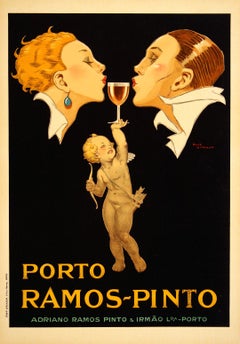
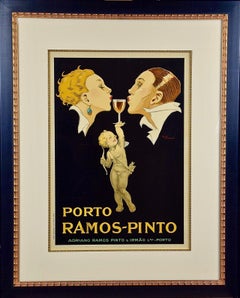
This iconic poster of the Ramos-Pinto Company illustrated by Rene Vincent advertises the famous port wine featuring two lovers in profile leaning into one another with only a famous glass of the irresistible Porto Ramos between their lips. An anxious cupid awaits below with bow in hand, using the delicious drink as his arrow. This image is still very much associated with the company to the present date. René Vincent (1879-1936) was a French illustrator who was prevalent in the 1920s-1930s. He worked in an Art Deco style and became famous for his poster designs. Vincent had a design style of distorting perspective and dynamism. He was influential in the Art Deco movement in the period between the two world wars. Vincent studied at the Ècole des Beaux-Arts, at first he studied architecture, then changed to graphic arts and ceramics courses. He was also an illustrator for La Vie Parisienne, The Saturday Evening Post, L’Illustration and Fantiso, with most of his contributions to these magazines being fashion illustrations. He created many advertisements for Bugatti, Peugeot, Michelin, and Shell Oil Company. However, his most recognizable work is the circa 1920 Porto Ramos Pinto...
Category

1920s Rene Vincent Art

Materials

Lithograph

Original 'Pas de Bon Cafe sans Composition des Moines" vintage coffee poster
By Rene Vincent
Located in Spokane, WA
Original COMPOSITION DES MOINES. smaller format antique poster created by the artist Rene Vincent, This lithograph was created c. 1925. Fine/ Mint co...
Category

1920s Art Deco Rene Vincent Art

Materials

Lithograph

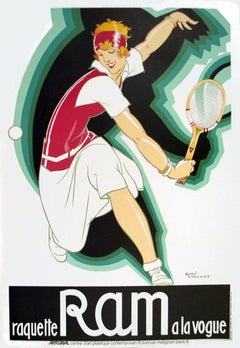
1980 Rene Vincent 'Raquette Ram' Vintage Green, Black, Yellow, Multicolor France
By Rene Vincent
Located in Brooklyn, NY
Paper Size: 39.25 x 27.25 inches ( 99.695 x 69.215 cm ) Image Size: 32.25 x 25 inches ( 81.915 x 63.5 cm ) Framed: No Condition: A: Mint Additional Details: Vintage art-deco il...
Category

1980s Rene Vincent Art

Materials

Lithograph

Framed Colorful French Port Wine Advertising Poster: Porto Ramos by Rene Vincent
By Rene Vincent
Located in Alamo, CA
This framed striking iconic French advertising poster entitled "Porto Ramos-Pinto" is by the famous graphic artist Rene Vincent. It was published in Paris ...
Category

1920s Art Deco Rene Vincent Art

Materials

Lithograph

Rene Vincent art for sale on 1stDibs.

Find a wide variety of authentic Rene Vincent art available for sale on 1stDibs. You can also browse by medium to find art by Rene Vincent in paper, lithograph, fabric and more. Much of the original work by this artist or collective was created during the 20th century and is mostly associated with the Art Deco style. Not every interior allows for large Rene Vincent art, so small editions measuring 15 inches across are available. Customers who are interested in this artist might also find the work of Roger de Valerio, Charles Turzak, and Maurice Dufrêne. Rene Vincent art prices can differ depending upon medium, time period and other attributes. On 1stDibs, the price for these items starts at $649 and tops out at $5,489, while the average work can sell for $1,232.

Artists Similar to Rene Vincent