Walter DuBois Richards Art

American, 1907-2006
Walter DuBois Richards graduated from the Cleveland School of Art and moved to New York in 1936, where he created illustrations for Madison Avenue advertising accounts and national publications. A gifted draftsman, watercolorist, and lithographer, he has traveled the world on assignment for Life magazine, the U.S. Air Force, and many American corporations. His paintings have been exhibited at the Metropolitan Museum of Art and are included in the permanent collections of the Whitney Museum of American Art, the New Britain Museum, and the Pentagon. His 37 U.S. stamps include a series honoring 16 national architectural treasures.
to
2
1
Overall Width
to
Overall Height
to
3
1
2
2
1
1
1
1
2
1
3
10,297
2,810
2,500
1,407
1
1
3
Artist: Walter DuBois Richards
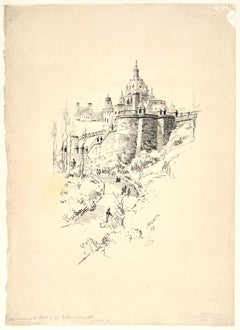
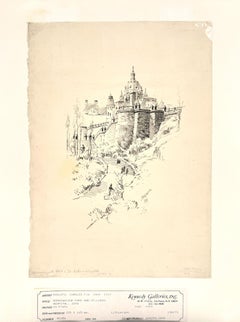
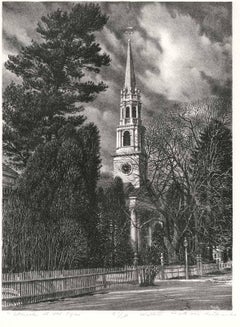
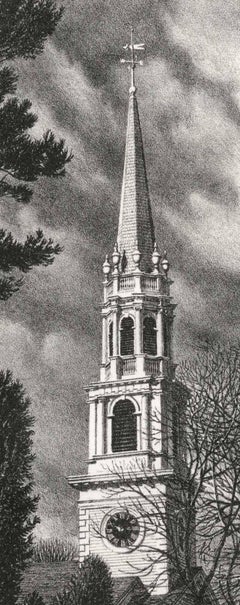
Congregational Church, Old Lyme, CT. (quintessential New England landmark)

Congregational Church, Old Lyme, CT. (quintessential New England landmark)

By Walter DuBois Richards

Located in New Orleans, LA

The Old Lyme Congregational Church located on Ferry Road, a quintessentially New England landmark, was captured by Walter DuBois Richards. The church was a favorite subject of Old Ly...

Category

Late 20th Century American Modern Walter DuBois Richards Art

Materials

Lithograph

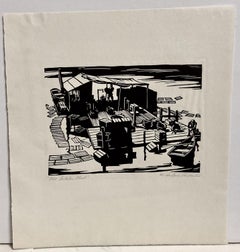
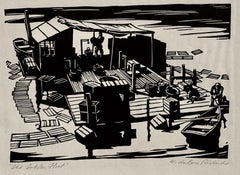
Walter DuBois Richards, The Lobster Float

Walter DuBois Richards, The Lobster Float

By Walter DuBois Richards

Located in New York, NY

Ohio-born Walter DuBois Richards (1907-2006) was educated at the Cleveland School of Art. He re-located to New York around 1933 where he had a successful career as a commercial artis...

Category

1930s American Modern Walter DuBois Richards Art

Materials

Woodcut

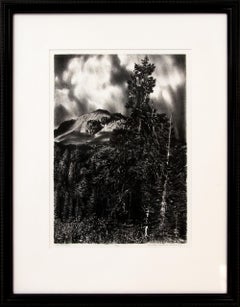
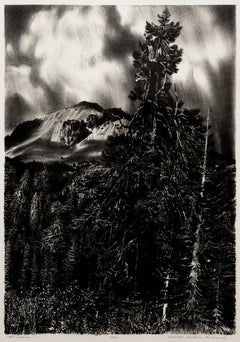
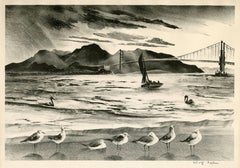
Walter DuBois Richards Mt Lassen Landscape American Realist Lithograph Print

Walter DuBois Richards Mt Lassen Landscape American Realist Lithograph Print

By Walter DuBois Richards

Located in Denver, CO

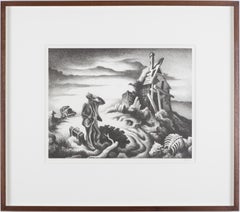
This dramatic Mt Lassen landscape lithograph print by Walter DuBois Richards captures the powerful scenery of Northern California’s volcanic Cascade Range. Rendered in bold black-and...

Category

Mid-20th Century American Realist Walter DuBois Richards Art

Materials

Lithograph

Related Items
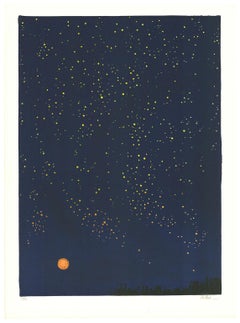
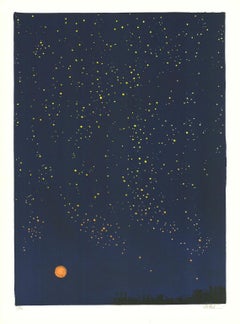
Constellations
Constellations

Richard FlorsheimConstellations, 1973

$365

H 26 in W 19.5 in D 0.98 in

Constellations

By Richard Florsheim

Located in New York, NY

Richard Florsheim created this color lithograph entitled “Constellations” in 1973 in an edition of 60 pieces. This impression is signed and inscribed “29/60.” It is in good condition...

Category

Late 20th Century American Modern Walter DuBois Richards Art

Materials

Lithograph

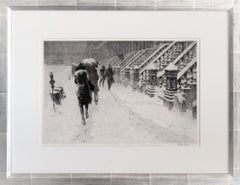
Stoops in Snow
Stoops in Snow

Martin LewisStoops in Snow, 1930

$35,000Sale Price|30% Off

H 18 in W 23.13 in D 2 in

Stoops in Snow

By Martin Lewis

Located in Plano, TX

Stoops in Snow. 1930. Drypoint and sandpaper ground. McCarron catalog 89.state ii. 9 x 14 7/8 (sheet 13 1/4 x 18 7/16 ). Edition 115 recorded impressio...

Category

1930s American Modern Walter DuBois Richards Art

Materials

Drypoint, Etching

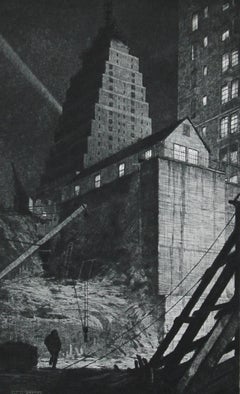
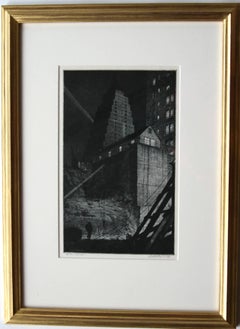
Building a Babylon, Tudor City, NY.

Martin LewisBuilding a Babylon, Tudor City, NY., 1929

$11,000Sale Price|26% Off

H 24.5 in W 20 in D 1 in

Building a Babylon, Tudor City, NY.

By Martin Lewis

Located in Plano, TX

McCarron 76. 12 7/8 x 7 7/8 (sheet 16 5/8 x 12 1/4). 6th trial proof (McCarron records 84 impressions including 4 trial proofs). Illustrated L'Amérique de la Dépression: Artistes En...

Category

Early 20th Century American Modern Walter DuBois Richards Art

Materials

Drypoint, Etching

The Golden Gate
The Golden Gate

The Golden Gate

By Adolf Arthur Dehn

Located in Fairlawn, OH

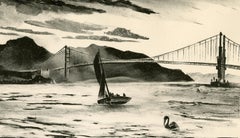
The Golden Gate Lithograph on wove paper watermarked GC, 1940 Signed in pencil by the artist (see photo) Publisher: Associated American Artists Edition: 189, unnumbered The image depicts The Golden Gate Bridge which connects San Francisco and Marin County, California References And Exhibitions: Illustrated: Adams, The Sensuous Life of Adolf Dehn, Fig. 13.17, page 324 Reference: L & O 325 AAA Index 391 Adolf Dehn, American Watercolorist and Printmaker, 1895-1968 Adolf Dehn was an artist who achieved extraordinary artistic heights, but in a very particular artistic sphere—not so much in oil painting as in watercolor and lithography. Long recognized as a master by serious print collectors, he is gradually gaining recognition as a notable and influential figure in the overall history of American art. In the 19th century, with the invention of the rotary press, which made possible enormous print runs, and the development of the popular, mass-market magazines, newspaper and magazine illustration developed into an artistic realm of its own, often surprisingly divorced from the world of museums and art exhibitions, and today remains surprisingly overlooked by most art historians. Dehn in many regards was an outgrowth of this world, although in an unusual way, since as a young man he produced most of his illustrative work not for popular magazines, such as The Saturday Evening Post, but rather for radical journals, such as The Masses or The Liberator, or artistic “little magazines” such as The Dial. This background established the foundation of his outlook, and led later to his unique and distinctive contribution to American graphic art. If there’s a distinctive quality to his work, it was his skill in introducing unusual tonal and textural effects into his work, particularly in printmaking but also in watercolor. Jackson Pollock seems to have been one of many notable artists who were influenced by his techniques. Early Years, 1895-1922 For an artist largely remembered for scenes of Vienna and Paris, Adolf Dehn’s background was a surprising one. Born in Waterville, Minnesota, on November 22, 1895, Dehn was the descendent of farmers who had emigrated from Germany and homesteaded in the region, initially in a one-room log cabin with a dirt floor. Adolf’s father, Arthur Clark Dehn, was a hunter and trapper who took pride that he had no boss but himself, and who had little use for art. Indeed, during Adolf’s boyhood the walls of his bedroom and the space under his bed were filled with the pelts of mink, muskrats and skunks that his father had killed, skinned and stretched on drying boards. It was Adolf’s mother, Emilie Haas Dehn, a faithful member of the German Lutheran Evangelical Church, who encouraged his interest in art, which became apparent early in childhood. Both parents were ardent socialists, and supporters of Eugene Debs. In many ways Dehn’s later artistic achievement was clearly a reaction against the grinding rural poverty of his childhood. After graduating from high school in 1914 at the age of 19—an age not unusual in farming communities at the time, where school attendance was often irregular—Dehn attended the Minneapolis School of Art from 1914 to 1917, whose character followed strongly reflected that of its director, Munich-trained Robert Kohler, an artistic conservative but a social radical. There Dehn joined a group of students who went on to nationally significant careers, including Wanda Gag (later author of best-selling children’s books); John Flanagan (a sculptor notable for his use of direct carving) Harry Gottlieb (a notable social realist and member of the Woodstock Art Colony), Elizabeth Olds (a printmaker and administrator for the WPA), Arnold Blanch (landscape, still-life and figure painter, and member of the Woodstock group), Lucille Lunquist, later Lucille Blanch (also a gifted painter and founder of the Woodstock art colony), and Johan Egilrud (who stayed in Minneapolis and became a journalist and poet). Adolf became particularly close to Wanda Gag (1893-1946), with whom he established an intense but platonic relationship. Two years older than he, Gag was the daughter of a Bohemian artist and decorator, Anton Gag, who had died in 1908. After her husband died, Wanda’s mother, Lizzi Gag, became a helpless invalid, so Wanda was entrusted with the task of raising and financially supporting her six younger siblings. This endowed her with toughness and an independent streak, but nonetheless, when she met Dehn, Wanda was Victorian and conventional in her artistic taste and social values. Dehn was more socially radical, and introduced her to radical ideas about politics and free love, as well as to socialist publications such as The Masses and The Appeal to Reason. Never very interested in oil painting, in Minneapolis Dehn focused on caricature and illustration--often of a humorous or politically radical character. In 1917 both Dehn and Wanda won scholarships to attend the Art Students League, and consequently, in the fall of that year both moved to New York. Dehn’s art education, however, ended in the summer of 1918, shortly after the United States entered World War I, when he was drafted to serve in the U. S. Army. Unwilling to fight, he applied for status as a conscientious objector, but was first imprisoned, then segregated in semi-imprisonment with other Pacifists, until the war ended. The abuse he suffered at this time may well explain his later withdrawal from taking political stands or making art of an overtly political nature. After his release from the army, Dehn returned to New York where he fell under the spell of the radical cartoonist Boardman Robinson and produced his first lithographs. He also finally consummated his sexual relationship with Wanda Gag. The Years in Europe: 1922-1929 In September of 1921, however, he abruptly departed for Europe, arriving in Paris and then moving on to Vienna. There in the winter of 1922 he fell in love with a Russian dancer, Mura Zipperovitch, ending his seven-year relationship with Wanda Gag. He and Mura were married in 1926. It was also in Vienna that he produced his first notable artistic work. Influenced by European artists such as Jules Pascin and Georg Grosz, Dehn began producing drawings of people in cafes, streets, and parks, which while mostly executed in his studio, were based on spontaneous life studies and have an expressive, sometimes almost childishly wandering quality of line. The mixture of sophistication and naiveté in these drawings was new to American audiences, as was the raciness of their subject matter, which often featured pleasure-seekers, prostitutes or scenes of sexual dalliance, presented with a strong element of caricature. Some of these drawings contain an element of social criticism, reminiscent of that found in the work of George Grosz, although Dehn’s work tended to focus on humorous commentary rather than savagely attacking his subjects or making a partisan political statement. Many Americans, including some who had originally been supporters of Dehn such as Boardman Robinson, were shocked by these European drawings, although George Grocz (who became a friend of the artist in this period) admired them, and recognized that Dehn could also bring a new vision to America subject matter. As he told Dehn: “You will do things in America which haven’t been done, which need to be done, which only you can do—as far at least as I know America.” A key factor in Dehn’s artistic evolution at this time was his association with Scofield Thayer...

Category

1940s American Realist Walter DuBois Richards Art
Materials

Lithograph

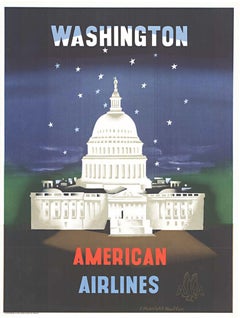
Original Washington D.C. American Airlines vintage travel poster  Midcentury

Original Washington D.C. American Airlines vintage travel poster Midcentury

By Edward McKnight Kauffer

Located in Spokane, WA

Original Washington (D.C.) American Airlines mid-century vintage travel poster. Professional archival linen backed in very fine condition, ready to frame. Featuring one of the ...

Category

1940s American Modern Walter DuBois Richards Art

Materials

Lithograph

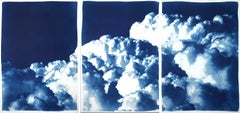
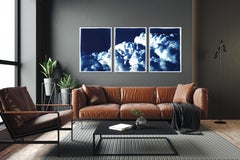
Blue Tones Triptych, Serene Gorgeous Clouds, Handmade Cyanotype Watercolor Paper

Blue Tones Triptych, Serene Gorgeous Clouds, Handmade Cyanotype Watercolor Paper

By Kind of Cyan

Located in Barcelona, ES

This series of cyanotype triptychs showcases the beauty of nature scenes, including stunning beaches and oceans, as well as the intricate textures of w...

Category

2010s American Realist Walter DuBois Richards Art
Materials

Emulsion, Lithograph, Monotype, Handmade Paper

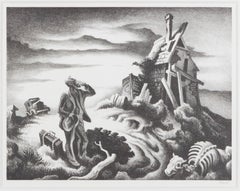
Lithograph of American rural life timeless with architecture monochrome

Lithograph of American rural life timeless with architecture monochrome

By Thomas Hart Benton

Located in London, GB

A man raises his hand to his chin, his neck tilted and face turned to look at a dilapidated farmhouse, barely held together by planks of wood and exposed to the elements. Behind him ...

Category

1930s American Modern Walter DuBois Richards Art

Materials

Lithograph

Coenties Slip
Coenties Slip

Coenties Slip

By Charles Frederick William Mielatz

Located in Middletown, NY

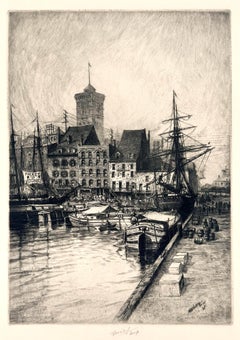
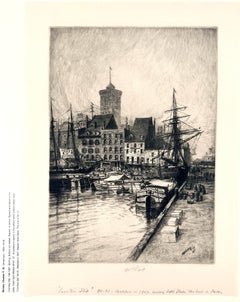
Lower Manhattan and the Seaport as the artist imagined it would have appeared before 1835. New York: 1907. Etching with drypoint on Japon paper, 13 7/8 x 9 3/4 inches (353 x 248 mm...

Category

Late 19th Century American Modern Walter DuBois Richards Art

Materials

Etching, Drypoint, Handmade Paper

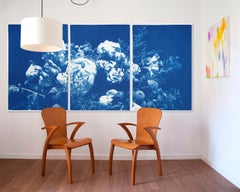
Floral Triptych of Large Floral Bouquet, Botanical Cyanotype in Classic Blue

Floral Triptych of Large Floral Bouquet, Botanical Cyanotype in Classic Blue

By Kind of Cyan

Located in Barcelona, ES

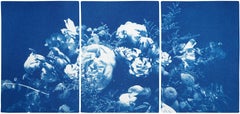
This series of cyanotype triptychs showcases the beauty of nature scenes, including stunning beaches and oceans, as well as the intricate textures of water, forests, and skies. These...

Category

2010s American Realist Walter DuBois Richards Art
Materials

Watercolor, Lithograph, Rag Paper

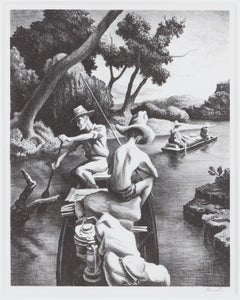
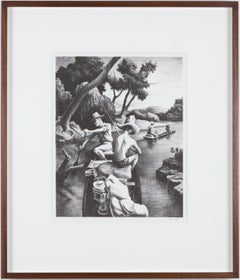
Lithograph of American rural life timeless and romantic monochrome

Lithograph of American rural life timeless and romantic monochrome

By Thomas Hart Benton

Located in London, GB

In this sentimental work from 1939, Benton expresses his admiration for the rural lifestyle of the Midwest. He highlights the connection between man and the land by depicting two fig...

Category

1930s American Modern Walter DuBois Richards Art
Materials

Lithograph

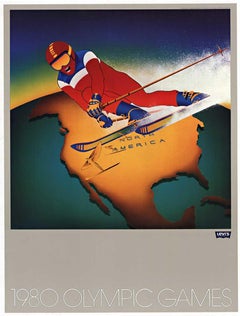
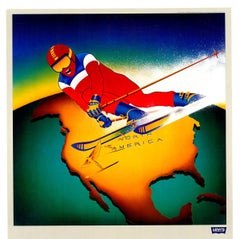
Original Levis's Olympic Games, Skiing North America 1980

Original Levis's Olympic Games, Skiing North America 1980

By Michael Gibson

Located in Spokane, WA

Original Vintage Poster, Moscow 1980, Olympic Games. Levi's Skiing North America. Original first printing of this poster. Official sponsors of the US team for the 1980 Olympic Games. The campaign was titled “Levi’s Olympic Opportunity Sweepstakes," and each poster emphasized the sport associated with one of the six continents: Great artwork depicting a sliding red skier with the globe behind, highlighting the North American continent. This poster is linen-backed and in excellent condition, ready to frame. One of six posters produced by Levi-Strauss for the 1980 Moscow Olympic Games. The posters were created with a sport that was associated with of the six continents. Levi's logo and stylized title text in the margin below the images. Levi's commissioned FCB Advertising in San Francisco to produce a set of six posters and designed by some of the top commercial artists of the 1970s and 1980s. The US pulled out of the Moscow Olympics due to the Soviet Union's invasion of Afghanistan. A small group of these posters was printed. Levi’s abandoned the promotions. The posters were withdrawn following the decision by US President Carter to boycott the Olympics in protest after the USSR invaded Afghanistan in December 1979. The U.S. boycott in 1980 applied to the Moscow SUMMER Olympic Games The artists who created the Levi 1980 Olympic posters...

Category

1970s American Modern Walter DuBois Richards Art
Materials

Offset

Morningside Park and St. Luke's Hospital

Morningside Park and St. Luke's Hospital

By Charles Frederick William Mielatz

Located in Middletown, NY

A bucolic late 19th century image of upper Manhattan. New York: 1898. Lithograph on tissue-thin Japon paper with a deckle edge, 14 1/8 x 10 inches (357 x 252 mm), the full sheet. Tit...

Category

Late 19th Century American Modern Walter DuBois Richards Art
Materials

Lithograph, Handmade Paper

Previously Available Items
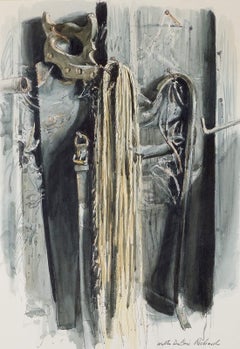
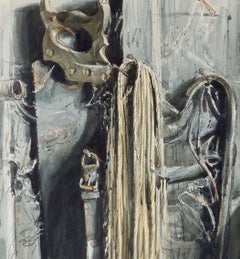
Homer's Things (tools of a working farmer with saw, crowbar, rope and cinch)

Homer's Things (tools of a working farmer with saw, crowbar, rope and cinch)

By Walter DuBois Richards

Located in New Orleans, LA

A beautiful watercolor in pale colors of old tools on a barn wall that tell a story of an American who makes his living off the land. This is a piece of Americana that invokes the n...

Category

1950s American Modern Walter DuBois Richards Art
Materials

Ink, Watercolor

Walter Dubois Richards art for sale on 1stDibs.

Find a wide variety of authentic Walter DuBois Richards art available for sale on 1stDibs. You can also browse by medium to find art by Walter DuBois Richards in lithograph and more. Much of the original work by this artist or collective was created during the 20th century and is mostly associated with the modern style. Not every interior allows for large Walter DuBois Richards art, so small editions measuring 11 inches across are available. Customers who are interested in this artist might also find the work of Warrington Colescott, Gordon Grant, and Armin Landeck. Walter DuBois Richards art prices can differ depending upon medium, time period and other attributes. On 1stDibs, the price for these items starts at $270 and tops out at $1,160, while the average work can sell for $715.

Artists Similar to Walter DuBois Richards