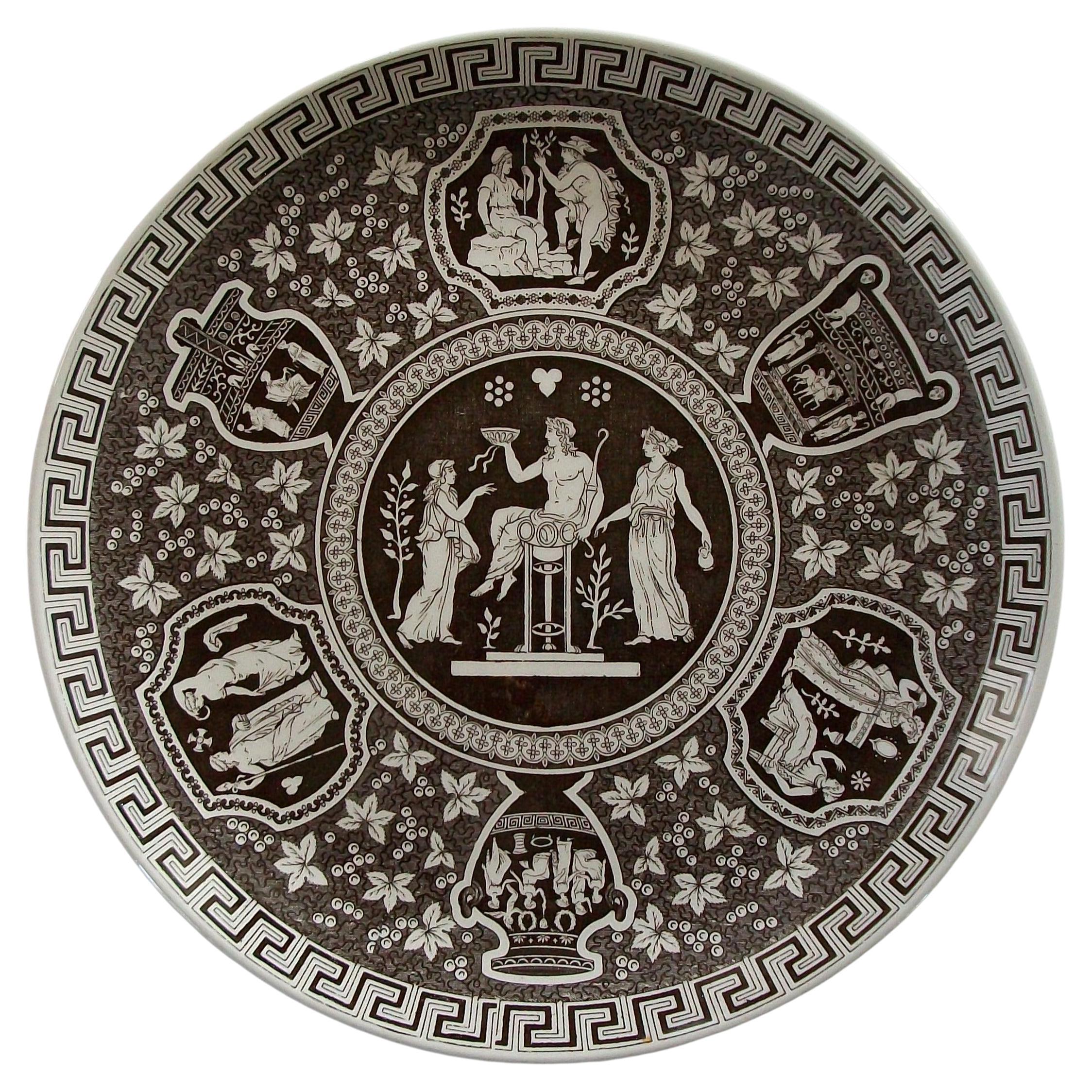
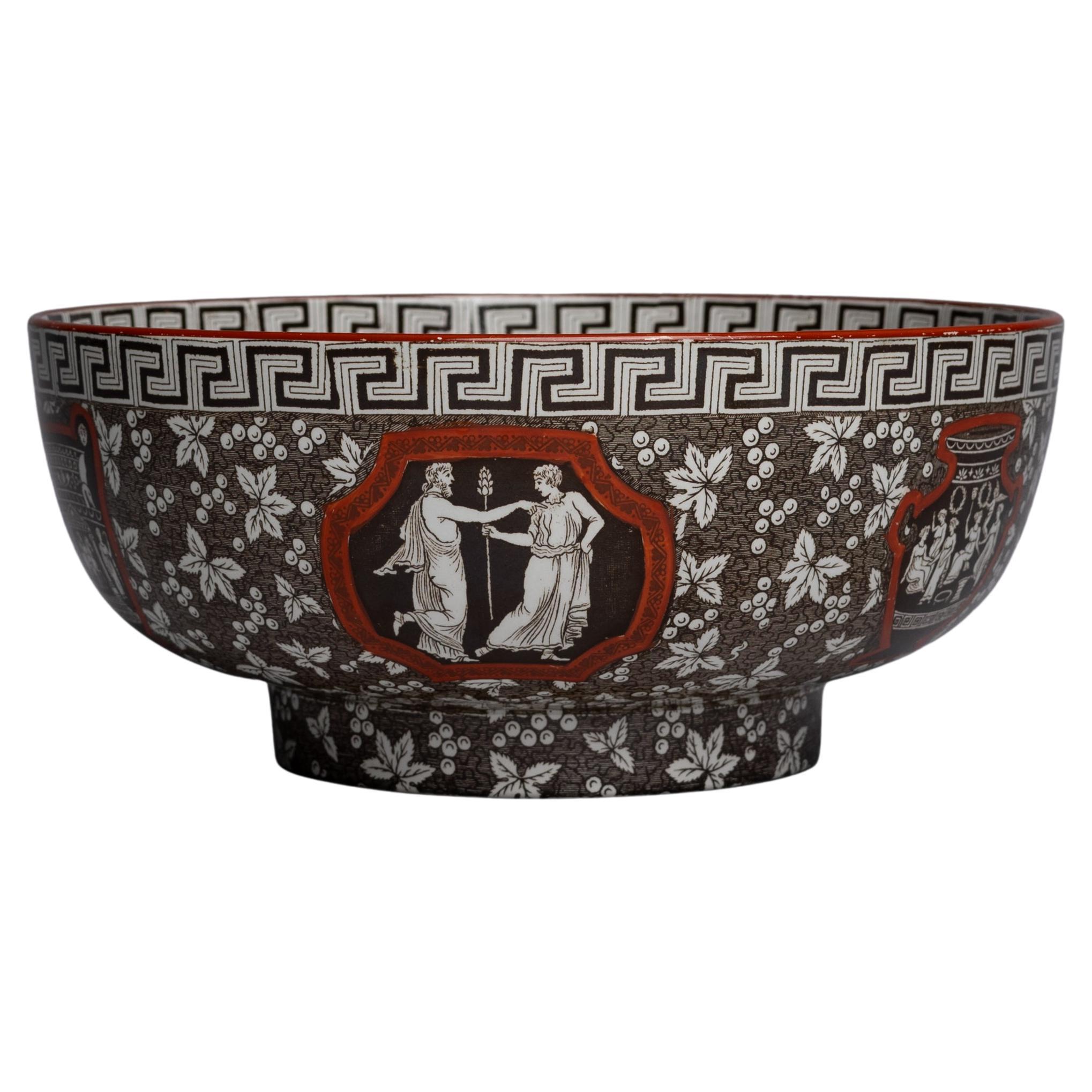
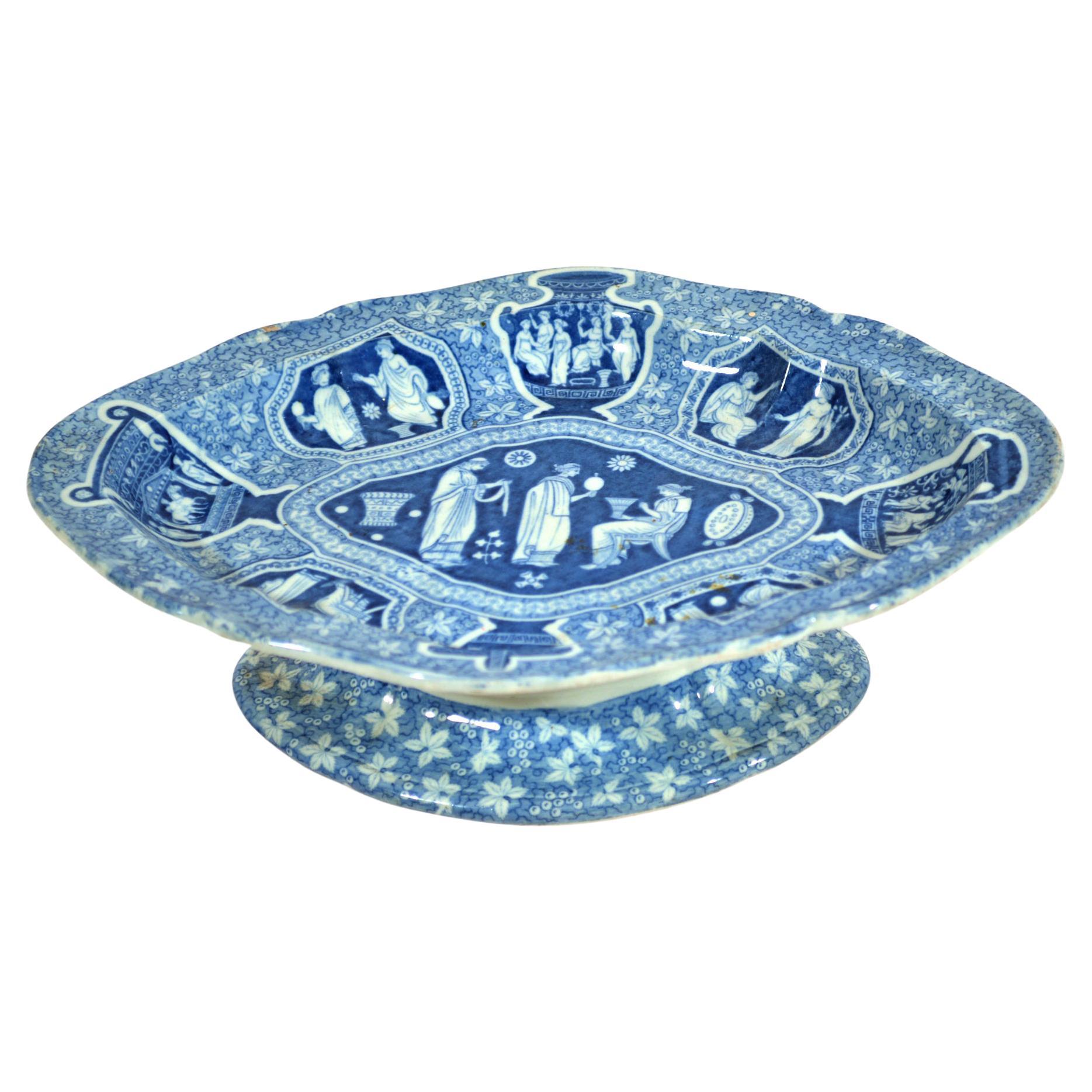
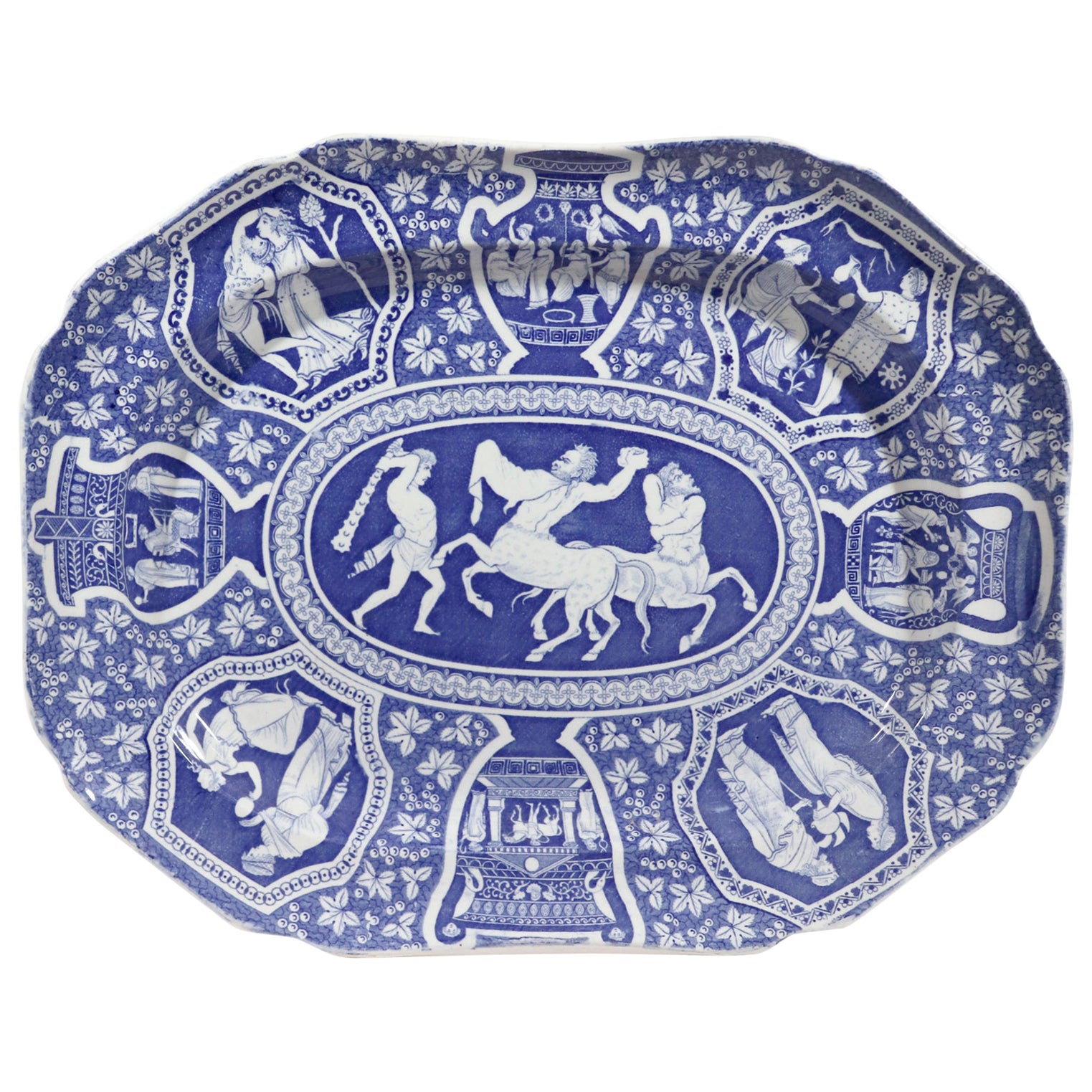
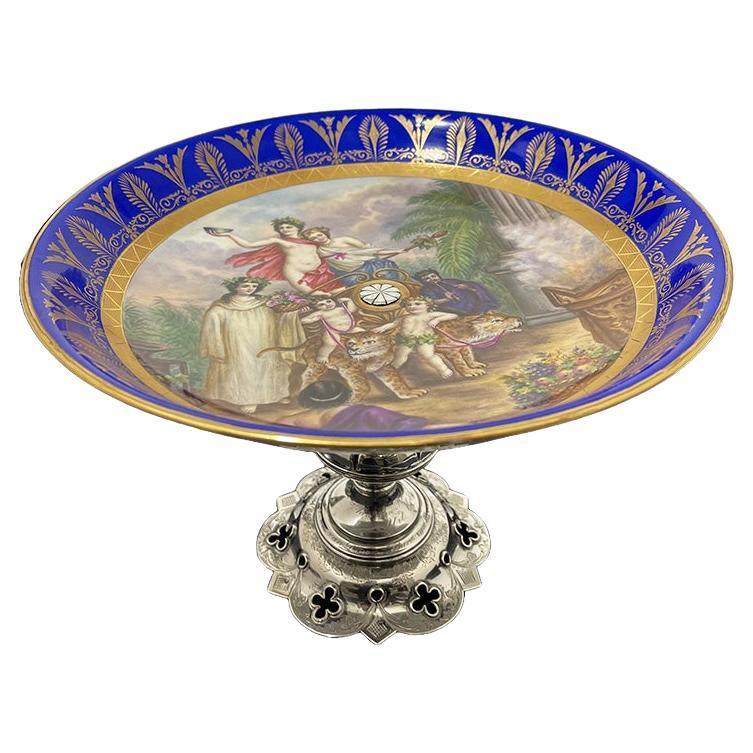
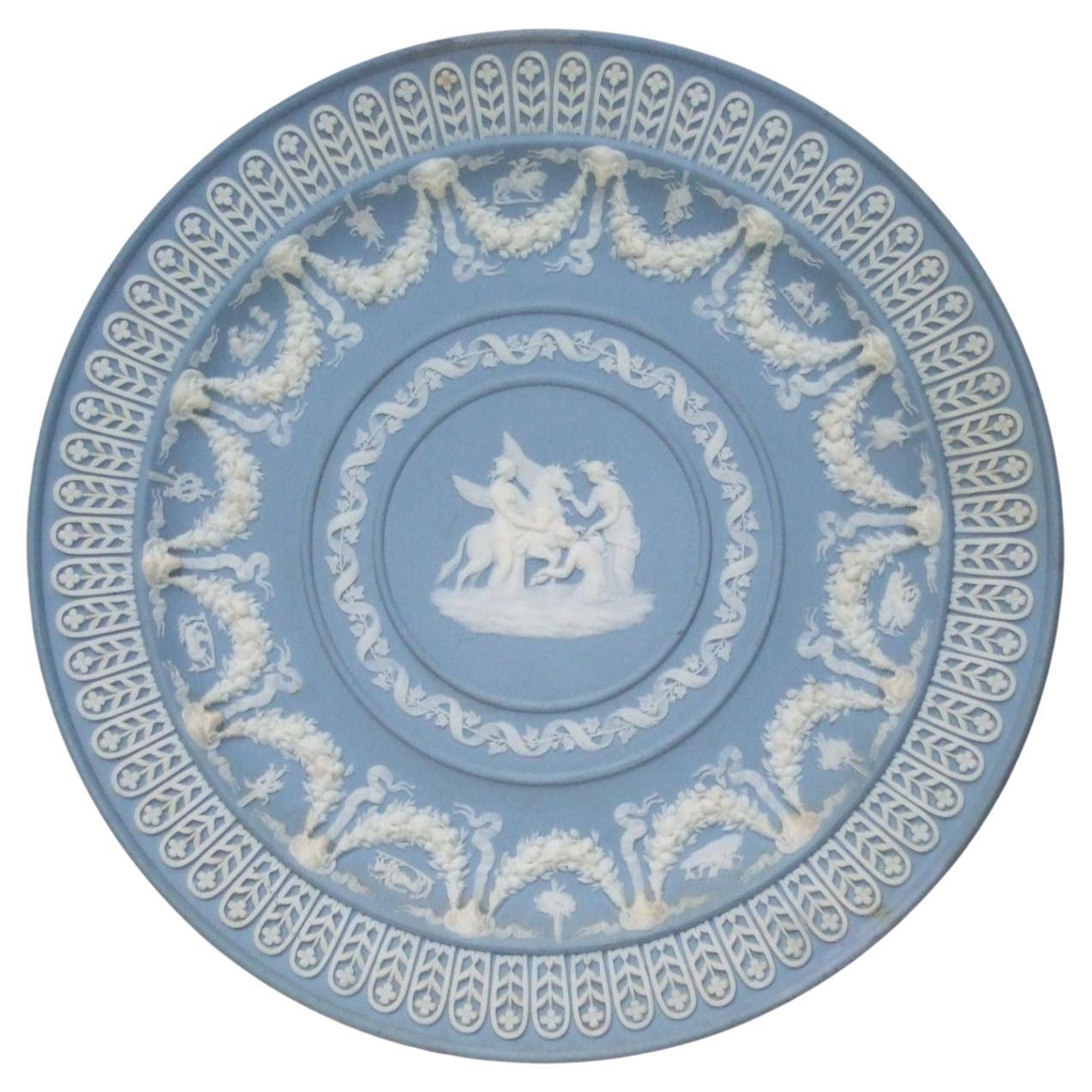
19th Century Copeland Spode Greek Tazza
About the Item
- Creator:Copeland Spode (Manufacturer)
- Dimensions:Height: 4.25 in (10.8 cm)Diameter: 11.25 in (28.58 cm)
- Style:Neoclassical Revival (Of the Period)
- Materials and Techniques:
- Place of Origin:
- Period:
- Date of Manufacture:late 19th century
- Condition:
- Seller Location:Fort Lauderdale, FL
- Reference Number:Seller: 2024.6.21stDibs: LU5643240227852
Copeland Spode
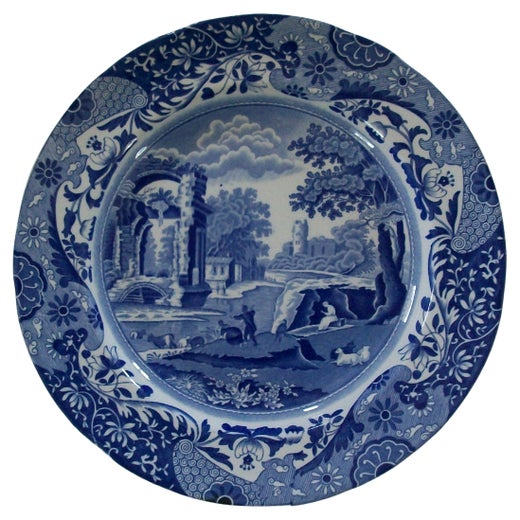
Steeped in British history and tradition, the name Copeland Spode is renowned among porcelain collectors for its fine-quality bone china and earthenware pieces. With its roots in Spode — one of the oldest and most distinguished of the great pottery companies of Staffordshire, the time-honored home of English ceramics — Copeland Spode is known to pottery enthusiasts for some of the most timeless and recognizable patterns produced in 19th and early 20th-century porcelain manufacturing such as Wicker Lane, Chinese Rose and Tower. Collectors regard Copeland-marked pieces as Spode china.
The story of Copeland Spode china began in 1770 when English potter Josiah Spode founded a pottery and homewares company called Spode in Stoke-on-Trent, England. Within fifteen years, the manufacturer became known for its signature blue-on-white palette, and one of the company’s designers developed a specific cobalt hue for their teapots, trays, bowls and more. Spode’s founder was particularly revered for two technical achievements in the firm’s early decades. The first was to develop a standard formula for the making of bone china — a type of porcelain (made with a mixture of bone ash, minerals and clay) that is dazzlingly white and so strong it can be used to create very thin translucent plates and vessels. The other was to perfect the making of transferware.
In 1833, entrepreneurs William Taylor Copeland (the Lord Mayor of London at the time) and Thomas Garrett purchased Spode’s pottery-making company following the death of Josiah Spode III, and the name was changed to Copeland Spode. Then, in 1847, Copeland became the firm’s sole owner and the name changed again, this time to W. T. Copeland and Sons, in 1867 when Copeland retired and his four sons took over the business.
Trading as W. T. Copeland and Sons throughout the mid-to-late 19th century, the company found a formidable competitor in another well-known porcelain maker, Minton. Many of the manufacturer’s Georgian, Rococo and late-Victorian pieces such as its dinner plates, tableware, platters, bowls and baskets were commissioned by wealthy British and European clients and exported for sale throughout the British Empire and to the United States. Several of W. T. Copeland and Sons’ spectacular pieces were exhibited at the Great Exhibition of London in 1851 and the International Exhibitions of London and Paris in 1862 and 1878, respectively.
In addition to their exceptional quality and design, the company’s ceramics were particularly prized for their intricate patterns which featured a variety of colors. For instance, its popular Tower pattern was available in a pale ultramarine blue, a darker Royal Saxon blue, rose pink, brown and green.
The company continued as W. T. Copeland and Sons until 1970 when Spode again became the brand's name. Afterward, during the late 1970s, Spode, Royal Worcester and Palissy came under common ownership. In 2009, the firm was purchased by the Portmeirion Group. However, the Spode and Royal Worcester names continue to flourish as highly popular “traditional English heritage” brands within the Portmeirion company.
Find antique Copeland Spode serveware, decorative objects and more collectibles on 1stDibs.
- ShippingRetrieving quote...Shipping from: Fort Lauderdale, FL
- Return Policy
More From This Seller
View AllAntique Late 19th Century British Neoclassical Revival Pottery
Earthenware, Pearlware
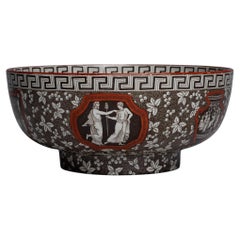
Antique 1870s English Aesthetic Movement Centerpieces
Earthenware

Antique Late 18th Century English Neoclassical Ceramics
Creamware
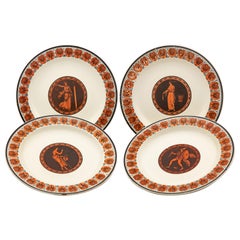
Antique Early 19th Century English Regency Dinner Plates
Ironstone
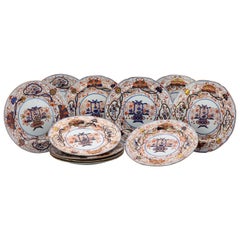
Antique 1770s English Rococo Porcelain
Porcelain
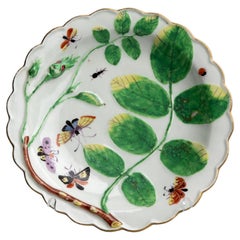
Vintage 1920s English Greek Revival Decorative Bowls
Ceramic, Creamware, Pottery
You May Also Like
Mid-20th Century English Greek Revival Ceramics
Ceramic
Antique Early 19th Century English Regency Pottery
Pearlware, Pottery
Antique Mid-19th Century English Neoclassical Platters and Serveware
Pearlware, Pottery
Antique Mid-19th Century Dutch Serving Pieces
Silver
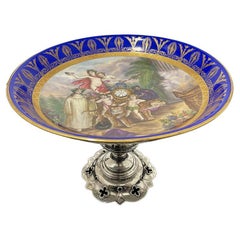
Antique Late 19th Century English Neoclassical Revival Pottery
Stoneware
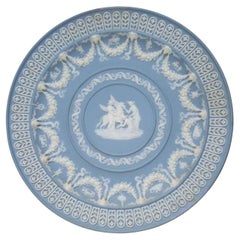
20th Century English Neoclassical Decorative Dishes and Vide-Poche
Stoneware