Tempera Abstract Paintings

35 Results
to
5
16
8
5
2
4
Overall Width
to
Overall Height
to
22
13
7
7
1
1
1
142
25
4
3
3
2
1
1
25
10
1
1
1
1
1,346
1,544
848
554
540
4
1
1
1
1
9
17
26
9
Style: Modern
Medium: Tempera
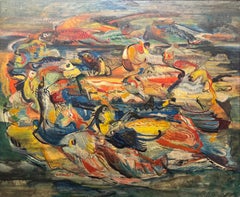
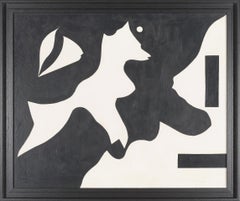
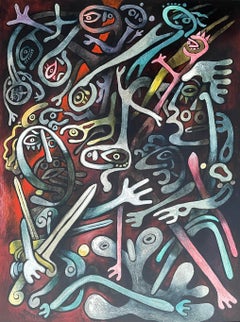
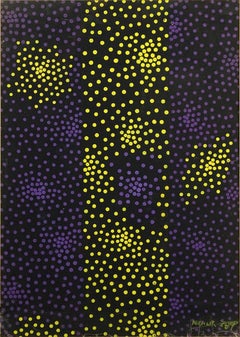
Abstract Composition - Painting by Lucian - 20th century

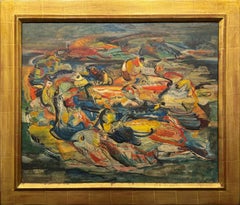
Abstract Composition - Painting by Lucian - 20th century

Located in Roma, IT

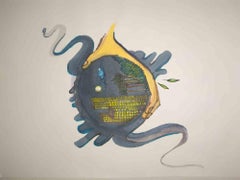
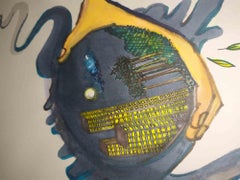
Abstract Composition is an Original tempera and watercolor on Paper applied on wood realized by Lucian in the 20th century. Hand-signed , also the stamp of Atelier Montmartre.

Category

Late 20th Century Modern Tempera Abstract Paintings

Materials

Tempera, Paper

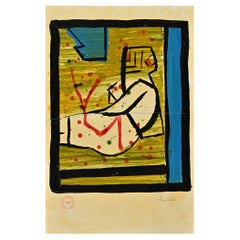
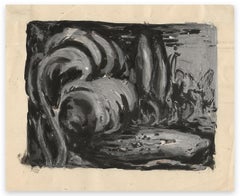
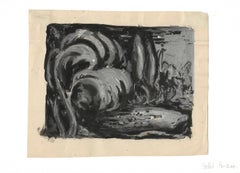
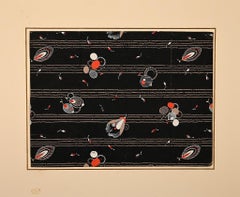
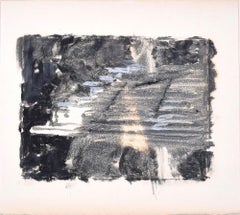
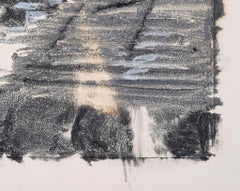
Waves - Tempera and China Ink Drawing on Paper - Early 20th Century

Waves - Tempera and China Ink Drawing on Paper - Early 20th Century

By Marguerite Callet-Carcano

Located in Roma, IT

Waves is an original tempera and Cina ink drawing on paper, realized by Marguerite Callet-Carcano With pencil signature on lower right margin. In very good condition, except for a little missing of paper on lower left margin. Marguerite Callet-Carcano (Milan, 1878) Marguerite Callet-Carcano was an Italian-Belgian graphic artist, illustrated books like Drame and Savonarole. Drame by Iwan Gilkin (1926), Les Chimères by Georges Rency (1928), René by François-René Chateaubriand and a reprint by Adolphe by Benjamin Constant. In addition to the xilograph technique, she also used the linoleum one. She engraved the portrait of Charles De Coster...

Category

Early 20th Century Modern Tempera Abstract Paintings

Materials

Ink, Tempera

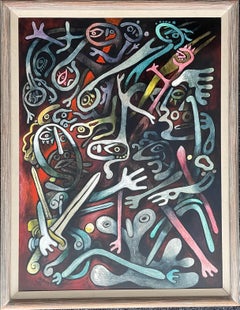
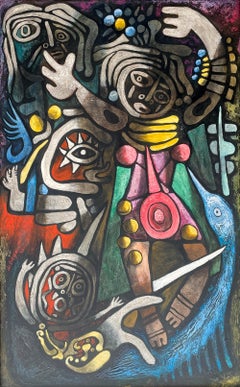
The Magician oil and tempera painting by Julio de Diego

The Magician oil and tempera painting by Julio de Diego

By Julio de Diego

Located in Hudson, NY

Julio De Diego’s Atomic Series paintings made an extraordinary statement regarding the shock and fear that accompanied the dawn of the nuclear age. In the artist’s own words, “Scientists were working secretly to develop formidable powers taken from the mysterious depths of the earth - with the power to make the earth useless! Then, the EXPLOSION! . . . we entered the Atomic Age, and from there the neo-Atomic war begins. Explosions fell everywhere and man kept on fighting, discovering he could fight without flesh.” To execute these works, De Diego developed a technique of using tempera underpainting before applying layer upon layer of pigmented oil glazes. The result is paintings with surfaces which were described as “bonelike” in quality. The forms seem to float freely, creating a three-dimensional visual effect. In the 1954 book The Modern Renaissance in American Art, author Ralph Pearson summarizes the series as “a fantastic interpretation of a weighty theme. Perhaps it is well to let fantasy and irony appear to lighten the devastating impact. By inverse action, they may in fact increase its weight.” Exhibited 1964 Marion Koogler McNay Art Institute, San Antonio, Texas This work retains its original frame which measures 54" x 42" x 2" About this artist: Julio De Diego crafted a formidable persona within the artistic developments and political struggles of his time. The artist characterized his own work as “lyrical,” explaining, “through the years, the surrealists, the social-conscious painters and the others tried to adopt me, but I went my own way, good, bad or indifferent.” [1] His independence manifested early in life when de Diego left his parent’s home in Madrid, Spain, in adolescence following his father’s attempts to curtail his artistic aspirations. At the age of fifteen he held his first exhibition, set up within a gambling casino. He managed to acquire an apprenticeship in a studio producing scenery for Madrid’s operas, but moved from behind the curtains to the stage, trying his hand at acting and performing as an extra in the Ballet Russes’ Petrouchka with Nijinsky. He spent several years in the Spanish army, including a six-month stretch in the Rif War of 1920 in Northern Africa. His artistic career pushed ahead as he set off for Paris and became familiar with modernism’s forays into abstraction, surrealism, and cubism. The artist arrived in the U.S. in 1924 and settled in Chicago two years later. He established himself with a commission for the decoration of two chapels in St. Gregory’s Church. He also worked in fashion illustration, designed magazine covers and developed a popular laundry bag for the Hotel Sherman. De Diego began exhibiting through the Art Institute of Chicago in 1929, and participated in the annual Chicago Artists Exhibitions, Annual American Exhibitions, and International Water Color Exhibitions. He held a solo exhibition at the Art Institute of Chicago in the summer of 1935. Though the artist’s career was advancing, his family life had deteriorated. In 1932 his first marriage dissolved, and the couple’s young daughter Kiriki was sent to live with friend Paul Hoffman. De Diego continued to develop his artistic vocabulary with a growing interest in Mexican art. He traveled throughout the country acquainting himself with the works of muralists such as Carlos Merida, and also began a collection of small native artifacts...

Category

1940s American Modern Tempera Abstract Paintings

Materials

Masonite, Oil, Tempera
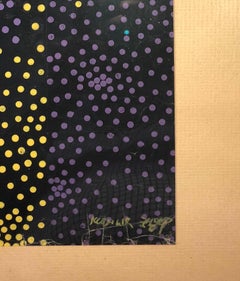
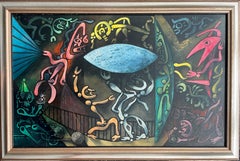
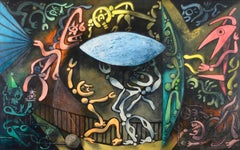
Inevitable Day – Birth of the Atom oil and tempera painting by Julio De Diego

Inevitable Day – Birth of the Atom oil and tempera painting by Julio De Diego

By Julio de Diego

Located in Hudson, NY

Julio De Diego’s Atomic Series paintings made an extraordinary statement regarding the shock and fear that accompanied the dawn of the nuclear age. In the artist’s own words, “Scientists were working secretly to develop formidable powers taken from the mysterious depths of the earth - with the power to make the earth useless! Then, the EXPLOSION! . . . we entered the Atomic Age, and from there the neo-Atomic war begins. Explosions fell everywhere and man kept on fighting, discovering he could fight without flesh.” To execute these works, De Diego developed a technique of using tempera underpainting before applying layer upon layer of pigmented oil glazes. The result is paintings with surfaces which were described as “bonelike” in quality. The forms seem to float freely, creating a three-dimensional visual effect. In the 1954 book The Modern Renaissance in American Art, author Ralph Pearson summarizes the series as “a fantastic interpretation of a weighty theme. Perhaps it is well to let fantasy and irony appear to lighten the devastating impact. By inverse action, they may in fact increase its weight.” Bibliography Art in America, April 1951, p.78 About this artists: Julio De Diego crafted a formidable persona within the artistic developments and political struggles of his time. The artist characterized his own work as “lyrical,” explaining, “through the years, the surrealists, the social-conscious painters and the others tried to adopt me, but I went my own way, good, bad or indifferent.” [1] His independence manifested early in life when de Diego left his parent’s home in Madrid, Spain, in adolescence following his father’s attempts to curtail his artistic aspirations. At the age of fifteen he held his first exhibition, set up within a gambling casino. He managed to acquire an apprenticeship in a studio producing scenery for Madrid’s operas, but moved from behind the curtains to the stage, trying his hand at acting and performing as an extra in the Ballet Russes’ Petrouchka with Nijinsky. He spent several years in the Spanish army, including a six-month stretch in the Rif War of 1920 in Northern Africa. His artistic career pushed ahead as he set off for Paris and became familiar with modernism’s forays into abstraction, surrealism, and cubism. The artist arrived in the U.S. in 1924 and settled in Chicago two years later. He established himself with a commission for the decoration of two chapels in St. Gregory’s Church. He also worked in fashion illustration, designed magazine covers and developed a popular laundry bag for the Hotel Sherman. De Diego began exhibiting through the Art Institute of Chicago in 1929, and participated in the annual Chicago Artists Exhibitions, Annual American Exhibitions, and International Water Color Exhibitions. He held a solo exhibition at the Art Institute of Chicago in the summer of 1935. Though the artist’s career was advancing, his family life had deteriorated. In 1932 his first marriage dissolved, and the couple’s young daughter Kiriki was sent to live with friend Paul Hoffman. De Diego continued to develop his artistic vocabulary with a growing interest in Mexican art. He traveled throughout the country acquainting himself with the works of muralists such as Carlos Merida, and also began a collection of small native artifacts...

Category

1940s American Modern Tempera Abstract Paintings

Materials

Masonite, Oil, Tempera
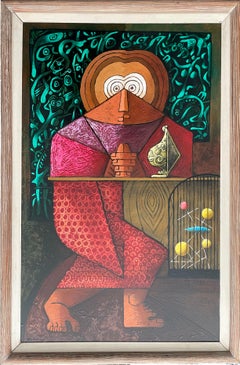
Abstract Composition Tempera Painting Russian Soviet Avant Garde Ksenia Ender

Abstract Composition Tempera Painting Russian Soviet Avant Garde Ksenia Ender

By Ksenia Ender

Located in Surfside, FL

Dimensions: 25.5 X 20.5 Frame. Artwork measures 23.25 X 18.25 Tempera painting Signed by the artist, lower right corner Ksenia Vladimirovna Ender ( Russian Ксения Владимировна Энде...

Category

Early 20th Century Modern Tempera Abstract Paintings

Materials

Paper, Tempera

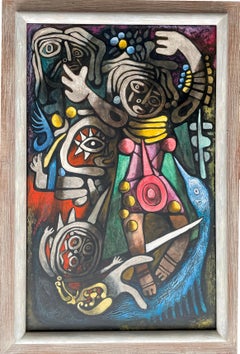
St. Atomic oil and tempera painting by Julio de Diego

St. Atomic oil and tempera painting by Julio de Diego

By Julio de Diego

Located in Hudson, NY

Julio De Diego’s Atomic Series paintings made an extraordinary statement regarding the shock and fear that accompanied the dawn of the nuclear age. In the artist’s own words, “Scientists were working secretly to develop formidable powers taken from the mysterious depths of the earth - with the power to make the earth useless! Then, the EXPLOSION! . . . we entered the Atomic Age, and from there the neo-Atomic war begins. Explosions fell everywhere and man kept on fighting, discovering he could fight without flesh.” To execute these works, De Diego developed a technique of using tempera underpainting before applying layer upon layer of pigmented oil glazes. The result is paintings with surfaces which were described as “bonelike” in quality. The forms seem to float freely, creating a three-dimensional visual effect. In the 1954 book The Modern Renaissance in American Art, author Ralph Pearson summarizes the series as “a fantastic interpretation of a weighty theme. Perhaps it is well to let fantasy and irony appear to lighten the devastating impact. By inverse action, they may in fact increase its weight.” Exhibited 1950 University of Illinois at Urbana "Contemporary American Painting" 1964 Marion Koogler McNay Art Institute, San Antonio, Texas This work retains its original frame which measures 54" x 36" x 2". About this artist: Julio De Diego crafted a formidable persona within the artistic developments and political struggles of his time. The artist characterized his own work as “lyrical,” explaining, “through the years, the surrealists, the social-conscious painters and the others tried to adopt me, but I went my own way, good, bad or indifferent.” [1] His independence manifested early in life when de Diego left his parent’s home in Madrid, Spain, in adolescence following his father’s attempts to curtail his artistic aspirations. At the age of fifteen he held his first exhibition, set up within a gambling casino. He managed to acquire an apprenticeship in a studio producing scenery for Madrid’s operas, but moved from behind the curtains to the stage, trying his hand at acting and performing as an extra in the Ballet Russes’ Petrouchka with Nijinsky. He spent several years in the Spanish army, including a six-month stretch in the Rif War of 1920 in Northern Africa. His artistic career pushed ahead as he set off for Paris and became familiar with modernism’s forays into abstraction, surrealism, and cubism. The artist arrived in the U.S. in 1924 and settled in Chicago two years later. He established himself with a commission for the decoration of two chapels in St. Gregory’s Church. He also worked in fashion illustration, designed magazine covers and developed a popular laundry bag for the Hotel Sherman. De Diego began exhibiting through the Art Institute of Chicago in 1929, and participated in the annual Chicago Artists Exhibitions, Annual American Exhibitions, and International Water Color Exhibitions. He held a solo exhibition at the Art Institute of Chicago in the summer of 1935. Though the artist’s career was advancing, his family life had deteriorated. In 1932 his first marriage dissolved, and the couple’s young daughter Kiriki was sent to live with friend Paul Hoffman. De Diego continued to develop his artistic vocabulary with a growing interest in Mexican art. He traveled throughout the country acquainting himself with the works of muralists such as Carlos Merida, and also began a collection of small native artifacts...

Category

1940s American Modern Tempera Abstract Paintings

Materials

Masonite, Oil, Tempera
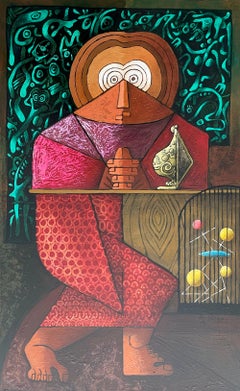
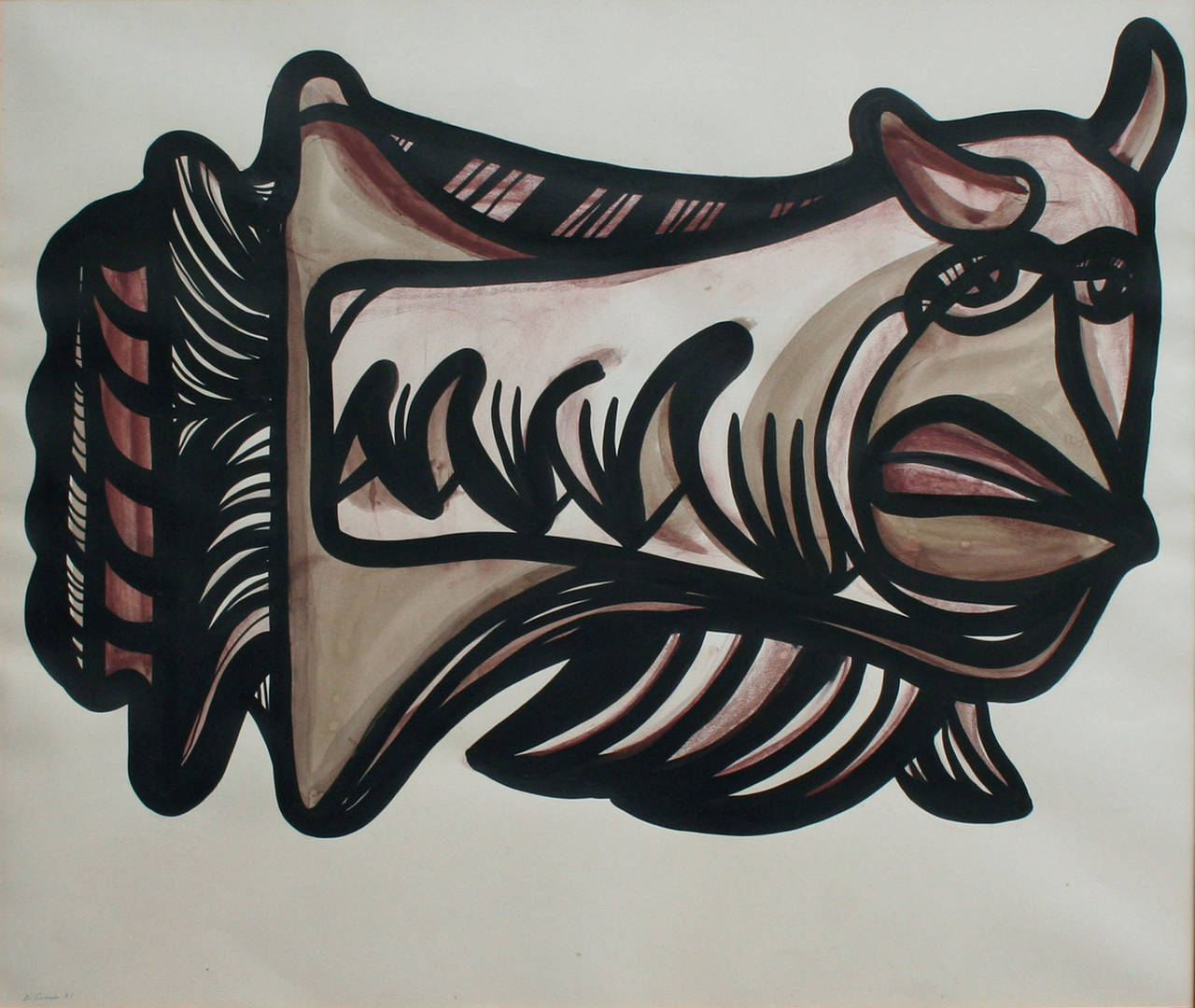
Modernist Abstract Bull Painting, Tempera on Paper, Signed, 1981
Modernist Abstract Bull Painting, Tempera on Paper, Signed, 1981
By Dick Crispo

Located in Soquel, CA

Unique modernist depiction of an abstracted bull by California artist Dick Crispo (American, b.1945), 1981. The earthtoned animal is outlined in bold strokes of black, and is rendered in an interesting fractured geometric style evocative of cubism's handling of perspective. Signed and dated lower left "D. Crispo '81", and on label on verso. Presented in a dark copper metal frame. Image size; 22.5"H x 28.75"L. An award winning artist, Crispo has studied at the Carmel Art Institute under John Cunningham and Sam Colburn...

Category

1980s American Modern Tempera Abstract Paintings
Materials

Tempera
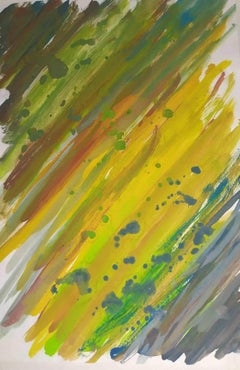
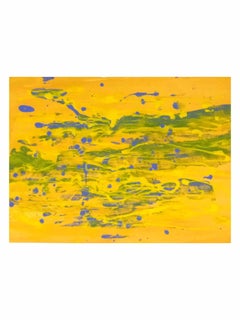
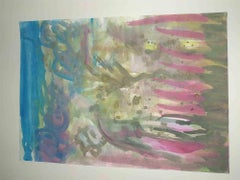
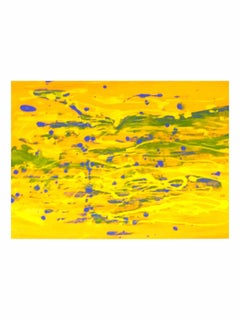
Wonder - Tempera on paper - 2021
Wonder - Tempera on paper - 2021
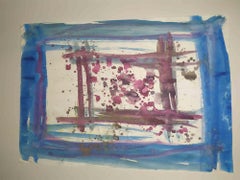
By Contempologyc E.M.

Located in Roma, IT

Realizzato da contempologyc a tempera su carta nel 2021 in Italia . Contempologyc artista poliedrica contemporanea amante dell'astrattismo ,sono svariati anni che percorre la sua car...
Category

2010s Modern Tempera Abstract Paintings

Materials

Tempera

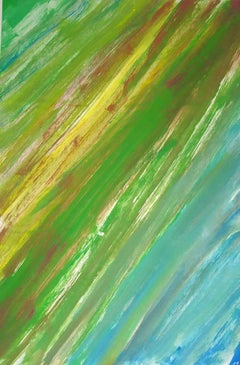
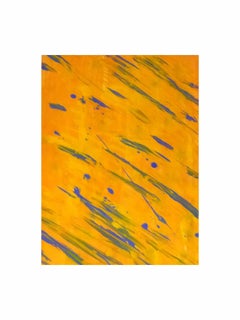
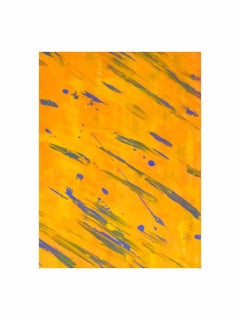
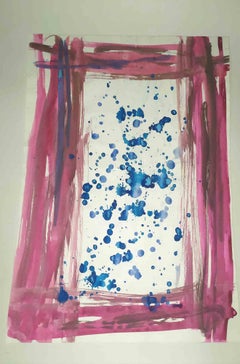
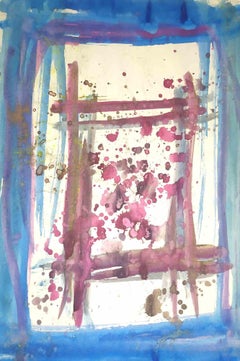
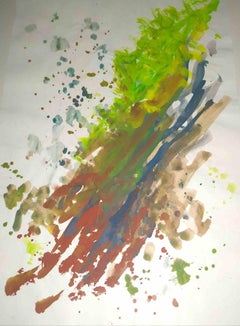
Tender Conviviality -  Tempera on Paper - 2020

Tender Conviviality - Tempera on Paper - 2020

Located in Roma, IT

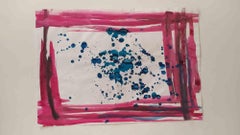
Original tempera on paper realized in 2020 by the italian artist Contempologyc. Excellent condition.

Category

2010s Modern Tempera Abstract Paintings

Materials

Tempera

Tempera abstract paintings for sale on 1stDibs.

Find a wide variety of authentic Tempera abstract paintings available on 1stDibs. While artists have worked in this medium across a range of time periods, art made with this material during the 21st Century is especially popular. If you’re looking to add Abstract paintings created with this material to introduce a provocative pop of color and texture to an otherwise neutral space in your home, the works available on 1stDibs include elements of blue, red, green, orange and other colors. There are many well-known artists whose body of work includes ceramic sculptures. Popular artists on 1stDibs associated with pieces like this include Kory Twaddle, Giorgio Lo Fermo, Leo Guida, and Paul Lorenz. Frequently made by artists working in the Abstract, Modern, all of these pieces for sale are unique and many will draw the attention of guests in your home. Not every interior allows for large Tempera abstract paintings, so small editions measuring 0.1 inches across are also available