Items Similar to Fernand Leger, The Screen, from Derriere le miroir, 1958 (after)
Want more images or videos?
Request additional images or videos from the seller
1 of 10
Fernand Leger, The Screen, from Derriere le miroir, 1958 (after)1958
1958
$1,196
$1,49520% Off
£915.03
£1,143.7920% Off
€1,046.48
€1,308.1020% Off
CA$1,703
CA$2,128.7520% Off
A$1,844.55
A$2,305.6920% Off
CHF 976.96
CHF 1,221.2020% Off
MX$22,316.33
MX$27,895.4220% Off
NOK 12,281.86
NOK 15,352.3320% Off
SEK 11,449.31
SEK 14,311.6320% Off
DKK 7,815.62
DKK 9,769.5220% Off
About the Item
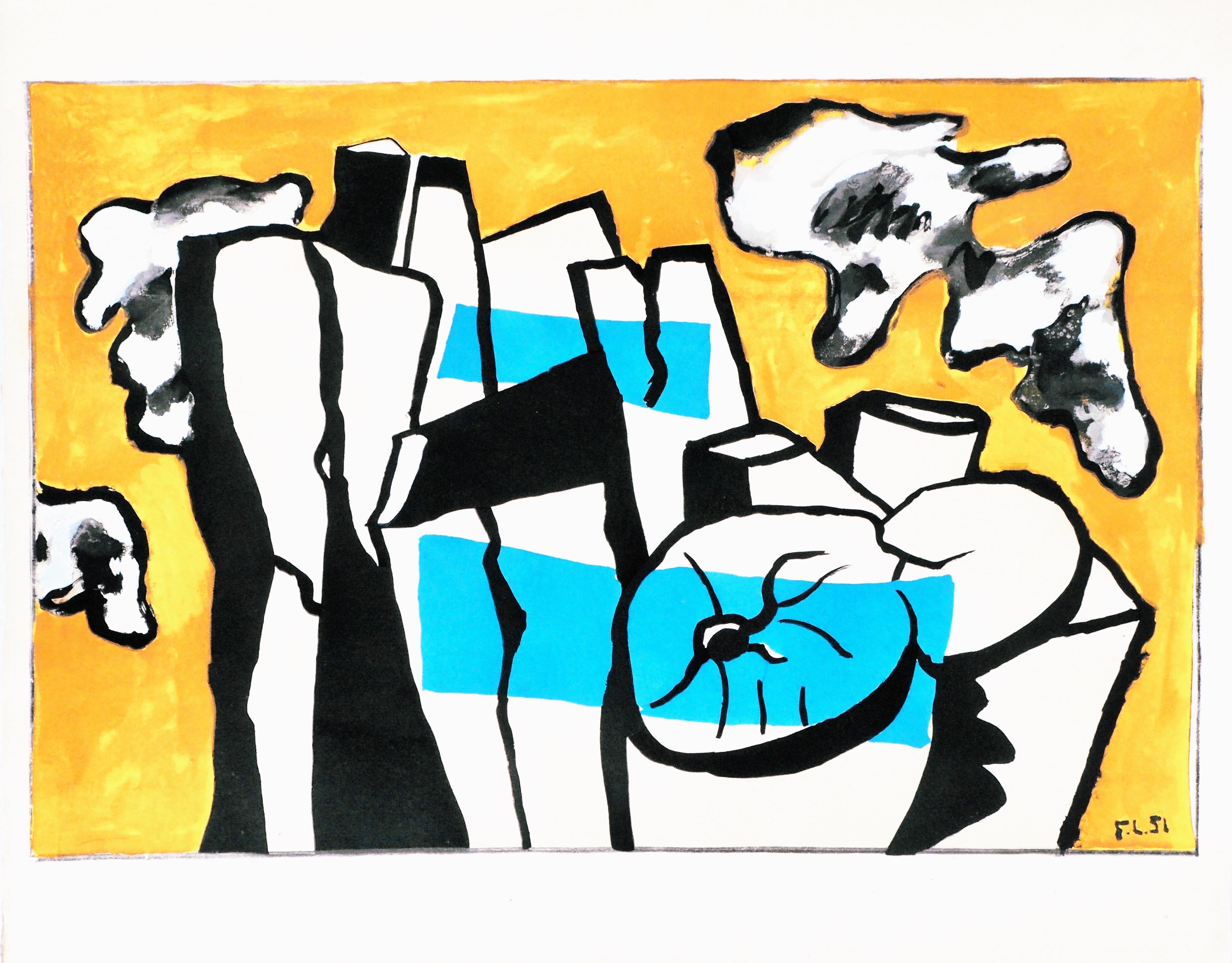
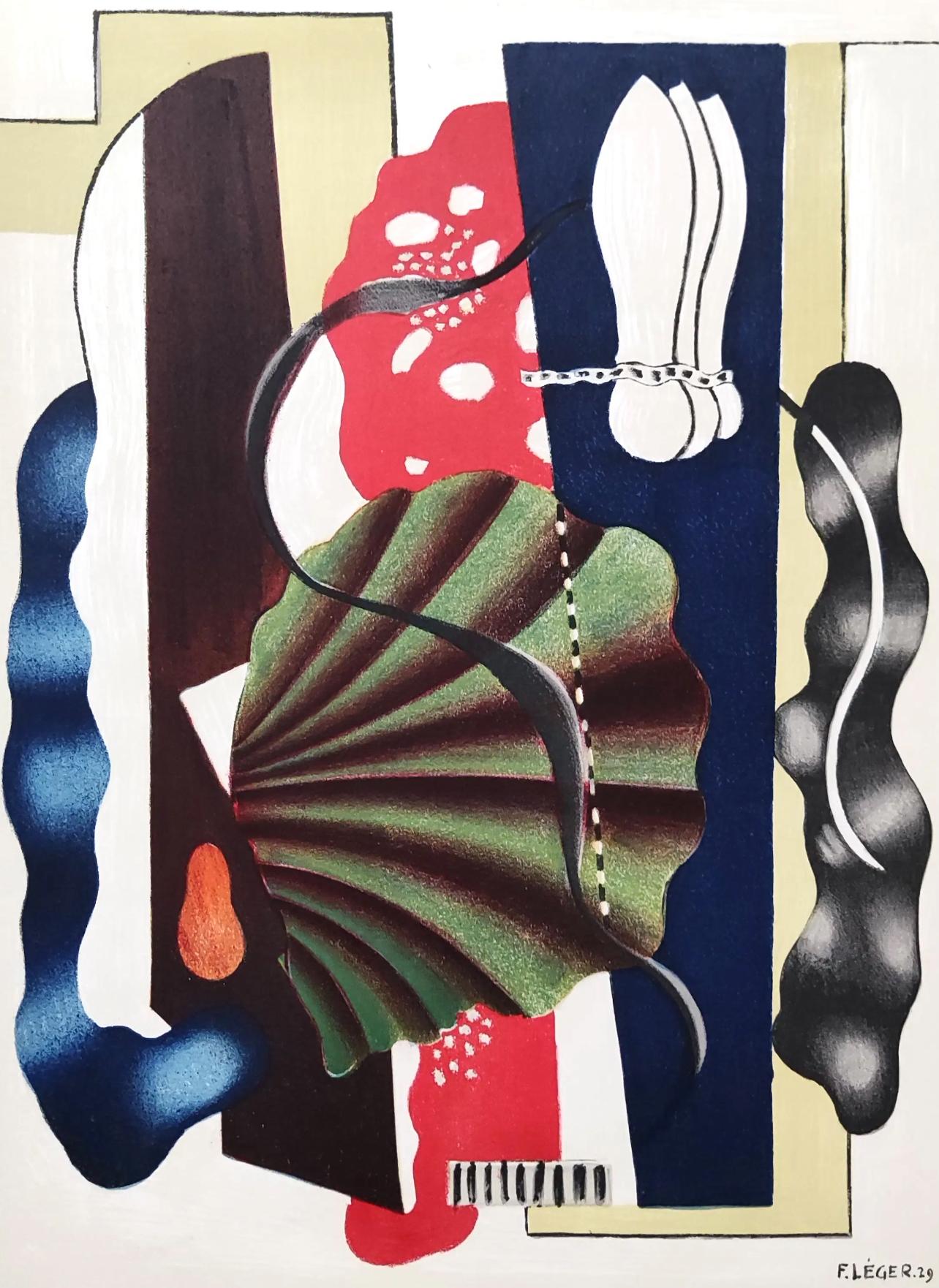
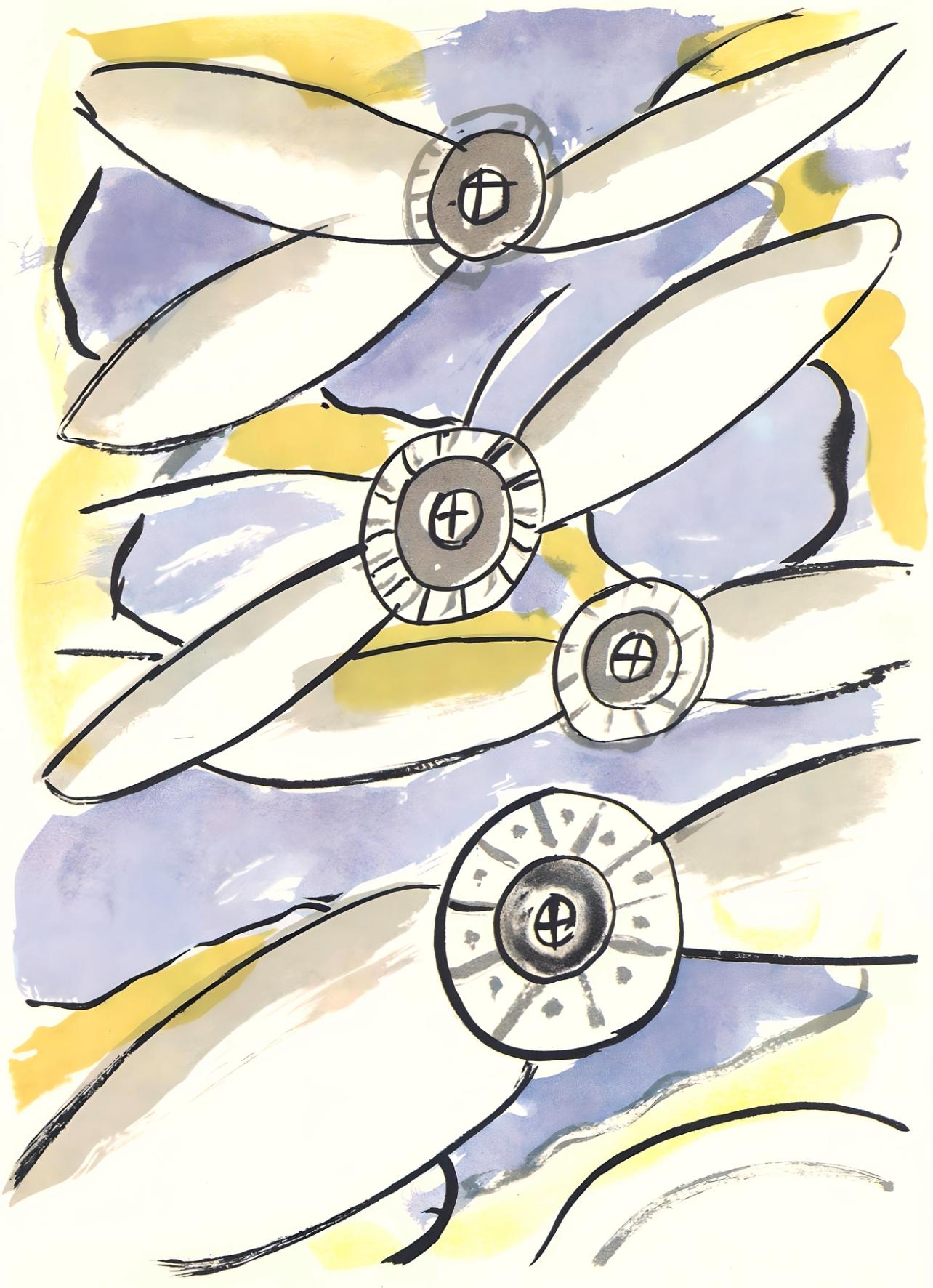
This exquisite lithograph after Fernand Leger (1881–1955), titled Le Paravent (The Screen), from the folio Derriere le miroir, No. 107–108–109, originates from the 1958 edition published by Maeght Editeur, Paris, and printed by Mourlot Freres, Paris, 1958. The composition reflects Legers bold modernist vocabulary, where cylindrical form, contrast, and rhythmic structure coalesce into a vibrant celebration of modern life.
Executed as a lithograph on velin paper, this work measures 15 x 22 inches, with centerfold as issued. Unsigned and unnumbered as issued. The edition exemplifies the superb craftsmanship of Mourlot Freres, Paris.
Artwork Details:
Artist: After Fernand Leger (1881–1955)
Title: Le Paravent (The Screen), from the folio Derriere le miroir, No. 107–108–109
Medium: Lithograph on velin paper
Dimensions: 15 x 22 inches (38.1 x 55.88 cm), with centerfold as issued
Inscription: Unsigned and unnumbered as issued
Date: 1958
Publisher: Maeght Editeur, Paris
Printer: Mourlot Freres, Paris
Condition: Well preserved, consistent with age and medium
Provenance: From the folio Derriere le miroir, No. 107–108–109, published by Maeght Editeur, Paris; printed by Mourlot Freres, Paris, 1958
About the Publication:
Derriere le miroir (Behind the Mirror) was one of the most important art publications of the 20th century, created and published by Maeght Editeur in Paris from 1946 to 1982. Founded by the visionary art dealer and publisher Aime Maeght, the series served as both an exhibition catalogue and a work of art in its own right, uniting original lithographs by leading modern and contemporary artists with critical essays, poetry, and design of the highest quality. Printed by master lithographers such as Mourlot Freres and Arte, Derriere le miroir became synonymous with the artistic vanguard of postwar Europe. Each issue was devoted to a single artist or theme and published to accompany exhibitions at the Galerie Maeght in Paris, featuring works by Pablo Picasso, Henri Matisse, Georges Braque, Joan Miro, Marc Chagall, Alexander Calder, Fernand Leger, and Alberto Giacometti, among others. The publication reflected Maeghts belief that art should be both accessible and elevated—an ideal realized through its luxurious production values, meticulous printing, and collaboration with the greatest creative minds of its time.
About the Artist:
Fernand Leger (1881–1955) was a French painter, sculptor, and filmmaker whose pioneering fusion of modern life, mechanization, and visual abstraction made him one of the most influential artists of the 20th century. Emerging from the Cubist movement, Leger developed a highly personal style distinguished by bold contrasts, cylindrical forms, and rhythmic compositions that celebrated the beauty of industrial progress and the vitality of modern urban life. Deeply influenced by the innovations of Paul Cezanne and the structural experimentation of Pablo Picasso and Georges Braque, Leger transformed Cubisms fragmented perspective into a dynamic, machine-age aesthetic that bridged fine art, architecture, and design. His work often depicted workers, machinery, and everyday objects as monumental symbols of harmony between humanity and technology, reflecting both his optimism for modernity and his belief in the democratization of art. During his career, Leger was part of an extraordinary artistic circle that included Henri Matisse, Marc Chagall, Alexander Calder, Alberto Giacometti, Salvador Dali, Joan Miro, Wassily Kandinsky, Marcel Duchamp, and Man Ray—visionaries who shared his commitment to pushing the boundaries of artistic form and expression. A leading figure in the international avant-garde, Leger also explored large-scale murals, public art, and film, expanding the reach of modern art beyond the gallery. His works are represented in major museum collections worldwide, including the Museum of Modern Art, the Centre Pompidou, the Tate, and the Guggenheim, where they continue to inspire admiration for their bold geometry, humanist vision, and timeless modernity. The highest price ever paid for a Fernand Leger artwork is approximately 70 million USD, achieved in 2017 at Christies New York for Contraste de formes (1913).
After Fernand Leger Le Paravent 1958, Leger Derriere le miroir No. 107–108–109, Leger Mourlot Freres, Leger Maeght Editeur, Leger velin paper, Leger collectible print.
- Creation Year:1958
- Dimensions:Height: 15 in (38.1 cm)Width: 22 in (55.88 cm)
- Medium:
- Movement & Style:
- After:Fernand Léger (1881-1955, French)
- Period:
- Condition:
- Gallery Location:Southampton, NY
- Reference Number:1stDibs: LU1465215499922
About the Seller
4.9
Platinum Seller
Premium sellers with a 4.7+ rating and 24-hour response times
Established in 1978
1stDibs seller since 2021
1,235 sales on 1stDibs
Typical response time: <1 hour
- ShippingRetrieving quote...Shipping from: Southampton, NY
- Return Policy
More From This Seller
View AllLéger, La partie de campagne, Derrière le miroir (after)
By Fernand Léger
Located in Southampton, NY
Lithograph on vélin paper. Inscription: Unsigned and unnumbered, as issued. Good condition, with centerfold, as issued. Notes: From Derrière le miroir, N° 121-122, 1960. Published by...
Category
1960s Modern Abstract Prints
Materials
Lithograph
Fernand Leger, Composition with Three Keys, Derriere le miroir, 1955 (after)
By Fernand Léger
Located in Southampton, NY
This exquisite lithograph after Fernand Leger (1881–1955), titled Composition aux trois cles (Composition with Three Keys), from the folio Derriere le miroir, No. 79-81, originates from the 1955 edition published by Maeght Editeur, Paris, and printed by Mourlot Freres, Paris, 1955. This composition exemplifies Leger’s rhythmic balance of color, form, and movement, translating the mechanical vitality of modern life into a harmonious, humanized geometry.
Executed as a lithograph on velin paper, this work measures 15 x 22 inches, with centerfold as issued. Signed in the plate and unnumbered as issued. The edition exemplifies the superb craftsmanship of Mourlot Freres, Paris.
Artwork Details:
Artist: After Fernand Leger (1881–1955)
Title: Composition aux trois cles (Composition with Three Keys), from the folio Derriere le miroir, No. 79-81
Medium: Lithograph on velin paper
Dimensions: 15 x 22 inches (38.1 x 55.88 cm), with centerfold as issued
Inscription: Signed in the plate and unnumbered as issued
Date: 1955
Publisher: Maeght Editeur, Paris
Printer: Mourlot Freres, Paris
Condition: Well preserved, consistent with age and medium
Provenance: From the folio Derriere le miroir, No. 79-81, published by Maeght Editeur, Paris; printed by Mourlot Freres, Paris, 1955
About the Publication:
Derriere le miroir (Behind the Mirror) was one of the most important art publications of the 20th century, created and published by Maeght Editeur in Paris from 1946 to 1982. Founded by the visionary art dealer and publisher Aime Maeght, the series served as both an exhibition catalogue and a work of art in its own right, uniting original lithographs by leading modern and contemporary artists with critical essays, poetry, and design of the highest quality. Printed by master lithographers such as Mourlot Freres and Arte, Derriere le miroir became synonymous with the artistic vanguard of postwar Europe. Each issue was devoted to a single artist or theme and published to accompany exhibitions at the Galerie Maeght in Paris, featuring works by Pablo Picasso, Henri Matisse, Georges Braque, Joan Miro, Marc Chagall, Alexander Calder, Fernand Leger, and Alberto Giacometti, among others. The publication reflected Maeght's belief that art should be both accessible and elevated—an ideal realized through its luxurious production values, meticulous printing, and collaboration with the greatest creative minds of its time.
About the Artist:
Fernand Leger (1881–1955) was a visionary French painter, sculptor, designer, and filmmaker whose groundbreaking fusion of modern industry, vivid color, and geometric form transformed the course of 20th-century art. Born in Argentan, Normandy, Leger began as an architectural draftsman before studying at the Academie Julian and the Ecole des Beaux-Arts in Paris, where he absorbed the lessons of Paul Cezanne’s structural rigor and the revolutionary ideas of Cubism. Alongside Pablo Picasso and Georges Braque, he became one of the leading innovators of the avant-garde, yet his work stood apart through its embrace of mechanical rhythm, bold contrasts, and industrial modernity—earning him the title “the painter of the machine age.” His art celebrated the beauty of technology, urban life, and the human form rendered in dynamic, interlocking cylinders and planes, evoking the pulse of the modern world. Immersed in the vibrant Parisian art scene, Leger worked in dialogue with peers and contemporaries such as Alexander Calder, Alberto Giacometti, Salvador Dali, Joan Miro, Wassily Kandinsky, Marcel Duchamp, and Man Ray, all of whom shared his commitment to innovation and the reimagining of artistic expression. Beyond painting, Leger’s creative reach extended into film, design, and monumental public art—his 1924 collaboration on Ballet Mecanique with Dudley Murphy and Man Ray remains a landmark of avant-garde cinema. His later works evolved toward greater clarity and monumentality, celebrating the unity of form, color, and humanity through large-scale murals and mosaics that bridged fine art and architecture. Leger’s synthesis of Cubism, Futurism, and abstraction paved the way for movements such as Pop Art and influenced generations of artists including Roy Lichtenstein, Ellsworth Kelly, Robert Indiana, and Alexander Calder, who admired his fusion of structure, energy, and optimism. Today, his works are prized by major museums and collectors worldwide for their bold visual power and enduring modernity. His highest auction record was achieved by La femme en rouge et vert (1914), which sold for 39,241,000 USD at Sotheby’s, New York, on May 7, 2008.
After Fernand Leger Composition aux trois cles 1955, Leger Derriere le miroir No. 79-81, Leger Mourlot...
Category
1950s Cubist Still-life Prints
Materials
Lithograph
$956 Sale Price
20% Off
Free Shipping
Léger, Les instruments de la Passion, Derrière le miroir (after)
By Fernand Léger
Located in Southampton, NY
Lithograph on vélin paper. Paper Size: 15 x 22 inches, with centerfold, as issued. Inscription: Unsigned and unnumbered, as issued. Notes: From the folio, Derrière le miroir, Sur Qua...
Category
1950s Cubist Abstract Prints
Materials
Lithograph
$716 Sale Price
20% Off
Free Shipping
Fernand Leger, The Logs, from Contrastes, 1959 (after)
By Fernand Léger
Located in Southampton, NY
This exquisite lithograph and pochoir after Fernand Leger (1881–1955), titled Les Buches (The Logs), from the folio Contrastes, 13 Aquarelles, Gouache, Lavis, Crayon (Contrasts, 13 W...
Category
1950s Modern Figurative Prints
Materials
Lithograph, Stencil
Fernand Leger, Still Life, from Derriere le miroir, 1955 (after)
By Fernand Léger
Located in Southampton, NY
This exquisite lithograph after Fernand Leger (1881–1955), titled Nature morte (Still Life), from the folio Derriere le miroir, No. 79-81, originates from the 1955 edition published by Maeght Editeur, Paris, and printed by Mourlot Freres, Paris, 1955. This composition exemplifies Leger’s rhythmic balance of color, form, and movement, translating the mechanical vitality of modern life into a harmonious, humanized geometry.
Executed as a lithograph on velin paper, this work measures 15 x 11 inches. Signed in the plate and unnumbered as issued. The edition exemplifies the superb craftsmanship of Mourlot Freres, Paris.
Artwork Details:
Artist: After Fernand Leger (1881–1955)
Title: Nature morte (Still Life), from the folio Derriere le miroir, No. 79-81
Medium: Lithograph on velin paper
Dimensions: 15 x 11 inches (38.1 x 27.94 cm)
Inscription: Signed in the plate and unnumbered as issued
Date: 1955
Publisher: Maeght Editeur, Paris
Printer: Mourlot Freres, Paris
Condition: Well preserved, consistent with age and medium
Provenance: From the folio Derriere le miroir, No. 79-81, published by Maeght Editeur, Paris; printed by Mourlot Freres, Paris, 1955
About the Publication:
Derriere le miroir (Behind the Mirror) was one of the most important art publications of the 20th century, created and published by Maeght Editeur in Paris from 1946 to 1982. Founded by the visionary art dealer and publisher Aime Maeght, the series served as both an exhibition catalogue and a work of art in its own right, uniting original lithographs by leading modern and contemporary artists with critical essays, poetry, and design of the highest quality. Printed by master lithographers such as Mourlot Freres and Arte, Derriere le miroir became synonymous with the artistic vanguard of postwar Europe. Each issue was devoted to a single artist or theme and published to accompany exhibitions at the Galerie Maeght in Paris, featuring works by Pablo Picasso, Henri Matisse, Georges Braque, Joan Miro, Marc Chagall, Alexander Calder, Fernand Leger, and Alberto Giacometti, among others. The publication reflected Maeght's belief that art should be both accessible and elevated—an ideal realized through its luxurious production values, meticulous printing, and collaboration with the greatest creative minds of its time.
About the Artist:
Fernand Leger (1881–1955) was a visionary French painter, sculptor, designer, and filmmaker whose groundbreaking fusion of modern industry, vivid color, and geometric form transformed the course of 20th-century art. Born in Argentan, Normandy, Leger began as an architectural draftsman before studying at the Academie Julian and the Ecole des Beaux-Arts in Paris, where he absorbed the lessons of Paul Cezanne’s structural rigor and the revolutionary ideas of Cubism. Alongside Pablo Picasso and Georges Braque, he became one of the leading innovators of the avant-garde, yet his work stood apart through its embrace of mechanical rhythm, bold contrasts, and industrial modernity—earning him the title “the painter of the machine age.” His art celebrated the beauty of technology, urban life, and the human form rendered in dynamic, interlocking cylinders and planes, evoking the pulse of the modern world. Immersed in the vibrant Parisian art scene, Leger worked in dialogue with peers and contemporaries such as Alexander Calder, Alberto Giacometti, Salvador Dali, Joan Miro, Wassily Kandinsky, Marcel Duchamp, and Man Ray, all of whom shared his commitment to innovation and the reimagining of artistic expression. Beyond painting, Leger’s creative reach extended into film, design, and monumental public art—his 1924 collaboration on Ballet Mecanique with Dudley Murphy and Man Ray remains a landmark of avant-garde cinema. His later works evolved toward greater clarity and monumentality, celebrating the unity of form, color, and humanity through large-scale murals and mosaics that bridged fine art and architecture. Leger’s synthesis of Cubism, Futurism, and abstraction paved the way for movements such as Pop Art and influenced generations of artists including Roy Lichtenstein, Ellsworth Kelly, Robert Indiana, and Alexander Calder, who admired his fusion of structure, energy, and optimism. Today, his works are prized by major museums and collectors worldwide for their bold visual power and enduring modernity. His highest auction record was achieved by La femme en rouge et vert (1914), which sold for 39,241,000 USD at Sotheby’s, New York, on May 7, 2008.
After Fernand Leger Nature morte 1955, Leger Derriere le miroir No. 79-81, Leger Mourlot...
Category
1950s Cubist Still-life Prints
Materials
Lithograph
$956 Sale Price
20% Off
Free Shipping
Léger, Composition, mes voyages (after)
By Fernand Léger
Located in Southampton, NY
Lithograph on vélin bouffant des Papeteries de Hauteville paper. Unsigned and unnumbered, as issued. Good condition. Notes: From the folio, Fernand Léger mes voyages avec un poème d'...
Category
1970s Modern Landscape Prints
Materials
Lithograph
You May Also Like
Composition - Original Lithograph after F. Léger - 20th Century
By (after) Fernand Léger
Located in Roma, IT
Composition is an original lithograph on paper realized by Fernand Léger (1881-1955).
Very good conditions except for some little foxings.
Sheet dimension: 23.5 x 26
On both sides...
Category
20th Century Cubist Figurative Prints
Materials
Lithograph
French Modern Art by Fernand Léger - Untitled
By Fernand Léger
Located in Paris, IDF
Lithography on paper printed in 40's, numbered 42/300, 54,5 x 75,5 x 0,1 cm - 21,4 x 29,7 x 0,04 in, printed by Moulot Editions Editions with the stamp Fernand Léger on Musee Biot pa...
Category
1940s Cubist Abstract Prints
Materials
Paper, Lithograph
Architectural Composition
By Fernand Léger
Located in Austin, TX
By Fernand Léger
Medium: Mixed Media on Paper
Size: 28" x 21"
Framed Size: 39.25" x 32"
An glorious example of a Master Cubist, Fernand Léger, featuring bold primaries and stately s...
Category
Early 20th Century Cubist Abstract Paintings
Materials
Archival Paper, Gouache
No title
By Fernand Léger
Located in Paris, FR
Silksreen
Handsigned by the artist in pencil
After a gouache.
Edition : 113/200
Printer : Jean Bruller (Paris)
Catalog : Saphire E10
56.00 cm. x 38.00 cm. 22.05 in. x 14.96 in. (pa...
Category
1950s Abstract Abstract Prints
Materials
Silk
Figure Miroir
Located in San Francisco, CA
This artwork titled "Figure Miroir" c.1980 is an original lithograph on Arches paper by noted French abstract expressionist artist Francois Rouan, b.194...
Category
Late 20th Century Abstract Expressionist Abstract Prints
Materials
Lithograph
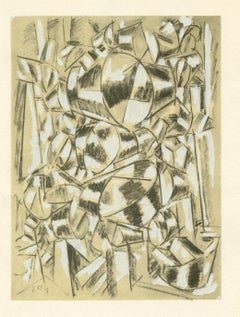
"Contraste de formes" pochoir
By (after) Fernand Léger
Located in Henderson, NV
Medium: pochoir (after the gouache). Printed in 1962 at the Daniel Jacomet atelier and published in Paris by the Berggruen Gallery in an edition of 1000. Image size: 5 x 3 3/4 inches...
Category
1960s Prints and Multiples
Materials
Lithograph, Stencil
More Ways To Browse
C Garcia
Calder Pyramid
Calder Sky Swirl
Calder Unfinished Revolution
Chateau Mouton Rothschild Lithograph
Chillida Maeght
Christopher Wool On Sale
Dali Conquest Of Cosmos
Dali Time Lithograph
Damien Hirst Woodcut Spot
Escultor Miro
Etienne Hajdu
Frances Senska
Frankenthaler Poster
Gaston Petit
Gerhard Richter Cage
Gina Pellon
Goat Chagall