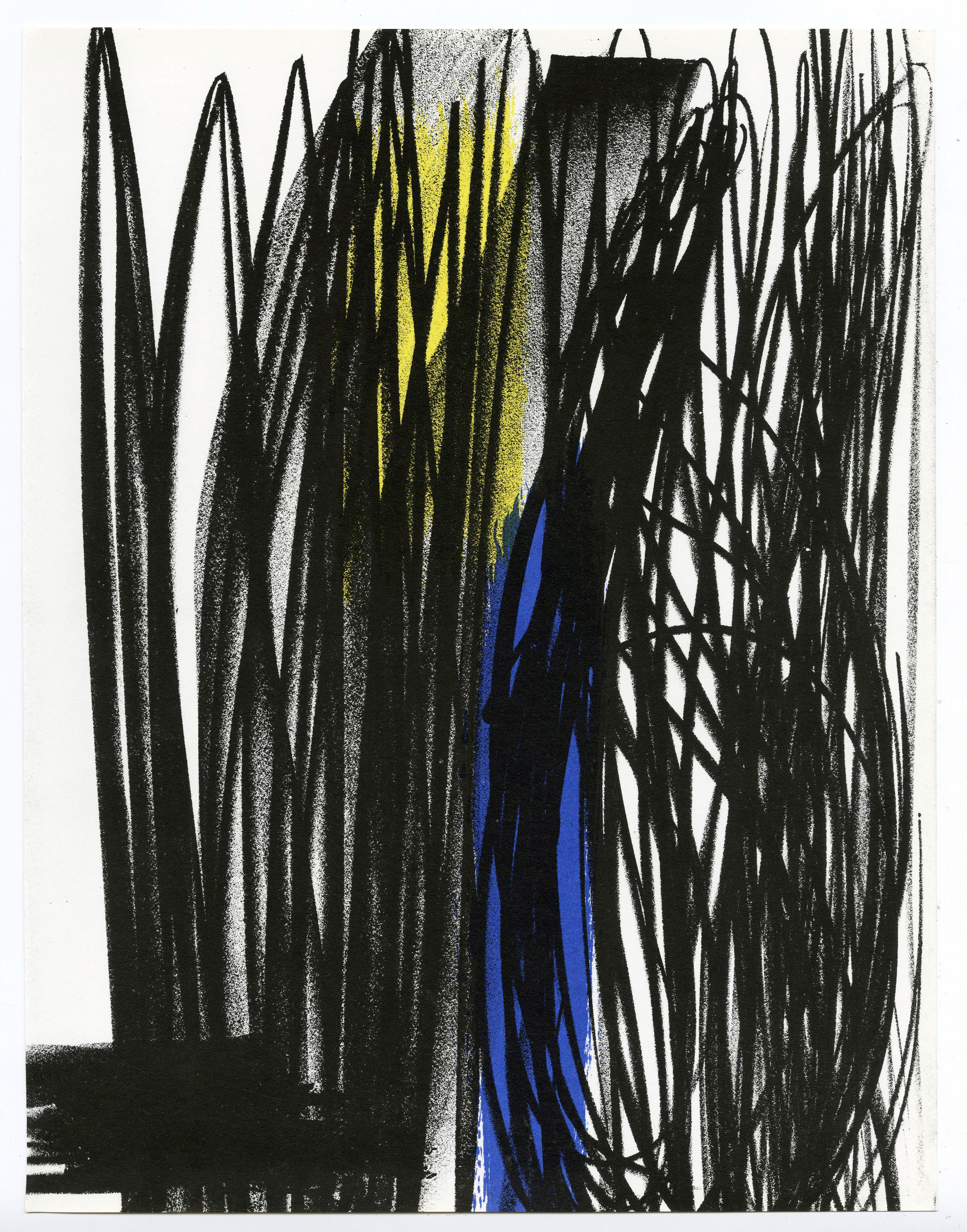
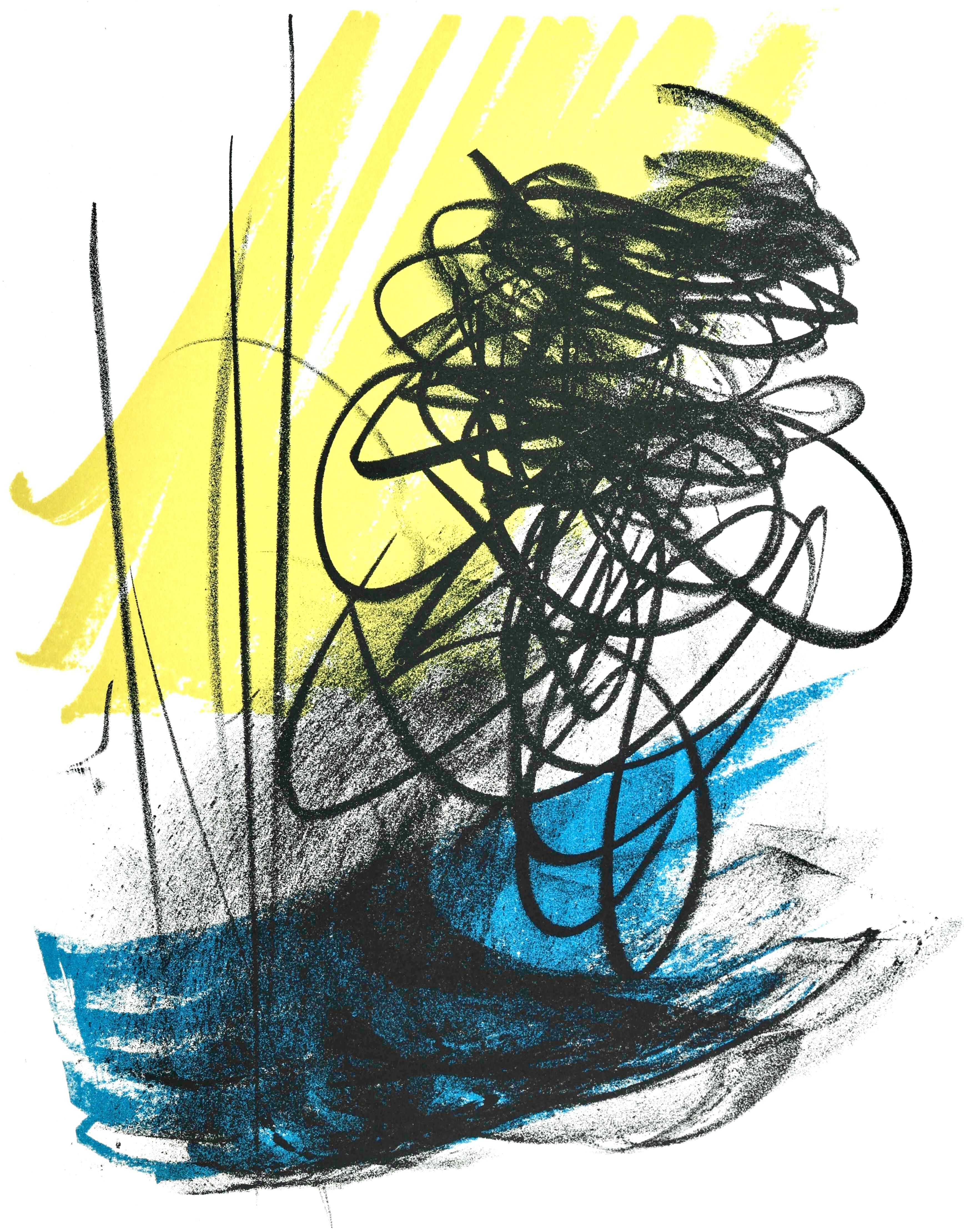
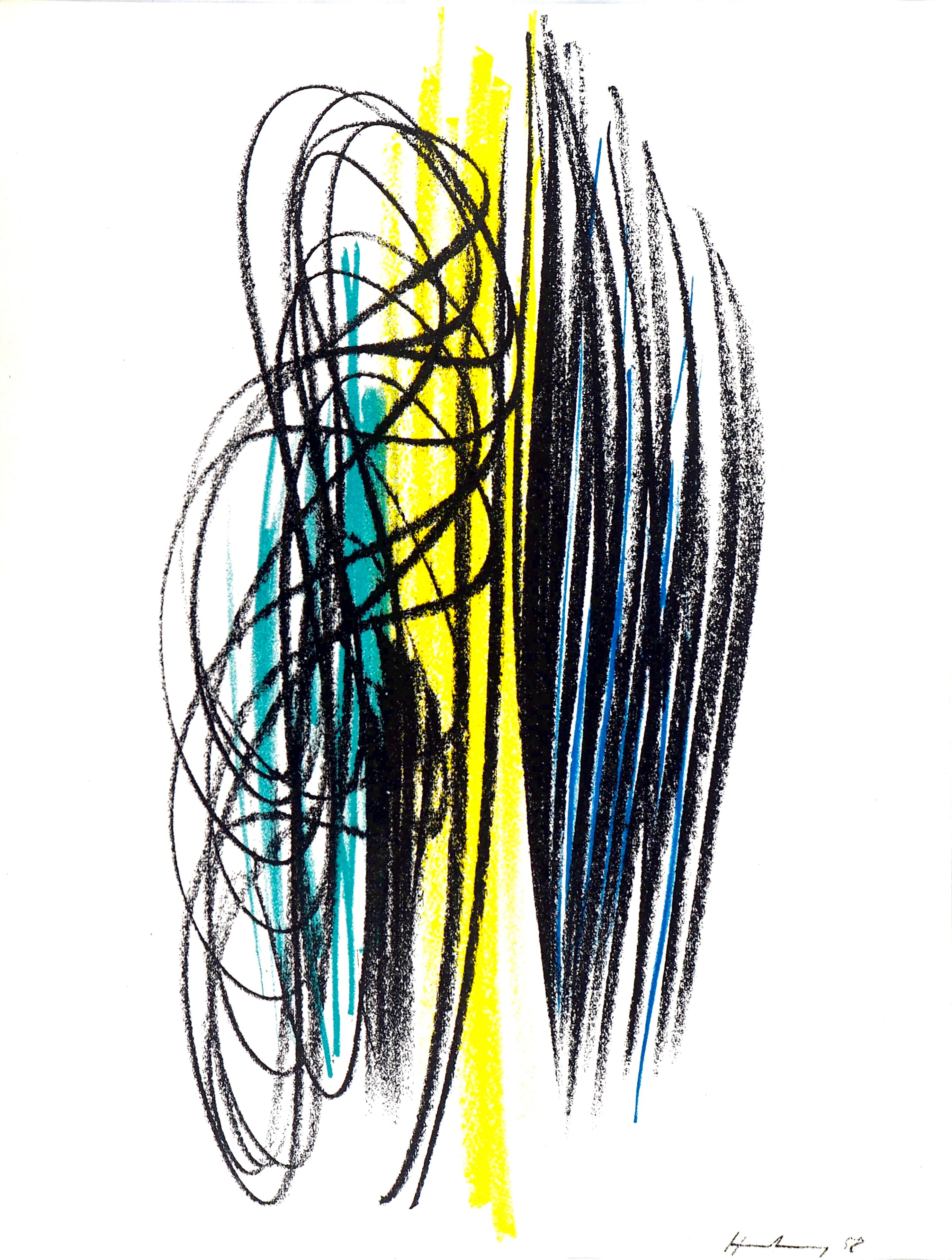
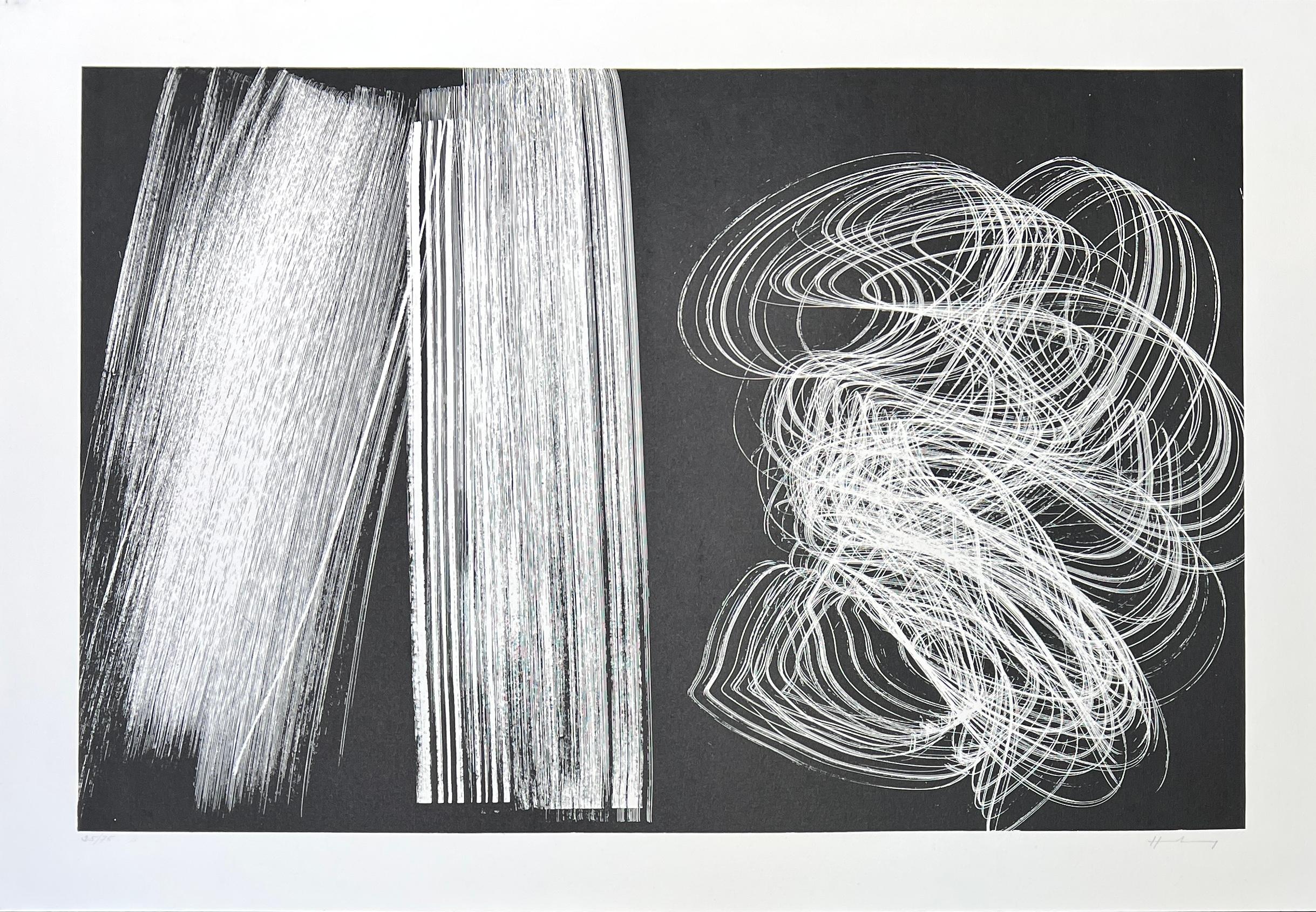
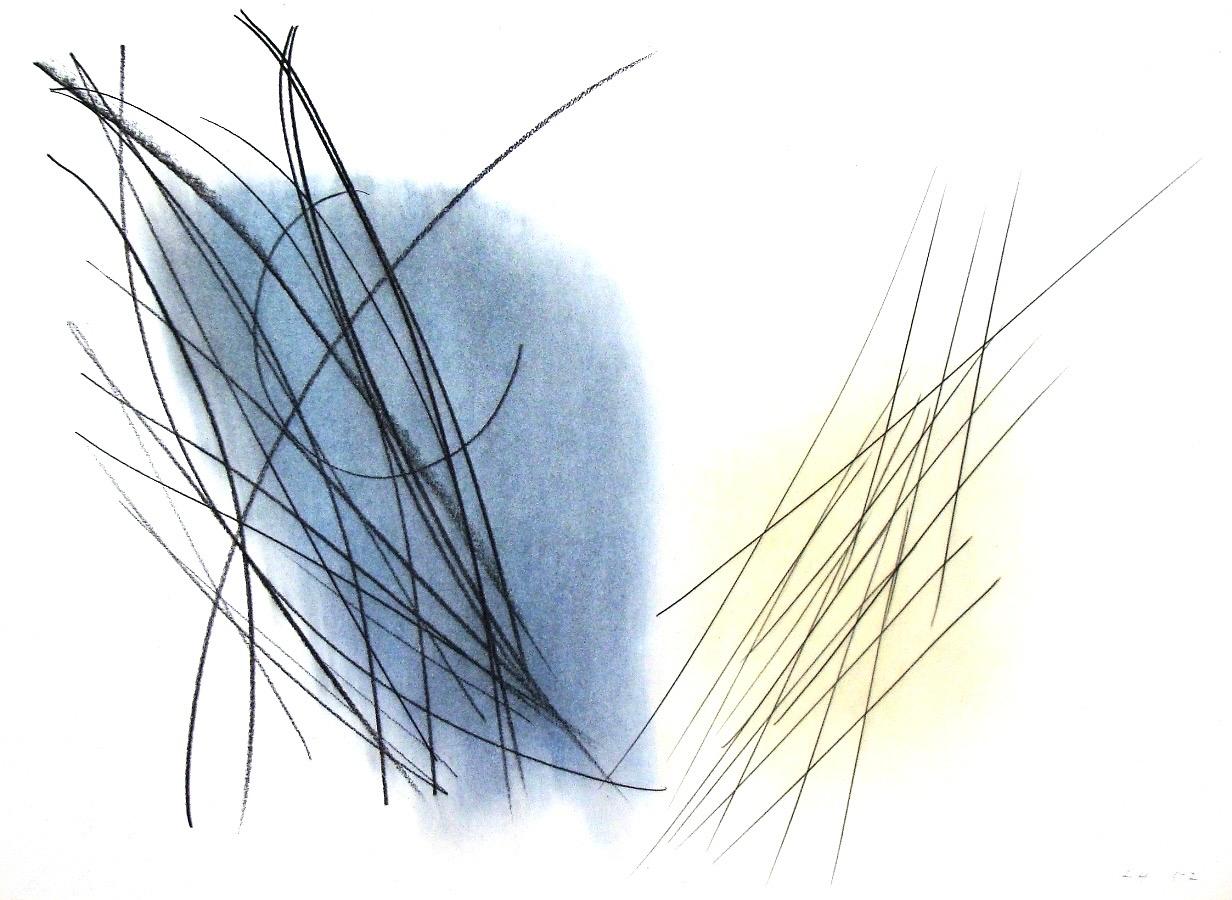
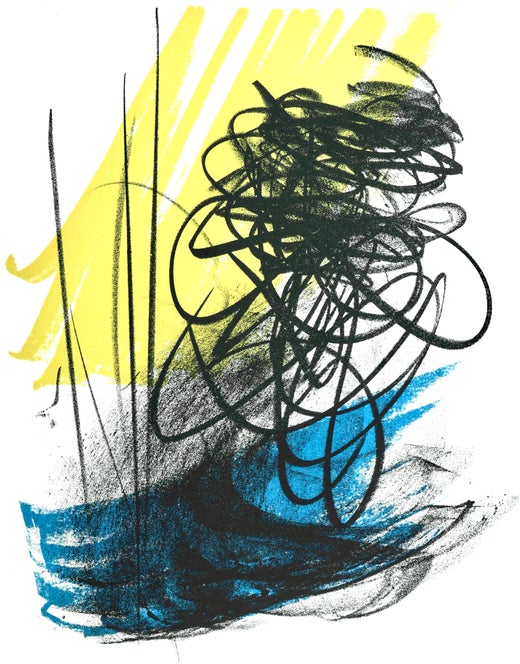
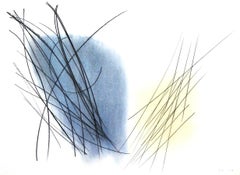
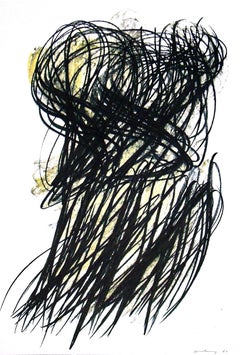
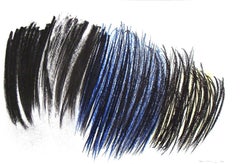
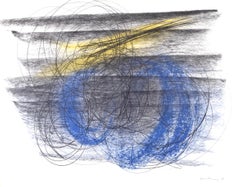
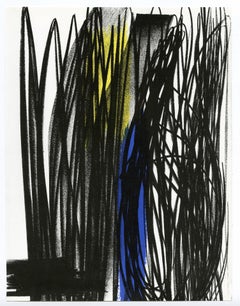
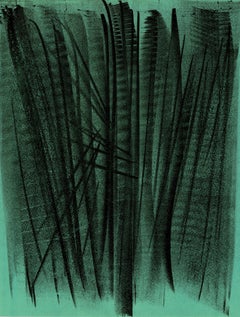
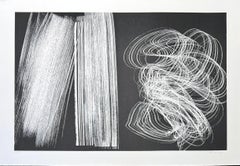
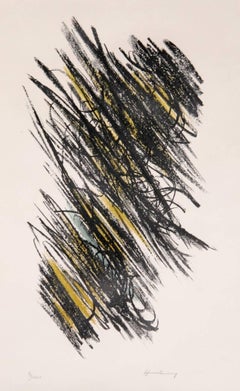
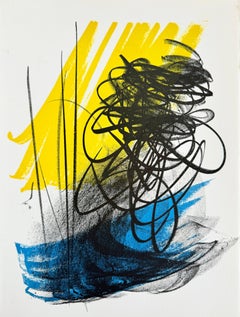
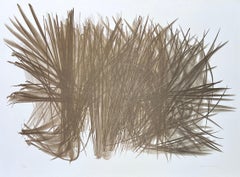
This exquisite lithograph by Hans Hartung (1904–1989), titled Sans titre (Untitled), from the album XXe Siecle, Annee No. 41, Decembre 1973, originates from the 1973 edition published by Societe Internationale dArt XXe Siecle, Paris, under the direction of Gualtieri di San Lazzaro, editeur, Paris, and printed by Mourlot Freres, Paris, 1973. Sans titre reflects Hartungs mastery of gestural abstraction during a period marked by his continued exploration of spontaneity, structure, and atmospheric depth.
Executed as a lithograph on velin paper, this work measures 12.5 x 9.75 inches. Unsigned and unnumbered as issued. The edition exemplifies the superb craftsmanship of Mourlot Freres, Paris
Artwork Details:
Artist: Hans Hartung (1904–1989)
Title: Sans titre (Untitled)
Medium: Lithograph on velin paper
Dimensions: 12.5 x 9.75 inches (31.75 x 24.77 cm)
Inscription: Unsigned and unnumbered as issued
Date: 1973
Publisher: Societe Internationale dArt XXe Siecle, Paris, under the direction of Gualtieri di San Lazzaro, editeur, Paris
Printer: Mourlot Freres, Paris
Condition: Well preserved, consistent with age and medium
Provenance: From the album XXe Siecle, Annee No. 41, Decembre 1973, published by Societe Internationale dArt XXe Siecle, Paris; printed by Mourlot Freres, Paris, 1973
About the Publication:
Gualtieri di San Lazzaros XXe Siecle (Twentieth Century) was one of the most influential art journals of the modern era, founded in Paris in 1938 as a platform for the greatest painters, sculptors, and writers of the 20th century. San Lazzaro, a visionary editor, critic, and champion of modernism, believed that art and literature should coexist as expressions of a shared human imagination. Under his direction, XXe Siecle became a cultural bridge between Europe and the wider world, publishing special issues devoted to leading figures such as Picasso, Matisse, Chagall, Braque, Calder, Miro, Kandinsky, and Leger. Each edition combined essays by renowned critics and poets with original lithographs and woodcuts printed by the foremost ateliers of Paris, Milan, and New York, including Mourlot, Curwen, and Amilcare Pizzi, creating a uniquely rich dialogue between text and image. The 1960 issue, XXe Siecle, Nouvelle serie, No. 14, showcased Daphnis et Chloe, one of Chagalls most celebrated lithographic subjects, coinciding with his work on the monumental suite of lithographs inspired by the same pastoral tale, published by Teriade. Through this publication, San Lazzaro further cemented Chagalls reputation as the modern poet of color and love, uniting myth, nature, and emotion in visual form. Today, XXe Siecle remains an essential record of 20th century modernism, celebrated for its seamless integration of fine art, literature, and design.
About the Artist:
Hans Hartung (1904–1989) was a German-French painter and one of the great pioneers of postwar European abstraction, celebrated for his bold gestural mark-making, experimental techniques, and ability to translate pure energy and emotion into visual form. Born in Leipzig, Germany, Hartung studied philosophy, art history, and fine art in Leipzig, Dresden, and Munich, where he absorbed the groundbreaking ideas of Pablo Picasso, Wassily Kandinsky, and Joan Miro, artists whose innovations profoundly shaped his artistic philosophy. Influenced by Picassos daring structure, Kandinskys spiritual abstraction, and Miros lyrical biomorphism, Hartung sought to create an art that transcended representation and captured the rhythm of existence itself. In 1935, he moved to Paris and joined the avant-garde circle that included Alexander Calder, Alberto Giacometti, Salvador Dali, Marcel Duchamp, and Man Ray, whose explorations of form, movement, and perception encouraged him to experiment beyond the traditional boundaries of painting. His early works revealed a fascination with the expressive power of line, arcs, cross-hatching, and gestural brushwork that balanced chaos and control, tension and harmony. After losing a leg in World War II while fighting for the French Foreign Legion, Hartung transformed his personal pain into artistic liberation, creating works that embodied both destruction and renewal. Emerging as a leader of Art Informel in the 1940s and 1950s, he developed a radical process of painting using unconventional tools such as spray guns, knives, and branches to achieve luminous layers, textures, and explosive movement across his canvases. Each composition became a record of physical action and psychological intensity, a visual symphony that paralleled the spontaneity of Abstract Expressionism in America but with the lyrical precision of European modernism. His dynamic gestures, arcing lines, scratches, and splatters conveyed both cosmic motion and meditative stillness, evoking the universal energies of nature, sound, and light. Like Duchamp and Man Ray, he viewed creation as experimentation; like Calder and Miro, he saw art as rhythm and freedom; and like Kandinsky, he understood abstraction as visual music. By the 1960s, Hartung had achieved international acclaim, winning the Grand Prix for painting at the Venice Biennale and exhibiting at Documenta, the Musee dArt Moderne de la Ville de Paris, and major museums worldwide including MoMA, the Tate, the Guggenheim, and the Centre Pompidou. His influence extended to generations of artists such as Joan Mitchell, Pierre Soulages, Zao Wou-Ki, Anselm Kiefer, Gerhard Richter, and Sean Scully, who drew inspiration from his fusion of control and spontaneity. In his late career, Hartung continued to innovate with monumental airbrush works that radiated light and motion, confirming his lifelong belief that abstraction is a universal language of energy. Standing alongside Pablo Picasso, Alexander Calder, Alberto Giacometti, Salvador Dali, Joan Miro, Wassily Kandinsky, Marcel Duchamp, and Man Ray, Hans Hartung remains a cornerstone of modern abstraction, an artist whose fearless experimentation bridged chaos and beauty, intellect and instinct, and emotion and form. His highest auction record was achieved by T1962-R6 (1962), which sold for 4.4 million USD at Sothebys, Paris, on December 5, 2023, reaffirming Hans Hartungs enduring legacy as one of the most visionary, expressive, and collectible abstract artists of the modern era.
Hans Hartung XXe Siecle 1973, Hans Hartung lithograph, Hartung Sans titre.