Video Loading
Want more images or videos?
Request additional images or videos from the seller
1 of 7

Tracey Emin
UNIQUELY Hand signed by Tracey Emin Bazaar magazine cover for David Bowie Framed

2016

$8,800
£6,730.46
€7,702.34
CA$12,524.81
A$13,560.73
CHF 7,209.61
MX$163,551.70
NOK 90,664.95
SEK 84,525.56
DKK 57,526.73

About the Item

Tracey Emin Hand Signed by Tracey Emin: Bazaar magazine homage to David Bowie, 2016 Glossy offset lithograph magazine (uniquely hand signed by Tracey Emin) Boldly signed in silver sharpie with Tracey's trademark 'x' under her signature This is a collectors' item - not an editioned work, as it was, exceptionally hand signed by Tracey Emin for the present owner. Complete magazine floated in a shadowbox frame (the signed cover has not been removed and the magazine is preserved and framed in its entirety) Cover depicts Tracey Emin's homage to David Bowie It is, exceptionally uniquely signed in a silver sharpie by Tracey Emin (the regular publication did not bear her hand signature - this is exceptional) Provenance: Hand signed by Tracey Emin for the present owner Frame included: Elegantly floated in museum quality white wood frame under UV plexiglass Measurements: Framed 15.25 inches by 12.25 inches by 1.5 inches Magazine 11 by 8.25 Tracey Emin Biography: Tracey Emin looks to her life for her primary material. With soul-searching candour, she probes the construct of the self but also the very impulse to create. Unfiltered, irreverent, raw, she draws on the fundamental themes of love, desire, loss and grief in works that are disarmingly and unashamedly emotional. ‘The most beautiful thing is honesty, even if it’s really painful to look at’, she has remarked. Self-portraiture and the nude run throughout her practice, which Emin has described as being about ‘rites of passage, of time and age, and the simple realisation that we are always alone’. Her earliest works refer to her family, childhood and chaotic teenage years, growing up in the seaside town of Margate and leaving home at the age of fifteen. What happened next is explored, in a manner that is neither tragic nor sentimental, in drawing, painting, film, photography, sewn appliqué, sculpture, neon and writing, as the vicissitudes of relationships, pregnancies and abortions intersect with her commitment to the formal disciplines of art. Most recently, the artist has experienced her body as a battleground, through illness and ageing, on which she reports with characteristic fearlessness. The playful title of Emin’s first solo exhibition, My Major Retrospective 1963–1993, suggests the artist felt, despite being at the beginning of her career, significant things had already happened. Her obsessive assemblage of personal memorabilia included tiny photographs of her art school paintings that she’d destroyed, a ‘photographic graveyard’ that revealed an admiration for paintings by Egon Schiele and Edvard Munch. She details this ‘emotional suiside’ in Tracey Emin’s CV Cunt Vernacular (1997), among several early video works that give further insight into her formation as an artist, highlighting moments of epiphany through the use of first-person narrative. ‘I realised there was the essence of creativity, that moment of conception,’ she says in How It Feels (1996), a pivotal film in which she tells the story of her abortion. ‘The whole being of everything… it had to be about where it was really coming from’. Speaking to camera while walking through the streets of London, she concludes that conceptual art, as an act of reproduction, is inseparable from the artist’s inner life. Developing this connection, the haunting film Homage to Edvard Munch and All My Dead Children (1998) shows the artist on the pier near Munch’s house, naked and prostrate in the foetal position, the dawn rising over the water as she lifts her head and screams – a guttural response to great painter’s iconic image. In 1998, Emin created My Bed, an uncensored presentation of her most personal habitat. The double bed has become abstracted from function as it sits on the gallery floor, in conversation with art history and a stage for life events: birth, sleep, sex, depression, illness, death. The accumulation of real objects (slippers, condoms, cigarettes, empty bottles, underwear) on and around the unmade bed builds a portrait of the artist with bracing matter-of-factness, defying convention to exhibit what most people would keep private. The work gained international attention as part of the Turner Prize, entering Emin into public consciousness. Another work that became a byword for her art of disclosure was the sculpture Everyone I Have Ever Slept With 1963−1995 (1995, destroyed 2004), where the names of all those she had ever shared a bed with – friends, lovers and family – were sewn on the inside of a tent, a crawl-space that invites the viewer to reflect on their own inventory. Explicitly feminist, and acknowledging the influence of her friend and collaborator Louise Bourgeois, Emin’s choice of medium is integral to the story she tells. In hand-embroidered blankets and quilts, traditionally associated with women’s work, she pierces the visual field with words, combining scraps of different material with uneven stitching to spell out statements whose syntax and spelling remain uncorrected. With titles such as  Mad Tracey from Margate. Everyone’s been there, (1997) or Helter Fucking Skelter (2001), they register the artist’s acute sensitivity to the views of those around her and give a riposte, just as the medium is a riposte to the classification of fine art, for centuries dominated by male artists. As she herself became newsworthy, both nationally and internationally, Emin used the publicity to prick other forms of decorum in the professional art world – such as never over-explaining. In longer form, her memoir, Strangeland (2005) offers an account of her journey to becoming ‘a fucked, crazy, anorexic-alcoholic-childless, beautiful woman. I never dreamt it would be like this.’ The text is riddled with spelling mistakes that challenge the form and carry through a sense of unfiltered process, as was also the case with her long-running newspaper column for The Independent (2005–09), in which she narrated her weekly goings-on under the title ‘My Life in a Column’. Emin’s ongoing series of neons features snatches of text in her recognisable slanted handwriting, elevating fleeting thoughts and feelings as aphorisms: You touch my Soul (2020), I Longed For you (2019) or I don’t Believe in Love but I believe in you (2012). Her formulation of statements in the second person has the effect of placing the viewer squarely in the situation, and can encapsulate an entire romance in a pithy phrase, as in I want my time with You (2018), a twenty-metre-wide neon that greets passengers at London’s St Pancras Station. A critical part of her practice since the 1990s, the neons evoke the seafront lights of Margate, latent with the sense of dusk and faded glamour. Her birthplace is an abiding subject; it resurfaces in large-scale sculptures, where reclaimed wood and found materials are assembled in jagged structures that allude to the beach, pier, huts and tide markers. Margate’s famous theme park ‘Dreamland’ is referred to in several works, among them Self-Portrait (2001), which recreates the pleasure ground’s helter-skelter, and It’s Not the Way I want to Die (2005), which recalls the undulating roller-coaster in rickety, worn wood, fragile to the point of collapse. Margate is ‘part of me’, Emin says, and while looking back she is now looking to the future with the establishment of TKE Studios, a new art school and artists’ studios. Questions of mortality and the centrality of the female reproductive body drive The Mother (2021), one of Emin’s most significant public sculptures. Permanently sited next to the new Munch Museum, Oslo, it marks the death of her own mother, and brings her lifelong admiration for Munch full circle. Fifteen tonnes of bronze standing nine metres high, this woman with ‘her legs open to the Fjord’ is visible from afar over land and water, a monument to the female figure as protector without compromising on her vulnerability or eroticism. By contrast, Baby Things, Emin’s accurate rendering of children’s tiny lost shoes and clothes in bronze, was installed as if by chance outside the British Pavilion at the Venice Biennale (2007) and around Folkestone Triennial (2008), intimate tokens that might inadvertently provoke a range of reactions, from fear for those we love most, to the indifference with which we treat a discarded object. Most recently, Emin’s work has been charged by the seriousness of her medical situation, since in 2020 she was diagnosed with bladder cancer. Self-portraits taken on her camera phone in bed find the artist facing her ‘crippling’ insomnia in the small hours, and in recovery from extensive surgery. Her paintings of the nude figure have a tempestuous energy. Emin’s graphic line, by turn delicate or vigorous, imparts a sense of urgency; with each abandoned and assertive gesture, she is flaying herself open. Drips and obliterations point to the fluidity of the body, as it fluctuates between joy and suffering on its journey between birth and death. Explosions of colour allude to a self that is overcome by feeling and triumphing in sheer sensuality.  Tracey Emin was born in 1963 in London. She currently lives and works between London, the South of France, and Margate, UK. Emin has exhibited extensively including major exhibitions at Royal Academy of Arts, London (2020); Musée d’Orsay, Paris (2019); Château La Coste, Aix-en-Provence, France (2017); Leopold Museum, Vienna (2015); Museum of Contemporary Art, Miami (2013); Museo de Arte Latinoamericano de Buenos Aires (2012); Turner Contemporary, Margate, UK (2012); Hayward Gallery, London (2011); Kunstmuseum Bern (2009); Scottish National Gallery of Modern Art, Edinburgh (2008); Centro de Arte Contemporáneo, Malaga, Spain (2008); Art Gallery of New South Wales, Sydney (2003); and Stedelijk Museum, Amsterdam (2002). In 2007 Emin represented Great Britain at the 52nd Venice Biennale and her installation  My Bed has been included in ‘In Focus’ displays at Tate Britain with Francis Bacon (2015), Tate Liverpool with William Blake and also at Turner Contemporary, Margate alongside JMW Turner (2017). In 2011, Emin was appointed Professor of Drawing at the Royal Academy of Arts, London, and in 2012 was made Commander of the Most Excellent Order of the British Empire for her contributions to the visual arts. -Courtesy of White Cube Gallery
  • Creator:
    Tracey Emin (1963, British)
  • Creation Year:
    2016
  • Dimensions:
    Height: 15.25 in (38.74 cm)Width: 12.25 in (31.12 cm)Depth: 1.5 in (3.81 cm)
  • Medium:
  • Movement & Style:
  • Period:
  • Condition:
    Very good vintage condition (see photograph).
  • Gallery Location:
    New York, NY
  • Reference Number:
    1stDibs: LU1745217317372

More From This Seller

View All
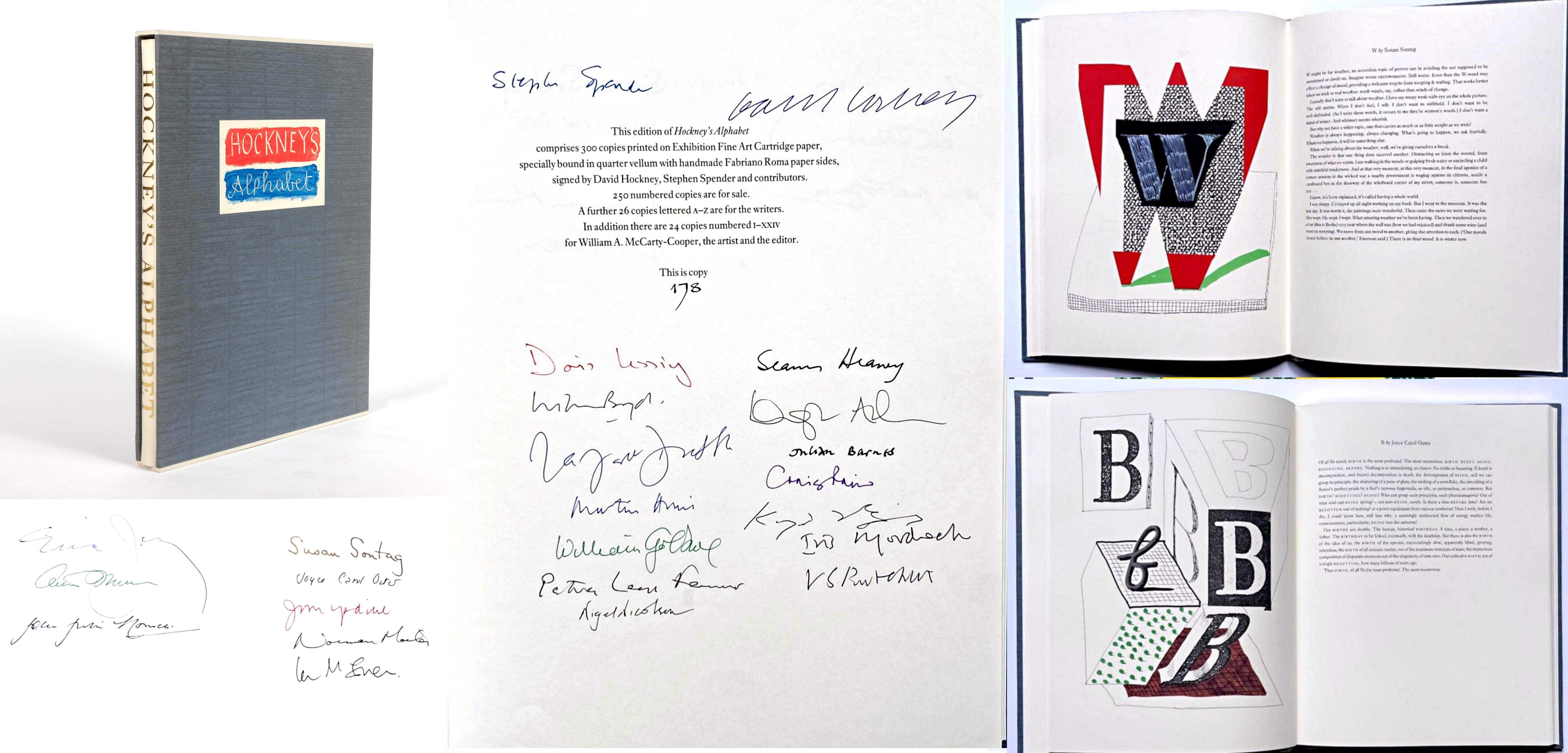
Hockney's Alphabet, portfolio of 26 lithographs signed by Hockney and 23 writers
By David Hockney
Located in New York, NY
David Hockney Hockney's Alphabet, 1991 26 color lithographs in Fine Art Cartridge paper bound in quarter vellum with handmade Fabriano Roma paper sides, housed in matching box; signed by David Hockney and most contributors in ink and numbered 178 in black ink on the justification page Numbered 178/250 Hand signed by 24 of the contributors, including David Hockney and Steven Spender 12 5/8 x 9 5/8 inches Bound in book and held in slipcase This portfolio features 26 color lithographs in Fine Art Cartridge paper with full margins, bound as issued, in quarter vellum with handmade Fabriano Roma paper sides, in original grey slipcase. It is signed by David Hockney (the artist) and most contributors in ink and numbered 178 in black ink on the justification page, from the edition of 250, with full text and title page, published by Faber & Faber, London, text edits by Stephen Spender, who also signed. It is illustrated by David Hockney, hand signed by David Hockney and Stephen Spender and also signed by the following contributors: Douglas Adams, Martin Amis, Julian Barnes, William Boyd, Margaret Drabble, Patrick Leigh Fermor, William Golding, Seamus Heaney...
Category

1990s Pop Art Abstract Prints

Materials

Ink, Mixed Media, Vellum, Lithograph, Board, Pencil, Offset

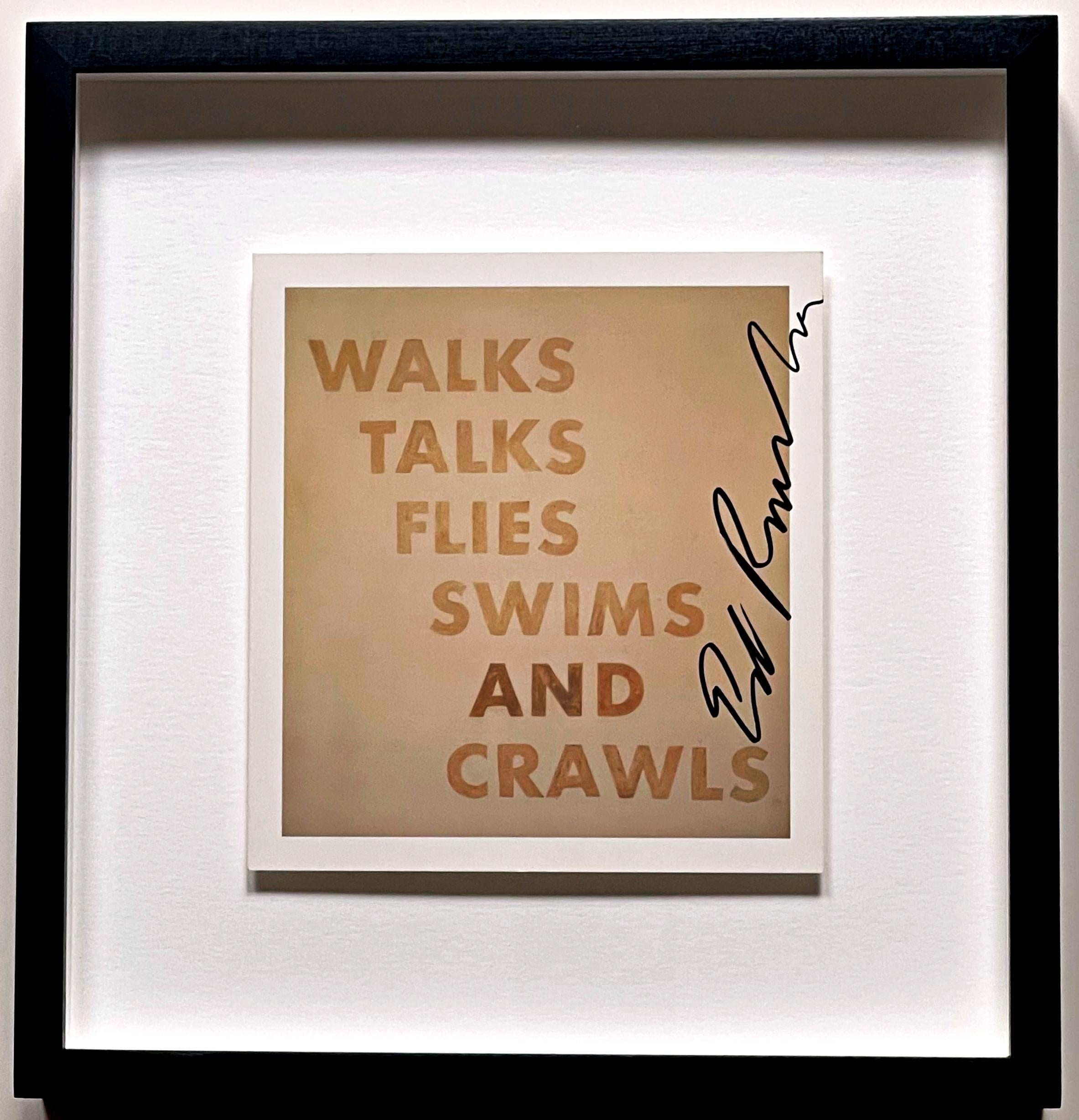
WALKS TALKS FLIES SWIMS AND CRAWLS, Rare Card, (Hand Signed by Ed Ruscha) Framed
By Ed Ruscha
Located in New York, NY
Ed Ruscha WALKS TALKS FLIES SWIMS AND CRAWLS (Hand Signed by Ed Ruscha), 1992 Offset lithograph invitation card (hand signed) Vintage Robert Miller Gallery invitation card Boldly sig...
Category

1990s Pop Art Abstract Prints

Materials

Postcard, Lithograph, Offset

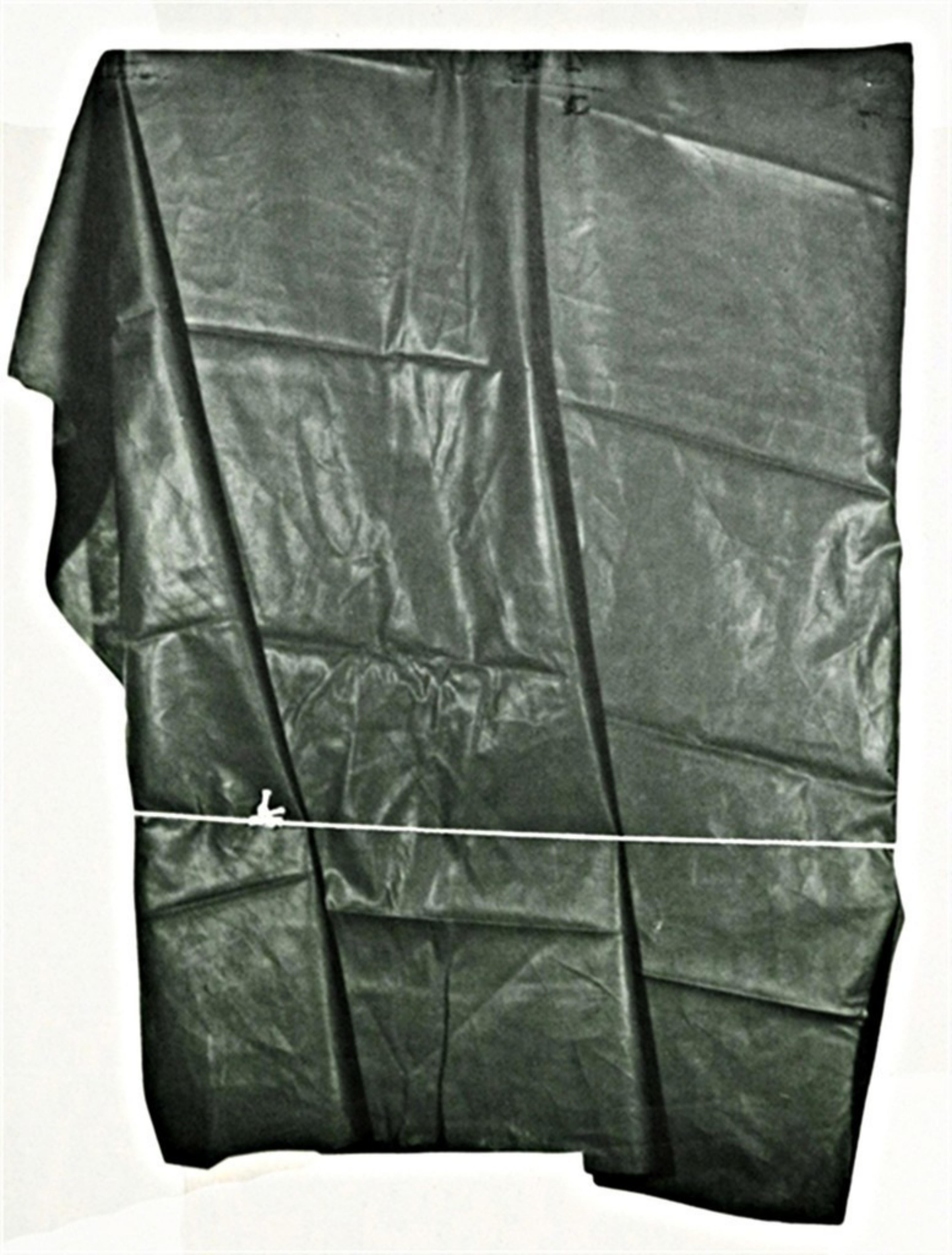
MOCA Chicago Lithograph, first North American building Christo wrapped Signed/N
By Christo
Located in New York, NY
This is a truly historic limited edition hand signed museum print from the 1960s - of the first North American building the legendary artists Christo ever wrapped: Christo Wrap In Wr...
Category

1960s Pop Art Abstract Prints

Materials

Offset, Lithograph, Laid Paper, Pencil

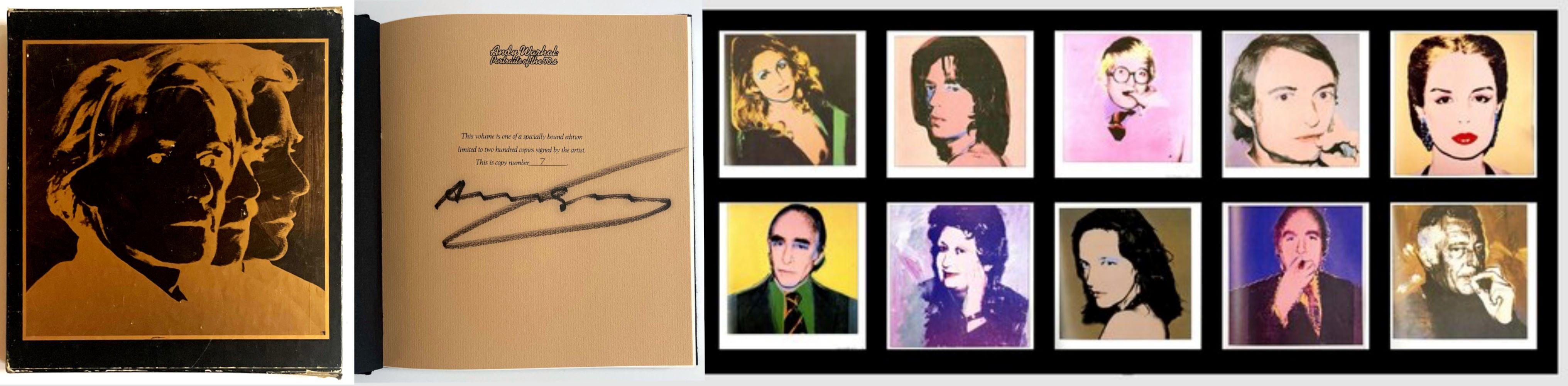
Portraits of the 1970s, Deluxe Monograph + Slipcase Hand Signed/N by Andy Warhol
By Andy Warhol
Located in New York, NY
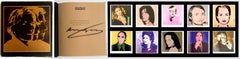
Andy Warhol Portraits of the 1970s (Deluxe Limited Edition Monograph with Slipcase, Hand Signed and Numbered by Warhol), 1979 Hand Signed and Numbered Hardback Monograph with 120 Bound offset lithographs and text, held in original slipcase (boxed set). Boldly signed by Andy Warhol and numbered 7, from the edition of 200 on the colophon page. 9 1/2 × 8 1/2 × 2 inches Provenance The original (uptown) Whitney Museum An amazing and historic gift! As dazzling as the Warhol show was in 2019 at the new Whitney Museum -- only his show in the late 1970s at the old Whitney Museum, could offer this Deluxe limited edition collectors item - hand signed and numbered by Andy Warhol - because the latter was published during his lifetime. This rare 1979 First (and only) Edition hardback monograph is held in the original slipcase, and is hand signed by Andy Warhol and numbered 108 out of only 200 on the first front end page (see image). This collectors item features text, accompanied by 120 full page color offset lithograph bound, double sided plates on regular pages. (Total pages are: 145) It was published by the Whitney Museum in collaboration with Random House, in conjunction with the exhibition held at the Whitney Museum of American Art, November 20, 1979 to January 27, 1980. Text foreword is by Tom Armstrong, the Whitney's director. Total pages are: 145. The Warhol portraits included are: Giovanni Agnelli, Marella Agnelli, Corice Arman, Marian Block, Irving Blum, Truman Capote, Cristina Caramati, Leo Castelli, Carol Coleman, Norman Fisher, Kay Fortson, Tina Freeman, Diane Von Furstenberg, Henry Geldzahler, Halston, Brooke Hayward...
Category

1970s Pop Art Figurative Prints

Materials

Offset, Lithograph, Pencil, Board, Mixed Media, Ink, Paper

David Hockney at Castelli Graphics
By David Hockney
Located in New York, NY
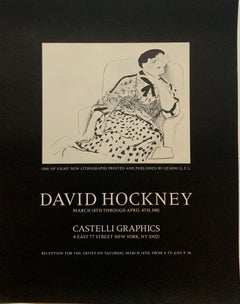
David Hockney David Hockney at Castelli Graphics, 1981 Offset Lithograph poster 20 × 16 inches Unframed Rare 1981 poster published on the occasion of the r...
Category

1980s Pop Art Abstract Prints

Materials

Offset, Lithograph

LOVE in Central Park, New York Pencil Signed and numbered 66/89, Historic print
By Robert Indiana
Located in New York, NY
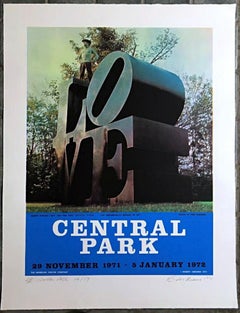
Robert Indiana LOVE in Central Park, New York, 1971 Color lithograph on wove paper. Pencil signed, dated and numbered with LOVE drawing/flourish Hand-signed by artist, Pencil signed, dated and numbered 66/ 89. Also bears a drawing of the stacked letters LOVE in pencil. Bears Robert Indiana's copyright Published by Robert Indiana and printed by the American Poster Company to raise money for Central Park 39 × 30 inches Unframed This impressively large 1971 lithograph - pencil signed and numbered from the limited edition of only 89, with a stacked LOVE drawing on the front - depicts Robert Indiana's iconic LOVE sculpture (from the permanent collection of the Indianapolis Museum of Art) when it was exhibited at Central Park in New York City. This was the turn of the decade of the 1970s - during the height of the anti-Vietnam War protests of the Nixon Administration, when the presence of Indiana's monumental cor-ten steel LOVE in Central Park took on a much deeper significance in New York and indeed the country. This important print is pencil signed, dated and numbered by Robert Indiana from the very small edition of only 89. It also bears a drawing - a flourish - of the word LOVE written by the artist in pencil. Very few of the signed editions of this print remain -- so it is rarely seen on the market. Indeed, eighty nine (89) is a very small edition; however, this oversized print was used for promotional purposes in public places, so very few of the 89 signed and numbered works remain - let alone with the original stacked love drawing. . If you LOVE Robert Indiana...
Category

1970s Pop Art Abstract Prints

Materials

Lithograph, Pencil, Offset

You May Also Like

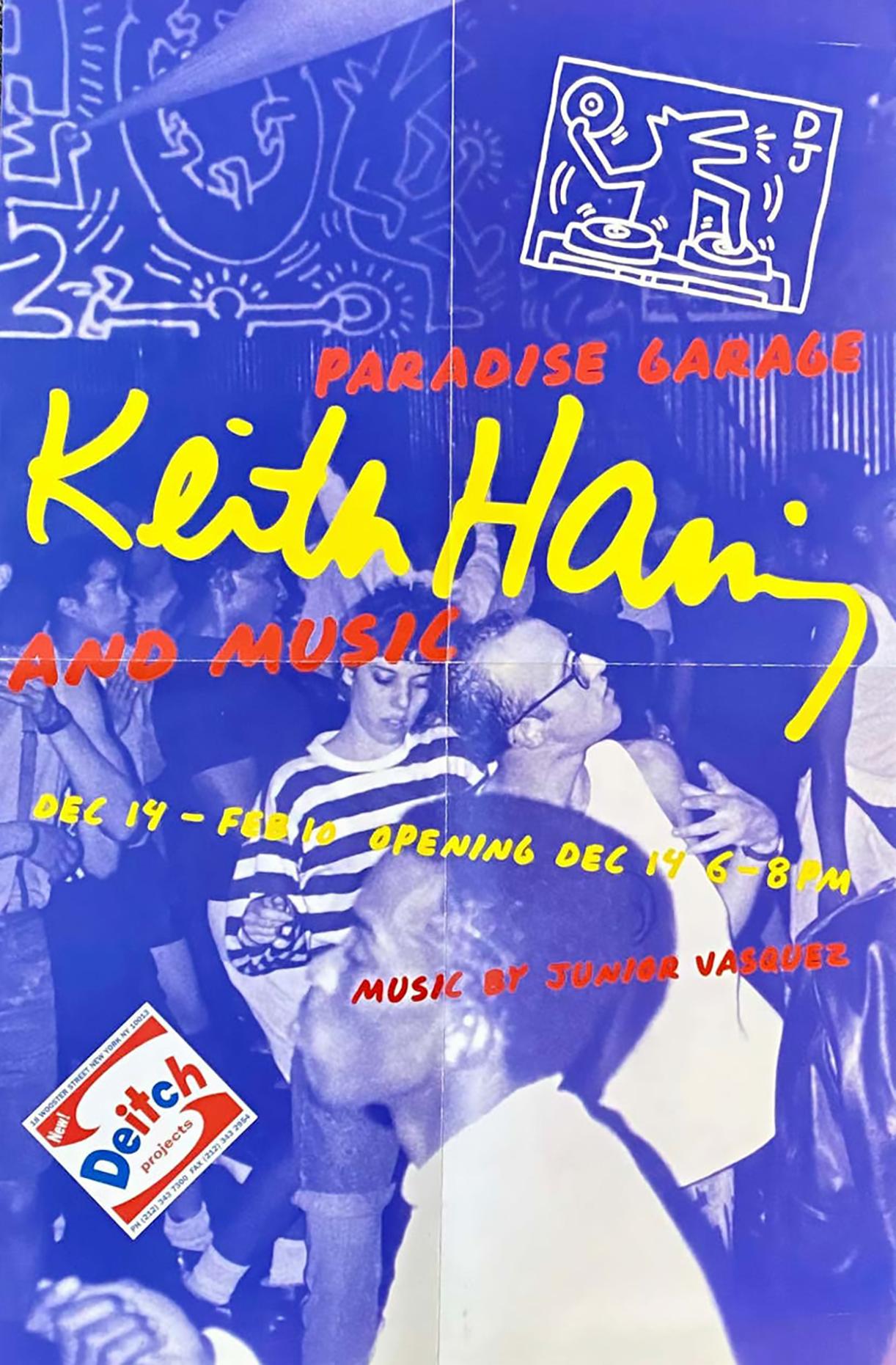
Keith Haring Paradise Garage Exhibit Poster 'Keith Haring Jeffrey Deitch'
By Keith Haring
Located in NEW YORK, NY
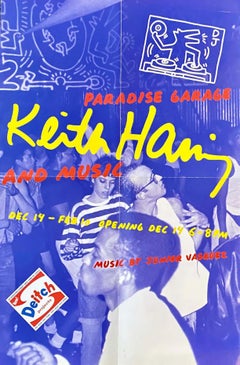
Rare vintage Keith Haring exhibition poster published on the occasion of: ‘Paradise Garage: Keith Haring and Music, December 14, 2000-February 10, 2001, Deitch Projects, 18 Wooster ...
Category

1980s Pop Art Figurative Prints

Materials

Paper, Lithograph, Offset

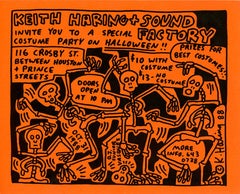
Keith Haring Halloween 1989 (announcement)
By Keith Haring
Located in NEW YORK, NY
Keith Haring New York City 1989: RARE original 1989 Keith Haring designed Sound Factory Halloween invite featuring a dazzling array of Keith Haring Skeletons: “Keith Haring & Sound Factory Invite You to A Special Halloween Costume...
Category

1980s Pop Art Abstract Prints

Materials

Lithograph, Offset

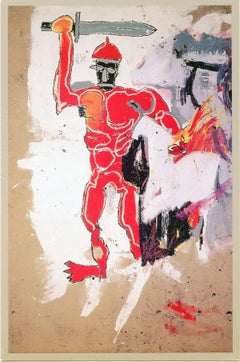
Basquiat at Vrej Baghoomian gallery 1989 (Basquiat Red Warrior announcement)
By Jean-Michel Basquiat
Located in NEW YORK, NY
Basquiat: Vrej Baghoomian gallery New York, 1989: Vintage original folding announcement card to Jean-Michel Basquiat at Vrej Baghoomian Gallery New York: 10/21 to 11/25, 1989. Pictured on front side is an image of Basquiat's iconic, 'Red Warrior.' A rare, highly collectible Basquiat ephemera piece that works well in any collection. Off-set printed gallery announcement. 8.75 x 5.75 inches (folded closed). Light signs of handling; otherwise very good overall vintage condition. Published by Vrej Baghoomian Gallery, New York, 1989. Unsigned from an edition of unknown. Scarce. Jean-Michel Basquiat rose to success during the 1980s. Basquiat’s paintings are largely responsible for elevating graffiti artists into the realm of the New York gallery scene. His spray-painted crowns and scribbled words referenced everything from his Haitian and Puerto Rican heritage, to political issues, pop-culture icons, and Biblical verse. The gestural marks and expressive nature of his work not only aligned him with the street art of Keith Haring and Kenny Scharf, but also the Neo-Expressionists Julian Schnabel and David Salle. “If you wanna talk about influence, man, then you've got to realize that influence is not influence,” he said of his process. After quickly rising to fame in the early 1980s, Basquiat was befriended by many celebrities and artists, including Andy Warhol, with whom he made several collaborative works. At only 27, his troubles with fame and drug addiction led to his tragic death from a heroin overdose on August 12, 1988 in New York, NY. The Whitney Museum of American Art held the artist’s first retrospective from October 1992 to February 1993. Related Categories: Basquiat Tony Shafrazi. Basquiat ephemera. Basquiat poster. Basquiat prints...
Category

1980s Pop Art Figurative Prints

Materials

Lithograph, Offset

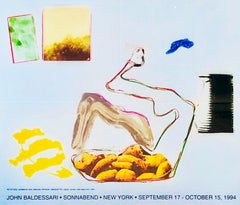
John Baldessari Sonnabend Gallery 1994 (John Baldessari prints posters)
By John Baldessari
Located in NEW YORK, NY
John Baldessari, Sonnabend Gallery. New York, NY, September 17 - October 15, 1994: A beautifully composed rare original John Baldessari exhibition poster on elegant transparent paper...
Category

1990s Pop Art Figurative Prints

Materials

Lithograph, Offset

Keith Haring Halloween 1989 (announcement)
By Keith Haring
Located in NEW YORK, NY
Keith Haring New York City 1989: RARE original 1989 Keith Haring designed Sound Factory Halloween invite featuring a dazzling array of Keith Haring Skeletons: “Keith Haring & Sound...
Category

1980s Pop Art Abstract Prints

Materials

Lithograph, Offset

Keith Haring lithographic insert 1982 (Keith Haring Tony Shafrazi 1982)
By Keith Haring
Located in NEW YORK, NY
Keith Haring Lithograph 1982: Double-sided lithographic insert from the seminal spiral bound, 1982 Tony Shafrazi catalog published on the occasion of Haring's first gallery solo exhi...
Category

1980s Pop Art Figurative Prints

Materials

Lithograph, Offset