Woodcut Figurative Prints
to
375
2,621
290
147
65
97
Overall Width
to
Overall Height
to
1,864
253
203
182
84
40
22
19
18
16
1
170
132
44
42
29
40
676
2,276
229
20
50
328
206
114
115
260
82
86
47
25
2,326
832
56
1,990
1,051
779
705
514
422
392
364
335
314
288
232
204
195
180
157
153
120
111
93
16,940
12,501
6,109
3,250
3,222
200
1,917
1,279
975
Medium: Woodcut
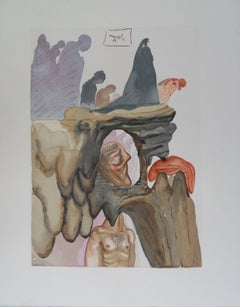
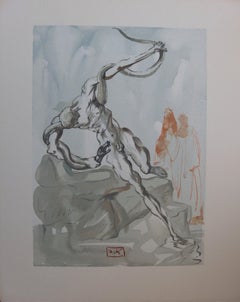
Hell 22 - The Liars - Original Woodcut 1963 (Field p 189 à 200)
Located in Paris, IDF
Salvador Dali (1904-1989)
Hell 22 - The Liars, 1963
Wood engraving from "Divine Comedy"
with the signature printed in the plate
On BFK Rives vellum 32,8 x 26,4 cm (c. 13 x 10")
REF...
Category
1960s Surrealist Woodcut Figurative Prints
Materials
Woodcut
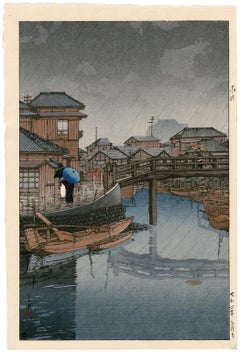
'Rain at Shinagawa, Ryoshimachi' — Showa-era Woodblock Print
By Kawase Hasui
Located in Myrtle Beach, SC
Kawase Hasui, 'Rain at Shinagawa, Ryoshimachi' from the series 'Selection of Views of the Tokaido', woodblock print, 1931. A very fine, atmospheric impression, with fresh colors; the...
Category
1930s Showa Woodcut Figurative Prints
Materials
Woodcut
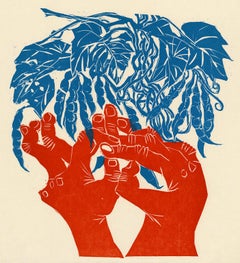
'Drop of Life' — from 'Solitude' for Henry David Thoreau's 'Walden'
Located in Myrtle Beach, SC
Naoko Matsubara, 'Drop of Life' for the portfolio 'Solitude', color woodcut, 1971. A fine impression with fresh, vivid colors, on cream laid Japan paper, the full sheet with margins,...
Category
1970s Modern Woodcut Figurative Prints
Materials
Woodcut
Elwood W. Bartlett, Wisconsin Farm, about 1945, mid-century wood engraving
Located in New York, NY
Elwood Warren Bartlett is a Wisconsin native who also worked in Indiana.
Largely self taught as a printmaker, Bartlett worked in a style that once identified as his, immediately t...
Category
1940s American Modern Woodcut Figurative Prints
Materials
Woodcut

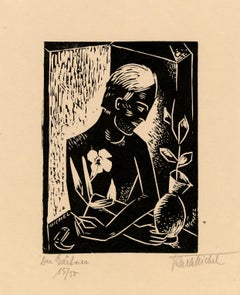
'Der Gartner' (The Gardener) — German Expressionism
By Karl Michel
Located in Myrtle Beach, SC
Karl Michel, 'Der Gartner' (The Gardener), woodcut, c. 1925. Signed, titled, and numbered '15/50' in pencil. Signed in the block, lower left and right. A fine, richly-inked impression on buff wove paper, with full margins (1 1/2 to 2 3/4 inches), in excellent condition. Matted to museum standards, unframed. Scarce.
Image size 5 1/4 x 3 7/8 inches (133 x 98 mm); sheet size 10 x 7 3/4 inches (254 x 198 mm).
ABOUT THE ARTIST
Karl Michel (1889-1984) was a noted graphic designer and expressionist printmaker during Germany's pre-Nazi Weimar Republic (1919 - 1933). In 1920, his work was featured in the influential German graphic design magazine Das Plakat...
Category
1920s Expressionist Woodcut Figurative Prints
Materials
Woodcut
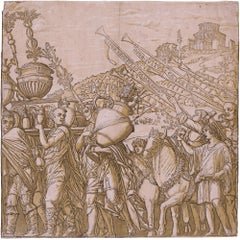
The Triumph of Caesar: Plate IV
By Andrea Mantegna
Located in Middletown, NY
Andreani, Andrea (Italian, about 1558–1610), after Andrea Mantegna (Italian, 1431-1506)
Chiaroscuro woodcut in colors printed from four blocks on laid paper in dark brown, grey, and...
Category
16th Century Old Masters Woodcut Figurative Prints
Materials
Ink, Handmade Paper, Laid Paper, Woodcut
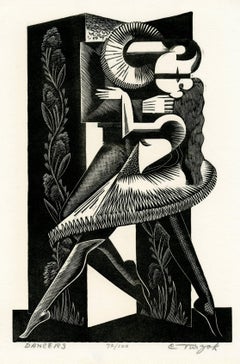
'Dancers' — 1930s American Modernism
Located in Myrtle Beach, SC
Charles Turzak, 'Dancers', 1939, wood engraving, edition 100. Signed, titled, and numbered 72/100 in pencil. A fine, richly-inked impression, on off-white Japan paper, with full marg...
Category
Mid-20th Century Art Deco Woodcut Figurative Prints
Materials
Woodcut
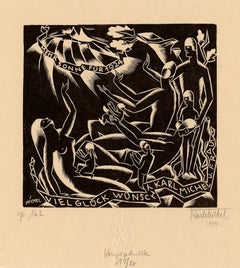
'Mehr Sonne fur 1924' (More Sun for 1924)— German Expressionism
By Karl Michel
Located in Myrtle Beach, SC
Karl Michel, 'Mehr Sonne fur 1924. Viel Gluck Wunscht Karl Michel U. Frau', woodcut, 1924, edition 20. Signed, dated, and numbered 'op. 162' and '15/20' in pencil. Signed in the image, lower left. A fine, richly-inked impression on buff wove paper, with full margins (1 1/2 to 2 3/4 inches), in very good condition. Printed by the artist. Scarce. Matted to museum standards, unframed.
New Year's Greeting – English translation: "More Sun for 1924. Good Luck Wishes from Karl Michel and his Wife."
Image size 4 5/8 x 4 3/4 inches (118 x 121 mm); sheet size 7 3/4 x 10 inches (198 x 254 mm).
ABOUT THE ARTIST
Karl Michel (1889-1984) was a noted graphic designer and expressionist printmaker during Germany's pre-Nazi Weimar Republic (1919-1933). Michel’s work was the subject of a feature article in the influential German graphic design magazine Das Plakat...
Category
1920s Expressionist Woodcut Figurative Prints
Materials
Woodcut
Hell 24 - The Thieves - Woodcut - 1963 (Field #p. 189)
Located in Paris, IDF
Salvador Dali (1904-1989)
Hell 24 - The Thieves
Original woodcut
Printed signature in the plate
1960/63
Printed on paper Vélin BFK Rives
Size 32,8 x 26,4 cm (c. 13 x 10")
REFERENCE...
Category
1960s Surrealist Woodcut Figurative Prints
Materials
Woodcut
Nicole
By Alex Katz
Located in New York, NY
signed and numbered lower right
edition of 60
Catalogue raisonné 00717
Published by Simmelink Sukimoto Editions
Internationally recognized painter and printmaker Alex Katz was born...
Category
2010s Contemporary Woodcut Figurative Prints
Materials
Linocut, Woodcut


$30,000
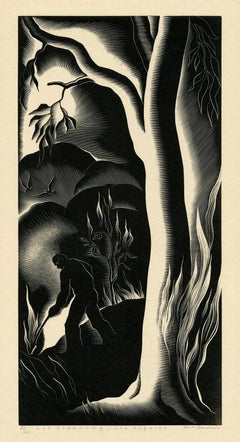
'Lot Cleaning, Los Angeles' — 1930s Modernism
Located in Myrtle Beach, SC
'Lot Cleaning, Los Angeles', wood engraving, edition 60, Zeitlin & Ver Brugge 69. Signed, titled and numbered '51/60' in pencil. A brilliant, black impression, on Kitakata Japan pape...
Category
1930s American Modern Woodcut Figurative Prints
Materials
Woodcut
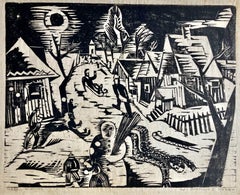
Werner Drewes, Winter, 1933, modernist woodcut
Located in New York, NY
A modernist fantasy winter scene created by Werner Drewes, this print brings key aspects of the period together. His cubist-inspired woodcut technique is utilized here to bring the s...
Category
1930s American Modern Woodcut Figurative Prints
Materials
Woodcut
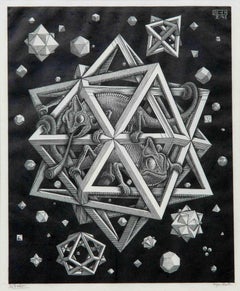
Stars/Sterren - Woodcut by Maurits Cornelis Escher - 1948
Located in Roma, IT
Woodcut print realized by Escher in 1948.
Hand signed in pencil and annotated in pencil lower right "eigen druck".
Monogrammed and dated in the plate "MCE/X-'48 upper right.
One o...
Category
1940s Modern Woodcut Figurative Prints
Materials
Woodcut
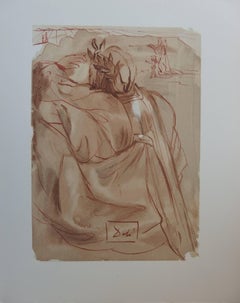
Purgatory 30 - The Announcement of a Great Event - woodcut -1963
Located in Paris, IDF
Salvador Dali (1904-1989)
Purgatory 30 - The Announcement of a Great Event
Wood engraving from "Divine Comedy"
with the printed signature
1960/63
Printed on paper Vélin BFK Rives
S...
Category
1960s Surrealist Woodcut Figurative Prints
Materials
Woodcut
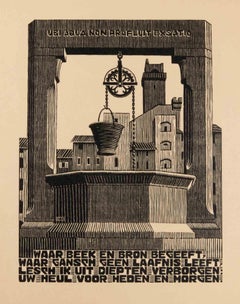
Well - Woodcut by Maurits Cornelis Escher - 1931
Located in Roma, IT
Woodcut print realized by Escher for the series "Emblemata", and published in 1931.
On Hollande van Gelder paper.
Edition of 300.
Unsigned, as issued. Excellent condition, matted....
Category
1930s Modern Woodcut Figurative Prints
Materials
Woodcut
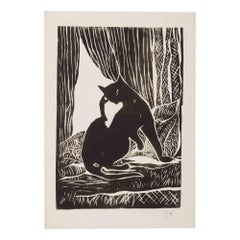
Cat - Woodcut by Giselle Halff - Mid 20th Century
Located in Roma, IT
Black Cat is an Original Woodcut Print realized in the Mid-20th Century by Giselle Halff (1899-1971).
Good condition, monogrammed on the lower right corner.
Giselle Halff (1899-197...
Category
Mid-20th Century Modern Woodcut Figurative Prints
Materials
Woodcut
$251 Sale Price
25% Off
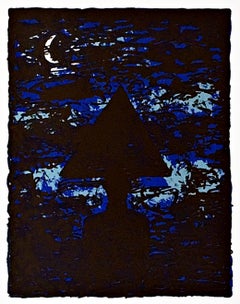
Untitled abstraction, woodcut, Signed/N, Art Against AIDS, British Pop pioneer
Located in New York, NY
Derek Boshier
Untitled, from the Art Against AIDS Portfolio, 1988
Woodcut on paper with deckled edges
Hand signed, numbered 38/50 and dated on lower front with printer's and publishe...
Category
1980s Abstract Woodcut Figurative Prints
Materials
Woodcut, Pencil
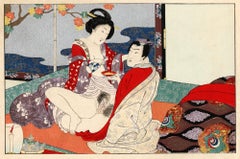
Seishi Ai-oi Genji – Set of 12 Shunga works together w/astrological commentary
Located in Middletown, NY
Set of 12 woodblock prints in colors on handmade, laid mulberry paper, 6 3/4 x 10 1/4 inches (170 x 258 mm), printed in Ka-ei 4 (1851). Each print with minor handling wear, otherwise in excellent condition with bright and fresh color, and with details printed in silver ink. The images themselves contain several illusive characters indicating the publisher which are obfuscated by figures, as intended. Presented loose, as issued. A fine set.
The astrological commentary print has a large and meandering blind stamp with a bird and palm frond motif. This print lists various phrases concerning the Twelve Zodiac Animals as historically counted in Japan, and appears to include erotic commentary on the traits of people born under each of the twelve signs.
These Shunga images were issued in books that paralleled (in an erotic fashion...
Category
Mid-19th Century Edo Woodcut Figurative Prints
Materials
Ink, Handmade Paper, Woodcut
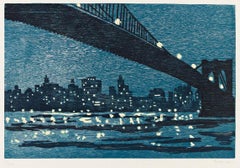
Brooklyn Bridge
Located in New York, NY
An exquisitely printed image created by Richard Bosman in 1996, the artist’s iconic Brooklyn Bridge is a woodcut on Japan paper. Measuring 18 x 24 1/2 in. (45.7 x 62.2 cm), unframed,...
Category
20th Century Neo-Expressionist Woodcut Figurative Prints
Materials
Woodcut
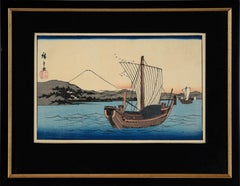
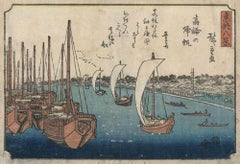
Kiyomi Barrier & Seiken Temple Near Okitsu- Japanese Woodcut Print on Rice Paper
Located in Soquel, CA
Kiyomi Barrier & Seiken Temple Near Okitsu - Japanese Woodcut Print on Rice Paper
Woodblock print of boats in a harbor by Utagawa Hiroshige (Japanese, 1797-1858). Originally publish...
Category
1850s Impressionist Woodcut Figurative Prints
Materials
Rice Paper, Woodcut
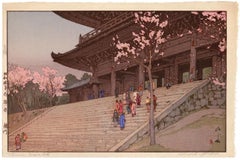
'Chion-in Temple Gate' from 'Eight Scenes of Cherry Blossoms' — Jizuri Seal
By Hiroshi Yoshida
Located in Myrtle Beach, SC
Hiroshi Yoshida, 'Chion-in Temple Gate (Sunset)' from the series 'Eight Scenes of Cherry Blossoms (Sakura hachi dai: Sakura mon)', color woodblock print, 1935. Signed in brush 'Yoshida' and in pencil 'Hiroshi Yoshida'. A superb, early impression, with fresh colors; the full sheet with margins, on cream Japan paper; an area of slight toning in the top right sheet corner, not affecting the image, otherwise in excellent condition. Marked with a jizuri (self-printed) seal, upper left margin. Self-published by the artist.
Image size 9 5/8 x 14 3/4 inches (444 x 375 mm); sheet size 10 7/8 x 16 inches (276 x 406 mm). Archivally sleeved, unmatted.
Provenance: M. Nakazawa, Tokyo.
Literature: Japanese Landscapes of the 20th Century (Hotei Publishing calendar), 2001, May.
Collections: Honolulu Museum of Art, Museum of Fine Arts, Boston.
ABOUT THE IMAGE
Located in Kyoto, Chionin is the main temple of the Jodo sect of Japanese Buddhism, one of the most popular Buddhist sects in Japan, having millions of followers. The Sanmon Gate, Chionin's entrance gate, standing 24 meters tall and 50 meters wide, it is the largest wooden temple gate in Japan and dates back to the early 1600s. Behind the gate, a broad set of stairs leads to the main temple grounds.
ABOUT THE ARTIST
Painter and printmaker Yoshida Hiroshi (1876-1950) is regarded as one of the greatest artists of the Japanese 'shin hanga' (New Print) movement.
Yoshida was born as the second son of Ueda Tsukane in Kurume, Fukuoka Prefecture, a schoolteacher from an old samurai family. In 1891 he was adopted by his art teacher Yoshida Kasaburo in Fukuoka and took his surname. In 1893 he went to Kyoto to study painting, and the following year to Tokyo to join Koyama Shotaro's Fudosha private school; he also became a member of the Meiji Fine Arts Society. These institutions taught and advocated Western-style painting, greatly influencing Yoshida’s artistic development.
In 1899 Yoshida had his first American exhibition at Detroit Museum of Art (now Detroit Institute of Art), making the first of many visits to the US and Europe. In 1902 he helped reorganize the Meiji Fine Arts Society, renaming it the Taiheiyo-Gakai (Pacific Painting...
Category
1930s Showa Woodcut Figurative Prints
Materials
Woodcut
Sergio Hernández, 'Untitled', 2011, Woodcut, 29.5x41.3 in
Located in Miami, FL
Sergio Hernández (Mexico, 1957)
'Untitled', 2011
woodcut on paper Velin Arches 300 g.
29.6 x 41.4 in. (75 x 105 cm.)
Edition of 8
Unframed
Category
2010s Contemporary Woodcut Figurative Prints
Materials
Paper, Woodcut
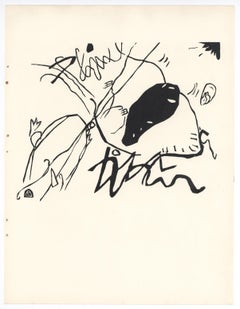
"Schwartzer Fleck" original woodcut
Located in Henderson, NV
Medium: original woodcut. Catalogue reference Roethel 145. Printed in Paris in 1938 for the art revue XXe Siecle (issue number 3). Image size: 7 x 8 1/2 inches (170 x 218 mm). Sheet ...
Category
1930s Expressionist Woodcut Figurative Prints
Materials
Woodcut
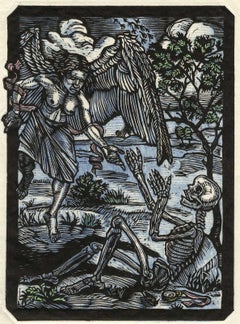
Angel and Skeleton (the rescuing Angel appears to be female)
By Donna Evans
Located in New Orleans, LA
Donna Evans' "Angel and Skeleton" shows an angel reaching out to a skeleton as if to rescue it from a wooded landscape.
Donna Evans is one of a group of N...
Category
1980s Contemporary Woodcut Figurative Prints
Materials
Woodcut
$75 Sale Price
25% Off
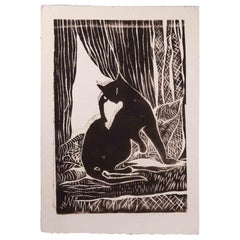
Black Cat by the Window - Woodcut Print by Giselle Halff - Early 20th century
Located in Roma, IT
Black Cat by the Window is a woodcut print on paper realized by Giselle Halff in the early 20th century.
Good conditions.
The delicate and beautiful fine strokes of the artwork sho...
Category
Early 20th Century Modern Woodcut Figurative Prints
Materials
Woodcut
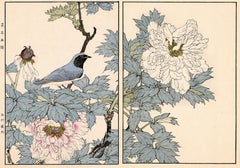
Tree Peony and Blue and White Flycatcher — 19th century woodblock print
Located in Myrtle Beach, SC
Imao Keinen, 'Tree Peony and Blue and White Flycatcher' from the series 'Birds and Flowers of the Four Seasons', color woodblock Oban dipty...
Category
1880s Naturalistic Woodcut Figurative Prints
Materials
Woodcut
$440 Sale Price
20% Off
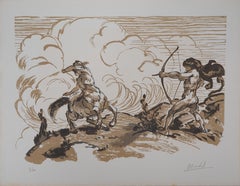
Mythology : Fight with a Centaur - Original wooodcut, Handsigned & Numbered
Located in Paris, IDF
Jules CHADEL (1870-1941)
Mythology : Fight with a Centaur, 1929
Original woodcut
Handsigned in pencil
Numbered /160
On Perrigot vellum 32.5 x 25.5 cm (c. 13 x 10 in)
Bears the blind...
Category
1920s Modern Woodcut Figurative Prints
Materials
Woodcut
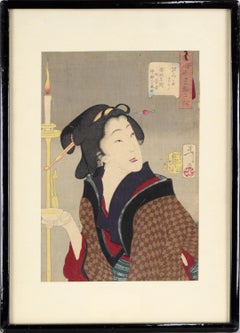
"Thirsty: the appearance of a town geisha in the Ansei era" - Woodblock on Paper
Located in Soquel, CA
"Thirsty: the appearance of a town geisha in the Ansei era" - Woodblock on Paper
From the series "Thirty-two Aspects of Customs and Manners" (Fuzoku sanjuniso)
Lively woodblock of a...
Category
1880s Edo Woodcut Figurative Prints
Materials
Paper, Ink, Woodcut
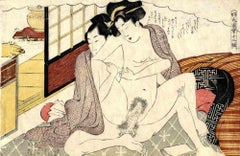
Shunga - Woodcut by Katsukawa Schuncho - Mid-18th Century
Located in Roma, IT
Shunga is an original modern artwork realized by Katsukawa Schuncho (1726 – 1793) in the half of the 18th Century.
Oban yokoe.
Erotic scene from the series "Koshuko zue juni ko" (Erotic pictures...
Category
1750s Modern Woodcut Figurative Prints
Materials
Paper, Woodcut
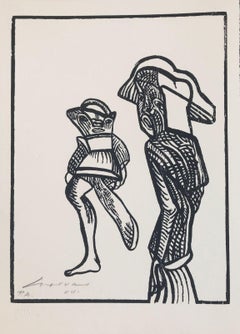
Jose Luis Cuevas original artist proof signed woodcut Ghosts of downtown V paper
Located in Miami, FL
Jose Luis Cuevas (Mexico, 1934-2017)
Artist Proof
'Fantasmas del Centro Histórico V', 2004
woodcut on paper Guarro Biblos 250g.
20.9 x 16 in. (53 x 40.5 cm.)
Edition of 60
Unframed
I...
Category
Early 2000s Contemporary Woodcut Figurative Prints
Materials
Paper, Woodcut, Ink
2011 Artist Proof Signed Original Woodcut 30x44in Mexican Oaxaca
Located in Miami, FL
"Sergio Hernández (Mexico, 1957)
'Untitled', 2011
woodcut on paper
30 x 41.4 in. (76 x 105 cm.)
P.A I/III (Proof of Artist)
ID: HER-157-1"
Category
2010s Contemporary Woodcut Figurative Prints
Materials
Woodcut
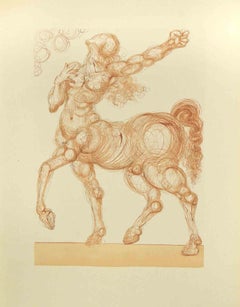
The Centaur - Woodcut - 1963
Located in Roma, IT
The Centaur - Hell, Plate-26 is a woodcut print realized in 1963 for a series illustrating the Medieval poem of the "Divine Comedy" by Dante Alighieri.
Not signed, as issued.
Goo...
Category
1960s Surrealist Woodcut Figurative Prints
Materials
Woodcut
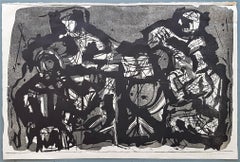
Quartet No. 1
By Eugene Larkin
Located in Kansas City, MO
Eugene Larkin
Quartet No. 1
Woodcut in two colors
Signed and titled by hand
Size: 20 x 29.5 inches
COA provided
Eugene Larkin (1921-2010)
The late Eugene Larkin was an artist who worked in the Twin Cities area for many years and needs little introduction. His works have been shown, collected and appreciated by numerous galleries, museums and collectors throughout the United States.
Larkin was influential both as an artist and as a teacher. He taught at the Minneapolis College of Art and Design between 1954 and 1969, where he was head of printmaking and Chairman of the Division of Fine Arts. From 1969-1991 he was a professor in the Design Department at the University of Minnesota.
Eugene Larkin, a lithographer, teacher and artist who left behind scores of works, some of them in the permanent collections of the Library of Congress and the Museum of Modern Art. He was considered an early promoter of lithography education, Larkin introduced it into arts programs while teaching at the Minneapolis College of Art and Design and the University of Minnesota. He held a prominent place in the art world through decades of working and teaching in Minneapolis. His work depicted a wide range of subjects, from musicians to nature, including a series of woodcuts based on William Blake's ""Songs of Innocence and Experience."
Larkin also wrote a textbook, ""Design: The Search for Unity."" It was his work with lithography, an 18th-century printmaking process, for which he was best known.
His last local exhibit was a retrospective at The University of Minnesota Weisman Museum in 2005. ""Sometimes I start the artistic process from a literary source - Adam and Eve, the Egyptian nature gods, or classical Greek themes but sometimes I start from nature. Trees have always been a favorite subject. I see trees as people, as vertical objects...
Category
15th Century and Earlier Modern Woodcut Figurative Prints
Materials
Woodcut
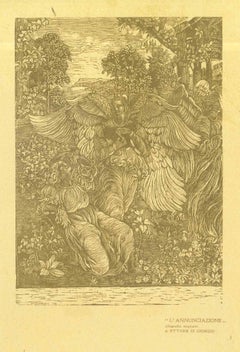
Annunciation - Original Woodcut by Ettore di Giorgio - Early 20th Century
Located in Roma, IT
Annunciation is an Original Woodcut Print on paper realized by Ettore di Giorgio in the Early 20th Century
Good Conditions.
The artwork is depicted through strong strokes in well-b...
Category
Early 20th Century Modern Woodcut Figurative Prints
Materials
Woodcut
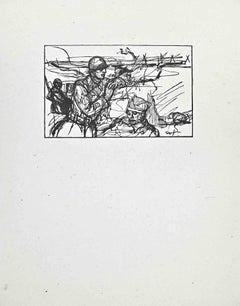
The Disastrous War - Woodcut Print by Paul Baudier - 1930s
Located in Roma, IT
The Disastrous War is a woodcut print on ivory-colored paper realized by Paul Baudier (1881-1962) in the 1930s.
Good conditions.
Paul Baudier, (born October 18, 1881 in Paris and d...
Category
1930s Modern Woodcut Figurative Prints
Materials
Woodcut
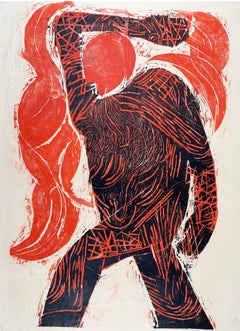
Prometheus, by William Wolff
Located in Palm Springs, CA
Wolff’s woodcut of the mythological figure of Prometheus is carved and printed in only two strong colors—black and a fiery red-orange—yet the impact is monumental. The central figure...
Category
1990s Contemporary Woodcut Figurative Prints
Materials
Woodcut
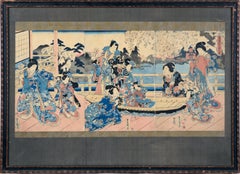
Elegant Amusements of Eastern Genji - Japanese Triptych Woodblock Print on Paper
Located in Soquel, CA
Elegant Amusements of Eastern Genji - Japanese Triptych Woodblock Print on Paper
Dynamic woodblock print with several elegantly dressed figures by Utag...
Category
1850s Edo Woodcut Figurative Prints
Materials
Paper, Ink, Woodcut
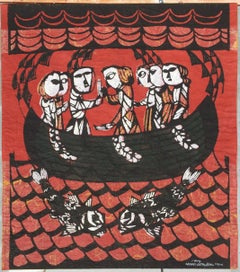
Jonah
Located in Santa Monica, CA
SADAO WATANABE (Japanese 1913-1996)
JONAH, 1959
Color stencil, signed, numbered and dated in white ink. Sheet, 25 5/8 x 22 5/8 inches. Edition: 44/50. Good color and generally good ...
Category
1950s Modern Woodcut Figurative Prints
Materials
Woodcut, Stencil
$1,200 Sale Price
20% Off
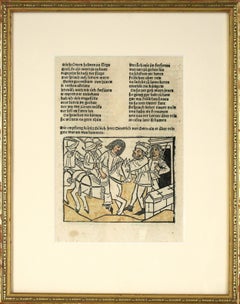
Wolfdietrich - Original leaflet from Johann Prüss' Das Heldenbuch
Located in Soquel, CA
Original leaflet from Johann Prüss' 1479 printing of "Das Heldenbuch."
The Heldenbücher is the title given to a group of late medieval/early renaissance Germanic manuscripts primari...
Category
15th Century and Earlier Medieval Woodcut Figurative Prints
Materials
Paint, Laid Paper, Woodcut
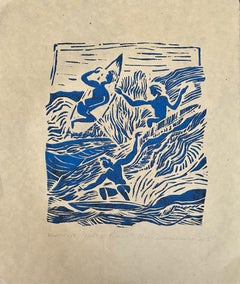
Three Turns - Surfing Art By Marc Zimmerman
Located in Carmel, CA
Three Turns - Surfing Art - Figurative - Woodcut Print By Marc Zimmerman
Limited Edition 01/04
This masterwork is exhibited in the Zimmerman Gallery, Carmel CA.
Immerse yourself i...
Category
2010s Contemporary Woodcut Figurative Prints
Materials
Woodcut
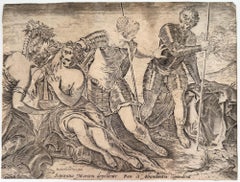
Mars driven away from Peace and Abundance by Minerva
By Agostino Carracci
Located in Middletown, NY
Agostino CARRACCI, after Jacopo TINTORETTO
Sapientia Martem depellente Pax et Abundantia cogaudent; Mars driven away from Peace and Abundance by Minerva
Engraving on handmade laid ...
Category
16th Century Old Masters Woodcut Figurative Prints
Materials
Ink, Handmade Paper, Laid Paper, Woodcut
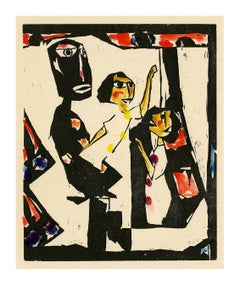
'Theater' — 1920s German Expressionism
Located in Myrtle Beach, SC
A German Expressionist woodcut, with original hand-coloring in watercolor, depicting a parent and child watching a theatrical production; ...
Category
1920s Expressionist Woodcut Figurative Prints
Materials
Woodcut
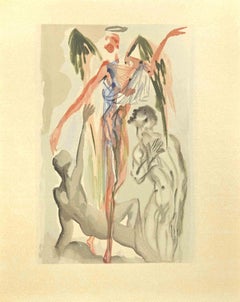
The Earthly Paradise - Woodcut - 1963
Located in Roma, IT
The Earthly Paradise - The Divine Comedy is a woodcut print realized in 1963 for a series illustrating the Medieval poem of the "Divine Comedy" by Dante Alighieri.
Not signed, as i...
Category
1960s Surrealist Woodcut Figurative Prints
Materials
Woodcut
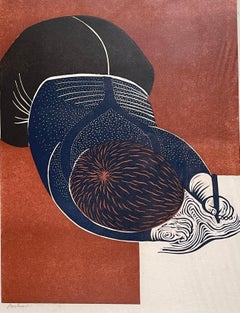
WOMAN DRAWING
Located in Portland, ME
Packard, Emmy Lou (American, 1914 - 1998). WOMAN DRAWING. Color Woodcut, not dated. Edition size not known. Signed in pencil. 18 1/16" x 14 1/8" inches (...
Category
1940s Woodcut Figurative Prints
Materials
Woodcut
Gauguin, The Long Night (Te Po), Gauguin (after)
By Paul Gauguin
Located in Southampton, NY
Woodcut on vélin Utopian paper. Unsigned and unnumbered, as issued. Good Condition. Notes: From the folio, Gauguin, A portfolio of 12 color woodblocks, Paul Gauguin, French, 1848-1903 from the collection of the Museum Of Fine Arts, Boston, 1946. Rendered by Albert Carman (1899-1949); published the Museum Of Fine Arts, Boston and The Studio Publications, Inc., New York and London; printed by Holme Press Inc., New York, in an edition of MMMD. Excerpted from the folio, Paul Gauguin and Emil Bernard at Pont-Aven, Brittany, in 1888, each made a bas-relief, wooden panel to decorate a piece of furniture for a friend. In order to keep a record of their designs, a few inked impressions were made on paper. The illustration at left is a reproduction of a print which is possibly one of the above mentioned. It is further possible that this experiment later gave Gauguin the idea of making woodcuts. Just as his work in painting expressed a revolt against the overemphasis on factual representation of the nineteenth century in favor of decorative pattern and color, so also his woodcuts leaned strongly to the same side of the balance. Ten of the cuts reproduced (all excepting Soyez Amoureuses and Changement de Residence), which constitute the whole of his best known series, were made at Pont-Aven beginning in the fall of 1894, after Gauguin's return from his first trip to Tahiti and after he broke his ankle. They were at first roughly cut with a common carpenter's gouge, and the flat surfaces sandpapered and engraved with a sharp in-strument, perhaps an engraver's burin. A few trial proofs were printed in black ink only. Then the hollows were deepened with a woodcutter's gouge and highlights were added. An edition of thirty to fifty impressions of each subject, with the addition of color blocks (one, two or three), was made by Louis Roy...
Category
1940s Post-Impressionist Woodcut Figurative Prints
Materials
Woodcut
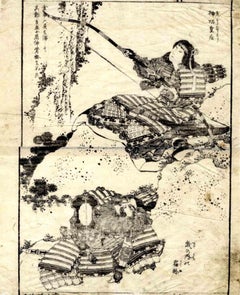
$716 Sale Price
20% Off
The Stirrups of Musashi- Original Woodcut Print by Katsushika Hokusai - 1836
Located in Roma, IT
The Stirrups of Musashi is an original modern artwork realized by Katsushika Hokusai in 1836.
Mushae (double page, book 1836).
B/W print. From the book "Ehon Musashi abumi" (The St...
Category
19th Century Modern Woodcut Figurative Prints
Materials
Woodcut
The Lonely House at Asajigahara.
Located in Middletown, NY
A scene from a series of ghost stories and spooky rural legends.
Tokyo: Matsuki Heikichi, 1896.
Woodcut in ink with embossing and hand-coloring in watercolor on handmade mulberry pa...
Category
Late 19th Century Edo Woodcut Figurative Prints
Materials
Watercolor, Handmade Paper, Woodcut
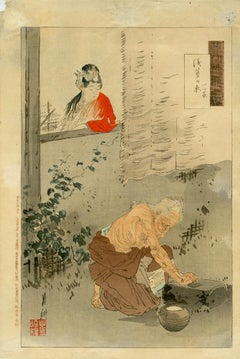
The Blasphemers - Woodcut - 1963
Located in Roma, IT
The blasphemers is a woodcut print realized in 1963 for a series illustrating the Medieval poem of the "Divine Comedy" by Dante Alighieri.
Not signed, as issued.
Plate n.14 (as ...
Category
1960s Surrealist Woodcut Figurative Prints
Materials
Woodcut
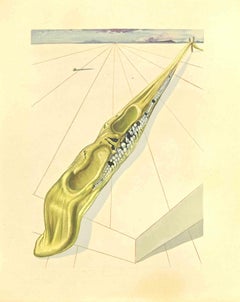
Sawamura Tosho - Woodcut Print by Utagawa Kunisada - 1862
Located in Roma, IT
Sawamura Tosho is an original modern artwork realized by Utagawa Kunisada in 1862.
Woodcut print Oban from a tryptich
Signature Kio Toyokuni ga (77 Toyokuni). Publisher: Soshuya. ...
Category
19th Century Modern Woodcut Figurative Prints
Materials
Woodcut
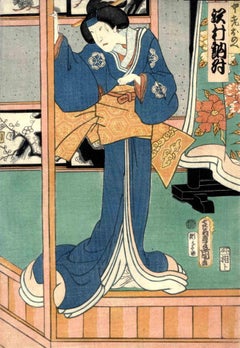
Figure - Original Woodcut Print by Amadore Porcella - Early 20th Century
Located in Roma, IT
Figure is an original woodcut print realized by Amadore Porcella.
The state of preservation of the artwork is very good.
Passepartout dimension: ...
Category
Early 20th Century Modern Woodcut Figurative Prints
Materials
Woodcut
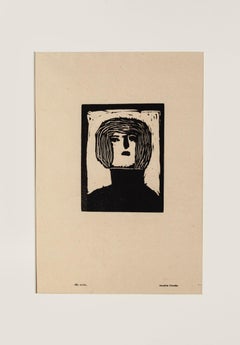
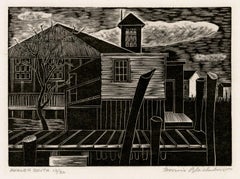
'Avalon South' —— Mid-Century Modernism
Located in Myrtle Beach, SC
Morris Blackburn, 'Avalon South', wood engraving, 1951, edition 30. Signed, titled, and numbered '12/30' in pencil. A fine black impression on cream wove Japan paper, with wide margins (1 3/8 to 2 1/4 inches), in excellent condition. Archivally sleeved, unmatted.
Image size 5 x 7 inches (127 x 178 mm); sheet size 8 5/8 x 10 7/8 inches (219 x 276 mm).
ABOUT THE ARTIST
Morris Blackburn was a prominent painter, printmaker, and graphic artist, as well as a respected teacher at the Philadelphia Museum School of Industrial Art and the Pennsylvania Academy of Fine Arts.
Born in Philadelphia, where he spent most of his career, Blackburn was a descendant of the notable colonial portrait artist Joseph J. Blackburn (c. 1700–1780). He developed an interest in art early on and studied architectural drawing at the Philadelphia Trade School. In 1922, he took classes at the Graphic Sketch Club and later attended the School of Industrial Art. While working for the well-known Philadelphia furniture designer Oscar Mertz, he studied at the Pennsylvania Academy of the Fine Arts from 1925 to 1929. During his studies, he learned painting from Henry Bainbridge McCarter...
Category
1950s Modern Woodcut Figurative Prints
Materials
Woodcut
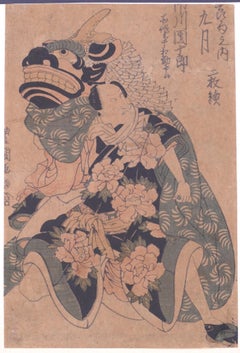
Man with the Dragon - Woodblock Print by Utagawa Toyokuni I - 1800 ca
Located in Roma, IT
Man with the Dragon is a superb color woodbloock print on rice-paper, realized by the great master of ukiyo-e print, Utagawa Toyokuni I (1769-1825)
Depicti...
Category
Early 1800s Woodcut Figurative Prints
Materials
Paper, Woodcut
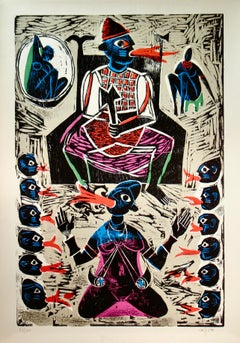
"Lendas Africanas Da Bahia" from the suite.
Located in San Francisco, CA
This artwork titled " Lendas Africanas Da Bahia" from the suite, 1978, is an original colors woodcut by renown Brazilian/Argentinian artist Hector Julio Paride Barnabo Carybe, 1911-1997. It is hand signed and numbered 83/200 in pencil by the artist. The Wood block mark (image) is 23.65 x 15.75 inches, sheet size is 26.75 x 19 inches. It is in excellent condition, has never been framed. It will be shipped in a 8 inches diameter heavy duty tube.
About the artist:
Héctor Julio Páride Bernabó (7 February 1911 – 2 October 1997) was an Argentine-Brazilian artist, researcher, writer, historian and journalist. His nickname and artistic name, Carybé, a type of piranha, comes from his time in the scouts. He died of heart failure after the meeting of a candomblé community's lay board of directors, the Cruz Santa Opô Afonjá Society, of which he was a member.
Quick Facts Born, Died ...
Carybé
Born
Héctor Julio Páride Bernabó
7 February 1911
Lanús, Argentina
Died
2 October 1997 (aged 86)
Salvador, Bahia, Brazil
Nationality
Brazilian
Known for
Painter, engraver, draughtsman, illustrator, potter, sculptor, mural painter, researcher, historian and journalist
Close
He produced thousands of works, including paintings, drawings, sculptures and sketches. He was an Obá de Xangô, an honorary position at Ilê Axé Opô Afonjá.
Orixá Panels in the Afro-Brazilian Museum in Salvador
Some of Carybé's work can be found in the Afro-Brazilian Museum in Salvador: 27 cedar panels representing different orixás or divinities of the Afro-Brazilian religion candomblé. Each panel shows a divinity with their associated implements and animal. The work was commissioned by the former Banco da Bahia S.A., now Banco BBM S.A., which originally installed them in its branch on Avenida Sete de Setembro in 1968.
Murals at Miami International Airport
American Airlines, Odebrecht and the Miami-Dade Aviation Department partnered to install two of Carybé's murals at Miami International Airport. They have been displayed in the American Airlines terminal at John F. Kennedy International Airport in New York since 1960. The 16.5 x 53-foot murals were accredited when Carybé won the first and the second prize in a contest of public art pieces for JFK airport.
As its terminal at that airport was due for demolition, American Airlines donated the murals to Miami-Dade County, and Odebrecht invested in a project to remove, restore, transport and install the murals at Miami International Airport.
The mural "Rejoicing and Festival of the Americas" portrays colorful scenes from popular festivals throughout the Americas, and "Discovery and Settlement of the West" depicts the pioneers’ journey into the American West.
Carybé's Woodcuts in Gabriel García Márquez's Books
Carybé illustrated four books by the Colombian writer Gabriel García Márquez, including One Hundred Years of Solitude, The Autumn of the Patriarch, Chronicle of a Death Foretold, and Love in the Time of Cholera "Carybé: um mestre da cultura baiana". ArqBahia Arquitetura, design, arte e lifestyle (in Brazilian Portuguese). 26 April 2023.. In particular, the woodcuts in One Hundred Years of Solitude are well-known for providing a visual image of the fictional town of Macondo, where the story takes place. The illustrations depict the colorful and winding houses, the railway bridge, and the hot and humid climate of the region, contributing to the reader's immersion in the story.
Carybé's woodcuts are, therefore, an important part of Gabriel García Márquez's literary legacy, bringing a visual dimension to his stories that further enriches the reader's experience.
Timeline
1911 — Birth in Lanús, Argentina.
1919 — Moved to Brazil.
1921 — The name Carybé is first given to him by the Clube do Flamengo scouts group, in Rio de Janeiro.
1925 — Beginning of his artistic endeavours, going to the pottery workshop of his elder brother, Arnaldo Bernabó, in Rio de Janeiro.
1927–1929 — Studies at the National School of Fine Arts, in Rio de Janeiro.
1930 — Worked for the newspaper Noticias Gráficas, in Buenos Aires, Argentina.
1935–1936 — Works with the writer Julio Cortázar and as a draughtsman for the El Diario newspaper.
1938 — Sent to Salvador by newspaper Prégon.
1939 — First collective exhibition, with the artist Clemente Moreau, at the Buenos Aires City Museum of Fine Arts, Argentina; illustrates the book Macumba, Relatos de la Tierra Verde, by Bernardo Kardon, published by Tiempo Nuestro.
1940 — Illustrates the book Macunaíma, by Mário de Andrade.
1941 — Draws the Esso Almanach, the payment for which allows him to set on a long journey through Uruguay, Brazil, Bolivia, and Argentina.
1941–1942 — Study trip around several South American countries.
1942 — Illustration for the book La Carreta by Henrique Amorim, published by El Ateneo (Buenos Aires, Argentina).
1943 — Together with Raul Brié, translates the book Macunaíma, by Mário de Andrade, into Spanish; produces the illustrations for the works Maracatu, Motivos Típicos y Carnavalescos, by Newton Freitas, published by Pigmaleon, Luna Muerta, by Manoel Castilla, published by Schapire, and Amores de Juventud, by Casanova Callabero; also publishes and illustrates Me voy al Norte, for the quarterly magazine Libertad Creadora; awarded First Prize by the Cámara Argentina del Libro (Argentine Book Council) for the illustration of the book Juvenília, by Miguel Cané (Buenos Aires, Argentina).
1944 — Illustrates the books The Complete Poetry of Walt Whitmann and A Cabana do Pai Tomás, both published by Schapire ; as well as and Los Quatro Gigantes del Alma by Mira y Lopez, Salvador BA; attends capoeira classes, visits candomblé meetings and makes drawings and paintings.
1945 — Does the illustrations for Daniel Defoe's Robinson Crusoe, for the Viau publishing house.
1946 — Helps in setting up the Tribuna da Imprensa newspaper, in Rio de Janeiro.
1947 — Works for the O Diário Carioca newspaper, in Rio de Janeiro.
1948 — Produces texts and illustrations for the book Ajtuss, Ediciones Botella al Mar (Buenos Aires, Argentina).
1949–1950 — Invited by Carlos Lacerda to work at the Tribuna da Imprensa, in Rio de Janeiro.
1950 — Invited by the Education Secretary Anísio Teixeira, moves to Bahia, and produces two panels for the Carneiro Ribeiro Education Center (Park School), in Salvador, Bahia.
1950–1997 — Settles in Salvador, Bahia.
1950–1960 — Actively participate in the plastic arts renewal movement, alongside Mário Cravo Júnior, Genaro de Carvalho, and Jenner Augusto.
1951 — Produces texts and illustrations for the works of the Coleção Recôncavo, published by Tipografia Beneditina and illustrations for the book, Bahia, Imagens da Terra e do Povo, by Odorico Tavares, published by José Olímpio in Rio de Janeiro; for the latter work he receives the gold medal at the 1st Biennial of Books and Graphic Arts.
1952 — Makes roughly 1,600 drawings for the scenes of the movie O Cangaceiro, by Lima Barreto; also works as the art director and as an extra on the film (São Paulo, SP).
1953 — Illustrations for the book A Borboleta Amarela, by Rubem Braga, published by José Olímpio (Rio de Janeiro, RJ).
1955 — Illustrates the work O Torso da Baiana, edited by the Modern Art Museum of Bahia.
1957 — Produces etchings, with original designs, for the special edition of Mário de Andrade's Macunaíma, published by the Sociedade dos 100 Bibliófilos do Brasil.
1958 — Makes an oil painting mural for the Petrobras Office in New York, USA; illustrates the book As Três Mulheres de Xangô, by Zora Seljan, published by Editora G. R. D. (Rio de Janeiro, RJ); Receives a scholarship grant in New York, USA.
1959 — Takes part in the competition for the New York International Airport panels project, in New York, USA, winning first and second prizes.
1961 — Illustrates the book Jubiabá, by Jorge Amado, published by Martins Fontes (São Paulo, SP).
1963 — Awarded the title of Honorary Citizen of Salvador, Bahia.
1965 — Illustrates A Muito Leal e Heróica Cidade de São Sebastião do Rio de Janeiro, published by Raymundo Castro Maya (Rio de Janeiro, RJ).
1966 — With Jorge Amado, co-authors Bahia, Boa Terra Bahia, published by Image (Rio de Janeiro, RJ); writes and illustrates the book Olha o Boi, published by Cultrix (São Paulo, SP).
1967 — Receives the Odorico Tavares Prize – Best Plastic Artist of 1967, in a competition ran by the state government to stimulate the development of plastic arts in Bahia; makes the Orixás Panels for the Banco da Bahia (currently at the UFBA Afro-Brazilian Museum) (Salvador, BA).
1968 — Illustrates the books Carta de Pero Vaz de Caminha ao Rei Dom Manuel, published by Sabiá (Rio de Janeiro) and Capoeira Angolana, by Waldeloir Rego, published by Itapoã (Bahia).
1969 — Produces the illustrations for the book Ninguém Escreve ao Coronel, by Gabriel Garcia Marquez, published by Sabiá (Rio de Janeiro, RJ).
1970 — Illustrates the books O Enterro do Diabo and Os Funerais de Mamãe Grande, published by Sabiá (Rio de Janeiro, RJ), Agotimé her Legend, by Judith Gleason, published by Grossman Publishers (New York, USA).
1971 — Illustrates the books One Hundred Years of Solitude, by Gabriel Garcia Marquez and A Casa Verde by Mario Vargas Llosa, both published by Sabiá (Rio de Janeiro, RJ); produces texts and illustrations for the book Candomblé da Bahia, published by Brunner (São Paulo, SP).
1973 — Illustrations for Gabriel Garcia Marquez's A Incrível e Triste História de Cândida Erendira e sua Avó Desalmada (Rio de Janeiro, RJ); paints the mural for the Legislative Assembly and the panel for the Bahia State Secretary of the Treasury.
1974 — Produces woodcuts for the book Visitações da Bahia, published by Onile.
1976 — Illustrates the book O Gato Malhado e a Andorinha Sinhá: uma história de amor, by Jorge Amado (Salvador, BA); receives the title of Knight of the Order of Merit of Bahia.
1977 — Certified with the Honor for Afro-Brazilian Cult Spiritual Merit, Xangô das Pedrinhas ao Obá de Xangô Carybé (Magé, RJ).
1978 — Makes the concrete sculpture Oxóssi, in the Catacumba Park; illustrates the book A Morte e a Morte de Quincas Berro D´Água, by Jorge Amado, published by Edições Alumbramento (Rio de Janeiro, RJ).
1979 — Produces woodcuts for the book Sete Lendas Africanas da Bahia, published by Onile.
1980 — Designs the costumes and scenery for the ballet Quincas Berro D´Água, at the Teatro Municipal in Rio de Janeiro.
1981 — Publication of the book Iconografia dos Deuses Africanos no Candomblé da Bahia (Ed. Raízes), following thirty years of research.
1982 — Receives the title of Honorary Doctor of the Federal University of Bahia.
1983 — Makes the panel for the Brazilian Embassy in Lagos, Nigeria.
1984 — Receives the Jerônimo Monteiro Commendation – Level of Knight (Espírito Santo); receives the Castro Alves Medal of Merit, granted by the UFBA Academy of Arts and Letters; makes the bronze sculpture Homenagem à mulher baiana (Homage to the Bahian woman), at the Iguatemi Shopping Center (Salvador, BA).
1985 — Designs the costumes and sets for the spectacle La Bohème, at the Castro Alves Theater; illustrates the book Lendas Africanas dos Orixás, by Pierre Verger, published by Currupio.
1992 — Illustrates the book O sumiço da santa: uma história de feitiçaria, by Jorge Amado (Rio de Janeiro, RJ).
1995 — Illustration of the book O uso das plantas na sociedade iorubá, by Pierre Verger (São Paulo, SP).
1996 — Making of the short film Capeta Carybé, by Agnaldo Siri Azevedo, adapted from the book O Capeta Carybé, by Jorge Amado, about the artist Carybé, who was born in Argentina and became the most Bahian of all Brazilians.
1997 — Illustration of the book Poesias de Castro Alves.
Exhibitions
ммIndividual Exhibitions:
1943 — Buenos Aires (Argentina) — First individual exhibition, at the Nordiska Gallery
1944 — Salta (Argentina) — at the Consejo General de Educacion
1945 — Salta (Argentina) — Amigos del Arte, Buenos Aires (Argentina) — Motivos de América, at the Amauta Gallery, Rio de Janeiro RJ — individual exhibition at the IAB/RJ
1947 — Salta (Argentina) — Agrupación Cultural Femenina
1950 — Salvador BA — First individual exhibit in Bahia, at the Bar Anjo Azul; São Paulo SP — MASP.
1952 — São Paulo SP — MAM/SP
1954 — Salvador BA — Oxumaré Gallery
1957 — New York (USA) — Bodley Gallery; Buenos Aires (Argentina) — Bonino Gallery * 1958 - New York (USA) — Bodley Gallery
1962 — Salvador BA - MAM/BA
1963 — Rio de Janeiro RJ — Bonino Gallery
1965 — Rio de Janeiro RJ — Bonino Gallery
1966 — São Paulo SP — Astrea Gallery
1967 — Rio de Janeiro RJ — Santa Rosa Gallery
1969 — London (England) — Varig Airlines
1970 — Rio de Janeiro RJ — Galeria da Praça
1971 — Rio de Janeiro RJ — MAM/RJ, São Paulo SP — A Galeria; Belo Horizonte MG, Brasília DF, Curitiba PR, Florianopolis SC, Porto Alegre RS, Rio de Janeiro RJ and São Paulo SP — The Orixás Panel (exhibition tour), at the Casa da Cultura in Belo Horizonte, MAM/DF, the Public Library of Paraná, the Legislative Assembly of Santa Catarina State, the Legislative Assembly of Rio Grande do Sul, MAM/RJ and MAM/SP
1972 — The Orixás Panel in Fortaleza CE — at the Ceará Federal University Art Museum, and in Recife PE — at the Santa Isabel Theater
1973 — São Paulo SP — A Galeria
1976 — Salvador BA — at the Church of the Nossa Senhora do Carmo Convent
1980 — São Paulo SP — A Galeria
1981 — Lisbon (Portugal) — Cassino Estoril
1982 — São Paulo SP — Renot Art Gallery, São Paulo SP — A Galeria
1983 — New York (USA) — Iconografia dos Deuses Africanos no Candomblé da Bahia, The Caribbean Cultural Center
1984 — Philadelphia (USA) — Art Institute of Philadelphia; Mexico — Museo Nacional de Las Culturas; São Paulo SP — Galeria de Arte André
1986 — Lisbon (Portugal) — Cassino Estoril; Salvador BA — As Artes de Carybé, Núcleo de Artes Desenbanco
1989 — Lisbon (Portugal) — Cassino Estoril; São Paulo SP — MASP
1995 — São Paulo SP — Documenta Galeria de Arte, São Paulo SP — Casa das Artes Galeria, Campinas SP — Galeria Croqui, Curitiba PR — Galeria de Arte Fraletti e Rubbo, Belo Horizonte MG — Nuance Galeria de Arte, Foz do Iguaçu PR — Ita Galeria de Arte, Porto Alegre RS — Bublitz Decaedro Galeria de Artes, Cuiabá MT — Só Vi Arte Galeria, Goiânia GO — Época Galeria de Arte, São Paulo SP — Artebela Galeria Arte Molduras, Fortaleza CE — Galeria Casa D'Arte, Salvador BA — Oxum Casa de Arte
Collective Exhibitions:
1939 — Buenos Aires (Argentina) — Carybé and Clemente Moreau Exhibition, at the Museo Municipal de Belas Artes
1943 — Buenos Aires (Argentina) — 29th Salon de Acuarelistas y Grabadores — first prize
1946 — Buenos Aires (Argentina) — Drawings by Argentine Artists, at the Kraft Gallery
1948 — Washington (USA) — Artists of Argentina, at the Pan American Union Gallery
1949 — Buenos Aires (Argentina) — Carybé and Gertrudis Chale, at the Viau Gallery; Salvador BA — Bahian Showroom of Fine Arts, at the Hotel Bahia
1950 — Salvador BA — 2nd Bahian Showroom of Fine Arts; São Paulo SP — MAM/SP
1951 — São Paulo SP — 1st São Paulo Art Biennial, Trianon Pavilion.
1952 — Salvador BA — 3rd Bahian Showroom of Fine Arts, at Belvedere da Sé; São Paulo SP — MAM/SP
1953 — Recife PE — Mario Cravo Júnior and Carybé, at the Santa Isabel Theater; São Paulo SP — 2nd São Paulo Art Biennial, at MAM/SP
1954 — Salvador BA — 4th Bahian Showroom of Fine Arts, at the Hotel Bahia. — Bronze medal
1955 — São Paulo SP — 3rd São Paulo Art Biennial, at MAM/SP — first prize for drawing
1956 — Salvador BA — Modern Artists of Bahia, at the Oxumaré Gallery; Venice (Italy) — 28th Venice Biennial
1957 — Rio de Janeiro RJ — 6th National Modern Art Show — exemption from the jury; São Paulo SP — Artists from Bahia, at the MAM/SP
1958 — San Francisco (USA) — Works by Brazilian Artists, at the Fine Arts Museums of San Francisco, Washington and New York (USA) — Works by Brazilian Artists, at the Pan American Union and the MoMA
1959 — Seattle (USA) — 30th International Exhibition, at the Seattle Art Museum; Salvador BA — Modern Artists of Bahia, at the Dentistry School.
1961 — São Paulo SP — 6th São Paulo Art Biennial, at MAM/SP — special room
1963 — Lagos (Nigeria) — Brazilian Contemporary Artists, at the Nigerian Museum; São Paulo SP — 7th São Paulo Art Biennial Bienal, at the Fundação Bienal
1964 — Salvador BA — Christmas Exhibition, at the Galeria Querino
1966 — Baghdad (Iraq) — collective exhibition sponsored by the Calouste Gulbenkian Foundation; Madrid (Spain) — Artists of Bahia, at the Hispanic Culture Institute; Rome (Italy) — Piero Cartona Palace; Salvador BA — 1st National Biennial of Plastic Arts (Bienal da Bahia) — special room; Salvador BA — Draughtsmen of Bahia, at the Convivium Gallery
1967 — Salvador BA — Christmas Exhibition at the Panorama Art Gallery; São Paulo SP — Artists of Bahia, at the A Gallery
1968 — São Paulo SP — Bahian Artists, at the A Gallery
1969 — London (England) — Tryon Gallery; São Paulo SP — 1st Panorama of Current Brazilian Art at the MAM/SP; São Paulo SP — Carybé, Carlos Bastos...
Category
Late 20th Century Modern Woodcut Figurative Prints
Materials
Woodcut
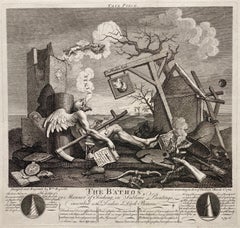
BATHOS / Tail PIece
Located in Santa Monica, CA
WILLIAM HOGRATH (1767- 1764)
THE BATHOS / Tail Piece 1764 (Paulson 1989: 216 I/I Paulson 1965/70: 216 I/I)
Engraving Plate 12 7/8 x 13 3/8, sheet 17 ¾ x 18 ¾ Designed & Engrav’d by Wm Hogarth at left and Published according to Act of Parliam’t March 3, 1764 at right. Good condition on thick laid paper Small bit of tape on the left & right sheet edges small stan lower sheet edge all on recto.
This Hogarth’s last print is fascinating as it is prophacy about death.
Various institutions have interesting commentaries - to wit:
Chicago Art Institute: Hogarth created The Bathos toward the end of his life. It is considered one of the bleakest artworks of the 18th century because it depicts the Apocalypse without an afterlife. The Angel of Death even collapses in exhaustion after having destroyed the world. In his hand is an execution decree and around him lies a mass of broken objects.
Princeton: Hogarth’s last print, The Bathos,….. is filled with all manner of images denoting the end of life as we know it. Entry no. 216 in Ronald Paulson’s catalogue raisonne Hogarth’s Graphic Works, 3rd revised edition says “This print is the culmination of such pessimistic images . . . . [taking] his general composition, the configuration of objects, and some of the particular items, from Dürer’s engraving, Melancholia; but he also recalls Salvator Rosa’s Democritus in Meditation (which derives from Dürer’s print) with a scroll at the bottom of the etching: ‘Democritus the mocker of all things, confounded by the ending of All Things’ (Antal, p.168).”
Newfields (Indianapolis Museum of Art): Hogarth intended this engraving to serve as the tailpiece to bound volumes of his collected engravings and, appropriately, it proved to be his last engraving. Father Time has died and his last will and testament has been witnessed by the three Fates. He is surrounded by a landscape of death, decay, and ruin. Hogarth aimed this print at dealers in “dark” Old Masters paintings who promoted the idea that ruins evoked sublime feelings in viewers—a sentiment, Hogarth wrote, that was reducing the world to ruin.
British Caricature...
Category
1760s Old Masters Woodcut Figurative Prints
Materials
Woodcut
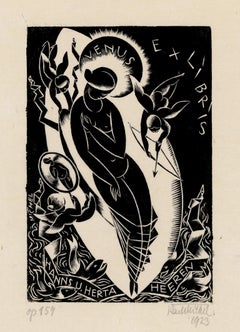
'Venus' — German Expressionism
By Karl Michel
Located in Myrtle Beach, SC
Karl Michel, 'Venus, Ex Libris - Hanns U. Herta Heeren', woodcut, 1923, edition not stated but small. Signed, dated, and numbered 'op.154' in pencil. Signed in the block, lower left. A fine impression, on cream Japan paper, with full margins (15/16 to 2 11/16 inches), in good condition. Printed by the artist. Matted to museum standards (unframed).
.
Translation: Venus Ex Libris for Hanns and Herta Heeren.
Image size 5 15/16 x 4 inches (156 x 102 mm); sheet size 9 5/8 x 6 inches (245 x 152 mm).
ABOUT THE ARTIST
Karl Michel (1889-1984) was a noted graphic designer and expressionist printmaker during Germany's pre-Nazi Weimar Republic (1919-1933). Michel’s work was the subject of a feature article in the influential German graphic design magazine Das Plakat (The Poster) in 1920. An anti-war advocate, Michel created a suite of 12 wood engravings depicting his impressions of the humanitarian toll of WWII entitled ‘Humanitas’ (Humanity). The German publishing house Greifenverlag published the series in a reduced folio of unsigned prints.
Michel’s graphic work is held in the permanent collections of the Auckland War Memorial Museum (New Zealand), Frederikshavn Kunstmuseum & Exlibrissamling (Denmark), Museum of Applied Arts (Budapest), The Robert Gore Rifkind Center for German Expressionist Studies at the Los Angeles County Museum of Art, and the German Expressionism...
Category
1920s Expressionist Woodcut Figurative Prints
Materials
Woodcut
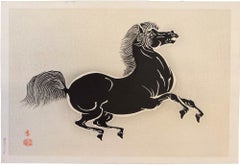
Black Horse
By Tokuriki Tomikichiro
Located in Middletown, NY
circa 1950.
Woodblock print in black and gray ink on Japon laid paper, 10 1/4 x 15 3/4 inches (260 x 398 mm), full margins. With the artist's embossed chop mark in red ink in the l...
Category
Mid-20th Century Edo Woodcut Figurative Prints
Materials
Handmade Paper, Woodcut
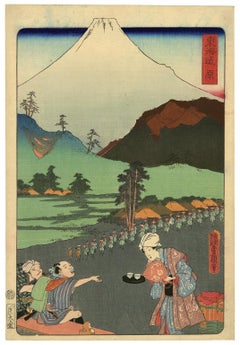
'Tokaido' — Mt. Fuji Rising – Mid-Nineteenth Century Woodblock Print
Located in Myrtle Beach, SC
Utagawa Kunisada (Tokoyuni III), 'Tokaido', color woodblock, 1863. Signed in the cartouche, lower right. A fine impression, with rich, fresh colors and pronounced woodgrain, the full...
Category
1860s Edo Woodcut Figurative Prints
Materials
Woodcut
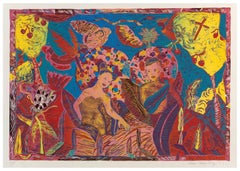
'The Garden' — Celebrated Contemporary African American Artist
Located in Myrtle Beach, SC
Margo Humphrey, 'The Garden (Adam and Eve)', reductive color woodcut, 1989. Signed, dated, and annotated 'A/P' in pencil. Signed and dated in the image, lower right. A fine, richly-inked, artist's proof impression, with fresh, vivid colors, on BFK Rives, heavy, off-white wove paper; the full sheet with margins (1 to 1 3/8 inches), in excellent condition. Archivally sleeved, unmatted. Scarce.
Image size 27 1/4 x 39 1/8 inches (692 x 994 mm); sheet size 29 1/2 x 42 inches (749 x 1,067 mm).
ABOUT THIS WORK
"Humphrey continued to reinterpret stories from the Bible with African American figures. In 1989 she published the woodcut print 'The Garden' at Magnolia Editions in Oakland, CA. For this rare foray into relief printmaking, she employed the reductive method, which uses only one block that is successively carved for each color segment, reducing the block with each cutting. Technically challenging, this lush and elaborate print is a testament to Humphrey’s skills as a printmaker. A youthful Adam and Eve are depicted in a luxuriant tropical landscape. Here, Humphrey chooses not to include the traditional symbols of humanity’s downfall but instead portrays them as being protected by angels in an atmosphere of idyllic bounty. ...Although Humphrey challenges traditional representation of Christian themes, her images are not iconoclastic but present a broader, more inclusive engagement with religious spirituality."
— Adrienne L. Childs, 'Margo Humphrey, The David C. Driskell Series of African American Art: Volume VII,' Pomegranate Communications, Inc., 2009, page 71.
ABOUT THE ARTIST
American printmaker, illustrator, and art teacher Margo Humphrey was born in Oakland, California, in 1942. She earned a BFA in Painting and Printmaking from the California College of Arts and Crafts and a Master of Fine Arts degree in Printmaking from Stanford University.
Humphrey began teaching in 1973 at the University of California Santa Cruz and has since taught at the University of Texas at San Antonio, the San Francisco Art Institute, and the School of the Art Institute of Chicago. She has also taught at the University of the South Pacific in Suva, Fiji; Yaba Technological Institute of Fine Art, Ekoi Island, Nigeria; the University of Benin in Benin City, Nigeria; the Margaret Trowell School of Fine Art in Kampala, Uganda, and the Fine Art School of the National Gallery of Art, Harare, Zimbabwe. In 1989, she was appointed Department Head of Printmaking at the University of Maryland in College Park.
Humphrey has worked in lithography, monoprint, and woodcut with significant printmaking ateliers, including the Rutgers Center for Innovative Print and Paper, the Bob Blackburn Printmaking Workshop, and the Tamarind Institute in New Mexico. She was one of the earliest African-American woman artists to distinguish herself as a lithographer in a highly technical, male-dominated profession and was the first to have her prints published by Tamarind in 1974.
Humphrey’s imagery combines historical perspective, autobiography, and fantasy to illuminate her experience as an African American woman. Bold, saturated color, animated figures, and syncopated rhythmic arrangements are hallmarks of Humphrey's oeuvre. Though Humphrey labels her distinctive style "sophisticated naive," the narrative complexity and technical skill of her works attest to her artistic virtuosity. Joyful, expressive, and at times humorous, her works offer engaging commentary on the presumptions of American culture and myth while embracing her personal vision of authenticity and spirituality.
She developed her 1987 work The Last Bar-B-Que, a vividly colored transformation of the Last Supper, following a three-year period during which she examined portrayals of the iconic subject by artists from Pietro Lorenzetti to Emil Nolde. Her narrative work The Garden, a monumentally scaled reductive woodcut, is a further example of an archetypal subject—Adam and Eve in the Garden of Eden—debunked and rendered with fresh, life-affirming vibrancy.
Since her first solo exhibition in 1965, Humphrey’s works have been exhibited internationally. They are held in major institutions, including the Museum of Modern Art, The Smithsonian American Art Museum, the Philadelphia Museum of Art, the Hampton University Museum, the Victoria and Albert Museum (London), the Museum of Modern Art, Rio de Janeiro, and the National Gallery of Modern Art, Lagos. In 1996, she was invited to be part of the World Printmaking Survey at the Museum of Modern Art, New York.
In 2011, Hampton University Museum mounted a 45-year retrospective of Humphrey’s work Her Story: Margo Humphrey Lithographs and Works on Paper, jointly curated by Robert E. Steele, executive director of the David Driskell...
Category
1980s Expressionist Woodcut Figurative Prints
Materials
Woodcut
Takanawa no Kihan - Woodblock print by Utagawa Hiroshige - 1843-1847
Located in Roma, IT
Takanawa no kihan is a modern artwork realized between 1843 and 1847 after Utagawa Hiroshige.
Ukiyo-e color woodblock print from the Touto hakkei (The Eight Famous Views of the Capital of the East) series.
Mounted under passepartout.
The artwork depicts the port of Takanawa, a suburb of Minato in southern Tokyo, and is one of the very rare sheets by Utagawa Ando Hiroshige...
Category
Mid-19th Century Modern Woodcut Figurative Prints
Materials
Woodcut
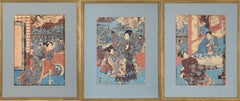
The Four Seasons: Spring Japanese Woodblock Triptych ink on Paper Tales of Genji
Located in Soquel, CA
The Four Seasons: Spring - Japanese Woodblock Triptych in Ink on Paper
Colorful kabuki scene by Utagawa Kuniteru (Japanese, active 1818-18...
Category
Early 19th Century Edo Woodcut Figurative Prints
Materials
Paper, Ink, Woodcut
Woodcut figurative prints for sale on 1stDibs.
Find a wide variety of authentic Woodcut figurative prints available on 1stDibs. While artists have worked in this medium across a range of time periods, art made with this material during the 21st Century is especially popular. If you’re looking to add figurative prints created with this material to introduce a provocative pop of color and texture to an otherwise neutral space in your home, the works available on 1stDibs include elements of orange, yellow, blue, green and other colors. There are many well-known artists whose body of work includes ceramic sculptures. Popular artists on 1stDibs associated with pieces like this include Salvador Dalí, Mino Maccari, Michel Fingesten, and Utagawa Kunisada (Toyokuni III). Frequently made by artists working in the Modern, Surrealist, all of these pieces for sale are unique and many will draw the attention of guests in your home. Not every interior allows for large Woodcut figurative prints, so small editions measuring 0.04 inches across are also available
Still Thinking About These?
All Recently ViewedMore Ways To Browse
Edmund F Ward
Edna Manley
Eduardo Roca
Edward B Gay
Edward Hopper Oil Painting
Edward Simmons
Edwin Lord Weeks
Elizabeth Enders
Elizabeth Horning
Emil Holzhauer
England Church Oil Painting
English Deer Painting
English Fox Hunt Painting
English Toy Terrier
Enrique Martinez Celaya
Eric Aho
Eritrea Art
Ernest Chateignon