Mid-20th Century Figurative Prints
to
2,928
6,636
1,655
1,037
307
169
Overall Width
to
Overall Height
to
4,784
1,204
626
490
337
216
172
133
95
57
12
5
1
724
261
184
163
143
3,642
7,764
25,321
6,672
285
583
1,468
1,209
1,250
2,193
3,068
5,175
3,014
1,520
3,110
7,340
2,372
75
6,300
3,587
3,333
2,091
2,081
1,762
1,260
1,118
656
528
515
478
337
302
291
229
206
185
179
177
5,097
2,151
1,329
667
415
720
3,471
4,913
3,687
Period: Mid-20th Century
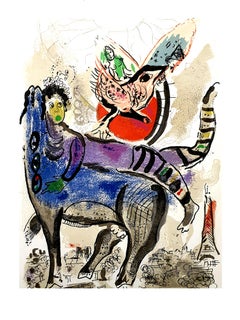
Marc Chagall - La Vache Bleue (Blue Cow) - Original Lithograph
By Marc Chagall
Located in Collonge Bellerive, Geneve, CH
Marc Chagall - Original Lithograph
La Vache Bleue (The Blue Cow)
From the unsigned, unnumbered lithograph printed in the literary review XXe Siecle
1967
See Mourlot 488
Dimensions: 32 x 24 cm
Publisher: G. di San Lazzaro.
Marc Chagall (born in 1887)
Marc Chagall was born in Belarus in 1887 and developed an early interest in art. After studying painting, in 1907 he left Russia for Paris, where he lived in an artist colony on the city’s outskirts. Fusing his own personal, dreamlike imagery with hints of the fauvism and cubism popular in France at the time, Chagall created his most lasting work—including I and the Village (1911)—some of which would be featured in the Salon des Indépendants exhibitions. After returning to Vitebsk for a visit in 1914, the outbreak of WWI trapped Chagall in Russia. He returned to France in 1923 but was forced to flee the country and Nazi persecution during WWII. Finding asylum in the U.S., Chagall became involved in set and costume design before returning to France in 1948. In his later years, he experimented with new art forms and was commissioned to produce numerous large-scale works. Chagall died in St.-Paul-de-Vence in 1985.
The Village
Marc Chagall was born in a small Hassidic community on the outskirts of Vitebsk, Belarus, on July 7, 1887. His father was a fishmonger, and his mother ran a small sundries shop in the village. As a child, Chagall attended the Jewish elementary school, where he studied Hebrew and the Bible, before later attending the Russian public school. He began to learn the fundamentals of drawing during this time, but perhaps more importantly, he absorbed the world around him, storing away the imagery and themes that would feature largely in most of his later work.
At age 19 Chagall enrolled at a private, all-Jewish art school and began his formal education in painting, studying briefly with portrait artist Yehuda Pen. However, he left the school after several months, moving to St. Petersburg in 1907 to study at the Imperial Society for the Protection of Fine Arts. The following year, he enrolled at the Svanseva School, studying with set designer Léon Bakst, whose work had been featured in Sergei Diaghilev's Ballets Russes. This early experience would prove important to Chagall’s later career as well.
Despite this formal instruction, and the widespread popularity of realism in Russia at the time, Chagall was already establishing his own personal style, which featured a more dreamlike unreality and the people, places and imagery that were close to his heart. Some examples from this period are his Window Vitebsk (1908) and My Fianceé with Black Gloves (1909), which pictured Bella Rosenfeld, to whom he had recently become engaged.
The Beehive
Despite his romance with Bella, in 1911 an allowance from Russian parliament member and art patron Maxim Binaver enabled Chagall to move to Paris, France. After settling briefly in the Montparnasse neighborhood, Chagall moved further afield to an artist colony known as La Ruche (“The Beehive”), where he began to work side by side with abstract painters such as Amedeo Modigliani and Fernand Léger as well as the avant-garde poet Guillaume Apollinaire. At their urging, and under the influence of the wildly popular fauvism and cubism, Chagall lightened his palette and pushed his style ever further from reality. I and the Village (1911) and Homage to Apollinaire (1912) are among his early Parisian works, widely considered to be his most successful and representative period.
Though his work stood stylistically apart from his cubist contemporaries, from 1912 to 1914 Chagall exhibited several paintings at the annual Salon des Indépendants exhibition, where works by the likes of Juan Gris, Marcel Duchamp and Robert Delaunay were causing a stir in the Paris art world. Chagall’s popularity began to spread beyond La Ruche, and in May 1914 he traveled to Berlin to help organize his first solo exhibition, at Der Sturm Gallery. Chagall remained in the city until the highly acclaimed show opened that June. He then returned to Vitebsk, unaware of the fateful events to come.
War, Peace and Revolution
In August 1914 the outbreak of World War I precluded Chagall’s plans to return to Paris. The conflict did little to stem the flow of his creative output, however, instead merely giving him direct access to the childhood scenes so essential to his work, as seen in paintings such as Jew in Green (1914) and Over Vitebsk (1914). His paintings from this period also occasionally featured images of the war’s impact on the region, as with Wounded Soldier (1914) and Marching (1915). But despite the hardships of life during wartime, this would also prove to be a joyful period for Chagall. In July 1915 he married Bella, and she gave birth to a daughter, Ida, the following year. Their appearance in works such as Birthday (1915), Bella and Ida by the Window (1917) and several of his “Lovers” paintings give a glimpse of the island of domestic bliss that was Chagall’s amidst the chaos.
To avoid military service and stay with his new family, Chagall took a position as a clerk in the Ministry of War Economy in St. Petersburg. While there he began work on his autobiography and also immersed himself in the local art scene, befriending novelist Boris Pasternak, among others. He also exhibited his work in the city and soon gained considerable recognition. That notoriety would prove important in the aftermath of the 1917 Russian Revolution when he was appointed as the Commissar of Fine Arts in Vitebsk. In his new post, Chagall undertook various projects in the region, including the 1919 founding of the Academy of the Arts. Despite these endeavors, differences among his colleagues eventually disillusioned Chagall. In 1920 he relinquished his position and moved his family to Moscow, the post-revolution capital of Russia.
In Moscow, Chagall was soon commissioned to create sets and costumes for various productions at the Moscow State Yiddish Theater, where he would paint a series of murals titled Introduction to the Jewish Theater as well. In 1921, Chagall also found work as a teacher at a school for war orphans. By 1922, however, Chagall found that his art had fallen out of favor, and seeking new horizons he left Russia for good.
Flight
After a brief stay in Berlin, where he unsuccessfully sought to recover the work exhibited at Der Sturm before the war, Chagall moved his family to Paris in September 1923. Shortly after their arrival, he was commissioned by art dealer and publisher Ambroise Vollard to produce a series of etchings for a new edition of Nikolai Gogol's 1842 novel Dead Souls. Two years later Chagall began work on an illustrated edition of Jean de la Fontaine’s Fables, and in 1930 he created etchings for an illustrated edition of the Old Testament, for which he traveled to Palestine to conduct research.
Chagall’s work during this period brought him new success as an artist and enabled him to travel throughout Europe in the 1930s. He also published his autobiography, My Life (1931), and in 1933 received a retrospective at the Kunsthalle in Basel, Switzerland. But at the same time that Chagall’s popularity was spreading, so, too, was the threat of Fascism and Nazism. Singled out during the cultural "cleansing" undertaken by the Nazis in Germany, Chagall’s work was ordered removed from museums throughout the country. Several pieces were subsequently burned, and others were featured in a 1937 exhibition of “degenerate art” held in Munich. Chagall’s angst regarding these troubling events and the persecution of Jews in general can be seen in his 1938 painting White Crucifixion.
With the eruption of World War II, Chagall and his family moved to the Loire region before moving farther south to Marseilles following the invasion of France. They found a more certain refuge when, in 1941, Chagall’s name was added by the director of the Museum of Modern Art (MOMA) in New York City to a list of artists and intellectuals deemed most at risk from the Nazis’ anti-Jewish campaign. Chagall and his family would be among the more than 2,000 who received visas and escaped this way.
Haunted Harbors
Arriving in New York City in June 1941, Chagall discovered that he was already a well-known artist there and, despite a language barrier, soon became a part of the exiled European artist community. The following year he was commissioned by choreographer Léonide Massine to design sets and costumes for the ballet Aleko, based on Alexander Pushkin’s “The Gypsies” and set to the music of Pyotr Ilyich Tchaikovsky.
But even as he settled into the safety of his temporary home, Chagall’s thoughts were frequently consumed by the fate befalling the Jews of Europe and the destruction of Russia, as paintings such as The Yellow Crucifixion...
Category
Surrealist Mid-20th Century Figurative Prints
Materials
Lithograph
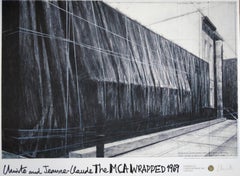
The Wrapped (MCA) Chicago 1969, Lt Ed of 200 w/gold stamp Hand Signed by Christo
Located in New York, NY
Christo and Jeanne-Claude
The Wrapped (MCA), 1969 (Hand Signed), 2019
Four-color offset lithograph on 110 lb. Crane Lettra Cover stock, with an elegant gold foil stamp.
Hand Signed ...
Category
Pop Art Mid-20th Century Figurative Prints
Materials
Foil
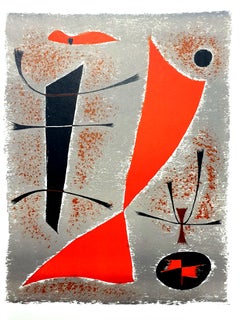
Gustave Singier - Abstract Fish - Original Lithograph
Located in Collonge Bellerive, Geneve, CH
Gustave Singier - Abstract Fish - Original Lithograph
Conditions: excellent
32 x 24 cm
1955
From XXe siècle, San Lazzaro
Unsigned and unumbered as issued
Category
Contemporary Mid-20th Century Figurative Prints
Materials
Lithograph
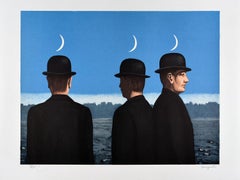
René Magritte - LE CHEF D'OEUVRE OU... Limited Surrealism French Contemporary
Located in Madrid, Madrid
René Magritte - LE CHEF D'OEUVRE OU LES MYSTÈRES DE L'HORIZON, 1965
Date of creation: 2010
Medium: Lithograph on BFK Rives Paper
Edition number: 131/275
Size: 60 x 45 cm
Condition: N...
Category
Surrealist Mid-20th Century Figurative Prints
Materials
Lithograph
Salvador Dali - The Vision - Original Lithograph
Located in Collonge Bellerive, Geneve, CH
Salvador Dali - The Vision - Original Lithograph
Joseph FORET, Paris, 1957
PRINTER : Detruit.
SIGNATURE : plate signed by Dali.
LIMITED : 233 copies.
SIZE : 41 x 33 cm
REFERENCES ...
Category
Surrealist Mid-20th Century Figurative Prints
Materials
Lithograph

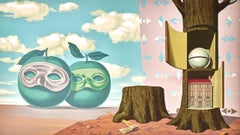
Rene Magritte, On the Shore of the Sea…, 1968 (after)
Located in Southampton, NY
This exquisite lithograph after Rene Magritte (1898–1967), titled Il y a sur le Rivage de la Mer Deux Pommes Visiteuses (On the Shore of the Sea There Are Two Visiting Apples), from ...
Category
Surrealist Mid-20th Century Figurative Prints
Materials
Lithograph

$3,996 Sale Price
20% Off
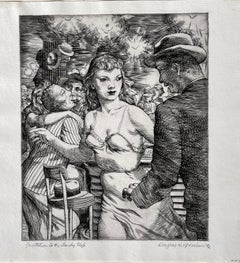
INVITATION TO THE LINDY HOP
Located in Portland, ME
Gorsline, Douglas (American, 1913-1985). INVITATION TO THE LINDY HOP. Engraving, 1942. 7 3/8 x 6 1/8 inches (plate), 8 1/2 x 7 3/8 inches (sheet). Signed, ti...
Category
Mid-20th Century Figurative Prints
Materials
Engraving
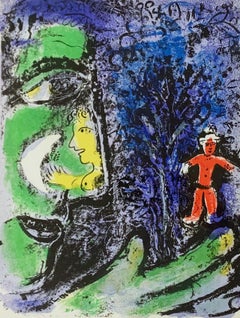
Profile and Red Child, from 1960 Mourlot Lithographe I
By Marc Chagall
Located in Washington, DC
Artist: Marc Chagall
Title: Profile and Red Child
Portfolio: Mourlot Lithographe I
Medium: Lithograph
Year: 1960
Edition: Unnumbered
Framed Size: 20 1/2" x 17 1/2"
Image Size: 12 1/2...
Category
Modern Mid-20th Century Figurative Prints
Materials
Lithograph
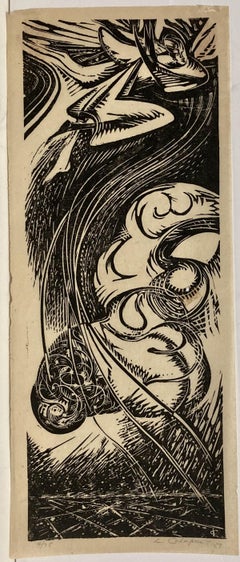
Letterio Calapai, (Sky Abstraction), 1957, mid-century wood engraving
Located in New York, NY
Letterio Calapai is widely recognized as a major American artist of the twentieth century. He is widely respected as a printmaker, especially for engravings and wood engravings, and ...
Category
American Modern Mid-20th Century Figurative Prints
Materials
Woodcut
The Secret
By Paul Delvaux
Located in Lake Worth Beach, FL
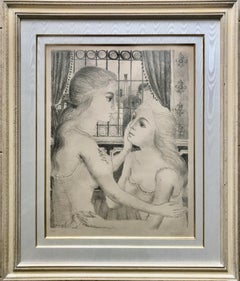
The Secret 1966
Lithograph on wove paper with watermark arches 20in x 25in (64cm x 50cm), paper size 29inx22in and (39inx33in) framed under glass. Pencil signed and numbered, edition 34/75. Ref. no. 4, in: Cahier Paul Delvaux, no. 1, printed by Mourlot, published by Galerie Bateau Lavoir, Paris.
Paul Delvaux, (born September 23, 1897, Antheit, Liège, Belgium—died July 20, 1994, Veurne), Belgian Surrealist painter and printmaker whose canvases typically portray transfixed nudes and skeletons in mysterious settings.
From 1920 to 1924 Delvaux studied architecture and painting at the Académie des Beaux-Arts in Brussels. His early work was influenced by Post-Impressionism and Expressionism, but after discovering the work of Salvador Dalí, Giorgio de Chirico, and his fellow Belgian René Magritte, Delvaux converted to a Surrealist style in the mid-1930s. He traveled through Italy before World War II, and the Classical architecture he encountered there developed into recurring motifs in his work. During that trip he was also greatly influenced by early 16th-century Italian Mannerist...
Category
Surrealist Mid-20th Century Figurative Prints
Materials
Lithograph
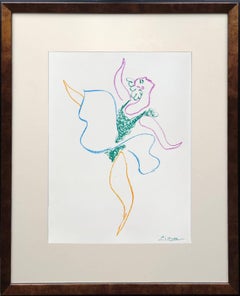
Le Ballet
Located in OPOLE, PL
Pablo Picasso (1881-1973) - Le Ballet
Technique: Lithograph
Year: 1954
Dimensions: 31 × 22 cm
Publisher: Pantheon
Signature: Signed in Plate
Catalogue Reference: Cramer 62
Condition...
Category
Modern Mid-20th Century Figurative Prints
Materials
Lithograph
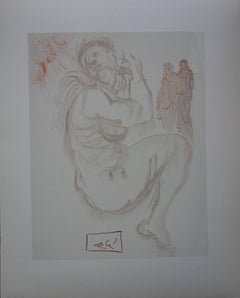
Purgatory 19 - Dante's Dream - woodcut - 1963
Located in Paris, IDF
Salvador Dali (1904-1989)
Purgatory 19 - Dante's Dream
Woodcut on paper
Signature printed in the image
1960/63
Printed on paper Vélin BFK Rives
Size 32,8 x 26,4 cm (c. 13 x 10 in)
...
Category
Surrealist Mid-20th Century Figurative Prints
Materials
Paper, Woodcut
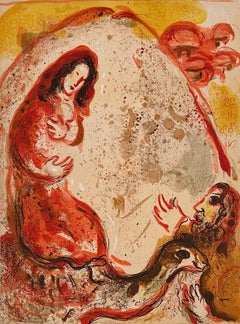
Rachel Hides Her Father's Household Goods, from 1960 Drawings for the Bible
By Marc Chagall
Located in Washington, DC
Artist: Marc Chagall
Title: Rachel Hides Her Father's Household Goods
Portfolio: Drawings for the Bible
Medium: Lithograph
Year: 1960
Edition: Unnumbered
Frame Size: 22 1/4" x 18 3/4...
Category
Modern Mid-20th Century Figurative Prints
Materials
Lithograph
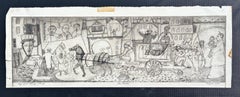
Parade (Surrealist Black Philadelphia Artist)
By Roland Ayers
Located in Wilton Manors, FL
Roland Ayers (1932-2014).
Parade, 1960
Drypoint Etching, 5.5 × 17.75 inches.
Signed, titled and dated by the artist in pencil, lower margin.
Small tear, left margin which exte...
Category
Surrealist Mid-20th Century Figurative Prints
Materials
Paper, Ink
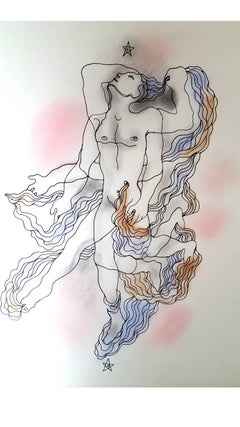
Jean Cocteau - White Book - Original Handcolored Lithograph
By Jean Cocteau
Located in Collonge Bellerive, Geneve, CH
Jean Cocteau
White Book - Autobiography about Cocteau's discovery of his homosexuality. The book was first published anonymously and created a scandal.
Original Handcolored Lithograp...
Category
Modern Mid-20th Century Figurative Prints
Materials
Lithograph
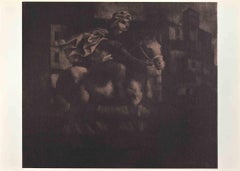
Knight - Phototype after Corrado Cagli - Mid-20th Century
Located in Roma, IT
Knight is an artwork realized after Corrado Cagli in the middle of the 20th century.
Photype print.
Signed on the low side.
Good condition.
Corrado Cagli (Ancona, 1910 - Rome...
Category
Contemporary Mid-20th Century Figurative Prints
Materials
Photogravure
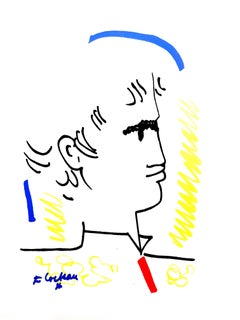
Jean Cocteau - Colorful Portrait - Original Lithograph
By Jean Cocteau
Located in Collonge Bellerive, Geneve, CH
Original Lithograph by Jean Cocteau
Title: Taureaux
Dimensions: 40 x 30 cm
Edition: 200
Luxury print edition from the portfolio of Trinckvel
1965
Jean Cocteau
Writer, artist and fi...
Category
Modern Mid-20th Century Figurative Prints
Materials
Lithograph
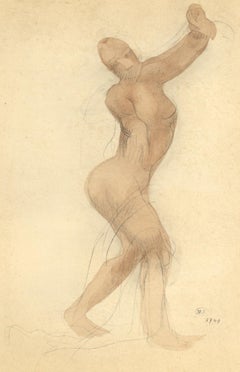
Francois Auguste Rene Rodin, Untitled, from The Varende, 1944 (after)
Located in Southampton, NY
This exquisite lithograph after Francois Auguste Rene Rodin (1840–1917), titled Sans titre (Untitled), from the folio La Varende, Rodin (La Varende, Rodin), originates from the 1944 ...
Category
Modern Mid-20th Century Figurative Prints
Materials
Lithograph, Stencil
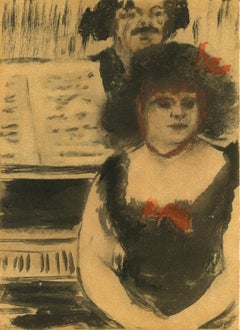
$716 Sale Price
20% Off
Degas, La Pianiste et le Chanteur, E. Degas Monotypes (after)
By Edgar Degas
Located in Fairfield, CT
Medium: Engraving on vélin du Marais paper
Year: 1948
Paper Size: 12.25 x 9.125 inches; image size: 6.75 x 5 inches
Inscription: Unsigned and unnumbered, as issued
Notes: From the vo...
Category
Impressionist Mid-20th Century Figurative Prints
Materials
Engraving
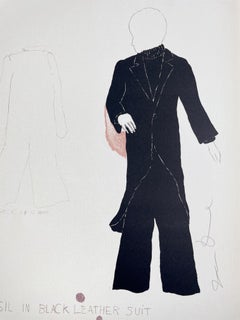
$956 Sale Price
20% Off
Basil in Black Leather Suit by Jim Dine from The Picture of Dorian Gray fashion
By Jim Dine
Located in New York, NY
Pictured in this monochromatic Jim Dine lithograph is Basil Hallward, the artist companion of Dorian Gray in Oscar Wilde's novel The Picture of Dorian Gray. Wearing a sleek black lea...
Category
Pop Art Mid-20th Century Figurative Prints
Materials
Lithograph
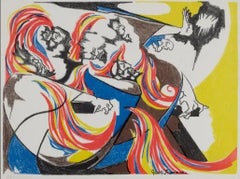
The Pentecost
Located in New York, NY
A very good impression of this color lithograph. Printer's proof, annotated P.P. 1 from the unknown edition size. Printed by United Church Press, Boston/Philadelphia. Published by Un...
Category
Modern Mid-20th Century Figurative Prints
Materials
Color, Lithograph
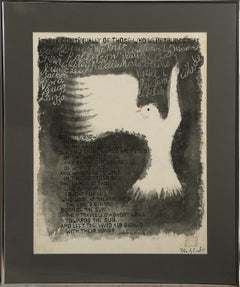
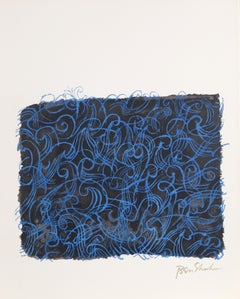
I Think Continually Of Those... from 9 Drawings, Modern Lithograph by Ben Shahn
By Ben Shahn
Located in Long Island City, NY
The Nine Drawings Portfolio is a strong example of Shahn’s commitment to the struggle for social justice and racial equity. It was “published and distributed as part of a fund-raisin...
Category
Modern Mid-20th Century Figurative Prints
Materials
Lithograph
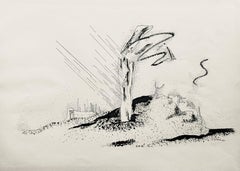
Jean Lurcat, S.O.S., from Eight Drawings, 1933 (after)
By Jean Lurçat
Located in Southampton, NY
This exquisite heliogravure after Jean Lurcat (1892–1966), titled S.O.S., from the folio Jean Lurcat Huit Dessins (Jean Lurcat Eight Drawings), originates from the 1933 edition publi...
Category
Surrealist Mid-20th Century Figurative Prints
Materials
Lithograph
$716 Sale Price
20% Off
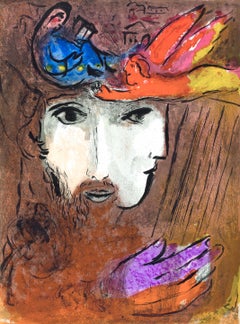
Marc Chagall, David and Bathsheba, from Drawings for the Bible, 1956
By Marc Chagall
Located in Southampton, NY
This exquisite lithograph by Marc Chagall (1887–1985), titled David et Bethsabee (David and Bathsheba), from Marc Chagall, Dessins Pour La Bible (Drawings for the Bible), Verve: Revu...
Category
Expressionist Mid-20th Century Figurative Prints
Materials
Lithograph
$956 Sale Price
20% Off
Lewis Lee Tilley 1966 Abstract Color Lithograph, American Modernist Limited Ed.
Located in Denver, CO
This 1966 American Modernist abstract color lithograph by renowned artist Lewis Lee Tilley (1921–2005) is a striking example of mid-20th-century abstraction. Pencil-signed by the artist and numbered 4 of 5 in a very limited edition, this rare lithograph demonstrates Tilley’s mastery of color theory, geometric abstraction, and dynamic composition, making it highly desirable for collectors of American Modernist prints.
The artwork features a bold interplay of vibrant colors and abstract forms, creating a rhythmic and visually compelling composition. Its balance of energy and sophistication reflects Tilley’s distinctive modernist style and innovative approach to printmaking. Ideal for gallery display or a contemporary interior, this lithograph is a refined addition to any modern art collection.
Professionally framed, the piece measures 29 x 23 inches overall, with an image size of 12 ½ x 10 ½ inches, providing a strong visual presence without overwhelming space.
Provenance:
Formerly part of the Fremont Center for the Arts collection, Canon City...
Category
Abstract Mid-20th Century Figurative Prints
Materials
Lithograph
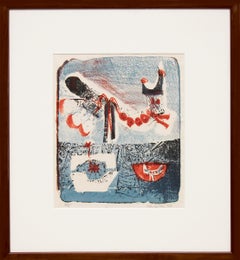
Jean Cocteau - Juliet Waiting for Romeo - Original Lithograph
By Jean Cocteau
Located in Collonge Bellerive, Geneve, CH
Original Lithograph by Jean Cocteau
From "Théâtre" Portfolio, 1957
Edition: 207 / 8800
Dimensions: 22.5 x 15.5 cm
Jean Cocteau
Writer, artist and film director Jean Cocteau was on...
Category
Modern Mid-20th Century Figurative Prints
Materials
Lithograph
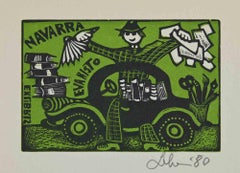
Ex-Libris - Navarra - woodcut - Mid 20th Century
Located in Roma, IT
Ex-Libris - Navarra is an Artwork realized in Mid 20th Century.
Woodcut on paper.
Good conditions.
The artwork represents a minimalistic, clean design, through preciseness .
Category
Modern Mid-20th Century Figurative Prints
Materials
Woodcut
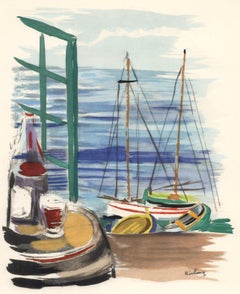
Moise Kisling, Wine of Departure, from Wines, Flowers, and Flames, 1956 (after)
Located in Southampton, NY
This exquisite lithograph after Moise Kisling (1891–1953), titled Vin du depart (Wine of Departure), from the folio Vins, Fleurs et Flammes (Wines, Flowers, and Flames), originates f...
Category
Modern Mid-20th Century Figurative Prints
Materials
Lithograph, Stencil
$1,036 Sale Price
20% Off
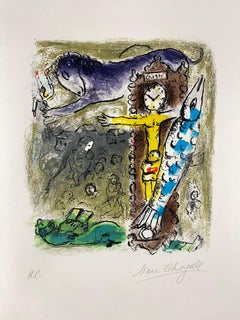
Le Christ a l'Horloge, Paris (Christ in the Clock)
By Marc Chagall
Located in Missouri, MO
Marc Chagall
"Le Christ a l'Horloge, Paris" (Christ in the Clock) 1957 (M. 196)
Color Lithograph on Arches Wove Paper
Signed in Pencil "Marc Chagall" Lower Right
Initialed "H.C." (Hors Commerce) Lower Left, aside from numbered edition of 90
*Floated in Gold Frame with Linen Matting, UV Plexiglass
Sheet Size: 18 3/4 x 14 3/4 inches (47.5 cm x 38 cm)
Image Size: 9 3/4 x 8 1/2 inches
Framed Size: 28.5 x 24.25 inches
Marc Chagall was a man of keen intelligence, a shrewd observer of the contemporary scene, with a great sympathy for human suffering. He was born on July 7, 1887 in Vitebsk, Russia; his original name was Moishe Shagal (Segal), but when he became a foremost member of the Ecole de Paris, he adopted French citizenship and the French spelling of his name. Vitebsk was a good-sized Russian town of over 60,000, not a shtetl. His father supported a wife and eight children as a worker in a herring-pickling plant.
Sheltered by the Jewish commandment against graven images, the young Chagall never saw so much as a drawing until, one day, he watched a schoolmate copying a magazine illustration. He was ridiculed for his astonishment, but he began copying and improvising from magazines. Both Chagall's parents reluctantly agreed to let him study with Yehuda Pen, a Jewish artist in Vitebsk. Later, in 1906, they allowed their son to study in St. Petersburg, where he was exposed to Russian Iconography and folk art. At that time, Jews could leave the Pale only for business and employment and were required to carry a permit. Chagall, who was in St. Petersburg without a permit, was imprisoned briefly.
His first wife, Bella Rosenfeld, was a product of a rich cultivated and intellectual group of Jews in Vitebsk. Chagall was made commissar for the arts for the area, charged with directing its cultural life and establishing an art school. Russian folklore, peasant life and landscapes persisted in his work all his life. In 1910 a rich patron, a lawyer named Vinaver, staked him to a crucial trip to Paris, where young artists were revolutionizing art. He also sent him a handsome allowance of 125 francs (in those days about $24) each month. Chagall rejected cubism, fauvism and futurism, but remained in Paris. He found a studio near Montparnasse in a famous twelve-sided wooden structure divided into wedge-shaped rooms. Chaim Soutine, a fellow Russian Jew, and Modigliani lived on the same floor. To Chagall's astonishment, he found himself heralded as one of the fathers of surrealism. In 1923, a delegation of Max Ernst, Paul Eluard and Gala (later Salvador Dali's wife) actually knelt before Chagall, begging him to join their ranks. He refused.
To understand Chagall's work, it is necessary to know that he was born a Hasidic Jew, heir to mysticism and a world of the spirit, steeped in Jewish lore and reared in the Yiddish language. The Hasidim had a special feeling for animals, which they tried not to overburden. In the mysterious world of Kabbala and fantastic ancient legends of Chagall's youth, the imaginary was as important as the real. His extraordinary use of color also grew out of his dream world; he did not use color realistically, but for emotional effect and to serve the needs of his design. Most of his favorite themes, though superficially light and trivial, mask dark and somber thoughts. The circus he views as a mirror of life; the crucifixion as a tragic theme, used as a parallel to the historic Jewish condition, but he is perhaps best known for the rapturous lovers he painted all his life. His love of music is a theme that runs through his paintings.
After a brief period in Berlin, Chagall, Bella and their young daughter, Ida, moved to Paris and in 1937 they assumed French citizenship. When France fell, Chagall accepted an invitation from the Museum of Modern Art to immigrate to the United States. He was arrested and imprisoned in Marseilles for a short time, but was still able to immigrate with his family. The Nazi onslaught caught Chagall in Vichy, France, preoccupied with his work. He was loath to leave; his friend Varian Fry rescued him from a police roundup of Jews in Marseille, and packed him, his family and 3500 lbs. of his art works on board a transatlantic ship. The day before he arrived in New York City, June 23, 1941, the Nazis attacked Russia. The United States provided a wartime haven and a climate of liberty for Chagall. In America he spent the war years designing large backdrops for the Ballet.
Bella died suddenly in the United States of a viral infection in September 1944 while summering in upstate New York. He rushed her to a hospital in the Adirondacks, where, hampered by his fragmentary English, they were turned away with the excuse that the hour was too late. The next day she died.
He waited for three years after the war before returning to France. With him went a slender married English girl, Virginia Haggard MacNeil; Chagall fell in love with her and they had a son, David. After seven years she ran off with an indigent photographer. It was an immense blow to Chagall's ego, but soon after, he met Valentine Brodsky, a Russian divorcee designing millinery in London (he called her Fava). She cared for him during the days of his immense fame and glory. They returned to France, to a home and studio in rustic Vence. Chagall loved the country and every day walked through the orchards, terraces, etc. before he went to work.
Chagall died on March 28, 1985 in the south of France. His heirs negotiated an arrangement with the French state allowing them to pay most of their inheritance taxes in works of art. The heirs owed about $30 million to the French government; roughly $23 million of that amount was deemed payable in artworks. Chagall's daughter, Ida and his widow approved the arrangement.
Written and submitted by Jean Ershler Schatz, artist and researcher from Laguna Woods, California.
Sources:
Hannah Grad Goodman in Homage to Chagall in Hadassah Magazine, June 1985
Jack Kroll in Newsweek, April 8, 1985
Andrea Jolles in National Jewish Monthly Magazine, May 1985
Michael Gibson...
Category
Modern Mid-20th Century Figurative Prints
Materials
Lithograph
Manet, Composition, Édouard Manet, Letters with Aquarelles (after)
Located in Southampton, NY
Lithograph and stencil on vélin Foreign Affairs paper mounted on Foreign Affairs museum board, as issued . Unsigned and unnumbered, as issued. Good Condition. Notes: From the folio, ...
Category
Impressionist Mid-20th Century Figurative Prints
Materials
Lithograph
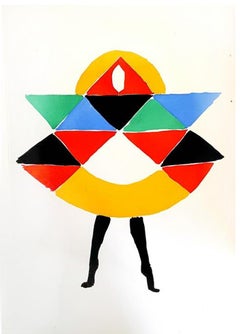
$716 Sale Price
20% Off
Living Painting - Colour Pochoir
Located in Collonge Bellerive, Geneve, CH
Full-page, colour pochoir after costume designs by Sonia Delaunay.
Edition 331/500 copies on Velin Aussedat
Dimensions: 28.5 x 19.5 cm.
From 27 Living Paintings. [Milano, Edizioni d...
Category
Abstract Geometric Mid-20th Century Figurative Prints
Dufy, Composition, Les Côtes Normandes (after)
By Raoul Dufy
Located in Southampton, NY
Lithograph on grand vélin d'Arches spécial paper. Unsigned and unnumbered, as issued. Good condition with centerfold, as issued. Notes: From the folio, Les Côtes Normandes 1961. Publ...
Category
Modern Mid-20th Century Figurative Prints
Materials
Lithograph
$1,516 Sale Price
20% Off
Migration from Lettera Amorosa
Located in Palo Alto, CA
Braque is known to have spent years working on this project, the illustrations for Lettera Amorosa by René Char. This exquisite work from the book utilizes sweeps of color to create ...
Category
Modern Mid-20th Century Figurative Prints
Materials
Lithograph
$7,000 Sale Price
50% Off
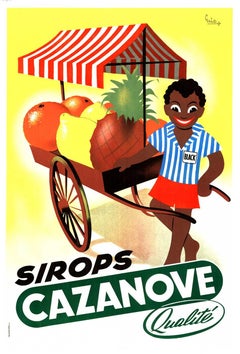
Original Sirops Cazanove French vintage poster Grade A on linen
Located in Spokane, WA
SIROPS CAZANOVE Original Vintage French Poster by Eric — Excellent condition, Grade A. Linen-backed. Printer: Akarcher, Paris. Circa 1945–1955. Mid-century modern.
Discover a rare o...
Category
Art Deco Mid-20th Century Figurative Prints
Materials
Lithograph
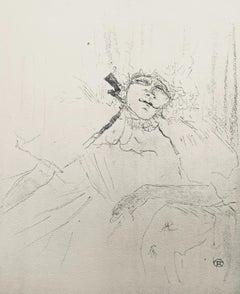
Toulouse-Lautrec, Composition, Yvette Guilbert vue par Toulouse-Lautrec (after)
Located in Southampton, NY
Lithograph and stencil on vélin Rives BFK paper. Unsigned and unnumbered, as issued. Good Condition; never framed or matted. Notes: From the folio, Yvette Guilbert vue par Toulouse-Lautrec, 1950. Published by Librairie Au Pont des Arts, Paris; rendered by Daniel Jacomet; and, printed by Ateliers Daniel Jacomet et Cie, Paris, Monday, October 30, 1950. Excerpted from the folio (translated from French), This album, including all the prints dedicated by Toulouse-Lautrec to Yvette Guilbert, was printed for the Librairie Au Pont des Arts, by D. Jacomet. The color state of the Colombine plate in Pierrot and the twenty-seven plates of the French and English series were executed according to the original lithographs (before the letter for the French suite) from the Toulouse-Lautrec workshop and kept in the Cabinet des Stampes of the National Library. The collection includes three plates in color and twenty-eight plates in black. All copies also include a lithograph: Colombine à Pierrot, taken, after special authorization from the Musée d'Albi, on the original stone of Toulouse-Lautrec, by Lucien Détruit. It was taken from this album: A non-trade and nominative example; L examples on a large vélin of Rives including: III proofs of the lithography Colombine à Pierrot printed...
Category
Post-Impressionist Mid-20th Century Figurative Prints
Materials
Lithograph, Stencil
$716 Sale Price
20% Off
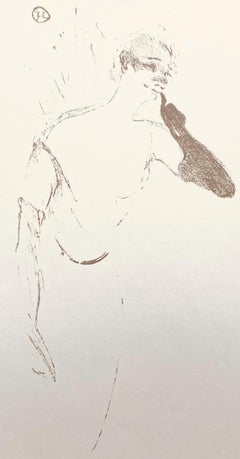
Toulouse-Lautrec, Composition, Yvette Guilbert vue par Toulouse-Lautrec (after)
Located in Southampton, NY
Lithograph and stencil on vélin Rives BFK paper. Unsigned and unnumbered, as issued. Good Condition; never framed or matted. Notes: From the folio, Yvette Guilbert vue par Toulouse-...
Category
Post-Impressionist Mid-20th Century Figurative Prints
Materials
Lithograph, Stencil
$716 Sale Price
20% Off
'Join The Regular Army: A Skilled Trade' 1950s British Army Recruitment Poster
Located in London, GB
To see our other original vintage posters, scroll down to "More from this Seller" and below it click on "See all from this Seller" - or send us a message if you cannot find the poster you want.
Anon.
Join the Regular Army...
Category
Realist Mid-20th Century Figurative Prints
Materials
Lithograph

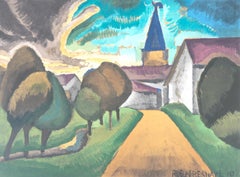
de La Fresnaye, L'entrée du village, Collection Pierre Lévy (after)
Located in Fairfield, CT
Medium: Lithograph on vélin d'Arches paper
Year: 1968
Paper Size: 20 x 26 inches
Inscription: Signed in the plate and unnumbered, as issued
Notes: From the folio, Roger de la Fresnay...
Category
Cubist Mid-20th Century Figurative Prints
Materials
Lithograph
$716 Sale Price
20% Off
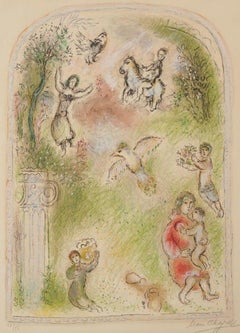
LE JARDIN DE POMONE
By Marc Chagall
Located in New York, NY
A very good impression of this color lithograph. Signed and numbered 38/50 in pencil by Chagall.
Catalogue reference: Mourlot 541
Category
Modern Mid-20th Century Figurative Prints
Materials
Color, Lithograph
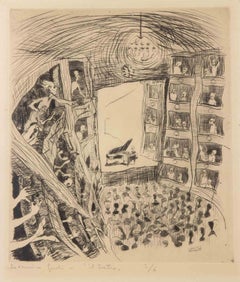
Il Teatro - Etching by Domenico Gnoli - 1960s
Located in Roma, IT
Etching and drypoint realized by Domenico Gnoli in 1960s.
Signed in the plate.
Hand signed and titled in pencil.
Edition of 3/6.
Very good condition except for some staing in the...
Category
Modern Mid-20th Century Figurative Prints
Materials
Etching
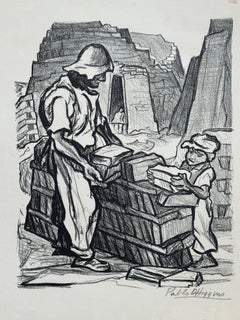
The Bricklayer & His Son (Mexican Artist)
Located in Wilton Manors, FL
Pablo O'Higgins (1904-1983).
The Bricklayer and His Son, 1946.
Lithographic ink on paper, Sheet measuring 15 x 17 5/8 inches.
Signed in pencil by artist lower right.
Water stai...
Category
Realist Mid-20th Century Figurative Prints
Materials
Paper
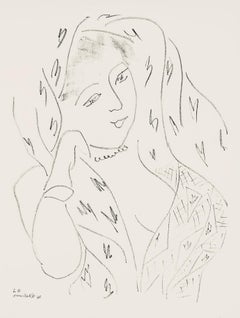
Henri Matisse, Series L, Var. 14, Drawings, Themes and Variations, 1943 (after)
Located in Southampton, NY
This exquisite lithograph after Henri Matisse (1869–1954), titled Serie L, var. 14 (Series L, Variation 14), from the album Henri Matisse, Dessins, Themes et Variations (Drawings, Th...
Category
Modern Mid-20th Century Figurative Prints
Materials
Lithograph
$796 Sale Price
20% Off
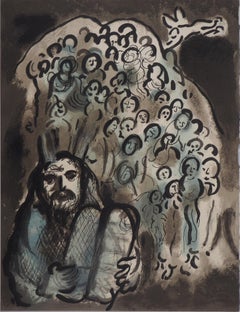
Moses, the Tablets of the Law & His People - Original lithograph - Mourlot #689
By Marc Chagall
Located in Paris, IDF
Marc CHAGALL
Moses with the Tablets of the Law & His People, 1973
Original stone lithograph (Printed in Mourlot workshop)
Unsigned and not numbered
On vellum 32 x 24 cm (c. 13 x 10 ...
Category
Modern Mid-20th Century Figurative Prints
Materials
Lithograph
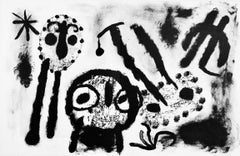
Joan Miro, Untitled, from Miro Recent Paintings, 1953
By Joan Miró
Located in Southampton, NY
This exquisite lithograph by Joan Miro (1893–1983), titled Sans titre (Untitled), originates from the 1953 album Miro Recent Paintings. Published by the Pierre Matisse Gallery, New Y...
Category
Surrealist Mid-20th Century Figurative Prints
Materials
Lithograph
$956 Sale Price
20% Off
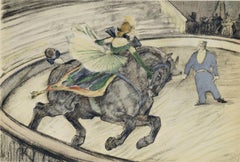
Henri de Toulouse-Lautrec, Work on the Panel, from The Circus, 1952 (after)
Located in Southampton, NY
This exquisite lithograph after Henri de Toulouse-Lautrec (1864–1901), titled Travail sur le panneau (Work on the Panel), originates from the 1952 album The Circus of Toulouse-Lautre...
Category
Post-Impressionist Mid-20th Century Figurative Prints
Materials
Lithograph
$716 Sale Price
20% Off
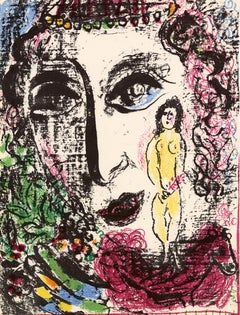
L'Apparition au Cirque (Apparition at the Circus)
By Marc Chagall
Located in Milwaukee, WI
Framed 26 x 22 in
No. 392 in the Catalogue Raisonne of Chagall's lithographs
This lithograph came from "The Lithographs of Chagall: Volume II" by Fernand Mourlot and Marc Chagall....
Category
Mid-20th Century Figurative Prints
Materials
Lithograph
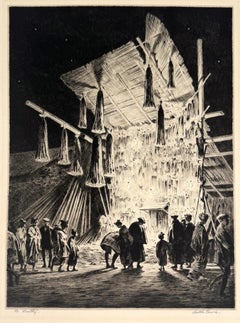
Street Booth, Tokyo, New Year's Eve
By Martin Lewis
Located in Middletown, NY
A superb impression of Martin Lewis's consummate image of Japan.
Etching with drypoint on fine cream laid paper, 13 7/8 x 10 3/8 inches (352 x 265 mm); sheet 17 3/4 x 14 1/4 inches ...
Category
American Modern Mid-20th Century Figurative Prints
Materials
Handmade Paper, Laid Paper, Drypoint, Etching
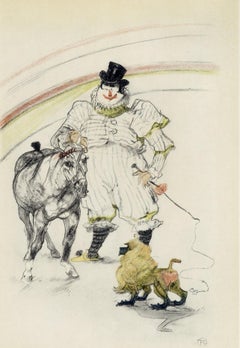
Henri de Toulouse-Lautrec, Clown Training a Horse, from The Circus, 1952 (after)
Located in Southampton, NY
This exquisite lithograph after Henri de Toulouse-Lautrec (1864–1901), titled Clown dressant un cheval et un singe (Clown Training a Horse and a Monkey), originates from the 1952 alb...
Category
Post-Impressionist Mid-20th Century Figurative Prints
Materials
Lithograph
$716 Sale Price
20% Off
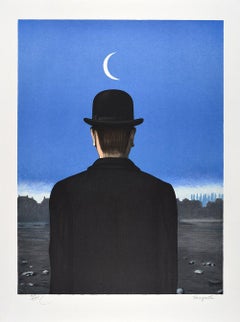
RENÉ MAGRITTE Le Maître d'École - 1955 Limited edition Lithograph - Surrealism
Located in Madrid, Madrid
LE MAÎTRE D'ÉCOLE, 1955 (THE SCHOOLMASTER)
Date of creation: 2010
Medium: Lithograph on BFK Rives Paper
Edition: 275
Size: 60 x 45 cm
Observations: Lithograph on BFK Rives paper plat...
Category
Surrealist Mid-20th Century Figurative Prints
Materials
Lithograph
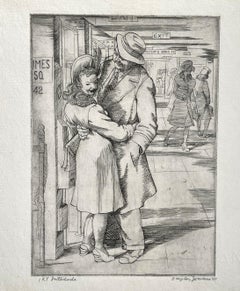
IRT INTERLUDE
Located in Portland, ME
Gorsline, Douglas (American, 1913-1985). IRT INTERLUDE. Engraving, 1940. 7 7/8 x 5 1/8 inches (plate), 9 1/2 x 8 5/8 inches (sheet). Signed, titled and dated in pencil. Edition size ...
Category
Mid-20th Century Figurative Prints
Materials
Engraving
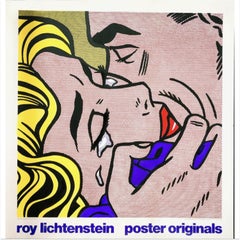
Kiss By Roy Lichtenstein
Located in Dubai, Dubai
Kiss
By Roy Lichtenstein
Roy Lichtenstein was a prominent American pop artist known for his bold, comic strip-inspired paintings. Emerging in the 1960s, his work featured bright co...
Category
Contemporary Mid-20th Century Figurative Prints
Materials
Paper, Screen
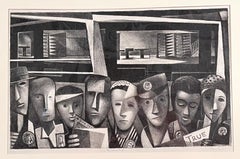
SUBWAY SHIFT - THE SECOND FRONT
Located in Portland, ME
Spruance, Benton (American 1904-1967). SUBWAY SHIFT - THE SECOND FRONT. Fine and Looney 223. Lithograph, 1943. Fine and Looney cite two editions, one of 35 and one of 30, this being ...
Category
Mid-20th Century Figurative Prints
Materials
Lithograph
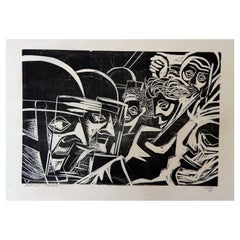
Herman Volz Original Woodcut, Social Unrest of the 1960's, Confrontation
Located in Phoenix, AZ
An original woodcut print depicting the social unrest of the 1960s by Herman Roderick Volz.
Pencil signed by the artist lower right. Image measures 11 1/2" x 17," sheet measures 18"...
Category
Mid-20th Century Figurative Prints
Materials
Paper
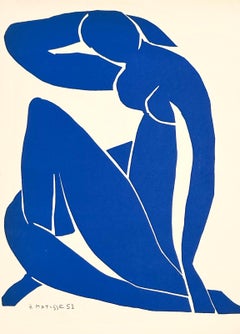
Henri Matisse (after) Nus Bleus II
Located in Washington, DC
Artist: Henri Matisse (after)
Title: Nus Bleus II
Portfolio: The Last Works of Henri Matisse
Medium: Lithograph
Year: 1958
Edition: 2000
Framed Size: 22" x 18"
Sheet Size: 14" x 10 ...
Category
Mid-20th Century Figurative Prints
Materials
Lithograph
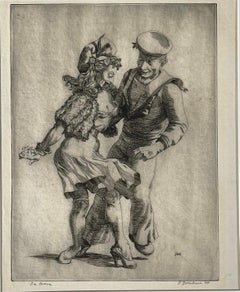
ON LEAVE
Located in Portland, ME
Gorsline, Douglas (American, 1913-1985). ON LEAVE. Engraving, 1944. 10 7/8 x 8 1/8 inches (plate), 12 1/2 x 10 inches (sheet). Signed, titled and dated in pencil. Edition size not k...
Category
Mid-20th Century Figurative Prints
Materials
Engraving
PKZ [Man Tipping His Hat].
By Franco Barberis
Located in New York, NY
Barberis, Franco. PKZ [Man Tipping His Hat]. 1953, Color lithograph, 50 1/2 x 35 1/2”
On Linen. Ref: American Poster Renaissance, p. 41
As a graphic designer, Barberis was initial...
Category
Art Deco Mid-20th Century Figurative Prints
Materials
Lithograph
![PKZ [Man Tipping His Hat].](https://a.1stdibscdn.com/franco-barberis-prints-works-on-paper-pkz-man-tipping-his-hat-for-sale/a_2922/1610721000093/Barberis_PKZtippinghat_53_master.jpg?width=240 "man tipping hat")
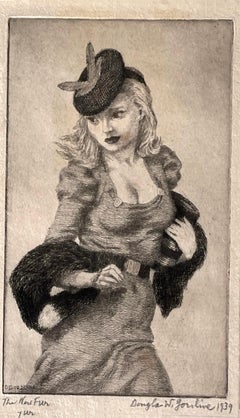
THE NEW FUR
Located in Portland, ME
Gorsline, Douglas (American, 1913-1985). THE NEW FUR. Etching, 1939. 5 x 3 1/16 inches (plate), 7 3/4 X 4 1/2 inches (sheet). Signed, titled and dated in penc...
Category
Mid-20th Century Figurative Prints
Materials
Etching
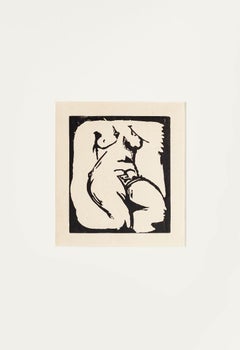
Ricordi - Original Woodcut on Paper by Raymond Brudieux - 1940s
Located in Roma, IT
Figure of Woman is an original woodcut on paper realized by Anonymous Artist in 1940s.
Including a white cardboard passepartout (49 x 34 cm).
Not signed.
Good conditions.
Category
Mid-20th Century Figurative Prints
Materials
Woodcut
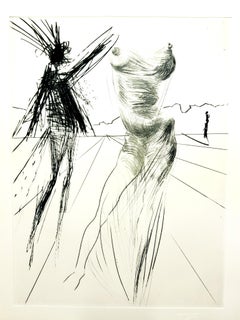
Salvador Dali - Sator from "Faust"
Located in Collonge Bellerive, Geneve, CH
Salvador Dali - Sator, from "Faust"
Original Etching
Embossed signature
From the edition of 731
Dimensions: 38,5 x 28,5 cm
1969
References : Field 69-1 K / Michler & Lopsinger 305
Salvador Dali
Salvador Dali was born as the son of a prestigious notary in the small town of Figueras in Northern Spain. His talent as an artist showed at an early age and Salvador Felipe Jacinto Dali received his first drawing lessons when he was ten years old. His art teachers were a then well known Spanish impressionist painter, Ramon Pichot and later an art professor at the Municipal Drawing School. In 1923 his father bought his son his first printing press.
Dali began to study art at the Royal Academy of Art in Madrid. He was expelled twice and never took the final examinations. His opinion was that he was more qualified than those who should have examined him.
In 1928 Dali went to Paris where he met the Spanish painters Pablo Picasso and Joan Miro. He established himself as the principal figure of a group of surrealist artists grouped around Andre Breton, who was something like the theoretical "schoolmaster" of surrealism. Years later Breton turned away from Dali accusing him of support of fascism, excessive self-presentation and financial greediness.
By 1929 Dali had found his personal style that should make him famous the world of the unconscious that is recalled during our dreams. The surrealist theory is based on the theories of the psychologist Dr. Sigmund Freud. Recurring images of burning giraffes and melting watches became the artist's surrealist trademarks. His great craftsmanship allowed him to execute his paintings in a nearly photo-realistic style. No wonder that the artist was a great admirer of the Italian Renaissance painter Raphael.
Salvador Dali and Gala.
Meeting Gala was the most important event in the artist's life and decisive for his future career. She was a Russian immigrant and ten years older than Dali. When he met her, she was married to Paul Eluard.
Gala decided to stay with Dali. She became his companion, his muse, his sexual partner, his model in numerous art works and his business manager. For him she was everything. Most of all Gala was a stabilizing factor in his life. And she managed his success in the 1930s with exhibitions in Europe and the United States.
Gala was legally divorced from her husband in 1932. In 1934 Dali and Gala were married in a civil ceremony...
Category
Surrealist Mid-20th Century Figurative Prints
Materials
Etching
The Sea Itself from the Rilke Portfolio, Minimalist Lithograph by Ben Shahn
By Ben Shahn
Located in Long Island City, NY
Artist: Ben Shahn, American (1898 - 1969)
Title: The Sea Itself from the Rilke Portfolio
Year: 1968
Medium: Lithograph on Arches, signed in the plate
Edition: 750
Size: 22.5 x 17.75 ...
Category
Modern Mid-20th Century Figurative Prints
Materials
Lithograph
Still Thinking About These?
All Recently ViewedMore Ways To Browse
Eduardo Roca
Edward B Gay
Edward Hopper Oil Painting
Edward Simmons
Edwin Lord Weeks
Elizabeth Enders
Elizabeth Horning
Emil Holzhauer
England Church Oil Painting
English Deer Painting
English Fox Hunt Painting
English Toy Terrier
Enrique Martinez Celaya
Eric Aho
Eritrea Art
Ernest Chateignon
Erotic Art Animal
Eugene Chigot