1960s Landscape Prints
to
1,056
831
336
210
71
20
Overall Width
to
Overall Height
to
787
130
93
85
53
45
23
18
8
4
3
3
1
40
36
31
30
27
1,009
2,154
9,999
3,999
116
115
718
511
594
1,139
1,468
1,655
1,322
631
660
910
553
2
535
283
273
216
142
134
114
92
74
54
53
52
49
48
45
45
41
39
35
34
1,107
145
61
61
57
73
135
1,271
189
Period: 1960s
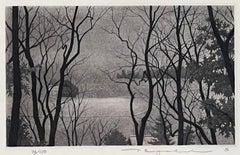
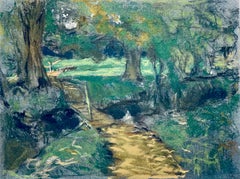
WOODED LANDSCAPE AT DUSK
Located in Portland, ME
Ryohei, Tanaka (Japanese, 1933- 2019). WOODED LANDSCAPE WITH TREES AT DUSK. Etching and aquatint, 1986. Signed and numbered 76/150 in pencil, 5 ½ x 9 ...
Category
1960s Landscape Prints
Materials
Etching
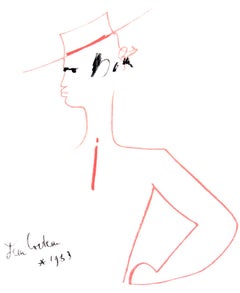
Jean Cocteau, He, from Bulls, 1965 (after)
By Jean Cocteau
Located in Southampton, NY
This exquisite lithograph after Jean Cocteau (1889–1963), titled El (He), from the folio Taureaux, Lithographies de Jean Cocteau (Bulls, Lithographs by Jean Cocteau), originates from...
Category
Modern 1960s Landscape Prints
Materials
Lithograph

$796 Sale Price
20% Off
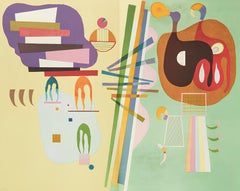
Wassily Kandinsky, Untitled, from Derriere le miroir, 1969 (after)
Located in Southampton, NY
This exquisite lithograph after Wassily Kandinsky (1866–1944), titled Sans titre (Untitled), from the folio Derriere le miroir, No. 179, originates from the 1969 edition published by...
Category
Modern 1960s Landscape Prints
Materials
Lithograph
$1,036 Sale Price
20% Off
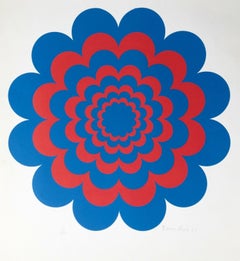
Flasher, Brian Rice
By Brian Rice
Located in Fairfield, CT
Artist: Brian Rice (1936)
Title: Flasher
Year: 1967
Edition: 67/175, plus proofs
Medium: Lithograph on wove paper
Size: 28.5 x 25 inches
Condition: Excellent
Inscription: Signed and ...
Category
Pop Art 1960s Landscape Prints
Materials
Lithograph
$2,000 Sale Price
20% Off
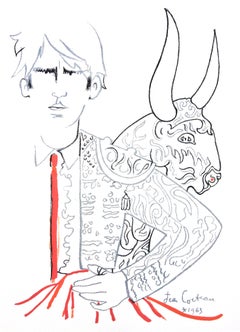
Jean Cocteau, The Suit of Light, from Bulls, 1965 (after)
By Jean Cocteau
Located in Southampton, NY
This exquisite lithograph after Jean Cocteau (1889–1963), titled L'habit de lumiere (The Suit of Light), from the folio Taureaux, Lithographies de Jean Cocteau (Bulls, Lithographs by...
Category
Modern 1960s Landscape Prints
Materials
Lithograph
$796 Sale Price
20% Off
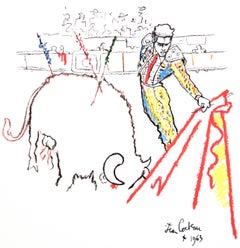
Jean Cocteau, Veronica, from Bulls, 1965 (after)
By Jean Cocteau
Located in Southampton, NY
This exquisite lithograph after Jean Cocteau (1889–1963), titled Veronica (Veronica), from the folio Taureaux, Lithographies de Jean Cocteau (Bulls, Lithographs by Jean Cocteau), ori...
Category
Modern 1960s Landscape Prints
Materials
Lithograph
$796 Sale Price
20% Off
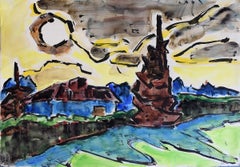
Animated Autumn Landscape
Located in London, GB
KARL SCHMIDT-ROTTLUFF 1884-1976
Rottluff, Germany 1884 - 1976 Berlin (German)
Title: Animated Autumn Landscape Bewegte Herbstlandschaft, 1967
Technique: Signed and Dated Brush, I...
Category
Expressionist 1960s Landscape Prints
Materials
Ink, Watercolor, Gouache
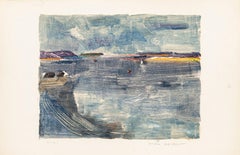
The Sea - Original Lithograph by Denise Bonvallet Philippon
Located in Roma, IT
The Sea is an original contemporary artwork realized by Denise Bonvallet-Philippon in the half of the XX Century by the French artist Denise Bonvallet-Philippon (1906-1994).
Origina...
Category
Modern 1960s Landscape Prints
Materials
Lithograph
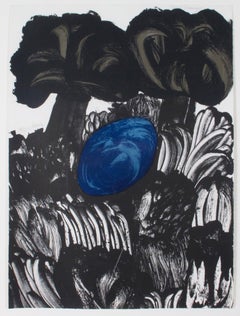
"Jungle, " Color Lithograph Landscape signed by Carol Summers
Located in Milwaukee, WI
"Jungle" is an important, rare color lithograph signed by Carol Summers from the early years of his production. The image offers a landscape of a dark jungle, printed mostly in black ink. In the center, a blue pool of water is shaded by two trees. Summers' technique in this print renders a painterly quality to the image: the grasses and leaves of the scene are all created with playful, energetic swiping motions much like watercolor paint. This technique and the use of fields of color predict the style Summers would adopt in the coming decades, making this an important early work.
30 x 22 inches, artwork
Numbered 14 of the edition of 27
Carol Summers (1925-2016) has worked as an artist throughout the second half of the 20th century and into the first years of the next, outliving most of his mid-century modernist peers. Initially trained as a painter, Summers was drawn to color woodcuts around 1950 and it became his specialty thereafter. Over the years he has developed a process and style that is both innovative and readily recognizable. His art is known for it’s large scale, saturated fields of bold color, semi-abstract treatment of landscapes from around the world and a luminescent quality achieved through a printmaking process he invented.
In a career that has extended over half a century, Summers has hand-pulled approximately 245 woodcuts in editions that have typically run from 25 to 100 in number. His talent was both inherited and learned. Born in 1925 in Kingston, a small town in upstate New York, Summers was raised in nearby Woodstock with his older sister, Mary. His parents were both artists who had met in art school in St. Louis. During the Great Depression, when Carol was growing up, his father supported the family as a medical illustrator until he could return to painting. His mother was a watercolorist and also quite knowledgeable about the different kinds of papers used for various kinds of painting. Many years later, Summers would paint or print on thinly textured paper originally collected by his mother.
From 1948 to 1951, Carol Summers trained in the classical fine and studio arts at Bard College and at the Art Students League of New York. He studied painting with Steven Hirsh and printmaking with Louis Schanker. He admired the shapes and colors favored by early modernists Paul Klee (Sw: 1879-1940) and Matt Phillips (Am: b.1927- ). After graduating, Summers quit working as a part-time carpenter and cabinetmaker (which had supported his schooling and living expenses) to focus fulltime on art. That same year, an early abstract, Bridge No. 1 was selected for a Purchase Prize in a competition sponsored by the Brooklyn Museum.
In 1952, his work (Cathedral, Construction and Icarus) was shown the first time at the Museum of Modern Art in New York City in an exhibition of American woodcuts. In 1954, Summers received a grant from the Italian government to study for a year in Italy. Woodcuts completed soon after his arrival there were almost all editions of only 8 to 25 prints, small in size, architectural in content and black and white in color. The most well-known are Siennese Landscape and Little Landscape, which depicted the area near where he resided. Summers extended this trip three more years, a decision which would have significant impact on choices of subject matter and color in the coming decade.
After returning from Europe, Summers’ images continued to feature historical landmarks and events from Italy as well as from France, Spain and Greece. However, as evidenced in Aetna’s Dream, Worldwind and Arch of Triumph, a new look prevailed. These woodcuts were larger in size and in color. Some incorporated metal leaf in the creation of a collage and Summers even experimented with silkscreening. Editions were now between 20 and 50 prints in number. Most importantly, Summers employed his rubbing technique for the first time in the creation of Fantastic Garden in late 1957.
Dark Vision of Xerxes, a benchmark for Summers, was the first woodcut where Summers experimented using mineral spirits as part of his printmaking process. A Fulbright Grant as well as Fellowships from the Louis Comfort Tiffany Foundation and the Guggenheim Foundation followed soon thereafter, as did faculty positions at colleges and universities primarily in New York and Pennsylvania. During this period he married a dancer named Elaine Smithers with whom he had one son, Kyle. Around this same time, along with fellow artist Leonard Baskin, Summers pioneered what is now referred to as the “monumental” woodcut. This term was coined in the early 1960s to denote woodcuts that were dramatically bigger than those previously created in earlier years, ones that were limited in size mostly by the size of small hand-presses. While Baskin chose figurative subject matter, serious in nature and rendered with thick, striated lines, Summers rendered much less somber images preferring to emphasize shape and color; his subject matter approached abstraction but was always firmly rooted in the landscape.
In addition to working in this new, larger scale, Summers simultaneously refined a printmaking process which would eventually be called the “Carol Summers Method” or the “ Carol Summers Technique”. Summers produces his woodcuts by hand, usually from one or more blocks of quarter-inch pine, using oil-based printing inks and porous mulberry papers. His woodcuts reveal a sensitivity to wood especially its absorptive qualities and the subtleties of the grain. In several of his woodcuts throughout his career he has used the undulating, grainy patterns of a large wood plank to portray a flowing river or tumbling waterfall. The best examples of this are Dream, done in 1965 and the later Flash Flood Escalante, in 2003. In the majority of his woodcuts, Summers makes the blocks slightly larger than the paper so the image and color will bleed off the edge.
Before printing, he centers a dry sheet of paper over the top of the cut wood block or blocks, securing it with giant clips. Then he rolls the ink directly on the front of the sheet of paper and pressing down onto the dry wood block or reassembled group of blocks. Summers is technically very proficient; the inks are thoroughly saturated onto the surface of the paper but they do not run into each other. The precision of the color inking in Constantine’s Dream in 1969 and Rainbow Glacier in 1970 has been referred to in various studio handbooks. Summers refers to his own printing technique as “rubbing”. In traditional woodcut printing, including the Japanese method, the ink is applied directly onto the block. However, by following his own method, Summers has avoided the mirror-reversed image of a conventional print and it has given him the control over the precise amount of ink that he wants on the paper. After the ink is applied to the front of the paper, Summers sprays it with mineral spirits, which act as a thinning agent. The absorptive fibers of the paper draw the thinned ink away from the surface softening the shapes and diffusing and muting the colors. This produces a unique glow that is a hallmark of the Summers printmaking technique. Unlike the works of other color field artists or modernists of the time, this new technique made Summers’ extreme simplification and flat color areas anything but hard-edged or coldly impersonal.
By the 1960s, Summers had developed a personal way of coloring and printing and was not afraid of hard work, doing the cutting, inking and pulling himself. In 1964, at the age of 38, Summers’ work was exhibited for a second time at the Museum of Modern Art. This time his work was featured in a one-man show and then as one of MOMA’s two-year traveling exhibitions which toured throughout the United States. In subsequent years, Summers’ works would be exhibited and acquired for the permanent collections of multiple museums throughout the United States, Europe and Asia. Summers’ familiarity with landscapes throughout the world is firsthand. As a navigator-bombardier in the Marines in World War II, he toured the South Pacific and Asia.
Following college, travel in Europe and subsequent teaching positions, in 1972, after 47 years on the East Coast, Carol Summers moved permanently to Bonny Doon in the Santa Cruz Mountains in Northern California. There met his second wife, Joan Ward Toth, a textile artist who died in 1998; and it was here his second son, Ethan was born. During the years that followed this relocation, Summers’ choice of subject matter became more diverse although it retained the positive, mostly life-affirming quality that had existed from the beginning. Images now included moons, comets, both sunny and starry skies, hearts and flowers, all of which, in one way or another, remained tied to the landscape.
In the 1980s, from his home and studio in the Santa Cruz mountains, Summers continued to work as an artist supplementing his income by conducting classes and workshops at universities in California and Oregon as well as throughout the Mid and Southwest. He also traveled extensively during this period hiking and camping, often for weeks at a time, throughout the western United States and Canada. Throughout the decade it was not unusual for Summers to backpack alone or with a fellow artist into mountains or back country for six weeks or more at a time. Not surprisingly, the artwork created during this period rarely departed from images of the land, sea and sky. Summers rendered these landscapes in a more representational style than before, however he always kept them somewhat abstract by mixing geometric shapes with organic shapes, irregular in outline. Some of his most critically acknowledged work was created during this period including First Rain, 1985 and The Rolling Sea, 1989. Summers received an honorary doctorate from his alma mater, Bard College in 1979 and was selected by the United States Information Agency to spend a year conducting painting and printmaking workshops at universities throughout India. Since that original sabbatical, he has returned every year, spending four to eight weeks traveling throughout that country.
In the 1990s, interspersed with these journeys to India have been additional treks to the back roads and high country areas of Mexico, Central America, Nepal, China and Japan. Travel to these exotic and faraway places had a profound influence on Summers’ art. Subject matter became more worldly and nonwestern as with From Humla to Dolpo, 1991 or A Former Life of Budha, 1996, for example. Architectural images, such as The Pillars of Hercules, 1990 or The Raja’s Aviary, 1992 became more common. Still life images made a reappearance with Jungle Bouquet in 1997. This was also a period when Summers began using odd-sized paper to further the impact of an image.
The 1996 Night, a view of the earth and horizon as it might be seen by an astronaut, is over six feet long and only slightly more than a foot-and-a-half high. From 1999, Revuelta A Vida (Spanish for “Return to Life”) is pie-shaped and covers nearly 18 cubic feet. It was also at this juncture that Summers began to experiment with a somewhat different palette although he retained his love of saturated colors. The 2003 Far Side of Time is a superb example of the new direction taken by this colorist.
At the turn of the millennium in 1999, “Carol Summers Woodcuts...
Category
Contemporary 1960s Landscape Prints
Materials
Lithograph
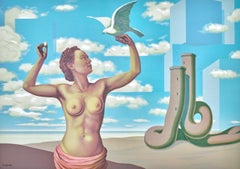
Rene Magritte, A Young Woman Presents with Grace, 1968 (after)
Located in Southampton, NY
This exquisite lithograph after Rene Magritte (1898–1967), titled Une Jeune Femme Presente avec Grace (A Young Woman Presents with Grace), from the folio Les Enfants Trouves de Magritte (The Found Children of Magritte), 1968, originates from the edition published by A.C. Mazo et Cie, Paris, and printed by Mourlot Freres, Paris, on November 20, 1968. The work embodies Magrittes sustained inquiry into semiotics and visual epistemology, translating his characteristic strategies of displacement, symbolic inversion, and conceptual ambiguity into an image that operates as both a poetic metaphor and a philosophical proposition concerning the instability of meaning.
Executed as a lithograph on grand velin dArches paper, this work measures 17.5 x 23.5 inches (44.5 x 59.7 cm). Signed in the plate by the artist; hand signed by Fernand Mourlot, Editeur. The edition exemplifies the technical mastery of the Mourlot atelier.
Artwork Details:
Artist: After Rene Magritte (1898–1967)
Title: Une Jeune Femme Presente avec Grace (A Young Woman Presents with Grace), from the folio Les Enfants Trouves de Magritte (The Found Children of Magritte)
Medium: Lithograph on grand velin dArches paper
Dimensions: 17.5 x 23.5 inches (44.5 x 59.7 cm)
Inscription: Signed in the plate by the artist; hand signed by Fernand Mourlot, Editeur
Date: 1968
Publisher: A.C. Mazo et Cie, Paris
Printer: Mourlot Freres, Paris
Catalogue Raisonne: Magritte, Rene, et al. Rene Magritte: Catalogue Raisonne, Vol. 3. Menil Foundation; Philip Wilson Publishers; Distributed in the USA and Canada by Rizzoli International, 1992, nos. 791–792 and 1056; vol. 5, p. 218, Bibliography entry 68.28.
Condition: Well preserved, consistent with age and medium
Provenance: From the folio Les Enfants Trouves de Magritte, 1968
Notes:
Excerpted from the folio (translated from French), Finished printing in Paris on November 20, 1968, on the presses of Mourlot, for the lithographs. The unpublished text by Louis Scutenaire was composed in Elzevir Casion corps 28 and printed by Fequet et Baudier, typographers. The unpublished compositions numbered from I to IV were specially made by Rene Magritte for this album. The compositions of the Enchanted Domain, are the renderings of the eight paintings of the mural of the Casino de Knokke. They were printed with the benevolent authorization of Mr. Gustave J. Nellens. Justification of the draw, this album was taken from CCCL examples on grand velin dArches numbered from I to CCCL, plus a few examples for collaborators and assistants.
About the Publication:
Les Enfants Trouves de Magritte (The Found Children of Magritte), published in 1968 by A.C. Mazo et Cie, Paris, represents one of the most significant late life print projects devoted to Rene Magrittes work. Conceived as both a literary and visual tribute, the folio pairs texts by the Belgian writer Louis Scutenaire, Magrittes close friend and fellow Surrealist, with lithographic interpretations produced at the Mourlot atelier, the premier lithographic workshop of twentieth century France. The album includes compositions by Magritte alongside lithographic renderings of the celebrated Enchanted Domain mural from the Casino de Knokke, printed with the authorization of Gustave J. Nellens, who commissioned the original mural. Issued in a single edition of CCCL examples on grand velin dArches, the folio stands as a testament to the collaboration between artist, writer, publisher, and master printer, and remains one of the most culturally important Surrealist print albums of the post war era.
About the Artist:
Rene Magritte (1898–1967) was a Belgian Surrealist painter whose visionary, intellectual, and poetic imagery redefined twentieth century art and forever changed how the world perceives reality and illusion. Celebrated for his calm precision and thought provoking juxtapositions of ordinary objects in extraordinary contexts, Magritte used painting as a philosophical tool, transforming the everyday into visual paradoxes that challenged the boundaries between what is seen and what is known. Born in Lessines, Belgium, and trained at the Academie Royale des Beaux Arts in Brussels, he absorbed early influences from Cubism, Futurism, and Symbolism before embracing Surrealism, where he found his true voice. In Paris, he became part of the avant garde circle that included Pablo Picasso, Alexander Calder, Alberto Giacometti, Salvador Dali, Joan Miro, Wassily Kandinsky, Marcel Duchamp, and Man Ray—all artists whose radical ideas helped him forge his distinctive synthesis of logic and mystery. Unlike Dalis dream...
Category
Surrealist 1960s Landscape Prints
Materials
Lithograph
$3,996 Sale Price
20% Off
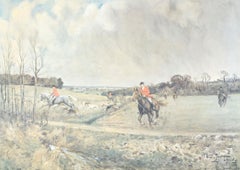
Fox hunting print by Lionel Edwards
Located in London, GB
To see our other hunting pictures, scroll down to "More from this Seller" and below it click on "See all from this Seller" and then search.
Lionel Ed...
Category
1960s Landscape Prints
Materials
Lithograph
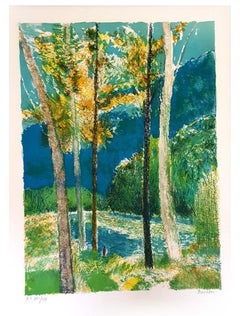
Guy Bardone - Original Handsigned Lithograph - Ecole de Paris
By Guy Bardone
Located in Collonge Bellerive, Geneve, CH
Guy Bardone
Original Handsigned Lithograph
Dimensions: 76 x 54 cm
Edition: HC XXI/XXX
HandSigned and Numbered
Ecole de Paris au seuil de la mutation des Arts
Sentiers Editions
Guy Bardone was one of the great painters of the “Ecole de Paris” and of the second mid twenty century.
Guy Bardone French, (1927 - )
Guy Bardone
Guy Bardone was born in 1927 in Saint-Claude, on of the most beautiful old towns in France. His vocation as a painter was confirmed after admission to the Ecole National Supérieure des Arts Decoratifs in Paris. Here he trained under Brianchon, Cavailles and Desnoyer. He was awarded the prestigious Prix Félix Fénéon in 1952 which set wider horizons and allowed him entry into the Paris arena.
Guy Bardone est né en 1927 à Saint-Claude (Jura). Après des études à l'école des Beaux-Arts de Lyon, il entre à l'école supérieure des arts décoratifs où il reçoit les enseignements de Brianchon, Cavaillès et Desnoyers. En 1950, il rencontre le critique George Besson qui l'encourage et le conseille.
En 1952, il obtient le Prix Félix Fénéon et commence à exposer dans divers salons et expositions de groupe. il est sélectionné en 1953 à la très importante expositions de groupe "célébrités et révélations de la peinture contemporaine...
Category
Post-Impressionist 1960s Landscape Prints
Materials
Lithograph
Haystack #5
Located in Fairlawn, OH
Haystack #5
Color lithograph and screen print, 1969
Signed and dated in pencil (see photo)
From: Haystack Series (seven plates) see photo of entire portfolio
Signed and dated in pencil
Edition: 100 (74/100)
Publisher: Gemini G.E.L., Los Angeles, CA, with their blaindstamp
Reference: Paul Bianchini No. 33e
Corlett and Fine 69
Condition: Excellent
Fresh colors
Small paper imperfection in bottom margin near the edge of the sheet
Image size: 13 1/4 x 23 3/8 inches
Sheet size: 20 ¾ x 30 ¾ inches
Frame size: 23 ½ x 33 ¾ inches
This is one of the finest images in the portfolio, inspired by Claude Monet's famous series of Haystack paintings...
Category
Pop Art 1960s Landscape Prints
Materials
Screen
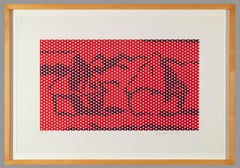
Pablo Palazuelo, Untitled, from Derriere le Miroir, 1963
Located in Southampton, NY
This exquisite lithograph by Pablo Palazuelo (1915–2007), titled Sans titre (Untitled), originates from the 1963 folio Derriere le Miroir, No. 137, published by Maeght Editeur, Paris...
Category
Abstract Geometric 1960s Landscape Prints
Materials
Lithograph
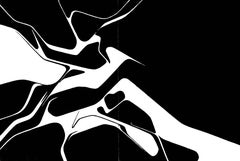
$716 Sale Price
20% Off
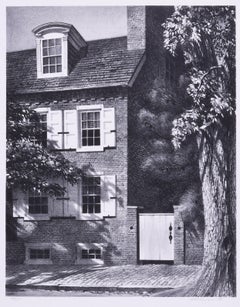
The White Gate (New Castle, Delaware)
Located in Fairlawn, OH
The White Gate (New Castle, Delaware)
Lithograph, 1961
Signed in pencil lower right (see photo)
Numbered and title in the lower left (see photos)
Condition: Excellent
Image size: 15 ...
Category
American Realist 1960s Landscape Prints
Materials
Lithograph
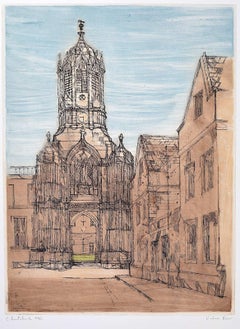
Christ Church, Oxford 1965 etching by Richard Beer
By Richard Beer
Located in London, GB
To see our other views of Oxford and Cambridge, or Modern British Art, scroll down to "More from this Seller" and below it click on "See all from this Seller" - or send us a message ...
Category
Modern 1960s Landscape Prints
Materials
Etching, Aquatint
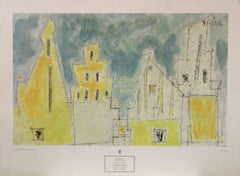
"Gothic Gables" New York Graphic Society 1966, Printed in Switzerland
Located in Chesterfield, MI
"Gothic Gables" Poster/Print by LYONEL FEININGER (American-German, 1871-1956). The print measures approximately 20 x 27 inches and is unframed. Published by New York Graphic Society 1966. Printed in Switzerland...
Category
1960s Landscape Prints
Materials
Lithograph
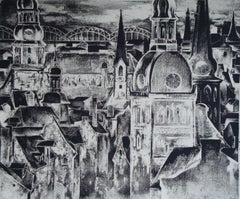
Riga. 1969, paper, silk screen printing, 62x74 cm
Located in Riga, LV
Riga. 1969, paper, silk screen printing, 62x74 cm
Josif Elgurt (1924-2007)
Born in 1924 in Kishinev in Romania. In 1947 resumed his art studies in Kishinev. Since 1952 he has lived...
Category
Realist 1960s Landscape Prints
Materials
Paper, Screen
$430 Sale Price
20% Off
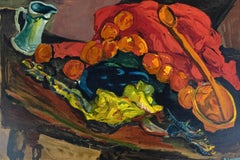
Chaim Soutine, Still Life with Turkey, from Soutine, I, 1966 (after)
Located in Southampton, NY
This exquisite lithograph after Chaim Soutine (1893–1943), titled Nature morte a la dinde (Still Life with Turkey), from the folio Soutine, I, Collection Pierre Levy, 1966, originates from the edition published by Fernand Mourlot, Paris, and printed by Mourlot Freres, Paris, on October 20, 1966. The work conveys the heightened emotional tension and expressive force characteristic of Soutines painterly vision, capturing in lithographic form the dynamic structure and psychological intensity that define his mature still lifes.
Executed as a lithograph on velin d'Arches paper, this work measures 20 x 26 inches. Signed in the plate and unnumbered as issued. The edition exemplifies the technical mastery of the Mourlot atelier.
Artwork Details:
Artist: After Chaim Soutine (1899–1943)
Title: Nature morte a la dinde (Still Life with Turkey), from the folio Soutine, I, Collection Pierre Levy
Medium: Lithograph on velin d'Arches paper
Dimensions: 20 x 26 inches
Inscription: Signed in the plate and unnumbered as issued
Date: 1966
Publisher: Fernand Mourlot, Paris
Printer: Mourlot Freres, Paris
Condition: Well preserved, consistent with age and medium
Provenance: From the folio Soutine, I, Collection Pierre Levy, 1966
Notes:
Excerpted from the folio (translated from French), This album, the first of a series dedicated to Mr. Pierre Levys collection, was printed in DL examples on Arches velin. Printing was finished on October 20, 1966 by Mourlot for lithographs of the canvases of Soutine, and by Fequet and Baudier for Waldemar Georges unpublished text. Fernand Mourlot, Paris 1966.
About the Publication:
Soutine, I, Collection Pierre Levy, published in 1966 by Fernand Mourlot, Paris, is the first album in the important series devoted to the Pierre Levy collection, one of the most significant private collections of twentieth century French painting. Conceived as a scholarly and visual record, the album was designed to present key works by Chaim Soutine in lithographic form at a time when renewed international interest in the artist was expanding. Created in collaboration with Mourlot Freres, the foremost lithographic atelier in France, the publication reflects the printers commitment to translating Soutines canvases into richly tonal lithographs that preserve the emotional intensity and structural drama of the originals. Issued in a single edition on Arches velin, the album stands as an essential document of postwar art publishing, illuminating the historical partnership between artist, collector, and master printer, and contributing to the larger historiography of modern French Expressionism and museum quality print albums of the mid twentieth century.
About the Artist:
Chaim Soutine (1893–1943) was a Belarus born French Expressionist painter whose explosive brushwork, emotionally charged distortions, and uncompromising commitment to depicting the psychological intensity of human experience have secured his place as one of the most vital and transformative figures in twentieth century art, creating his legacy within the same revolutionary modernist environment defined by Pablo Picasso, Alexander Calder, Alberto Giacometti, Salvador Dali, Joan Miro, Wassily Kandinsky, Marcel Duchamp, and Man Ray; after leaving his impoverished childhood in Smilavichy and arriving in Paris in 1913, Soutine immersed himself in the School of Paris circle at La Ruche—an incubator of international avant garde talent—where he developed formative friendships with Amedeo Modigliani, Marc Chagall, Jules Pascin, and other pioneering artists whose daring approaches inspired him to push color, gesture, and form into new emotional territories. His portraits of cooks, choirboys, servants, and village residents; his tempestuous landscapes of Cagnes, Chartres, and Ceret; and his deeply visceral still lifes—most famously his monumental depictions of slaughtered carcasses—reveal a singular ability to transform ordinary subjects into raw, pulsing, almost metaphysical dramas, building on the influence of Rembrandt, Goya, Velazquez, and El Greco while departing radically from academic restraint. His paintings vibrate with psychological tension, their twisted perspectives, molten colors, and trembling outlines capturing an inner world marked by anxiety, longing, resilience, and profound empathy. Soutines originality profoundly shaped the evolution of modern painting: Francis Bacon cited him as one of his greatest influences, Willem de Kooning and the Abstract Expressionists admired his gestural ferocity, and later artists—including Frank Auerbach, Leon Kossoff, Lucian Freud, Jenny Saville, and Adrian Ghenie...
Category
Modern 1960s Landscape Prints
Materials
Lithograph
$716 Sale Price
20% Off
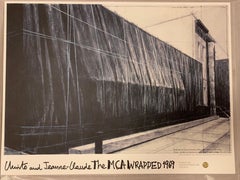
The MCA "Wrapped" 1969 Christo & Jeanne-Claude Exhibition Poster Contemporary
Located in Draper, UT
Own a piece of history with this rare and limited edition poster from the MCA! Commemorating Christo's iconic exhibition "Wrap In Wrap Out," this poster is a true collector's item. T...
Category
Contemporary 1960s Landscape Prints
Materials
Gold Leaf
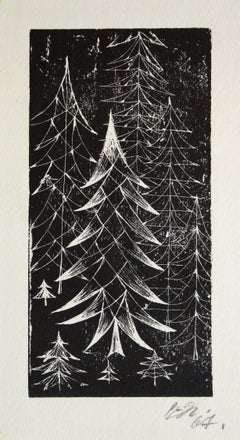
Spruce. 1967, paper, etching, 18x9 cm
Located in Riga, LV
Spruce. 1967, paper, etching, 18x9 cm
Dzidra Ezergaile (1926-2013)
Born in Riga. School years alternate with summer work in the countryside. In 1947,...
Category
Modern 1960s Landscape Prints
Materials
Paper, Etching
$86 Sale Price
20% Off
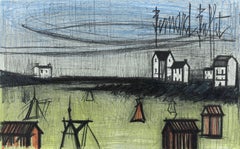
Bernard Buffet, A Small Beach, from Lithographs 1952-1966, 1967
Located in Southampton, NY
This exquisite lithograph by Bernard Buffet (1928–1999), titled Une petite plage (A Small Beach), originates from the 1967 album Bernard Buffet, Lithographs 1952-1966, published by T...
Category
Modern 1960s Landscape Prints
Materials
Lithograph
$716 Sale Price
20% Off
Bernard Buffet, A Small Beach, from Lithographs 1952-1966, 1967
Located in Southampton, NY
This exquisite lithograph by Bernard Buffet (1928–1999), titled Une petite plage (A Small Beach), originates from the 1967 album Bernard Buffet, Lithographs 1952-1966, published by T...
Category
Modern 1960s Landscape Prints
Materials
Lithograph
$716 Sale Price
20% Off
Bernard Buffet, A Small Beach, from Lithographs 1952-1966, 1967
Located in Southampton, NY
This exquisite lithograph by Bernard Buffet (1928–1999), titled Une petite plage (A Small Beach), originates from the 1967 album Bernard Buffet, Lithographs 1952-1966, published by T...
Category
Modern 1960s Landscape Prints
Materials
Lithograph
$716 Sale Price
20% Off
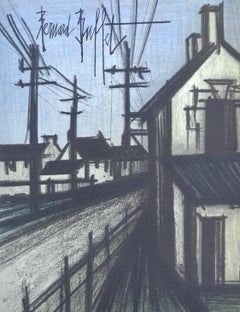
Bernard Buffet, The Village Road, from Lithographs 1952-1966, 1967
Located in Southampton, NY
This exquisite lithograph by Bernard Buffet (1928–1999), titled La route du village (The Village Road), originates from the 1967 album Bernard Buffet, Lithographs 1952-1966, publishe...
Category
Modern 1960s Landscape Prints
Materials
Lithograph
$716 Sale Price
20% Off
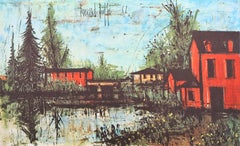
Bernard Buffet, Bridge over the Sarthe, from Painters of Today, 1966 (after)
Located in Southampton, NY
This exquisite heliogravure after Bernard Buffet (1928–1999), titled Pont sur la Sarthe (Bridge over the Sarthe), from the folio Bernard Buffet, Peintres d'aujourd'hui (Bernard Buffe...
Category
Modern 1960s Landscape Prints
Materials
Lithograph
$716 Sale Price
20% Off
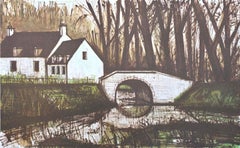
Bernard Buffet, Bridge over the River, from Painters of Today, 1966 (after)
Located in Southampton, NY
This exquisite heliogravure after Bernard Buffet (1928–1999), titled Pont sur la rivière (Bridge over the River), from the folio Bernard Buffet, Peintres d'aujourd'hui (Bernard Buffe...
Category
Modern 1960s Landscape Prints
Materials
Lithograph
$716 Sale Price
20% Off
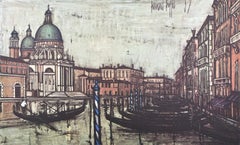
Bernard Buffet, The Grand Canal of Venice, from Painters of Today, 1966 (after)
Located in Southampton, NY
This exquisite heliogravure after Bernard Buffet (1928–1999), titled Le Grand Canal de Venise (The Grand Canal of Venice), from the folio Bernard Buffet, Peintres d'aujourd'hui (Bern...
Category
Modern 1960s Landscape Prints
Materials
Lithograph
$716 Sale Price
20% Off
Bernard Buffet, The Open Window, from Painters of Today, 1966 (after)
Located in Southampton, NY
This exquisite heliogravure after Bernard Buffet (1928–1999), titled La Fenetre ouverte (The Open Window), from the folio Bernard Buffet, Peintres d'aujourd'hui (Bernard Buffet, Pain...
Category
Modern 1960s Landscape Prints
Materials
Lithograph

$716 Sale Price
20% Off
Bernard Buffet, Woman with a Net, from Painters of Today, 1966 (after)
Located in Southampton, NY
This exquisite heliogravure after Bernard Buffet (1928–1999), titled Femme au filet (Woman with Net), from the folio Bernard Buffet, Peintres d'aujourd'hui (Bernard Buffet, Painters ...
Category
Modern 1960s Landscape Prints
Materials
Lithograph
$716 Sale Price
20% Off
Raoul Dufy, The Studio on Impasse Guelma, from Raoul Dufy, IV, 1969 (after)
By Raoul Dufy
Located in Southampton, NY
This exquisite lithograph after Raoul Dufy (1877–1953), titled L’atelier de Impasse Guelma (The Studio on Impasse Guelma), from the folio Raoul Dufy, IV (Raoul Dufy, IV), Collection ...
Category
Modern 1960s Landscape Prints
Materials
Lithograph

$956 Sale Price
20% Off
Tiendelitas
Located in New York, NY
Emilio Sanchez (1921-1999) created this color lithograph entitled “TIENDECITAS” in 1967. This impression is signed, titled, and inscribed “21/50” in pencil. The printed image size 15 x 23.13 inches (38 x 58.8 cm) and paper size 20.75 x 29 3/8 inches (53 x 74.5 cm). Printed in an edition of 50. Stamped on verso "Estate of Emilio Sanchez."
“Best known for his architectural paintings and lithographs, Emilio Sanchez (1921-1999) explored the effects of light and shadow to emphasize the abstract geometry of his subjects. His artwork encompasses his Cuban heritage...
Category
Modern 1960s Landscape Prints
Materials
Lithograph
Leonor Fini, Untitled, from The Story of O, 1962
By Leonor Fini
Located in Southampton, NY
This exquisite lithograph, titled Sans titre, after Leonor Fini, from the folio L'Histoire d'O (The Story of O), 1962, was published and printed by La Compagnie des Vibliophiles, au ...
Category
Modern 1960s Landscape Prints
Materials
Lithograph
$1,996 Sale Price
20% Off
Andre Masson, Untitled, from Albert Camus, oeuvres completes, 1962
By André Masson
Located in Southampton, NY
This exquisite lithograph by Andre Masson (1896–1987), titled Sans titre (Untitled), originates from the 1962 album Albert Camus, oeuvres completes, essais philosophiques, Le mythe d...
Category
Surrealist 1960s Landscape Prints
Materials
Lithograph
$716 Sale Price
20% Off
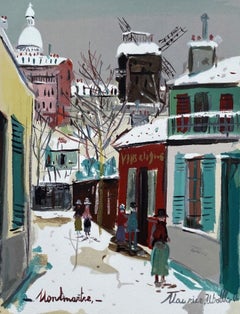
Maurice Utrillo, Montmartre, Under the Snow, 1965 (after)
Located in Southampton, NY
This exquisite woodcut after Maurice Utrillo (1883–1955), titled Montmartre, sous la neige (Montmartre, Under the Snow), from the folio Les Peintres mes amis (The Painters My Friends), originates from the 1965 edition published by Editions d'art Les Heures Claires, Paris, and printed by Atelier Raymond Jacquet, Paris, May 20, 1965. Montmartre, sous la neige (Montmartre, Under the Snow) captures Utrillo’s quiet poetry and emotional depth, translating his painterly vision of Paris into the medium of woodcut. The serene winter streets, rendered with rhythmic precision and tonal restraint, evoke the contemplative stillness that defines Utrillo’s deeply personal view of urban solitude and beauty.
Executed as a woodcut on grand velin d'Arches paper, this work measures 15 x 11 inches. Signed in the plate and unnumbered as issued. The edition exemplifies the exceptional standards of Editions d'art Les Heures Claires, Paris, and the master craftsmanship of Atelier Raymond Jacquet, Paris.
Artwork Details:
Artist: After Maurice Utrillo (1883–1955)
Title: Montmartre, sous la neige (Montmartre, Under the Snow), from the folio Les Peintres mes amis (The Painters My Friends), 1965
Medium: Woodcut on grand velin d'Arches paper
Dimensions: 15 x 11 inches (38.1 x 27.94 cm)
Inscription: Signed in the plate and unnumbered as issued
Date: 1965
Publisher: Editions d'art Les Heures Claires, Paris
Printer: Atelier Raymond Jacquet, Paris
Catalogue raisonne reference: Monod, Luc. Manuel de l’amateur de livres illustrés modernes, 1875–1975. Ides et Calendes, 1992, illustration 11485.
Condition: Well preserved, consistent with age and medium
Provenance: From the folio Les Peintres mes amis (The Painters My Friends), published by Editions d'art Les Heures Claires, Paris; printed by Atelier Raymond Jacquet, Paris, May 20, 1965
Notes:
Excerpted from the folio (translated from the folio), The lithographs by Derain and Van Dongen were printed by Lucien Detruit. Those by Dufy, Matisse, Chagall, Dunoyer de Segonzac, Cavailles, Terechkovitch, and Carzou were printed by Mourlot Freres. Those by Picasso and Buffet were printed by P.-J. Ballon. The lithograph by Miro was printed in the workshop Arte, which also printed, in phototype, the frontispiece. The etchings by Villon and Zadkine were printed by Manuel Robbe. That by Braque was printed by A. and P. Crommelynck. The wood engravings and printing of the illustrations by Vlaminck, Rouault, Pascin, and Utrillo were done by Raymond Jacquet. The texts by Andre Warnod, collected by his daughter Jeanine Warnod, were hand-set in De Roos type, size 24, and printed in Paris on the presses of Daragnes. Printing completed on May 20, 1965. Justification of the edition, III examples on large velin d'Arches containing the original copper plates inked for one intaglio illustration; a proof on silk of two lithographs; the four wood-engraved illustrations, mounted; a color separation of one lithograph; and a complete suite of the illustrations on Arches—numbered I to III. XVI examples on large velin d'Arches containing a proof on silk of two lithographs; the four wood-engraved illustrations, mounted; a color separation of one lithograph; and a complete suite of the illustrations on Arches—numbered IV to XIX. XXI examples on large velin d'Arches containing a proof on silk of two lithographs; the four wood-engraved illustrations, mounted; and a complete suite of the illustrations on Arches—numbered XX to XL. XL examples on large velin d'Arches containing a complete suite of the illustrations on Arches—numbered XLI to LXXX. CLXX examples on large velin d'Arches—numbered LXXXI to CCL.
About the Publication:
The folio Les Peintres mes amis (The Painters My Friends), published in Paris in 1965 by Editions d'art Les Heures Claires, stands among the most ambitious postwar French printmaking collaborations. Conceived as a celebration of modern art’s greatest masters, the volume unites original graphic works by Utrillo, Vlaminck, Matisse, Picasso, Chagall, Braque, Villon, Derain, Zadkine, Miro, and others, alongside critical essays by Andre Warnod. Each plate was executed under the supervision of Paris’s foremost ateliers—Mourlot Freres, Lucien Detruit, P.-J. Ballon, Manuel Robbe, and Raymond Jacquet—representing the finest techniques of lithography, etching, and woodcut. This luxurious folio exemplifies the artistry and craftsmanship of mid-20th-century French printing, merging text, image, and handcraft into a unified artistic statement. A triumph of the livre d’artiste tradition, it remains a vital record of the enduring creative dialogue between the painters, printers, and publishers who defined the visual culture of their time.
About the Artist:
Maurice Utrillo (1883–1955) was a French painter whose poetic depictions of Montmartre and Paris transformed the city’s quiet streets, cathedrals, and cafes into enduring symbols of nostalgia and modern beauty. Born in Paris to the artist Suzanne Valadon—model and muse to Pierre-Auguste Renoir and Henri de Toulouse-Lautrec—Utrillo was immersed in art from an early age but led a turbulent life that found solace in painting. Entirely self-taught, he became one of the most distinctive figures of the Paris School, celebrated for his lyrical “White Period” (1909–1914), during which he employed thick impasto and a restrained palette of whites, grays, and ochres to capture the worn facades and atmospheric stillness of Montmartre. Influenced by Paul Cezanne’s structural precision, Vincent van Gogh’s emotional color, and Camille Pissarro’s realism, Utrillo forged a style that blended Impressionist light with Post-Impressionist solidity, expressing solitude, longing, and spiritual calm. He worked amidst the revolutionary ferment of early 20th-century Paris, alongside Pablo Picasso, Amedeo Modigliani, Georges Braque, and Chaim Soutine, yet his art stood apart from their Cubist and Expressionist experiments, focusing instead on evoking emotional truth through representation. Though he shared his generation’s stage with avant-garde icons such as Joan Miro, Salvador Dali, Wassily Kandinsky, Marcel Duchamp, Alexander Calder, Alberto Giacometti, and Man Ray, Utrillo’s paintings offered a poetic counterpoint—a meditative realism that captured the enduring soul of modern life. His mastery of perspective and tonal harmony imbued works like Rue Norvins and Place du Tertre with quiet majesty, transforming ordinary streets into sanctuaries of memory and light. Utrillo’s profound sensitivity influenced later artists including Balthus, Jean Dubuffet, Nicolas de Stael, and Giorgio Morandi, as well as Edward Hopper and Wayne Thiebaud, who echoed his stillness and emotional clarity in their own depictions of urban solitude. His art, now housed in major museums such as the Musee d’Orsay, Centre Pompidou, Metropolitan Museum of Art, and Tate, remains a cornerstone of modern French painting, bridging the lyricism of Impressionism with the introspection of modernism. Revered for his sincerity and mastery of mood, Utrillo stands alongside Picasso, Miro, Dali, Kandinsky, Duchamp, Calder, Giacometti, and Man Ray as a pillar of 20th-century art, his work capturing the eternal poetry of Paris. The highest auction record for Maurice Utrillo was achieved by his masterpiece Rue Norvins a Montmartre (circa 1910), which sold for $4,882,500 USD at Sotheby’s, New York, on November 6, 2011, affirming his enduring legacy as one of the most beloved and collectible painters of his era.
Maurice Utrillo Montmartre...
Category
Modern 1960s Landscape Prints
Materials
Lithograph
$1,196 Sale Price
20% Off
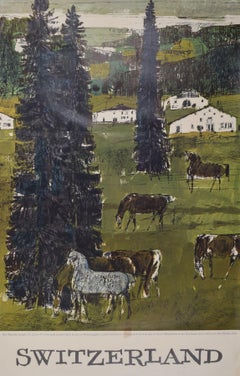
Switzerland horses by Hugo Wetli original vintage poster Swiss Jura Alps
By Hugo Wetli
Located in London, GB
To see our other original vintage travel posters, many of which are from Switzerland, scroll down to "More from this Seller" and below it click on "See all from this Seller" - or sen...
Category
Modern 1960s Landscape Prints
Materials
Lithograph
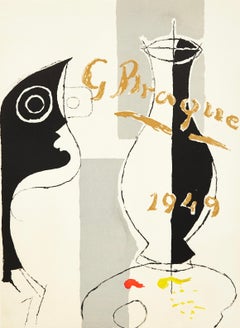
Georges Braque, Frontispiece, L'édition de tête (after)
Located in Southampton, NY
Lithograph on vélin de Rives paper. Inscription: Unsigned and unnumbered, as issued. Good condition. Notes: From the folio, tête edition, Consacre a Pierre Reverdy et Georges Braque,...
Category
Modern 1960s Landscape Prints
Materials
Lithograph
$1,436 Sale Price
20% Off
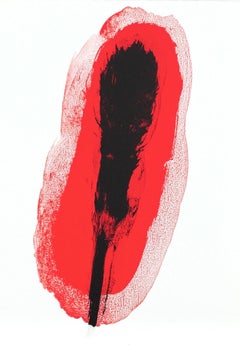
Joan Miro, The Ring, from Derriere le miroir, 1961
By Joan Miró
Located in Southampton, NY
This exquisite lithograph by Joan Miro (1893–1983), titled L’anneau (The Ring), originates from the 1961 folio Derriere le miroir, No. 128. Published by Maeght Editeur, Paris, under ...
Category
Surrealist 1960s Landscape Prints
Materials
Lithograph
$796 Sale Price
20% Off
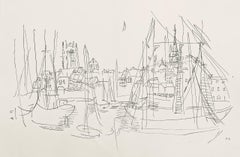
Dufy, Composition, Les Côtes Normandes (after)
By Raoul Dufy
Located in Southampton, NY
Lithograph on grand vélin d'Arches spécial paper. Unsigned and unnumbered, as issued. Good condition with centerfold, as issued. Notes: From the folio, Les Côtes Normandes 1961. Publ...
Category
Modern 1960s Landscape Prints
Materials
Lithograph
$1,516 Sale Price
20% Off
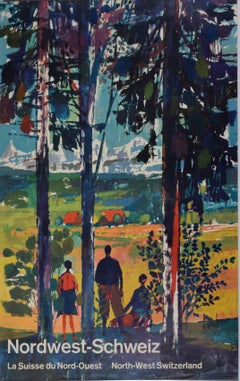
Original Poster - Hugo Wetli: Nordwest-Schweiz North-West Switzerland Skiing
By Hugo Wetli
Located in London, GB
To see our other original vintage travel posters, many of which are from Switzerland, scroll down to "More from this Seller" and below it click on "See all from this Seller" - or sen...
Category
Modern 1960s Landscape Prints
Materials
Lithograph
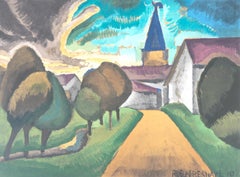
de La Fresnaye, L'entrée du village, Collection Pierre Lévy (after)
Located in Fairfield, CT
Medium: Lithograph on vélin d'Arches paper
Year: 1968
Paper Size: 20 x 26 inches
Inscription: Signed in the plate and unnumbered, as issued
Notes: From the folio, Roger de la Fresnay...
Category
Cubist 1960s Landscape Prints
Materials
Lithograph
$716 Sale Price
20% Off
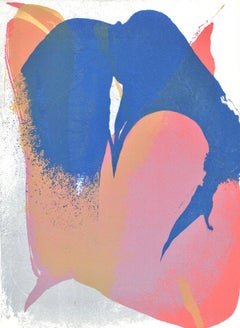
Paul Jenkins, Untitled, from Prints from the Mourlot Press, 1964
By Paul Jenkins
Located in Southampton, NY
This exquisite lithograph by Paul Jenkins (1923–2012), titled Sans titre (Untitled), from the album Prints from the Mourlot Press, exhibition sponsored by the French Embassy, circula...
Category
Abstract Expressionist 1960s Landscape Prints
Materials
Lithograph
$716 Sale Price
20% Off
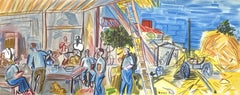
Raoul Dufy, The Harvesters, from Letter to My Painter Raoul Dufy, 1965 (after)
By Raoul Dufy
Located in Southampton, NY
This exquisite lithograph after Raoul Dufy (1877–1953), titled Les Moissonneurs (The Harvesters), from the folio Lettre a mon peintre Raoul Dufy (Letter to My Painter Raoul Dufy), or...
Category
Fauvist 1960s Landscape Prints
Materials
Lithograph
$716 Sale Price
20% Off
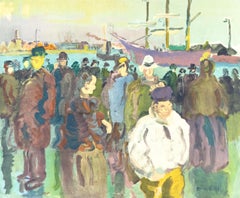
Raoul Dufy, Quay in Rouen, from Raoul Dufy, IV, 1969 (after)
By Raoul Dufy
Located in Southampton, NY
This exquisite lithograph after Raoul Dufy (1877–1953), titled Quai a Rouen (Quay in Rouen), from the folio Raoul Dufy, IV (Raoul Dufy, IV), Collection Pierre Levy, 1969, originates ...
Category
Modern 1960s Landscape Prints
Materials
Lithograph
$956 Sale Price
20% Off
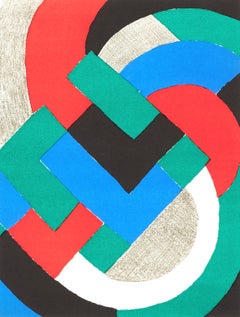
Sonia Delaunay, Color Rhythms, from XXe Siecle, 1969
Located in Southampton, NY
This exquisite lithograph by Sonia Delaunay (1885–1979), titled Rythmes couleur (Color Rhythms), from the album XXe Siecle, Nouvelle serie, XXXIe Annee No. 32, Juin 1969, originates ...
Category
Orphist 1960s Landscape Prints
Materials
Lithograph
$796 Sale Price
20% Off
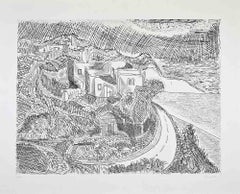
Landscape - Etching by Gian Paolo Berto - 1968
Located in Roma, IT
Etching realized in 1968.
Hand signed, dated and numbered in pencil.
Very good condition.
Category
Contemporary 1960s Landscape Prints
Materials
Etching
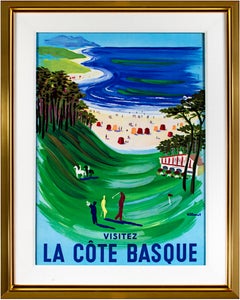
'La Côte Basque' original lithograph travel poster with beach and golf
Located in Milwaukee, WI
This poster, titled 'La Côte Basque' in the image, was intended to draw people to travel to the Basque coast of Spain. The image is dominated by the serene blues, greens and yellows of the golf course and sandy beach. Throughout the vista, figures can be seen at leisure golfing, riding horseback, eating at restaurants, and sunbathing.
34 x 23.75 inches, poster
43.5 x 33.25 inches, image
Signed in the stone, lower right
Framed to conservation standards using archival materials including 100 percent rag mounting, UV5 Plexiglas to inhibit fading, and housed in a gold finished wood moulding with a 3-inch Belgian linen liner.
Bernard Villemot (1911 – 1989) was a French graphic artist known primarily for his iconic advertising images for Orangina, Bally Shoe, Perrier, and Air France. He was known for a sharp artistic vision that was influenced by photography, and for his ability to distill an advertising message to a memorable image with simple, elegant lines and bold colors. From 1932 to1934, he studied in Paris with artist Paul Colin, who was considered a master of Art Deco. From 1945 to 1946, Villemot prepared posters for the Red Cross. In the late 1940s, he also began a famous series of travel posters for Air France that would continue for decades. In 1949, Villemot's works were exhibited with those of his contemporary poster artist Raymond Savignac at the Gallery of Beaux Arts in Paris. In 1953, Villemot began designing logos and posters for the new soft drink Orangina, and over time these works would become some of his best known. In 1963, the Museum of Decorative Arts in Paris held an exhibition of his works. By the end of his life in 1989, he was known as one of the last great poster artists, and many collectors and critics consider him to be the "painter-laureate of modern commercial art." Since his death in 1989, his memorable images have been increasingly sought after by collectors. At least three books have been published that survey his art: "Les affiches de Villemot," by Jean-Francois Bazin...
Category
Modern 1960s Landscape Prints
Materials
Lithograph
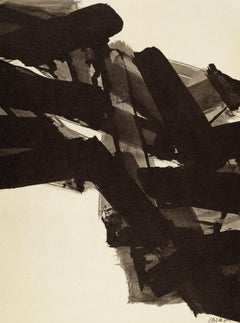
Pierre Soulages, Plate No. 12, from Painters of Today, 1962 (after)
Located in Southampton, NY
This exquisite heliogravure after Pierre Soulages (1919–2022), titled Planche No. 12 (Plate No. 12), from the folio Pierre Soulages, Peintres d'aujourd'hui (Pierre Soulages, Painters...
Category
Modern 1960s Landscape Prints
Materials
Lithograph
$1,996 Sale Price
20% Off
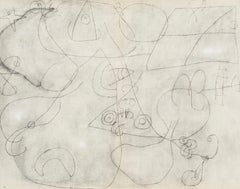
Joan Miro, The Awakening, from Miro 1959–1960, 1961 (after)
By Joan Miró
Located in Southampton, NY
This exquisite lithograph and pochoir after Joan Miro (1893–1983), titled Le reveil (The Awakening), from the album Miro 1959–1960 (Miro 1959–1960), origi...
Category
Surrealist 1960s Landscape Prints
Materials
Lithograph
$1,196 Sale Price
20% Off
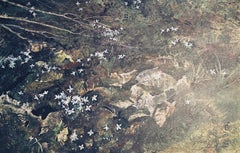
Andrew Wyeth, Quaker Ladies, from The Four Seasons (after)
By Andrew Wyeth
Located in Southampton, NY
This exquisite lithograph after Andrew Wyeth (1917–2009), titled Quaker Ladies, originates from the distinguished 1962 folio The Four Seasons: Paintings and Drawings by Andrew Wyeth. Published and printed by Art in America Company, Inc., New York, the edition exemplifies Wyeth’s deep reverence for nature and his mastery of tonal subtlety. Quaker Ladies captures the full flowering of spring—an intimate study of delicate wild blossoms rendered with Wyeth’s signature restraint and sensitivity to atmosphere, texture, and light.
Executed on velin paper, this lithograph measures 17 x 13 inches (43.2 x 33 cm). As issued, it is unsigned and unnumbered, representing the folio’s authentic format. The Four Seasons series was conceived by the editors of Art in America in collaboration with Andrew and Betsy Wyeth, who selected drawings from the artist’s studio to express the cyclical beauty of nature’s transformations. Each image demonstrates Wyeth’s ability to translate fleeting seasonal impressions into works of quiet emotional resonance and painterly poetry.
Artwork Details:
Artist: After Andrew Wyeth (1917–2009)
Title: Quaker Ladies, from The Four Seasons, Paintings and Drawings by Andrew Wyeth, 1962
Medium: Lithograph on velin paper
Dimensions: 17 x 13 inches (43.2 x 33 cm)
Inscription: Unsigned and unnumbered, as issued
Date: 1962
Publisher: Art in America Company, Inc., New York
Printer: Art in America Company, Inc., New York
Condition: Well preserved, consistent with age and medium
Provenance: From the 1962 folio The Four Seasons, Paintings and Drawings by Andrew Wyeth, published and printed by Art in America Company, Inc., New York
Notes:
Excerpted from the 1962 folio:
"In 1962 the editors of Art in America proposed to Wyeth a portfolio of images of his recent dry-brush drawings. The artist and his wife suggested the theme, 'The Four Seasons,' because of the essential role played in his work by the cycle of the seasons. The drawings were selected by Andrew and Betsy Wyeth from works in the house and studio at Chadds Ford, supplemented by some owned by friends. With a few exceptions they had never been exhibited or reproduced. The plates were made directly from the originals. In these drawings Wyeth's loving concentration on the object is fully revealed. But as always in his work, this concern with the tangible is balanced by sensibility to mood, to the emotion arising from the actual. They are pervaded with a sense of the season—the exact time of year, the hour of the day, the quality of the light. To the truth and subtlety with which he captures these intangible factors, these drawings owe their poignant poetry."
About the Artist:
Andrew Wyeth (1917–2009) was an American visual artist and one of the best-known painters of the mid-20th century. Although he considered himself an abstractionist, Wyeth’s work is characterized by a meticulous realism imbued with psychological depth and atmosphere. He often painted the landscapes and people surrounding his homes in Chadds Ford, Pennsylvania, and Cushing, Maine, creating an intimate record of American rural life. The son of the celebrated illustrator N. C. Wyeth, Andrew trained under his father before developing his own deeply personal visual language inspired by Winslow Homer, Henry David Thoreau, and King Vidor. His wife, Betsy Wyeth, was both his muse and career manager, while his son Jamie Wyeth continued the family’s artistic legacy.
Among Wyeth’s best-known works is Christina’s World (1948), housed in the Museum of Modern Art, New York—a quintessential image of 20th-century American art. His other notable series include The Helga Pictures and his window studies, each reflecting a profound meditation on solitude, memory, and perception. Wyeth was the first painter to receive both the Presidential Medal of Freedom and the Congressional Gold Medal, and was elected to the French Académie des Beaux-Arts in 1980.
In 2022, Andrew Wyeth's painting Day Dream sold for USD 23.29 million at Christie’s New York, setting a world record for the artist.
Andrew Wyeth lithograph...
Category
American Realist 1960s Landscape Prints
Materials
Lithograph
$716 Sale Price
20% Off
Composition (Ginestet/Pouillon 42-64), Hésiode, Les Travaux et les Jours
Located in Southampton, NY
Etching on vélin de Rives paper. Unsigned and unnumbered, as issued. Good condition, with centerfold, as issued. Notes: From the folio, Hésiode, Les Travaux et les jours. Eaux-fortes...
Category
Modern 1960s Landscape Prints
Materials
Etching
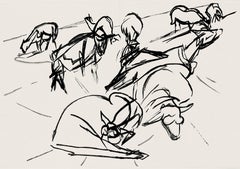
$1,916 Sale Price
20% Off
Joan Miro, Untitled, from Derriere le miroir, 1967
By Joan Miró
Located in Southampton, NY
This exquisite lithograph by Joan Miro (1893–1983), titled Sans titre (Untitled), originates from the 1967 folio Derriere le miroir, L'oiseau solaire, l'oiseau lunaire, etin-celles (...
Category
Surrealist 1960s Landscape Prints
Materials
Lithograph
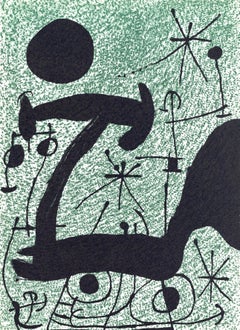
$796 Sale Price
20% Off
Marc Chagall, The Circus, from Derriere le miroir, 1965 (after)
By Marc Chagall
Located in Southampton, NY
This exquisite lithograph after Marc Chagall (1887–1985), titled Le Cirque (The Circus), from the folio Derriere le miroir, No. 155, originates from the 1965 edition published by Mae...
Category
Expressionist 1960s Landscape Prints
Materials
Lithograph
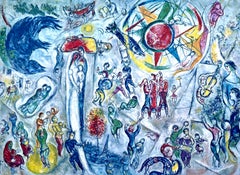
$1,436 Sale Price
20% Off
Nicolas de Stael, The Little Footballers, from Painters of Today, 1960 (after)
By Nicolas de Staël
Located in Southampton, NY
This exquisite heliogravure after Nicolas de Stael (1914–1955), titled Les petits footballeurs (The Little Footballers), from the folio Nicolas de Stael, Peintres d'aujourd'hui (Nico...
Category
Modern 1960s Landscape Prints
Materials
Lithograph
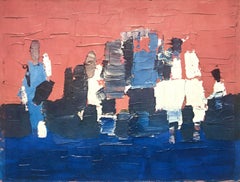
$716 Sale Price
20% Off
Vuillard, La Passerelle, Douze pastels (after)
Located in Southampton, NY
Lithograph and stencil on vélin paper mounted on backing museum board, as issued. Unsigned and unnumbered, as issued. Good condition. Notes: From the folio, Vuillard, Douze Pastels P...
Category
Post-Impressionist 1960s Landscape Prints
Materials
Lithograph, Stencil
$1,996 Sale Price
20% Off
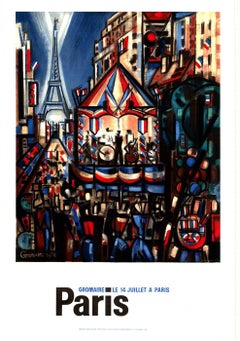
Original Paris le 14 Juillet Bastille Day vintage travel poster, linen-backed
Located in Spokane, WA
Original "Le 14 Juillet à Paris" Poster by Gromaire, Linen-Backed, 1956, Excellent Condition. First edition lithograph poster, an after of a 1956 painting by Marcel Gromaire, spons...
Category
Surrealist 1960s Landscape Prints
Materials
Lithograph
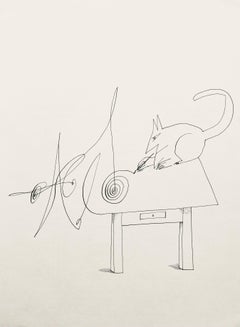
Saul Steinberg, Cat, L'édition de tête (after)
Located in Southampton, NY
Lithograph on vélin de Lana paper. Inscription: Unsigned and unnumbered, as issued. Good condition. Notes: From the folio, tête edition, Consacré a Steinberg, Derrière le miroir, N° ...
Category
Modern 1960s Landscape Prints
Materials
Lithograph
$1,036 Sale Price
20% Off
Orlando Pelayo, Untitled, from Albert Camus, oeuvres completes, 1962
Located in Southampton, NY
This exquisite lithograph by Orlando Pelayo (1920–1990), titled Sans titre (Untitled), originates from the 1962 album Albert Camus, oeuvres completes, Essais litteraires Noces, l'ete...
Category
Modern 1960s Landscape Prints
Materials
Lithograph

$716 Sale Price
20% Off
Orlando Pelayo, Untitled, from Albert Camus, oeuvres completes, 1962
Located in Southampton, NY
This exquisite lithograph by Orlando Pelayo (1920–1990), titled Sans titre (Untitled), originates from the 1962 album Albert Camus, oeuvres completes, Essais litteraires Noces, l'ete...
Category
Modern 1960s Landscape Prints
Materials
Lithograph

$716 Sale Price
20% Off
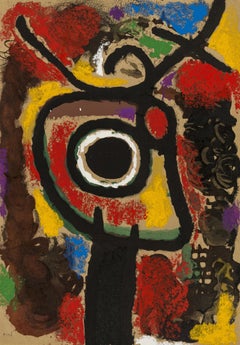
Joan Miro, Figure and Bird, from Cardboards 1959–1965, 1965 (after)
By Joan Miró
Located in Southampton, NY
This exquisite lithograph and pochoir after Joan Miro (1893–1983), titled Personnage et oiseau (Figure and Bird), from the album Miro, Cartones 1959–1965 (Miro, Cardboards 1959–1965)...
Category
Surrealist 1960s Landscape Prints
Materials
Lithograph
$1,196 Sale Price
20% Off